Tag Archives: wine

LIVING THE LIFE IN PROVENCE AND A VISIT TO TAVEL – THE BEST ROSÉ

I haven’t posted in a while, because Dorianne and I have been focusing on some writing projects and dining in our apartment for the most part. We are sill in Villeneuve-les-Avignon, the picturesque village across the Rhône River from Avignon in northern Provence.

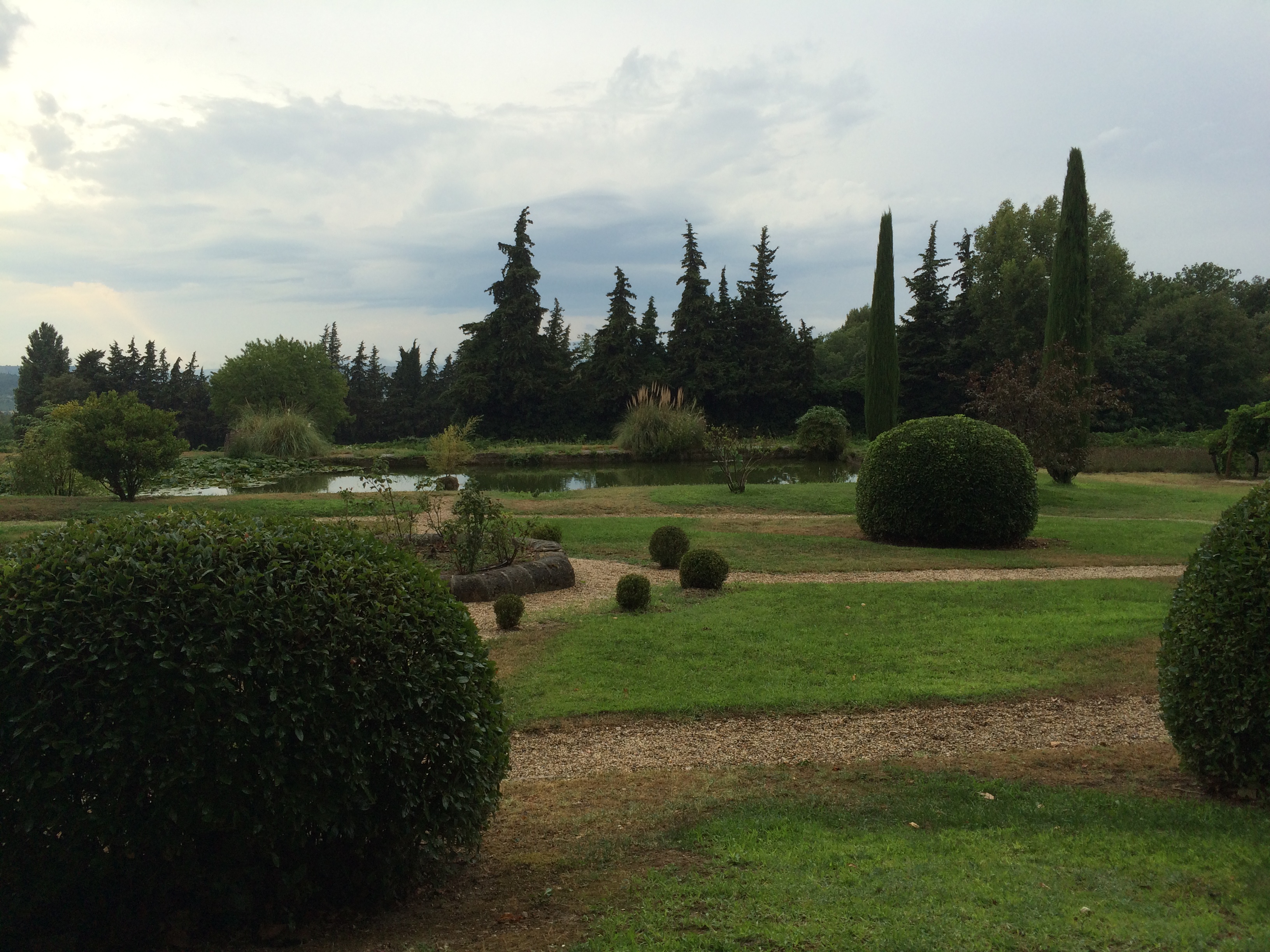
This weekend, we were invited by our friend Richard Major, who lives in Mazan in the Ventoux region, to a party being hosted by an ex-pat American couple celebrating one year of living in France. There would be ex-pats from the United Kingdom, New Zealand, and other nations, plus a few French neighbors. So, of course, we were interested in attending. I won’t use any names here, because I did not get permission to do so. Here is the sunset from the home.

2015-08-28 20.09.41

The home was located in the hills above Bédoin, a picturesque (they are ALL picturesque) village near the base of Mont Ventoux. The couple, from California, and their two children seemed very happy with their choice to move to Provence. We also spoke with a number of other ex-pats and a couple visiting from the U.S., also from California, who own a home nearby, but still live in the States.

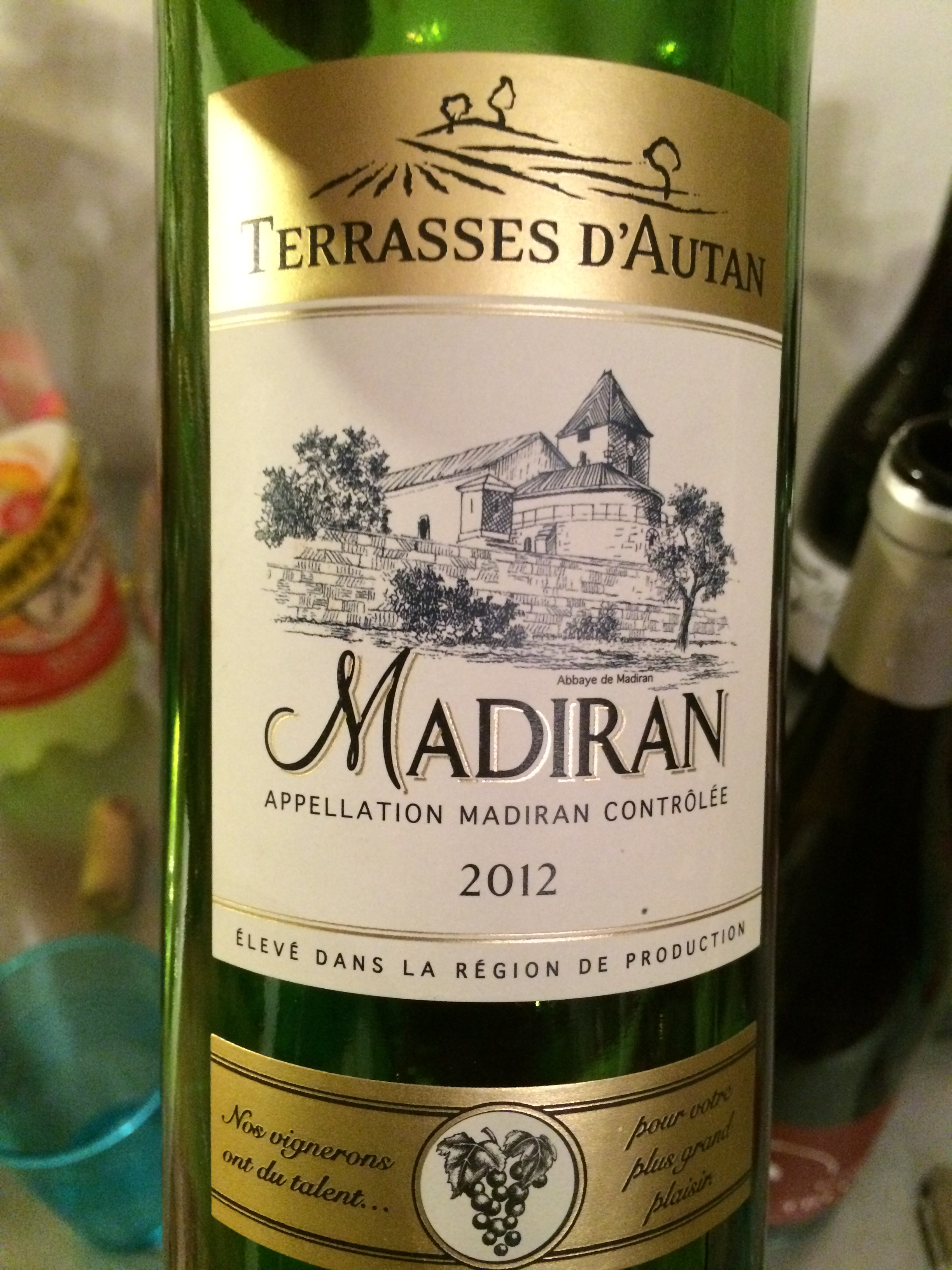
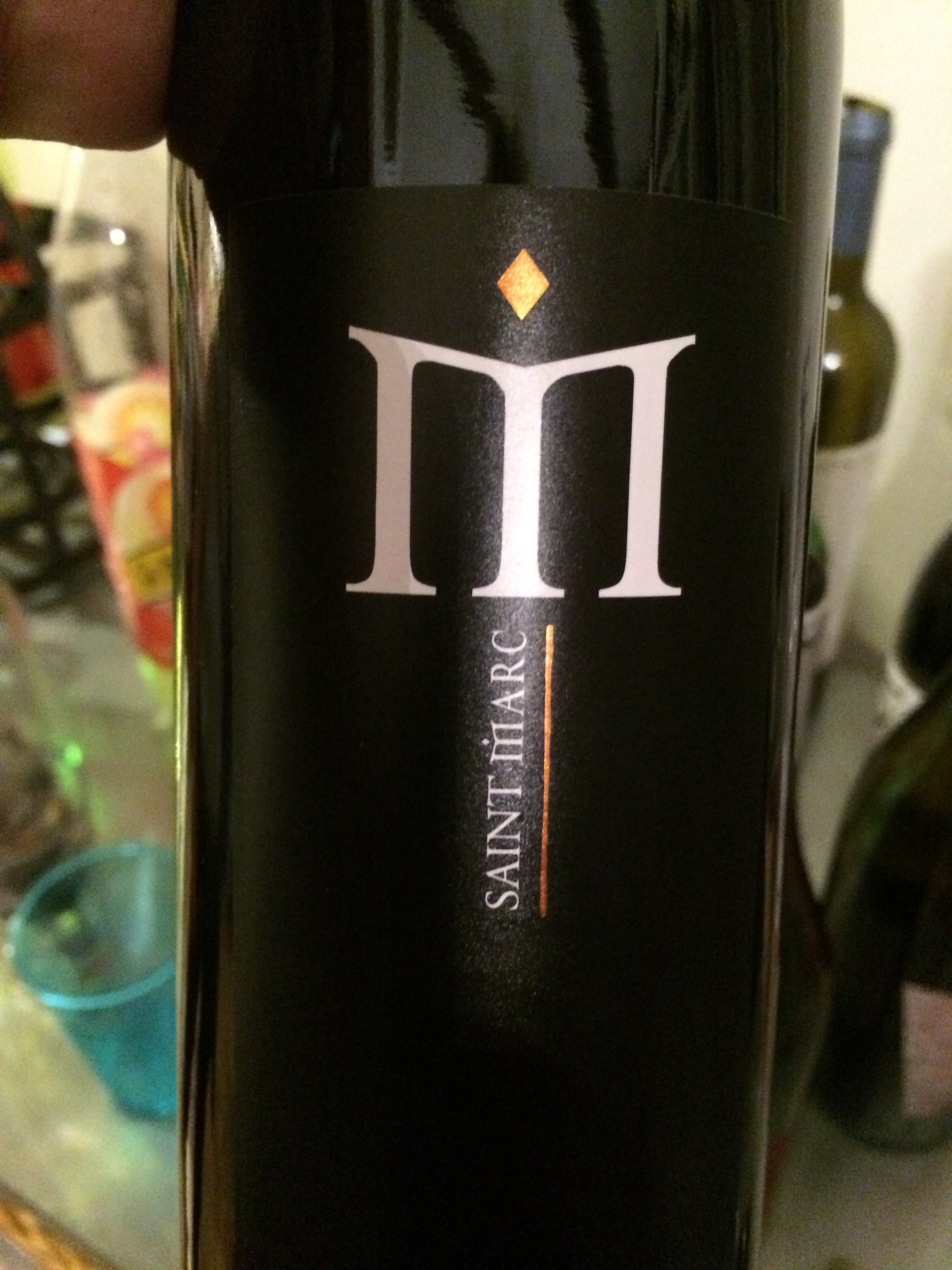
The dinner was pot-luck, and there was a good bit of local wine. The Ventoux Region (LINK) is known for Grenache, Syrah and Mouvèdre, with  Cinsault and Carignan – the usual Rhône Valley suspects. In the Ventoux A.O.P., no varietal can be more than 30% of the blend. Here are some images of some of the wines served at the party.

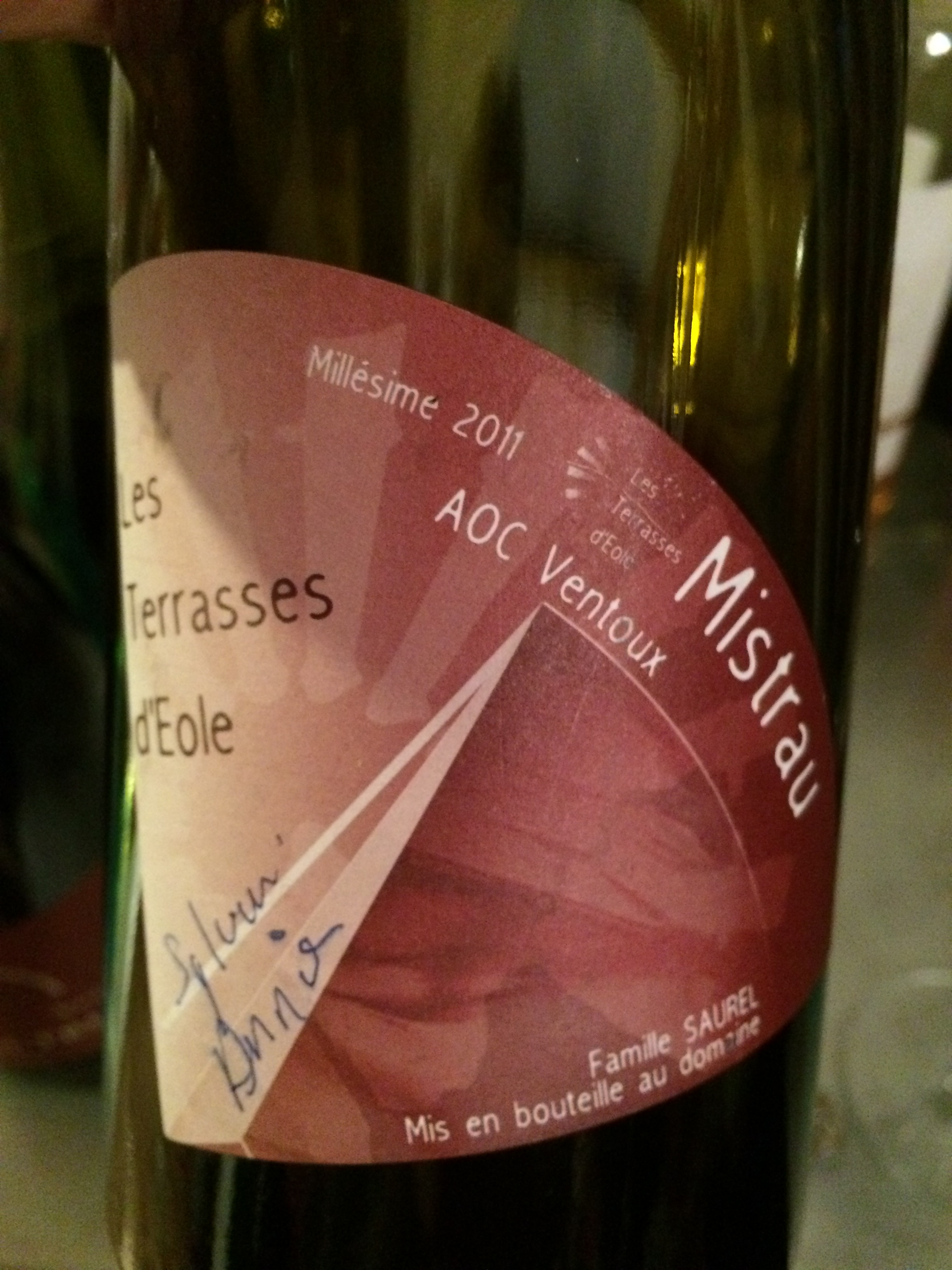
2015-08-28 21.02.01 2015-08-28 21.02.12 2015-08-28 21.02.28 2015-08-28 21.02.38 2015-08-28 21.02.49

Suffice to say, Dorianne and I were impressed by the lifestyle and the conviviality of the English-speaking ex-pats in this part of Provence. It gave us more food for thought about our future home base.

After an overnight at Richard’s in Mazan, we headed for a day in Tavel, the only A.O.P. in France where only rosè wines are allowed; and then over to Châteauneuf-du-Pape for lunch and a visit to Les Caves St Charles, which will be detailed in a separate post.

It was a very special day. If you stay off of the highways, this part of France is a treat for the senses – beautiful panoramas of low hills, valleys, fields of grapes and olive trees, rustic farmhouses – simply beautiful. We traveled down one-lane roads through vineyards and tiny villages, smelled the aromas in the air, and heard almost nothing – silence. It was a very peaceful way to travel.

Tavel (LINK) is located on the right bank of the Rhône River, bordering the Lirac A.O.P., and very close to Avignon. First, let’s look at A.O.C. and A.O.P.

The French government, not too long ago, officially announced that the long standing A.O.C. (Appellation d’origine contrôlée) system for wine is being replace by an new quality ladder with the top step being an A.O.P. (Appellation d’Origine Protégée) (LINK). So, since about 2009, the correct designation is A.O.P.  – – That’s just F.Y.I.

We chose Château de Manissy (LINK) in the  Tavel A.O.P. from a list online. We are very glad that we did. Owned by the Holy Family’s Missionaries, it has produced rosè wines since the beginning of the 20th century and acquired a famous reputation with the “Tête de Cuvée” wine, a barrel-aged rosé. The monks turned over the viticulture and wine-making to a young many from TavelFlorian André, who was in his early 20’s at the time. Monsieur André has continued some of the traditions of the monks, and oversaw the conversion to an organic winery in 2009. He has also modernized some of the techniques, while keeping that barrel-aged rosé in production. By the way, the monks still live in the Château.
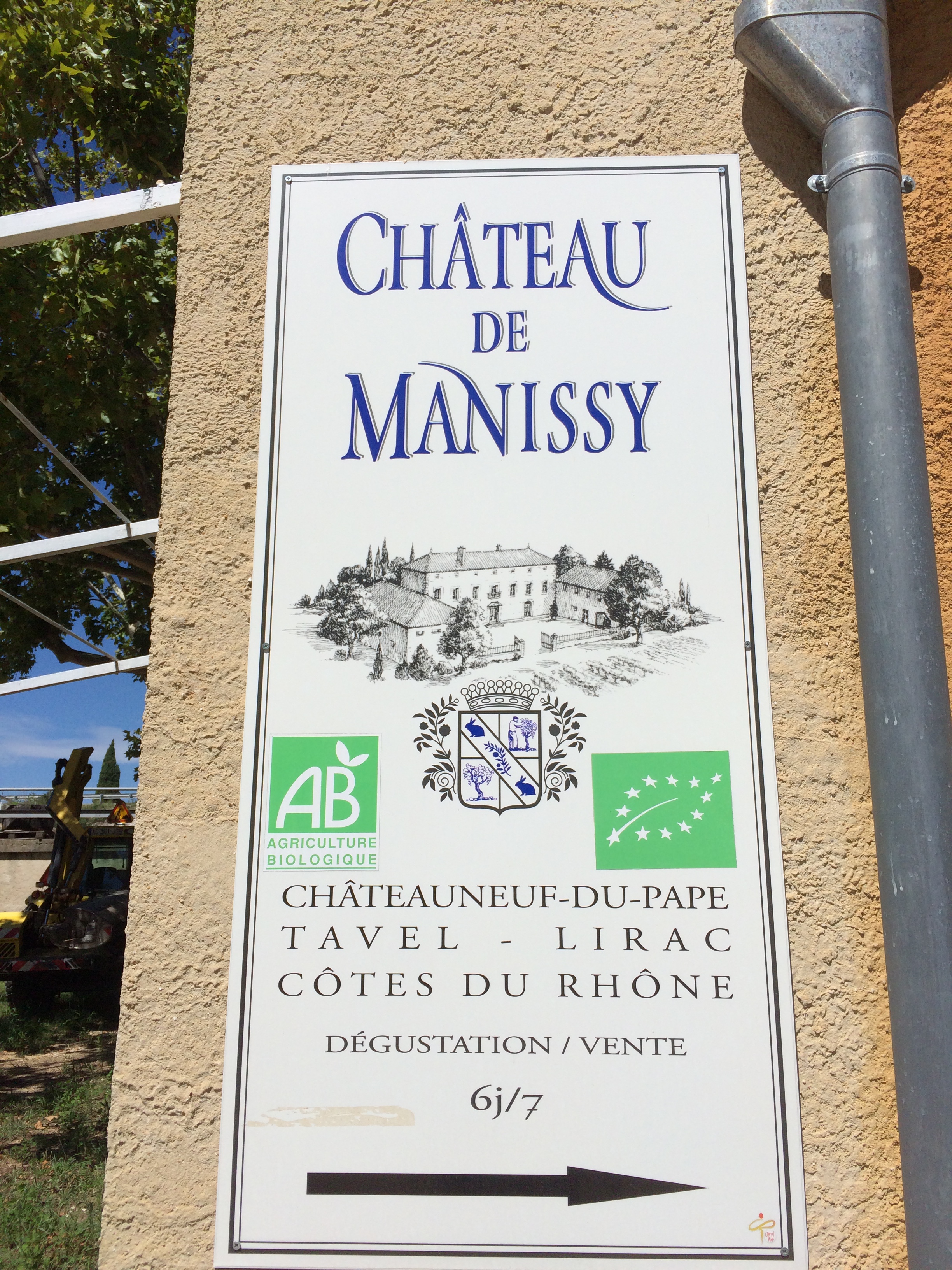
2015-08-29 13.40.32 2015-08-29 13.40.55 2015-08-29 13.41.42 2015-08-29 13.49.04

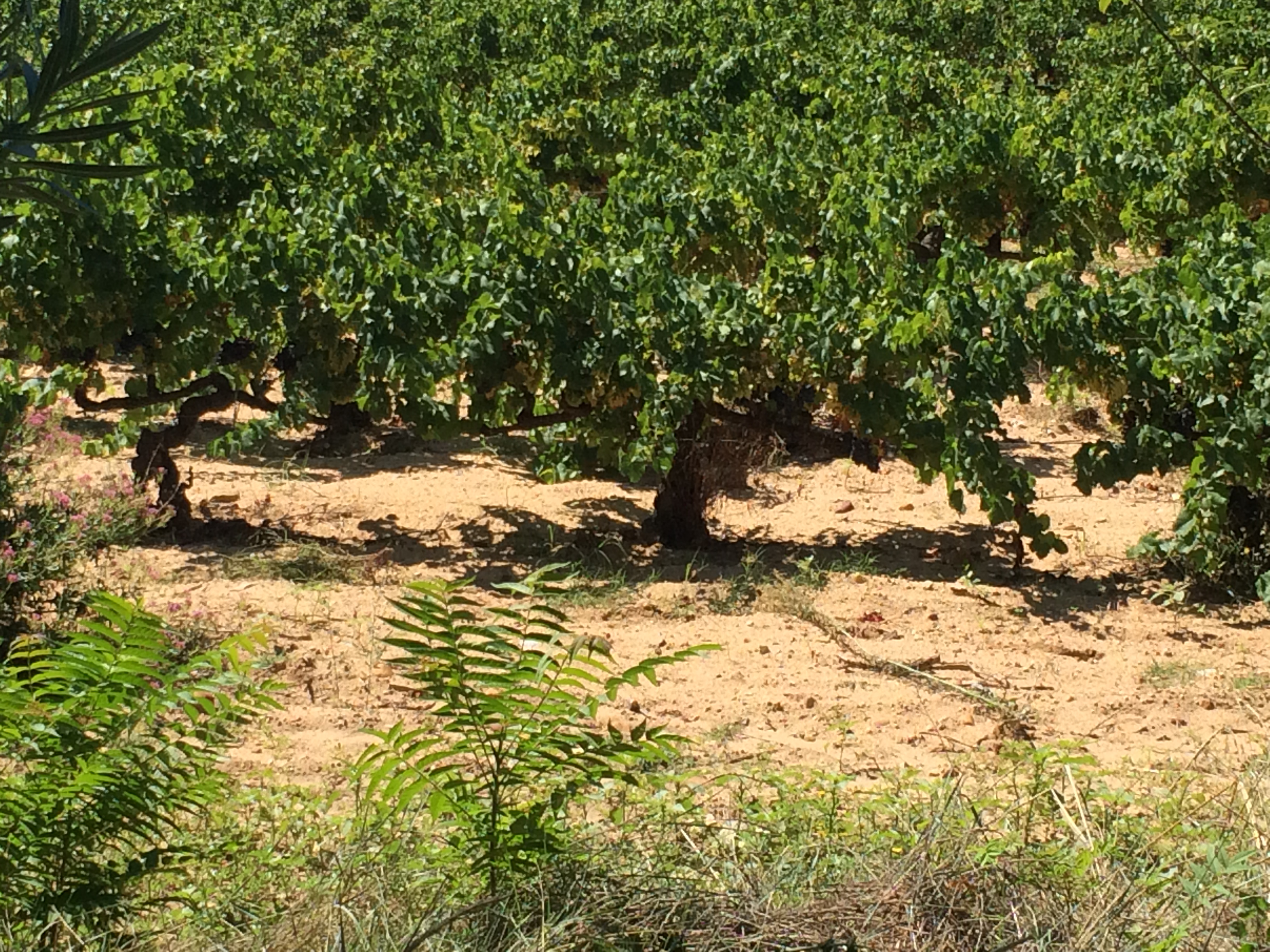
We arrived a bit early for our 2:00 pm appointment, so we wandered the grounds a bit before being met by Anaïs, the Tasting Room Manager. She took us out to the vineyards and we discussed the viticulture of the region. It turned out that her English was so good because she spent a year (2013) working at Tablas Creek Winery in Paso Robles, known for their Rhône varietals and techniques. As it happened, Dorianne and  I were in the Tablas Creek wine club in 2013. Anaïs told us that her father is the winemaker at Famille Perrin/Perrin & Fils in Tavel, and they partner with Tablas Creek in a number of ventures. Small world.

2015-08-29 13.57.42
Anaïs – Tasting Room Manager.
2015-08-29 14.19.40
Manissy’s Chateauneuf-du-Pape – from a Single Hectare Vineyard. 100% Grenache.

It also turned out that our guide on a previous tour (LINK) of Châteauneuf-du-Pape and GigondasValentina of MistralTour.fr, used to work at Château de Manissy. Smaller world.

We did a tasting and then toured the wine-making operation.

First, we tasted a white from another area of vineyards and a Côtes du Rhône – Rosé of Grenache 40% – Carignan 40% – Cinsault 10% – Syrah 10%. This wine, not from 100% Tavel fruit, was closer to the rosé wines of the larger Provencal region. It was lighter and crisper than the wines to follow. They also make some other wines from vineyards outside of Tavel, all were good and very reasonably priced, but they are not why you want to visit Château de Manissy, or the wines you want to try.

The rosé wines of Château de Manissy, and of Tavel in general, are unlike other rosé wines from Provence. They tend to have a deeper pink to red color and be bolder. This is true of the 2013 Tavel Rosé that we tasted, a blending of principally Grenache, Clairette, Cinsault and Bourboulenc, from about 40 years old vines. This is a bolder, more structured rosé with a sense of terroir, unusual in a rosé. There is also a nice balance of fruit – this wine manages to be refreshing and structured enough to pair with chicken or other fowl. This wine is a good representative of the moden Tavel A.O.P. rosés.

2015-08-29 14.19.58 2015-08-31 12.05.57

Then, we had the unique 2013 Tête de Cuvée, the barrel-aged rosé that is the last vestige of the monks’ style of wine making. This is a unique rosé in almost every respect. It is aged in small oak barrels, bottled in brown glass like a red wine, it pairs with beef and other meats, it is made to age for decades, and it is made to consume year-round. It is a blending of Grenache, Clairette, Cinsault, Bourboulenc and Carignan. It is mentioned but not listed for sale on their website, and there is very little information about this wine on the internet that I could find. This would be a wonderful wine for Thanksgiving Dinner, strong enough to stand up to turkey and gravy and such, but supple enough to match pretty well with all the other appetizers and side dishes that show up at that feast that is so hard to find good wine parings for. We have two bottles that will travel home with us for this purpose. Oh, and the 2013 Tête de Cuvée was priced at 11€ or about $12.00 – one of their more expensive wines!
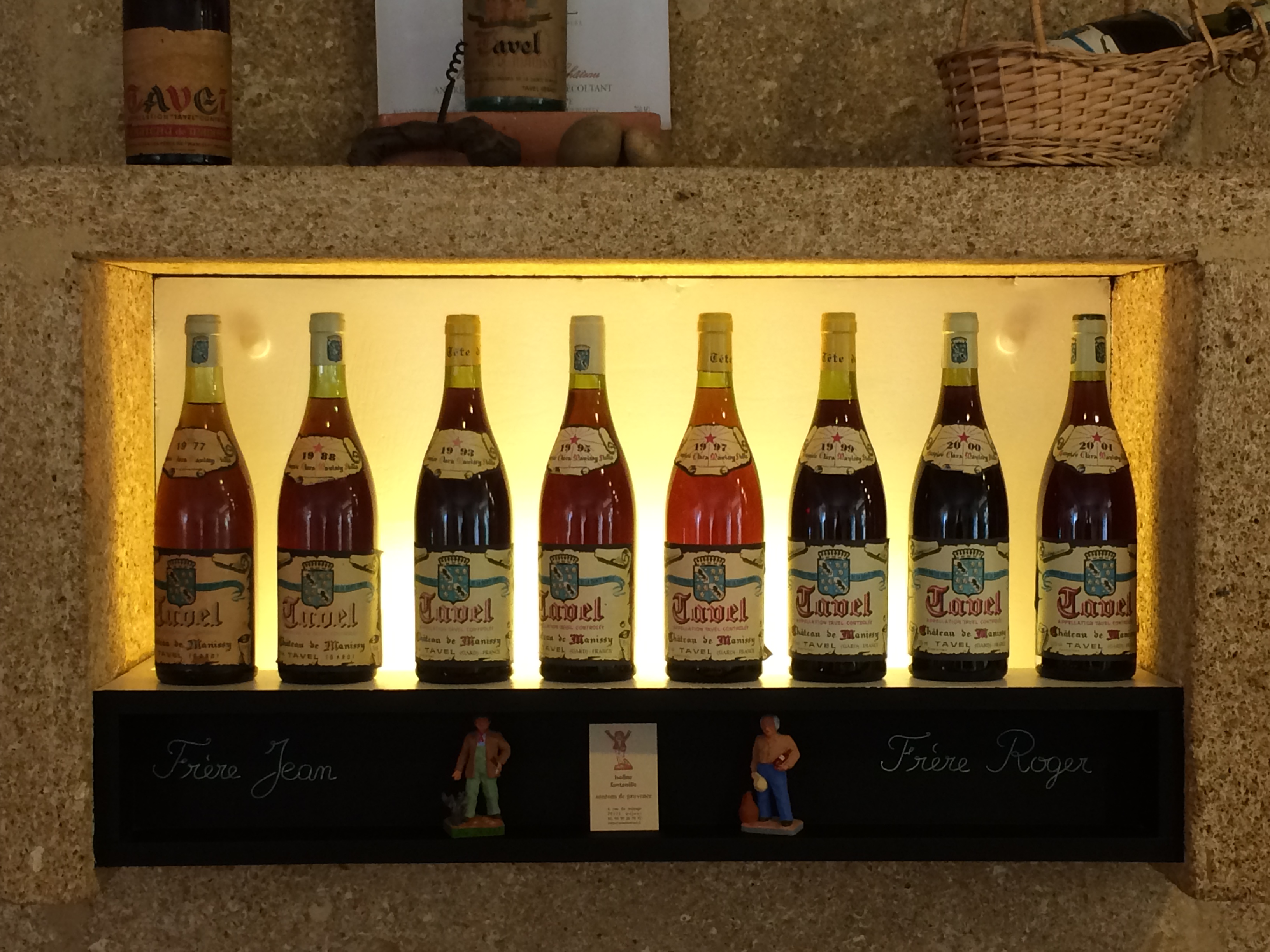
2015-08-29 14.19.34
Tête de Cuvée Rosés Gone Back to 1977

2015-08-31 12.05.21

It is also worth noting that Anaïs told us that we were the very first visitors in 2015 from the United States. I found this surprising, but then again, Tavel is not well known in the U.S. If you are looking for rosés for the remainder of the summer and into the cooler days of autumn – see if your wine retailer has wines from Tavel – you won’t be disappointed.

I will post about the other part of our day – a return to Châteauneuf-du-Pape, in the next post.

Photos and text Copyright Jim Lockard 2015.

AN INSIDER’S GUIDE TO TRAVELING WITH WINE

There are any number of aspects of wine enjoyment that can get confusing. The number of varietals, the thousands of producers in hundreds of regions, the right temperature and stemware to use, just to name a few. But one area that seems to stump just about everyone at one time or another is traveling with wine, especially internationally.
The article at the link is from the Lazenne.com blog site. Lazenne is a manufacturer of wine travel gear, everything from padded sleeves to keep your wine from breaking open in your suitcase to, well, wine suitcases. Here is the link to their retail site: (LINK).

(LINK to ARTICLE)

Here are a few highlights:

“You’ll be pleasantly surprised that there are no TSA-regulated quantity limits for wine or alcohol in your checked (hold) baggage as long as it contains less than 24% alcohol. Those wanting to add a little spirits to the mix need to know that alcohol that contains over 24% alcohol is limited to 170 oz or 5 litres per person. Beverages that contain more than 70% alcohol are prohibited.

Individual airline baggage weight limits still apply, but you can use up your entire weight allotment for wine or alcohol if you choose as long as the above mentioned rules are respected. One bottle of wine weighs on average 3 lbs or 1.4 kg so you can do the math. Typical international baggage weight limits are 50 lbs or 23 kg.”

And when you get to U.S. Customs:

“In the United States there are no limits to how much alcohol you can bring as long as it is intended for personal consumption and not resale. Many mistake the duty-free limit of 34 oz or 1 liter as the total limit. If you are over the duty-free limit, you simply have to declare the alcohol you are transporting on your customs form and pay the appropriate duty to the customs officer, typically around $1 to $2 for wine and beer, while the amount for spirits is slightly higher and varies by type, as of publication. From our experience however, more typically than not, you will be waived through without paying any duty due to the amount being so negligible.”

There is more there, so check it out if you are thinking about traveling with wine soon.

Wine ShippingTravel - Suitcase

GUIDE TO SERVING WINES – TEMPERATURE AND STEMWARE

In making wine more accessible, information is a helpful thing. This very good article from Wine Enthusiast Magazine (LINK to WEBSITE), is a good guide to temperature ranges and the kinds of glassware to know about in serving various types of wine. While your budget may not allow you to have all of these types of glasses in your home, the temperature guidelines are something that you can manage at no additional cost – just some time and effort. And note the piece about decanting at the end.

When wines are stored properly (or even consumed just after purchase), then served at the correct temperature in the ideal stemware, you get the best value for your wine dollars and the most enjoyment possible.

(LINK TO ARTICLE)

CHATEAU LA CANORGUE – AWARD WINNING LUBERON WINES

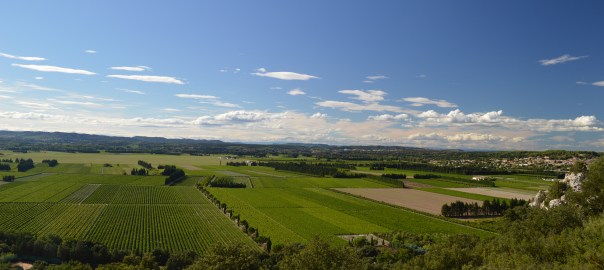
Last week, Dorianne, Grace and I joined our friend Richard Major, who was raised in the Luberon region for an afternoon drive thought the region. We started with a wonderful lunch at his home in Mazan, sharing a couple of bottles of local wines, then drove through a beautiful gorge into the Luberon Valley. As we approached the town of Bonnieux, one of the places where Richard grew up, he turned into a driveway marked Château La Canorgue (LINK)“Let’s see if they are still open,” he said – it was 6:45 pm. As we drove up the driveway through the scenic property, Richard said casually, “The winemaker, Jean-Pierre Margan and I went to high school together. I haven’t seen him for forty years.”

We digested that bit of information as we pulled into the parking area, and Richard spotted Jean-Pierre standing outside of the tasting room. They engaged in conversation while we went inside, where we met his daughter, Nathalie, who now represents the 5th generation of winegrowers at this storied property.

2015-08-13 19.29.39
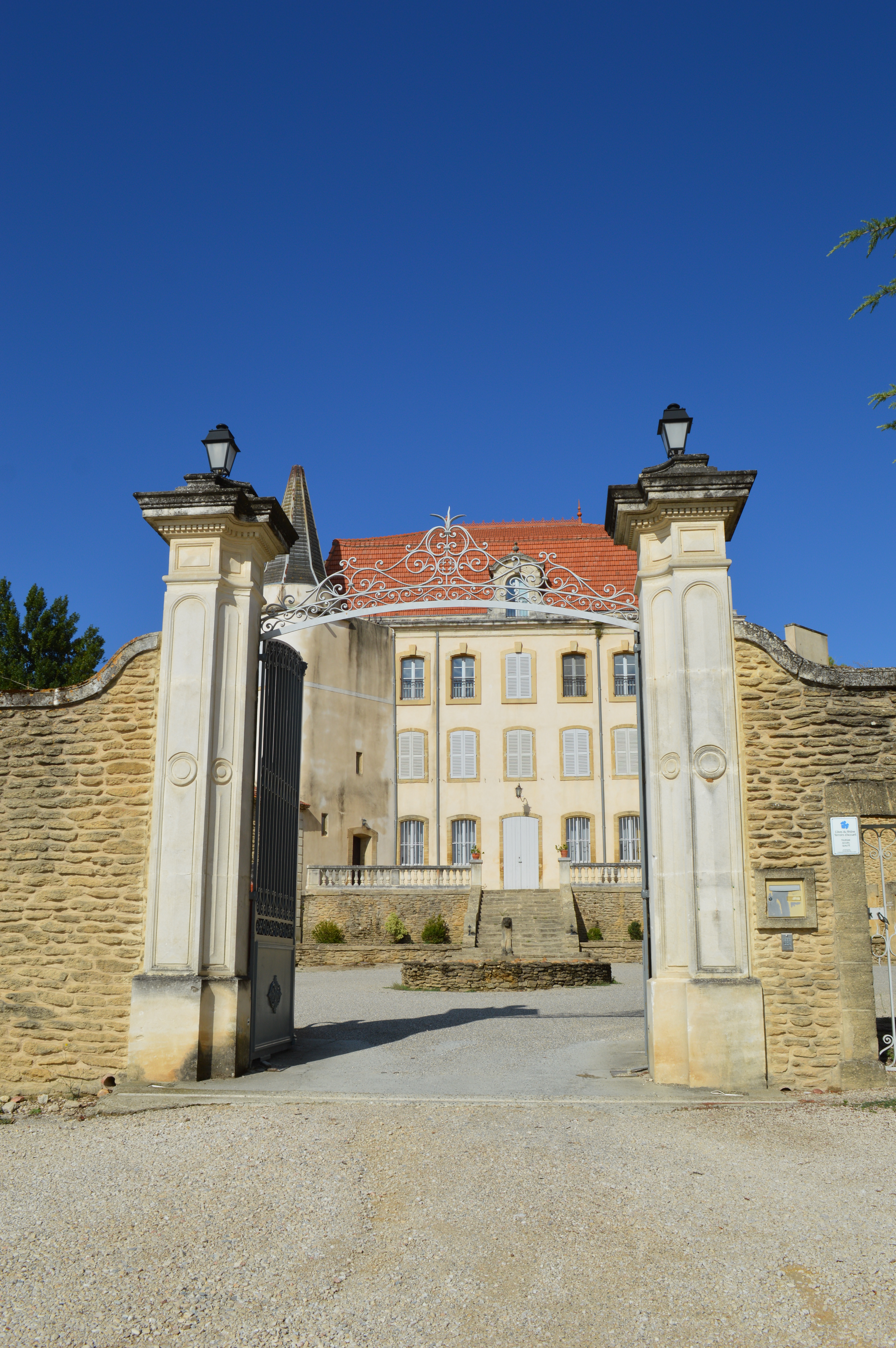
The Chateau grounds.

This beautiful property was featured in the movie “A Good Year” (A Big Year) with Russell Crowe and Marion Cotillard directed by Ridley Scott. They produce 100% organic wines (LINK) .

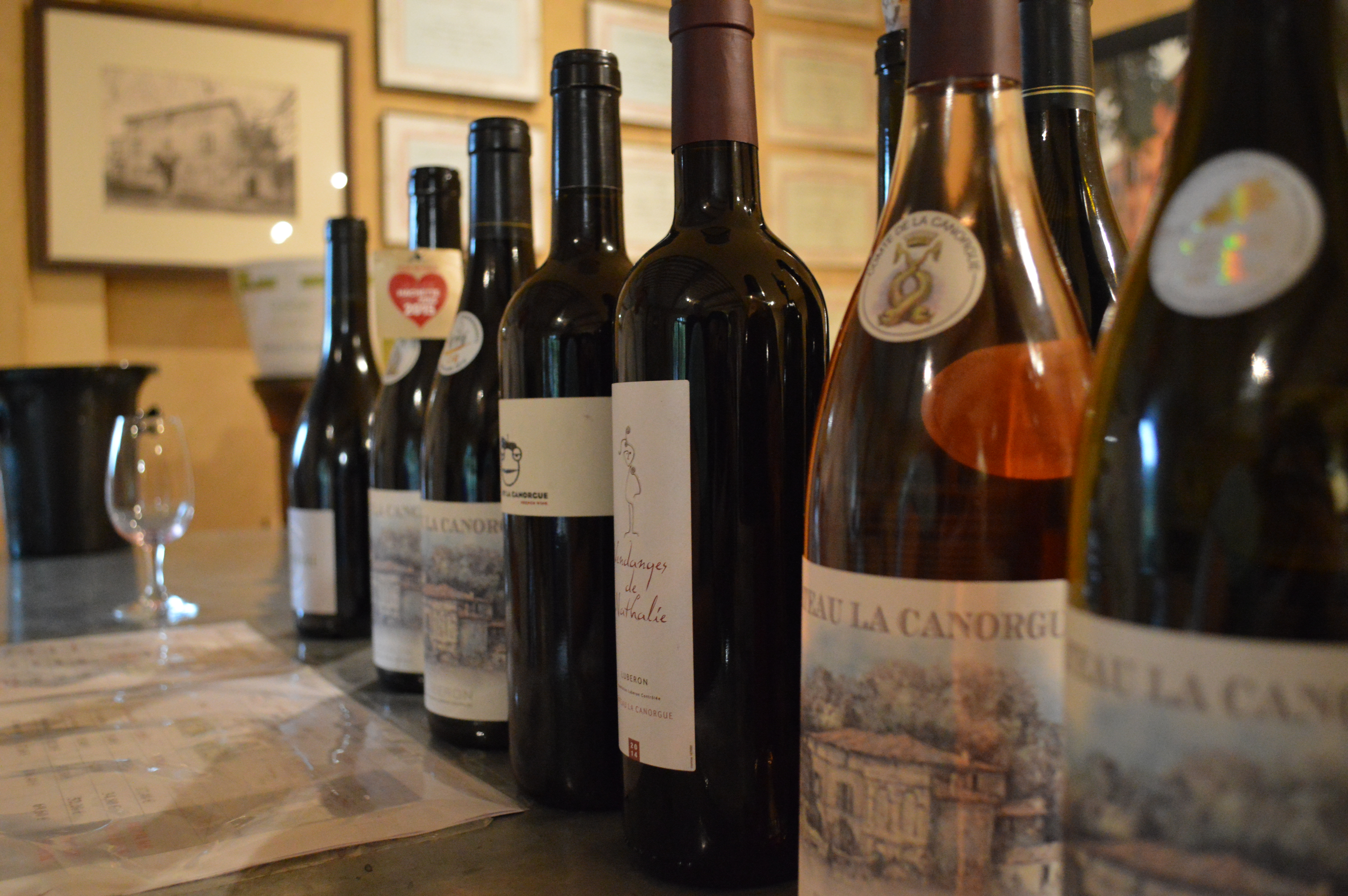
It was getting late, so we got right to a tasting of several of their wines next to a wall that contained a few dozen award certificates that the Chateau had amassed over the years.DSC_0305

2015-08-13 18.45.25

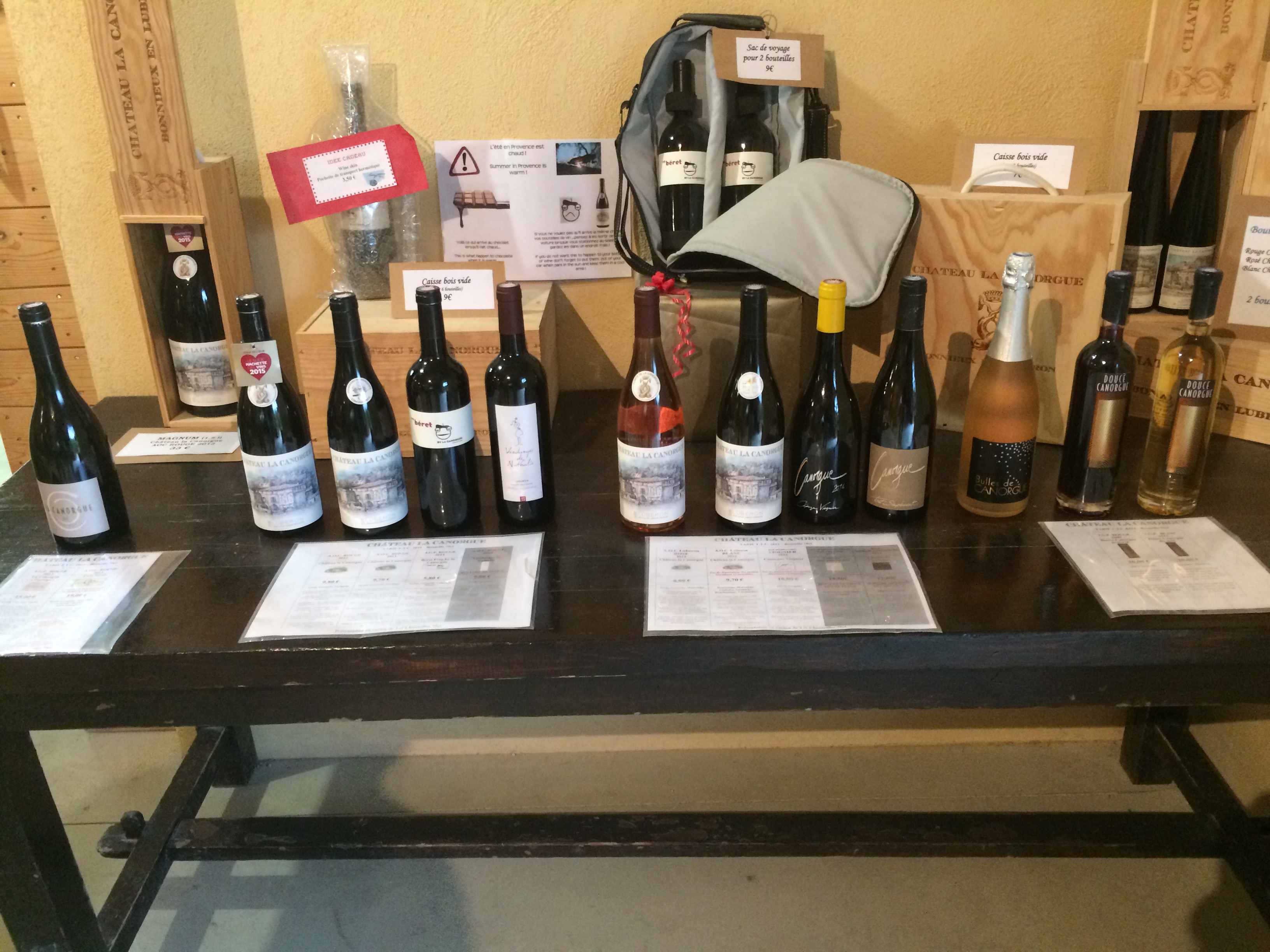
We started with their Château La Canorgue label Luberon Rosé, a blend of Grenache Blanc and Syrah. A nice, refreshing wine. 

Then we tasted their Château La Canorgue label Luberon White Blend (LINK), a winner of the Gold Medal in the 2015 Concours Général Agricole Paris. This blend of Rousanne, Marsanne, Clairette and Bourboulenc makes for a very refreshing, complex wine. An excellent white wine – something that I was coming to realize as a trait of this area in the northern reaches of Provence, normally known for the reds produced here.

Next, we tasted their La Canorgue 100% Viognier (LINK), a wine that cannot carry the Chateau label because it does not meet the AOP (formerly known as AOC) regulations for blending. Nathalie Margan said that this wine was so good as a single varietal that they just went ahead and labeled it this way. It is a very fruity and light wine that would be excellent with shellfish, and has a very pleasing, long finish.

Moving to the reds, we started with their second label, Béret Frog, a blend of Cabernet, Grenache, Merlot & Syrah that sells for about 7 euros a bottle. It is a good everyday wine, with some complexity, but is more of a table wine that would be a cut above most vin ordinaire.

Next, the Château La Canorgue label Luberon Red blend (LINK), a blend of 60% Syrah, 30% Grenache, and 10% old vine Carignan and Mourvedre. This is the flagship wine of the property. It is a first-class wine, with great structure, a nose of dark fruit and minerals, and flavor of the terroir balanced nicely with fruit and cassis, and a smooth long finish.

Finally, the 2012 La Canorgue Red, a limited production 100% Grenache. A truly delicious wine with a nice tannic structure. This small production wine is generally absent from the internet, but you can order it from their website.

We purchased 8 bottles of wine to take back to our apartment near Avignon, and headed out to explore another village or two and then have dinner back in Mazan. A great day in The Luberon Valley. If you get up this way, don’t miss Château La Canorgue, a beautiful location with some wonderful wines.

Château La Canorgue, Route du Pont Julien, 84480 Bonnieux

CHATEAUNEUF-DU-PAPE, GIGONDAS, AND CRESTET – THE BEST OF NORTHERN PROVENCE

As a wine blogger, I really like to explore the wine regions I visit. We are in the Avignon area for six weeks, and I had been itching to get to Châteauneuf-du-Pape to taste some of their fantastic wines on-site and to learn more about the culture and process of this renowned region. At the recommendation of Lauren, proprietor of the wonderful Art, Wine, and Design Shop in Villeneuve-les-Avignon, I called Valentina of MistralTour.fr and set up an all-day tour this past Friday. Dorianne and our daughter, Grace, joined us. Most of the photographs in this post were taken by Grace – here is a (LINK) to her website.

2015-08-14 18.15.59

Valentina is a delight – an Italian who lives in France and speaks perfect English; she is very vivacious and professional. She is an excellent guide.

Our tour took us to the Village of Châteauneuf-du-Pape, where we went up to the ruins of the original chateau and surveyed the beautiful countryside laced with vineyards in all directions. Along the way, Valentina talks about all things wine – she really has a good degree of knowledge and makes everything clear.  Châteauneuf-du-Pape is a storied wine region centered around the town of the same name. The AOC (LINK) allows for 18 varietals (not 13 as is commonly believed). From Wikipedia.com: “Both red and white varieties are allowed in both red and white Châteauneuf-du-Pape. There are no restrictions as to the proportion of grape varieties to be used, and unlike the case with other appellations, the allowed grape varieties are not differentiated into principal varieties and accessory varieties. Thus, it is theoretically possible to produce varietal Châteauneuf-du-Pape from any of the eighteen allowed varieties. In reality, most Châteauneuf-du-Pape wines are blends dominated by Grenache. Only one of every 16 bottles produced in the region is white wine.” 

I was unfamiliar with whites and rosés from this region, but let me tell you, there are some amazing wines here. U.S. retailers and restaurants should be getting on the bandwagon for the whites and rosés of Châteauneuf-du-Pape and  Gigondas.

DSC_0359
Chateau de Vaudieu. Side entrance.
DSC_0369
La Cave at Chateau de Vaudieu.

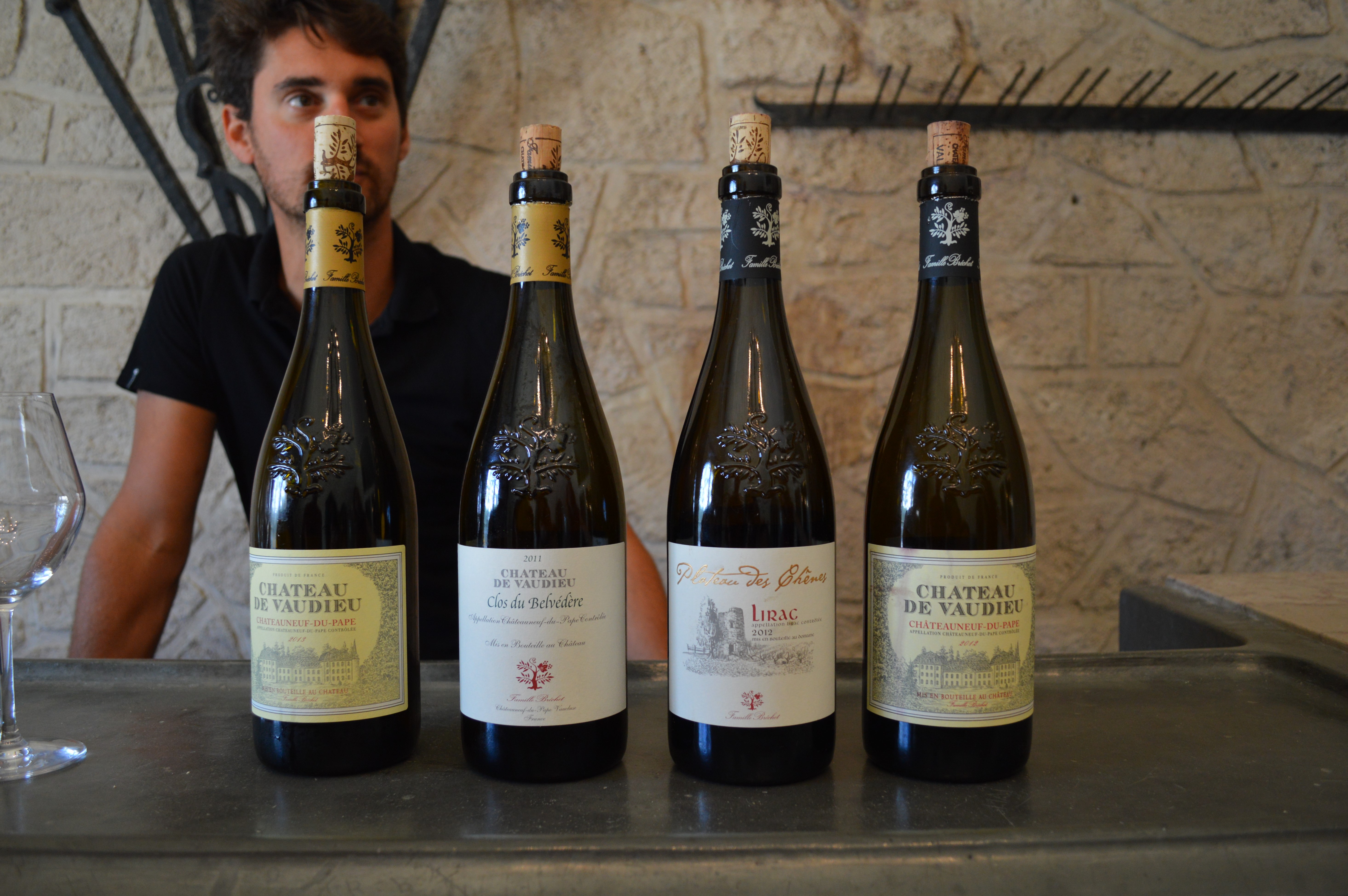
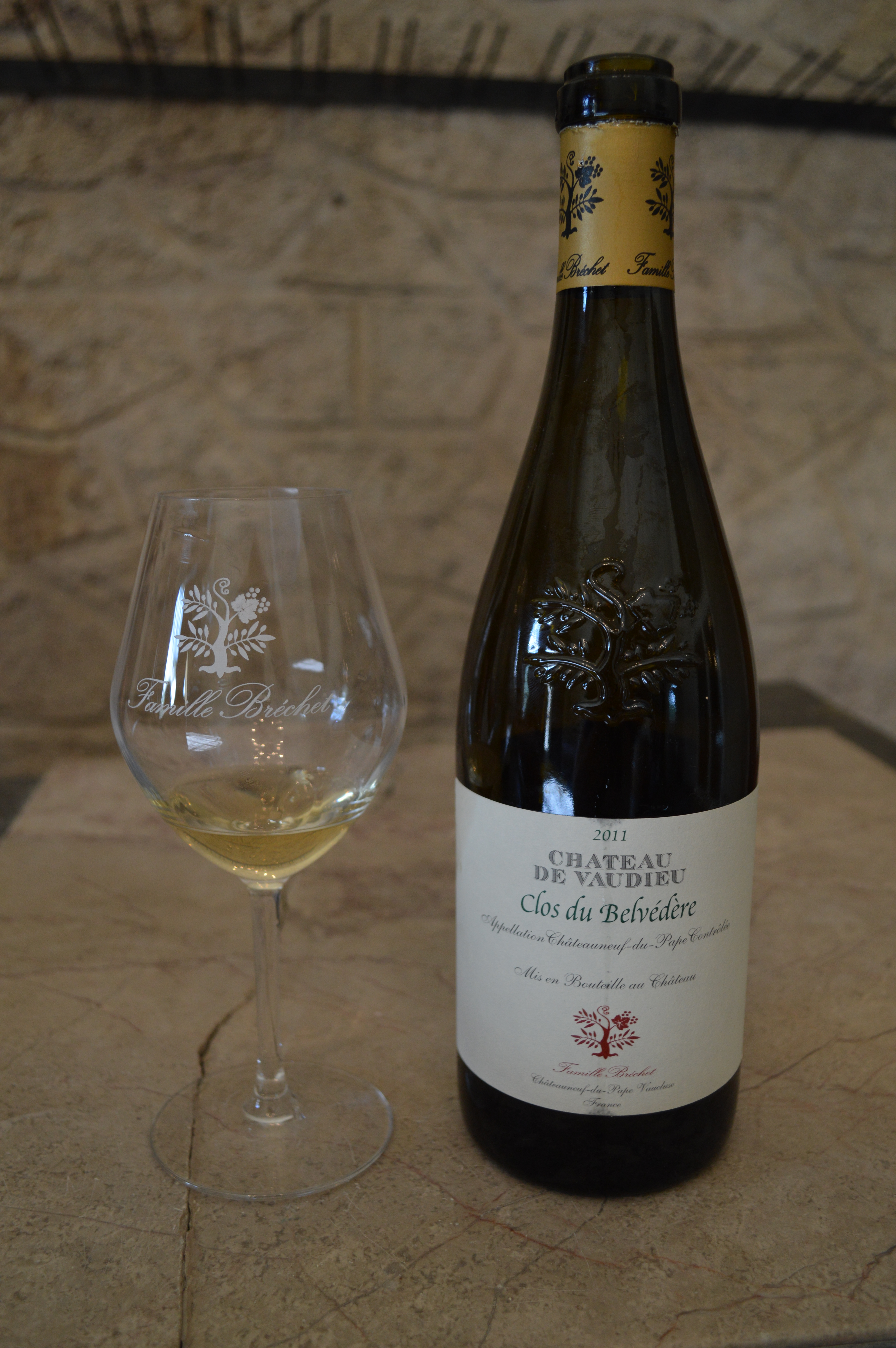
Then we drove just down the road to Chateau de Vaudieu (LINK) for a tour and a private tasting with the winemaker, Christophe. Chateau de Vaudieu dates from 1767. They have 70 hectares (173 acres) of grapes under cultivation, all around the chateau.

DSC_0372
Winemaker Christophe and his wines.
DSC_0375
A White Chateauneuf-du-Pape – whites make up 15% of Chateau de Vaudieu’s production. Grenache 75% – Roussanne 25%.
DSC_0376
Another White Chateauneuf-du-Pape – whites make up 15% of Chateau de Vaudieu’s production. 100% Grenache Blanc.

Lirac is an AOC just across the Rhône River from Châteauneuf-du-Pape. It has similar varietals and soils, and the wines are a bargain. Quite a few Châteauneuf-du-Pape growers bottle Lirac Wines.

DSC_0379
is 2012 Plateau des Red Oak , Lirac. Grenache/Syrah blend.
DSC_0380
2012 Chateau de Vaudieu Red. AOC CHATEAUNEUF DU PAPE. Grapes : Grenache 74% – Syrah 26%

Next, we went into the village to the wine shop of Domaine Durieu, where the winemaker was also present for part of our stay, then we tasted four of their wines. I should add that Châteauneuf-du-Pape wines are among the best in France. No photos here.

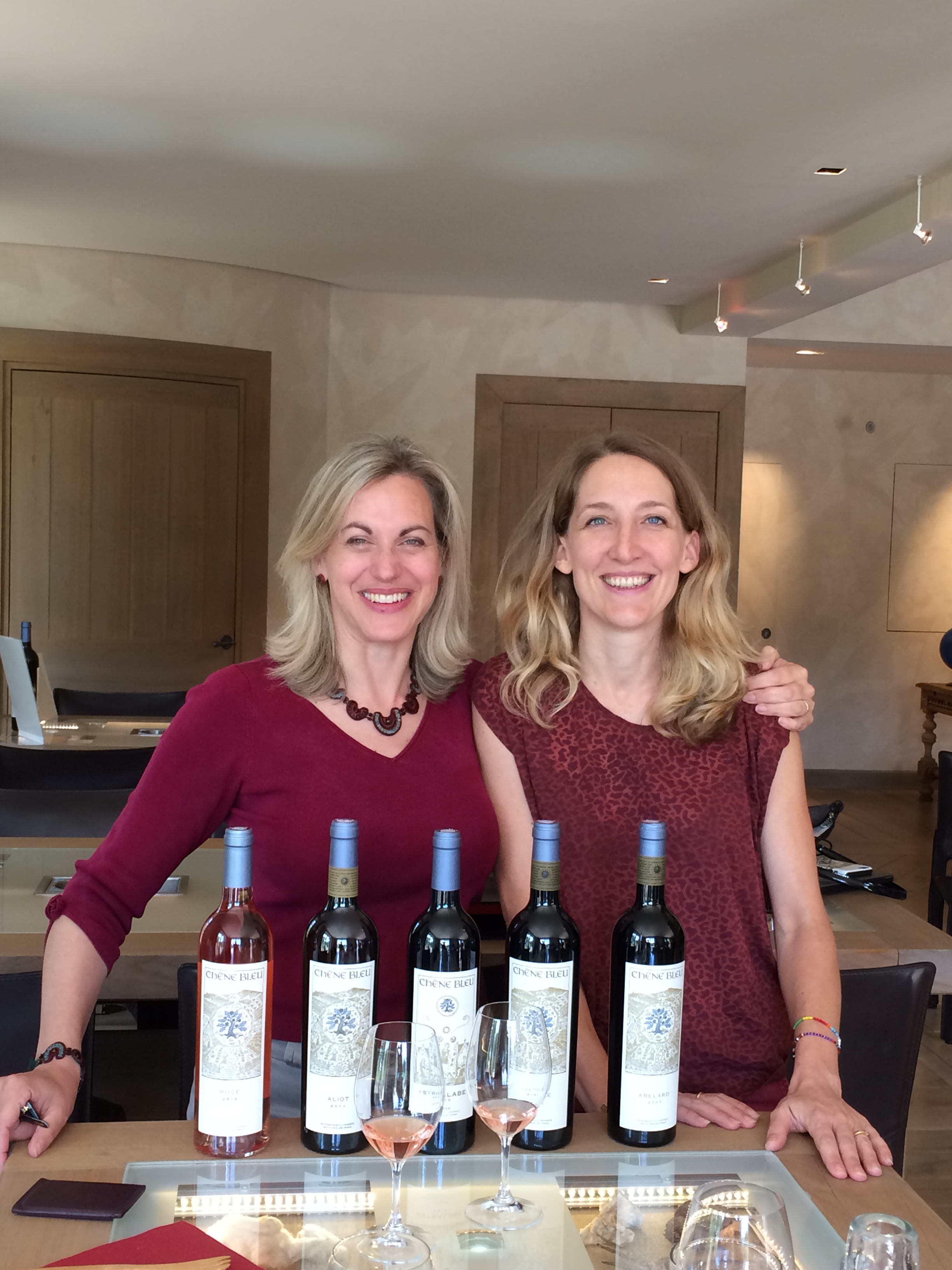
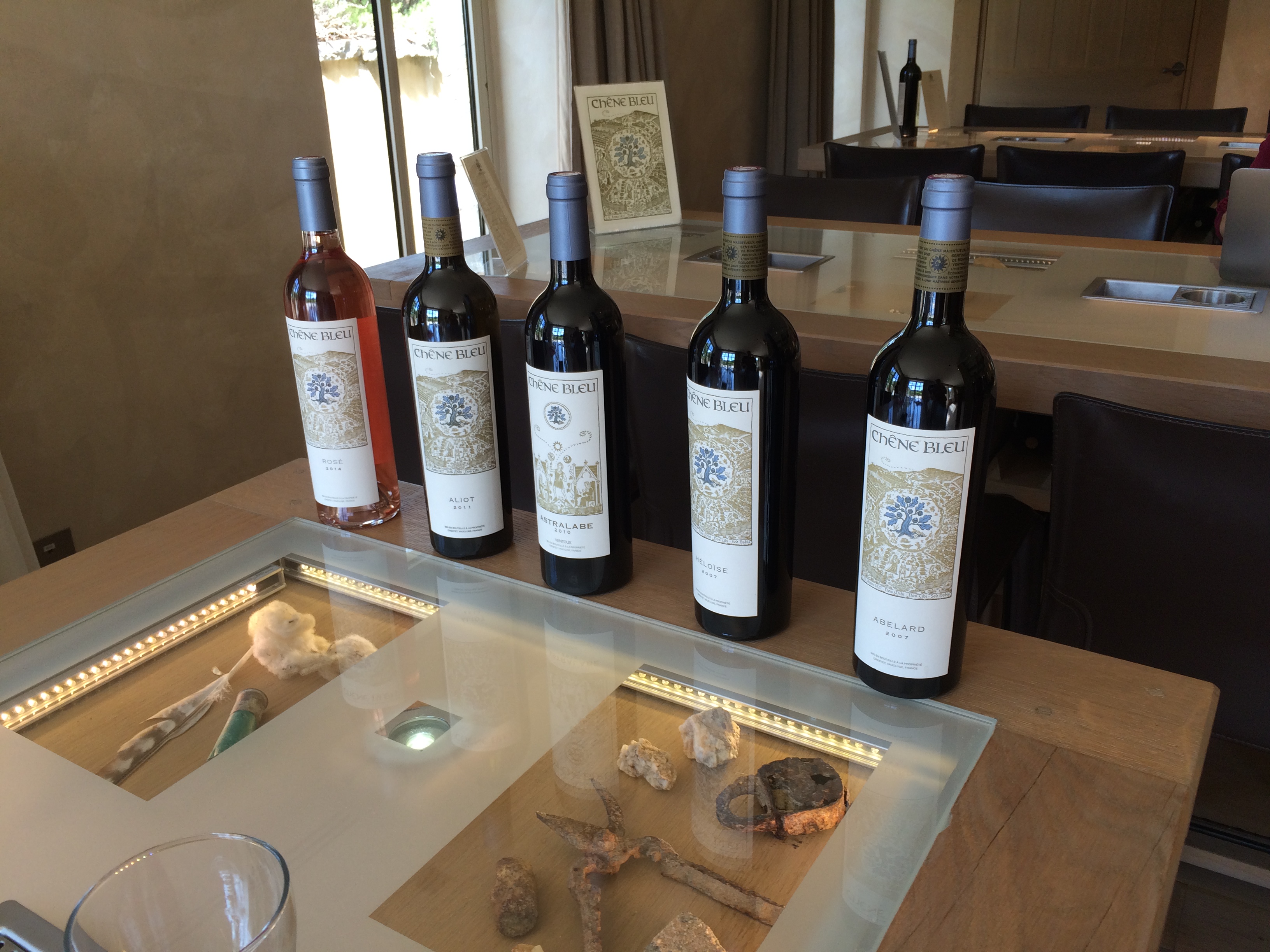
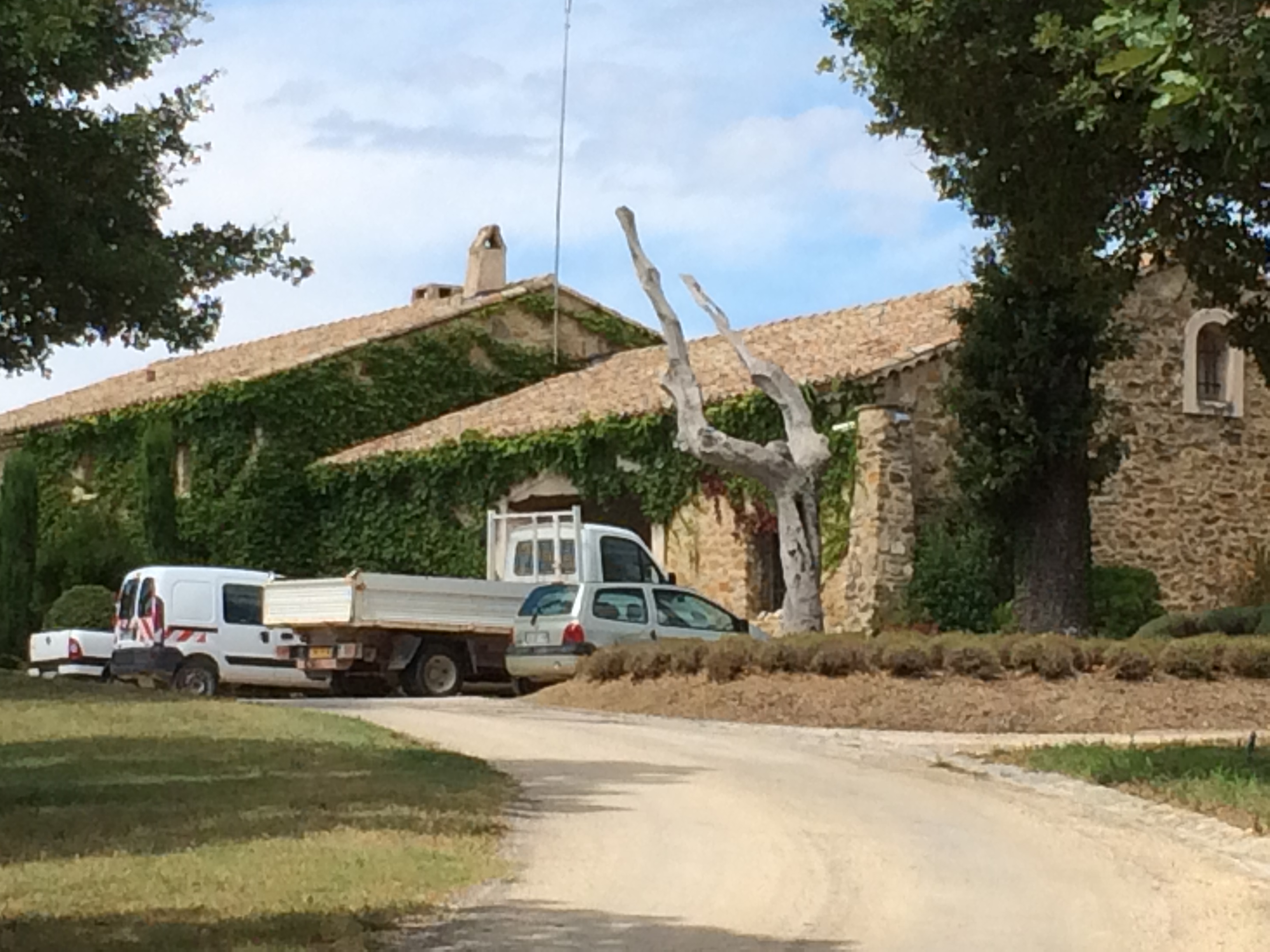
Then a long drive through he region to La Verrière, in Crestet up on a mountain, where we had a wonderful lunch, a conversation with the owner (Nicole Rolet who co-owns with her husband, Xavier) and the winemaker, and tasted the award winning Chene Bleu Rhône wines (LINK); then we had a complete tour of the facilities. This is one of the most beautiful wine estates I have ever seen in France, and after speaking with the principals, I can see why.

This team produces some excellent wines and they have created an atmosphere of success at their beautiful property. The wines were smooth, well-crafted, beautifully balanced and simply delicious. They are available in the U.S. and elsewhere, so check their website (LINK) for more information, or Google the wine names.

Note that the Chene Bleu wines are made outside of the French AOC systemNicole and Xavier felt too bound by the rules of the local AOC, so they deviated, and it has been a battle for acceptance. Of course, the wines speak for themselves and have received numerous awards and recognitions.

2015-08-14 13.22.06
Owner Nicole Rolet, our guide, Valentina, and the wines of Chêne Bleu at Domaine de la Verrière.
2015-08-14 12.44.31
The Chêne Bleu (Blue Oak) at Domaine de la Verrière – painted with copper paint.
2015-08-14 12.49.25
The wines of Domaine de la Verrière, labeled Chêne Bleu.

2015-08-14 12.45.53

2015-08-14 14.57.37
Me and the Winemaker, Jean-Luis Gallucci.

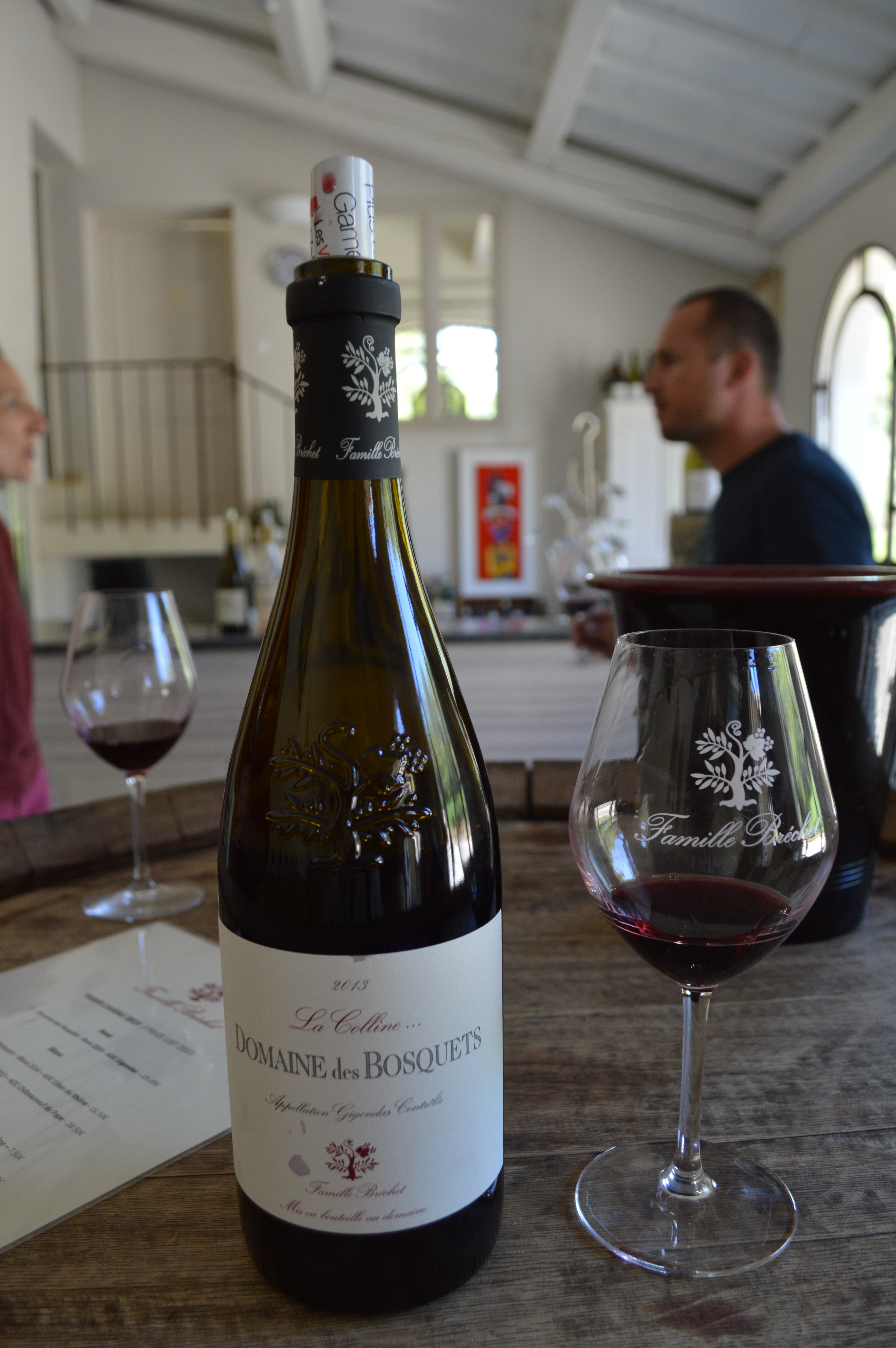
Then we were off to Gigondas, another storied region, for a tasting at Domaine des Bosquets (LINK), owned by the same family as Chateau de Veudieu. We tasted several wines with the owner/winemaker at this location as well. Winemaker Julien Bréchet hosted our tasting. The Gigondas is very similar to Châteauneuf-du-Pape, with a focus on Grenache and Syrah as the primary varietals. The main difference is the type of soil – less gravely and with more limestone and sand than Châteauneuf-du-Pape, plus a higher elevation with more verticality to the vineyards. The wines at Domaine des Bosquets were similar in style to those from Chateau de Veudieu – smooth, well-structured and elegant. The Gigondas is a great wine region.

DSC_0453
2014 Domaine des Bosquets Blanc – 80% Grenache – 20% Roussane – This white is made on the high elevation plot called “Cheval Long”. Handpicked, and vinified in oak barrels, only several cases are released.
DSC_0459
2013 Domaine des Bosquets Rouge cuvée « Le Lieu dit… » – The laying down wine from the estate’s celebrated plot, vinified and matured pure. This is a Grenache in all its splendor, in turn opulent, soft, elegant and blessed with beautiful length on the palate.
DSC_0460
2013 Domaine des Bosquets Rouge cuvée « La Colline… » – This parcel was planted into the rocks by our ancestors. It overlooks the estate and stretches as far as the edge of the Dentelles de Montmirail.
DSC_0462
2009 Domaine des Bosquets Rouge cuvée « Le Lieu dit… »
DSC_0466
Grace (our official photographer for the trip), Me, and Dorianne in the vineyard at Domaine des Bosquets

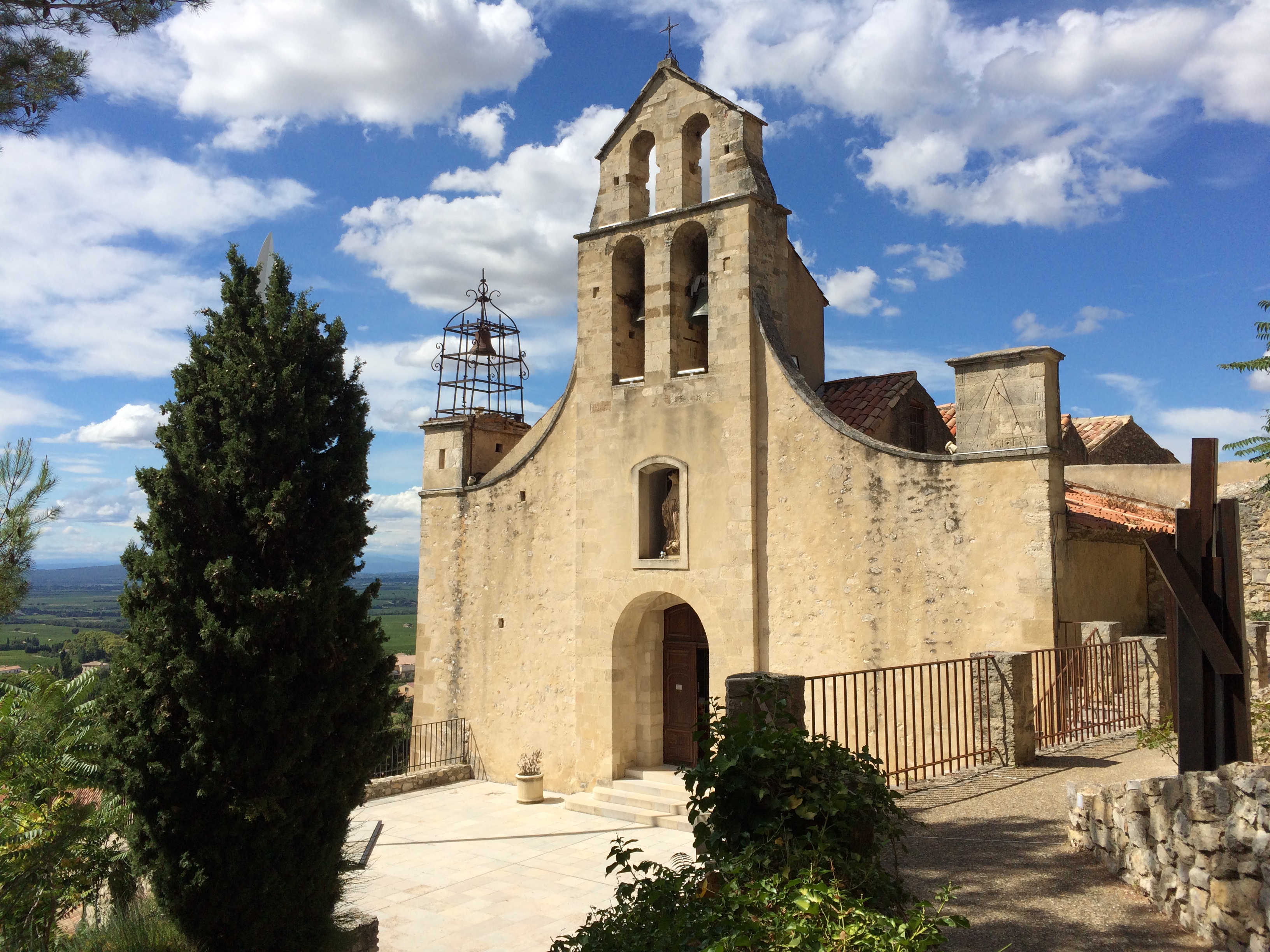
Then we explored the nearby hilltop town of Gigondas a bit before heading back to our apartment.

2015-08-14 15.42.56 2015-08-14 15.43.14
2015-08-14 15.45.27

It was an amazing day that filled my need to explore somewhat more n depth the areas we visited and to learn more about the wines. We made purchases at every stop! This is a very rich region, part of the overall Rhône Valley Region, so there is much, much more to explore. So we will have to do some more exploring on this trip, and we will have to come back.

And again, I cannot give enough praise to Valentina of MistralTour.fr (LINK) – she is a professional and makes your time together very enjoyable, while giving you as much, or as little inside information as you would like. And her prices really are a bargain.

UFO’S, CHATEAUNEUF-DU-PAPE AND A CALIFORNIA CONNECTION

Since we are staying very near Avignon in southeastern France, an article on the nearby Châteauneuf-du-Pape Region, where we will be visiting soon, caught my eye. It’s about a UFO scare in France in the 1950’s that led to some very unusual legislation being passed in Châteauneuf-du-Pape. There is also a link to one of my favorite California wines – Bonny Doon Cellar’s Le Cigare Volant (LINK), which derives its name from that legislation.

The article is from the site FWx and originally appeared on Vinepair.com

(LINK TO ARTICLE)

A quote from the article: “Châteauneuf-du-Pape, located in the Provence-Alpes-Côte d’Azur region in southeast France, is one of the most celebrated wine producing villages in all of France. It also has one of the wackiest wine laws in the world, one borne out of 1950s UFO hysteria.”

“THE BEST RESTAURANT IN THE WORLD:” COPENHAGEN’S NOMA – PART 4: BACKSTAGE AT NOMA AND SOME COMMENTARY

Noma, the Copenhagen restaurant that has been voted “The Best Restaurant in the World” (LINK) over and over, was the site of a recent visit by Dorianne, two friends, and me recently. Here are the links to the first three installments of the series: (LINK TO PART 1) (LINK TO PART 2) (LINK TO PART 3).

This post, the final installment in the series, covers the post-meal tour of the facilities at Noma (LINK) and contains some commentary.

After our meal (see parts 2 & 3 of this series), it was good to stand up. We had been sitting for about two and one-half hours in a very intensive activity – eating new things, drinking new wines, talking about the meal and doing our own internal processing without stopping. When I stood up, I realized two things – I had been sitting quite a while and I had a lot to drink. Wine with 20 courses . . .  you do the math.

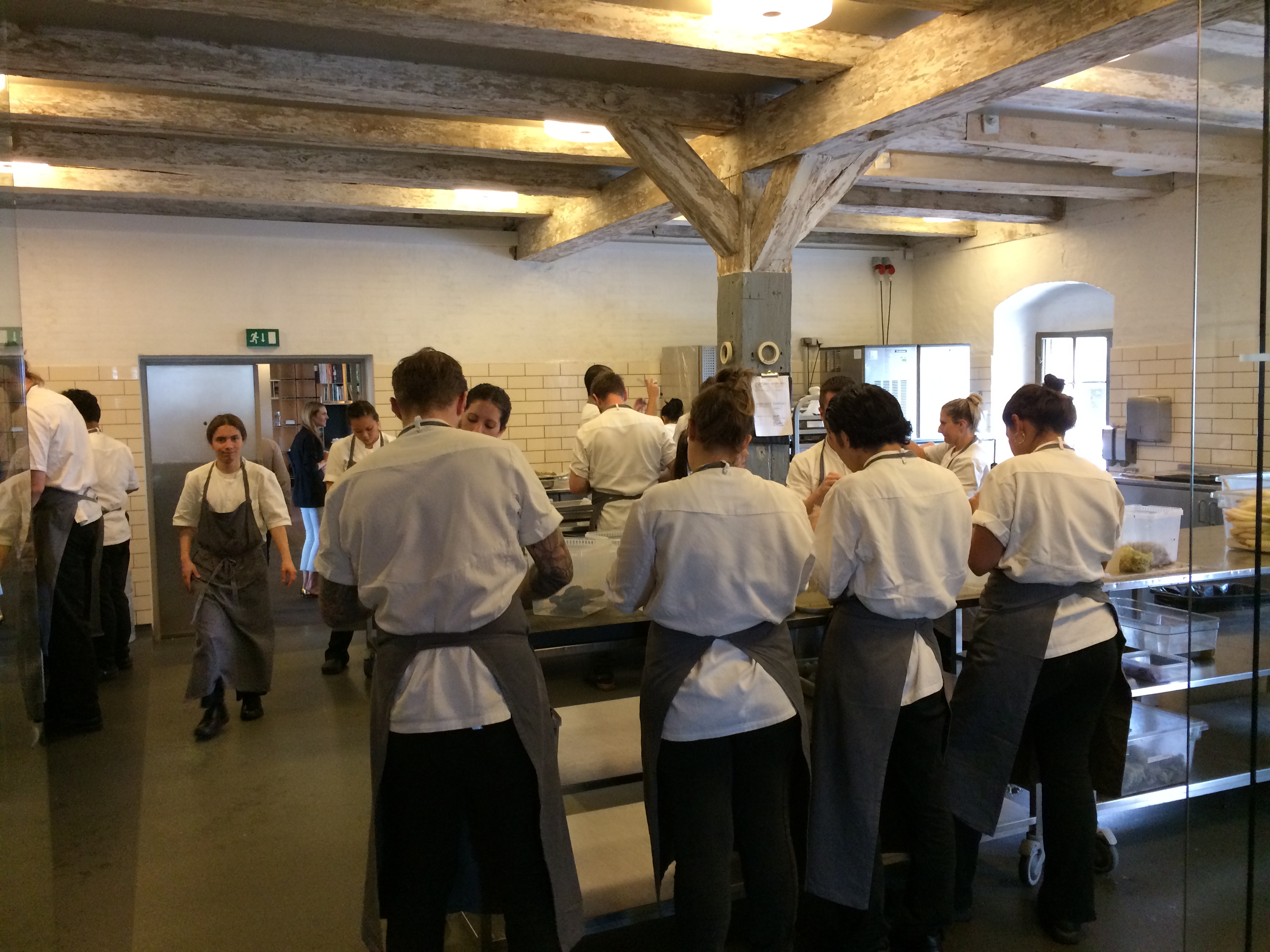
So I went to the restroom and then joined our party in the preparation kitchen, which is adjacent to and visible from the dining room. The tour, being guided by a young woman who is a chef at Noma (she said that she started as an intern a few years back. She is in her early 20’s, and YES, she knows – or says she knows – what an advantage that is for her). I did not get this young woman’s name, but I am sure that I will be seeing her face in a future foodie magazine as a star chef someplace.

2015-07-22 15.35.08
Assembling the Forest Flavors and Chocolate Desserts.
2015-07-22 15.35.19
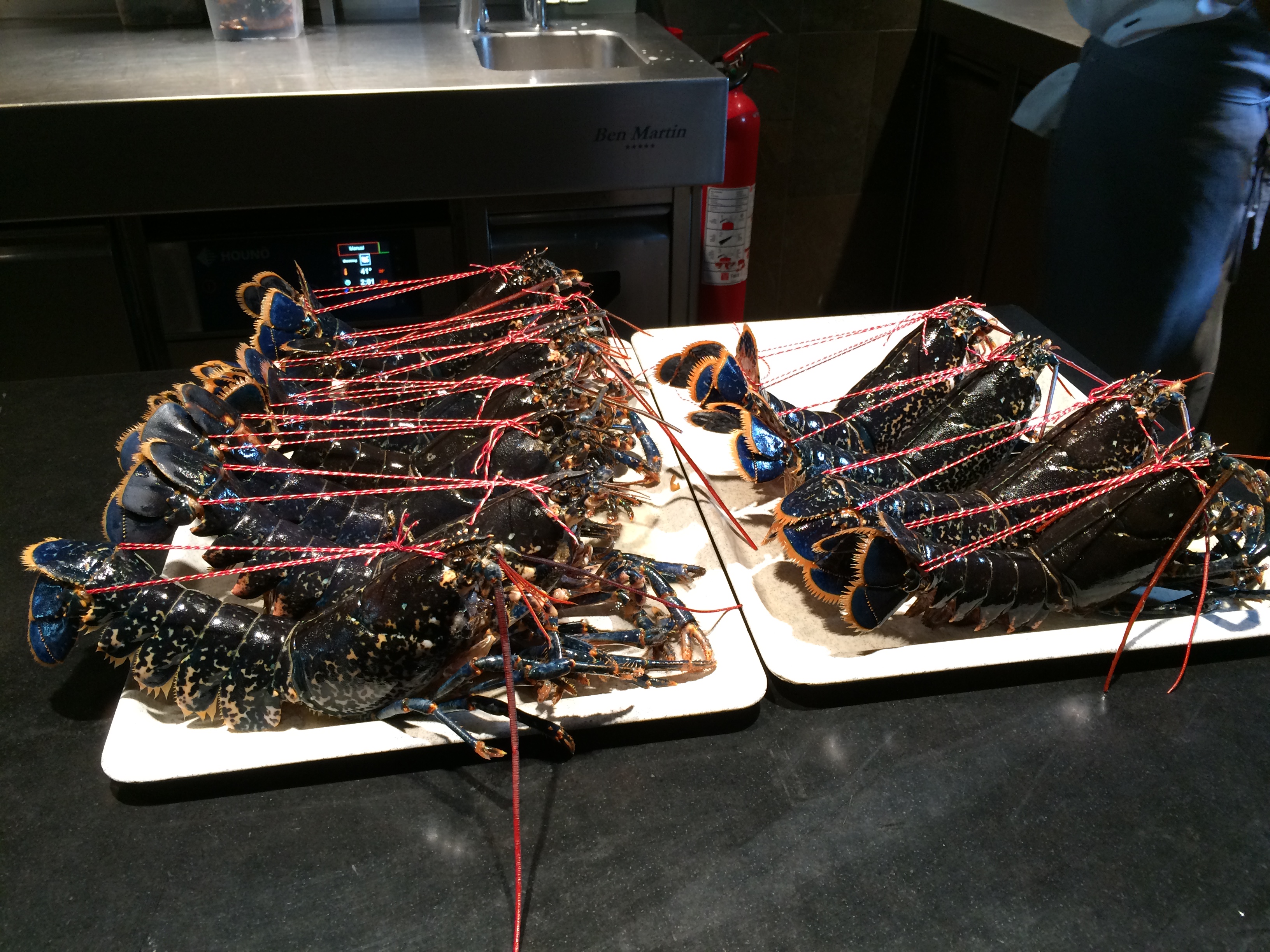
North Sea Lobsters all in a Row.
2015-07-22 15.35.39
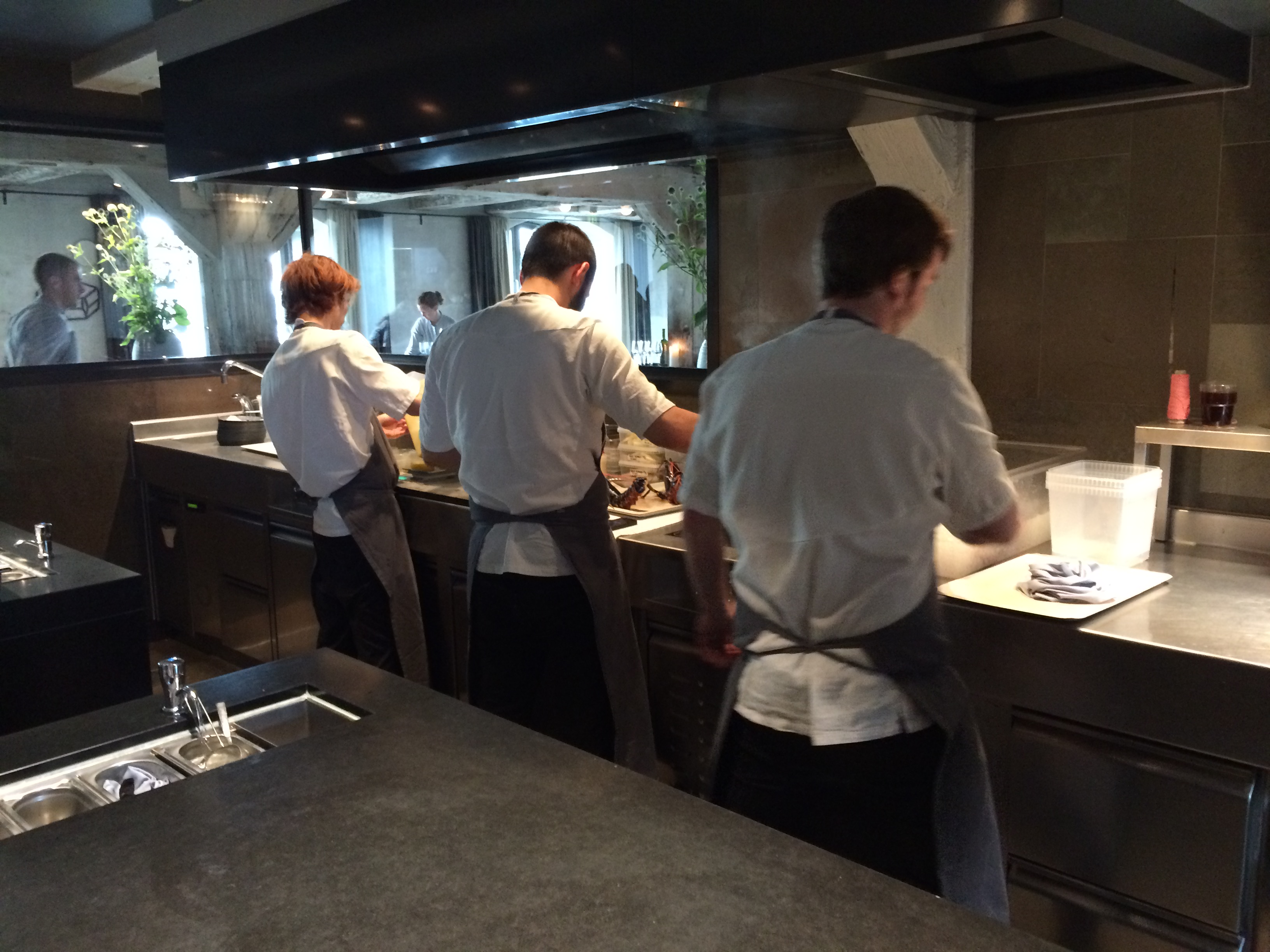
Presentation Kitchen Activity.
2015-07-22 15.35.53
Getting the Egg Liqueur Ready.

This first kitchen is where things are prepared to be served at the table and where some of the cooking is done.

2015-07-22 15.39.41
Our Young Chef Tour Guide Showing us Around.

Then we went out back of the restaurant to the Laboratory.

That’s right. The LABORATORY.

2015-07-22 15.42.11
The Laboratory Facility.
2015-07-22 15.43.11
Various Plants, Molds, etc., Being Tested for Various Qualities. All Very Mysterious.
2015-07-22 15.43.45
Testing How Certain Berries Age.

Here they try things out – there are all kinds of experiments going on to test various ingredients and what happens to them over time in various marinades, and under various conditions, etc. A very interesting part of the operation.

Upstairs, a private dining room that seats up to twenty. You can rent the room for a lot of money (like thousands of Euros) and then PAY FULL PRICE for your Noma meal!

2015-07-22 15.47.11
The Private Dining Room on the Second Floor.

The Book Shelves of Noma.

2015-07-22 15.38.51 2015-07-22 15.48.14

Action in the hallway: Ironing uniforms.

2015-07-22 15.51.24

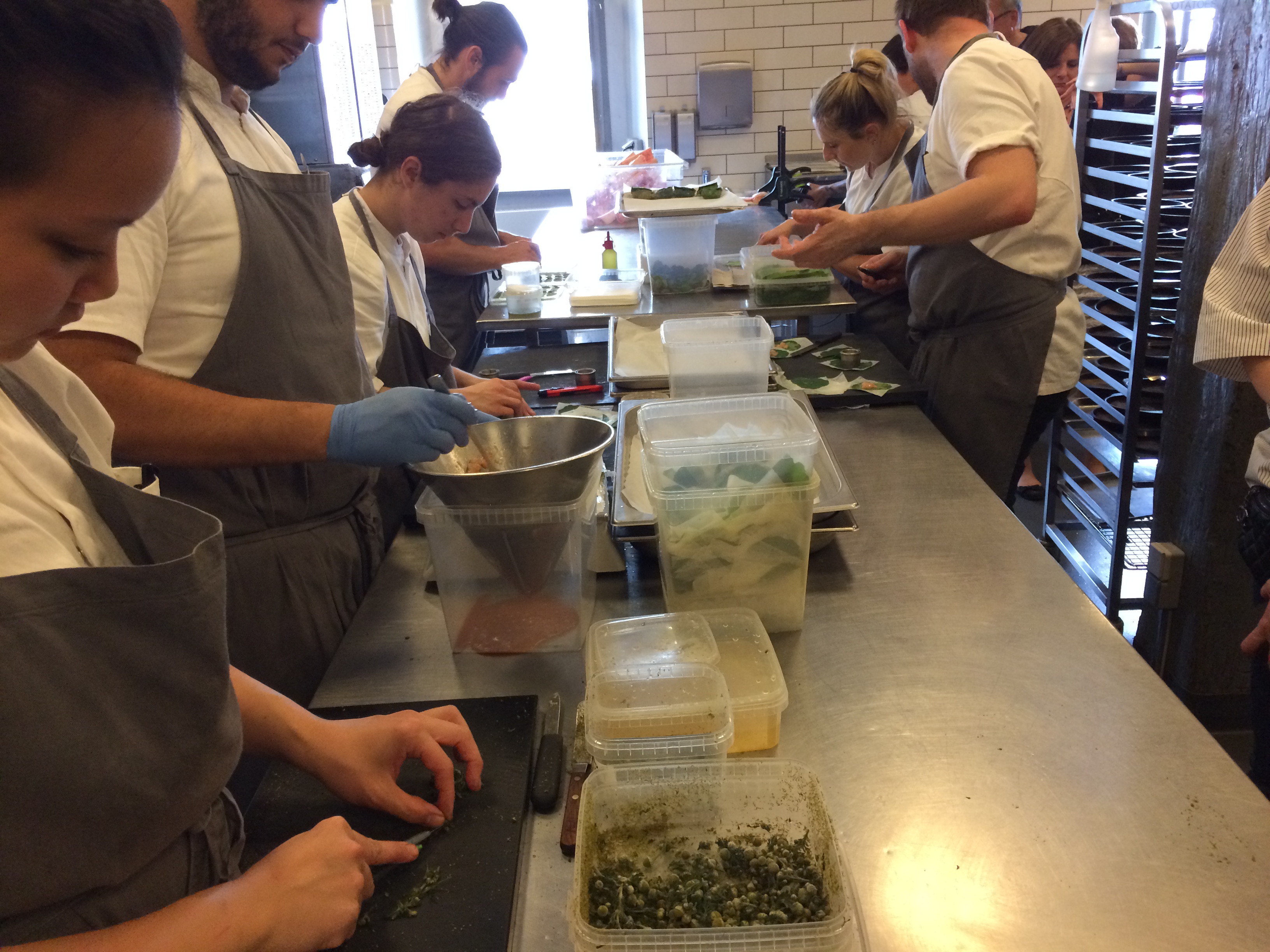
The Prep Kitchen – where the action is.

2015-07-22 15.53.27
Cutting Frozen Bones for the Bone Marrow Dish.
2015-07-22 15.52.56
Reindeer Moss.
2015-07-22 15.50.22
The Prep Kitchen Staff – Keep in Mind that Noma Seats 45 or so.

2015-07-22 15.55.11

The Staff Room – where cooking, exploring recipe ideas, relaxing, changing clothes, etc. happens. There is a smaller kitchen, an herb garden, and lots of things stored – mushrooms, etc. Here you really get a sense of the Noma Culture, which is think is the glue that makes Noma what it is – one of the best restaurants in the world. You can see that the people who work here have accepted an ethos that they have had a hand in co-creating. René Redzepi, Owner and Founder and Chef de Cuisine is Daniel Giusti were not on the premises that day. They have brought a powerful culture of creativity, innovation, sustainability and success that seems to permeate the staff in a very good way. To work at Noma is to believe in this ethos, even if your intention is to get some experience and move on. While you are there, you are a true believer. Here is a link a partial list of Noma Alumni (LINK).

2015-07-22 15.56.30
The Kitchen in the Staff Room.
2015-07-22 15.57.16
The Kitchen Garden in the Staff Room.
2015-07-22 16.03.45
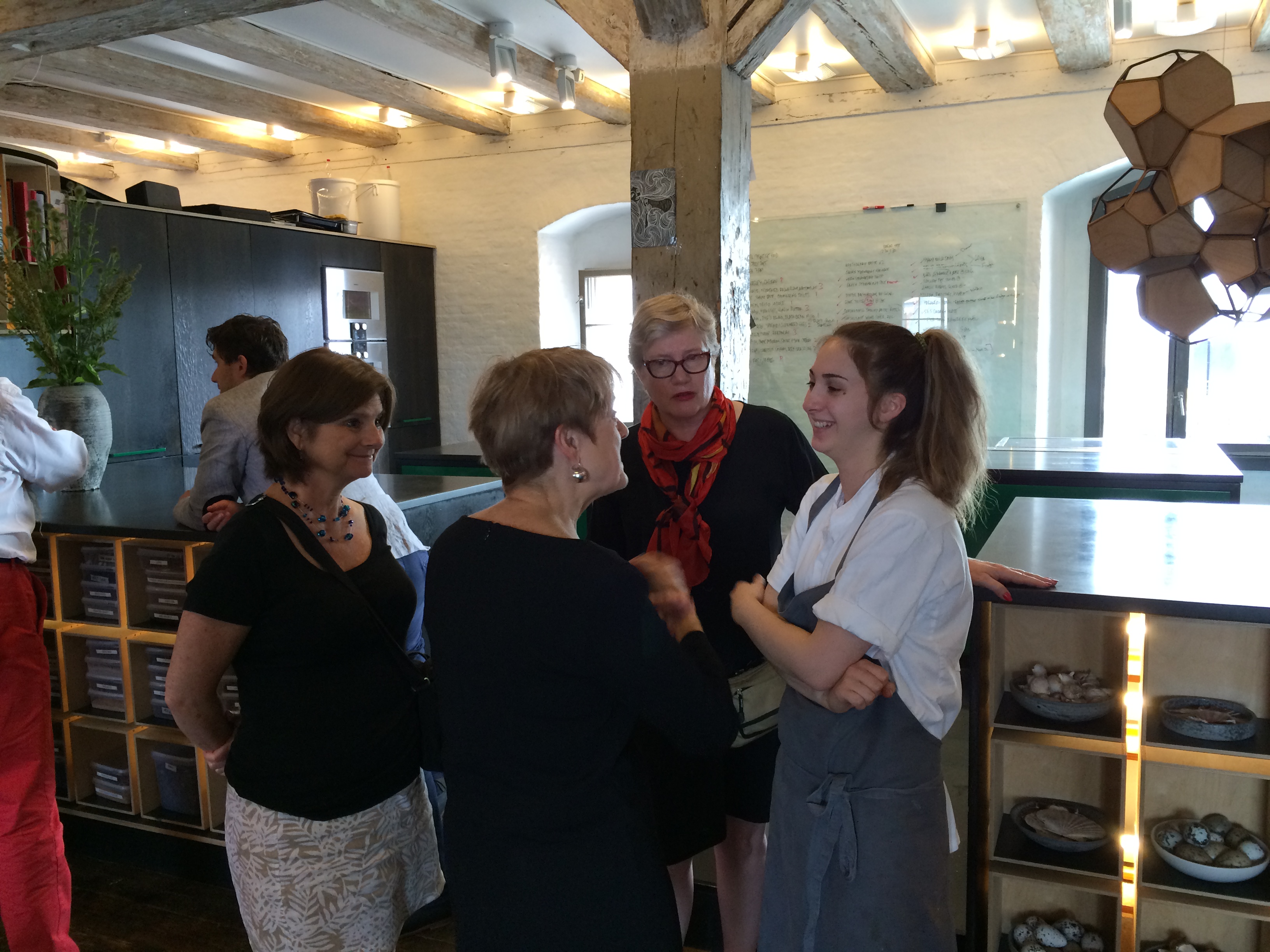
Our Group has Lots of Questions for our Guide.

2015-07-22 15.56.11 2015-07-22 16.07.23 2015-07-22 16.07.32

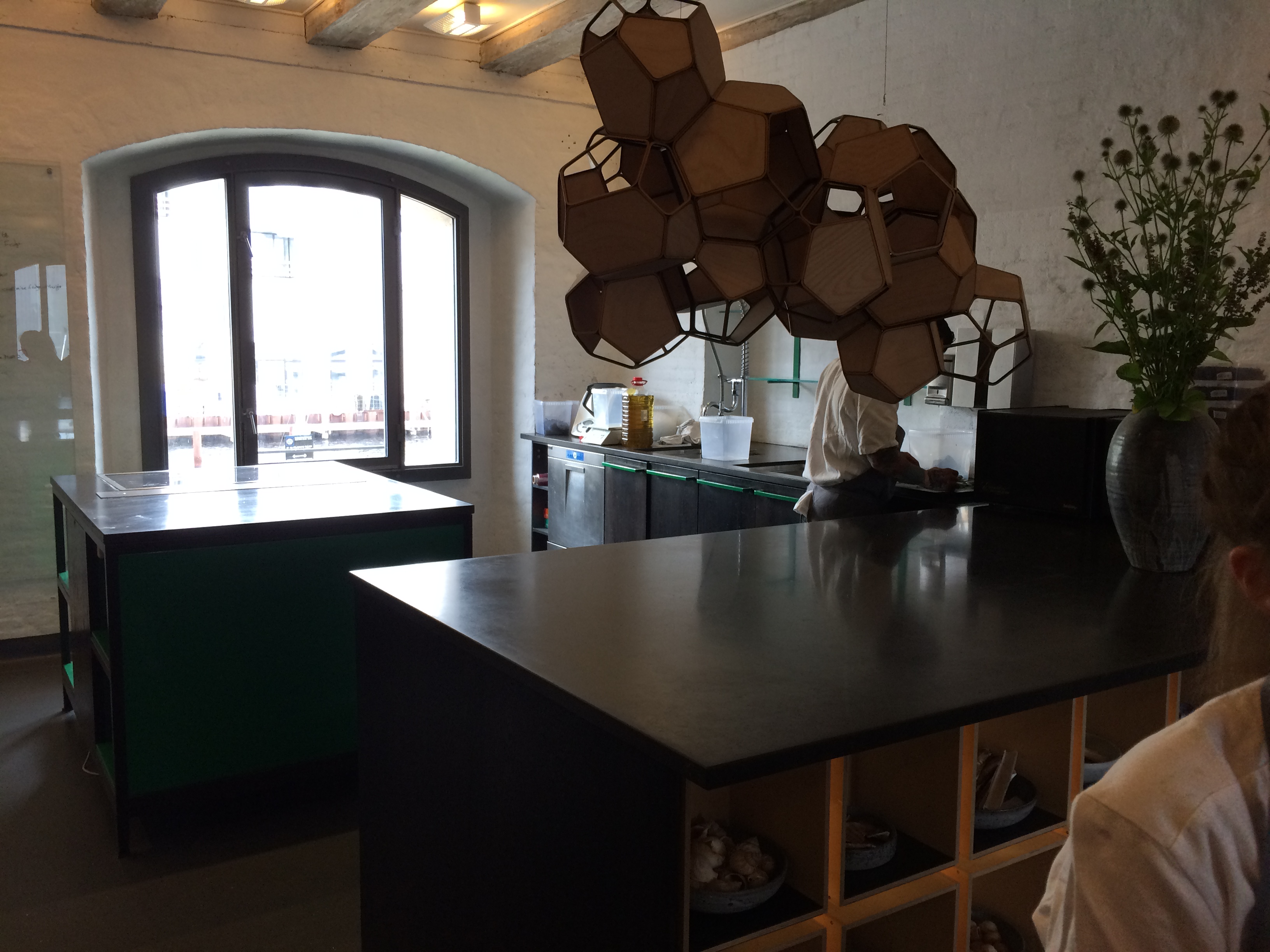
The lounge – near the entry, where you can have a drink before or after, or, I imagine, in lieu of, dinner.

2015-07-22 15.34.14
The Lounge at Noma.
2015-07-22 16.11.20
The Wine Storage in the Lounge.

So ends our tour of Noma.  On to some commentary.

Overall, this wonderful experience. While I did not like everything that I was served (probably not possible), I will say that the experience of the food was overall very enjoyable, both in tasting the dishes and in experiencing the creativity.

We were served 20 courses. My main negative about Noma is that the courses came out too quickly.

We had 20 in that time and it was too much too quickly. This is food that you want to savor – to talk about the amazing combinations of ingredients with your table mates, to take some photos (but of course!), and to taste the wine served and to experience the pairing of food and wine; then to reflect privately for a moment or two and then to share with your fellow diners your impressions and experience.

This takes time. But the next course is here!

I don’t think that this is a minor quibble. I like to savor. I don’t like to feel like they need to move me out to get the next seating in (which was not the case, as the next seating was for dinner). So please, Noma, a bit more time. I am not in a hurry when I am spending this kind of money for this kind of experience. I am sure that all of this has been figured out over time, but for me, it was not optimal in regard to truly enjoying the meal at leisure.

I read the other day of a restaurant opening in Barcelona that will serve 50 courses in two and one-half hours. I doubt I’ll be going there.

The wines at Noma were, let me say, unique (LINK TO LIST AS PDF). I have written about each and posted photos of the labels, but you probably won’t be able to find most of them – maybe one or two. I spoke with Sommelier Yukiyasu Kaneko about his choices. He said that he preferred to use only European wines, and that included a wine from Georgia in the former Soviet Union. He also clearly has a preference for young wines to accompany the fauna heavy Noma menu. All of the wines were whites. I found that the pairings worked well with one or two exceptions, and in those cases the wines were either sour or so very young as to have only rough edges, which I guess was intentional, but I did not agree with those choices.

Note that there is a lounge at Noma, where you can come for a drink or some wine before or after dinner, although you get quite a bit of wine with the paring meals – I recommend a taxi or a designated driver. We walked, and got a bit lost on the way back to our apartment.

How much did it cost? The wine pairing meal was 3100 DKK or about $450 per person. the juice pairing was 2500 DKK or about $367. Expensive, I know. It was Dorianne and my 10th Wedding Anniversary gift to one another, so a very special occasion.

Will I go again? Not sure that I need to, but if the opportunity presents itself – I will strongly consider it. I’d like to see what they do next. Have you been to Noma? Your comments are appreciated.

Photos and text, Copyright 2015 by Jim Lockard

“THE BEST RESTAURANT IN THE WORLD:” COPENHAGEN’S NOMA – PART 3: THE LAST HALF OF THE MEAL

Noma, the Copenhagen restaurant that has been voted “The Best Restaurant in the World” (LINK) over and over, was the site of a recent visit by Dorianne, two friends, and me recently. Here are the links to the first two installments of the series: (LINK TO PART 1)  (LINK TO PART 2).

This post covers the second half of our 18 (actually 20) course meal and wine pairing.

Course #10:

2015-07-22 13.22.07
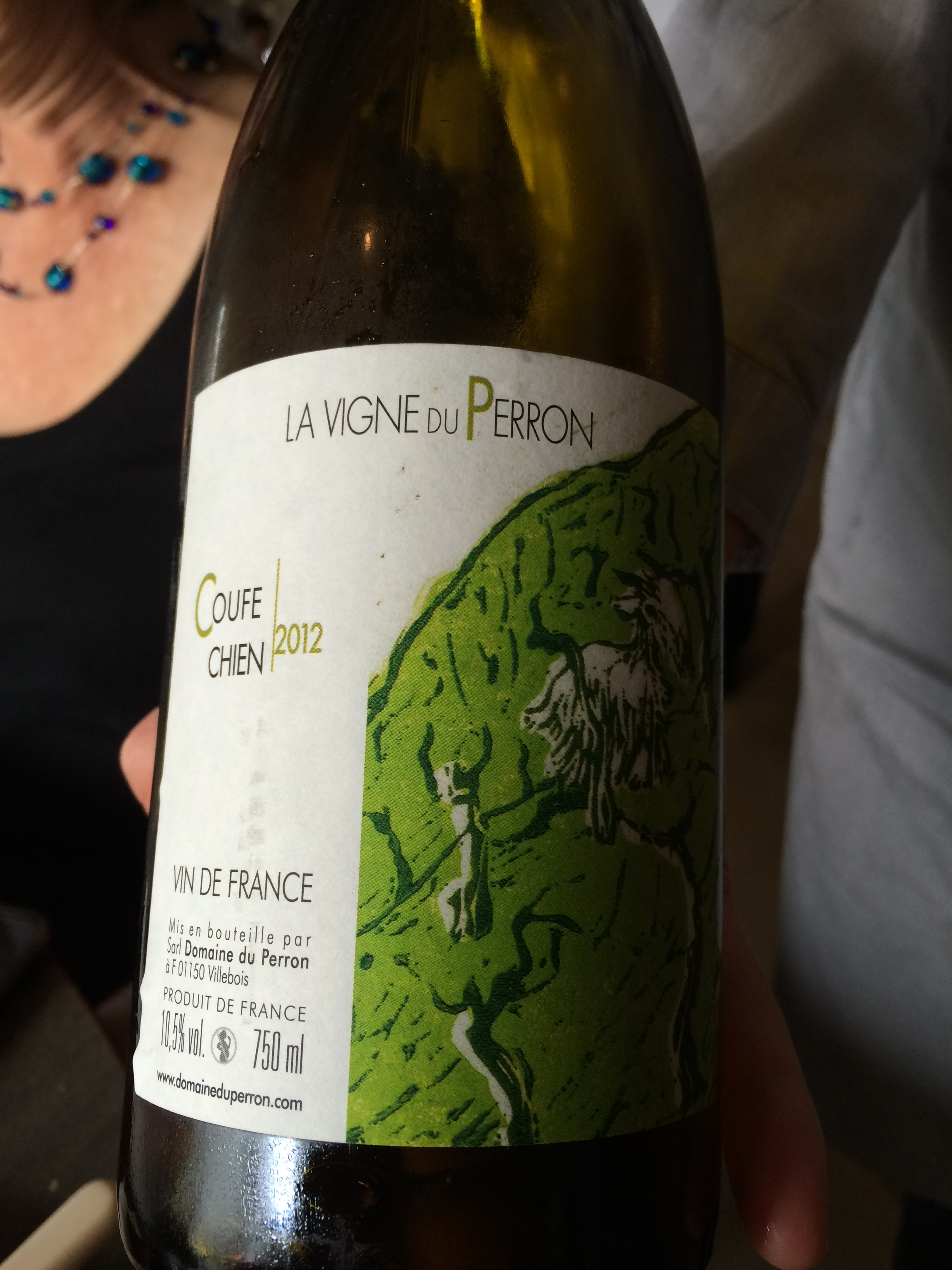
2012 Coufe Chien, Domaine du Perron, Bugey – Savoie
2015-07-22 13.22.44
Mahogany Clam and Grains.
2015-07-22 13.22.48
Mahogany Clam and Grains.

Our wine for this and the next course is a 2012 Coufe Chien, Domaine du Perron, Bugey – Savoie, Chardonnay (LINK to the 2011) from the Rhone Valley. Young and high in acid with an aromatic nose and hints of citrus, it was a perfect accompaniment to the Mahogany Clam.

The single clam was mounted on a bowl of wet stones (which we were advised not to eat). The uncooked clam meat was sitting in a marinade with a dusting of samfire (LINK) around the top of the shell. The dish was to eaten with a wooden fork. It was delicious – I could have eaten the rest of the dozen, but alas, it was not to be.

Next:

2015-07-22 13.31.40
Monkfish Liver on Toast.
2015-07-22 13.31.45
Monkfish Liver on Toast.

This course, Monkfish liver, cooked then chilled and served very cold on toast, sitting atop a folded napkin. This was a particularly succulent dish, with a great texture and flavor. The Coufe Chien was a beautiful match for this dish. Eaten with fingers.

Next:

2015-07-22 13.43.49
White Asparagus, Goosefoot, and Barley.
2015-07-22 13.44.28
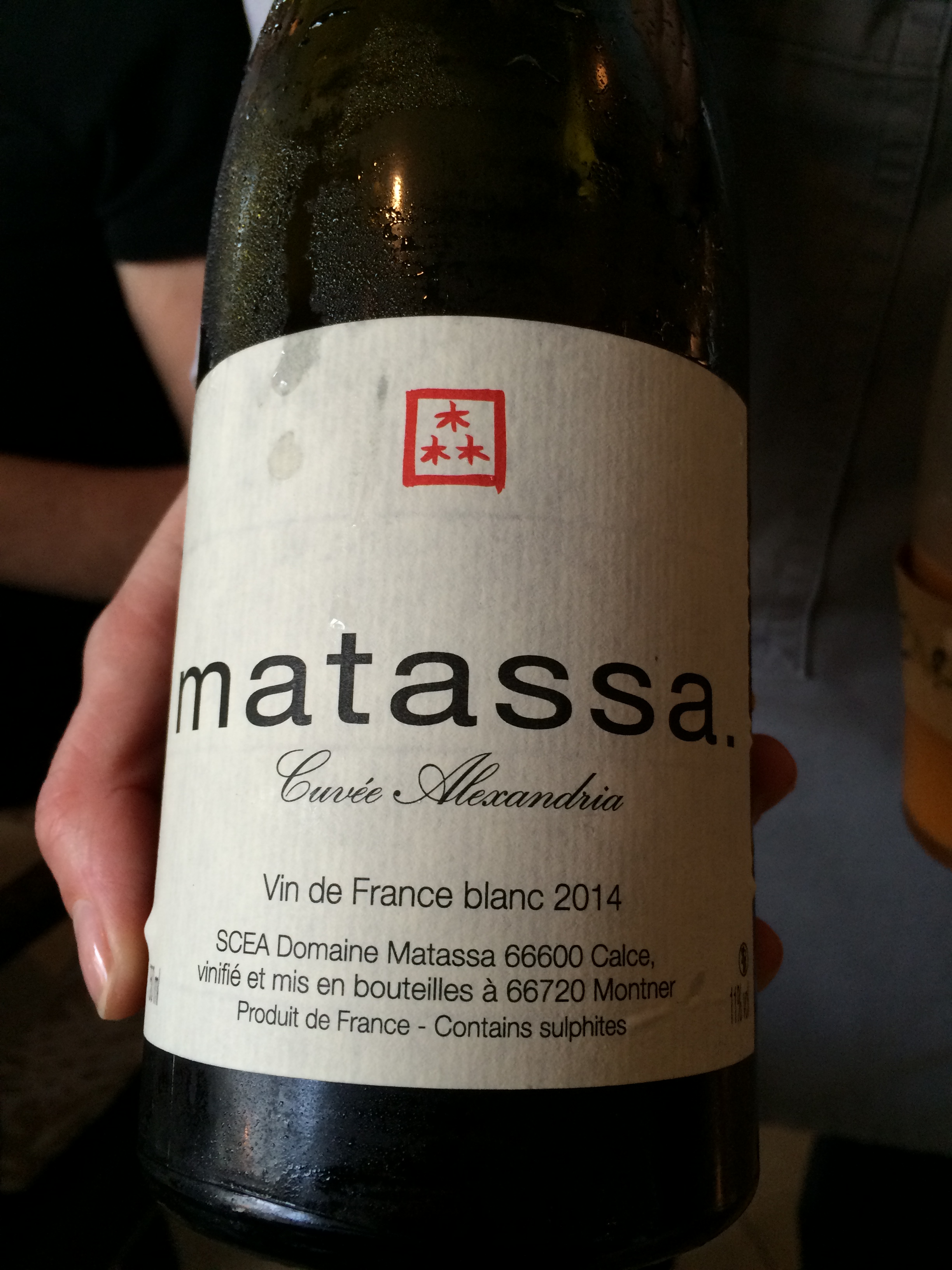
2014 Cuvée Alexandria, Domaine Matassa, Calce – Cote Catalan

Our next wine, a 2014 Cuvée Alexandria, Domaine Matassa, Calce – Cote Catalan (LINK – click on Cuvée Alexandria), is described as a “raw wine,” made from a grape called Muscat d’Alexandria. You won’t find much about this wine, from the Catalan hills in extreme southwest France, online, and I doubt that you will be finding this wine in your local wine shop. The wine is unfiltered, very young and is very raw. I would describe it as bitter and a bit sour. Not for sipping. It reminded me of the must right after fermentation, while the wine is still in the fermentation vessel.

It was served with only one dish, a white asparagus, goosefoot (LINK), and barley plate, this one eaten with utensils. The asparagus was amazing – tender and delicious, the goosefoot and barley added notes of green sour and some texture. And, I was surprised to see that there was some justification for the wine pairing. The Cuvée Alexandria was a decent match, adding to the sour notes of the dish (you would have to like sour), and extending the flavors through a long finish. Intriguing.

For the next course, a new wine:

2015-07-22 13.50.39
The Glasses Accumulate.
2015-07-22 13.53.44
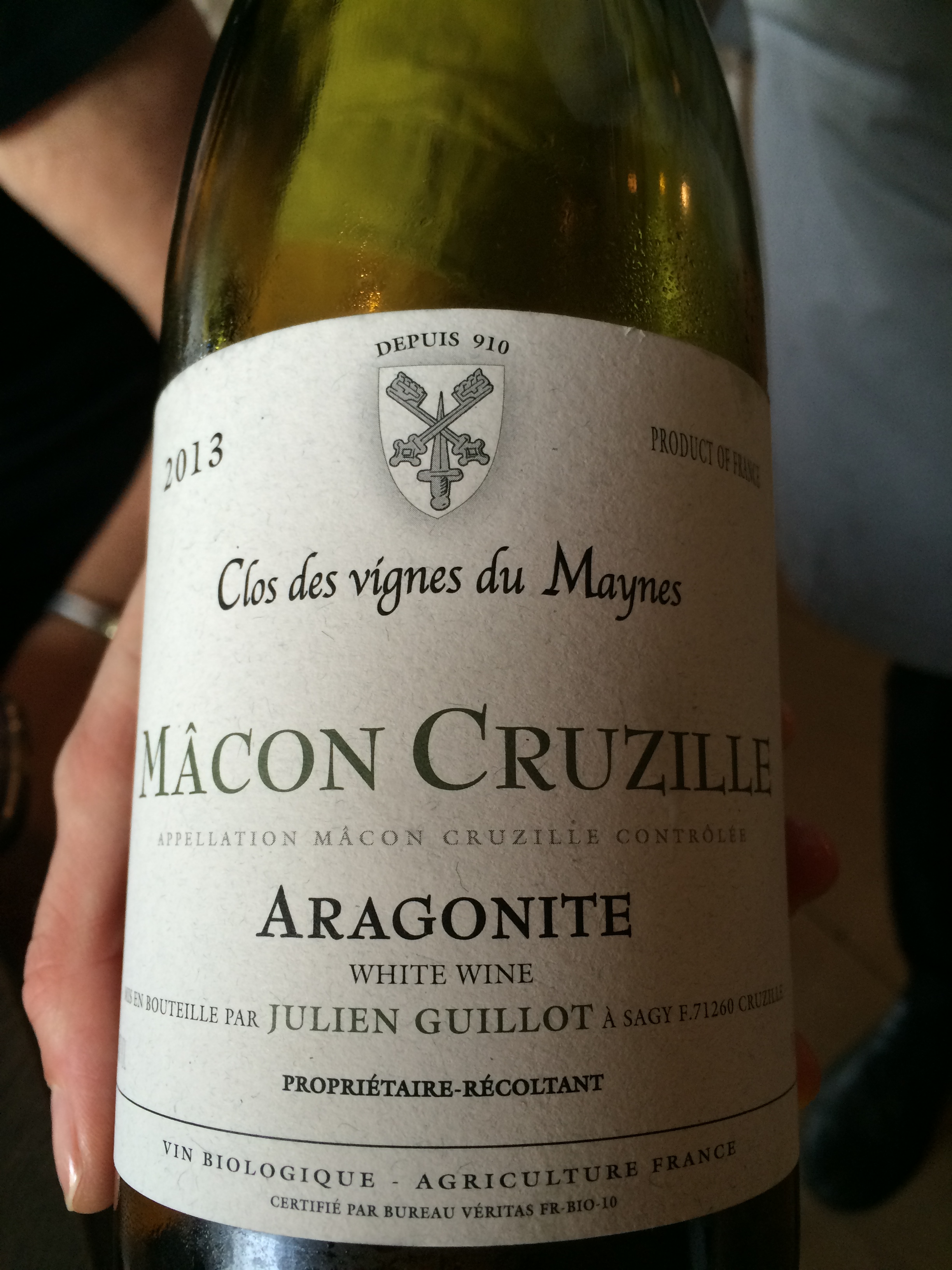
2013 “Aragonite” Julien Guillot, Cruzille – Macon
2015-07-22 13.54.19
Vegetable Flower.

The new wine, a 2013 “Aragonite” Julien Guillot, Cruzille – Macon (LINK)Burgundian Chardonnay, was a return to wine-normalcy for me. Fragrant, well-structured, and clean, the wine drank very well.

The first of two pairings with this wine was called vegetable flower. As you can see, it was nasturtium flowers in a vegetable broth. Delicious and delicate, the wine did not overpower this dish.

Then:

2015-07-22 14.01.53
Lobster and Nasturtium.
2015-07-22 14.02.06
Lobster and Nasturtium.

Lobster and nasturtium was next. A North Sea lobster tail served with nasturtium leaves attached. Paired with the Julien Guillot Chardonnay, it was one of the highlights of the meal.

Now, we enter into a bit more unusual territory:

2015-07-22 14.18.24
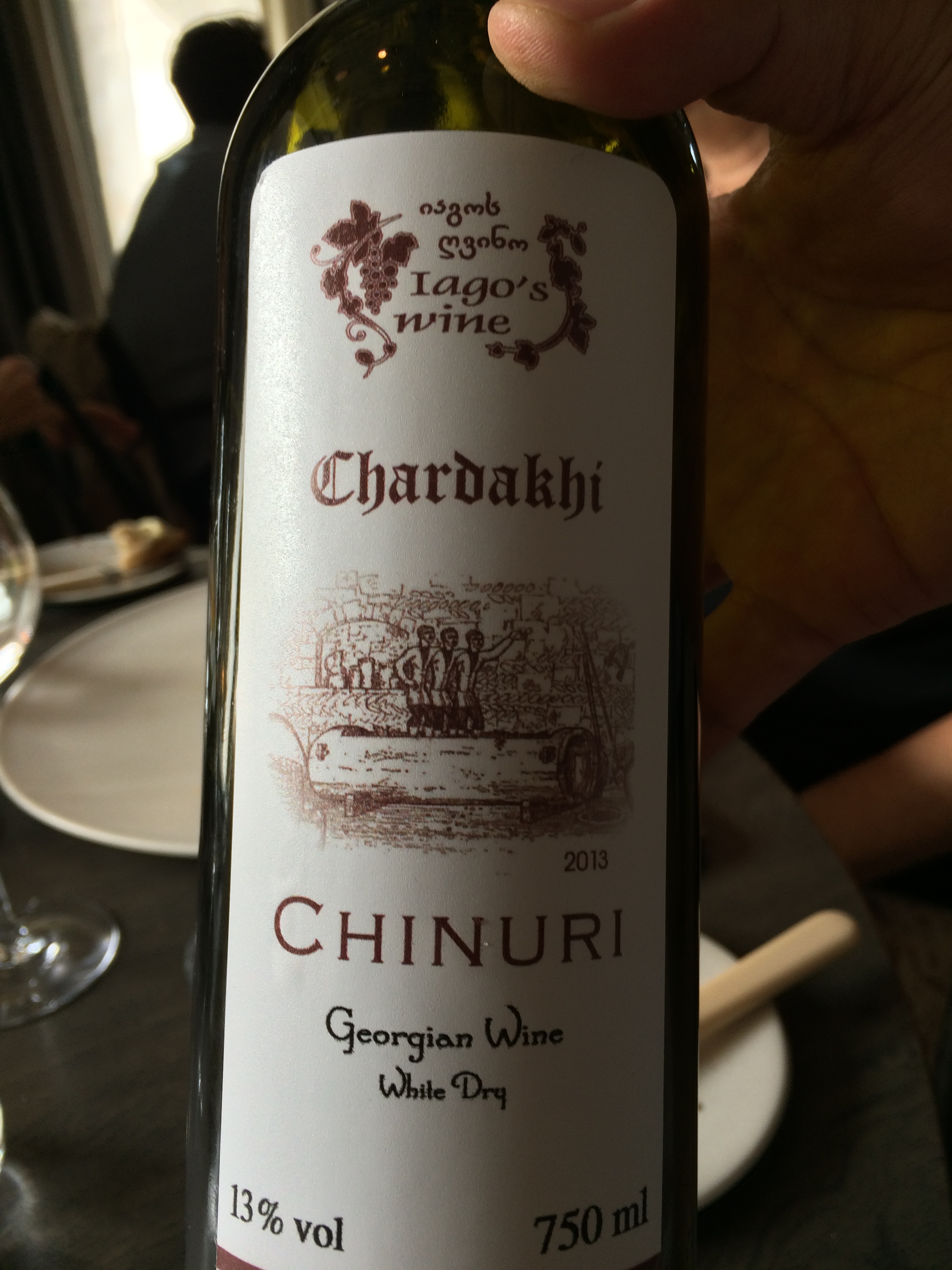
2013 Chinuri, Iago’s Wine, Chardakhi – Georgia.
2015-07-22 14.18.34
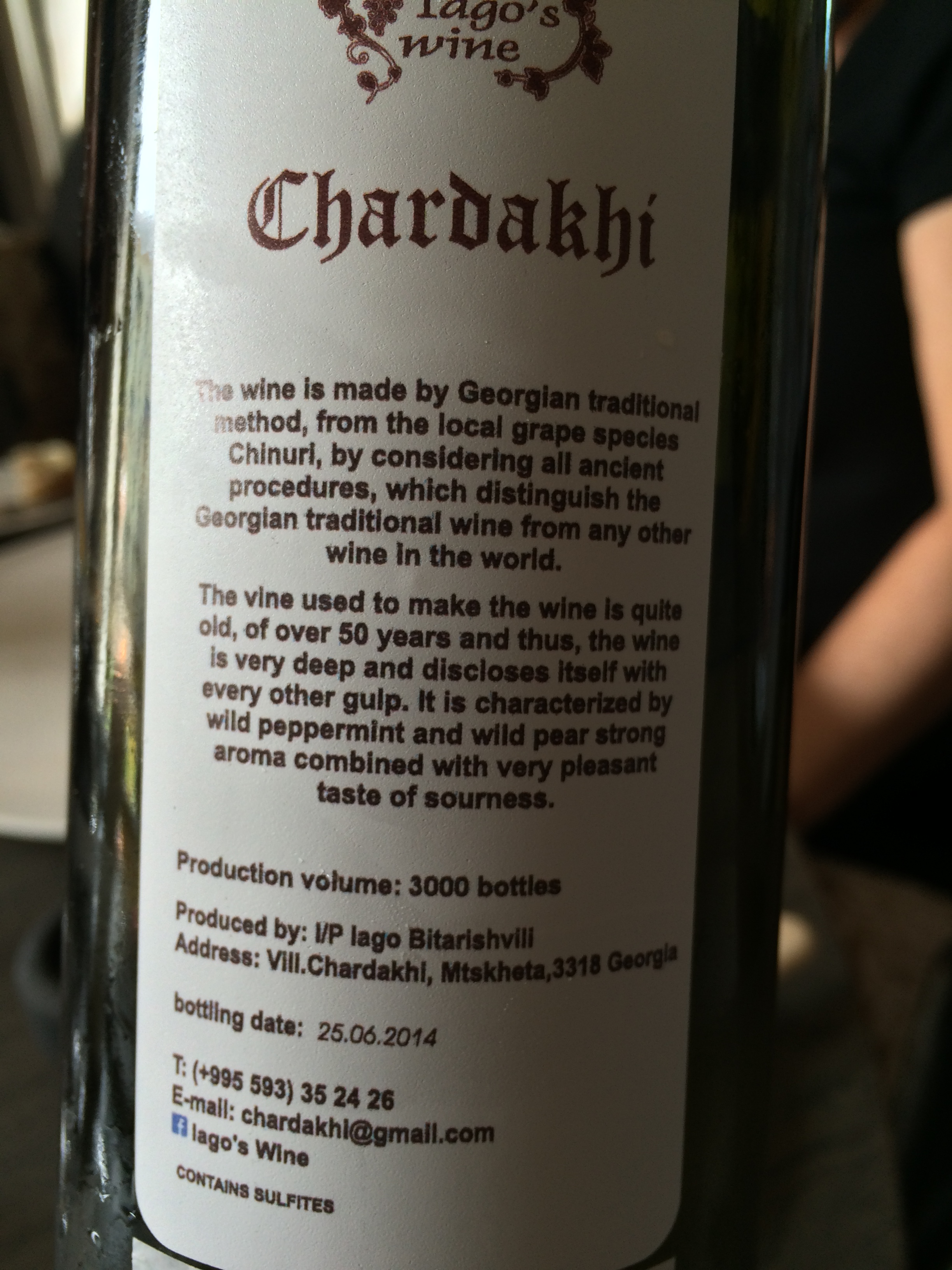
2013 Chinuri, Iago’s Wine, Chardakhi – Georgia. Back Label in English!

2015-07-22 14.21.34The next wine, a 2013 Chinuri, Iago’s Wine, Chardakhi – Georgia (LINK)was most unusual. Unfiltered, young, sour. Even more so than the Cuvée Alexandria mentioned earlier. This wine was almost unpleasant – there was wine in the mix somewhere, it was just hard to find.

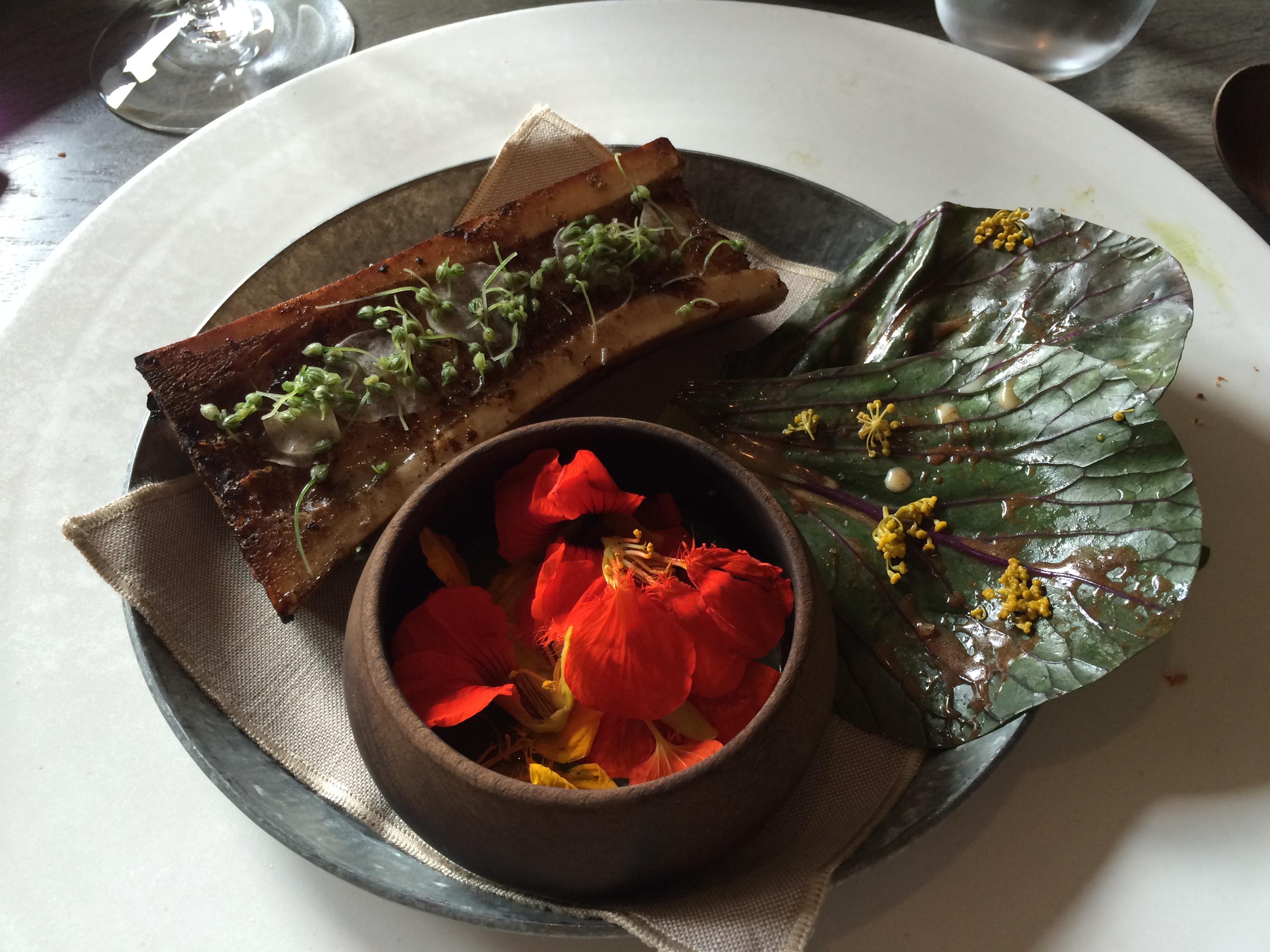
The first pairing was a dried fruit “leather” shaped into a leaf with a number of other items on it, including some garlic and grasshopper flour. It had the consistency but not the flavor of licorice and was very good.

Next:

2015-07-22 14.24.51
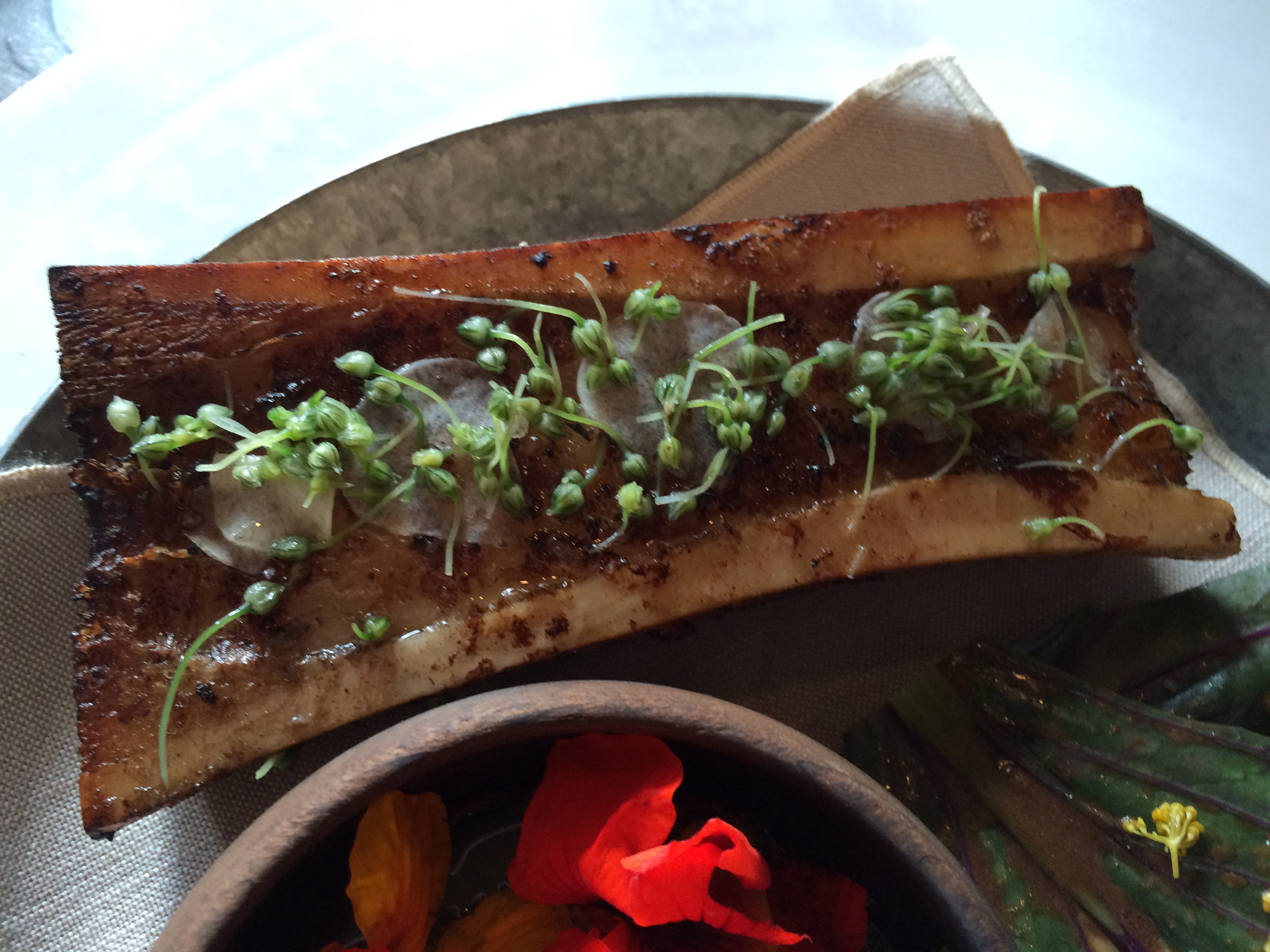
Bone Marrow with Flower Soup and Nasturtium Leaves.
2015-07-22 14.24.56
Bone Marrow with Flower Soup and Nasturtium Leaves.

Then, a dish not on our printed menu – beef bone marrow with a “soup” of flowers, and nasturtium leaves. This dish was the only one served that might have called for a red wine, but the Chardonnay did it’s job of pairing pretty well.

At this point, we were visited by the Sommelier, Yukiyasu Kaneko of Japan.

2015-07-22 14.22.09
Noma Sommelier, Yukiyasu Kaneko of Japan.

He answered our questions (I had a longer chat with him later) and explained his theory of using younger wines to compliment Noma’s unique cuisine.

Next:

2015-07-22 14.43.37
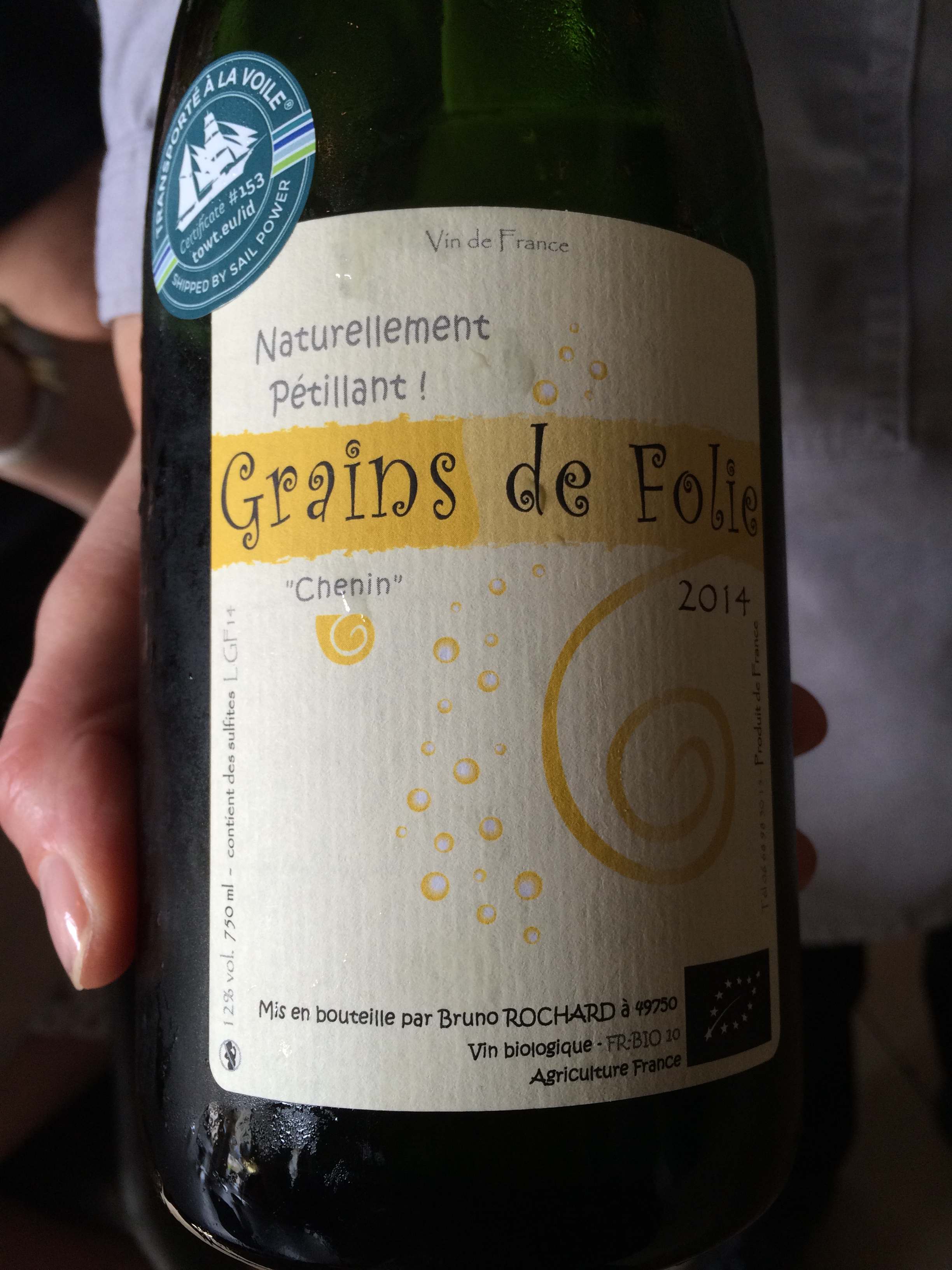
2014 Grains de Folie, Bruno Rochard, Coteaux du Layon – Loire.
2015-07-22 14.45.53
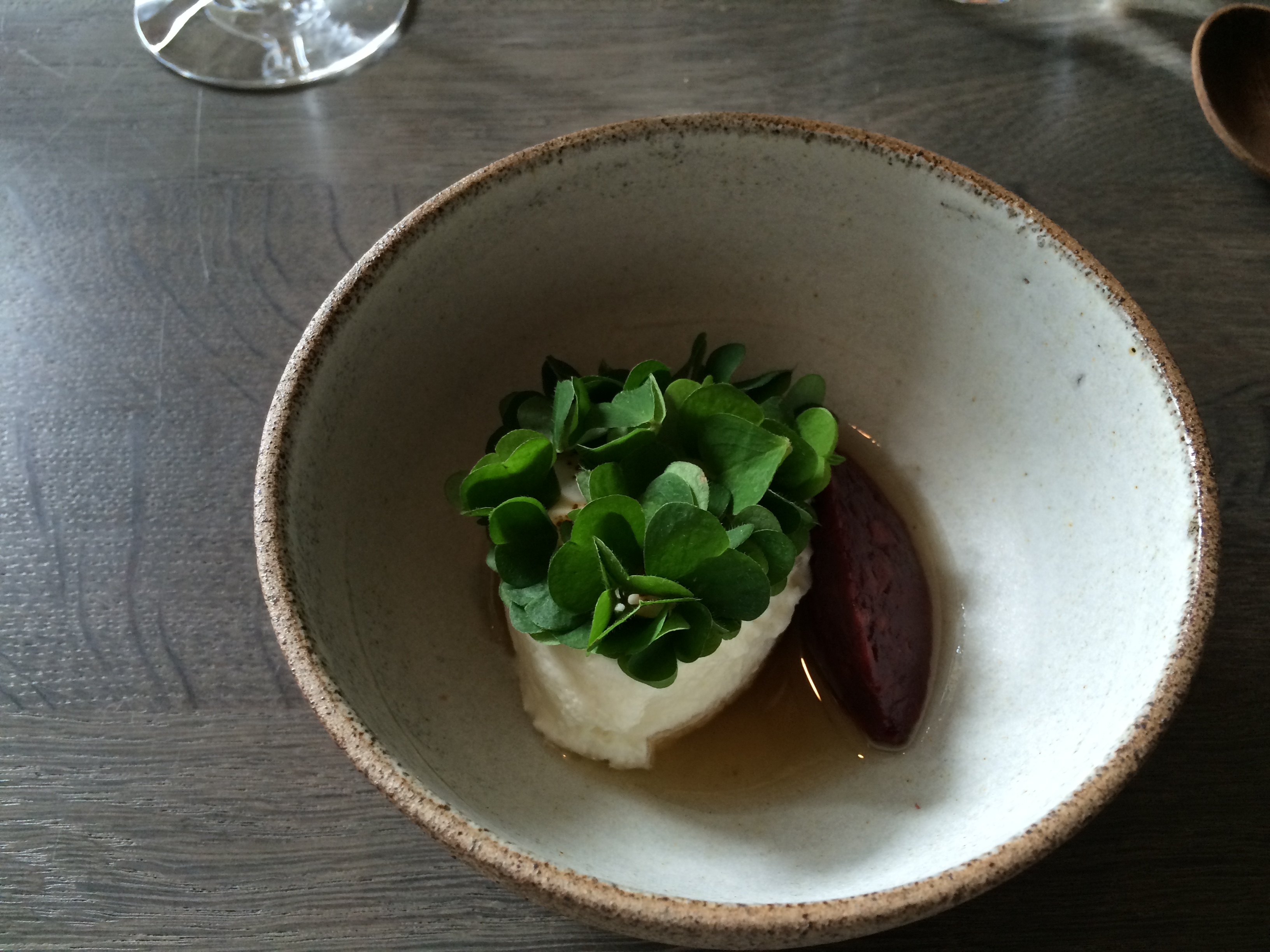
The Cheese Course – Not Sure of the Ingredients beyond a Creamy Cow’s Cheese.

The next wine, a 2014 Grains de Folie, Bruno Rochard, Coteaux du Layon – Loire Valley, Chenin Blanc (LINK – Related) comes from a region known for sweet wines. This wine, was a bit on the sweet side of dry. It was light, refreshing, and a nice pairing for the cheese course (also not on the written menu). The pairing worked well. The cheese was light and creamy, in a vegetable broth. Very good.

Now, on to Desserts:

2015-07-22 14.31.37
Berries and Greens Soaked in Vinegar for One Year.
2015-07-22 15.00.24
Forest Flavors – Deep Fried Reindeer Moss Dipped in Chocolate.
2015-07-22 15.00.28
Creme and Dipping Sauce.
2015-07-22 15.00.36
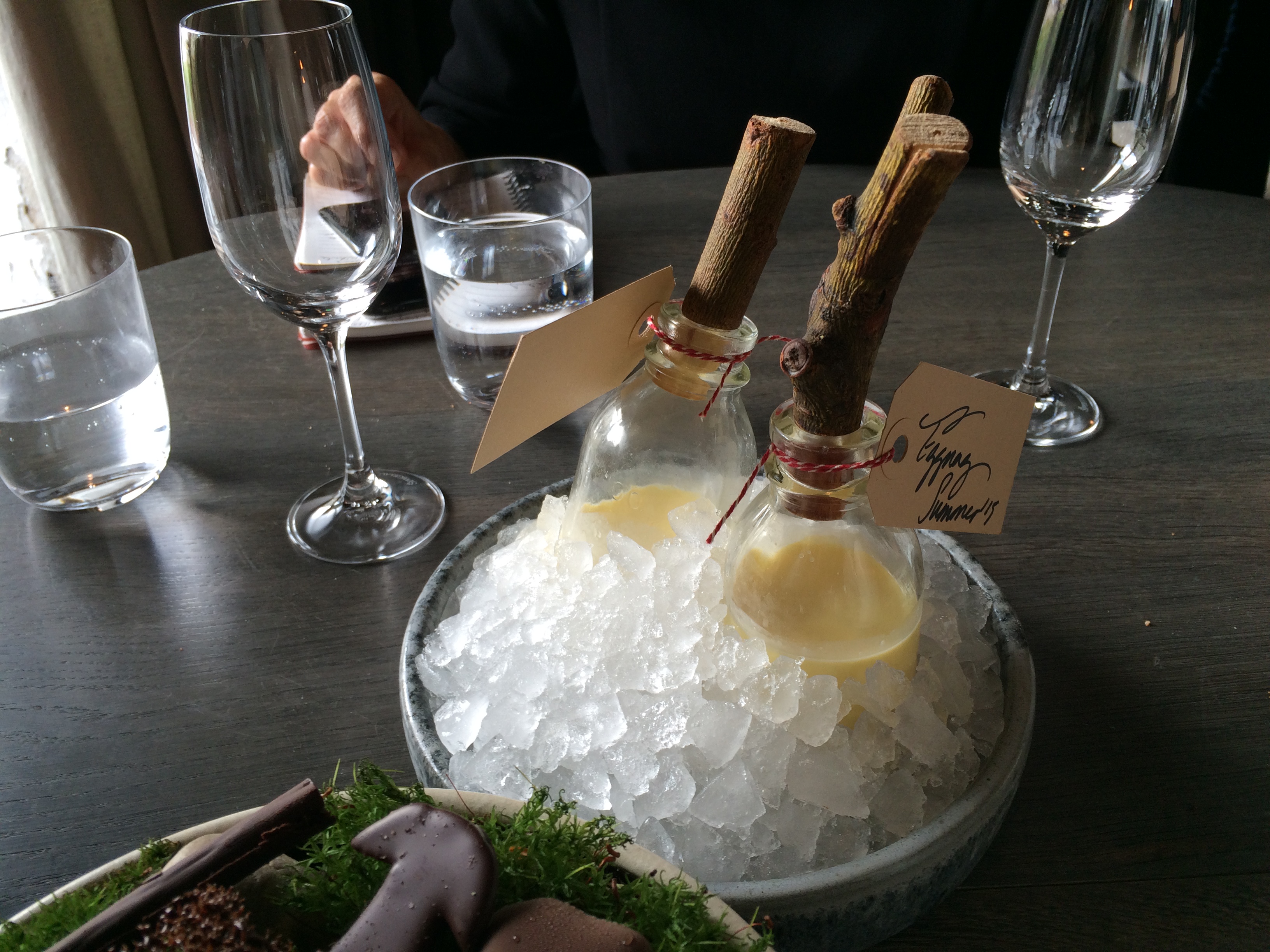
Egg Liqueur.
2015-07-22 15.14.07
Espresso to Finish.

Desserts were a flurry of items, pickled and sweet, with egg liqueur and espresso. The berries and greens soaked in vinegar for one year were very good – each retained much of its original flavor, but the textures were very unusual. The forest greens dipped in chocolate were a combination of tart, sour and sweet – the creme dipping sauce could tip it to the sweet side if you preferred, plus there were some more conventional chocolates on the plate. The egg liqueur was very smooth, much thinner than eggnog, and refreshing.

I should point out that Dorianne has allergies to beef and cow dairy, and the Noma staff made every effort to accommodate her in this regard, substituting ingredients, etc. You let them know 30 days in advance of your reservation about any allergies.

Wow. What a meal! The 18 courses turned out to be 20. We were well-fed, entertained, amazed, and, actually, ready for more. In the next and final installment of this series, I will let you know about the tour that you are offered of the Noma Complex and what you learn about the unique Noma Culture.

Photos and text, Copyright 2015 by Jim Lockard

THOSE OVER-WRITTEN AND OVERWROUGHT TASTING NOTES!

A little break from the series on Noma. 

From The NEW YORKER MAGAZINE: an article questioning those lengthy and often indiscernible tasting notes from wine critics. While tasting notes are often helpful (I prefer to loom at them after tasting a wine to see if I agree or to identify a quality that I noticed but did not identify myself). So read the article and see what you think.

(LINK TO ARTICLE)

Quote: “Frustrated with the state of modern winespeak, some academics, sommeliers, and critics are attempting to rein in tasting notes and develop new idioms that convey quality more concretely. A group of researchers known as the American Association of Wine Economists has waged a nearly decade-long crusade against overwrought .and unreliable flavor descriptions. In 2007, the association’s Journal of Wine Economics ran an analysis of wine critiAcs which concluded that the industry was, in no uncertain terms, ‘intrinsically bullshit-prone.’ ‘We, the wine-drinking public, are happy to read their evaluations, because we are largely ignorant of the quality of wines,’ the study’s author, the Princeton economist Richard Quandt, wrote. (He and the president of the Wine Economists, Orley Ashenfelter, shun tasting notes in their own wine club.) Another contributor, Jordi Ballester, is a researcher at the Center for Taste and Feeding Behavior, in Dijon, France, who’s spent his career weeding out wine bullshit—or what he more politely terms ‘fuzzy concepts.'”