Monthly Archives: April 2015

CLOS PEPE ESTATE WINES WILL BE MADE NO MORE

In an announcement to his mailing list and via his website, Wes Hagen, Vineyard Manager and Winemaker at Clos Pepe Estates in the Santa Rita Hills AVA, announced that the vineyard and operations have been leased to Hall/Walt Wines of Saint Helena, CA. (LINK TO WEB PAGE)

The 2014 Vintage will be the last for Clos Pepe Estate Wines and for their secondary label, Axis Mundi. Wes Hagen and his wife will move from the vineyard property and he will be looking for other opportunities in the Central Coast of California.

I have been a particular fan of Wes Hagen, his wines, his wine making, and his personality and depth of knowledge about all things wine. He is as much a philosopher as a wine maker. He has been a pioneer in the Burgundian style so prevalent in the Santa Rita Hills, and a leader in establishing the AVA designation there.

Clos Pepe Estate Wines will be missed.

2014-03-15 17.28.41
Jim Lockard and Wes Hagen at a Clos Pepe Estates Wine Tasting Event in Newbury Park, CA in 2014.

BORDEAUX – ARE THE WINES READY TO DRINK?

Dorianne and I are in Bordeaux for eleven nights, both to enjoy this Mecca of great wine, and to begin the process of setting up some wine tours here to begin in November.

After a couple of nights, I am surprised that there is a similar issue with restaurant wine lists here that I have found in the US – many of the Bordeaux’s listed are not ready to drink! Note that we have not been to any top of the line restaurants, but still, we are IN Bordeaux!

We will be researching this further, beginning at lunch today at Le Noailles, a favorite spot. More later!

An old grape v
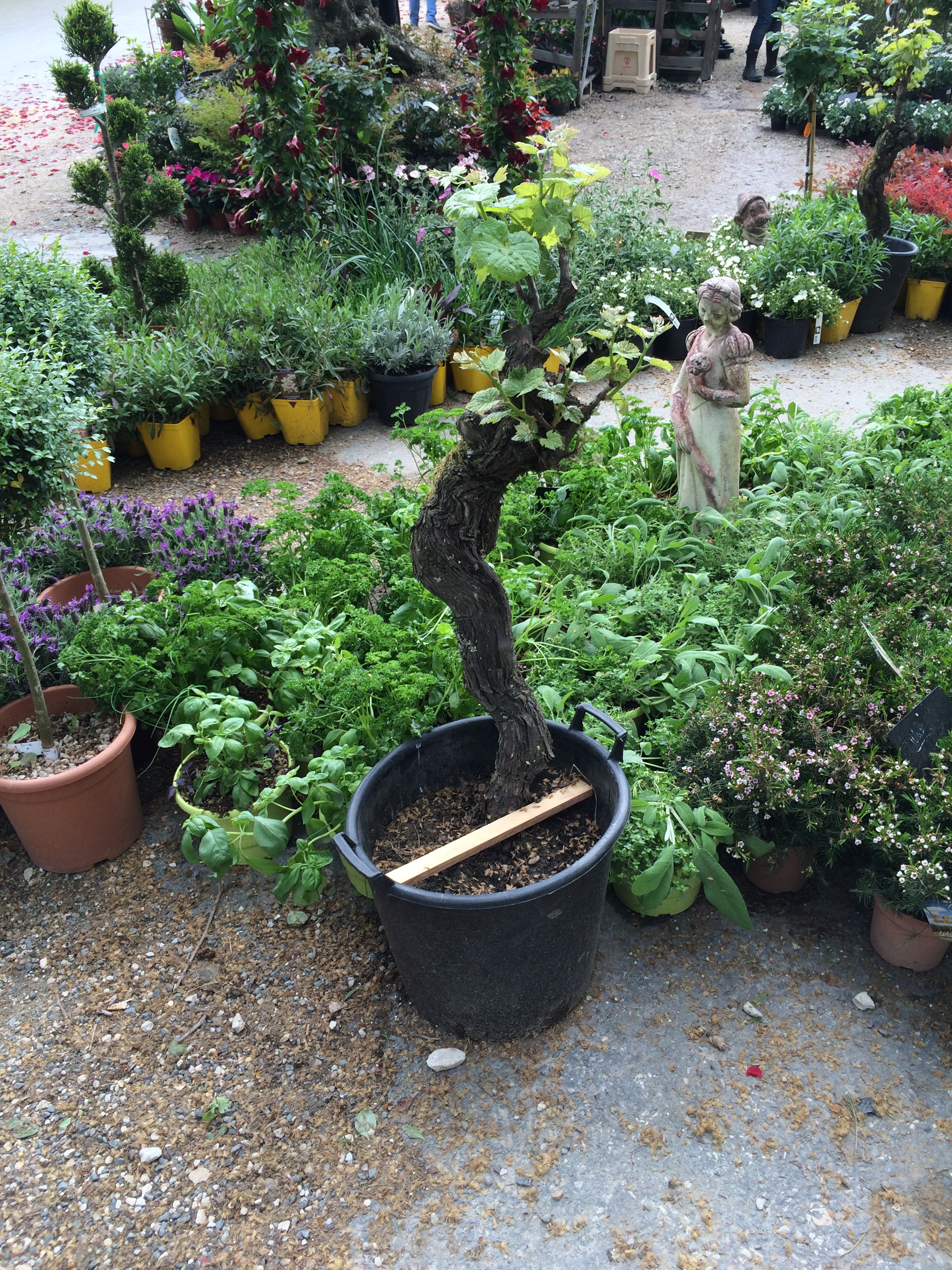
An Old Grape vine (of unknown vintage) for sale at a Bordeaux Garden Show.

6 WEEKS IN SPAIN – SUMMING UP

Our trip to Spain has been a wonderful experience. Madrid, Seville, Jerez, Cordoba, Sitges, and Barcelona – each unique and each an expression of the overall Spanish culture and way of life. And the wines! We stayed mostly in AirBnB.com (LINK) apartments with a couple of hotels for shorter stays. We walked almost everywhere and used the trains and busses – we only had a rental car for one week.

We began with five days in Madrid, the capital and one of Europe’s great cities. We stayed near the old town and the Palau  Real (Royal Palace), where there were a variety of restaurants, bars, cafes, and clubs. Madrid also has the high-end nightlife of a major city, although things are still a bit depressed here as the overall economy struggles to recover from the recession that hit Spain particularly hard. That said, it is a magnificent place to visit and we will surely return for a longer stay. The Prado Museum is among the very best in the world.

Slide1

Tapas is the king of food in Spain, and since the recession, these small plates of nearly infinite variety have moved from the status of late afternoon or late night snack to the evening’s repast. The variety and quality of Tapas at the many small tapas bars and cafes is simply astounding. And there is inexpensive and very good wine everywhere! During our stay in Spain, we probably averaged 2 euros a “copa” or glass. On most wine lists in the tapas bars, ALL of the wines were under 20 euros a bottle (and the dollar and euro are currently nearly at par)! So a Tapas dinner for two – three to five plates and two to three glasses of wine each – was almost always under 20 euros. This was true everywhere we went. There are more expensive places to eat, but the vast majority of food establishments in Spain are very, very reasonable.

After five days in Madrid, it was onto the Renfe High Speed Train for a nice ride down to Seville (Sevilla), the largest city in southern Spain’s Andalusia area. Seville is a gem of a city with a great history and a bustling food and wine scene. It is a home of Flamenco, and we saw some amazing shows while in town. We stayed for 3 1/2 weeks in an AirBnB.com apartment near the center of the old town. We were literally surrounded with history and the hustle and bustle of a busy city.We explored the city’s Tapas bars, the Arabian Spas, the Mercados (markets), along with the many historical and religious sites. We could have stayed longer. The people are amazingly welcoming, very proud of their city and their culture. We met many locals through our AirBnb host.

Slide2

Slide3

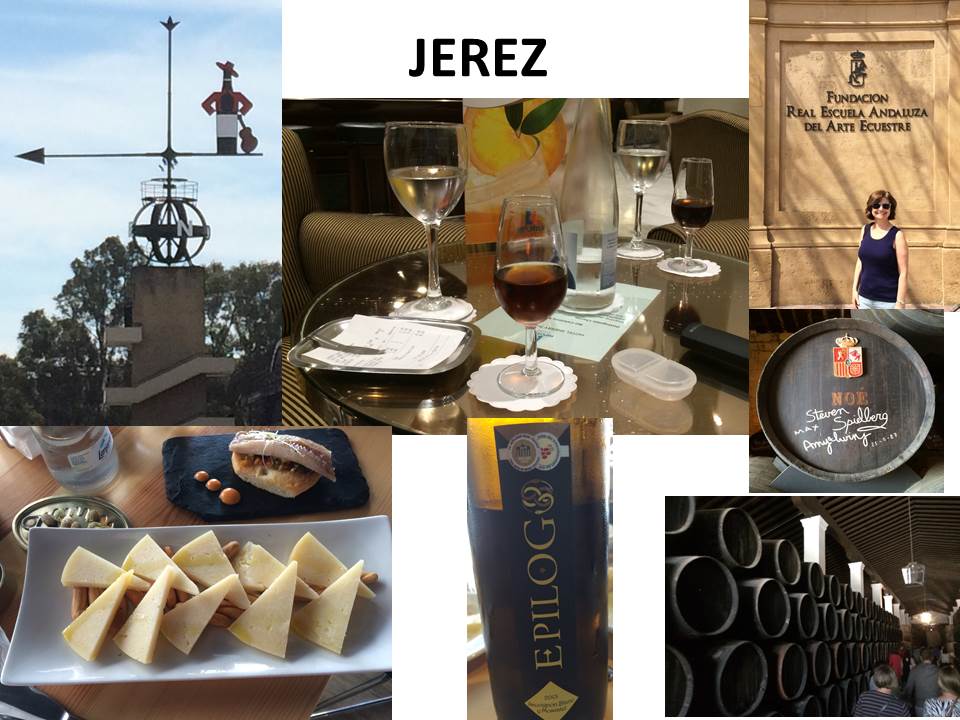
While in Seville, we did side trips. One was a weekend in Jerez, the center of Andalusian Sherry production. Jerez is like a mini Seville with a historical city center, but with numerous Bodegas where Sherry is produced and Tabacons, bars where Sherry is served out of the cask and where, frequently, Flamenco shows are staged. It is also home to the Royal Andalusian Horse Training Center, which we visited for a performance.

Slide4

After Seville, we flew to Barcelona’s Airport (BCN), but did not go right to Barcelona. We rented a car and went south a bit to Sitges, a wonderful Mediterranean Beach Community. Sitges reminds me of the French Riviera, only it has sandy beaches and that amazingly inexpensive Spanishn food and wine. We stayed at a beachfront hotel for seven nights and explored the food and wine scene a bit. Sitges is near the Penedès D.O. (LINK) wine region. You can read about our winery visits there here (LINK) and here (LINK). Sitges was relaxing and enjoyable.

Slide5

Then it was on to Barcelona for the final week in Spain. This was my third visit to this wonderful city. Part of the reason that we came was that both Dorianne and I were presenting at a conference at the ESADE Business School (LINK) on Spirituality and Creativity in Management. We still managed to squeeze in some wonderful food and wine, though. Also, Barcelona is home to all things Gaudi – that’s Antoni Gaudi (LINK), the genius visionary architect and designer. We stayed a bit out of the city near the FC Barcelona Stadium, which was a great choice.

Slide6

So Spain has cast its spell on me once again. It is with mixed feelings that we depart for France tomorrow, as much as I love France. Spain was hit hard by the financial collapse, but it is coming back gracefully, as far as I can see. And Spanish Wines – tintos, blancos, cavas, and Sherrys – are among the best values in the world today. So go to your local store and ask for something Spanish and then make a few small plates at home and sit back and savor the culture that brought us so much and continues to do so.

Some photos from our trip.

2015-03-30 21.26.25 2015-04-10 11.03.25 2015-04-15 12.35.47 2015-04-17 13.54.02 2015-04-21 12.59.54 2015-04-21 15.02.37 2015-04-22 11.51.10 2015-04-22 14.50.14-1 2015-04-23 17.23.33

2015-04-08 22.02.19

OUT OF THE WAY TAPAS BAR WITH A CERTIFIED SUMILLER (SOMMELIER)!

We are in Barcelona for a week to do two things: to attend a Spirituality and Creativity in Management Conference (SCM2015) at ESADE Business School and, well, to be in Barcelona. We are staying a bit out of town to be near the campus (which is very close to the FC Barcelona Stadium) but otherwise, a fairly nondescript area.

We had been going toward the Barri Gotic (LINK) to eat, but the other day, we decided to check out something close to our AirBnb apartment. The hosts recommended El Cóm (LINK), a very small and very ordinary looking tapas bar two blocks away. So we went with another couple, friends from France who are attending the conference.

2015-04-23 13.38.03
Friends from France – Richard and Kamala – with Dorianne.
2015-04-23 16.13.20
El Cóm

We get there and look at the menu and are told that the place is closing in half an hour. The menu looks good, so we order and we speak to the “waiter” about wine. He lights up. Now, he is speaking Spanish and my wife is somewhat conversant and one of our French friends is less so, and me, I’ve got Mexican restaurant Spanish, so nothing there.

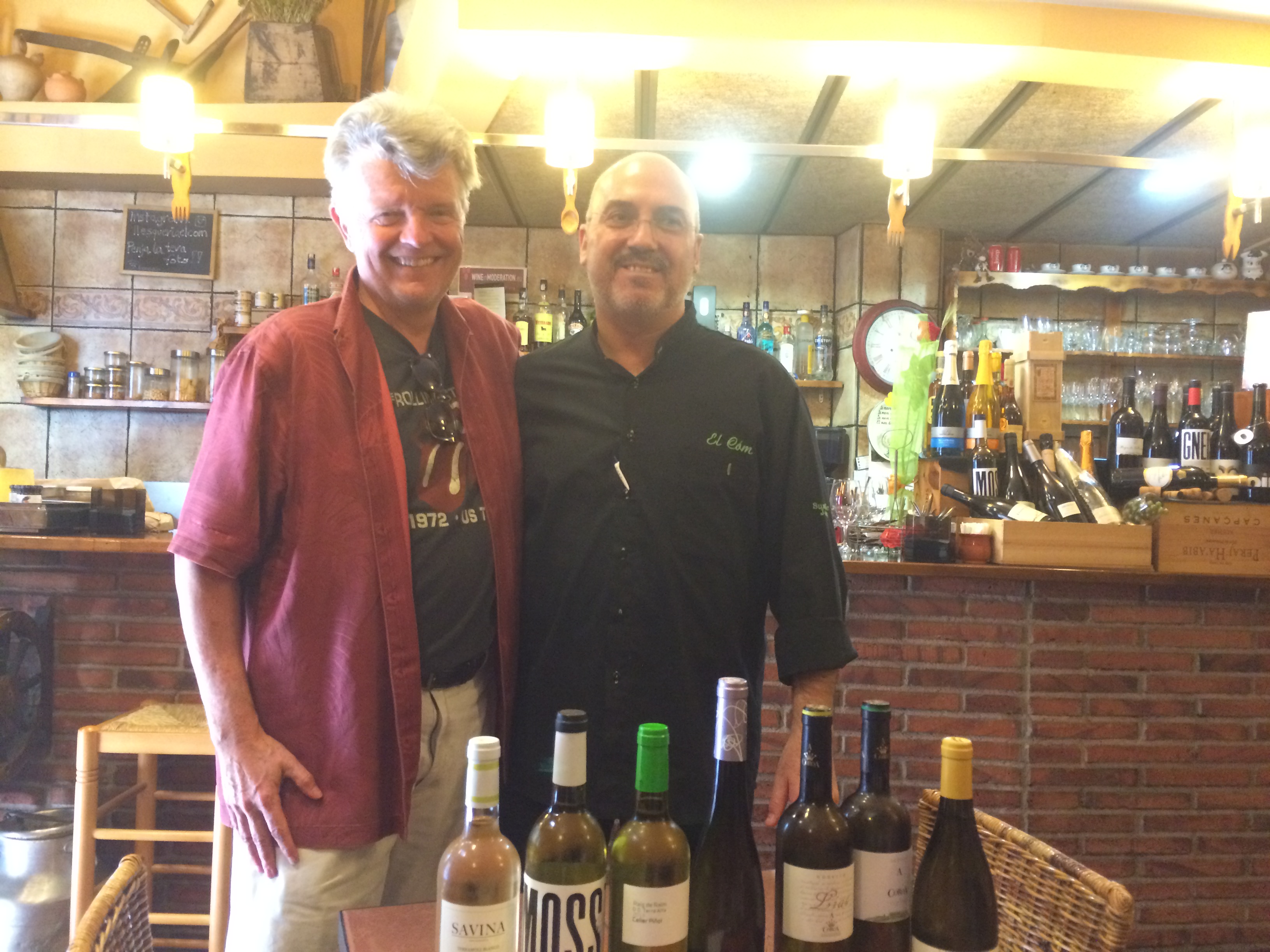
Dorianne asks about an Albarinõ, which is listed on the menu as not available. The “waiter” tells us that the vintage has run out, and then leaves. He returns with six bottles of vino blanco, then leaves and comes back with one more. At this point, we inquire a bit more deeply (noticing the many wine bottles around the restaurant in prominent places). It turns out that our “waiter” is Josep Valiente, Sumiller (Sommelier), a certified wine expert. Now I am paying attention.

2015-04-23 15.23.36
Me and Josep and the Wines.
2015-04-23 15.24.06
Just the Wines.

He describes each bottle (most of which we do not understand). I spot a Godello (LINK) varietal on one of the bottles, and, having just read about that varietal, I ask for that bottle. Josep opens it and we are transported to white wine heaven. It is a 2012 Bodegas A Coroa Lias Godello, from Valdeorras, Spain (LINK).

2015-04-23 15.29.08 2015-04-23 16.01.47

A beautifully crafted wine that is balanced, buttery, well structured, yet very very smooth. Hints of pear and spice with a nice floral nose and a smooth finish.

Josep came over with his smartphone and showed us photos of a vineyard he is growing in the area. He said that he is growing several varietals. I showed him photos of our wine co-op (LINK) in California.

Oh, and the food was amazing. Oh, and we stayed for an hour and a half. Oh, and we are going back on Sunday.

2015-04-23 15.26.39 2015-04-23 15.26.58 2015-04-23 15.27.12

It is a wonderul wine.

FREIXENET CAVA (Sparkling Wine) – THE GOOD STUFF

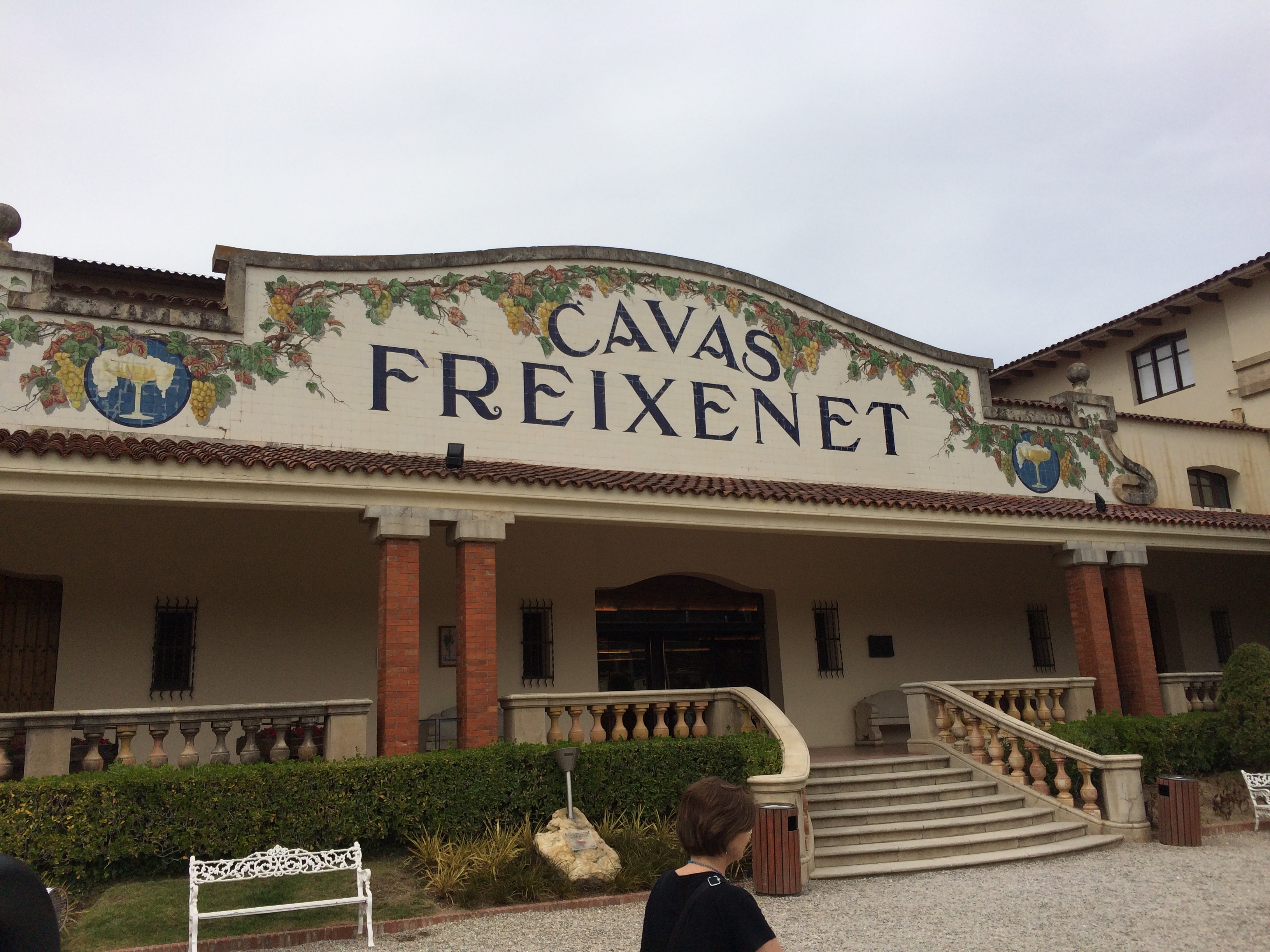
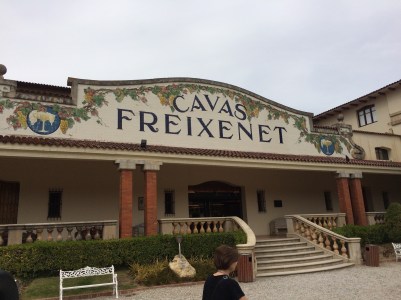
During our recent visit to the Penedès DO near Barcelona, we also visited the legendary Cava producer, Freixenet (LINK). Known in America mostly as a producer of very cheap sparkling wine suitable for college parties and sports celebrations (where most of the wine is shot out of the bottle), it is often hard for U.S. consumers to imagine high-end Freixenet Cavas. But that is what we had during our visit to the winery.
2015-04-15 16.18.12 2015-04-15 16.19.40

Cava (LINK) is the Spanish sparkling wine, similar in processing to French Champagne, but using different grapes and the name “Cava” is not limited to a specific geographic region or appellation. The primary grapes used in Cava are:

  • Macabeu (white)
  • Parellada (white)
  • Xarel·lo (white)

Other grapes:

  • Chardonnay (white)
  • Pinot Noir (red)
  • Garnacha (red)
  • Monastrell (red)

Freixenet uses the first three almost exclusively.

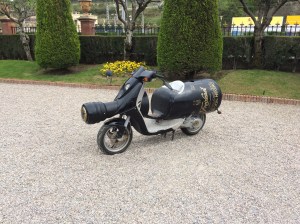
We did not do a tour of the extensive facility (90 million bottles per year) in Sant Sadurní d’Anoia. We went right to the tasting room, after wandering around a bit and seeing some of the marketing vehicles the winery has used over the years and some of the “art” on display in the main building.
2015-04-15 16.17.50 2015-04-15 16.18.08 2015-04-15 16.18.16

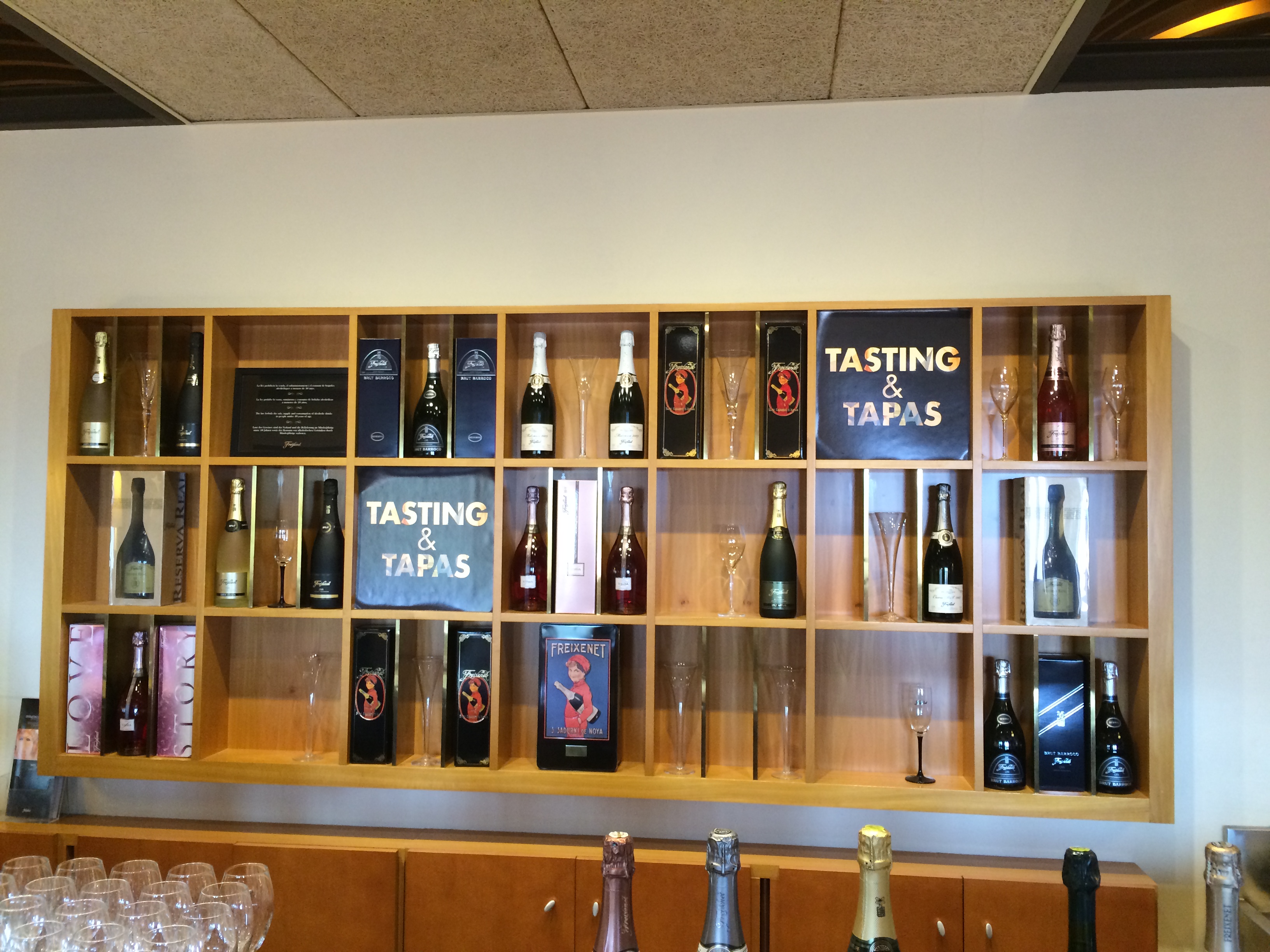
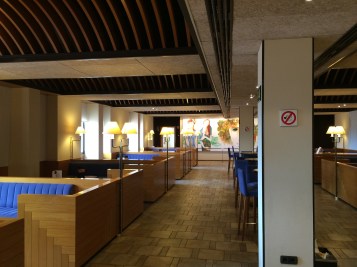
The tasting room is in the 3rd floor of a large production building that has a large gift shop on the first floor where you can get your “inexpensive” black bottle of Freixenet  that you remember from your formative years, along with lots of other things. The tasting room is large and well appointed – and handled a tour group of about 50 young people easily while we were there.
2015-04-15 16.37.25 2015-04-15 16.37.28

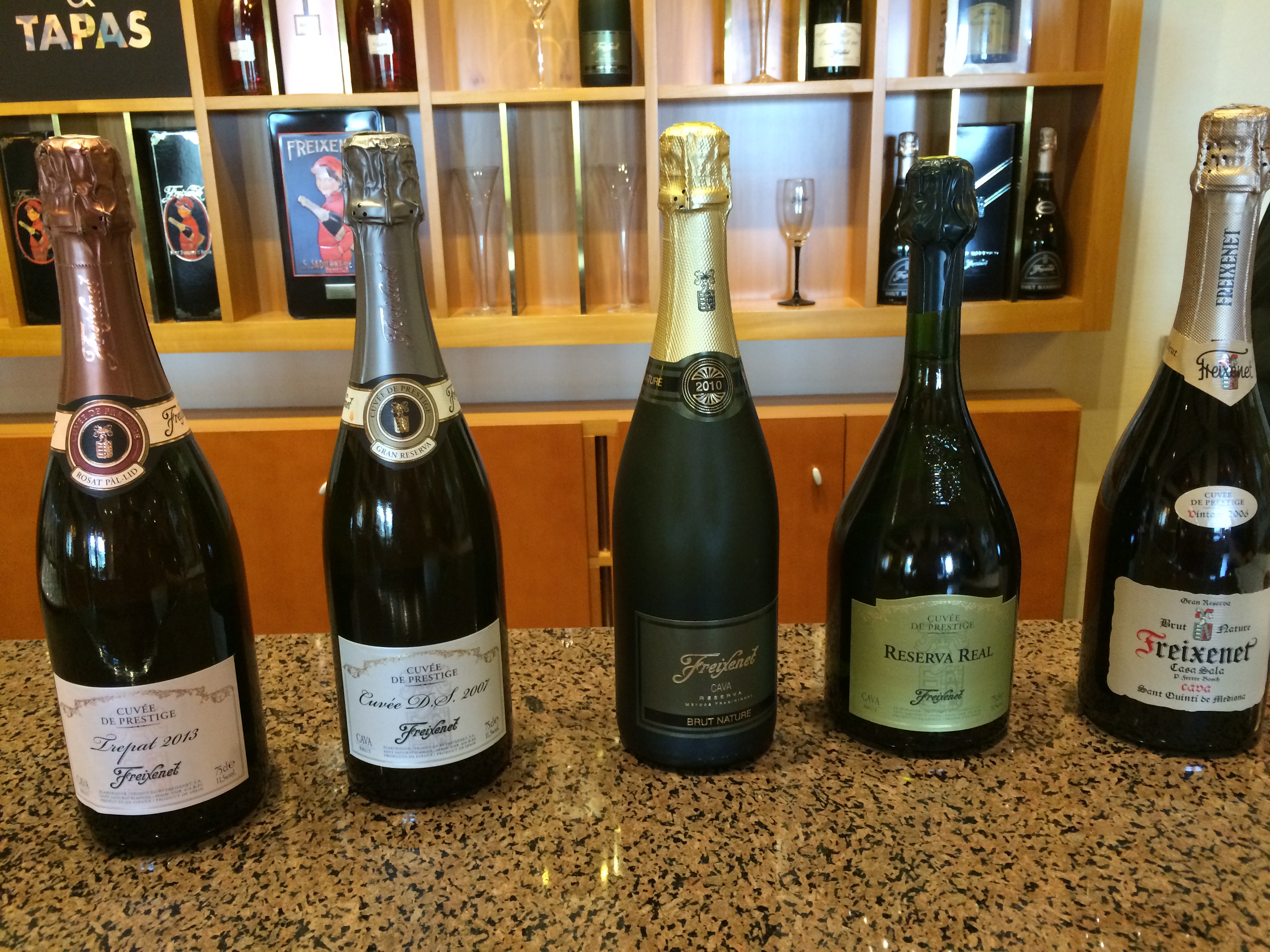
We opted to taste four wines from the Cuevèe Prestige Collection, their higher end cavas, and one, the Brut Nature Reserva 2009, that is the favorite of the locals in Spain. Now, Dorianne is more of a sparkling wine fan than I am, and she was the driving force behind our visit – having many fond, if foggy, memories of evenings where that black bottle played a role. But I was game, so we tasted.

2015-04-15 16.39.14 2015-04-15 16.48.47

We began with the Trepat 2013, a Blanc de noirs” style cava, that is a single vineyard wine – rare in this business. The wine was sharp, tart, and had a very strong degree of carbonation. This would be a great wine with a ripe cheese.

Next, we tasted the Cuvèe DS 2007 Gran Reserva, using Macabeo, Xarel•lo and Parellada grapes. It is only produced when the harvest is very good. This wine was more balanced than the Trepat and had a nice sense of fruit and not too much sugar. 

Then, the Brut Nature Reserva 2009, the cava that sells the best in Spain (according to the tasting room staff). The wine is only produced in certain years. It is a smooth and well-crafted cava that would accompany a meal of fish or chicken, or, well, just about anything.

Next, the Riserva Real, a non-vintage cava, made in the Champagne style, meaning a blend of vintages. This cava, like some of the others, is aged in chestnut barrels. This wine was very nicely crafted, with a hint of minerality on the nose and a very smooth mouthfeel. Fruit and spice. A really nice sparkling wine.

Finally, the CASA SALA Brut Nature, Gran Reserva 2005, the highest priced wine we tasted. This wine was similar to the Riserva Real, but not quite as well balanced. The wine is  produced at the original properly of the family (The Casa Sala’s) via manual harvest, pressed in a wine press from the Champagne region that is more than 150 years old, fermentation with native yeast, and wine decanting and maintenance by gravity, without using pumps. This brut nature has no dosage and is reminiscent of the traditional cavas of 50 years ago. Two traditional grape varieties are used for the blend, Xarel•lo and Parellada, and their percentages in the cuvée change from year to year. 

If you come to the Barcelona region, a visit to the Pendedès DO is worth your while. I would say that the better cavas of Spain can take a seat beside most French Champagnes, and, like most Spanish wines, they are a great value.
DOES SIZE REALLY MATTER? HALF-SIZE CAN BE BETTER! (do we have your attention?)

From The Wine Wanker – the advantages of 1/2 (350ml) bottles of wine. I agree, they can be great to have on hand, and for some people, the 1/2 bottle is the go-to size for everyday drinking. Read the excellent article below.

LINK: Does size really matter? Half size can be better (do we have your attention?).

IN CATALONIA – A WINE REGION FULL OF LIFE

Dorianne and I are in Sitges, Spain this week, which is a beach town south of Barcelona. Just east and slightly inland from Barcelona is the Penedès DO Wine Region, home to a variety of wines, including Cavas, the sparkling wines of Spain. More about cavas in later posts. This concerns our visit to Bodegas Torres (LINK), in Villafranca del Penedès, one of the largest wine makers in Spain.

penedes map catala
The Penedès DO Wine Region

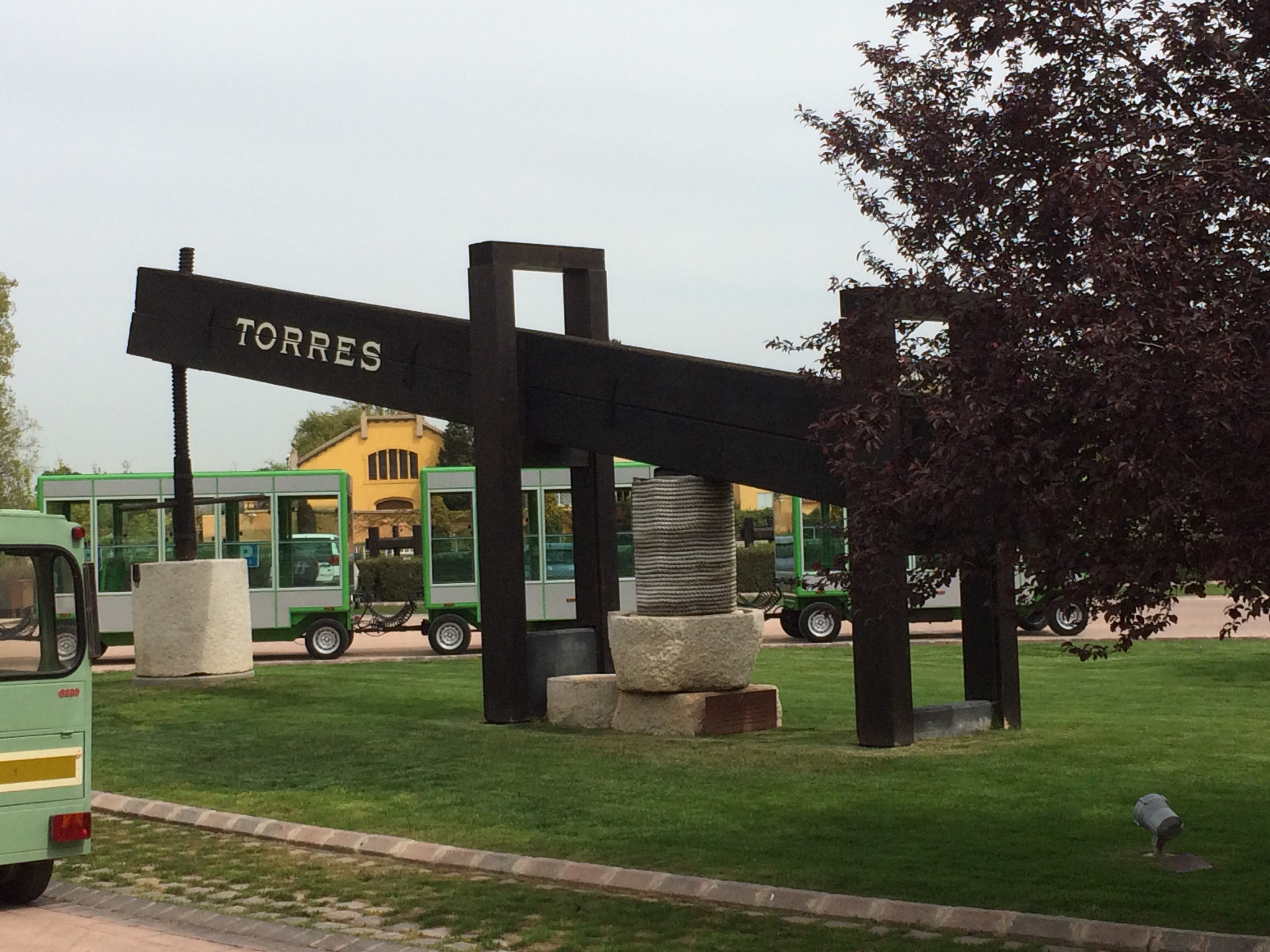
Bodegas Torres is truly a huge operation with a storied history and wine production all over the world (LINK). The Penedès Winery is a state of the art facility producing wine and brandy and is located next to the family home. It is roughly on the level of a Mondavi or a Gallo-sized operation, to give you an idea. The wine tour (which we were given alone with a guide, Archie, a young man from England) includes a tram and Universal Theme Park-like effects, which were inspired, we learned, by a family visit to Universal Studios in Los Angeles. So this is not your boutique winery.

2015-04-15 12.34.47 2015-04-15 12.34.58 2015-04-15 12.35.47 2015-04-15 12.36.32

That being said, the company is taking strong steps at environmental sustainability (LINK), including recycling, energy and land conservation, increased organic and biodynamic farming practices, and the like. The tour highlights many of these practices, which the company obviously sees as a good way to market their wines. I agree with them.

2015-04-15 12.36.06
Reservoir used to clean equipment – water is recycled through the artificial wetlands.
2015-04-15 13.38.42
Sand dome over a reserve cellar to provide insulation
2015-04-15 13.55.57
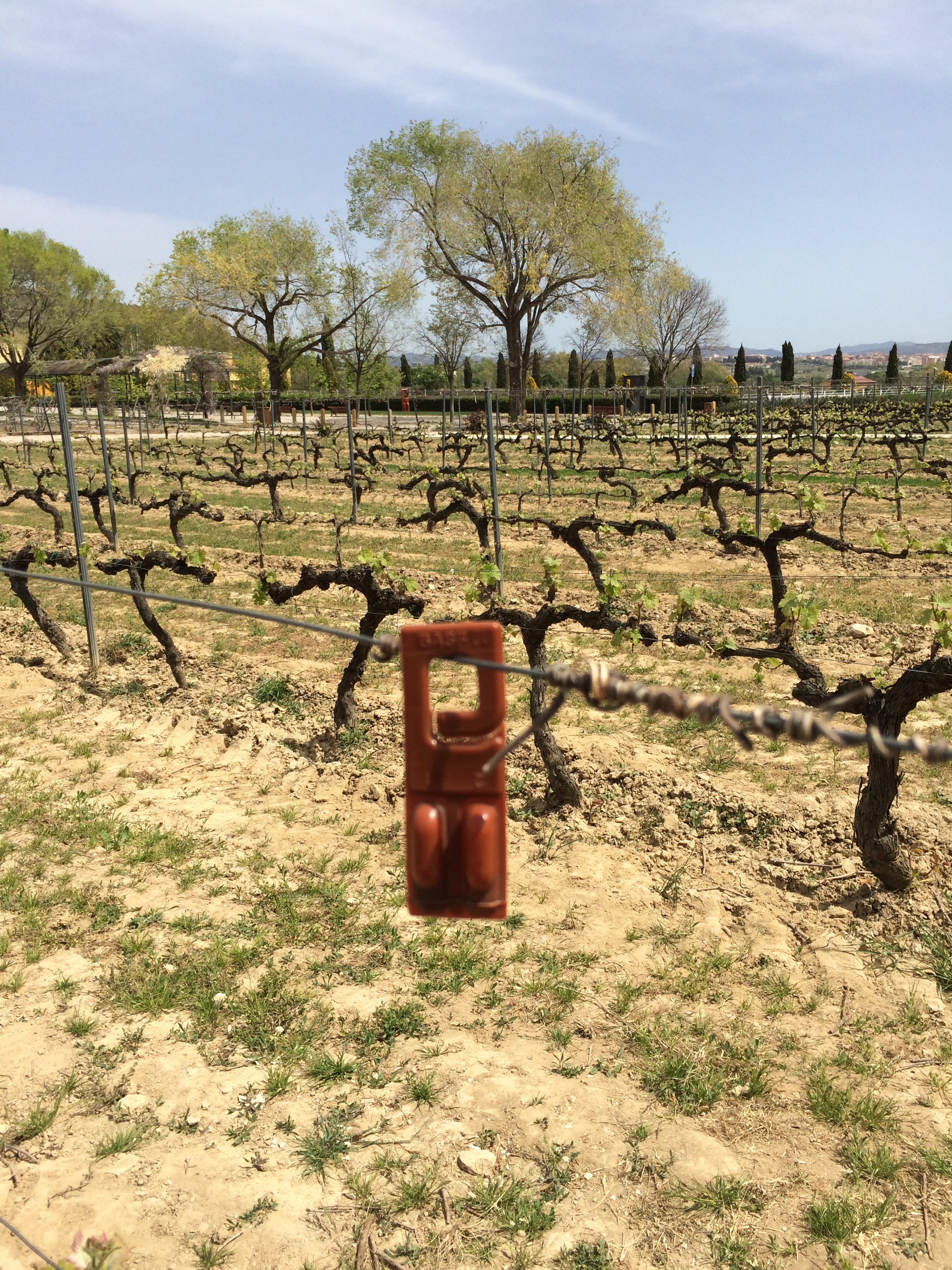
Pheremone capsule to keep flies from laying eggs in the grapes

2015-04-15 13.40.17

The winery facility in Penedès processes millions of bottles of wine annually. It has the look and feel of a place that has the resources to create whatever the owners want – the buildings are nicely appointed, the vineyards well tended, the equipment is in excellent condition, plus there are very nice touches for the customer at every turn. There are about a dozen wines and several brandies produced here. Our tasting after the tour was limited to five wines from three regions in Spain. Archie our guide, has been with the company for about a year and is working toward wine certifications in England. His plan is to work in the wine industry. He showed a great deal of knowledge about the entire process, and he was able to answer most of our questions. The tour would be an excellent introduction for someone new to wine production, and we learned a thing or two as well.

2015-04-15 13.43.33
Barrel Storage Cellar
2015-04-15 13.51.32
Bottle Aging Facility
2015-04-15 13.54.35
Our guide, Archie, describing pruning techniques.

2015-04-15 13.54.18

As to the tasting – the wines we tried – two whites (blancos) and four reds (tintos), were all well-crafted and balanced wines. We tasted across several of the labels of the winery – (there are dozens). The blancos, were a 2013 Jean Leon Chardonnay from Penedès DO, and a 2013 Torres Fransola Sauvignon Blanc. The Chardonnay was 50% oak barrel aged and 50% stainless steel. It was similar to the increasingly popular style of Chardonnay from California, which is less buttery and powerful. The wine was refined and nice on the nose and in the mouth. Very good. The Sauvignon Blanc was more in the French style – smooth and elegant. The wine did not jump out at you with citrus or grassy notes like New Zealand Sauvignon Blancs; rather it seduced you a bit – this wine would be amazing with shellfish, we both agreed.

The four tintos were also all well-structured and balanced wines. They included a 2012 Torres Altos Ibericos Crianza Rioja, a Tempranillo with good character. Moderate tanins and acid make this wine good for drinking alone or with food, such as barbecue or some wonderful Iberico Jamon. The second tinto, a 2012 Torres Celeste Crianza from  Ribera del Duero DO, a Tinto Fino (the name for Tempranillo in that region). This wine was more fruity and had lower tanin – but was clearly well-crafted. Very nice. Next, we moved on to the two higher-end wines in the tasting. A 2012 Torres Salmos a blend of Cariñena (60%) Garnacha Tinta (20%) and Syrah (20%) grapes from the Priorat DO. I have really enjoyed just about every Priorat wine that I have tasted, and this one was no different. A very dark, rich color, fruity and spicy on the nose, and bold fruit-forward in the mouth, very thick (but not unpleasantly so) mouthfeel and a long, silky finish. I really love this wine. Finally, we go to the 2010 Mas la Plana Cabernet Sauvignon from the Penedès DO. This wine brings a greater complexity with some mushroom on the nose and hints of minerality just behind the fruit. Good tanins and acidity balance on the tongue and the finish is smooth and elegant. I liked this just a tiny bit less than the Salmos. The latter two wines should age beautifully. You can research more details at the Torres links above. This may not be the winery visit and tour for everyone – it is a very large facility and run like one. But it does give good insights into the Spanish Wine Industry. There are a number of smaller wineries in the region as well.

2015-04-15 13.59.44
The Tasting Room at Torres
2015-04-15 14.01.31
The Blancos (whites)
2015-04-15 14.17.16
The Tintos (reds)
2015-04-15 14.46.03
Dorianne, Jim and Archie after the tasting.

WINE, TAPAS AND FLAMENCO IN SEVILLE!

Yesterday, Dorianne and I stopped into Taberna del Volapié (LINK) for lunch (around 3pm). We had a very nice meal of tapas and wine. The waiter told us that there was a free Flamenco (LINK) show that evening at 9pm. We decided to go later on.

We arrived at the Taberna at about 8:15 pm and noticed that all of the tables were either filled with customers or had “reserved” cards on them. Our waiter from lunch came up to us and we said that we had come for the show, but we did not know that we had to reserve a table. After some very rapid Spanish conversation with someone behind the bar, we were escorted to a table right up front, the reserved card was removed, and we were all set!

We ordered a bottle of 2013 Protos Roble, from Ribera del Duero (LINK), a wine that we have had before on our trip (in fact, I had two glasses with lunch). At 14€ (about $15) a bottle, it is quite a bargain.

2015-04-08 20.36.32
2013 Portos Robles Tinto

We had several tapas dishes – see the photos – and the show began.

2015-04-08 20.51.39
Iberico Jamon (ham)
2015-04-08 21.11.56
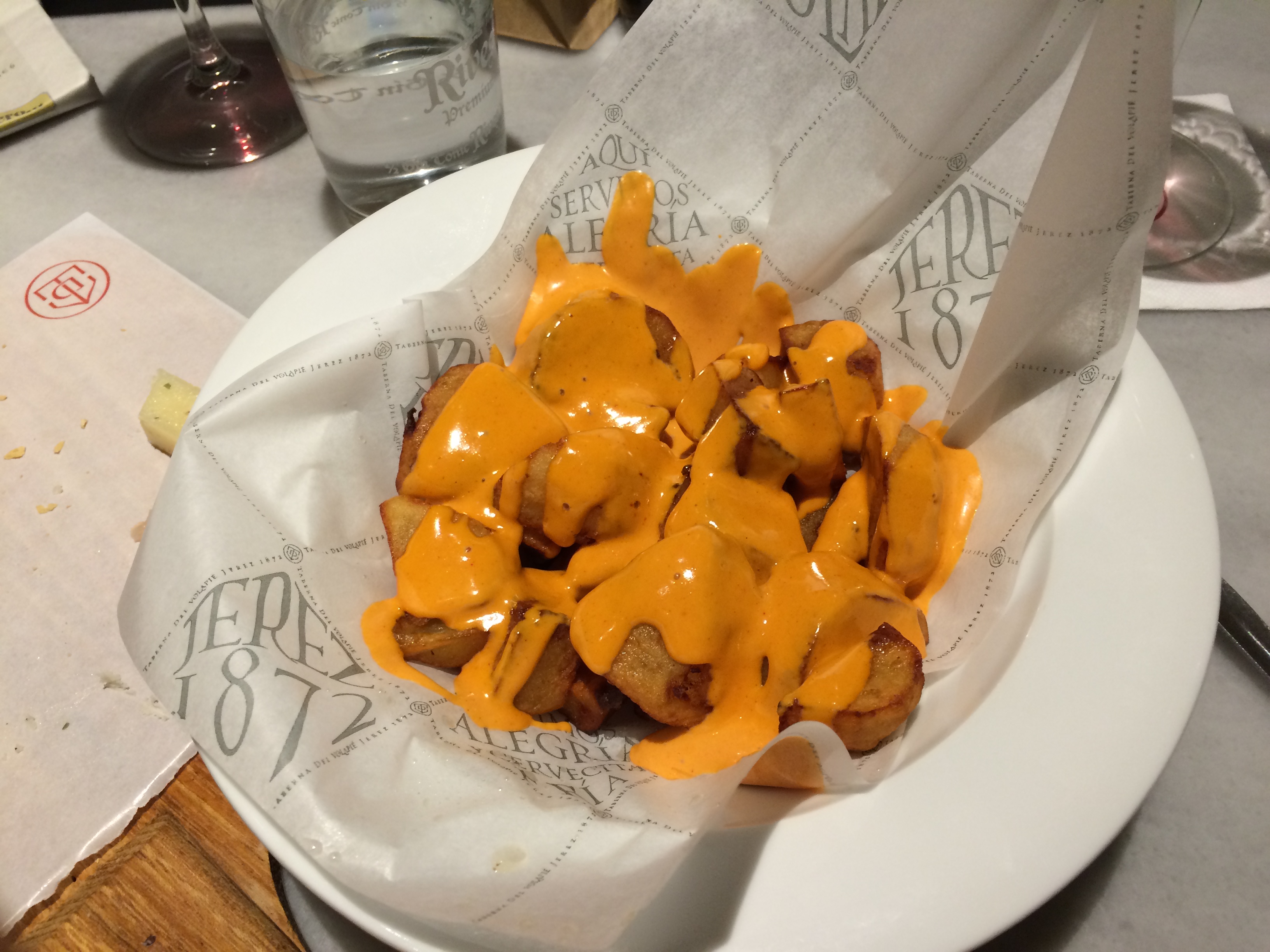
Patatas Bravas – fried potatoes with spiced sauce – each place makes this in a slightly different way.
2015-04-08 21.13.54
Tuna loin with tomatoes.

We each had a glass of Solera 1847 Cream Sherry to close out the evening – a sweet wine, it is reminiscent of a late harvest or a tawny port wine.

And then, FLAMENCO!

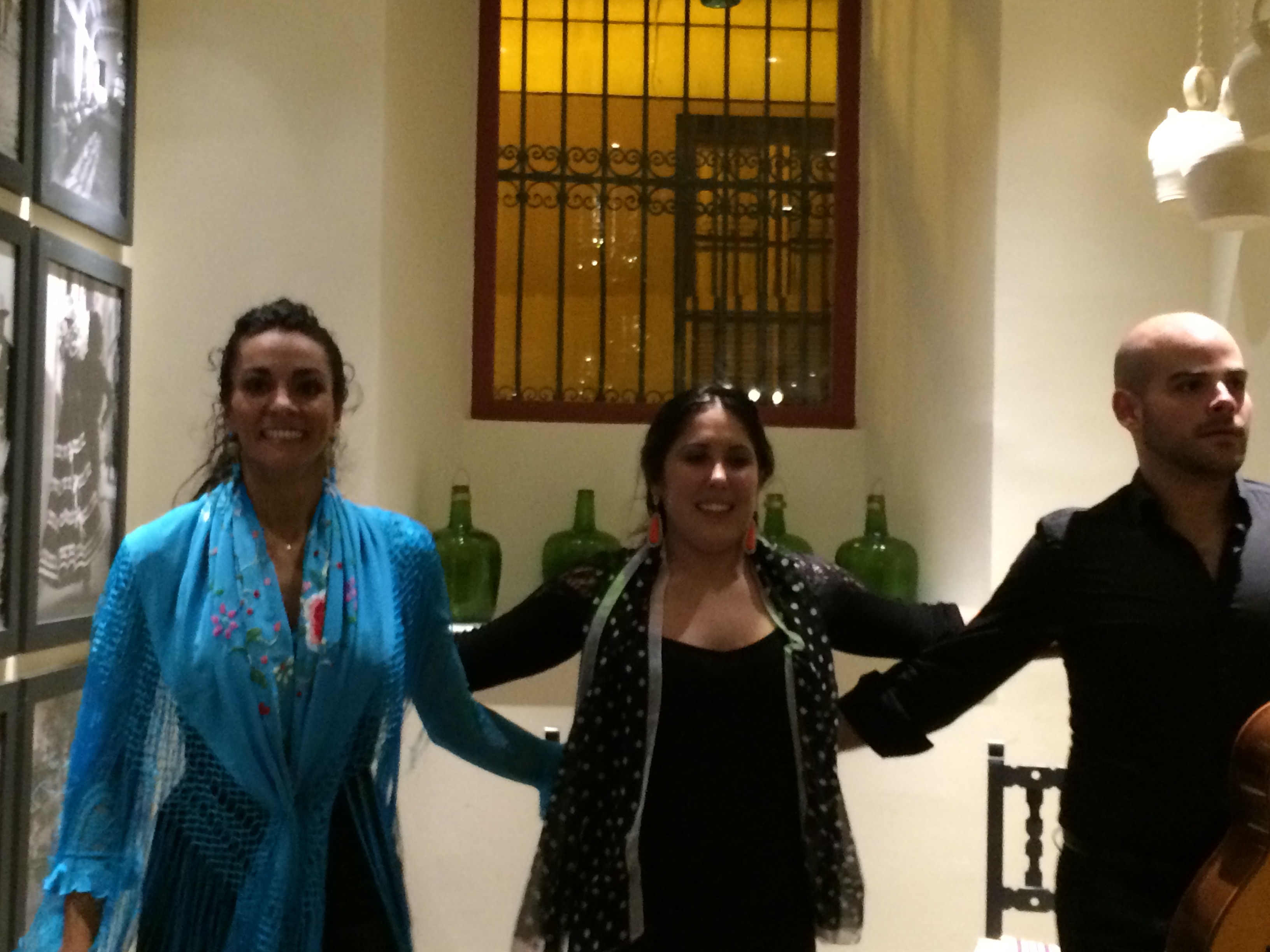
This group of three – guitarist, vocalist and percussionist (via clapping) and dancer – were the most accomplished team we have seen yet in Spain. Here are some photos and a video.

2015-04-08 21.14.05 2015-04-08 21.36.18 2015-04-08 21.57.31 2015-04-08 22.09.382015-04-08 20.30.58