Tag Archives: wine travel

A GEM IN ST. EMILION – CHATEAU GUILBEAU

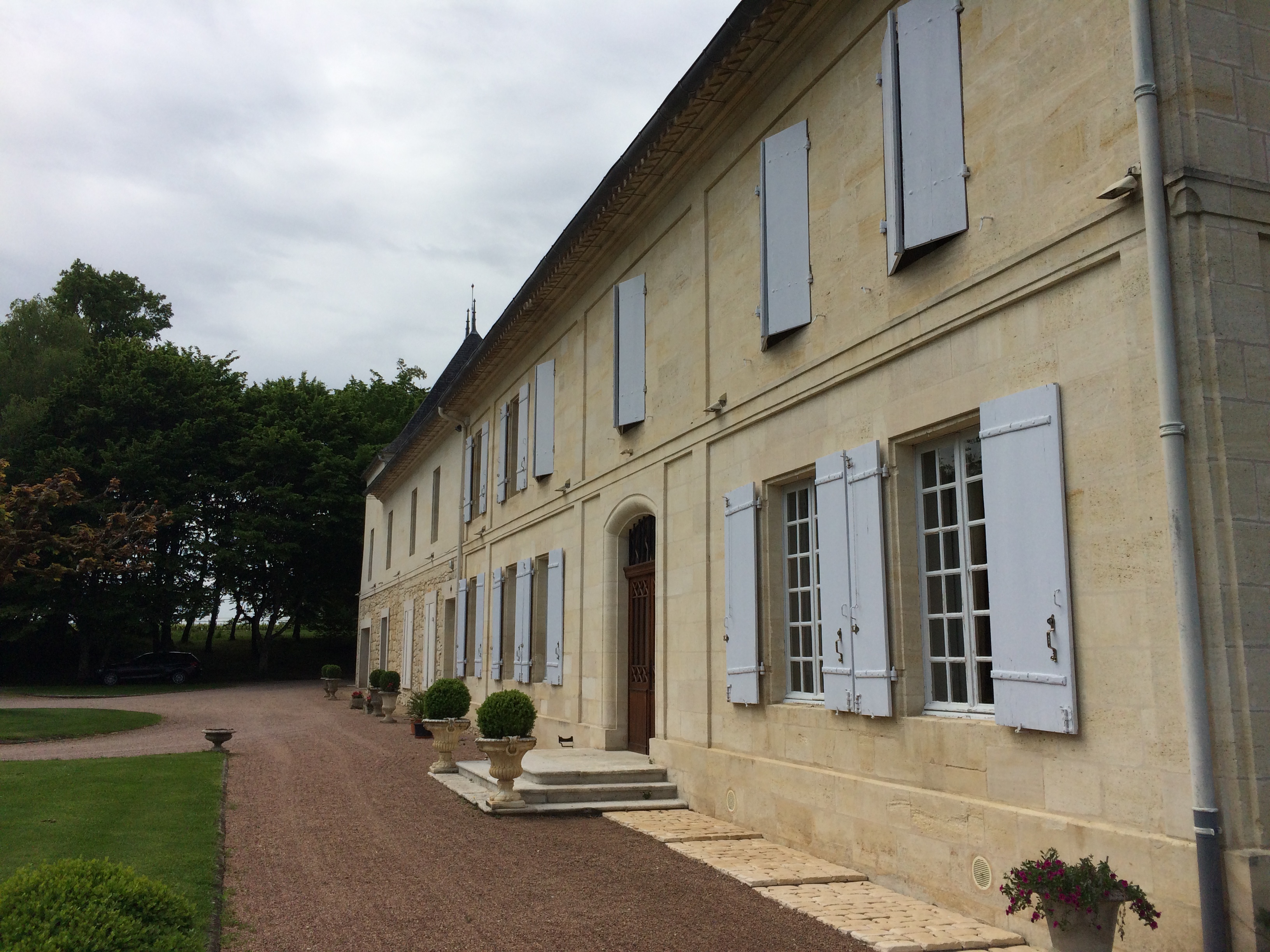
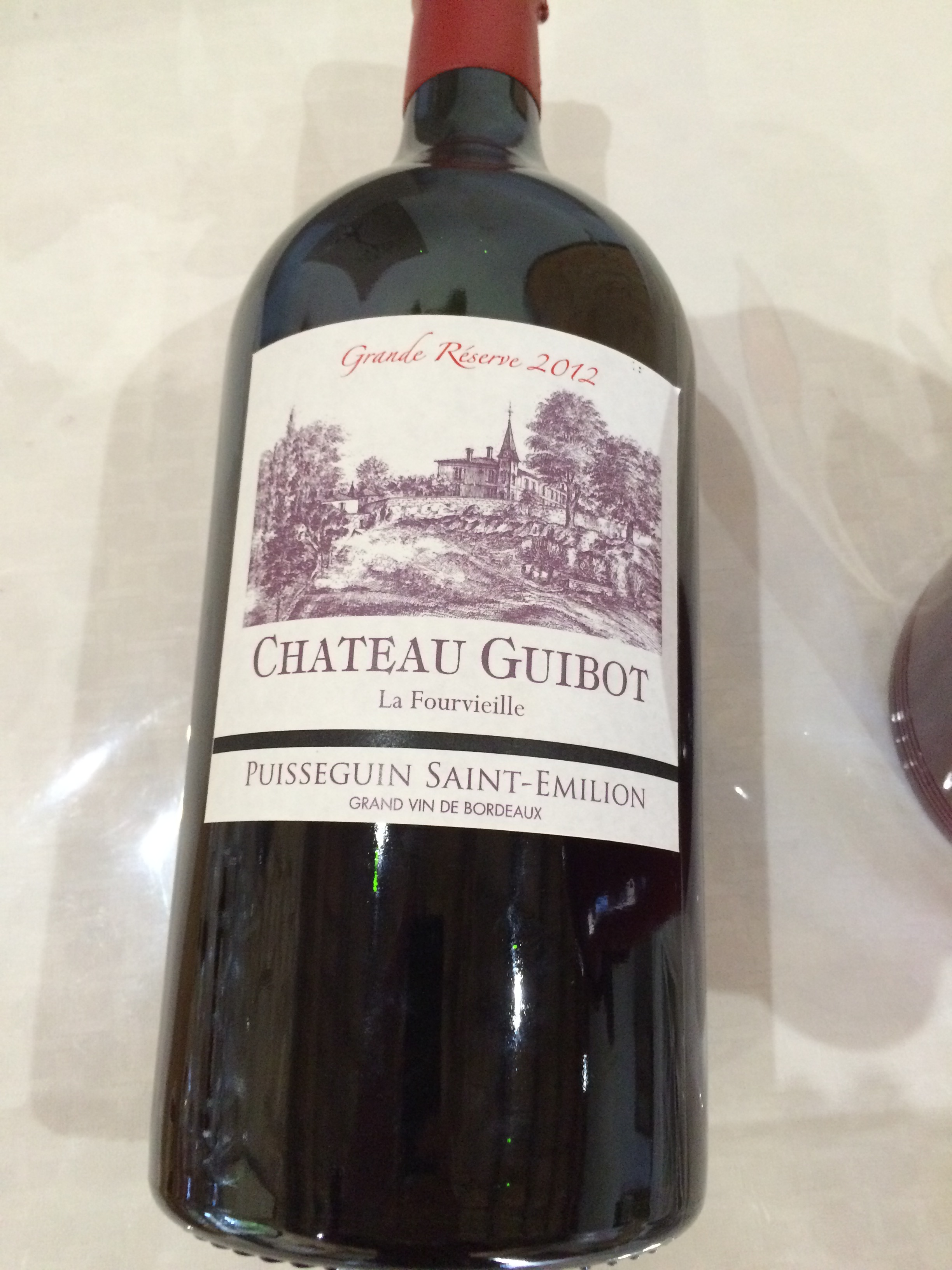
We arranged a visit to Chateau Guibeau (LINK) through a friend who is doing academic research on the vineyard and winery. After some pleasant email exchanges with Brigitte Destouet Bourlon and her husband, Eric, the co-owners, we visited last Thursday. Eric focuses on the vineyards, Brigitte on the marketing, and they collaborate on the wine making. The vineyard is actually the combination of properties of two families united in marriage a couple of generations ago, Chateau Guibeau and Guibot The Fourvieille. Wines are made under both labels today.

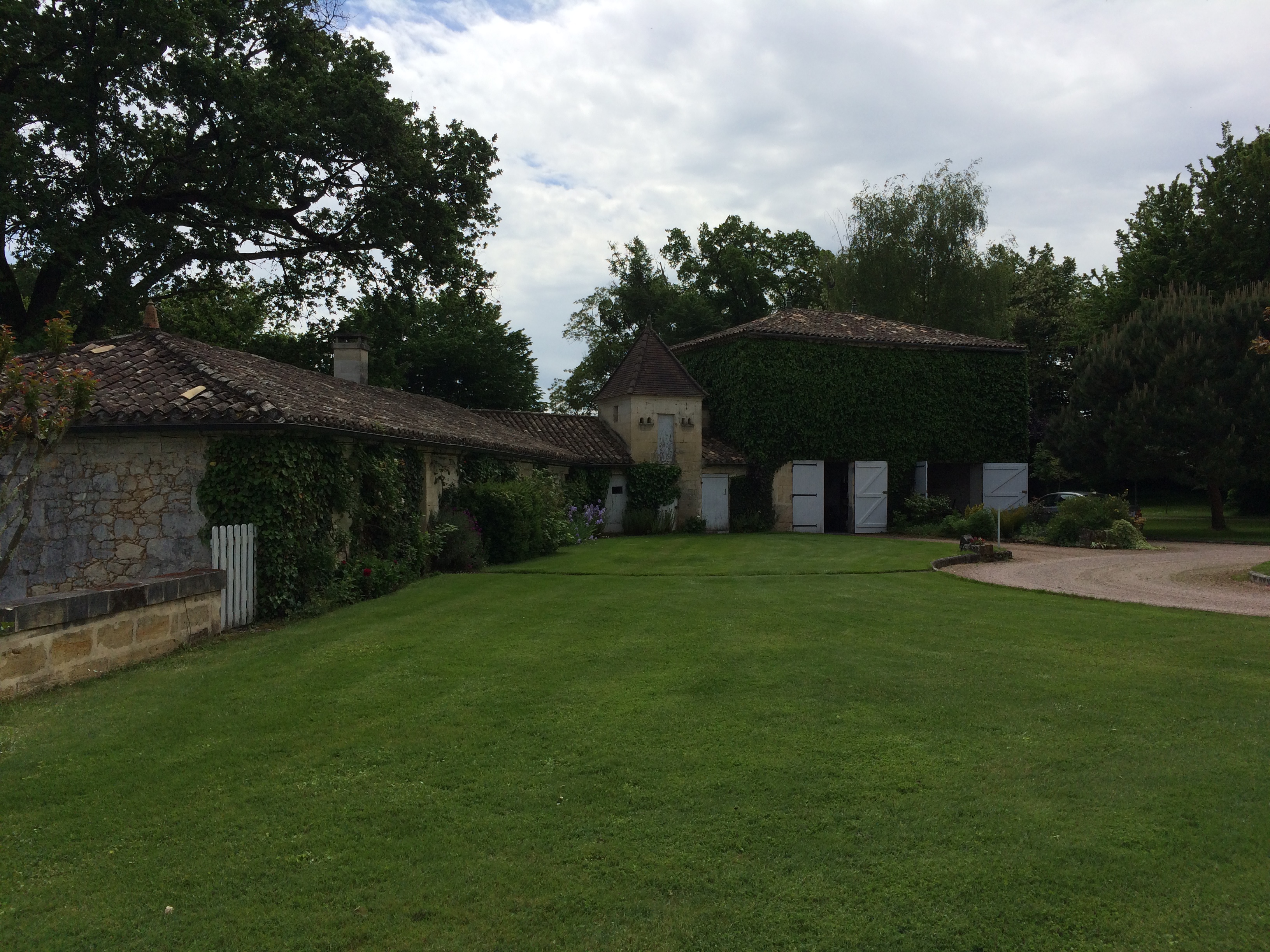
2015-05-07 13.29.43 2015-05-07 14.08.47 2015-05-07 14.08.55

Located in the St. Emilion (LINK), area, the property and its chateau overlook a beautiful valley and Puisseguin, the village below.

The vineyard of 41 hectares (101 acres), planted with Merlot (75%), Cabernet Franc and Cabernet Sauvignon is located in the town of Puisseguin (LINK), in the Bordeaux Region.

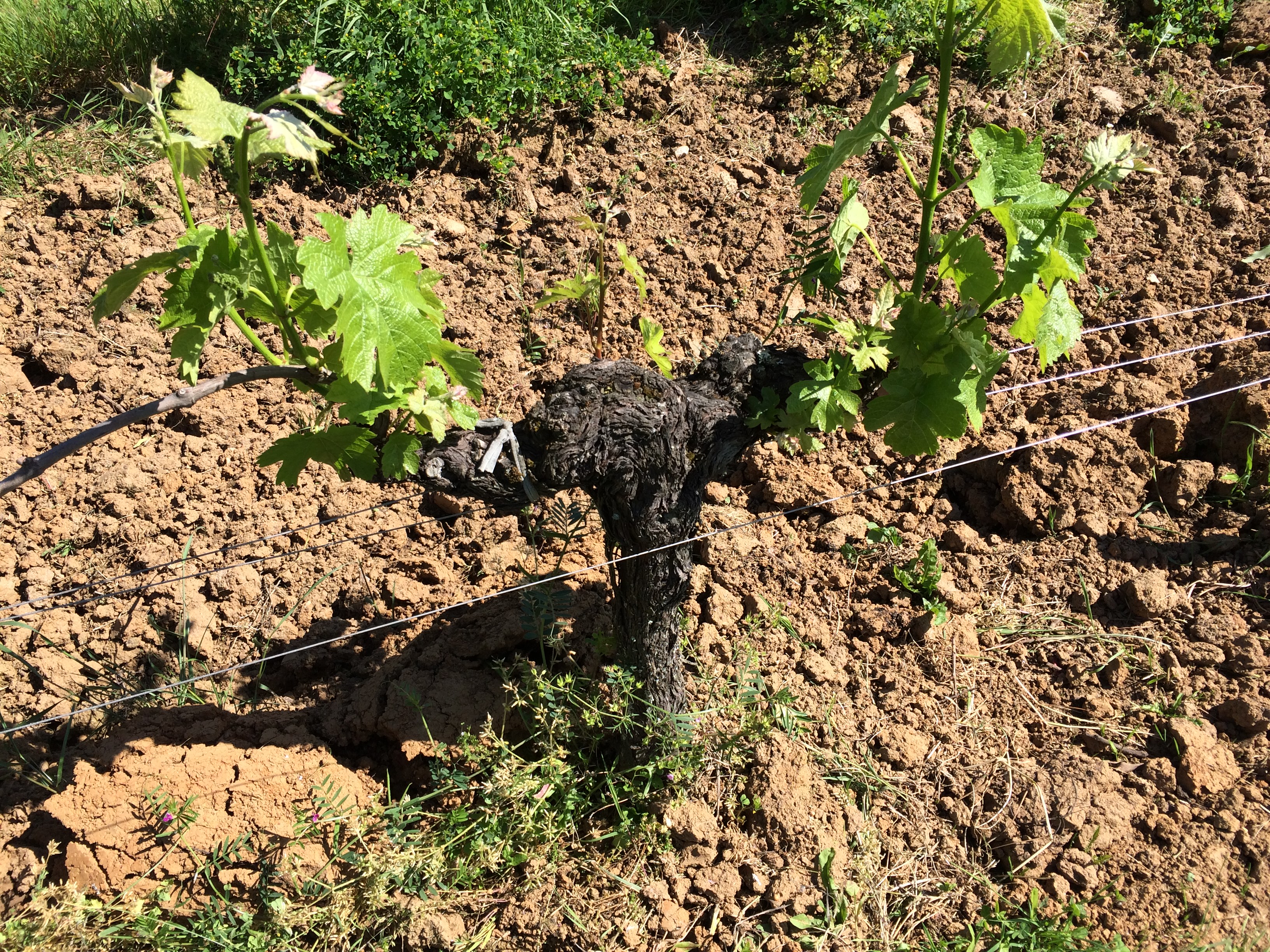
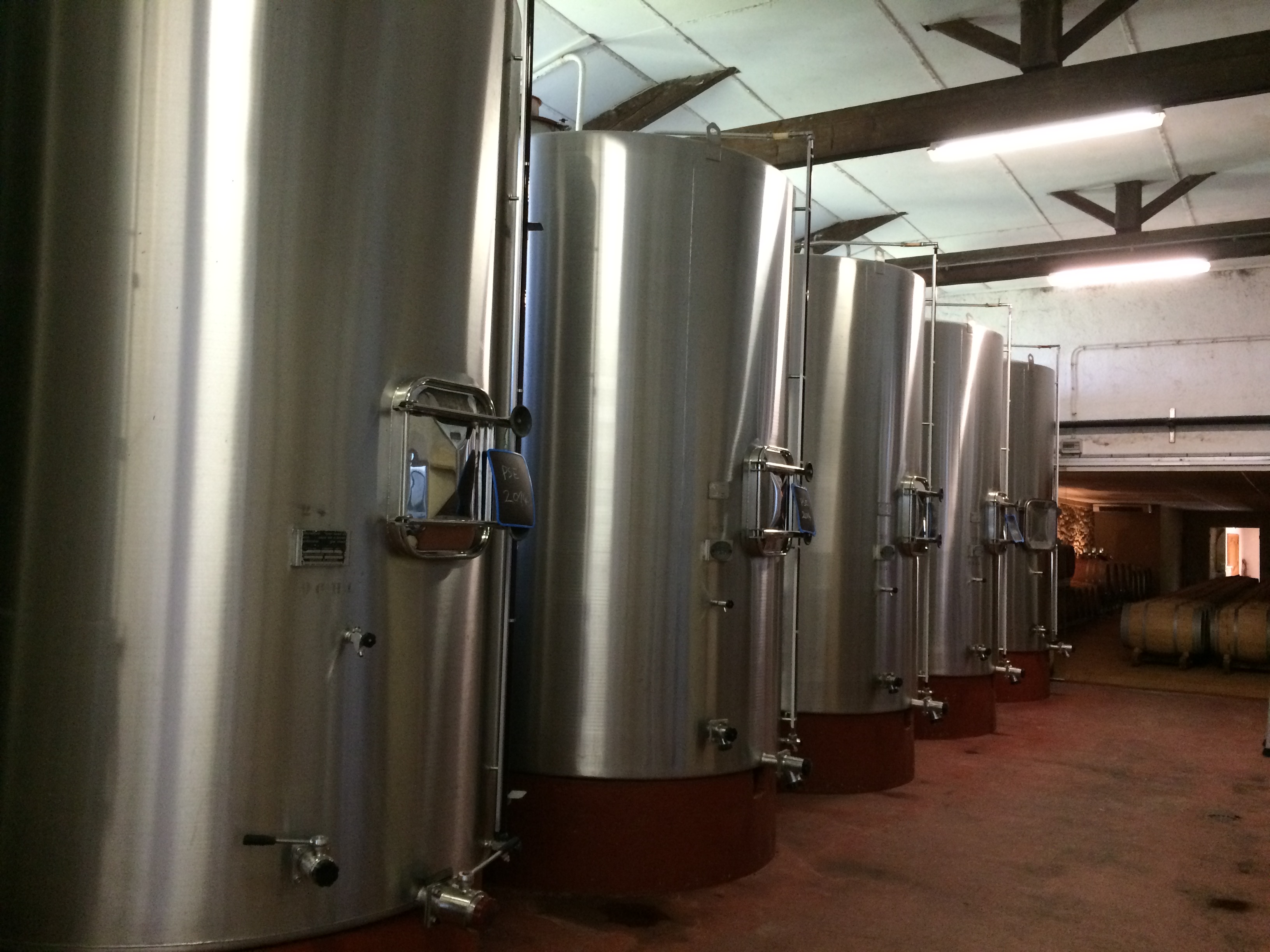
2015-05-07 16.02.08 2015-05-07 16.02.12 2015-05-07 16.02.17

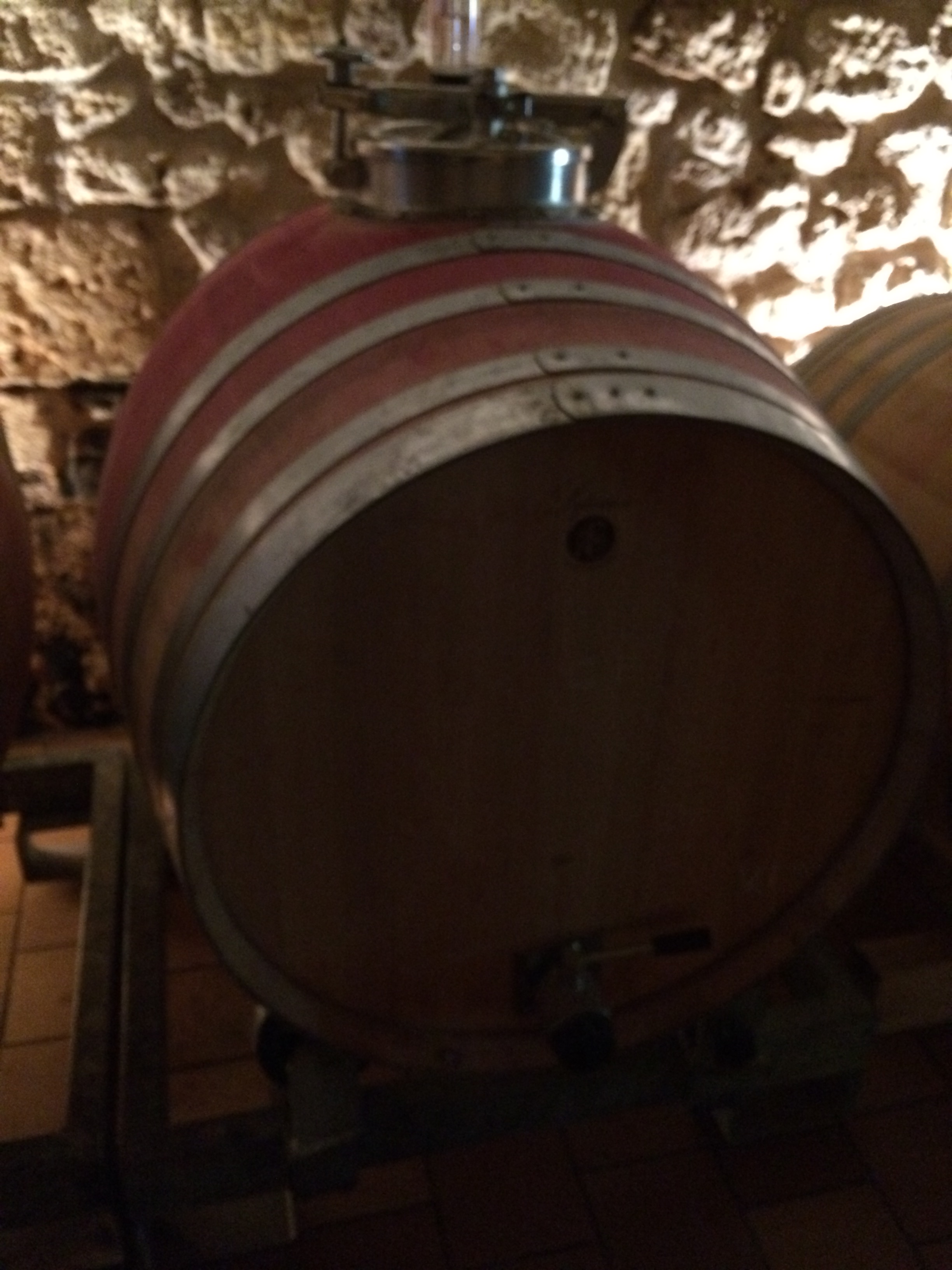
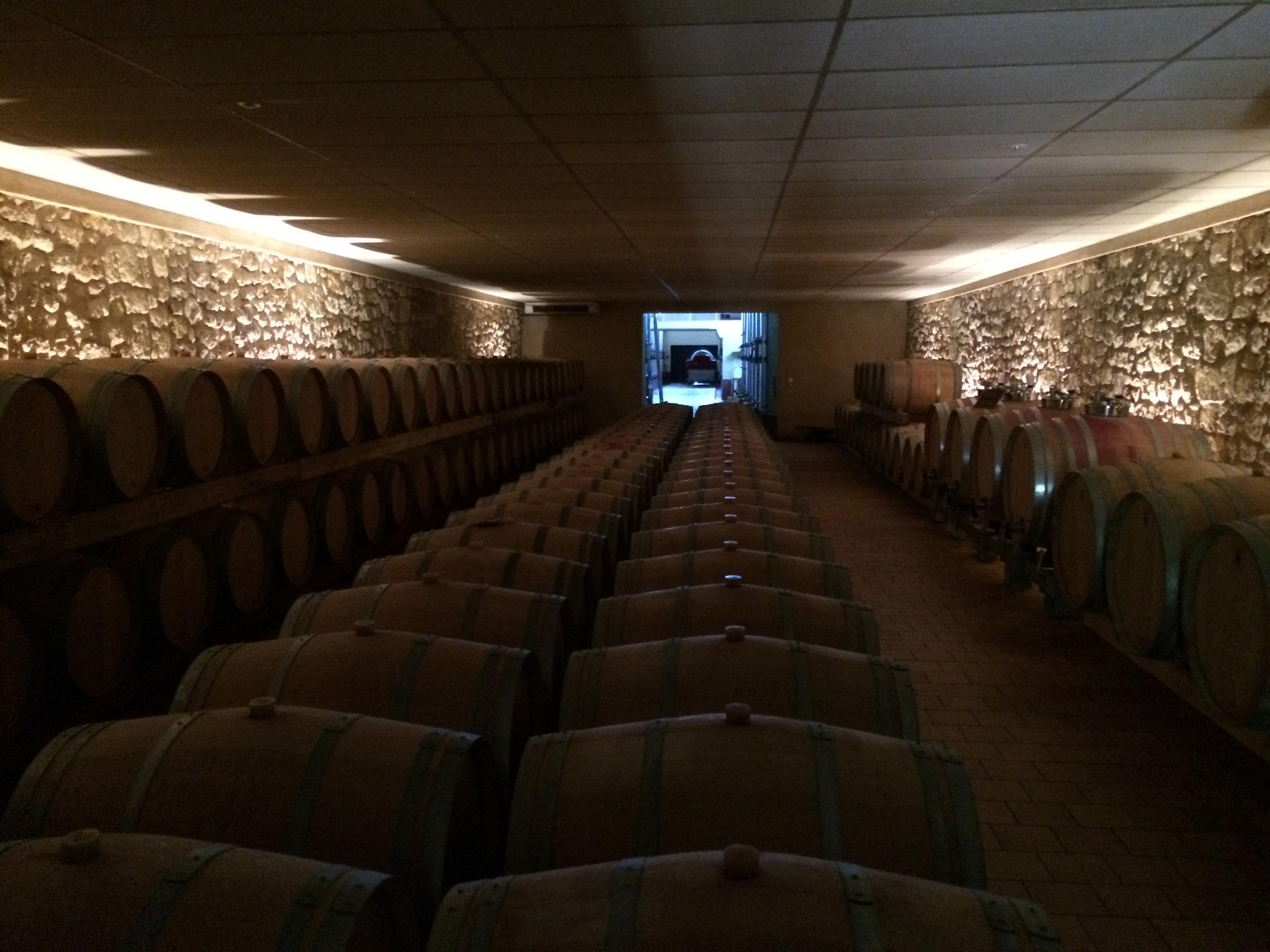
We walked around the beautiful grounds, toured the barrel room and the wine making areas, with the vast fermentation vats, did some tasting, then got a tour of the vineyard with Eric. They have been converting to a fully-organic vineyard over the past five years, and have their first vintages under that regimen produced. This required quite a bit more work for them in the vineyards, but they feel that it is worth it for environmental and health reasons.
2015-05-07 15.11.51
A special barrel design to aid in-barrel fermentation. This one is Merlot.

2015-05-07 15.10.52 2015-05-07 15.16.22

The wines that they produce at the Chateau are all reds – mostly Merlot, as it the case with most Right Bank producers in Bordeaux. The blends vary from year to year, but normally have at least 70% Merlot with lesser amounts of Cabernet Franc and Cabernet Sauvignon. Their 2012 Chateau Guibeau (LINK) blend is 80-10-10.
2015-05-07 15.24.34 2015-05-07 15.24.42

2015-05-12 21.16.10

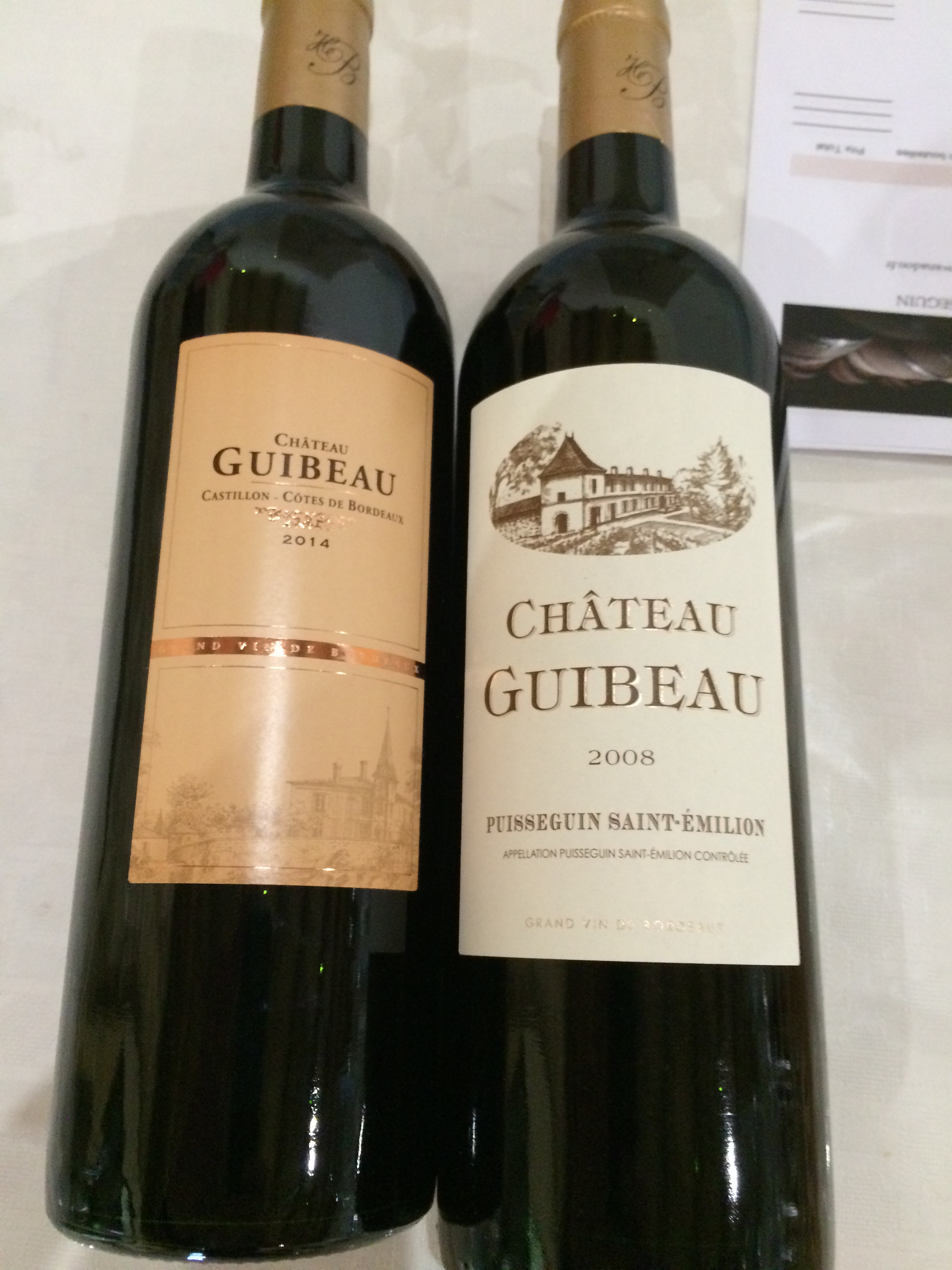
The Chateau Gibeau that we tasted, the 2012, shows great promise – it has a good balance, moderate tannins, a nice sense of dark fruit and a hint of minerality. It should improve with age. The 2008 Chateau Guibot La Fourvielle Puisseguin Saint-Emilion (LINK) was a revelation. This 85% Merlot, 15% Cabernet Franc beauty is rich with dark fruit, moderate tannins and acidity, and an underlying minerality that strikes both the nose and the palate in a very nice way. This wine should age well, but is ready to drink now. We bought several bottles to bring to the states, but two have disappeared so far on our journey home.

2015-05-07 15.28.28
Jim and Brigitte Destouet Bourlon in the Chateau Guilbeau tasting room.

There is also a guest house to rent on the Chateau property – here is the (LINK).

This is a very good house, doing very good things – look for their wines and visit when you are in Bordeaux.

IN BORDEAUX – LE WINE BAR

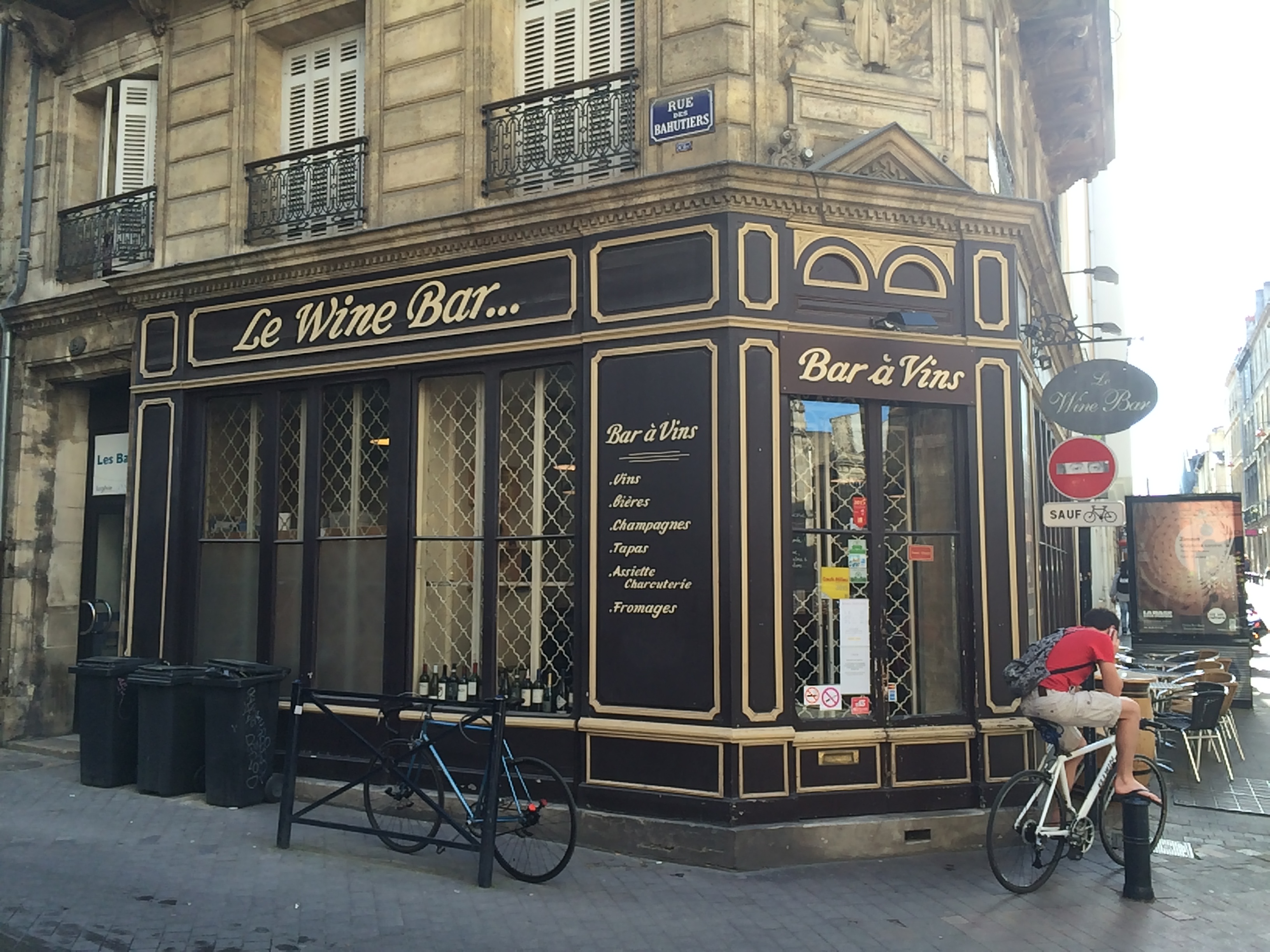
Le Wine Bar in Bordeaux, is always at or near the rankings of best wine bars in Bordeaux. There are a number of reasons for this, but Giancarlo is the main one – the co-owner and host is a raconteur about all things wine.
2013-05-22 21.29.03
Giancarlo and Dorianne on a previous visit to Le Wine Bar.

I visited Le Wine Bar tonight to talk about bringing some tour groups in for a special evening during the next year. I met with Ginacarlo Savini and Emmanuel Cadei, the owners to discuss our options. Ginacarlo handles the wine and the front of the house duties and Emmanuel handles the kitchen and all things food. We came to an agreement and our entire Bordeaux and Paris Tour Packages will be announced soon.

2015-05-06 18.47.32
Le Wine Bar – Interior.

After our meeting, I stayed around to spend some time talking with Giancarlo and sampling some wines and some of the food. I started with a glass of 2011 Chateau Beauregard, a Pomerol red blend. Very nice, smooth and excellent with the Charcuterie and Fromage Plate served up by Emmanuel. Now, the food at Le Wine Bar, basically, appetizers and platters of meats and cheeses, lean heavily to the Italian, as that is Giancarlo’s heritage.

Le Wine Bar is not a high-end fancy place. It is very down-to-earth, and features less expensive wines for the most part. But, when you look at the bottle list, it is a different story. A wide range of wines from both the Old Word and the New World are available, and at good prices.

2015-04-29 18.08.03
Le Wine Bar – Exterior.

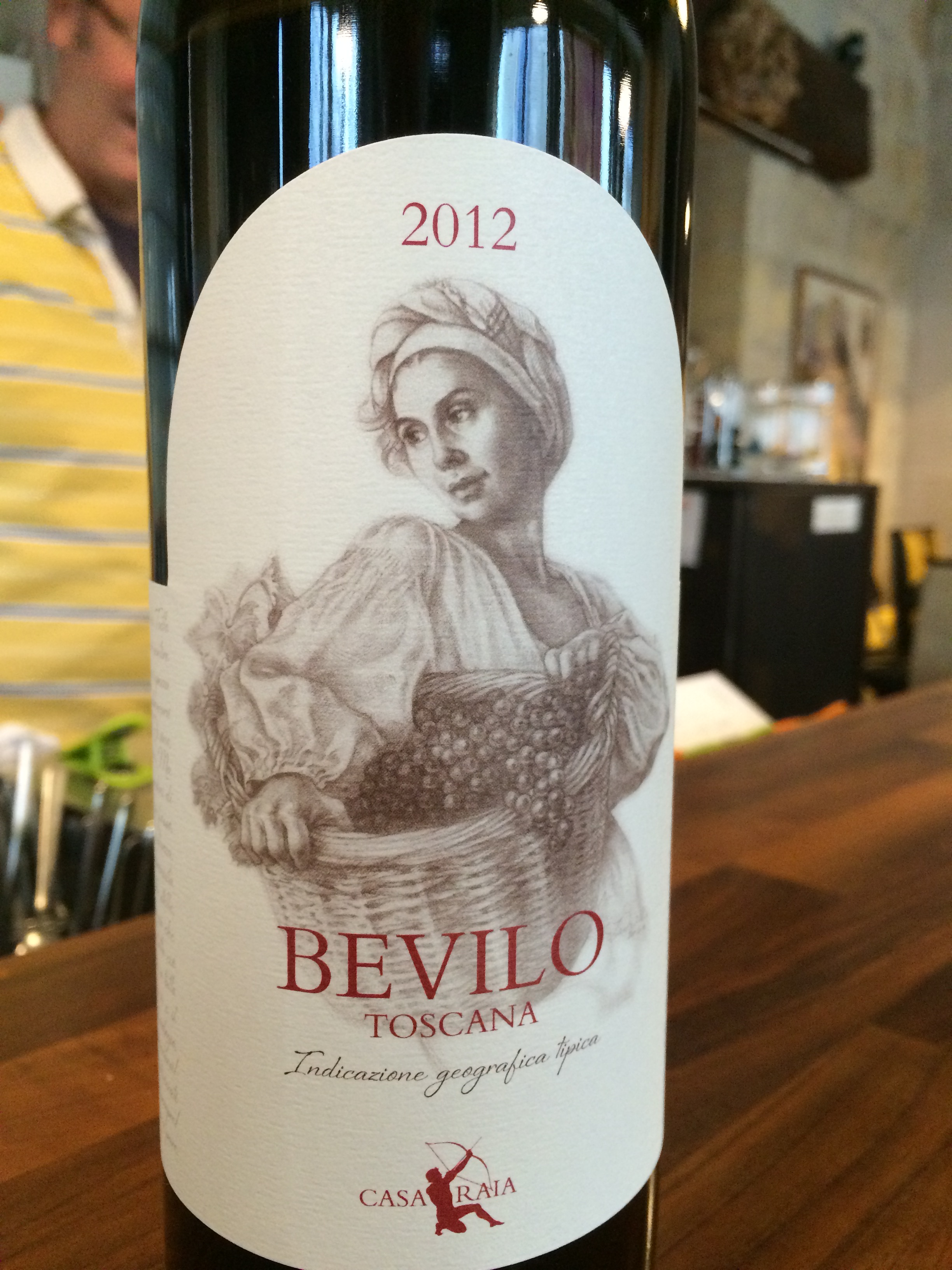
So for my second glass (and for the third) of wine, I asked Giancarlo to give me something that he enjoys. He opened a bottle of 2012 Bevilo Toscano, a Tuscan Bordeaux-style blend of Sangiovese, Cabernet Sauvignon, and Merlot. An amazing wine (apparently not available in the US) with very up-front fruit and medium tannins. Very velvety on the mouth with a long finish. The wine was noticeably better with the Italian Charcuterie and Cheese than the Bordeaux was. Coincidence?

2015-05-06 19.04.33 2015-05-06 19.04.47

If you are coming to Bordeaux, put Le Wine Bar on your list. Or, you can join us on our upcoming wine tours and visit Giancarlo and Emmanuel with us. More information coming in June!

BORDEAUX – ARE THE WINES READY TO DRINK?

Dorianne and I are in Bordeaux for eleven nights, both to enjoy this Mecca of great wine, and to begin the process of setting up some wine tours here to begin in November.

After a couple of nights, I am surprised that there is a similar issue with restaurant wine lists here that I have found in the US – many of the Bordeaux’s listed are not ready to drink! Note that we have not been to any top of the line restaurants, but still, we are IN Bordeaux!

We will be researching this further, beginning at lunch today at Le Noailles, a favorite spot. More later!

An old grape v
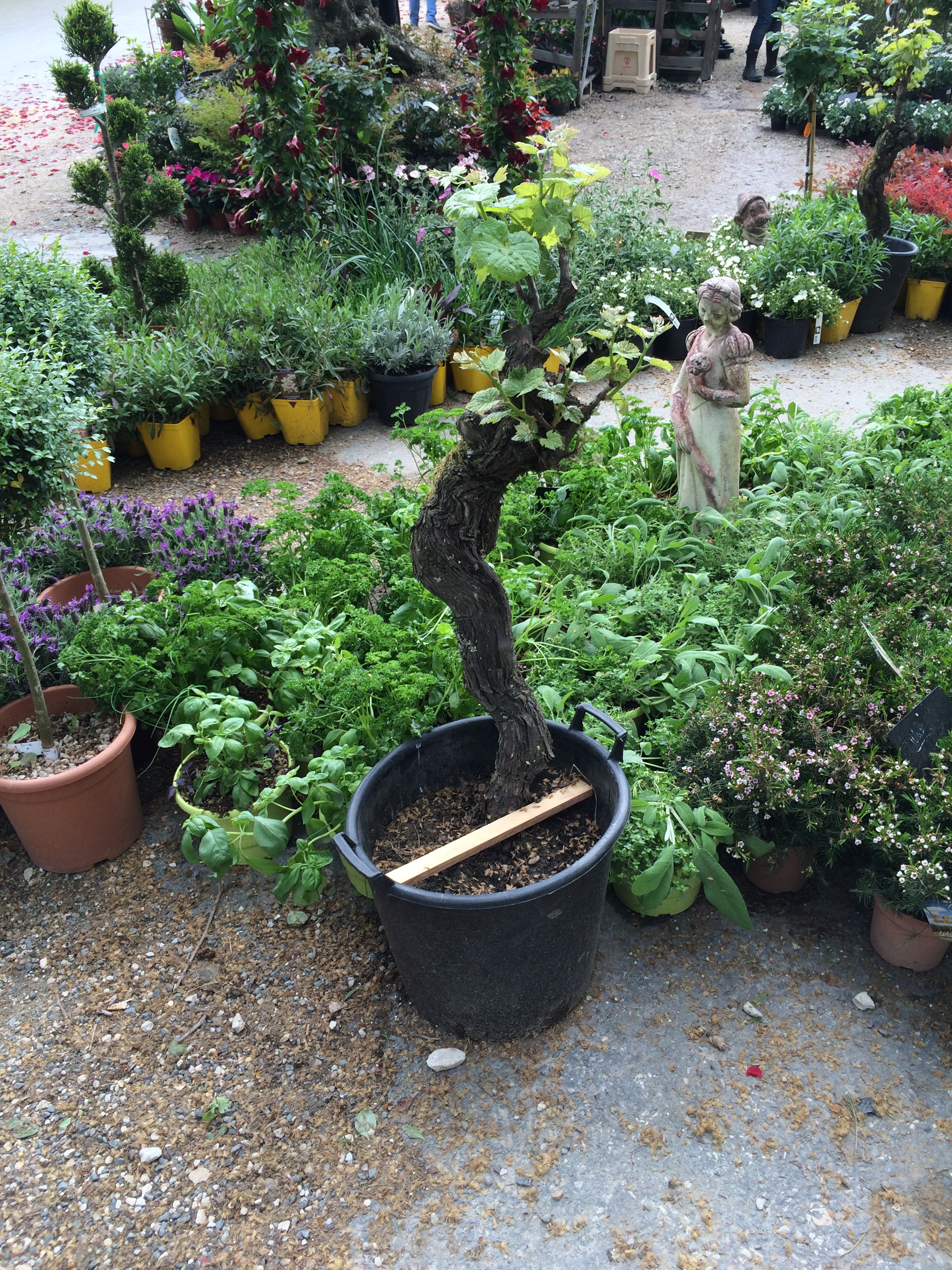
An Old Grape vine (of unknown vintage) for sale at a Bordeaux Garden Show.

6 WEEKS IN SPAIN – SUMMING UP

Our trip to Spain has been a wonderful experience. Madrid, Seville, Jerez, Cordoba, Sitges, and Barcelona – each unique and each an expression of the overall Spanish culture and way of life. And the wines! We stayed mostly in AirBnB.com (LINK) apartments with a couple of hotels for shorter stays. We walked almost everywhere and used the trains and busses – we only had a rental car for one week.

We began with five days in Madrid, the capital and one of Europe’s great cities. We stayed near the old town and the Palau  Real (Royal Palace), where there were a variety of restaurants, bars, cafes, and clubs. Madrid also has the high-end nightlife of a major city, although things are still a bit depressed here as the overall economy struggles to recover from the recession that hit Spain particularly hard. That said, it is a magnificent place to visit and we will surely return for a longer stay. The Prado Museum is among the very best in the world.

Slide1

Tapas is the king of food in Spain, and since the recession, these small plates of nearly infinite variety have moved from the status of late afternoon or late night snack to the evening’s repast. The variety and quality of Tapas at the many small tapas bars and cafes is simply astounding. And there is inexpensive and very good wine everywhere! During our stay in Spain, we probably averaged 2 euros a “copa” or glass. On most wine lists in the tapas bars, ALL of the wines were under 20 euros a bottle (and the dollar and euro are currently nearly at par)! So a Tapas dinner for two – three to five plates and two to three glasses of wine each – was almost always under 20 euros. This was true everywhere we went. There are more expensive places to eat, but the vast majority of food establishments in Spain are very, very reasonable.

After five days in Madrid, it was onto the Renfe High Speed Train for a nice ride down to Seville (Sevilla), the largest city in southern Spain’s Andalusia area. Seville is a gem of a city with a great history and a bustling food and wine scene. It is a home of Flamenco, and we saw some amazing shows while in town. We stayed for 3 1/2 weeks in an AirBnB.com apartment near the center of the old town. We were literally surrounded with history and the hustle and bustle of a busy city.We explored the city’s Tapas bars, the Arabian Spas, the Mercados (markets), along with the many historical and religious sites. We could have stayed longer. The people are amazingly welcoming, very proud of their city and their culture. We met many locals through our AirBnb host.

Slide2

Slide3

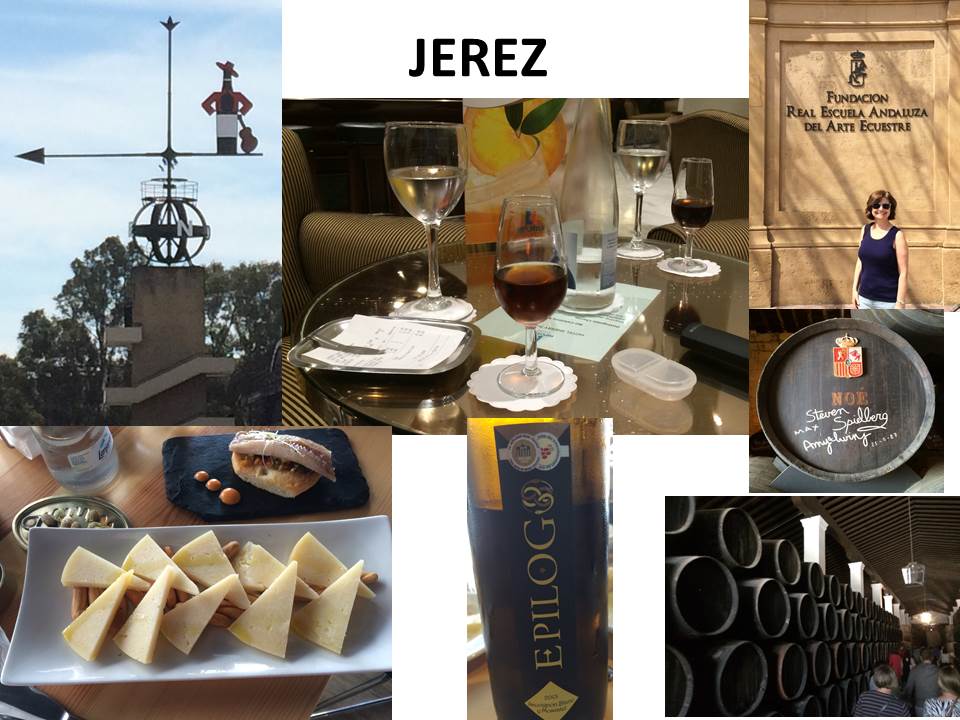
While in Seville, we did side trips. One was a weekend in Jerez, the center of Andalusian Sherry production. Jerez is like a mini Seville with a historical city center, but with numerous Bodegas where Sherry is produced and Tabacons, bars where Sherry is served out of the cask and where, frequently, Flamenco shows are staged. It is also home to the Royal Andalusian Horse Training Center, which we visited for a performance.

Slide4

After Seville, we flew to Barcelona’s Airport (BCN), but did not go right to Barcelona. We rented a car and went south a bit to Sitges, a wonderful Mediterranean Beach Community. Sitges reminds me of the French Riviera, only it has sandy beaches and that amazingly inexpensive Spanishn food and wine. We stayed at a beachfront hotel for seven nights and explored the food and wine scene a bit. Sitges is near the Penedès D.O. (LINK) wine region. You can read about our winery visits there here (LINK) and here (LINK). Sitges was relaxing and enjoyable.

Slide5

Then it was on to Barcelona for the final week in Spain. This was my third visit to this wonderful city. Part of the reason that we came was that both Dorianne and I were presenting at a conference at the ESADE Business School (LINK) on Spirituality and Creativity in Management. We still managed to squeeze in some wonderful food and wine, though. Also, Barcelona is home to all things Gaudi – that’s Antoni Gaudi (LINK), the genius visionary architect and designer. We stayed a bit out of the city near the FC Barcelona Stadium, which was a great choice.

Slide6

So Spain has cast its spell on me once again. It is with mixed feelings that we depart for France tomorrow, as much as I love France. Spain was hit hard by the financial collapse, but it is coming back gracefully, as far as I can see. And Spanish Wines – tintos, blancos, cavas, and Sherrys – are among the best values in the world today. So go to your local store and ask for something Spanish and then make a few small plates at home and sit back and savor the culture that brought us so much and continues to do so.

Some photos from our trip.

2015-03-30 21.26.25 2015-04-10 11.03.25 2015-04-15 12.35.47 2015-04-17 13.54.02 2015-04-21 12.59.54 2015-04-21 15.02.37 2015-04-22 11.51.10 2015-04-22 14.50.14-1 2015-04-23 17.23.33

2015-04-08 22.02.19

FREIXENET CAVA (Sparkling Wine) – THE GOOD STUFF

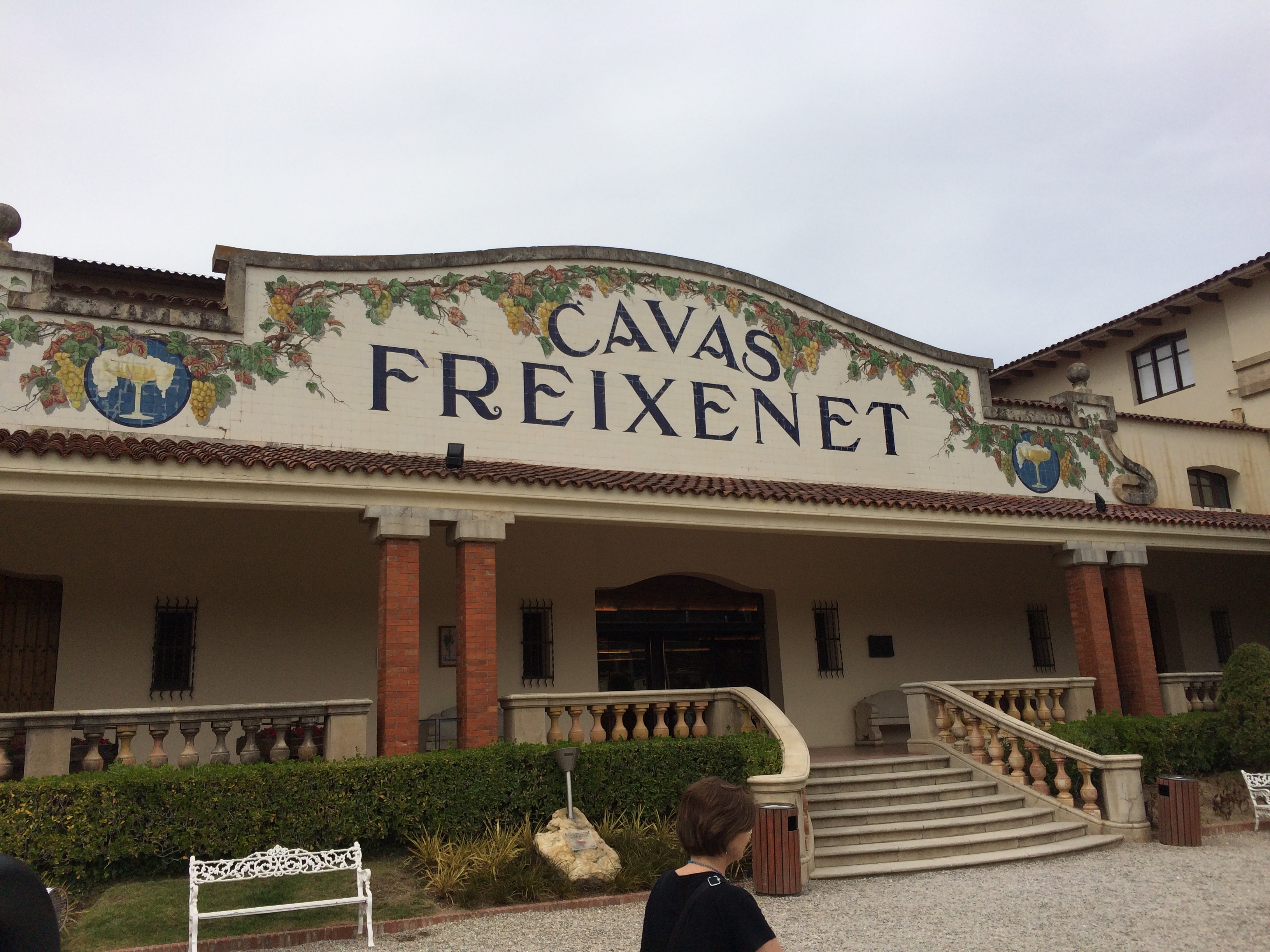
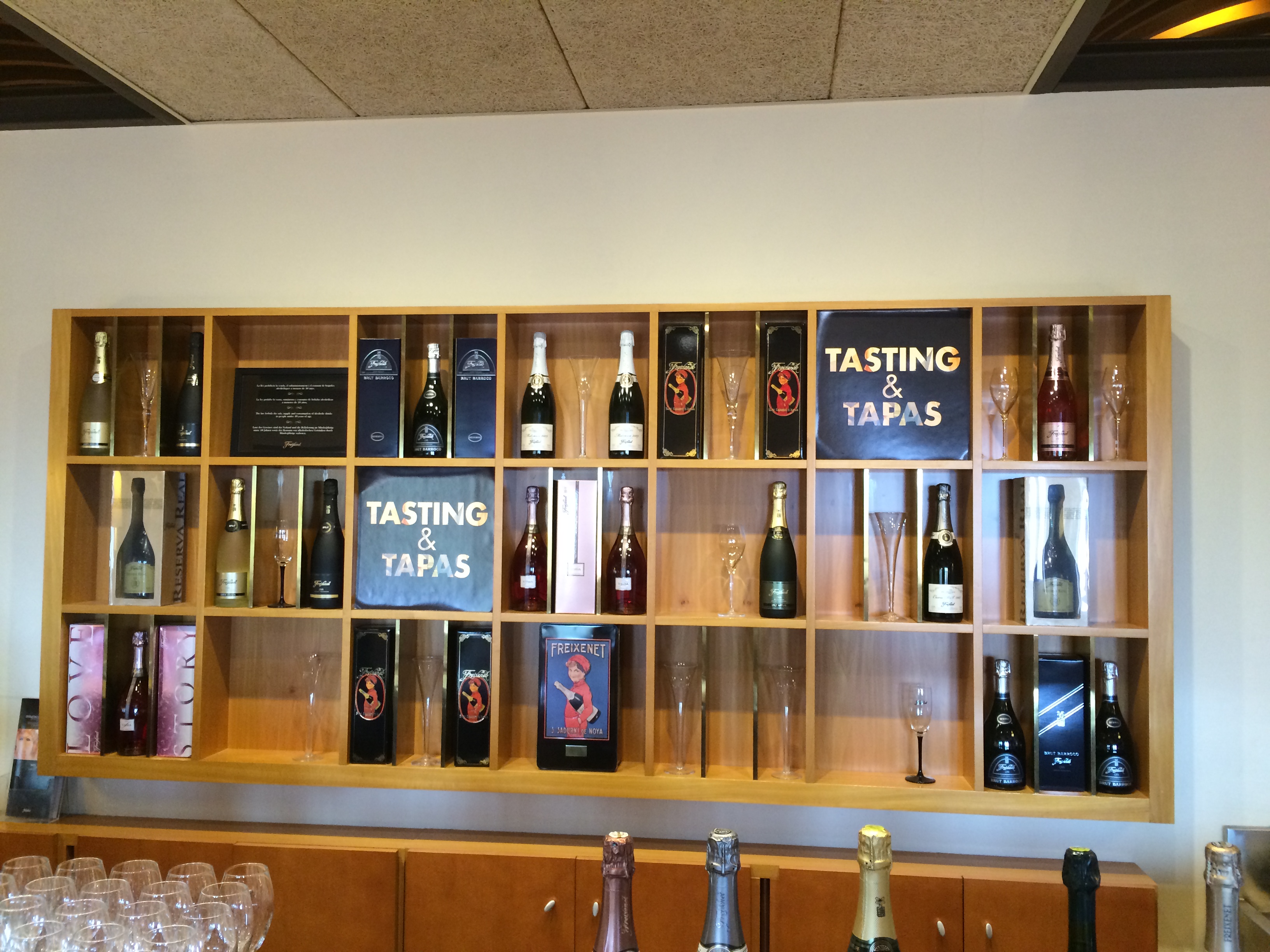
During our recent visit to the Penedès DO near Barcelona, we also visited the legendary Cava producer, Freixenet (LINK). Known in America mostly as a producer of very cheap sparkling wine suitable for college parties and sports celebrations (where most of the wine is shot out of the bottle), it is often hard for U.S. consumers to imagine high-end Freixenet Cavas. But that is what we had during our visit to the winery.

2015-04-15 16.18.12 2015-04-15 16.19.40

Cava (LINK) is the Spanish sparkling wine, similar in processing to French Champagne, but using different grapes and the name “Cava” is not limited to a specific geographic region or appellation. The primary grapes used in Cava are:

  • Macabeu (white)
  • Parellada (white)
  • Xarel·lo (white)

Other grapes:

  • Chardonnay (white)
  • Pinot Noir (red)
  • Garnacha (red)
  • Monastrell (red)

Freixenet uses the first three almost exclusively.

We did not do a tour of the extensive facility (90 million bottles per year) in Sant Sadurní d’Anoia. We went right to the tasting room, after wandering around a bit and seeing some of the marketing vehicles the winery has used over the years and some of the “art” on display in the main building.

2015-04-15 16.17.50 2015-04-15 16.18.08 2015-04-15 16.18.16

The tasting room is in the 3rd floor of a large production building that has a large gift shop on the first floor where you can get your “inexpensive” black bottle of Freixenet  that you remember from your formative years, along with lots of other things. The tasting room is large and well appointed – and handled a tour group of about 50 young people easily while we were there.

2015-04-15 16.37.25 2015-04-15 16.37.28

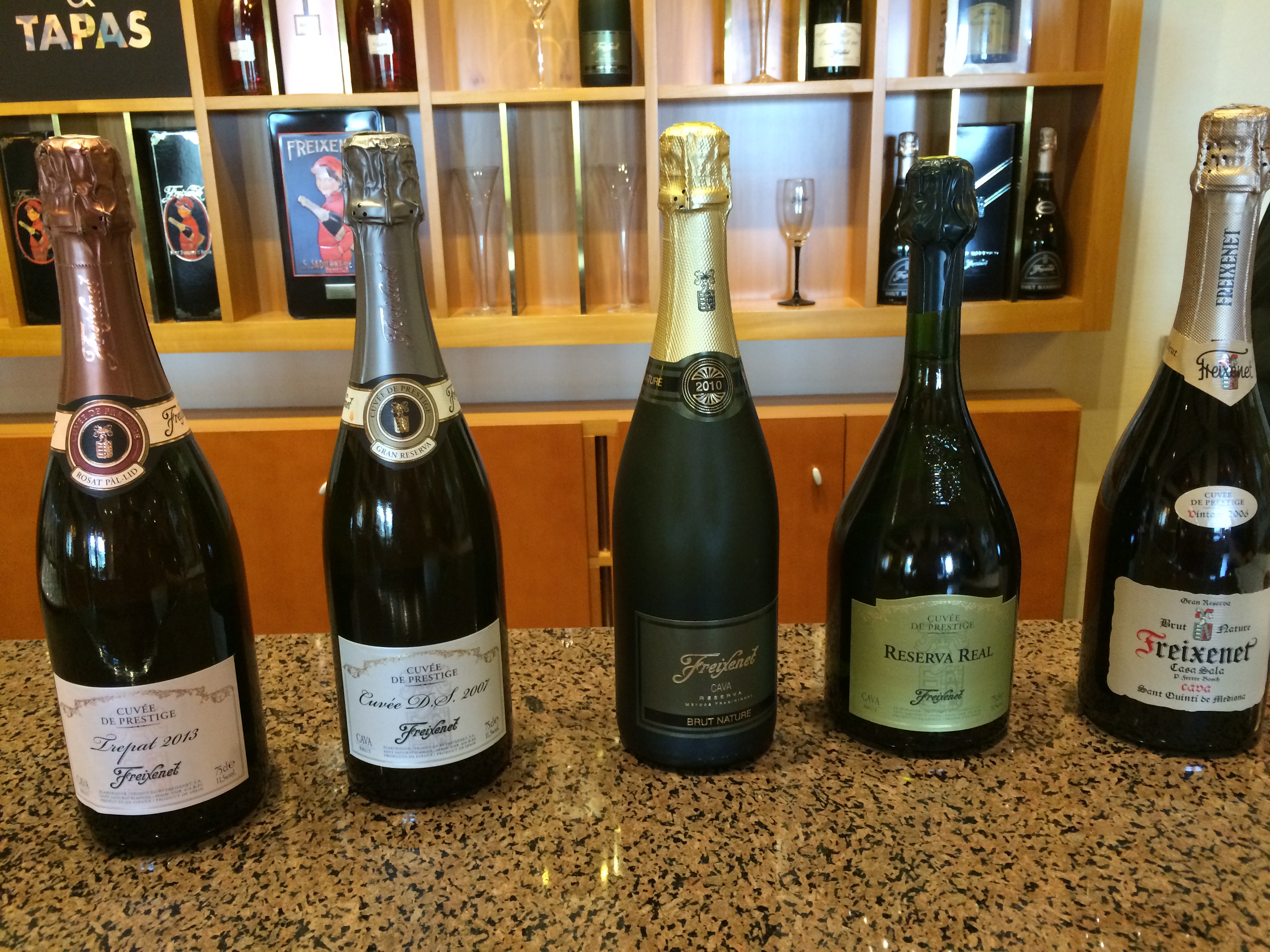
We opted to taste four wines from the Cuevèe Prestige Collection, their higher end cavas, and one, the Brut Nature Reserva 2009, that is the favorite of the locals in Spain. Now, Dorianne is more of a sparkling wine fan than I am, and she was the driving force behind our visit – having many fond, if foggy, memories of evenings where that black bottle played a role. But I was game, so we tasted.

2015-04-15 16.39.14 2015-04-15 16.48.47

We began with the Trepat 2013, a Blanc de noirs” style cava, that is a single vineyard wine – rare in this business. The wine was sharp, tart, and had a very strong degree of carbonation. This would be a great wine with a ripe cheese.

Next, we tasted the Cuvèe DS 2007 Gran Reserva, using Macabeo, Xarel•lo and Parellada grapes. It is only produced when the harvest is very good. This wine was more balanced than the Trepat and had a nice sense of fruit and not too much sugar. 

Then, the Brut Nature Reserva 2009, the cava that sells the best in Spain (according to the tasting room staff). The wine is only produced in certain years. It is a smooth and well-crafted cava that would accompany a meal of fish or chicken, or, well, just about anything.

Next, the Riserva Real, a non-vintage cava, made in the Champagne style, meaning a blend of vintages. This cava, like some of the others, is aged in chestnut barrels. This wine was very nicely crafted, with a hint of minerality on the nose and a very smooth mouthfeel. Fruit and spice. A really nice sparkling wine.

Finally, the CASA SALA Brut Nature, Gran Reserva 2005, the highest priced wine we tasted. This wine was similar to the Riserva Real, but not quite as well balanced. The wine is  produced at the original properly of the family (The Casa Sala’s) via manual harvest, pressed in a wine press from the Champagne region that is more than 150 years old, fermentation with native yeast, and wine decanting and maintenance by gravity, without using pumps. This brut nature has no dosage and is reminiscent of the traditional cavas of 50 years ago. Two traditional grape varieties are used for the blend, Xarel•lo and Parellada, and their percentages in the cuvée change from year to year. 

If you come to the Barcelona region, a visit to the Pendedès DO is worth your while. I would say that the better cavas of Spain can take a seat beside most French Champagnes, and, like most Spanish wines, they are a great value.

IN CATALONIA – A WINE REGION FULL OF LIFE

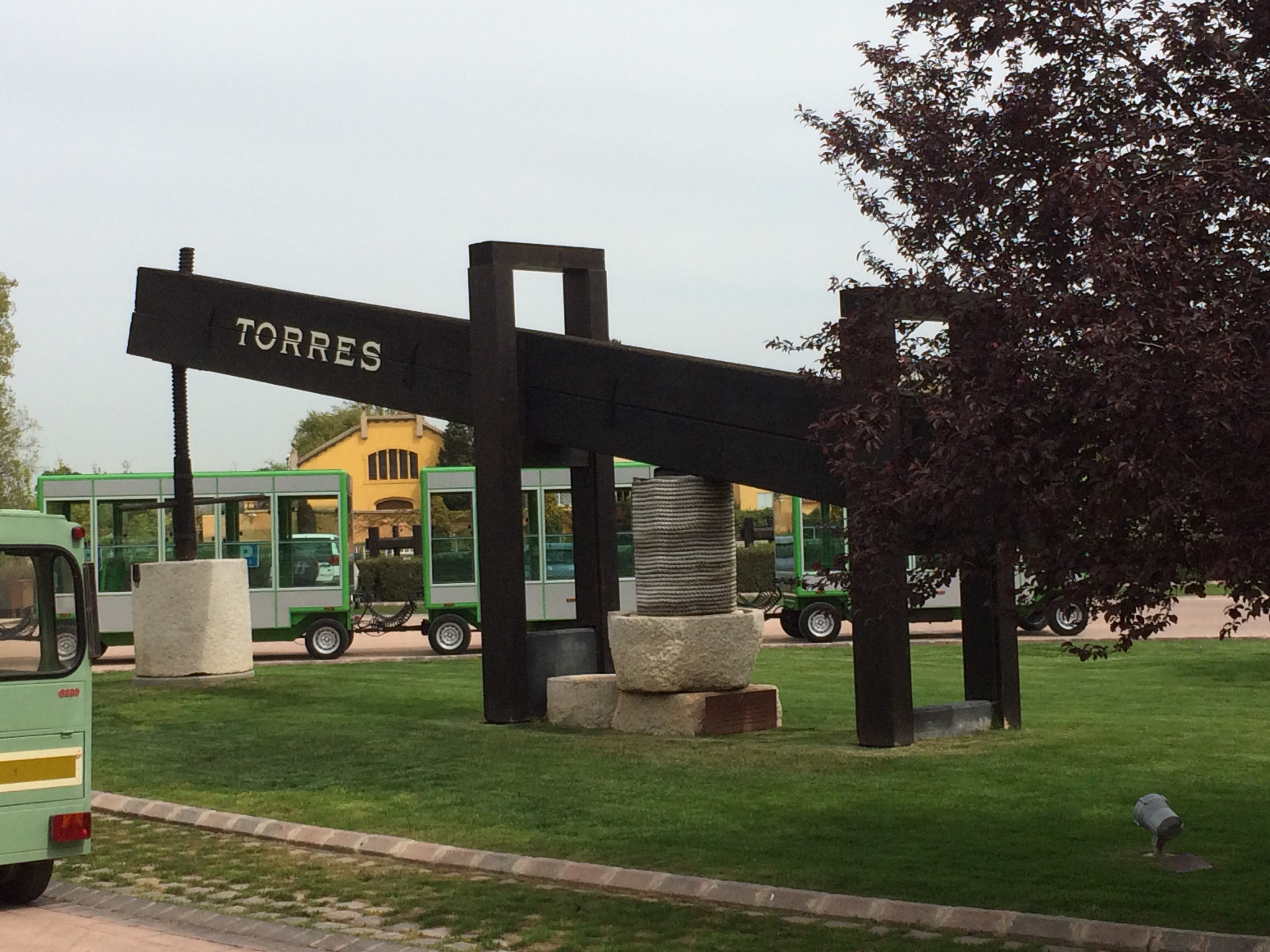
Dorianne and I are in Sitges, Spain this week, which is a beach town south of Barcelona. Just east and slightly inland from Barcelona is the Penedès DO Wine Region, home to a variety of wines, including Cavas, the sparkling wines of Spain. More about cavas in later posts. This concerns our visit to Bodegas Torres (LINK), in Villafranca del Penedès, one of the largest wine makers in Spain.

penedes map catala
The Penedès DO Wine Region

Bodegas Torres is truly a huge operation with a storied history and wine production all over the world (LINK). The Penedès Winery is a state of the art facility producing wine and brandy and is located next to the family home. It is roughly on the level of a Mondavi or a Gallo-sized operation, to give you an idea. The wine tour (which we were given alone with a guide, Archie, a young man from England) includes a tram and Universal Theme Park-like effects, which were inspired, we learned, by a family visit to Universal Studios in Los Angeles. So this is not your boutique winery.

2015-04-15 12.34.47 2015-04-15 12.34.58 2015-04-15 12.35.47 2015-04-15 12.36.32

That being said, the company is taking strong steps at environmental sustainability (LINK), including recycling, energy and land conservation, increased organic and biodynamic farming practices, and the like. The tour highlights many of these practices, which the company obviously sees as a good way to market their wines. I agree with them.

2015-04-15 12.36.06
Reservoir used to clean equipment – water is recycled through the artificial wetlands.
2015-04-15 13.38.42
Sand dome over a reserve cellar to provide insulation
2015-04-15 13.55.57
Pheremone capsule to keep flies from laying eggs in the grapes

2015-04-15 13.40.17

The winery facility in Penedès processes millions of bottles of wine annually. It has the look and feel of a place that has the resources to create whatever the owners want – the buildings are nicely appointed, the vineyards well tended, the equipment is in excellent condition, plus there are very nice touches for the customer at every turn. There are about a dozen wines and several brandies produced here. Our tasting after the tour was limited to five wines from three regions in Spain. Archie our guide, has been with the company for about a year and is working toward wine certifications in England. His plan is to work in the wine industry. He showed a great deal of knowledge about the entire process, and he was able to answer most of our questions. The tour would be an excellent introduction for someone new to wine production, and we learned a thing or two as well.

2015-04-15 13.43.33
Barrel Storage Cellar
2015-04-15 13.51.32
Bottle Aging Facility
2015-04-15 13.54.35
Our guide, Archie, describing pruning techniques.

2015-04-15 13.54.18

As to the tasting – the wines we tried – two whites (blancos) and four reds (tintos), were all well-crafted and balanced wines. We tasted across several of the labels of the winery – (there are dozens). The blancos, were a 2013 Jean Leon Chardonnay from Penedès DO, and a 2013 Torres Fransola Sauvignon Blanc. The Chardonnay was 50% oak barrel aged and 50% stainless steel. It was similar to the increasingly popular style of Chardonnay from California, which is less buttery and powerful. The wine was refined and nice on the nose and in the mouth. Very good. The Sauvignon Blanc was more in the French style – smooth and elegant. The wine did not jump out at you with citrus or grassy notes like New Zealand Sauvignon Blancs; rather it seduced you a bit – this wine would be amazing with shellfish, we both agreed.

The four tintos were also all well-structured and balanced wines. They included a 2012 Torres Altos Ibericos Crianza Rioja, a Tempranillo with good character. Moderate tanins and acid make this wine good for drinking alone or with food, such as barbecue or some wonderful Iberico Jamon. The second tinto, a 2012 Torres Celeste Crianza from  Ribera del Duero DO, a Tinto Fino (the name for Tempranillo in that region). This wine was more fruity and had lower tanin – but was clearly well-crafted. Very nice. Next, we moved on to the two higher-end wines in the tasting. A 2012 Torres Salmos a blend of Cariñena (60%) Garnacha Tinta (20%) and Syrah (20%) grapes from the Priorat DO. I have really enjoyed just about every Priorat wine that I have tasted, and this one was no different. A very dark, rich color, fruity and spicy on the nose, and bold fruit-forward in the mouth, very thick (but not unpleasantly so) mouthfeel and a long, silky finish. I really love this wine. Finally, we go to the 2010 Mas la Plana Cabernet Sauvignon from the Penedès DO. This wine brings a greater complexity with some mushroom on the nose and hints of minerality just behind the fruit. Good tanins and acidity balance on the tongue and the finish is smooth and elegant. I liked this just a tiny bit less than the Salmos. The latter two wines should age beautifully. You can research more details at the Torres links above. This may not be the winery visit and tour for everyone – it is a very large facility and run like one. But it does give good insights into the Spanish Wine Industry. There are a number of smaller wineries in the region as well.

2015-04-15 13.59.44
The Tasting Room at Torres
2015-04-15 14.01.31
The Blancos (whites)
2015-04-15 14.17.16
The Tintos (reds)
2015-04-15 14.46.03
Dorianne, Jim and Archie after the tasting.

GONZALEZ-BYASS IS THE LARGEST SHERRY MAKER IN THE WORLD

Dorianne and I spent Easter weekend in Jerez, Spain, both to take a break from the hectic Santa-Semana schedule in Seville, and to explore a bit of Sherry country. Andalusia, the southwestern region of Spain is known for its production of Sherry Wines.

2015-04-03 13.49.46
Lobby and Waiting Room for the Tours.

2015-04-03 13.46.29

2015-04-03 13.49.06

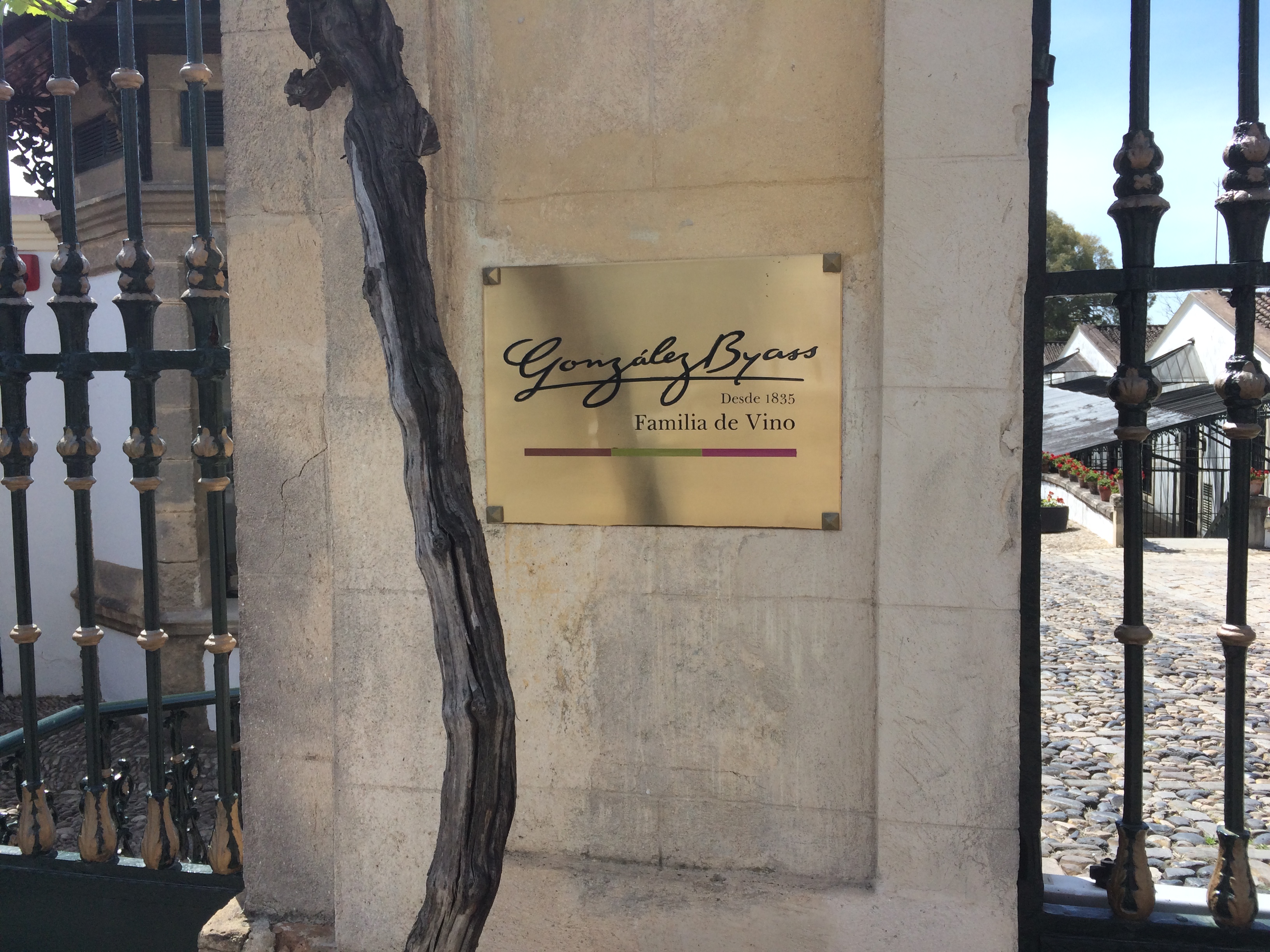
There are a number of bodegas or Sherry houses in Jerez. The only one open on Good Friday afternoon was Gonzalez-Byass (LINK), makers of the best-selling Tio Pepe and a number of other Sherries and brandies. Gonzalez-Byass is the largest Sherry producer and also has wineries in every major Spanish Wine Region – they are sort of the Mondavi of Spain. The bodega is located adjacent to the Cathedral of Jerez and The Alcazar – prime real estate to be sure.

The tour cost 16 euros, including a tasting of two wines and a plate of tapas. Gonzalez-Byass is a big operation, and the tour was extensive. There were groups taken out in Spanish, English and German while we were there. You also take a tram for part of the tour. It is very touristy, but I was impressed at the amount of information provided by our guide, Rachel and the expanse of the bodega. The tour is not an intimate experience, but it is a great introduction to Sherry wine production.

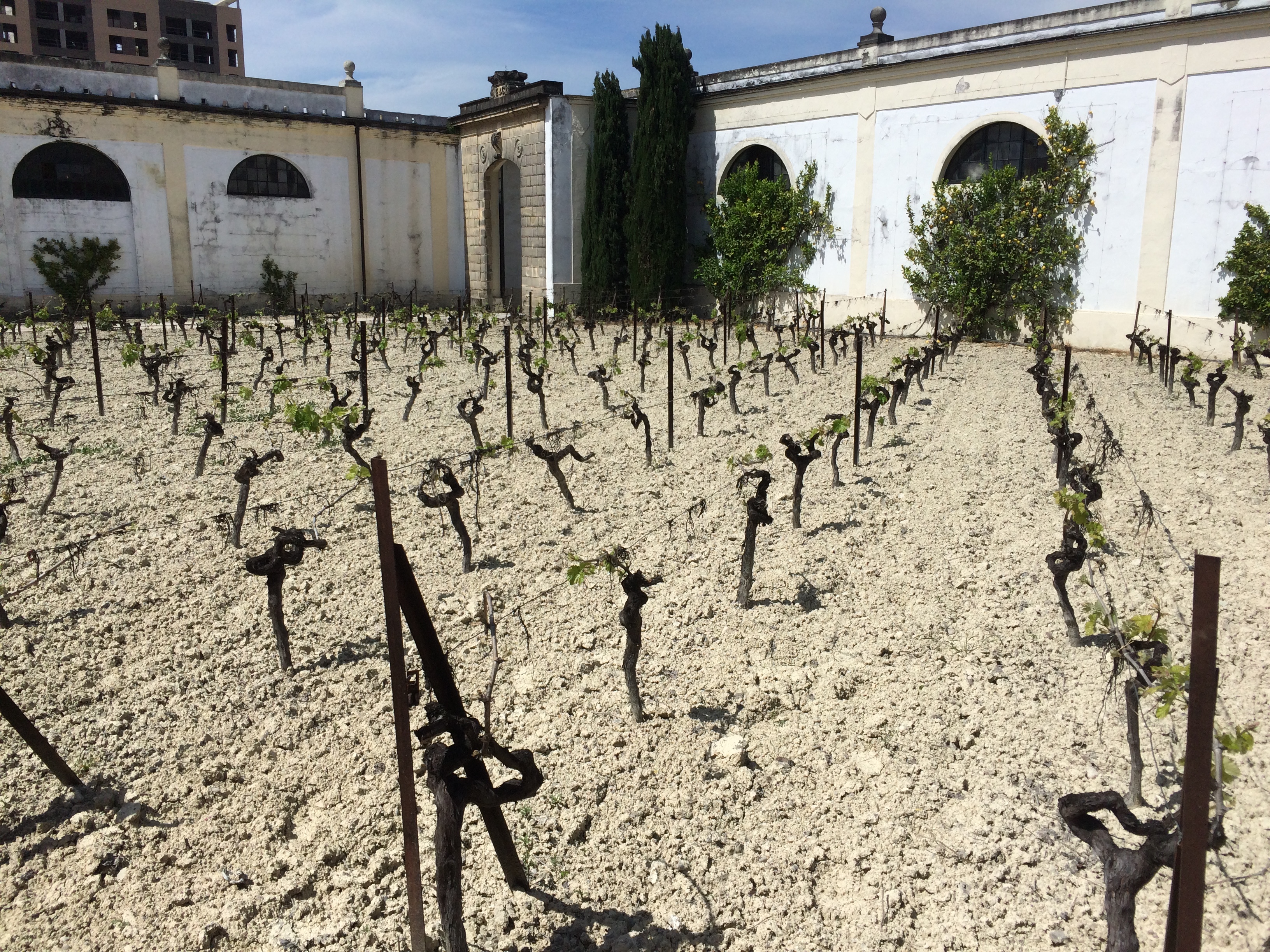
Sherry is made with only white grapes, primarily palomino, which grows well in the gray soil of the region. Dry Sherry or Fino is made from earlier harvests, sweet sherry or Cream or Dulces is made by adding late harvest grapes to the blend, in some cases, raisins.

2015-04-03 14.09.20 2015-04-03 14.34.23 2015-04-03 14.37.53 2015-04-03 14.38.28

Almost all Sherry is blended – a process where there is a stack of barrels four high. The bottom barrel contains up to 60 vintages, the second barrel is newer, the top barrel the current vintage. The winemaker takes 1/3 of the bottom barrel and then replaces that 1/3 with wine from the second barrel, and so on. Some from each of the upper barrels is added to the current wine being made. This, according to Gonzalez-Byass, results in a uniform product over time. There are some vintage Sherries, which are not made using this process.

2015-04-03 14.56.48
The grey soil of Andalusia.
2015-04-03 14.59.37
Samples of Brandies.
2015-04-03 14.59.53
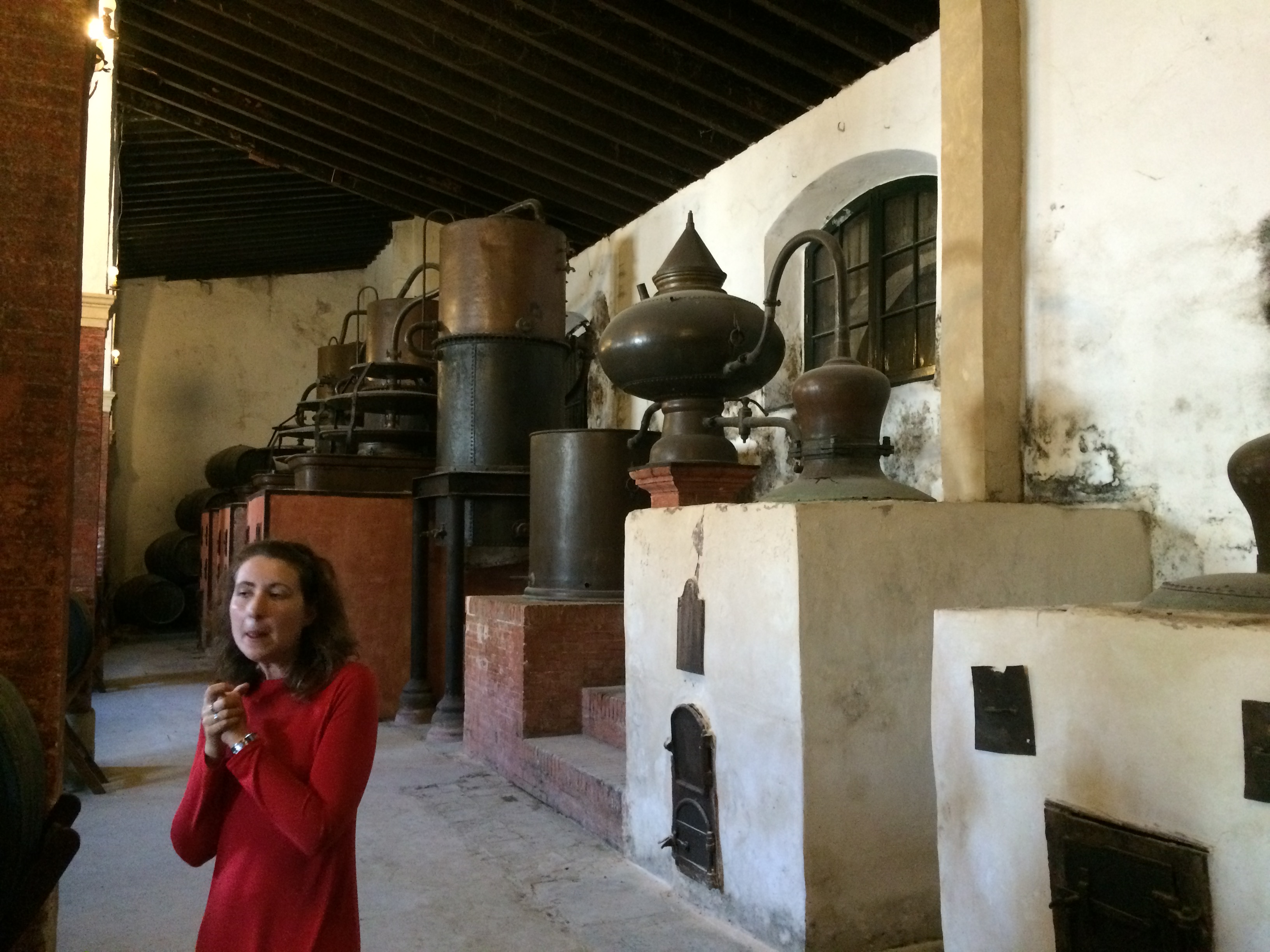
Rachel shows us the Old Brandy Stills.
2015-04-03 15.20.27
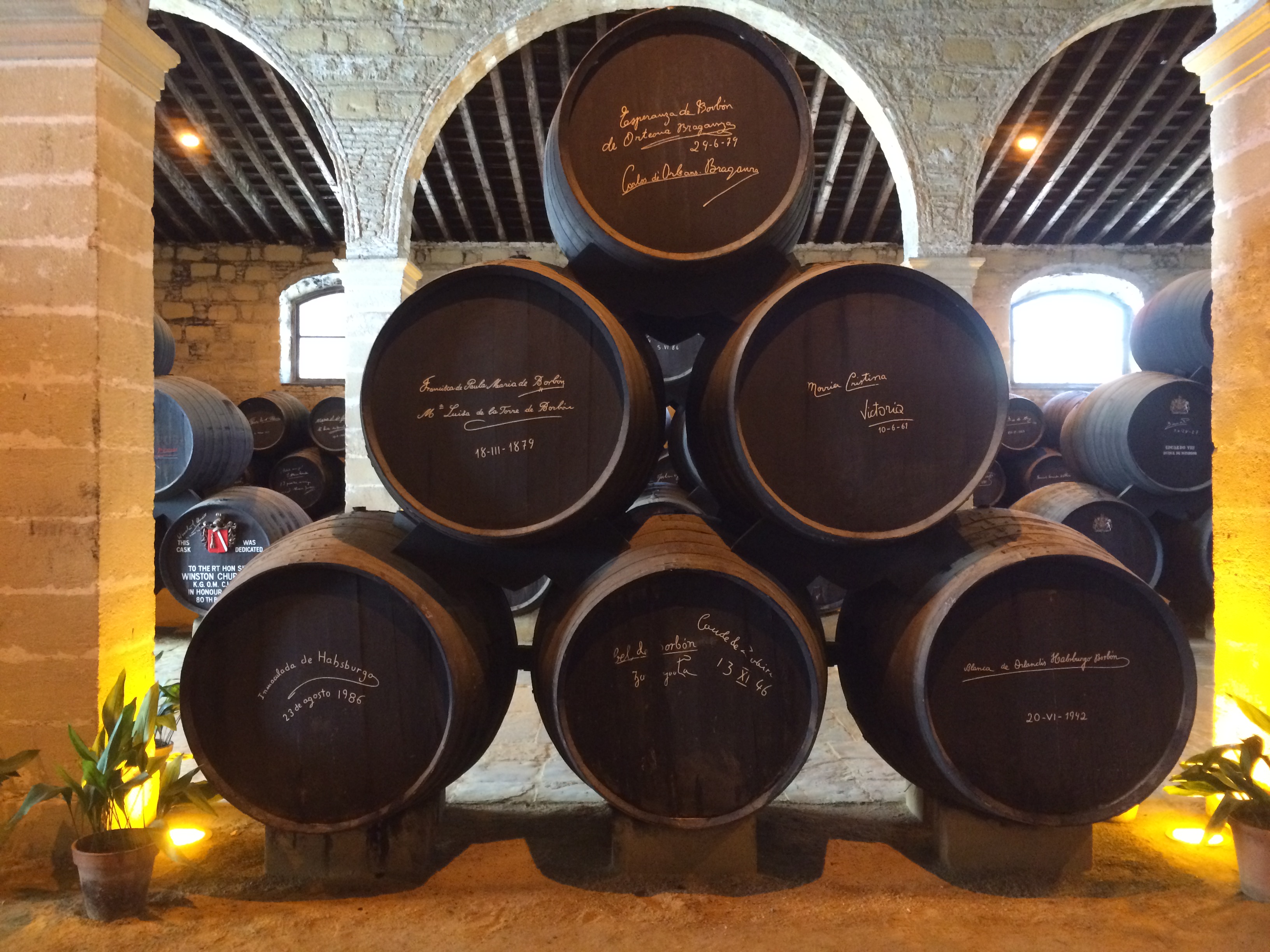
Signed barrels at Gonzalez-Byass.

Here is a good PDF showing the process of making Sherry wines (LINK).

The tour concluded in a very modernistic tasting area built inside the storage building for Tio Pepe wines. We tasted three wines – a Fino, a Cream, and a Blend, and had tapas at a table shared with a mother and daughter from Moscow who had taken the English language tour. They told us about Russian wines, which I would love to try sometime.

2015-04-03 15.31.38
World’s Largest Weather Vane.
2015-04-03 15.33.25
Tasting Area inside Tio Pepe Storage Building.

I recommend Gonzalez-Byass for those who want to learn about Sherry production and enjoy the big touristy experience. They do it well. There are lots of opportunities to experience other bodegas in Jerez – just don’t go in Easter weekend!

nf

SHERRY IN JEREZ, SPAIN

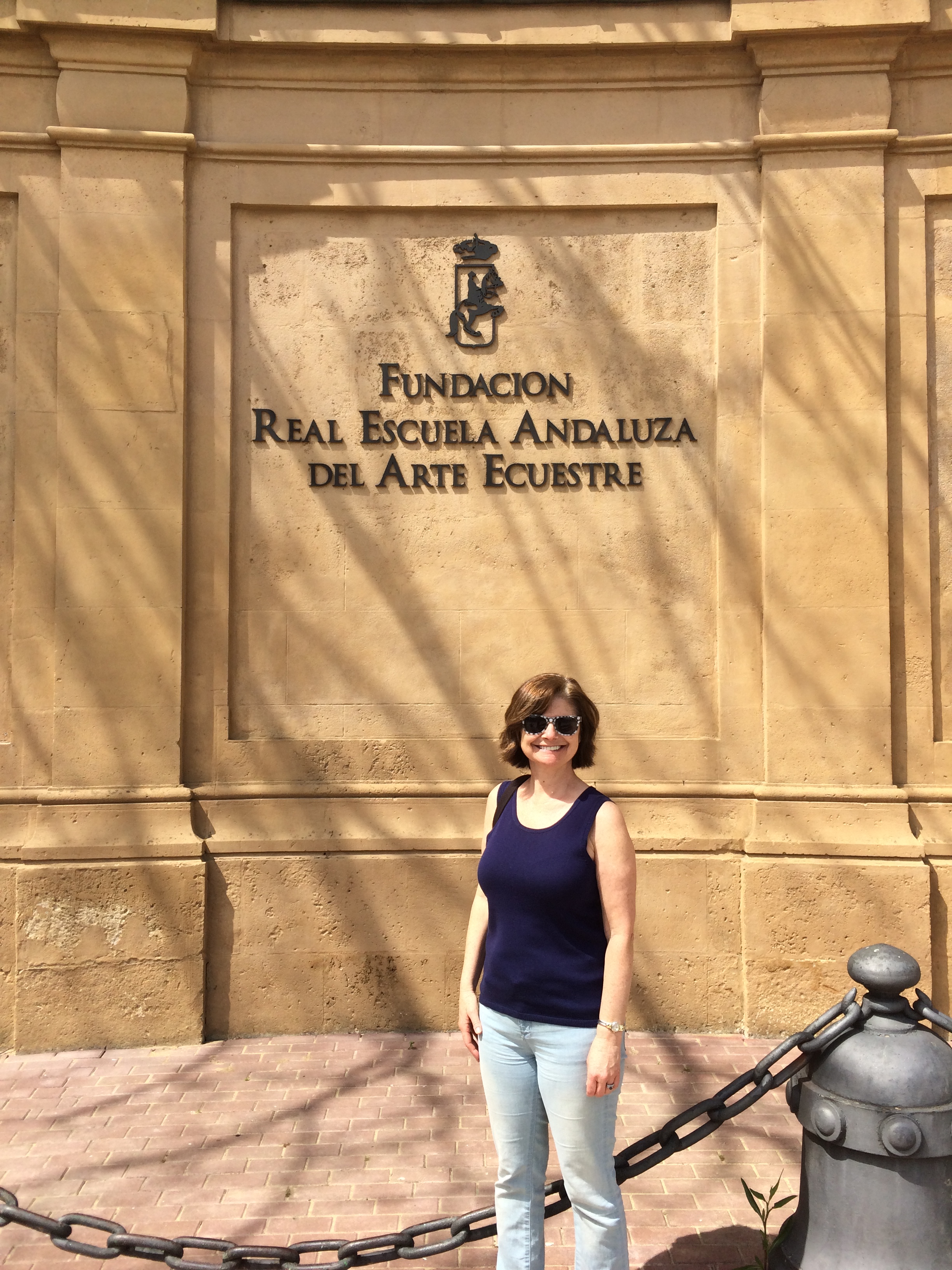
Dorianne and I took the train from Seville to Jerez on Good Friday and returned on Easter Sunday. During our short visit, we managed to do quite a bit – toured the largest Sherry Bodega – Gonzales-Bypass (LINK), makers of Tio Pepe and other sherries and brandies; had wonderful food and wine at several tapas bars; saw a Flamenco music show at a tabanco – a place where they serve Sherry from casks; visited a performance of the Andalusian Horses at the Foundation Real Escuela Andaluza del Arte Equestre (LINK); stayed in a very nice 4-star hotel, and strolled around town a bit.

I will be blogging about some of the specifics over the next couple of days, but for now, here are some representative photos of our side-trip.

2015-04-03 13.40.38 2015-04-03 13.46.29 2015-04-03 14.59.37 2015-04-03 15.05.03 2015-04-03 16.39.03 2015-04-04 13.47.45 2015-04-04 14.02.56 2015-04-04 14.14.48 2015-04-04 19.26.25

SPANISH WINE AND WINE CULTURE

Spain is a very interesting country when it comes to wine. While wine is literally just about everywhere, there does not appear to be the kind of wine culture that you see in the United States, especially in California. I mean a culture where you strive to be aware of as much information about wine, wine regions, wine makers, and the various aspects of the wines that you drink, or aspire to drink, as possible.

2015-03-14 20.43.23

Here, from what I have seen, people just drink the wine. You see very few expensive wines in stores and restaurants – about 65 euros is the max that I have seen, and that price point only one time – and there is little, if any, discussion about this wine versus that wine, or this region versus that.

It is both refreshing and disconcerting. When I tell people in tapas bars that I want to learn about Spanish wines, I usually get a response like, “Do you line blanco or tinto?” That is, red or white. That’s about it.

Everywhere you go, you see people, young and old, drinking wine – very cheaply compared to prices in the US. For 3 or 4 euros, you can get both a glass of wine and a plate of tapas in most places. Today, at a very nice tapas place, Dorianne and I had three large plates of tapas and two glasses of vino blanco for 18 euros.

That being said, I know that there is both a rich tradition of fine winemaking here and a culture that appreciates the results of good winemaking. I look forward to further explorations during the next month plus of our visit.

Next week, we will begin to tour some of the Sherry wine country of Andalusia, the southwest portion of Spain.

What is your experience with the wines of Spain?