Tag Archives: Syrah

AUSTRALIAN WINE TASTING IN LONDON

I was invited to an industry-only tasting in London yesterday. Titled “Artisans of Australian Wines,” it featured 43 labels being introduced by 15 British distributors. Held during the day at Cargo, a trendy nightclub in the Shoreditch area of London, the event was both fun and very interesting.

I had heard of exactly none of the 43 labels before the tasting. Indeed, most are smaller producers who do not export to the U.S., and who are just trying to break into the British market. I spent about 3 hours exploring, tasting, speaking to the people pouring (sometimes someone from the winery/vineyard, but most frequently someone from one of the distributors). I did not taste everything (there were at least 200 wines), not even close. But I will give you my impressions of what I did taste and who I did meet. And I will list all of the labels at the end of the blog post, in case you happen across any of them.

General impressions: there were some very nice wines here; in fact, most were very good or better. That would make sense, as they had been vetted by the distributors. Australia has no restrictions on who can grow what grapes where, and no blending rules, like there are in France and Spain, therefore, there is a great variety of both the varietals grown and the blends that are produced. There were a couple of wines that did knock my socks off, but only a couple. That said, pretty much all of these wines could have a place in my cellar or on my table or both.

So with my apologies to those labels that I did not get to taste (mostly in that really crowded section in the front room), let’s see what I did taste.

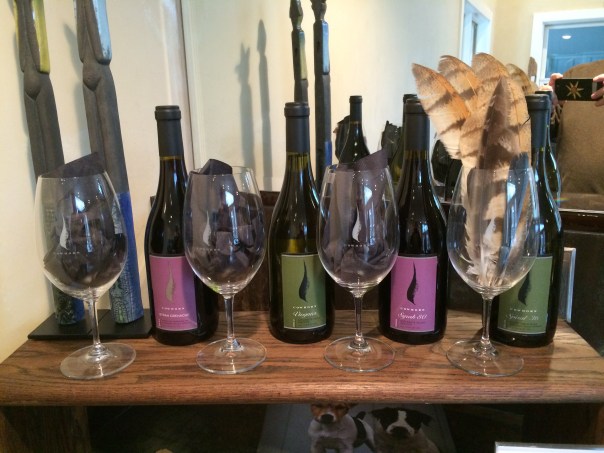
Adelina and VineMind Wines: The winemaker, Col McBryde was here pouring wines from his two labels. He produces about 2,000 cases/year and has been exporting to the UK for 6 years. Of most interest to me are his Rieslings, one from each label – both nicely balanced with minimal residual sugar.

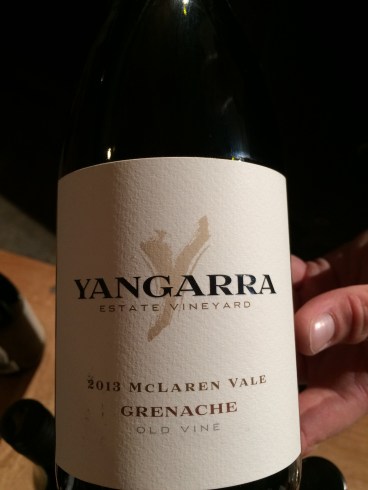
Yangarra Estate: Nicely polished, well-crafted wines from a producer owned by Jackson Family Wines of California. Winemaker Peter Fraser (Australian Winemaker of the Year for 2016), has crafted two wonderful McLaren Vale Grenache wines from single vineyards. The 2013 High Sands Grenache is of particular note.
2016-09-20-12-09-04

Chalmers Wines: Kim Chalmers, daughter of the owner, was pouring the Chalmers Wines at the tasting. I tasted four of the ten Italian varietal wines (3 labels) on hand – a 2014 Vermentino, which was one of the best whites I tasted all day – smooth, velvety, with green fruit and a hint of minerality on the finishsimply excellent. The 2013 Fiano, a varietal I had not previously encountered, was like a younger sister to the Vermentino in character – which makes me think that the winemaker has a large influence on the wines. The red, I tasted, a 2015 Nero d’Avila, was well-structured but young – it needs some time. The 2016 Schioppettino, under the Chalmers Project label, was tannic and bold, with red fruit and a strong finish. Another varietal that is new to me.

2016-09-20-11-53-12

Castagna Wines: The father and son team of Julian and Adam Castagna were presiding over their table with aplomb. Their Rhône-focused vineyard & winery deliver the goods. Their wines were consistently well made and nicely balanced. I tasted 8 of 9 wines available (choosing not to taste their Shiraz Vermouth). Standouts were the 2016 Rousanne, bottled a week ago, and already moving toward becoming a great white wine. The highlight, however, is their 2008 Sparkling Genesis Shiraz-Viognier, a dark red sparkler that delivers great taste and can be paired with just about anything, including meat. This is an amazing wine.

Bill Downie Wine: Apparently, Bill Downie is fairly well-known in Australia as a producer of small quantity, high quality wines. The lone representation of his work, sitting at the end of a table where about 5 other labels were being poured by distributor reps, would have been easy to overlook – in fact, I did on my first pass. Only after reading about it in the catalog did I return to try the 2015 Riverland Biodynamic Petit Verdot. This was my favorite wine of the day. I liked everything about it – the nose was beautifully balanced, inviting you to taste, the mouthfeel was like velvet, with red and black fruit, some leathery tones, and a smoothness that carried into the finish. If I could have purchased a case, I would have. Be on the lookout for this wine.


L.A.S. Vino: Aside from good marketing and design (something that was in abundance here – no doubt a reflection of the assistance that a good distributor can provide) this winery makes some good wine. I only tasted the 2013 ‘Portuguese Pirate’ Margaret River Blend made with Touriga Nacional, Tinto Cao, and Souzao grapes. I cannot honestly attest as to whether this blend is on a par in style or quality to a similar blend in Portugal, but I can say that this wine is of very high quality and would be an excellent companion to a leg of lamb, a steak, or a good cigar. Think smooth, a bit jammy (but not too much), and rich in black fruit. Very nice.

2016-09-20-13-36-32

Vinteloper Wines: This Adelaide Hills winery is operated by winemaker David Bowley, who was present and pouring. I tasted three of his excellent wines, two Pinot Noirs – which were nicely crafted and very good, especially his 2012 OPN Lenswood Pinot Noir, a single vineyard beauty. We had a good discussion about Pinot Noir, and I told him about some of the great Burgundian style wines coming out of the Santa Rita Hills AVA in  California.

Bowley’s other wine, the 2015 ‘Urban Winery Project #3’ Shiraz/Malbec comes with a story. This nice table wine is the result of a project that Bowley undertakes every year at harvest time. He moves parts of his winemaking operation to a city and, for one month, opens the operation to the locals, who can do everything from stomping grapes to blending wines. It is a great marketing idea – and a great way to invite people into the winemaking process. Kudos to David Bowley.

Sami Odi Wines: Two wines from this small producer were available for tasting – both are a bit unusual in packaging and presentation. The distributor rep, a very nice young woman, spoke so fast that I did not get a lot of information from her (my issue, being an American – she was speaking The King’s English after all). But the wines were very good – a ‘Little Wine #5’ Syrah and a 2014 Syrah ‘XIV’. The former comes from a vineyard with vines planted in different years. Both bring out the best aspects of Syrah.

Chaffey Bros Wines: Producing in the Barossa and Eden Valleys, Chaffey Bros make a number of wines. I would say that their strength is in their whites. I tasted 5 of 7 wines available. Their Rieslings were very good, the best being a 2015 Tripelpunkt Riesling, with fruit from three vineyards – dry with a hint of sweetness, floral notes, and smooth finish – what I like to see in a Riesling. Of interest is a true field blend, called 2015 ‘Düfte Punkt’ with Gewürztraminer, Riesling, and Weißer Herold (Kerner). The field blend was nicely balanced – not a great wine, but of interest because of the willingness to experiment.

S.C. Pannell/The Other Wine Co.: Side-by-side on the tasting table, these wineries bring good tasting wines at value price-points. I tasted the 2014 S.C Pannell Adelaide Hills Syrah (McLaren Vale)  – very rich, even for a Syrah, almost jammy; but nice red and black fruit notes with chocolate and slate later on. Long finish. I tasted the 2015 The Other Wine Co. Adelaide Hills Pinot Gris (before the Syrah) – a decent table wine with notes of lemon grass and pear.

Again, I did not taste them all – my bad – but suffice to say that there were a range of good quality wines on display. Aside from a growing tendency to call Syrah by its original name, instead of Shiraz, the most remarkable thing about this group was the winesgood quality and individual character. The UK wine market will be looking up thanks to these Aussie newcomers.

As promised, a list of all of the producers present:

Lethbridge Wines      Deviation Road           Adelina         VineMind           Yangarra Estate     Mac Forbes          Chalmers     Gembrook Hill     Teusner        Eden Road        Ruggabellus   Eperosa        Strenua        Ochota Barrels       Jamseed Wines        Luke Lambert Wines           Timo Mayer        Delinquente Wine Co.      Si Vintners       Patrick Sullivan Wines           Xavier          Gentle Folk Wines           Castagna      Jauma        Bill Downie      La Línea           L.A.S. Vino              S.C. Pannell         The Other Wine Co.         Chaffey Bros                     Bellwether          Vinteloper           Bremerton Wines   The Pawn Wine Co.     smallfry        BK Wines Massena           Sami Odi           Byrne             CRFT            David Franz                     La Violetta           Ministry of Clouds

You may be seeing some of these labels in your area soon.

Copyright 2016 – Jim Lockard

THE EPICENTER OF WINE CULTURE IN MÀLAGA, SPAIN

I went to Los Patios de Beatas on Calle Beatas the other evening to check out the wine scene there. It was recommended by Kelly Kannisto of Tannin Trail Tours (LINK) (LINK TO PREVIOUS POST), when I contacted him about recommendations for wine experiences in Màlaga.

Although Màlaga is a wine region, the wines made here are generally sweet. The great dry wines of Spain are made elsewhere.

Los Patios de Beatas is a combination restaurant, tapas bar, wine tasting room, wine retailer, and event location. It is beautifully appointed, has indoor and outdoor seating, and a good selection of wines, almost all from Spain, on sale. Since being in Màlaga, we have had some difficulty finding a good wine shop.

I looked around the space a bit, and asked if I could do a tasting. Àngel, the head waiter told me to sit anywhere in the tasting room/tapas bar area. He and Christina made sure that I was well attended to, even though there were other customers – the exterior seating was full. The main restaurant is staffed separately.

2016-07-20 21.00.34

There is a Enoteca Machine that dispenses wines and keeps them at temperature. The wine list had over 15 tintos (reds) and half a dozen blancos (whites) available by the glass. Eight of the reds were in the Enoteca. I started with a 2005 Tilenos Pagos de Posada, 100% Mencia from D.O. Bierzo (LINK) in northwestern Spain. This wine has a great minerality with hints of dark fruit, chocolate, and leather. Very nice. It retails for 33€ or about $36. Another great value from Spain.

Next, I tried a 2009 Alma de Luzon, Monastrell blend of 70% Monastrell, 20% Cabernet Sauvignon, and 10% Syrah. This wine is from D.O. Jumilla (LINK), in southern Spain not far from Valencia, where the Monastrell Grape is very popular. This wine was rich and chewy, with medium tannins and a smooth finish. It retails for 36€ or about $39.

Next, Àngel brought four bottles to the table – all chilled. Three were Sherry, and one was a local Màlaga sweet wine. There were two sweet Sherries and one dry Sherry from D.O. Jerez (LINK) (LINK TO PREVIOUS POST), where Dorianne and I visited last year. I tasted these side by side while waiting for my tapas to arrive.

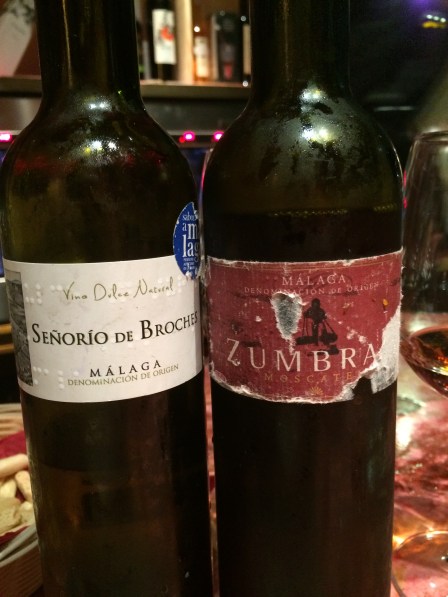
The Màlaga sweet wine, a Trajinero (LINK), made from 100% Pedro Ximénez grapes and fortified, was semi-sweet, with a nutty flavor and a nice smooth finish. The stand-out was the Fernando de Castilla Antique Oloroso Jerez Sherry (LINK), probably the best dry Sherry I have ever tasted. Over 20 years in the barrel (they rotate Sherries through a series of barrels so that each vintage is similar – taking some out, leaving some in, and adding the more recent vintage), this wine was smooth, with traces of coconut, vanilla and pear. Really special. This wine retails for 22€, or about $24 per 500ml bottle.

Then, my two tapa arrived. The first, a cod in a sauce that include coconut milk, was an amazing sensation of flavor. The second, pork belly, slow cooked and then the fat removed and a slice of pork chorizo inserted, accompanied by fennel and an apple puree. Amazing! The kitchen here is wonderfully creative and executes that creativity beautifully.

To accompany those, Àngel suggested a 2008 Mauro “Sin D.O.” from Castilla y Leon, made from 88% Tempranillo and 12% Syrah. The wine was a decent pairing with the cod (the coconut made it tricky), but perfect for the pork belly.

Then, to round of a great experience, Àngel brought out two local digestifs. They retail for about 7€ for a ½ bottle. Both were nice, if not exceptional.

2016-07-20 22.03.57

My tab for the whole thing was 50€. I know that a couple of things were comped. One of the more expensive evenings I’ve had in Màlaga, but a bargain anywhere outside of Spain.

So if you find yourself in Màlaga, find Los Patios de Beatas and have a great wine experience. I was solo on this trip, as Dorianne is out of town – so I will be taking her there when she returns.

As always, your comments on all things Spanish and/or wine are welcome.


Copyright 2016 – Jim Lockard

SPANISH WINE IN ANDALUCIA’S RONDA

Dorianne and I are staying in Málaga and Granada for six weeks. The other day, we took a tour of the beautiful white town, Ronda. We were going to go there anyway, but found a local tour company that combines your tour of the town with stops at two local wineries. All in all, a very nice day.

Southern Spain’s Andalucía region is an expansive area the borders the Mediterranean Sea on the south and east, Portugal on the west, and central Spain on the north. It includes cities like Seville, Granada, Málaga, Cordoba, Cadiz, and a host of other smaller towns and villages. The topography and climate are very much like southern California – warm and dry inland, slightly cooler and more humid near the sea. It is the home of millions of olive trees – and, where you can grow olives, you can usually grow grapes.

2016-07-08 09.42.24
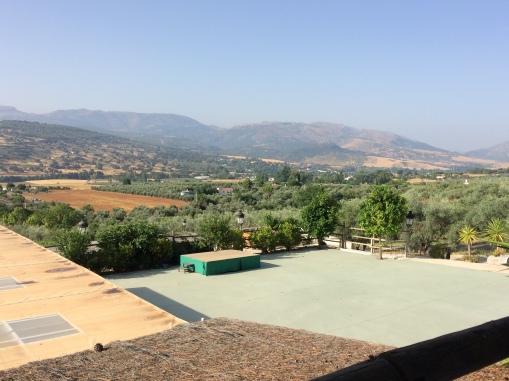
Andalucian Valley

The wines of Andalucia are often sweet and/or fortified, such as the famous Sherry wines of the area around Jerez (LINK). Málaga is also known for sweet red wines (vino tinto dulce). But elsewhere, small producers are making dry wines out of unexpected varietals in the midst of olive country.

Our first stop was at Bodega Joaquín Fernández (LINK), just 3km north of Ronda. The bodega is located on a sloped property, and there are five hectares under cultivation, with an additional hectare about a mile away. They produce about 5,000 cases per year. Also, there is a rental unit where you can stay right at the vineyard.

2016-07-08 09.58.01
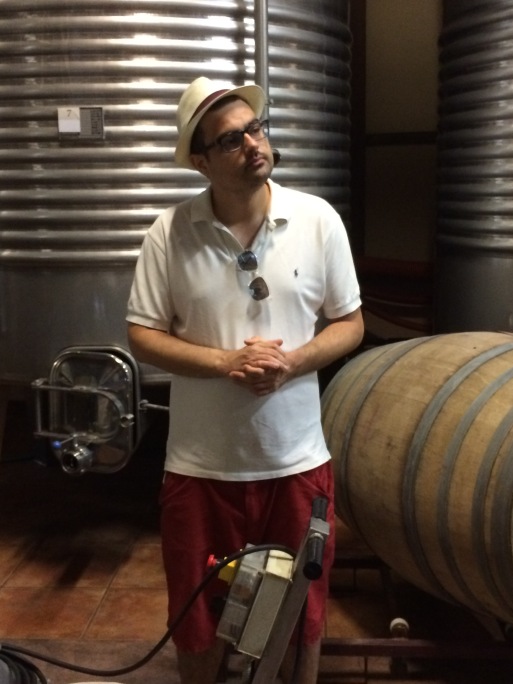
Moises Fernandez

Our tour was led by Moises Fernández, the son of the owner. He gave a very thorough tour of the vineyard and winemaking operation, with great detail on their organic processes. Only red varietals are grown at the bodega – Cabernet Sauvignon, Merlot (pronounced Mer-LOT here), Syrah (pronounced SEE-rak), and Garnacha.  A white wine and a rosé (Rosado) made from Merlot are signature wines here along with some red blends.

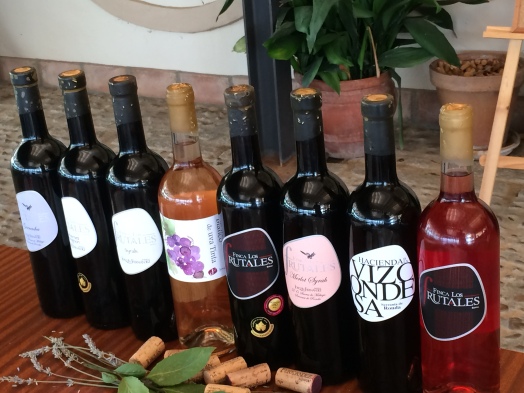
All wines are fermented in large stainless steel tanks – a fermentation for alcohol, and then a malolactic fermentation. The wines are then stored in oak barrelsFrench and American, for periods from 3 months to two years. This is regulated by the local D.O. Malaga Hills/Mountain. Another regulation is that Tempranillo, the most popular red wine grape of Spain, cannot be grown here. That is why local wine makers rely on Bordeaux and Rhône varietals. In keeping with their organic philosophy, then do not use foils on their wine bottles. Instead, they seal them with a thin coating of beeswax.

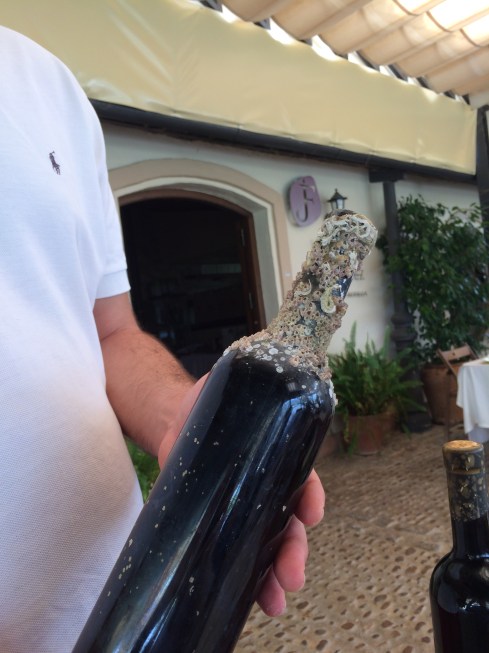
Of interest, they have been experimenting with storing bottled wine under water. Here is a sample.

2016-07-08 11.00.56

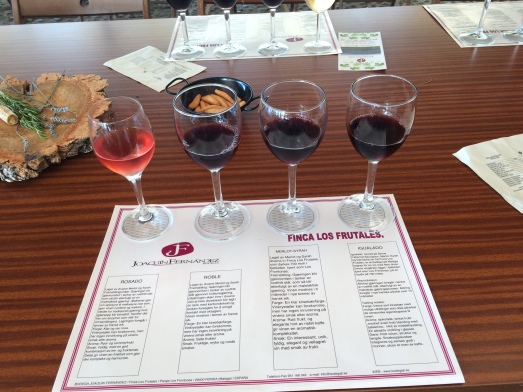
After the tour, we had a tasting and tapas in the bodega’s outdoor tasting room that overlooks the vines. We tasted all of the wines produced – six in total. Dorianne and I were both impressed with the craftsmanship here – the wines were uniformly well-balanced, and all were very enjoyable. Two favorites were the 2015 Blanco de Uva Tinta – a white Merlot, and the 2014 Garnacha, a blend of 90% Garnacha & 10% Cabernet Sauvignon. Their wines sell in the 11€ to 15€ range – great values.

2016-07-08 10.22.43

2016-07-08 10.22.50
The line up – note the beeswax seals.

Next, we had a couple of hours to tour Ronda – a beautiful city bisected by a river canyon that runs about 300 feet deep or more. If you visit Andalucía, Ronda should be on your list of places to visit. But back to the wine.

Our second stop would include lunch. We were driven a few kilometers out of town to a small bodega called Bodega Garcia Hildago, a small producer – about 1,000 cases annually. Here, we received a tour by Miguel Hildago, the owner and then a four-course lunch with some of his wines. His wife is an amazing cook, but she was away for the day, so he served the food that she had prepared earlier at a table on the patio of their beautiful home.

Miguel grows the same varietals as Bodega Joaquín Fernández, on about 2 hectares on his property. A few of his wines are in local restaurants, but otherwise, you have to visit the bodega to enjoy them. He makes four wines using organic techniques in his vineyard.

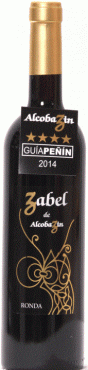
We particularly enjoyed his 2014 Zabel de Alcobazin, a blend of Cabernet Sauvignon, Merlot, and Syrah. It was rich, full bodied, and had a nice hint of minerality to it. There was a good tannin structure, so it should age well. It sells for 14€.

ZABEL OK_600x900

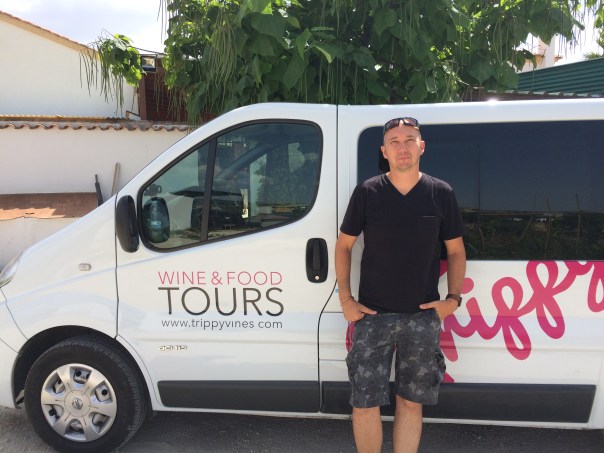
Our tour company, Tannin Trail (LINK), offered a great experience. The van was comfortable (only two couples on the tour, which may have been a factor), the guide, Kelly, who originates from South Africa and has lived in Spain for eight years, was very knowledgeable about the local viniculture and the wines of the region, and the two bodega stops were interesting and fun. The tour company is in the process of expanding their operations to the Rioja Region as well, and have been re-branding from Trippy Vines to Tannin Trail during that time. Their Tripadvisor.com ratings are also excellent (LINK).

2016-07-08 16.44.47

It was good to get out and visit some of the wine makers who are making dry wines in this area of mostly sweet wine production. To be sure, Andalucía has a lot to offer.


Copyright 2016 – Jim Lockard

A DAY IN NORTHERN SANTA BARBARA COUNTY – THREE WINERIES

I love the Santa Barbara County AVAs. Not only do they produce great wines, have lovely scenery, and a host of great winemakers and tasting rooms; they are easily accessible from the Los Angeles area.

On Tuesday, Dorianne and I were joined by Mary Stec and Richard Clark for a day trip to Santa Barbara County (LINK). We visited three wineries and had lunch at Industrial Eats in Buellton. Mary is a home chef and runs a cooking school & is a weight-loss coach (LINK) (LINK); Richard is the winemaker for the Conejo Valley Wine Co-op (LINK to previous post).

Our plan was to visit two wineries in the Santa Rita Hills AVA (LINK), have lunch, then visit two wineries in the northern section Stana Ynez Valley AVA (LINK), north of Los Olivos. The Santa Rita Hills are known for Burgundian varietalsChardonnay and Pinot Noir; the northern Santa Ynez Valley is Rhône varietals – especially Syrah, but also Mouvedre, Roussanne, Marsanne, Viognier, and Cinsault.

A late start and a few other things shifted out plans a bit, but we made the most of a magnificent sunny day in the 80’s.

Our first stop was Babcock Winery (LINK) along Rt. 246 near Lompoc. Babcock has been around for a while and they make some excellent wines, with Pinot Noir leading the way. Our tasting room host Jamie showed the four of us through two different tastings, one featuring their estate fruit, the other wines sourced from elsewhere in the Santa Rita Hills AVA. Babcock’s new and updated tasting room is filled with their wines mixed with places to sit, antiques and other items, some of which are for sale.

Babcock’s strongest suit is their Pinot Noir. They produce several estate wines and a blend of several vineyards. All of them drink well and show excellent craftsmanship, balance, and quality. We purchased a bottle of their 2013 Radical Pinot Noir, which showed the most character (to us) and will age well. We will be laying this one down for a while. Their Cabernet Sauvignon is notable as well, as is their Backroads Red BlendBabcock offers tours and you can have events there. It is a great winery to visit.

The next stop was lunch at the wonderful Industrial Eats (LINK) in the warehouse area of Buellton (of “Sideways” fame). This artisanal eatery also features a number of local wines on tap for $9 a glass, beer, cider, and more. You eat at common tables and can watch the pizza maker use the brick ovens.

2016-04-19 13.03.39
Menu Wall at Industrial Eats

As we were leaving the restaurant, we noted that the tasting room next door, Alma Rosa, showed the proprietors to be Thekla and Richard Sanford, well-known pioneers of the Santa Rita Hills. Richard is in the Vintner’s Hall of Fame. It turns out that I did not know that Alma Rosa was the Sanfords’ (relatively) new wine operation. So, our plans changed and in we went.

Alma Rosa Winery & Vineyards (LINK) has been around since 2005. Like most in the Santa Rita Hills AVA, they specialize in Pinot Noir and Chardonnay, also producing Pinot Gris, Pinot Blanc, and a Pinot Noir-Vin Gris Rosé. They have two levels of tastings, so each couple had one of them. The wines here are uniformly well-crafted and each has unique characteristics. There are five Pinot Noirs (three are single vineyard/clone) and two each of the Chardonnays, Pinot Gris, and Pinot Blancs. We purchased some of the La Encantada Vineyard Pinot Gris and the Clone 667 La Encantada Vineyard Pinot Noir. We would have purchased more, but our wine locker is nearly full (really).

2016-04-19 14.01.41
The Tasting Crew at Alma Rosa
2016-04-19 14.20.14
Rena of Alma Rosa Wine

The tasting room staff included Rena, who is both knowledgeable about the wines and the process and very outgoing. This small wine tasting room is really lovely (and you can have food sent over from Industrial Eats to boot!).

Next, it was on up the 101 Freeway to Zaca Mesa Road near Los Olivos. Our destination was Andrew Murray Wines (LINK) and their new facility at the former Curtis Winery which was purchased and added to the Andrew Murray operation a few years ago. Long known as the producer of the best Syrahs along the Central Coast, Andrew Murray has expanded into some additional Rhône varietals plus a few others since taking over Curtis. Our tasting was a reminder that these are truly exceptional wines. Highlights of the tasting were, of course, the Syrahs, especially the 2013 Thompson Vineyard Syrah, and the 2014 Watch Hill Vineyard Syrah. Both had nicely balanced fruit and minerality, a beautiful bouquet, and a smooth finish.

Also notable were the 2014 Estate Grown Cinsault, and the 2013 Curtis Vineyard Mourvèdre. Both were very well crafted and balanced with minerality and fruit that alternately competed for your attention. We bought some of the Cinsault. And finally, the 2015 Espérance Rosè, a light and crisp rosé made of nearly 100% Cinsault. It results in a surprising rich and flavorful rosé reminiscent of the wines of the Tavel A.O.P. (LINK to previous post) in the Rhône Valley. This is one of the best rosés I have had in some time. Richard and I took a case of this beauty home. Well – it was on sale and I will find the space!

2016-04-19 15.01.14

That was our day – we headed home with wine in the trunk and some great memories that will be rekindled each time we open a bottle.

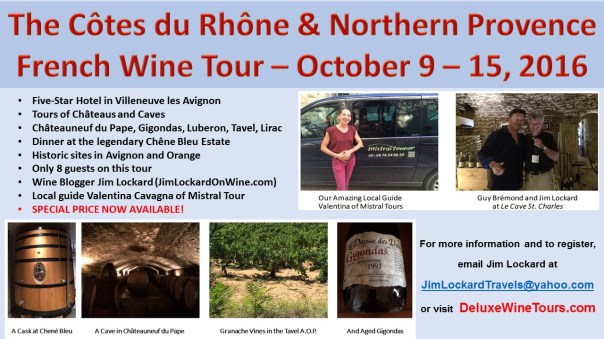
And a reminder – our amazing Wine Tour of the southern Rhône Valley and Provence (including Tavel) still has some space left. Visit (LINK – Deluxe Wine Tours) to get all the information and to register.

Wine Tour Online Image 1

Copyright 2016 – Jim Lockard

OREGON’S UMPQUA VALLEY – TWO WINERIES

The Umpqua Valley AVA (LINK) in south-central Oregon does not yet have a signature varietal, and it may not have one in the future. This rambling AVA contains many micro-climates and a range of soils, so it may well remain home to dozens of varietals over time, which is not a bad thing at all.

Visiting friends near Roseburg, we head out to the wineries, which are about a 30 minute drive to the southwest. A stop at the Lighthouse Center Bakery and Café (LINK), for a vegetarian lunch of huge proportions, fortifies us for an afternoon of wine tasting. Two wineries are on the schedule for this first day, Ruestle Prayer Rock Vineyards (LINK), and Abacela Winery and Vineyard (LINK). Our hosts, Andy and Bonnie Anderson, assure us that these are representative of the wines of the area.

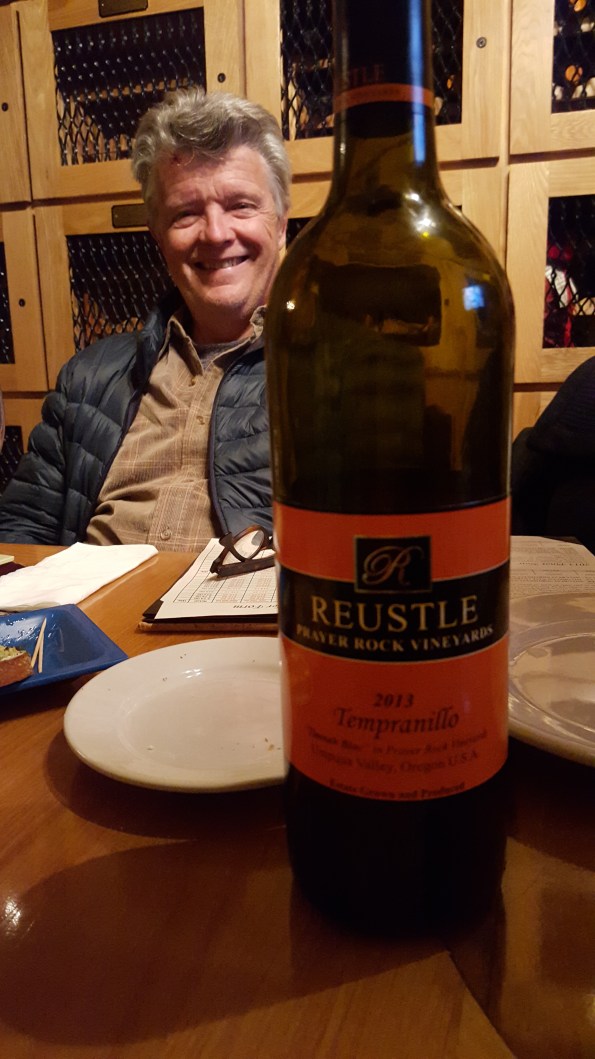
Ruestle Prayer Rock Vineyards is set in rolling hills and has been developed, built and planted by someone with an eye for beauty. Everything about this 200 acre patch of Oregon is lovely to behold. Stephen and Gloria Reustle made their money in marketing in New York and moved west to explore entry into the wine business. After a few false starts in California, they discovered this part of Oregon and fell in love with it. The first vines went into the ground in 2003 and now they produce about 8000 cases annually. The Reustles are devout Christians, and there are quotes form the Bible on the winery floors and elsewhere on the property. There is also a Men’s Bible Study group that meets at the winery and studies The Bible while they taste wine. Not a bad idea.

All of the wines produced here are estate grown. There are currently 6 red varietals – Pinot Noir, Tempranillo, Syrah, Malbec, Merlot, and Grenache; and 6 whites – Viognier, Sauvignon Blanc, Grüner Veltliner, Riesling, Muscat, and Semillon. There are reserves of most of these and several blends, and both a red and a white port. There is also an amphitheater nearby for events.

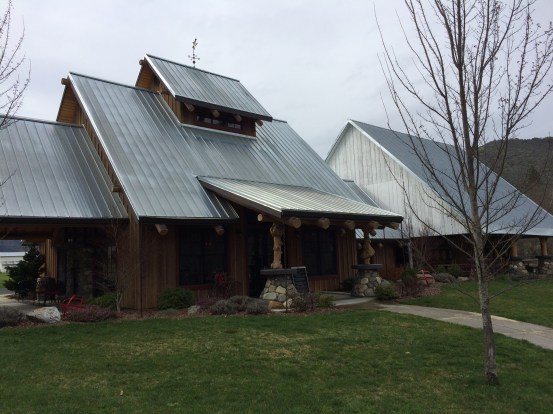
We were shown around by Kevin Kline, Wine Educator and Events Coordinator for the winery, and escorted to one of the private tasting rooms and served appetizers with each wine tasting. The tasting rooms, production area, and the wine cave (which includes tasting rooms and event space), are located in a lovely building that has been designed to look like old stone caves by a designer/architect who does a lot of work for Disney. In the cave are the barrels of French and American oak, where the reds are stored; the whites are in aluminum tanks in the production area.

Okay, let’s cut to the chase. The tasting was of four wines – the 2013 Grüner Veltliner, the 2013 Pinot Noir, the 2013 Syrah, and the 2013 Tempranillo. The Grüner Veltliner, with 1% residual sugar, was a bit sweet for me, but others may like it; the reds were all young with good tannins and acidity, indicating that they will age well. Nothing outstanding, but all well-crafted wines and good values at their respective price points.

I requested a taste of the 2013 Blanco Dulce, the white port. Mr. Kline was kind enough to open a bottle, and it was a revelation. This wine was aged in Acacia wood barrels for nearly two years, adding to the wine’s complexity and depth. It is a 50/50 blend of Riesling and Grüner Veltliner. Smooth, with just the right amount of sugar, fortified with brandy (sourced elsewhere) to 19% alcohol content, this is everything a white port should be. We bought 2 half-bottles, as did one of the other couples with us. I love making a find like this.

Abacela Wines - Vineyards.jpg
Abacela Vineyards

2016-03-23 16.05.29

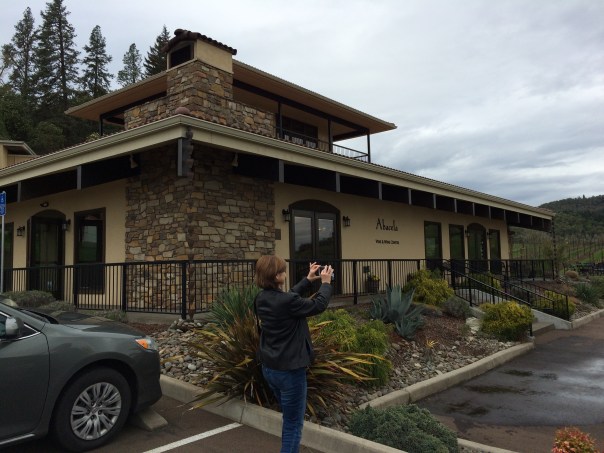
Our next stop was Abacela Winery and Vineyard, again featuring a nicely designed and appointed tasting room area set atop a hill overlooking 40 acres of vines. In 1995, Earl and Hilda Jones planted the first vines here. The focus here is Tempranillo, and they make several of them, most for wine club members only (although available for tasting). They also make small amounts of Albarino, Viognier, and Muscat, plus a Grenache Rosè; and in addition to the Tempranillo, Garnacha (Grenache), Malbec, Dolcetto, Graciano, Syrah, Tinta Amarela (a very nice wine), and a Tannat is coming soon.

2016-03-23 16.07.14

For the tasting, you get to pick any 8 of 17 wines, so Dorianne and I each did a tasting and alternated and shared – so we tasted 16 of the 17 available on the general tasting. You can also taste their reserve wines for an additional $5 per taste.

The highlights were the Tempranillos and, a bit surprisingly, the 2015 Muscat, a semi-sweet white wine, that is a great light sweet wine; and the 2013 Blanco Dulce, a late-harvest Albarino that is made into a faux ice-wine by freezing the grapes at the local creamery before fermenting. The wine was not too sweet and very elegant on the nose and the palate.

Back to the Tempranillos – the “Barrel Select” versions, and especially the 2009 Paramour ($100), which we tasted were all very well-crafted and balanced wines; they are not the same as you find in Spain, even though this part of Oregon is at about the same latitude as Ribero del Duero and Rioja. Nevertheless, good wines and all of them should age well or a decade or two. I really like what Abacela is doing with this amazing Spanish varietal. Given more time, they will likely become known for the Tempranillos they are producing.

The Umpqua Valley AVA is shaping up nicely and should mature well in the future. It is worth a visit.

Jim at Reustle Wines
Enjoying a Good Day
2016-03-23 14.19.09
Tasting Room at Reustle Winery

Copyright 2016 – Jim Lockard
APPLEGATE VALLY AVA – TWO WINERIES

Yesterday, several of us went to the Applegate Valley AVA area in southern Oregon to taste some wines. This area, just to the west of Ashland, is in the foothills of the Coastal Range near the Rogue River Siskiyou National Forest. Beautiful country, a growing number of  wineries in the area , but you travel a bit of a distance to get from winery to winery.

The AVA does not have a signature varietal. There are a number of micro-climates present, soil variations, and annual rainfall amounts vary from around 20 to 40 inches in different parts of the AVA. So you have Italian varietals like Sangiovese, Spanish Tempranillo, Rhône Syrah, Rousanne and Marsanne, plus Pinot Noir, Cabernet Franc, Cabernet Sauvignon and others.

We wanted to taste some of the best of the area, so our local friends took us to Cowhorn Vineyard and Garden (LINK) and to Red Lily Winery both off of Route 238 southwest of the quaint town of Jacksonville.

Cowhorn represents a number of good things about growing and making wine. First of all, the quality of the wines is simply superb. Producing a total of 2300 cases of Rhône varietals – Grenanche, Mouvedre, Syrah, ViognierRousanne and Marsanne, the owners and winemakersBill and Barbara Steele, use state-of-the-art biodynamic techniques. The wines that we tasted (and we didn’t even get to taste the reserve wines, which are spoken for by the wine club – hint) were beautifully crafted, balanced, and tasted much like wines we have had in the Rhône Valley. Their wines consistently score in the low to mid 90’s from such reviewers as Wine Spectator, Wine Enthusiast and Robert Parker.

The 2012 Syrah was beautifully crafted and needs a couple more years in the bottle to reach it’s peak. The whites – a Spiral 36 Blend of ViognierRousanne and Marsanne  is delicious and a bargain. The 100% Viognier was a revelation – a beautiful mouth feel with apple, pear, and other green fruit, some minerality, and a very smooth finish. The Marsanne/Rousanne 50/50 was also quite good – all of the whites could have been from top Rhône Valley producers. We did take some of these home with us.

2016-03-11 13.37.55
Some of Cowhorn’s Wines
2016-03-11 14.09.03
Jim & Bill Steele

Second, they are operating a highly eco-sensitive and sustainable operation. Under construction is a new tasting room that is being built to the exacting standards of  the International Living Future Institute (ILFI) (LINK), meaning that the building will add as much as it takes from the environment at every step of the building and operating process. While we were there, a beautiful table made from recovered wood and custom-designed for wine tasting by Barbara Steele, was delivered and set up. Here are a few photos.

If you can get your hands on some Cowhorn wines, do it.

Our next stop, after getting a bit lost on the scenic back roads of the area, was Red Lily Vineyards (LINK), a beautiful property along the roaring Applegate River. Here, Tempranillo is king. Les and Rachel Martin own and operate the vineyard and winery. The tasting room building is beautifully designed and contains facilities for special events. They also have a kitchen that produces some very good food. We had lunch here, accompanied by some of the Red Lily Wines.

2016-03-11 15.01.28
Red Lilly Tasting Room

The wines that we tasted were primarily Tempranillo, some mixed with Cabernet Sauvignon. The 100% 2012 Tempranillo in the tasting was the best of that group. I had a glass of a 2006 100% Tempranillo that showed how well these wines age. Great tannin structure, well balanced between dark red fruit and minerality. A beautiful wine (and, at $51, the most expensive). They also sell some wines made in Spain to compliment the Spanish varietals grown here.

The wine tastings are available poured into test tubes and put in a rack that you can pour yourself when you are ready. There are tasting notes for each wine. You can also have the friendly and knowledgeable tasting room staff pour each taste for you. The Red Lily wines are very well crafted, not up to the level of the Cowhorn, which would be exceptional in any AVA or appellation, but very drinkable and reasonably priced.

Both of these wineries were a joy to visit, with the usual great people that one tends to meet in the wine industry. If you are visiting southern Oregon soon, make it a point to check these two out.

We will be doing some more exploration on this visit – so watch this space.

applegate_map11

Copyright 2016 – Jim Lockard


SOUTHERN OREGON WINE COUNTRY VISIT

Dorianne and I are spending five weeks in Oregon, the first half of that in Ashland. The Rogue Valley, the Umpqua Valley, and the Applegate Valley AVA’s are closest to Ashland. They represent a fast-growing wine region that has been selected as a Top Ten Wine Travel Destination for 2016 by Wine Spectator Magazine.

Now you might be surprised that Ashland, with its hippie vibe, lithium in its drinking water, and being known as a New Age spiritual vortex, wouldn’t necessarily need to be a wine center, but it is – part of a growing wine region containing half-a-dozen AVA’s centered around Medford and Ashland. Of course, the Shakespeare Festival that dominates the social scene here is a good “pairing” for a wine culture.

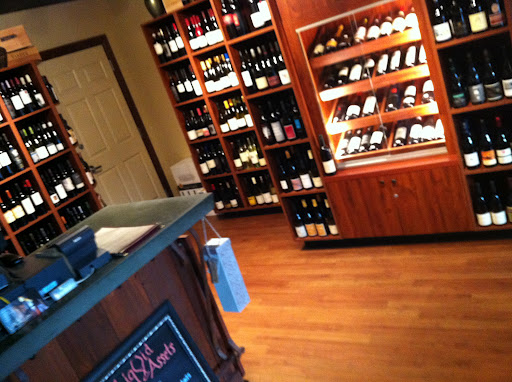
liquid21
Liquid Assets Retail Department

The first stop was Liquid Assets (LINK), a wine bar and restaurant on Main Street in Ashland to get the lay of the land. This busy spot has a small but well-selected retail section with wines from around the world and, of course, a number of the local labels. You can buy any wine and have it in the wine bar for the retail price plus a modest $5 corkage fee. There is also a rotating list of about 18 wines by the glass that, a bit oddly, does not feature more than two or three local wines. I wanted a flight of local red wines, and the best they could do on that night was two out of three, so I got a Washington Syrah (!) in my flight. There was only a single local white a Pinot Gris, which Dorianne ordered by the glass and really enjoyed. I guess that is a result of what their customers want – and they do have some very nice non-local wines in stock.

This area seems to lack a specific identity as to varietals or styles of wine making, so I am looking forward to heading out on Friday to visit a few wineries and see what the area has to offer. Stay tuned.

Copyright 2016 – Jim Lockard
A DAY IN EDNA VALLEY AND A STOP AT KEN BROWN WINES

We went up to Pismo Beach to join two other wine-loving couples for a couple of nights R&R on January 1st (I know, we just got back from Paso Robles on the 30th, but NYE was stressful). We stayed at the Kon Tiki Inn in Pismo (LINK), one of the better kept secrets in the area – no online registrations, you have to call!!!

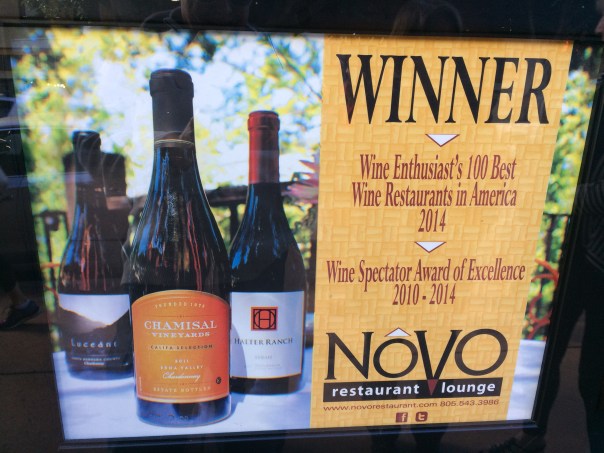
We had some great meals – dinners at Avila Gardens Restaurant (LINK) and Guiseppe’s Cusina Italiana (LINK); and great lunches at the Los Olivos Cafe (LINK) on the way up; at Novo (LINK) in San Luis Obispo; and one at the Spyglass Inn in Shell Beach (LINK). All worth a visit.

2016-01-02 14.07.09.jpg

But this is about the wine. And we did visit three, and only three wine tasting rooms on the trip. And the other couples brought some exceptional wines that we shared and took to dinner (a strategy: take your own bottle, but order a restaurant bottle first. It is likely that your bottle will then be served with no corkage fee – we did not aim for this, but that is what happened.).

The wineries, in order:

Baileyana/Zocker/Tangent/True Myth/Cadre (LINK): A tasting room outside of San Luis Obispo in the Edna Valley. All of the labels represented are made by a single producer and one winemaker. I am a fan of the Zocker label wines (and bought some) – a Grüner Veltliner, a Reisling, and a Late Harvest Grüner Veltliner. All are very true to the Austrian origins of these varietals. Light, crisp and refreshing – actually, great summer wines. The remainder of the 15 or so wines poured here are good, but not great. The tasting room and environs is very inviting, with boccie ball courts, picnic tables, etc., and there is a nice selection of wine-related gifts inside.

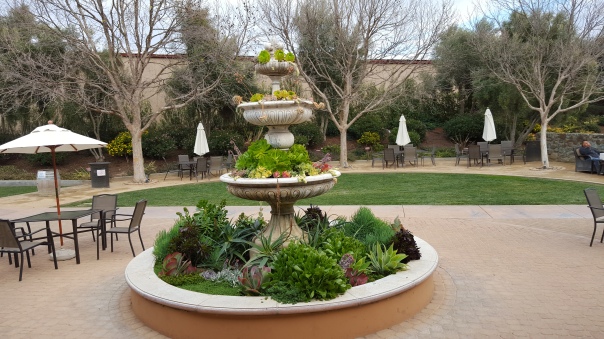
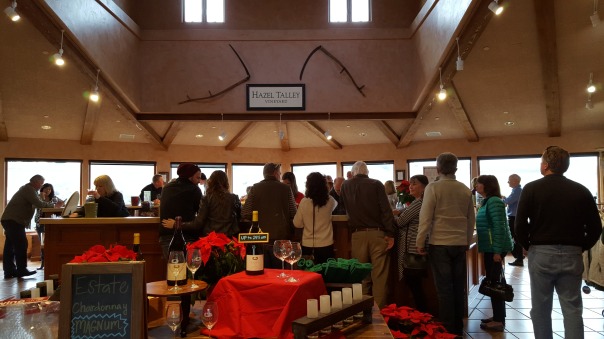
Talley Vineyards: An Edna Valley legend, Talley produces very good to excellent Burgundian-style wines. Their Pinot Noirs and Chardonnays, especially the single vineyard productions, are wonderful. And their prices have hardly risen over the past decade. There is also a second label, Bishop’s Peak, with some nice red wines. The tasting room is beautifully appointed and overlooks some of the vineyards to the west. Out front, a beautiful courtyard has tables and chairs around a lovely fountain that has been converted to a succulent garden due to California’s drought.

Mike, our tasting room host, has been there a long time. He was curiously unwilling or unable to answer some basic questions about the winery, such as was there a map of the vineyards, etc. It was busy, so I will give him the benefit of the doubt. We left with some single vineyard Chardonnay and Pinot Noir.

20160102_151419_001
Talley Tasting Room
20160102_151443
Talley Vineyards
20160102_151406
The Converted Fountain at Talley Vineyards

Ken Brown Wines (LINK)Dorianne and I stopped at Ken Brown Wines in Buellton on the way back down to Agoura Hills. Ken is one of the founders of the Santa Rita Hills AVA, and is responsible for the Zaca Mesa  and  Byron labels there. He decided to step back from large production and specialize in managing a few vineyards and producing some very fine wines in limited production. He produces six single vineyard Pinot Noirs, four Pinot blends from various vineyards, a fantastic single vineyard Chardonnay, a single vineyard Syrah, and several other wines, all in very small quantities – nothing over 240 cases per year.

I blogged about a visit here last year (LINK), but Dorianne wasn’t with me, hence the stop on this visit. Well, we might have stopped even if she had been along on the earlier visit.

We had another very enjoyable trip through parts of California’s Central Coast with friends, great wines, wonderful food, and all of the natural beauty that goes with this special part of the world.

As always, your comments are welcome.

Copyright 2016 – Jim Lockard


PASO ROBLES TRIP, PART 1. EBERLE, TOBIN JAMES & CASS WINERIES

Dorianne and I did a post-Christmas trip to Paso Robles this week. We were accompanied by her sister Debby and Debby’s husband, Mike, who live in Oklahoma, but love wine very much. The trip was really a good experience, so I will cover it in two posts.

Paso Robles has become the premier region of California’s Central Coast, which is saying something, as there are a lot of great wines coming from Santa Barbara, San Luis Obispo and Monterey Counties. With over 200 producers, Paso Robles is the largest region (it includes 11 AVA’s), but it is also the place where the most experimentation and innovation is happening, which is by design. The focus is mainly on Cabernet Sauvignon and Zinfandel, but there are dozens of varietals being grown and the Rhône-style wines produced there are world-class.

I have written before of our trips there to attend the Garagiste Festivals (LINKS). This time, we selected just a few wineries to visit, three on the east side and two on the west side; HWY 101 is the divider. This post will speak to the east side and Part 2 the west side.

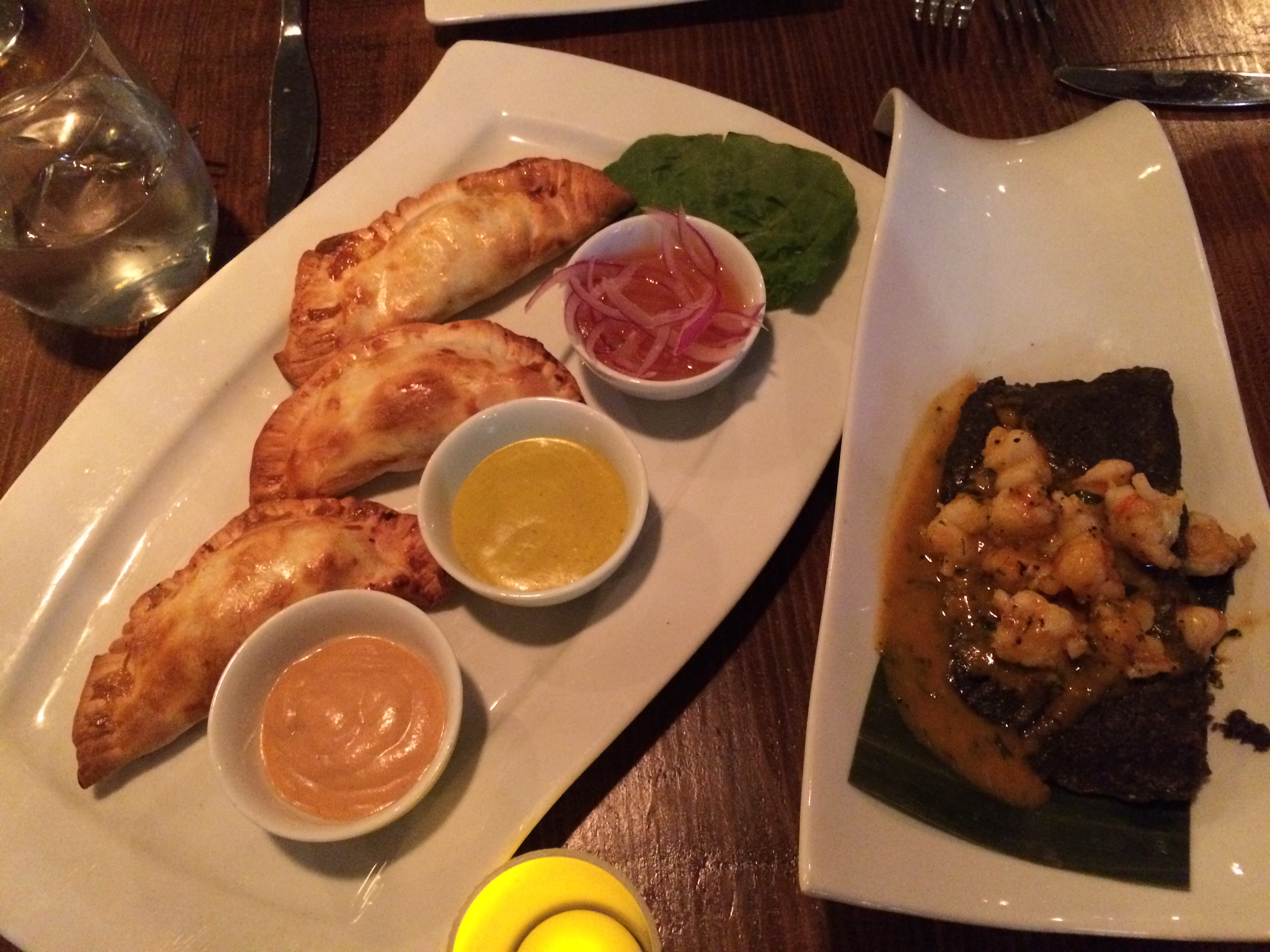
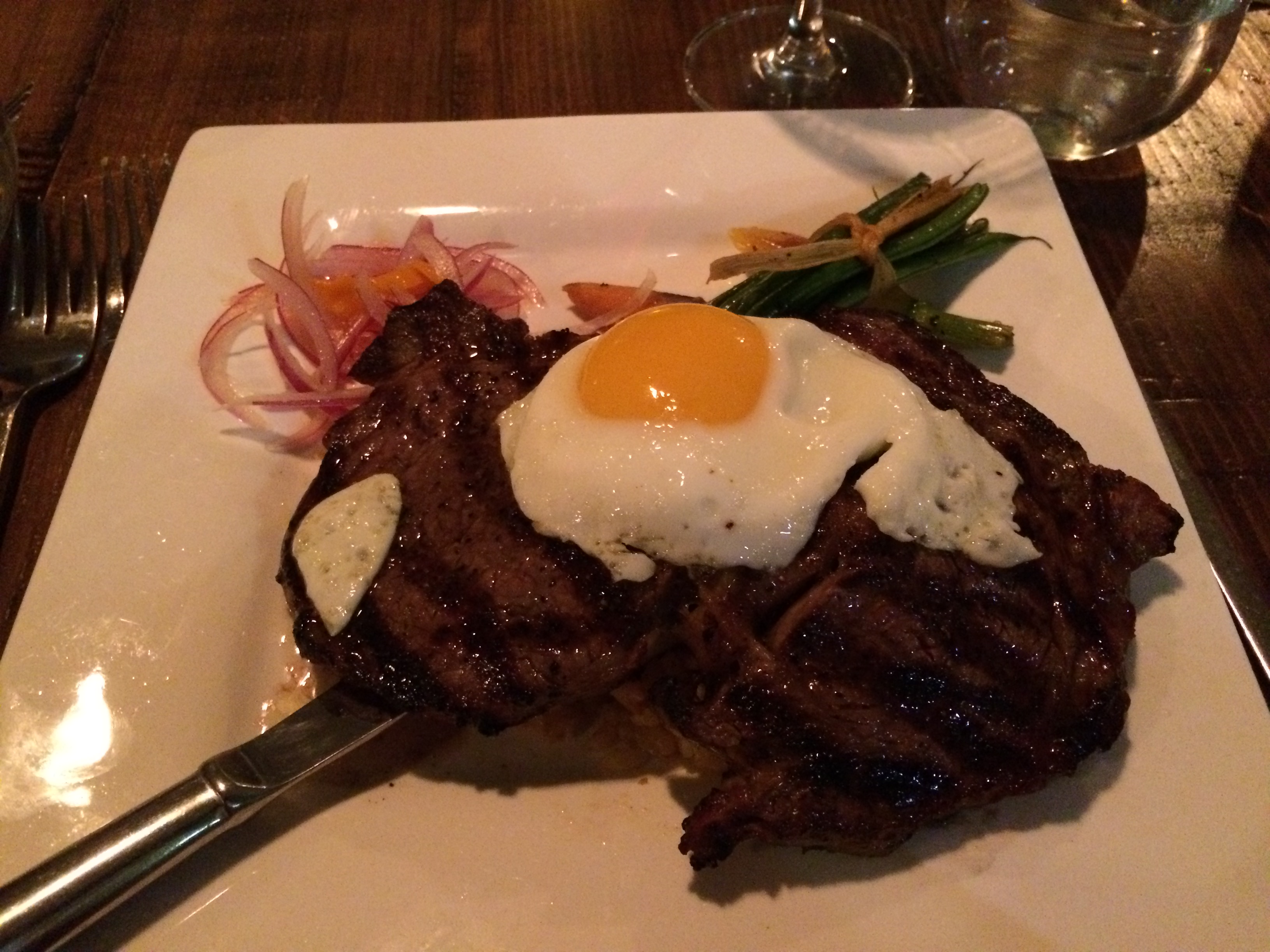
Our arrival on Sunday night began with dinner at Mistura (LINK), a Peruvian themed restaurant located at a golf course on the east side of town. This highly rated restaurant was an excellent choice for food and beverage, but our timing was off. The Sunday after Christmas is a very unpredictable night, and they were a bit over-crowded. We did not get seated for our 7:00 pm reservation until about 7:45 pm and our dinner did not arrive until almost 8:30 pm. That said, the staff was very gracious and helpful the wine list is very good, and the venue is very nice. Avoid the holidays and you should have a great experience.

2015-12-27 20.33.27 2015-12-27 20.55.30 2015-12-27 20.55.40 2015-12-27 20.55.47

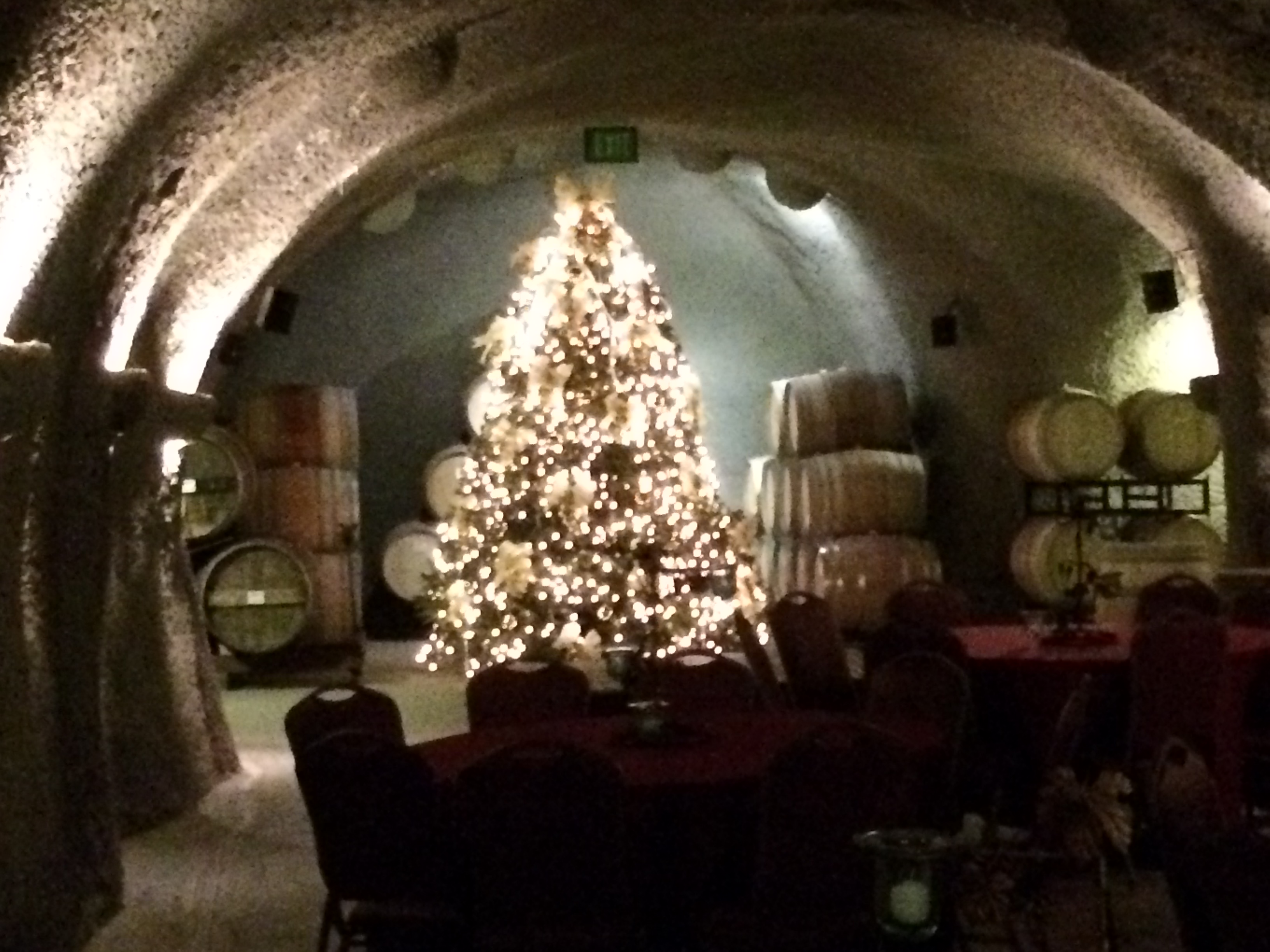
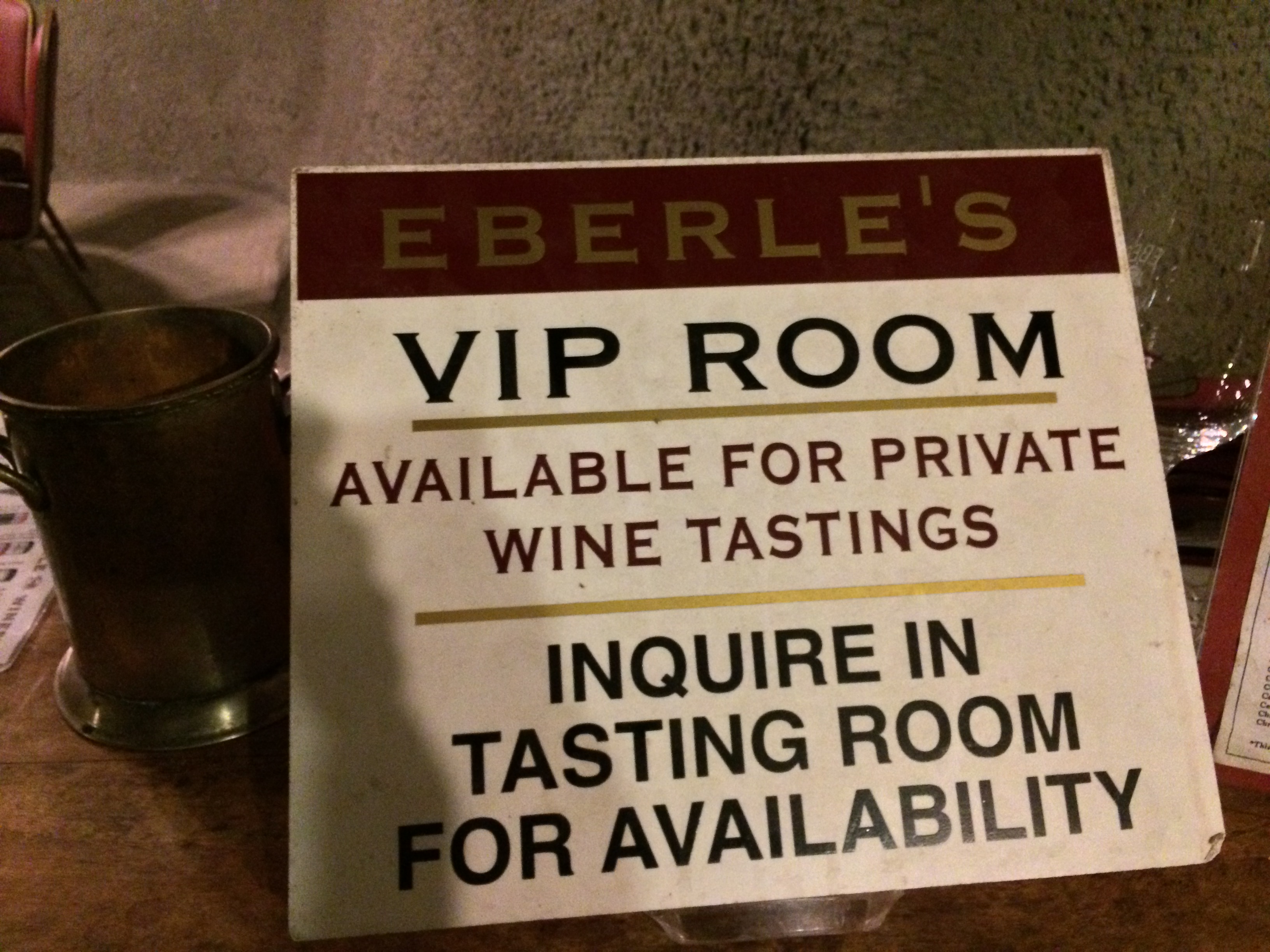
On Monday, joined by our daughter, Grace, who was in the area with her father for the holidays, we began our tours at Eberle Winery (LINK) on Route 46. A relatively large producer for Paso RoblesEberle provides a very good customer experience when you visit: complimentary tastings and winery tours (Dave Olcott and his team do a very professional job), a nicely appointed main tasting room, and knowledgeable staff. We felt well cared for and enjoyed our tour and experience very much. The venue is also available for special occasions and there is a VIP Tasting experience in the Wine Caves offered for a fee that looked very nice. Some photos from Eberle.

2015-12-28 10.44.54 2015-12-28 11.01.35

2015-12-28 11.07.27 2015-12-28 11.06.17 2015-12-28 11.15.48 2015-12-28 11.16.15

The wines at Eberle range from whites like ChardonnayViognier, and a Côtes-du-Rhône Blanc blend; a Syrah Rosé; and reds that include BarberaSyrahZinfandelCabernet Sauvignon, and a red blend. Most of the wines on their website are available for tasting. You get to choose up to five wines to taste. Overall, I would rate Eberle as a very competent wine producer and many of their wines are good values. We particularly enjoyed (and purchased) the 2014 Viognier, Mill Road Vineyard, the 2013 Zinfandel, and the 2013 Barbera.

The next stop was Tobin James Cellars (LINK), farther east just off of Route 46 East. Tobin James has a unique branding look and their tasting room facility is set like a saloon in the wild west. Very campy. The place was packed when we arrived (about noon on a Monday), with three large bars pouring complimentary tastings. One thing that appeals to me – they have Tommy Bahama brand (LINK) shirts with their logo and name on them. Probably 2/3 of my wardrobe is Tommy B.

2015-12-28 11.44.132015-12-28 11.44.32

2015-12-28 12.17.00
Bethany

Tobin James takes a little getting used to for the serious wine drinker – getting past the colorful hype if you will. In the tasting room, you have your choice of a variety of wines on the tasting menu, but only one Zinfandel. Since I know Tobin James as a producer of high-quality Zinfandels, I asked Bethany, our very personable and competent tasting room staff person, if there was another menu. She smiled and produced a second menu with 6 Zinfandels, a Primitivo, and seven other Reserve wines. Also complimentary for tasting. Now we were getting somewhere.

Dorianne and I did side-by-side tastings of the 6 Zins, which were all excellent. We purchased three after getting Grace to expand her pallet a bit. When you get to the higher-end wines, Tobin James excels. Their other wines are good for everyday use as well.

2015-12-28 11.50.47
The Gang at Tobin James

ORoussanne-2014-webur final stop of the day was a Cass Winery (LINK) in Creston, just southeast of Paso Robles. We know Cass Winery as a primary source of fruit for our Agoura Hills-based wine cooperative that I have posted about in the past (LINK)Cass, run by Steve Cass, is very well-known as both a reliable and innovative producer of a number of varietals. With 17 wines featured on their website, they are also very versatile. I am a big fan of Cass’s Rhône-style whites, particularly the Rousanne and Marsanne varietals.

Since our tasting included lunch in the winery cafe, it was an opportunity to experience their wines with some food. I opted for their award-winning burger, which was not the best choice for the whites, but . . . I was hungry.

Suffice to say that the Rousanne and Marsanne that we tasted were excellent – rich and fruity with a nice sense of minerality. The reds, a Syrah and a Cabernet Sauvignon, were also very nice.

2015-12-28 13.18.59
The Burger at Cass Winery

So our first day of tasting came to a close at about 2:30 pm. Then we said farewell to Grace and headed for the market to get chicken and some other provisions for dinner at our AirBnB house that evening. The Eberle Viognier and Zinfandel purchased that morning would prove up to the task of the appetizer and main courses.

Wine travel is indeed rewarding, the wines, the places, and the people.

Next post – Paso Robles’ west side, featuring Tablas Creek and Calcareous Wineries, and a great Mexican restaurant.


HEY, IT’S THE HOLIDAYS – GIFT GIVING GUIDE FOR THE PERPLEXED WINE LOVER

Wine-related gift giving is always a bit of a challenge. Do you give wine, wine gadgets, wine books, wine experiences? Do you have some entry-level wine lovers on your list? Some experts (God forbid a Wine Blogger)? Is price a big concern? Are you a bit panic-stricken in the wine department?

Wine Angst

Well, I know how you feel. The thing to do is to approach your holiday gift giving with a calm sense of purpose and a willingness to give someone something that they may not fully appreciate. Or even like.

Now no one wants to disappoint a loved one or a business colleague, but you’re not a mind reader are you? So do your best, be willing to be flexible, and relax. ‘Tis the season to ENJOY giving and receiving gifts. After all, you are probably more likely to receive a wine basket full of Barefoot Wine than you are to give one, right? (HINT: Do not give Barefoot Wine, Two-Buck Chuck, or “critter wines” – you know, the cheap Australians). No one wants those (they really don’t & they are filled with additives that nobody wants either) and you look, well, cheap and thoughtless for giving them. They are the equivalent of the fruitcake in Holiday wine gift giving.

My recommendation is to give wines that you personally enjoy and that, ideally, have a story. Maybe a little Syrah that you enjoyed at a restaurant or found at a winery that was off the beaten path somewhere; or a gadget that you particularly cherish. When a gift has a personal touch, it is both more fun to prepare and give and more special to receive.

If you live near wine country, or if your gift recipient has a trip planned to a wine region, you might consider the gift of a private tasting that includes a bottle of wine to take away. Most wineries can accommodate such a purchase and you get or make a certificate to give to the recipient. You can gift a wine class to a beginner, or a special wine pairing dinner to someone with more knowledge. And I can help you with the gift of a wine tour in France (if interested, PM me at JimLockardTravels@yahoo.com).

Gadgets are good gifts up to a point. A nice decanter or a set of nice wine glasses are good choices; it tends to go downhill from there. I probably do not keep about 2/3 of the wine gadgets I receive, either because I already have one or because they don’t work, or because it is something I just don’t use. Here is an example:

Wine - Wine Stopper Novelty

This stopper-thing is goofy and was given in fun. It might be okay except that it did not provide a good seal on the bottle. I would rather use the cork or twist cap that came with the wine bottle, because the goal is to preserve the wine.

Wine openers are a good choice, but a personal one. We all have our preferences. Here are links to posts about two openers that I have blogged about that I can recommend. However, you should remember that wine openers are personal and your gift may not be used.


(LINK TO CO2 GAS OPENER)

(LINK TO TRAVEL OPENER)

Wine - Santa Wine

What about wine as a gift?

Always a welcome idea, however, there are some inherent issues in giving wine that you may want to pay attention to.

  1. Shipping. If it needs to be shipped, this can be an issue. There are all kinds of restrictions, most importantly that the USPS, UPS and FEDeX do not take alcohol shipments from private parties. You can have a winery or a wine shop ship for you, but that will often cost more than the wine. I would stick to wine gifts that can be given in person or dropped off. Ship the gadgets.
  2. Shipping Part 2. One exception (and it’s too late for this Christmas) is to use an online service like WTSO.com (LINK) to ship gift wine. You are limited to what they are offering, so you may have to check the site repeatedly, but it is an easier way to ship wine.
  3. Giving the wine. If you take your gift of wine to a holiday party given by the recipient, it may just become part of the bar for the party. That may be fine, but it is not ideal. So bring a bottle for the bar and put your gift, well wrapped, under the tree.
  4. Selection of the wine to give can be a minefield (see the idea of being willing to give something that the recipient may not enjoy). I try to avoid their favorite wines because I know that they will get them for themselves. I go for something unusual for them. Maybe a Petite Sirah for a Cabernet drinker or a Semillion for a Chardonnay drinker. Or a Port or Sauternes, and even Champagne or Cava or a local sparkler for anyone. If they like whites or reds, give them that, but help them to explore a bit. You can also get something like an Australian Cabernet for a Bordeaux drinker. Another idea is to get a mixed case for a new wine drinker; or for me for that matter.
  5. Wine Baskets. The key to a good wine basket is the wine. Rather than picking up a pre-made basket, ask the staff at your wine retailer to make you one that you design yourself. (HINT: Instead of cheese, get a gift card for the cheese and put a description/photos of the recommended cheeses in the basket). Avoid the kinds of cheese that are usually in baskets that are full of preservatives and other non-cheese stuff.
  6. Labels. it is said that 80% of wine purchases are made because of the label. Fine, do that if you must. Get some Skinny Bitch as a joke for a female friend, or some Fat Bastard for that male friend with the not-too-sophisticated sense of humor. Just be aware that it only encourages the bottling of mostly bulk wine with clever labels, thus entrapping another generation of new wine drinkers in rivers of barely drinkable wines full of additives. I’m just sayin’.
  7. Price. It is easy for you to go overboard here. Those top-shelf wines are awfully appealing, especially when you want to impress someone (and many have nice labels, too!). I recommend that you know your budget and stick to it; that will make for a happier January when the credit card bill comes.
  8. Get help. Your local wine shop, or even Costco (but probably not Target – don’t buy gift wine at Target) has someone who knows wine and will help you. Get their advice – you don’t have to take it, but a good wine department employee can be a big help. The same is true if you are buying from a winery. Tell them what you are looking for, they love to talk about their wines and will be helpful.
  9. Status. I know that some are getting wines to give as corporate gifts. I will leave that to you, because you are clearly trying to impress people, which is fine, but that is not what the individual giver should be doing. The sad part of corporate wine giving is that many, if not most, of the wines go to people who do not appreciate them. I had a friend who does not drink wine and who received a case of Joseph Phelps Insignia Cabernet Sauvignon one year. He gave some away and used the rest in spaghetti sauce.

In short, wine-related giving is a field rich in opportunity with a few land mines here and there. I recommend again that you give thoughtfully, within your budget, and that you do your best to enjoy the process. Use your gift-buying time on-line or in stores to explore and expand your own wine experience.

Thanks so much for visiting this site, or even following it, this year. And have a very Happy Holiday Season and a Prosperous and Wine-filled New Year!

Wine - Christmas and Drink Wine