Tag Archives: California

WESTERN SONOMA – A TASTE OF THE POSSIBILITIES

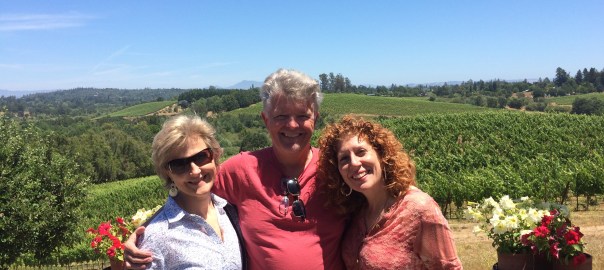
The other day, I was joined by Sonic Nourishment (LINK) musicians Erika Luckett and Lisa Ferraro for a day in western Sonoma for some wine tastings and lunch. It was a perfect day weatherwise, and we began with a drive out to Iron Horse Vineyards (LINK) near Sebastopol.

Known for their sparkling and white wines, Iron Horse consists of just over 100 acres of vineyards. We opted for two tastings, with Lisa getting the sparkling wines and me getting the white wines (Erika was our designated driver). The sparklers were all well-crafted (with the exception of one that turned out to be a bad bottle – when we pointed it out to the tasting room personnel, another one was opened, which was fine). I am not a huge sparkling wine fan, but I do appreciate the bubbly from time to time, and these were all very drinkable to me. Lisa said that she was overall less impressed than on a prior visit to Iron Horse.

The whites, all Chardonnays, were equally well-crafted, especially the 2012 Rued Clone Chardonnay which was especially well-crafted with a nose of white fruit – pears and apples – with a hint of caramel. Very nice. We did not taste any of their Pinot Noirs, saving our strength for the long day ahead.

One note – the tasting notes pages at Iron Horse said nothing about the wines, only naming some suggested food pairings. Since there was no food available, I did not find this very helpful. On the other hand, the tasting room staff was very helpful and paid attention to everyone.

Next, we headed into Healdsburg (LINK) for lunch and to hit a couple of tasting rooms there.

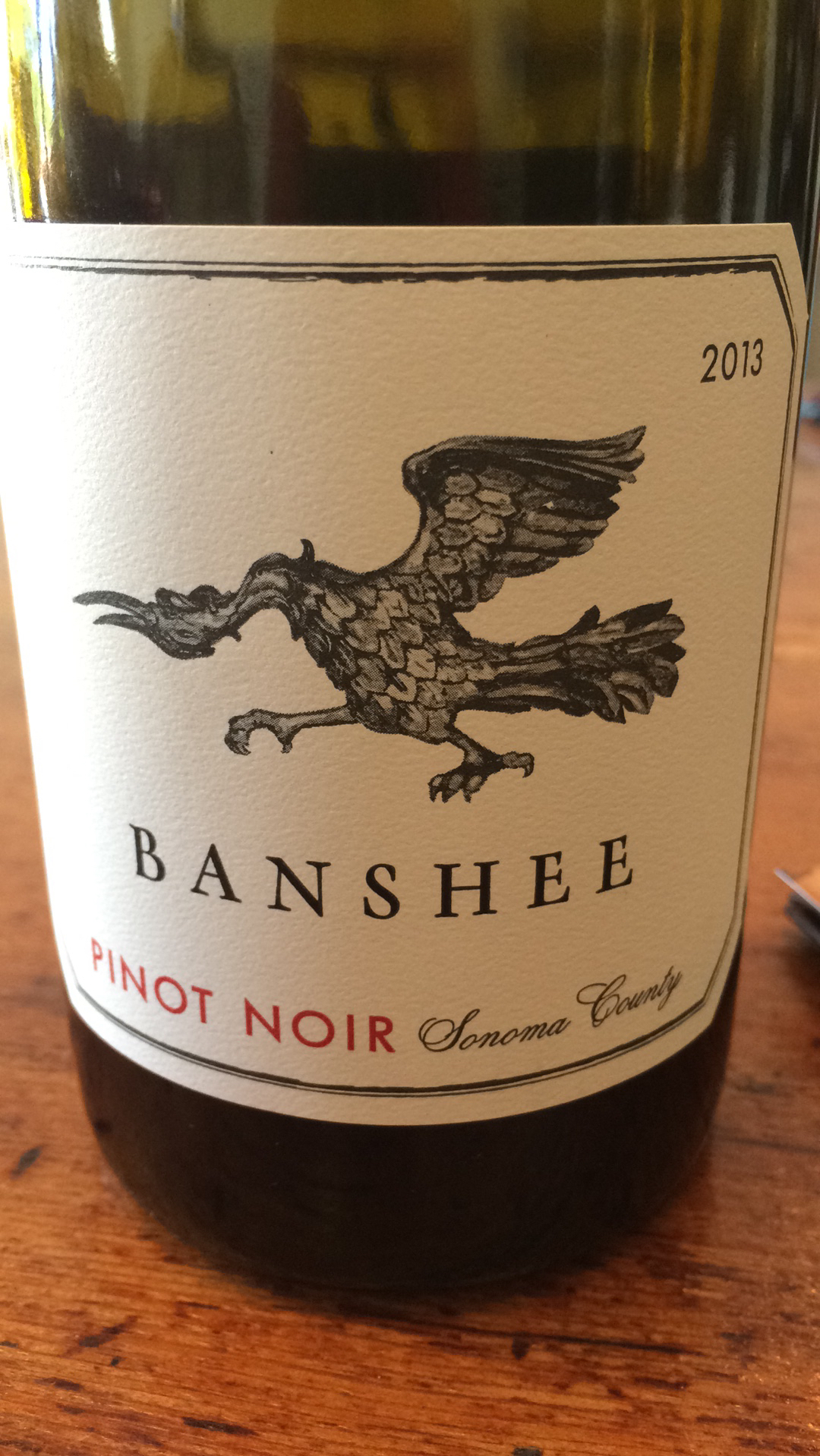
After a healthy lunch at the Oakville Grocery, we headed over to Banshee Wines (LINK), for some Chardonnay, Sauvignon Blanc, Pinot Noir, a Cabernet and a red blend. Banshee sources fruit from a number of Sonoma coastal and inland vineyards. They produce wines that are more Californian than Burgundian in style, which is not surprising. Lisa and I each did their basic tasting (there is also a reserve tasting), of three Chardonnays and two Pinot Noirs. They were all well-crafted and very good (think somewhere between oaky and stainless steel for the Chardonnays; the reds were very nice with one exception – The 2013 Mordecai Red Blend, made up of 9 varietals, had such an off-putting nose (think swampy) that neither Lisa nor I could get to the tasting. We asked the tasting room staff if this was a bad bottle, and were told that it was fine. We dumped that one.

Otherwise, the Banshee Wines that we tasted were enjoyable. Like many smaller producers in the area, their price points are a bit high for the average buyer – but if you like the wines, you will buy them.
2015-06-18 14.52.20

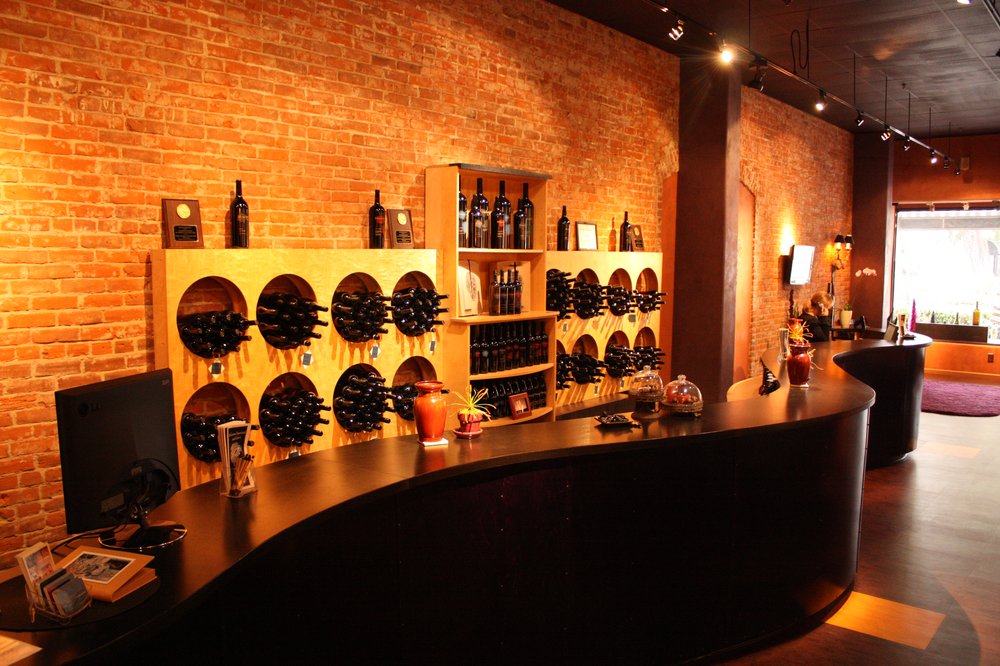
Our final stop of the day (we needed to beat the traffic back to the East Bay), was Thumbprint Cellars (LINK), whose tasting room is just off the square in Healdsburg. I had some of their wines a couple of years back, when they were regularly featured on the Wines Till Sold Out (www.WTSO.com) site, and liked them very much. When I mentioned that to the tasting room staff, I was told that those were special blends made just for WTSO at the time.

We started with their 2013 Arousal white blend of Sauvignon Blanc and Viognier, a floral nose, very rich mouth feel, and smooth finish on this one. We also tasted the 2011 Climax red blend, a mix of 44% Syrah, 26% Merlot,
20% Zinfandel, 7% Cabernet Franc, 3% Viogner
. This one is very smooth and complex (as you might imagine), but well-balanced. Very nice. I brought a bottle of this one home; so did Lisa. The 2011 Sonoma County Cabernet Sauvignon was everything you would want in a Sonoma Cab – rich, spicy, bold, and lots of dark fruit, but with an elegance that is so often missing in “big” wines.
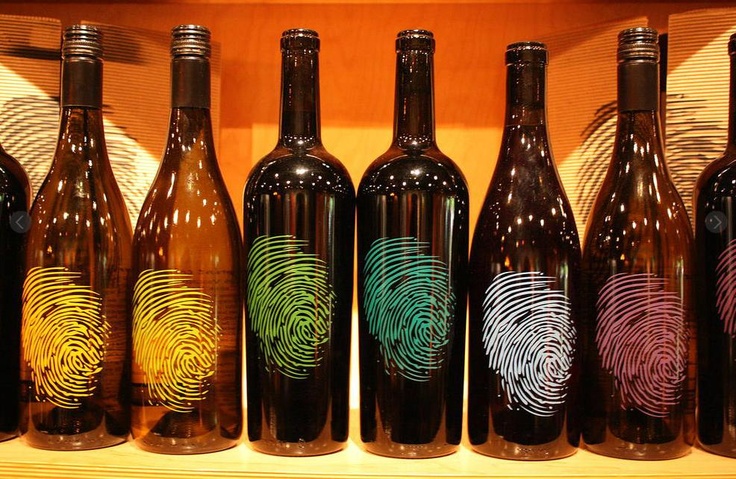
Wine - thumbprint-cellars-wine-tasting-room
Thumbprint Cellars Tasting Room

Wine - Thumbprint - Sonoma

So that was our day in Western Sonoma. Like all such tasting outings, we had a great time and missed a lot of wineries. But that gives us something to go back for.

TRIED AND TRUE – OYSTER BAR AT THE FERRY BUILDING

Since I’m in Berkeley for a couple of weeks, it makes sense to visit some nearby wine meccas – Sonoma tomorrow, Napa Valley next week. Today, it was San Francisco’s Ferry Building (LINK), an admittedly touristy, but very good for foodies edifice at the foot of Market Street. For east coasters, think Faneuil Hall in BostonSouth Street Station in New York, or Harborplace in Baltimore – but with much, much better food.

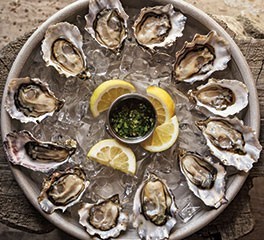
My go-to lunch spot here is always the Hogs Island Oyster Company (LINK) on the water side of the complex. The space has been expanded a bit since my last visit, and now features three bar areas and some indoor and outdoor tables. Oysters are the featured item, but the menu has much more from the sea. Today, I had steamed clams in melange of Mexican Chorizo, greens, hominy and jalapeno butter. I started with Boquerones, sardines with piquillo aioli, chopped egg, green herb sauce on a sliced ACME Bread Co. baguette. Delicious and beautiful.

Oysters Hog-Wash

2015-06-17 12.16.27
Boquerones – $7.00
2015-06-17 12.28.14
Steamers with Pasta $17.

To wash this delicious feast down I opted for the house white wine, Hog Island Oyster Wine, a very interesting blend of 55% Gruner Veltliner and 45% Albarino from the California Central Coast’s Edna Valley. This unusual blend went perfectly with the seafood, existing somewhere between a Chardonnay and a Sauvignon Blanc in consistency. Fruity, but with a hint of flinty minerality, and a very different blend than you might get from the European versions of these varietals. I have had some Edna Valley Gruner Veltliner and Albarino, and this is an inspired blending of these grapes.

2015-06-17 12.25.31

Afterwards, I wandered the halls of The Ferry Building, picking up some bread and chocolate to take home, and getting a Blue Bottle Coffee to sit outside by the water to enjoy with my new friend.

2015-06-17 13.34.56

OPENING WINE BOTTLES WITH WAX TOP SEALS

One of my favorite wineries in California is Artiste in Los Olivos on the Central CoastBion Rice the master blender (all Artiste wines are blends) of Artiste and winemaker and manager of Sunstone Wines, puts wax seals on all Artiste bottles. A number of wineries do this, mostly for aesthetic purposes. The wax seal can also serve to prove the the wine has not been tampered with.

Some Artiste Wines
Some Artiste Wines

So how best to open a bottle with a wax seal? Many wine openers will not work with these seals because the wax gives the top too large a circumference for them to fit over the bottle top. So electric openers are out, as are some others.

Many try to chip the wax off of the bottle with a sharp knife, the tip of their corkscrew or the little knife used to remove foil coverings from the bottle. These can work, but can lead to injury, to pieces of wax flying around the room, and to an unsatisfactory result.

The best way to open these bottles is with a Waiter’s Friend or a winged corkscrew. Simply put the corkscrew through the middle of the wax top and into the cork. When it is properly seated, remove the cork as you normally would. The wax will come with it. Then, enjoy your wine!

Wine - Opening Wax Top
Opening Wax Top Bottle with Waiter’s Friend Opener.

Wine - Waiters FriendWine - Winged Corkscrew

WINE ENJOYMENT SHOULD BE ACCESSIBLE AND ENJOYABLE, OR WHAT’S THE POINT?

There is a false notion that permeates wine culture at almost every level. That notion is that there is a level of knowledge that is attainable that will enable a person to know about every wine that exists. Now I know that most wine experts (a word that is past its expiration date IMHO) will say that this is not so, but it is conveyed in wine media of all kinds and by many individuals. My wine Twitter feed includes a number of people who purport to have a very deep knowledge of a very wide variety of wines. I have my doubts.

The reason that this is a false notion is that the sheer numbers relating to wine have grown so large and are so widely distributed around the globe. The California Wine Institute (LINK) has figures on its site for world wine production through 2012 – it shows 25,721,000 liters of wine produced world-wide (LINK). WineSearcher.com (LINK) shows about 3,600 wine regions in the world. There are probably around 100,000 wine producers in the world (this number is a bit difficult to nail down). The number of labels that you find in a decent wine store grows each year, with mega-stores like Total Wine and Spirits carrying upwards of 9,000 wines.

How is anyone going to know about all of these wines?

Wine Angst

For someone who is new to wine appreciation, or even for seasoned collectors, it can seem impossible. Most end up narrowing down their focus to a few regions or varietals, or even a single one. I have a friend who only drinks Kendall Jackson Chardonnay for example. Most collectors focus narrowly, some are more expansive, seeking out a wide variety of wines from various locations, vintages, and varietals. Those who focus will likely have a more in-depth knowledge of the particular area or areas of their attention. Those who explore more widely will have a more superficial knowledge of a variety of wines, regions, and varietals.

2014-09-11 12.57.26

Unless you are in the wine business, you will not have time to taste and understand the thousands of wines that are out there, or even the hundreds on the shelves on your local wine retailer’s shelves. And even if you are  in the wine business, it is doubtful that you will need to know about every region, varietal or producer. The idea that one needs to have so much knowledge can drive people away from the enjoyment of wine, and that serves no one.

My recommendation is to find your own way into and through the many types, styles, and iterations of wine. You may just have a glass or two a week of whatever is being served, or you may be an avid collector of all things from the Piedmont in Italy or Napa Valley in California, it does not matter. There are ways for you to access information about your own desires and preferences.

I tend to be an explorer. Even though I drink wine every day, blog about wine, and will be doing wine-related tours in the near future, I do not spend hours and hours pouring through information about wine. I tend to be an explorer – trying all kinds of wines from various regions – but I also have my preferences and I spend more time exploring those in greater depth as time and my wallet allow. Writers like Eric Asimov of the NYTimes work for me, because he explores a variety of wines from different places. I also enjoy Kermit Lynch, the amazing wine purveyor in Berkeley, whose newsletter (LINK)  is very informative and focuses mostly on French and Italian wines.

But you will find your own sources. I try to keep my blog as general as possible, but since I travel a lot, I write about the wines and the wine culture where I travel, so there may be some posts that do not interest everyone.

the world of wine should not be an impenetrable maze of secret or obscure or overwhelming information. It should be accessible, enjoyable, and allow each wine enthusiast to savor the experiences that he or she discovers. Whether that is a focus on First Growth Bordeaux or on trying to sample each of those 3,600 wine regions in the world, it should be an enjoyable experience, or what’s the point?

I would love to see some comments on this post – what do you think? What is your approach to wine?

IMG_0373

MAKING SENSE OF WINE REGIONS

A very good article from WineFolly.com with infographics on the appellation systems in the United States, France, Italy, and Spain. This is the kind of helpful information that wine buyers need to help decide what to purchase, especially when you are looking at wines with which you are not familiar. There are “click-throughs” to other information as well.

The Spanish Wine Map below is one example from the article (click on it in the article and you go to another excellent article about Spanish Wine).

(LINK TO ARTICLE)

Wine - Spanish Wine Regions Map

NEW DIRECTIONS IN CALIFORNIA WINES?

A very good article from the NYTimes Magazine, “The Wrath of Grapes,”  describes some new wine making styles emerging in California. Interesting stuff, but my take on it is that the larger wine-buying public will still flock to the high-alcohol fruit-bombs that have become popular in California. Some wine makers are re-examining what is possible in California. Read the article for more – link below the photo.

Wine - Rajat Parr in CA
Rajat Parr in his Domaine de la Côte winery in Lompoc, Calif. Credit Damon Casarez for The New York Times

(LINK TO ARTICLE)

HIGH END WINE TOO EXPENSIVE, SAYS ROBERT PARKER, WHO IS PART OF THE PROBLEM

In an article by Patrick Schmidt on The Drinks Business blog, Robert Parker talks about the rapid escalation in the price of high end wine. Parker notes that he is “part of the problem” as his high scores often help to inflate prices even higher. He says that there is a “caste system” developing because of wine prices.

From the article: “Parker told db, ‘I think this is a problem; it means a lot are shut out because basically we have a caste system of wine – at the really desirable high end, whether the wines are Burgundy or Bordeaux, or from California, they have become so expensive that people just can’t afford them, so they look elsewhere.’”

Wine prices seem to be expanding like the Universe – the farther apart they are, the more quickly they speed away from each other.

(LINK TO THE ARTICLE)

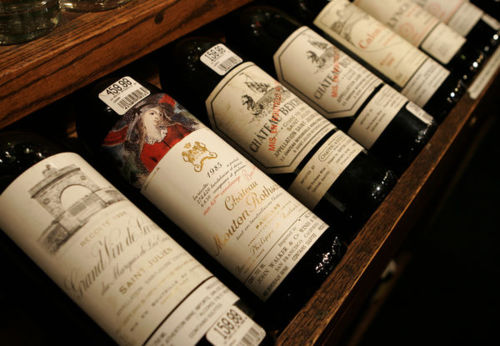
Wine - Bordeaux Beauties

LIFE’S TOO SHORT TO DRINK CHEAP WINE – LAWSUIT OVER ARSENIC IN WINE

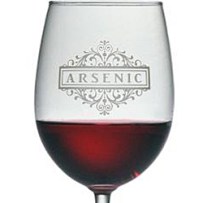
A lawsuit has been filed in California over illegal levels of arsenic found in inexpensive wines sold there. Here is a (Link to the list of wines) Here is a (Link to a news story) The lack of labeliWine - Arsenicng regarding wine additives is coming to a head in California, which is where you would expect it to happen in the U.S. The use of many additives has been addressed on this blog before via two well-researched articles from Joey Casco at TheWineStalker.net(Link to that post). The pressure to take bulk fruit and make it uniform in the wine making process for these inexpensive wines leads many of them to use additives that rang from undesirable to unsafe. Perhaps this lawsuit, brought by four individuals, may lead the way to more open reporting of what is going into wine.
UPDATE: This article (LINK) from Vinography is worth reading – giving another perspective on the matter. I still say, there are many reasons not to drink cheap wine. The arsenic thing may not even be the most compelling.

BACK TO SUNLAND WINES TASTING ROOM

On Saturday, Dorianne had a late-morning appointment with her allergist, and it just happened to be in the same shopping center where the Sunland Vintage Winery Tasting Room (Link) is located in Thousand Oaks, CA. The proprietors, Michael and Debby Giovinazzo, were in when I peeked in the door at 11:00 am (the sign said they open at 1:00 pm). I asked if they were open and was invited in.

2015-02-14 12.57.28
The Tasting Room at Sunland Vintage Wines – shared with Alma Sol Wines.

I blogged about their Tantalizing Thursday Events (LINK), where they combine $5 per glass wine with a food truck in the parking lot two weeks ago. That event was so crowded, that I was unable to have a conversation with Mike or Debby, so I returned to do just that.

Mike and Debby have been in the wine business for five years. Their wines are produced in Lodi, CA, and sourced from all over the state. His goal, he said, was to bring Italian Varietals to Southern California, which his Giovinazzo Wines label does, and does very well. There is also a newer label, SVI Wines with more traditional varietals – Cabernet Sauvignon, Syrah, Malbec, and Albarino. 

2015-02-05 18.51.36

Total production this year is 1350 cases, making Sunland Vintage Winery a small producer, but one with great variety. Mike told me that he just contracted for some Dolcetto fruit from Northern California growers that he is excited about. Mike and Debby clearly love being in and talking about, the wine business, and it looks like they have carved out a nice niche for themselves with their Italian Varietals and blends.

If you are in the area, check them out.

A FIND IN SANTA RITA HILLS – MARGERUM WINES

Continuing our series on the wineries I visited on a group wine tour in the Santa Rita Hills Appellation on Saturday, we will take a look at Margerum Wine Company (LINK). Our group tasted at the winery near Buellton, but the regular tasting rooms (LINK) are in Santa Barbara. Assistant Winemaker Sam Smith conducted our tasting on Saturday.

2015-02-07 14.05.56
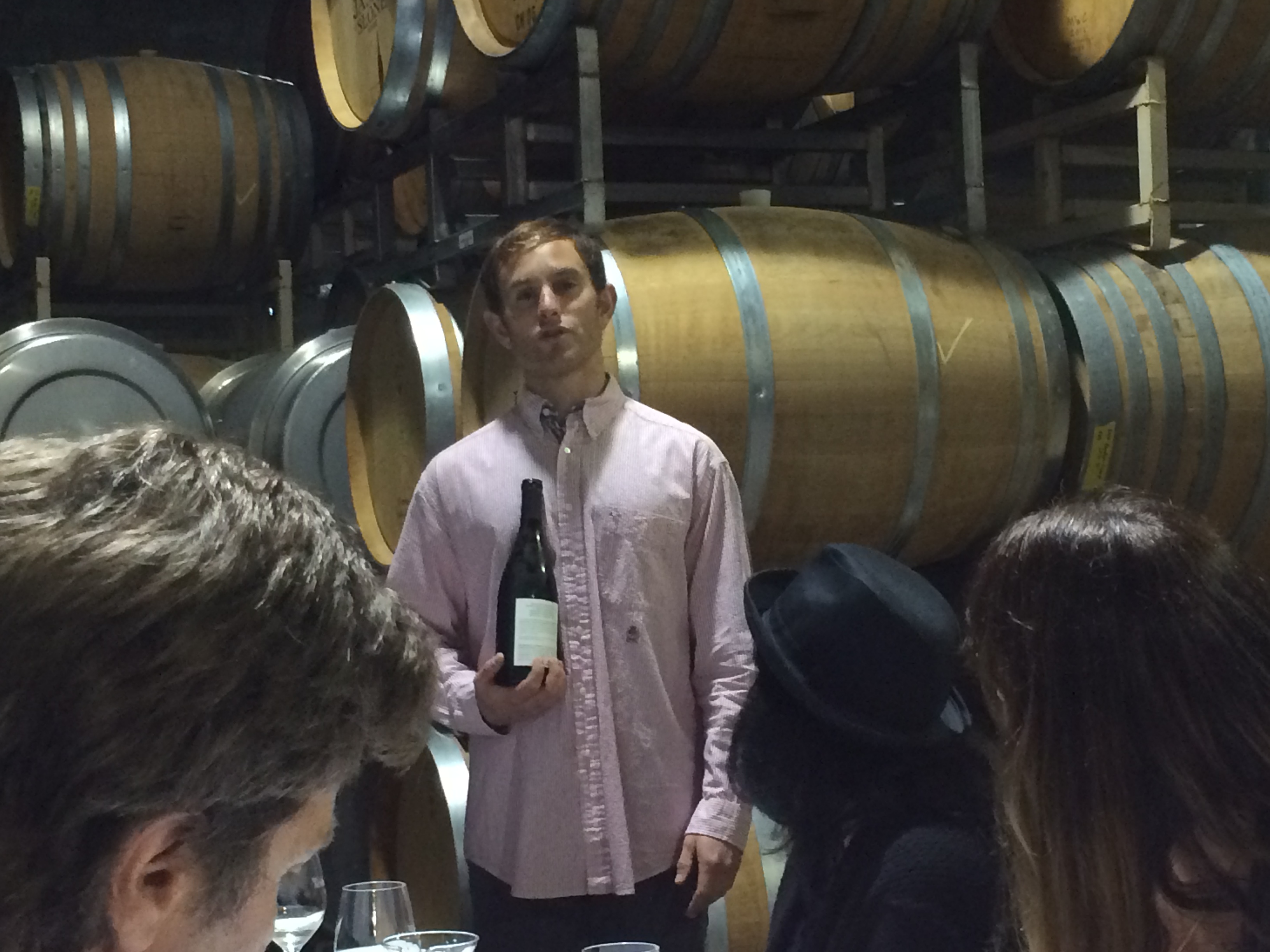
Sam Smith describes Margerum Wines.

2015-02-07 14.05.47

Margerum produces a number of wines from a variety of vineyards (LINK) in Santa Barbara County. They produce small quantities of each wine, seeking to maximize the quality. Their stable of wines runs from Sauvignon Blanc (including a rare late harvest dessert version), to Pinot Gris and a Grenache Rosé on the white side, with Syrah, Pinot Noir, Grenache, and Rhone and Chateauneuf-du-Pape style blends under a couple of labels. You can read about each of the wines at the link above. I really enjoyed the 2013 LATE HARVEST SAUVIGNON BLANCa very light and smooth dessert wine that has a light mouthfeel and not too much sweetness.

2015-02-07 14.45.43

I found the wines we tasted to be well-crafted with a tendency toward lightness and elegance, even a sense of understatement, which is consistent with the style that many winemakers adopt in this region. As noted in earlier posts, if you want the big fruit-bomb reds, you need to head north a bit to Paso Robles, where that style is more prevalent.

The owners of Margerum Wine Company are also involved in the Wine Cask Restaurant (LINK) in Santa Barbara. The restaurant has an excellent reputation, and, I am pretty sure, you can get some Margerum Wines on the premises.

Later, more posts on the other two wineries we visited, LaFond and Tyler, each very interesting in its own right.

2015-02-07 14.45.55
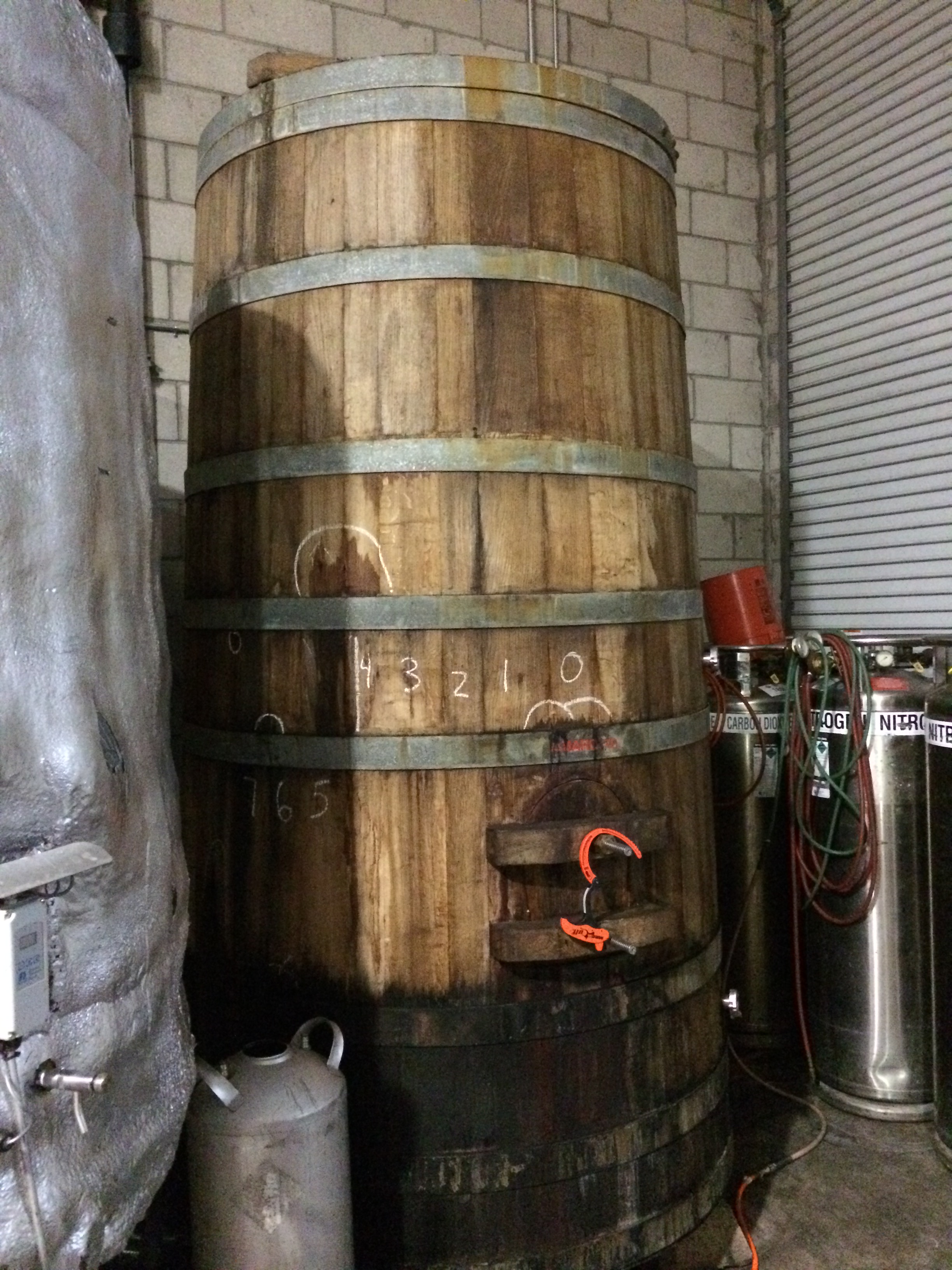
Stainless Steel Barrels at Mergerum.
2015-02-07 14.49.37
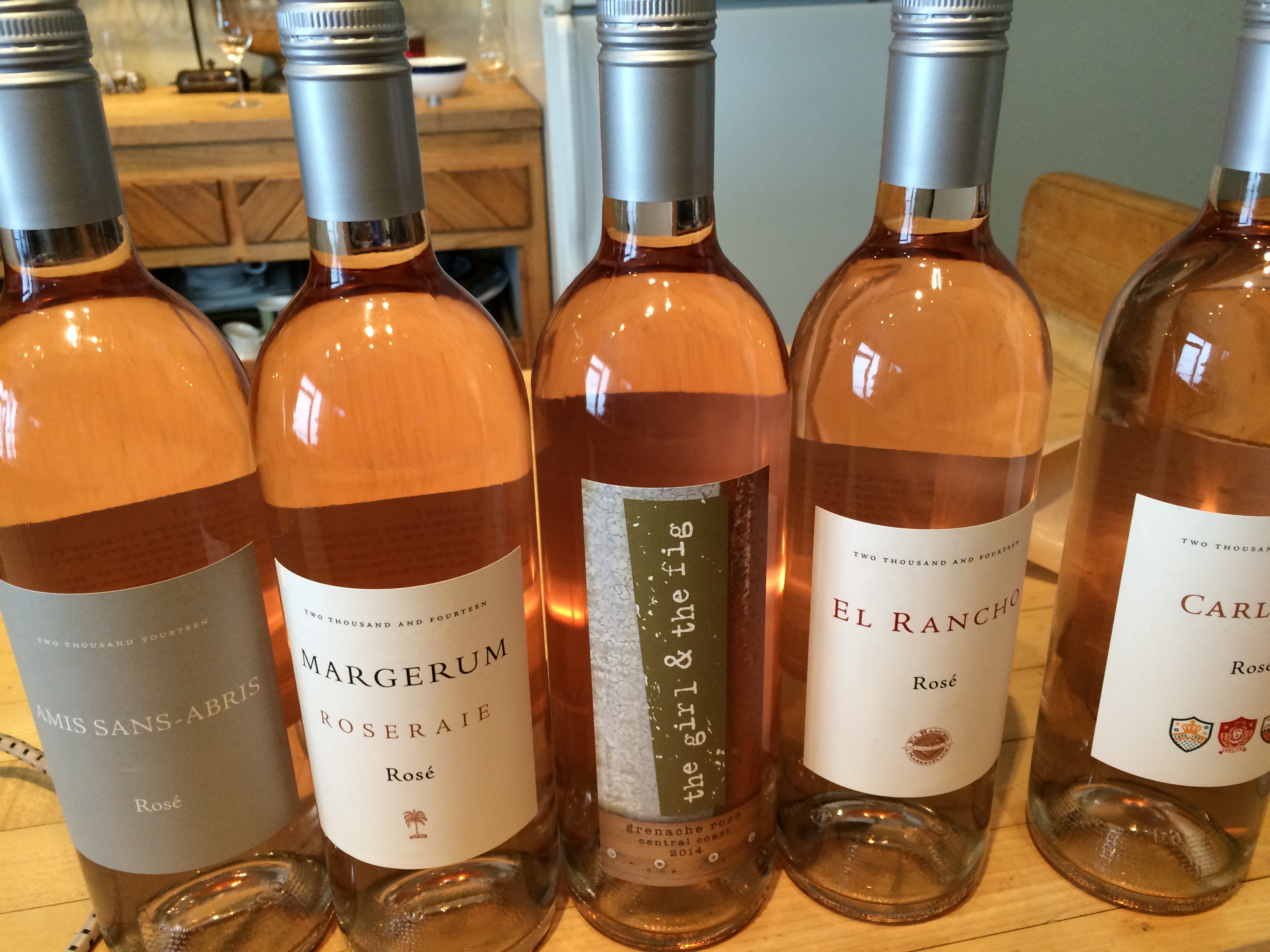
A Line Up of Rosés.