Category Archives: Wine Opinion

SOME BASIC TIPS FOR WINE STORAGE

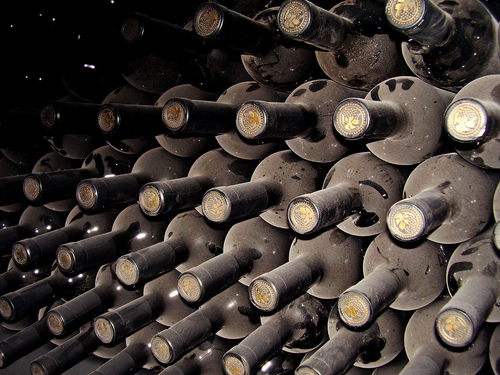
The best guidelines for storing wine are really rather simple. Avoid light, heat, and vibration. Here is a link to a post by Ted Loos in Travel and Leisure’s Online Blog that speaks to these issues very simply. (LINK TO POST)

My own experience has been that wine is not that sensitive – most wine anyway. I do store fine wines that I intend to keep for some time in a wine refrigerator. Everyday wines, I store in a closet on a wine rack, and some wines on a rack in the dining room. At least I did that when I had a house. Now that we are traveling more or less full-time, so all of the wine that we did not consume before leaving California is in a wine storage facility.

Obviously, wine storage is an area of practice that is relative to how long you keep the wine that you purchase or make. It is best to have the kind of storage that is the most conducive to allowing the wine to mature properly. If, however, like so many people today, you consume wine very soon after purchase, storage is less of a concern. In either case, the article cited above will be helpful.

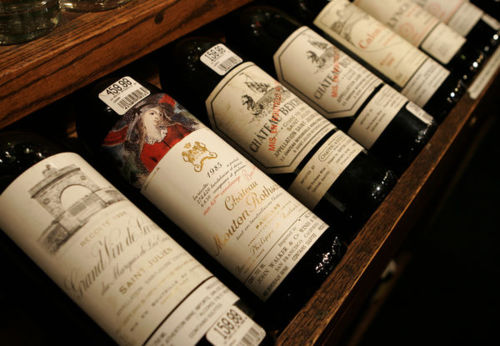
Wine - Old Bottles in Storage

EXPENSIVE WINE/CHEAP WINE – THE CONTROVERSY GOES ON

@EricAsimov on Twitter tipped me off about this article (LINK) by Sarah Miller on the Kitchenette Blog about the VOX video (see below) that has been circulating on the internet recently. The video says that Expensive Wine is for Suckers and features a tasting panel by a few folks at VOX of three Cabernet Sauvignons from different price points. They all liked the cheap one, ergo, expensive wines are for suckers.

Sarah Miller’s hilarious blog post in response (CAUTION: ADULT LANGUAGE!!!) takes VOX and the host of others who blithely support their findings to task in a very significant and entertaining way. It’s a long read, but, IMHO, worth it. First, here is the video:

https://youtube.com/watch?v=mVKuCbjFfIYframeborder%3D0allowfullscreen

And here is my take.

I agree with MIller in the basic premise of her post – that there is no definitive line that says what wine is good and what wine is bad; that less expensive wines from large producers tend to be altered with additives to create something other than what the  and grapes and terroir might have created on their own; and that the way we appreciate wine changes with greater knowledge and experience.

Since wine enjoyment is so subjective, each individual will find that his or her experience differs from others’, including many or all of the “experts” in the wine media. This is not unusual, as pointed out in the article – the masses often desire the simplest types of foods, drinks, music and movies. Thus the more expensive wines, those that represent higher quality fruit and true wine making craftsmanship, will tend to be appreciated by smaller numbers of people – more complexity = fewer adherents.

Here is a quote from the article: “Back to the whole cheap wine versus expensive wine thing. Cheap wine is awful. It used to taste like vinegar, and now, more often than not, it tastes like pancake syrup. It is made quickly and with little care. The grapes in it are often too ripe or not ripe enough. Good wine tastes like violets and flowers and fruit and spices and being blown away by it is an experience you are not required to have—but you should believe that it exists, because it does. Yes, of course, there are good wine values and bad ones. There is no one in the wine industry with a brain who thinks that every single bottle of $40 wine is universally better than every single bottle of $18 wine, or that every single person will like a $40 bottle better than a $8 one. As Schneider (a sommelier quoted in the article) pointed out, we aren’t robots.”

The philosopher Ken Wilber writes about the concept of span versus depth: the greater the span of something, the less depth and vice versa. A fast food restaurant will sell many more meals in a day than a fine dining restaurant; an action film with lots of explosions and little if any plot will out draw a character-driven film based on fine literature. Why should wine appreciation be any different?

If you like cheap wine, drink cheap wine. If you like expensive wine, drink that. But I suggest that you not let price, or ratings points, or labels, or other external factors be anything more than suggestions for you. If you are new to wine, find out what you like and drink that. Perhaps you will want to explore other types of wine over time; perhaps you will want to learn more about wines and wine making and that will influence what you drink.

My only caution, as I have stated in other posts, is to watch those really cheap wines produced in large quantities, as they are, more often than not, made with a lot of additives that you do not know about and that may not be good for you. The amount and type of additives tends to change and lessen as the price point of wines goes up, but not in an absolutely predictable fashion. Someday, stricter labeling requirements (LINK TO A GOOD ARTICLE) may help with this issue, but for now, you are pretty much on your own.

WINE ENJOYMENT SHOULD BE ACCESSIBLE AND ENJOYABLE, OR WHAT’S THE POINT?

There is a false notion that permeates wine culture at almost every level. That notion is that there is a level of knowledge that is attainable that will enable a person to know about every wine that exists. Now I know that most wine experts (a word that is past its expiration date IMHO) will say that this is not so, but it is conveyed in wine media of all kinds and by many individuals. My wine Twitter feed includes a number of people who purport to have a very deep knowledge of a very wide variety of wines. I have my doubts.

The reason that this is a false notion is that the sheer numbers relating to wine have grown so large and are so widely distributed around the globe. The California Wine Institute (LINK) has figures on its site for world wine production through 2012 – it shows 25,721,000 liters of wine produced world-wide (LINK). WineSearcher.com (LINK) shows about 3,600 wine regions in the world. There are probably around 100,000 wine producers in the world (this number is a bit difficult to nail down). The number of labels that you find in a decent wine store grows each year, with mega-stores like Total Wine and Spirits carrying upwards of 9,000 wines.

How is anyone going to know about all of these wines?
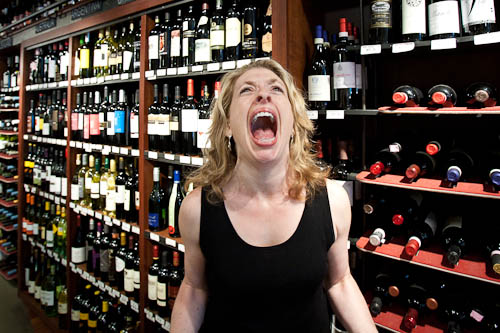
Wine Angst

For someone who is new to wine appreciation, or even for seasoned collectors, it can seem impossible. Most end up narrowing down their focus to a few regions or varietals, or even a single one. I have a friend who only drinks Kendall Jackson Chardonnay for example. Most collectors focus narrowly, some are more expansive, seeking out a wide variety of wines from various locations, vintages, and varietals. Those who focus will likely have a more in-depth knowledge of the particular area or areas of their attention. Those who explore more widely will have a more superficial knowledge of a variety of wines, regions, and varietals.

2014-09-11 12.57.26

Unless you are in the wine business, you will not have time to taste and understand the thousands of wines that are out there, or even the hundreds on the shelves on your local wine retailer’s shelves. And even if you are  in the wine business, it is doubtful that you will need to know about every region, varietal or producer. The idea that one needs to have so much knowledge can drive people away from the enjoyment of wine, and that serves no one.

My recommendation is to find your own way into and through the many types, styles, and iterations of wine. You may just have a glass or two a week of whatever is being served, or you may be an avid collector of all things from the Piedmont in Italy or Napa Valley in California, it does not matter. There are ways for you to access information about your own desires and preferences.

I tend to be an explorer. Even though I drink wine every day, blog about wine, and will be doing wine-related tours in the near future, I do not spend hours and hours pouring through information about wine. I tend to be an explorer – trying all kinds of wines from various regions – but I also have my preferences and I spend more time exploring those in greater depth as time and my wallet allow. Writers like Eric Asimov of the NYTimes work for me, because he explores a variety of wines from different places. I also enjoy Kermit Lynch, the amazing wine purveyor in Berkeley, whose newsletter (LINK)  is very informative and focuses mostly on French and Italian wines.

But you will find your own sources. I try to keep my blog as general as possible, but since I travel a lot, I write about the wines and the wine culture where I travel, so there may be some posts that do not interest everyone.

the world of wine should not be an impenetrable maze of secret or obscure or overwhelming information. It should be accessible, enjoyable, and allow each wine enthusiast to savor the experiences that he or she discovers. Whether that is a focus on First Growth Bordeaux or on trying to sample each of those 3,600 wine regions in the world, it should be an enjoyable experience, or what’s the point?

I would love to see some comments on this post – what do you think? What is your approach to wine?
IMG_0373

NEW DIRECTIONS IN CALIFORNIA WINES?

A very good article from the NYTimes Magazine, “The Wrath of Grapes,”  describes some new wine making styles emerging in California. Interesting stuff, but my take on it is that the larger wine-buying public will still flock to the high-alcohol fruit-bombs that have become popular in California. Some wine makers are re-examining what is possible in California. Read the article for more – link below the photo.

Wine - Rajat Parr in CA
Rajat Parr in his Domaine de la Côte winery in Lompoc, Calif. Credit Damon Casarez for The New York Times

(LINK TO ARTICLE)

CLOS PEPE ESTATE WINES WILL BE MADE NO MORE

In an announcement to his mailing list and via his website, Wes Hagen, Vineyard Manager and Winemaker at Clos Pepe Estates in the Santa Rita Hills AVA, announced that the vineyard and operations have been leased to Hall/Walt Wines of Saint Helena, CA. (LINK TO WEB PAGE)

The 2014 Vintage will be the last for Clos Pepe Estate Wines and for their secondary label, Axis Mundi. Wes Hagen and his wife will move from the vineyard property and he will be looking for other opportunities in the Central Coast of California.

I have been a particular fan of Wes Hagen, his wines, his wine making, and his personality and depth of knowledge about all things wine. He is as much a philosopher as a wine maker. He has been a pioneer in the Burgundian style so prevalent in the Santa Rita Hills, and a leader in establishing the AVA designation there.

Clos Pepe Estate Wines will be missed.

2014-03-15 17.28.41
Jim Lockard and Wes Hagen at a Clos Pepe Estates Wine Tasting Event in Newbury Park, CA in 2014.

BORDEAUX – ARE THE WINES READY TO DRINK?

Dorianne and I are in Bordeaux for eleven nights, both to enjoy this Mecca of great wine, and to begin the process of setting up some wine tours here to begin in November.

After a couple of nights, I am surprised that there is a similar issue with restaurant wine lists here that I have found in the US – many of the Bordeaux’s listed are not ready to drink! Note that we have not been to any top of the line restaurants, but still, we are IN Bordeaux!

We will be researching this further, beginning at lunch today at Le Noailles, a favorite spot. More later!

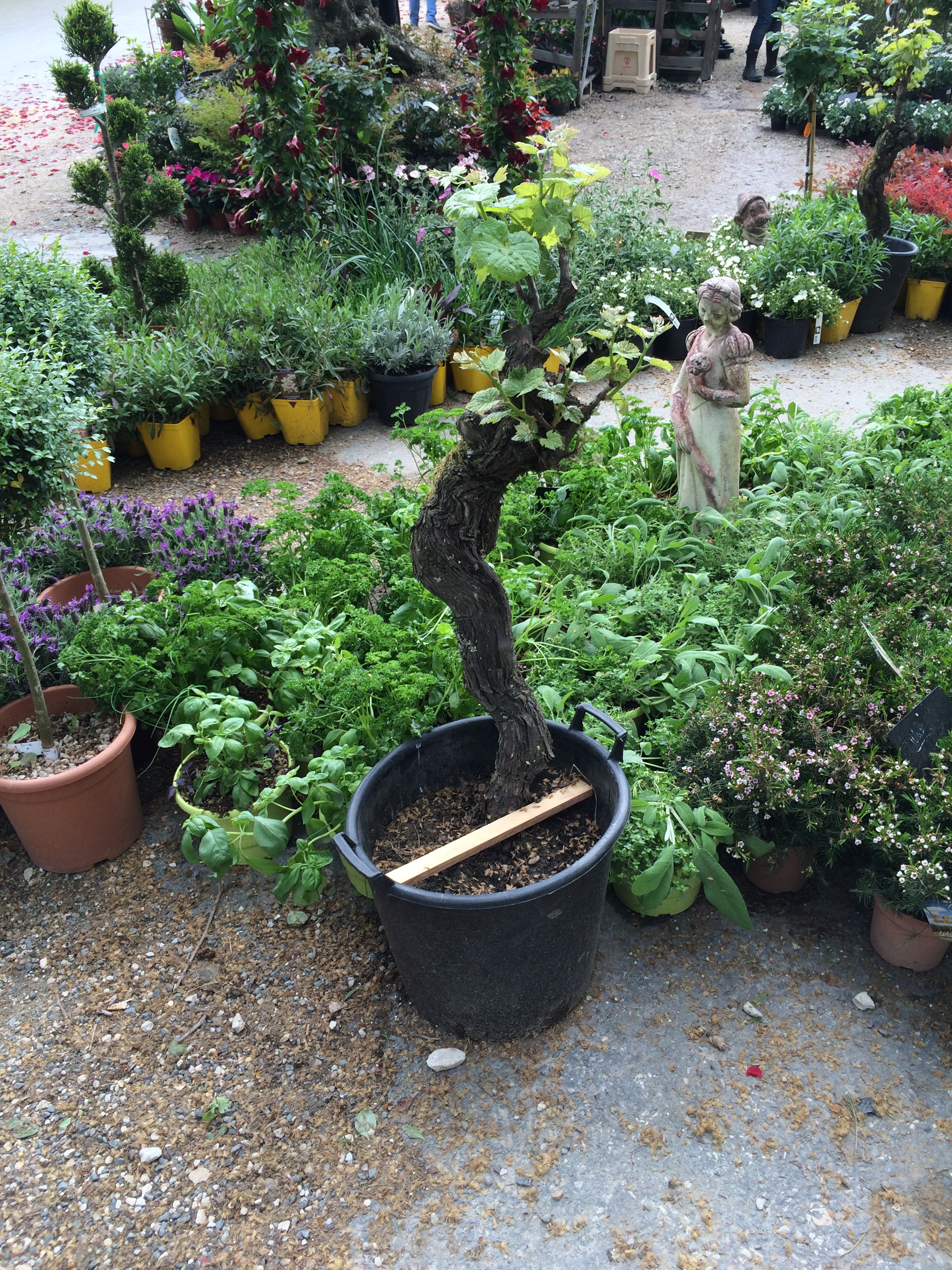
An old grape v
An Old Grape vine (of unknown vintage) for sale at a Bordeaux Garden Show.

DOES SIZE REALLY MATTER? HALF-SIZE CAN BE BETTER! (do we have your attention?)

From The Wine Wanker – the advantages of 1/2 (350ml) bottles of wine. I agree, they can be great to have on hand, and for some people, the 1/2 bottle is the go-to size for everyday drinking. Read the excellent article below.

LINK: Does size really matter? Half size can be better (do we have your attention?).

THE BOX WINE TASTING PANEL HAS SPOKEN

VinePair.com, a great site, has an article (LINK) about a tasting panel for boxed wine. Reading the article, it is pretty clear that many on the panel liked fruity wines that are not complex – so bear that in mind. Box wine is fine for those who enjoy that type of wine – and the wine lasts longer after opening because there is no air getting in with the wine – a bag in the box collapses as wine is poured. By the way, Wineberry was a big hit.

So, there you have it!

Wine - Box Wine Interior Wine - Box wine Wineberry

HIGH END WINE TOO EXPENSIVE, SAYS ROBERT PARKER, WHO IS PART OF THE PROBLEM

In an article by Patrick Schmidt on The Drinks Business blog, Robert Parker talks about the rapid escalation in the price of high end wine. Parker notes that he is “part of the problem” as his high scores often help to inflate prices even higher. He says that there is a “caste system” developing because of wine prices.

From the article: “Parker told db, ‘I think this is a problem; it means a lot are shut out because basically we have a caste system of wine – at the really desirable high end, whether the wines are Burgundy or Bordeaux, or from California, they have become so expensive that people just can’t afford them, so they look elsewhere.’”

Wine prices seem to be expanding like the Universe – the farther apart they are, the more quickly they speed away from each other.

(LINK TO THE ARTICLE)

Wine - Bordeaux Beauties