Category Archives: Wine Opinion

CREATING A STARTER CASE OF WINE

On a recent visit to New York to visit our daughter, Grace, we decided to purchase a starter case of wine for her and to set up an account at a wine shop. There are a number of very good wine shops in Manhattan, as you might imagine. We chose Union Square Wine Starter case -USQLogo_WBShop (LINK) after some online and in-person research, because of proximity to Grace’s school, a good selection of value-priced wines, and free delivery in the city when you purchase $95 or more worth of wine.
Grace, at 22, has developed a pretty good palate. She has been to France a few times and enjoys French wines very much, especially Bordeaux blends. My thoughts in filling the starter case were to take that preference into account and expand her experience a bit with reds, plus add some whites and rosès since summer is just around the corner. I also wanted to keep the prices under $25, being mindful of the budget of a starving aspiring Broadway star.

After discussing our goals with some of the sales staff, we (Dorianne, Grace and I) began to fill the case. I wanted to find some French wines that she would like first, which we did – one Bordeaux red blend, a Pomerol, two Sancerres, a Burgundian Chardonnay, and a wonderful rosè from Tavel, the only French A.O.P. that produces Au Bon Climat only rosès. To this, we added a reliable California Pinot Noir from, a favorite of ours; a nice Oregon Pinot Noir to  compare to the Au Bon Climat; a wonderful Rhône-style blend from Tablas Creek in Paso Robles; a Spanish Tempranillo blend; an Italian Barbara d’Asti and a Nebbiolo from Langhe; and an Australian Shiraz.

Here is the list:
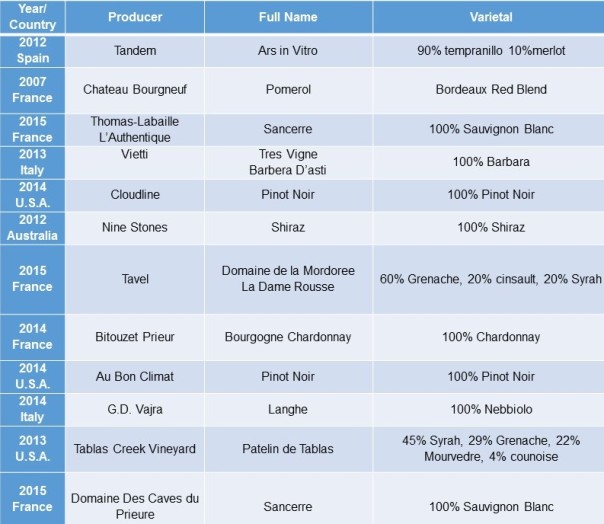
Starter Case Chart
There is nothing here from Germany or eastern Europe, no New Zealand or South America, etc. Fortunately, Grace has a long future to explore these and other options as she chooses.
Now, you can argue with any or all of these selections, but this starter case was built with some preferences in mind. That is the idea – you decide the parameters of the selections and then you find the best representatives of those parameters based on availability, price, and certain intangibles. Our bias was toward France, with an additional parameter of expanding outward from there and focusing on the Old World with some New World representation as well. That is a lot to cover in twelve bottles.
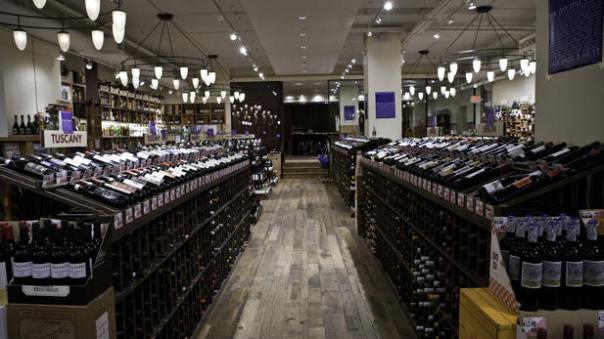
Starter case -USQ
Union Square Wines and Spirits Shop

My suggestion to her was to make tasting notes of each wine as she drinks it and then replace bottles with a balance of things she likes and things she would like to try. Having a set of preferences helps when she is at a restaurant or a party and there are a variety of options. She already knows to steer clear of the bulk wines and the cheap “critter wines” that populate lots of party bars among people her age (and, unfortunately, people my age as well).

To create your own starter case, for yourself or for your children, my suggestion is to begin where you, or they, are. Start with what you already like and populate part of the case with those wines, then expand outward from there. The value of a good wine shop is that they will have staff who can make good recommendations – something you will not get at most supermarkets or places like Target and Costco (with some exceptions).

I can’t overemphasize the importance of finding a wine store employee or owner who you feel comfortable with. I was recently in an independent wine shop in Baltimore that stocked many wines with which I was unfamiliar. When I asked for recommendations from the owner/manager, he told me that he could only help me with Kosher wines; “That’s all I taste,” he said. No one else in the shop had tasted any of the non-Kosher wines! Interesting business model.

A good wine shop staff member will be of great assistance, especially when deciding what to add to your own preferences. He/she will have the experience needed to make recommendations that are very similar to those, or that are different enough to give you a new tasting experience. Good wine shops will also have tastings that you can attend to expand your wine experience.

It is important that you be clear about what you want. Don’t let the sales staff give you a wine that you are not interested in, or one that is too expensive for your budget.

Keeping these things in mind, creating a starter case can be a really great experience. Your comments, as always, are appreciated.

Copyright 2016 – Jim Lockard

SO MANY WINES, SO LITTLE TIME

Please pardon the lack of originality in the title of this post. It was the best I could do under the circumstances. You see, I am trying to experience as many aspects of the world of wine as I can, and there just isn’t time for creative blog title development.

In fact, there isn’t time to write this blog post – but I am devoted to you, my dear readers, and that devotion shall not wane. But communicating with you like this is eating into my wine exploration and experiencing time. Just so you know.

The reason for this post is the fact that there is just too much.

Too much wine, too many varietals, too many producers, too many pairings, too many restaurant wine lists with too many wines listed, too many wine blogs, too many wine books, too many tasting rooms, too many regions, AVAs, AOPs, appellations, districts, domains, too many wine terms, tasting notes, words in those tasting notes, too much chemistry, too many vineyards with too many terroirs, too many wine apps.

How is a wine lover to keep up?

Wine - Poster - Tonights Forcast

One answer, the one that I like the best out of the options that I have thought about, is that one cannot and should not even try to experience it all. Can’t be done anyway, so give up that ambition, my friend. Let that sphere of wine experience shrink down to a manageable size. Perhaps you give up on the nether regions of Eastern Europe, the vineyards to Thailand, maybe even China. Take a pass on the wines of Malibu, Michigan, Maryland, and definitely, Florida. You aren’t going to taste them all, travel to them all, anyway. And even if you could, how much enjoyment or appreciation could there be in tasting five hundred wines in a weekend?

Wine - Cartfull

Now I say this as a wine lover who has a preference for exploration. There are many other kinds of wine lovers. I know one who drinks only one wine 95% of the time – Kendall-Jackson Chardonnay (LINK). That’s it. As for me, looking back over the photos I have taken over the past year, I have probably had 250 to 300 different wines, not counting wine tastings; you have seen many of them here and more on my Twitter feed (@JimLockardWine). And in that, I have had a few dozen wines more than once. So I get that there is a range of behavior in the wine lovers’ universe. My Kendall-Jackson loving friend probably does not care too much about this post. But she is an anomaly, isn’t she?

Take last night. We are staying with friends in Cleveland for a week. Last night was to be a birthday celebration for family friends of our host. One of the guest is a former wine columnist (yes, Ohio has wine columnists), and a another, their daughter, is currently taking the Certified Specialist of Wine course (LINK) in New York, where she lives. In preparation, our host, a wine lover himself, took Dorianne and I to the best local wine storeWhole Foods – where we purchased a mixed case, Italians for last night, and some others for the rest of the week.

2016-04-23 17.56.50
Part of Last Night’s Line-up

I had a great conversation with the other wine lovers (and a heightened level of wine lover they were to be sure). And I found that while we shared some common experiences and areas of knowledge, that for the most part, our experience and knowledge were different. This is, of course, to be expected. And, it tells me that there is no such thing as someone who knows even close to everything about wine. So we all have to operate within a chosen personal sphere of knowledge and experience that we create ourselves, either on purpose or by default.

So what does this mean for you, treasured reader? Simply that you have dominion over your domain of wine knowledge and experience. So choose what you love, follow your nature (an explorer or a few wines that you return to over and over); include travel or stay at home; talk about the wine at a meal or talk about other things; download half a dozen wine apps or none at all; explore those small wine regions or stick with Napa and Bordeaux; opt for the top shelf at your wine retailer or the bottom shelf, or stay resolutely in the middle.

Wine is, after all, about the enjoyment of life. It is best when shared with friends and family, and it is best when sipped alone with a good book or a beautiful sunset. It is a social lubricant and a solitary muse. It can be the reason for travel, or a small part of a larger purpose. It is a living, breathing thing that can add to the quality of your life, as long as you do not overindulge.

Wine - Wineyard last night
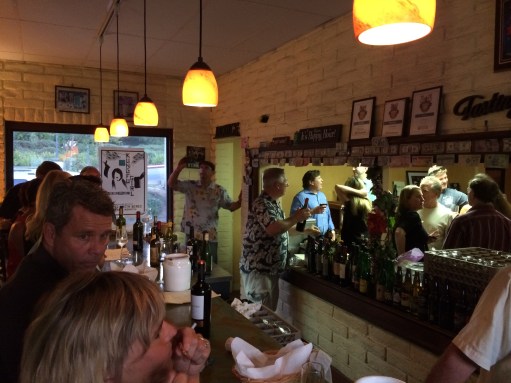
Enjoying Wine with Friends

So do not feel pressured to go beyond your own comfort zone in your experience of wine. (Well, maybe a little bit from time to time.) You are not going to know or experience everything anyway. And no matter how broad and deep your knowledge and experience is, you will meet people who know things that you do not, and who have tasted wines that you have not.

My advice is to find your wine sweet spot, explore that thoroughly, and then branch out from there in a way that suits you best. And have fun in the process.

What are your thoughts?

Copyright 2016 – Jim Lockard

2015-05-07 16.02.08

SOMETHING NEW IN WINE GEAR

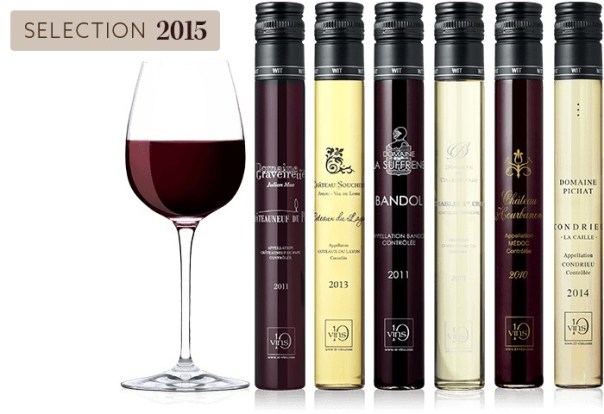
The D-vine Gravity Machine by 10-Vins is a recently developed wine dispenser for the home. The idea is really two-fold. One, to serve wines-by-the-glass to give you options that you do not get by opening a single bottle, and two, to serve the wine aerated and at an ideal temperature without need for refrigeration. Here is an image of the machine:

Wine - 10-vins-d-vine

Of course, the real idea is to get you to subscribe to home delivery of the tubes of wine, which retail in France for from 2€ to 16€. This device is apparently not yet available in the US. So we shall see. I don’t think I’ll be buying one. What do you think?

Wine - 10 D-vine-2015-selection

GOOD ARTICLE – THOSE DARN WINE RATINGS

A very well written article from The Globe and Mail (LINK TO ARTICLE) across the Pond on the difficulties with the 100 point scale. It speaks to several of the points I’ve made here before, but it’s well written, as I said, and as a bonus, has some interesting reviews of some little-known (in the US) wines.

Of course, one of the main concepts behind this blog (LINK) is that wine should be both accessible and enjoyable to everyone. Anything, even a rating system that is intended to be helpful, that gets in the way of either of those ideals is problematic. The enjoyment of wine is a subjective experience for everyone, and becomes something close to an objective experience, that is, one that can be quantified generally, for only a very few. So I come down on the side of the many, without denying the few the bounty that results from their training and expertise (and maybe their God-given naturally discerning palettes).

Robert Parker may have started the whole 100 point thing, but don’t blame him – someone else would have done it. And personally, I find his ratings helpful. I trust his Bordeaux ratings and distrust most of his California ratings. So, like I said, subjective.

Enjoy the article!

Wine - Parker 100 pts

Copyright 2016 – Jim Lockard
HEY, IT’S THE HOLIDAYS – GIFT GIVING GUIDE FOR THE PERPLEXED WINE LOVER

Wine-related gift giving is always a bit of a challenge. Do you give wine, wine gadgets, wine books, wine experiences? Do you have some entry-level wine lovers on your list? Some experts (God forbid a Wine Blogger)? Is price a big concern? Are you a bit panic-stricken in the wine department?

Wine Angst

Well, I know how you feel. The thing to do is to approach your holiday gift giving with a calm sense of purpose and a willingness to give someone something that they may not fully appreciate. Or even like.

Now no one wants to disappoint a loved one or a business colleague, but you’re not a mind reader are you? So do your best, be willing to be flexible, and relax. ‘Tis the season to ENJOY giving and receiving gifts. After all, you are probably more likely to receive a wine basket full of Barefoot Wine than you are to give one, right? (HINT: Do not give Barefoot Wine, Two-Buck Chuck, or “critter wines” – you know, the cheap Australians). No one wants those (they really don’t & they are filled with additives that nobody wants either) and you look, well, cheap and thoughtless for giving them. They are the equivalent of the fruitcake in Holiday wine gift giving.

My recommendation is to give wines that you personally enjoy and that, ideally, have a story. Maybe a little Syrah that you enjoyed at a restaurant or found at a winery that was off the beaten path somewhere; or a gadget that you particularly cherish. When a gift has a personal touch, it is both more fun to prepare and give and more special to receive.

If you live near wine country, or if your gift recipient has a trip planned to a wine region, you might consider the gift of a private tasting that includes a bottle of wine to take away. Most wineries can accommodate such a purchase and you get or make a certificate to give to the recipient. You can gift a wine class to a beginner, or a special wine pairing dinner to someone with more knowledge. And I can help you with the gift of a wine tour in France (if interested, PM me at JimLockardTravels@yahoo.com).

Gadgets are good gifts up to a point. A nice decanter or a set of nice wine glasses are good choices; it tends to go downhill from there. I probably do not keep about 2/3 of the wine gadgets I receive, either because I already have one or because they don’t work, or because it is something I just don’t use. Here is an example:

Wine - Wine Stopper Novelty

This stopper-thing is goofy and was given in fun. It might be okay except that it did not provide a good seal on the bottle. I would rather use the cork or twist cap that came with the wine bottle, because the goal is to preserve the wine.

Wine openers are a good choice, but a personal one. We all have our preferences. Here are links to posts about two openers that I have blogged about that I can recommend. However, you should remember that wine openers are personal and your gift may not be used.


(LINK TO CO2 GAS OPENER)

(LINK TO TRAVEL OPENER)

Wine - Santa Wine

What about wine as a gift?

Always a welcome idea, however, there are some inherent issues in giving wine that you may want to pay attention to.

  1. Shipping. If it needs to be shipped, this can be an issue. There are all kinds of restrictions, most importantly that the USPS, UPS and FEDeX do not take alcohol shipments from private parties. You can have a winery or a wine shop ship for you, but that will often cost more than the wine. I would stick to wine gifts that can be given in person or dropped off. Ship the gadgets.
  2. Shipping Part 2. One exception (and it’s too late for this Christmas) is to use an online service like WTSO.com (LINK) to ship gift wine. You are limited to what they are offering, so you may have to check the site repeatedly, but it is an easier way to ship wine.
  3. Giving the wine. If you take your gift of wine to a holiday party given by the recipient, it may just become part of the bar for the party. That may be fine, but it is not ideal. So bring a bottle for the bar and put your gift, well wrapped, under the tree.
  4. Selection of the wine to give can be a minefield (see the idea of being willing to give something that the recipient may not enjoy). I try to avoid their favorite wines because I know that they will get them for themselves. I go for something unusual for them. Maybe a Petite Sirah for a Cabernet drinker or a Semillion for a Chardonnay drinker. Or a Port or Sauternes, and even Champagne or Cava or a local sparkler for anyone. If they like whites or reds, give them that, but help them to explore a bit. You can also get something like an Australian Cabernet for a Bordeaux drinker. Another idea is to get a mixed case for a new wine drinker; or for me for that matter.
  5. Wine Baskets. The key to a good wine basket is the wine. Rather than picking up a pre-made basket, ask the staff at your wine retailer to make you one that you design yourself. (HINT: Instead of cheese, get a gift card for the cheese and put a description/photos of the recommended cheeses in the basket). Avoid the kinds of cheese that are usually in baskets that are full of preservatives and other non-cheese stuff.
  6. Labels. it is said that 80% of wine purchases are made because of the label. Fine, do that if you must. Get some Skinny Bitch as a joke for a female friend, or some Fat Bastard for that male friend with the not-too-sophisticated sense of humor. Just be aware that it only encourages the bottling of mostly bulk wine with clever labels, thus entrapping another generation of new wine drinkers in rivers of barely drinkable wines full of additives. I’m just sayin’.
  7. Price. It is easy for you to go overboard here. Those top-shelf wines are awfully appealing, especially when you want to impress someone (and many have nice labels, too!). I recommend that you know your budget and stick to it; that will make for a happier January when the credit card bill comes.
  8. Get help. Your local wine shop, or even Costco (but probably not Target – don’t buy gift wine at Target) has someone who knows wine and will help you. Get their advice – you don’t have to take it, but a good wine department employee can be a big help. The same is true if you are buying from a winery. Tell them what you are looking for, they love to talk about their wines and will be helpful.
  9. Status. I know that some are getting wines to give as corporate gifts. I will leave that to you, because you are clearly trying to impress people, which is fine, but that is not what the individual giver should be doing. The sad part of corporate wine giving is that many, if not most, of the wines go to people who do not appreciate them. I had a friend who does not drink wine and who received a case of Joseph Phelps Insignia Cabernet Sauvignon one year. He gave some away and used the rest in spaghetti sauce.

In short, wine-related giving is a field rich in opportunity with a few land mines here and there. I recommend again that you give thoughtfully, within your budget, and that you do your best to enjoy the process. Use your gift-buying time on-line or in stores to explore and expand your own wine experience.

Thanks so much for visiting this site, or even following it, this year. And have a very Happy Holiday Season and a Prosperous and Wine-filled New Year!

Wine - Christmas and Drink Wine


THE NEW “WINE DEMOCRACY” WHERE EVERY OPINION IS EQUALLY VALID. THOUGHTS?

In Matt Kramer’s column on WineSpectator.com, posted on Nov 3rd (LINK TO POST), he speaks of a growing phenomenon that he labels “Wine Democracy,” or the emergence of a more egalitarian approach to wine criticism as a whole.

Where in the past, only those with access to some “journalistic real estate in a newspaper or magazine” had a voice in the wine world – the rest of us were more passive consumers of the opinions of these few critics and taste makers. Now, via social media and the blogosphere, everyone can be a critic. And while there are certainly tiers of influence, the audience for wine opinion is doubtlessly more varied and diverse than it used to be; and that audience contains many who also feel free to give opinion (like yours truly).

But there is more to this phenomenon than technological innovation. There is also a cultural evolution process that is unfolding, and egalitarianism is part of where many people are finding themselves in terms of values. The old ways of looking to “experts” to define opinion and then following that opinion without much questioning, is fading fast. Now, a values system variously labeled “postmodernism,” Cultural Creative,” and Green (in Spiral Dynamics) has emerged and is becoming more and more prevalent.

spiral-dynamics Levels 2

Some of the key values of this level of cultural development are:

  • a high value for egalitarianism – anti-hierarchical.
  • all voices must be heard on any issue before a decision is made.
  • all (or almost all) opinions have equal validity.
  • feelings are more important than outcome – it is important that everyone feel good about what is decided.

Here is a link to some information about this phenomenon (LINK). You can see some of these values expressed in the column, but like most people, Kramer is apparently unaware of the cultural evolutionary models (as most people are), so instead of seeing a naturally unfolding way of being human, he sees people being different and, for the most part, wrong.

A quote from Mr. Kramer:  “These determined detectors of snobbery and elitism are like old-fashioned anti-communists: they’re sure that subversive snobs and elitists are lurking everywhere.

“In today’s wine democracy, equality of opportunity (to express oneself) too often is steamrollered into a much more simplistic ‘equality.’ All wines are equally good because all opinions are equally valid. Any deviation from that is seen as, well, you know.” 

What Mr. Kramer is describing is something that is not going away. In fact, it will grow as more and more people evolve culturally toward this level of being. In the meanwhile, get used to people turning away from the few “experts” and finding ways to not only form their own opinions, but to express them as well. Not all of these opinions will be of equal value, as the post by Mr. Kramer points out, but the days of a wide audience of consumers following a few select wine critics are over.

It’s the times; they’re a changin’.  As always, your comments are welcome.

Wine - Redness

WINE TIPS FOR TRAVELERS

Dorianne and I have been on the road since March, in Europe and the U.S., and I have been blogging along the way. I thought it might be helpful to do a post about Wine Tips for Travelers.

And, of course, if you love wine travel – join me for our Tour of Bordeaux, Paris, and Champagne in March (LINK).

BEST TRAVEL CORKSCREW

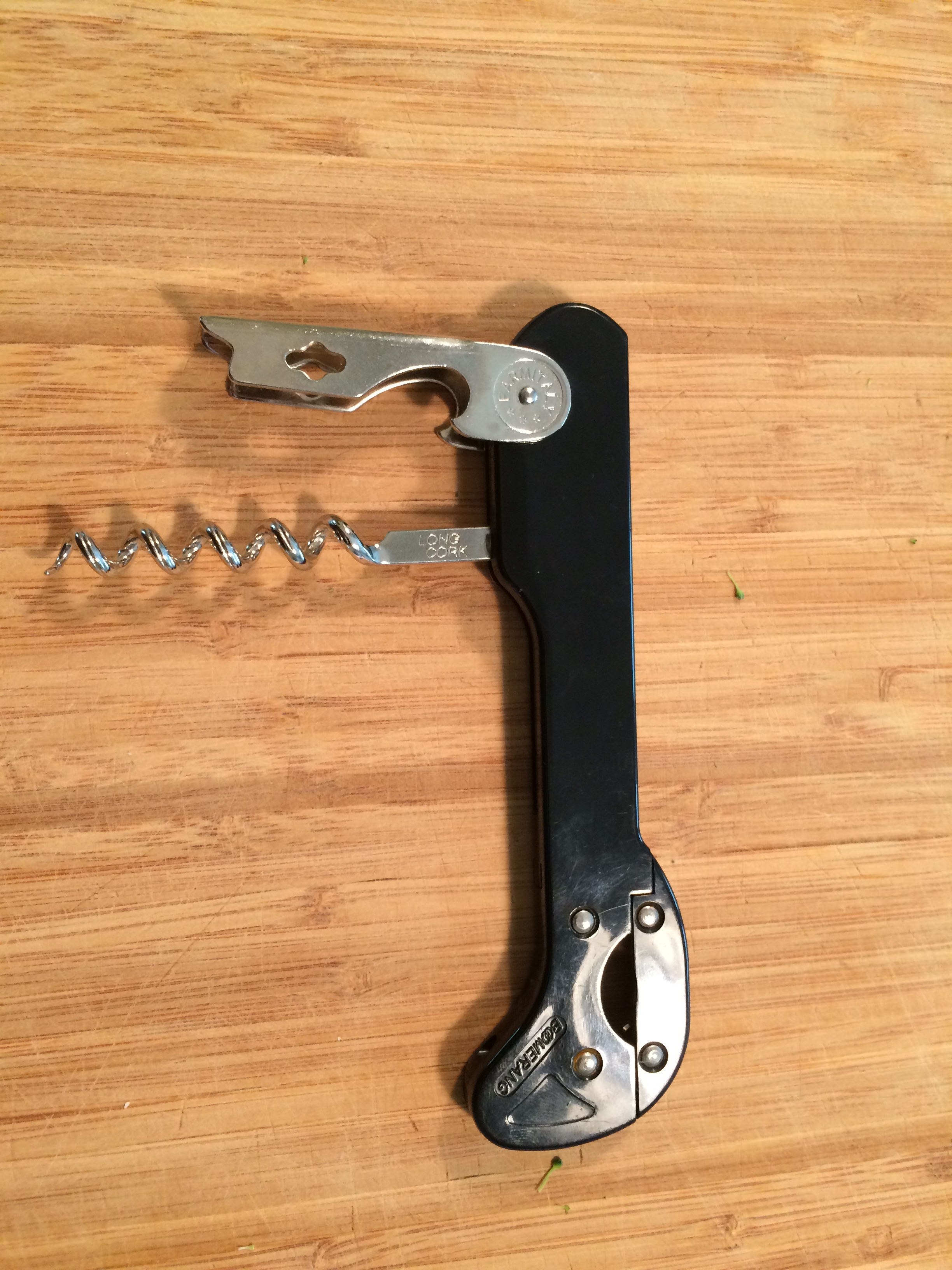
The best travel corkscrew that I have found is this little gem, The Boomerang, I purchased for $6.99. After having a number of corkscrews confiscated by TSA agents at U.S. airports, I began to look for one that did not have a knife blade as a foil cutter. This one has four discs that cut very evenly around the top of the foil. The corkscrew itself seems a bit fragile, but I have opened over 100 bottles with it with no sign of it slowing down. I do, however, carry a backup.

2015-10-21 13.20.47 2015-10-21 13.20.56 2015-10-21 13.21.07

The history since 9-11 is that all corkscrews were originally banned from carry-on luggage because of the knife blade as a foil cutter AND the corkscrew itself. This was relaxed a few years ago, but the ban on the knife blade has continued.

Since I always take a corkscrew with me and I fly dozens of times a year, I needed to find one that I could take in my carry-on luggage, because, well, you never know. A case in point – I was flying across country, and a friend happened to be one of the
flight attendants. My wife and I were in coach. The flight attendant brought us a package wrapped in plastic bags and said, “Mr. Lockard, you left this in the front of the plane.” Opening it, I found a bottle of very nice Chardonnay and two glasses from the first class cabin. My corkscrew was in the pocket of my backpack under the seat in front of me!

I have also blogged about the Best Corkscrew (LINK), the Cork Pops Legacy Wine Opener, but that model, being powered by gas capsules, is not suitable for travel. If you can only afford one of these, get the traveler – it’s much cheaper, and you can use it at home or on the road.

TRAVELING WITH WINE

There are a couple of things that you might want to know about taking wine with you on airlines and cruise ships. First, is how to pack the wine so that it is safe and does not spill onto the contents of your suitcase.

Many times, I have traveled with wine bottles in my checked luggage. What I usually do, if it is just a bottle or two, is either use a special wine bottle protector, or, absent that, wrap the wine in some clothing like a sweatshirt or a bathrobe (what, you don’t travel with a bathrobe?). It is best, of course, to have the protector.

If you are flying with more wine, like a case or so, it is best to get wine luggage and check it through. There are a number of products on the market. I like Lazenne (LINK), a light but stable product that works great for most uses. They also make wine bottle protectors.

Lazenne Wine Case Suitcase
Wine Bottle Protector

I did a blog post on bringing wine into the U.S. and customs duties, etc. Here is the (LINK TO THAT POST). Actually, duties on wine are lower than you might expect, and paying the extra airline fee, if there is one, to ship a case of wine is a relative bargain.

Cruise ships can be another story. Oceangoing cruise lines often have a policy restricting bringing alcohol on board. If you make purchases on shore excursions, the booze is often taken upon re-boarding and held until you disembark. You can usually get away with having some wine in your luggage initially, but that will, of course, be somewhat limited. If you are concerned about this, check with the cruise line to see what their policy is.

River cruises are often different. We recently went on a Viking Cruise Lines (LINK) ship on the Rhine River. We were encouraged to bring wine purchases aboard to have with dinner – no corkage fees. The reason for this is that this cruise offers complimentary wine with meals, so any wine that you bring on board saves them money. I still liked the policy, and we did bring some wine on board to consume.

WINE APPS FOR TRAVEL

I am not a big fan of any of the wine apps I have used so far. I guess the best is Delectable (LINK), which lets you scan the label and view a bit of info and any other reviews that happen to have been posted. It also lets you review the wine. The problem is that, while it recognizes most wines that you find only in Europe, there is a paucity of information and very few, if any reviews on them.

For locating wine venues, from wine bars to châteaus to good wine restaurants, I use TripAdvisor.com and occasionally, Yelp.com and Google.com/maps. These work as well in Europe as in the U.S., meaning that they are okay, not really great. Better to find a local wine bar or wine shop, make friends with the bartender or proprietor and ask questions about the local wine scene. If you know of something better, please leave a comment to this post.

SOME PLACES JUST AREN’T GREAT FOR WINE

While wine has become more and more prevalent in many parts of the world, there are some places where wine either isn’t available, isn’t good when it is available, or is so pricey that there are better options.

We were in Iceland (LINK TO THAT POST) in May for a few days. There is wine there, but it is extremely expensive due to shipping costs and UK duties on New World Wines. As my post at the time indicates, we found some great local beers and did just fine.

Prague is near some decent wine regions, particularly in Hungary, but I found that my lack of knowledge of the local wines was a problem. So we went with the huge array of excellent beers there as well.

Next month, we head to Oaxaca, Mexico for a month of Spanish Immersion Classes and the amazing cuisine of that region (think chocolate, mole sauces, and coffee). Not a wine region in sight, and if there is wine, it will be served at room temperature – about 80 degrees Fahrenheit. No, we will stick with beer and the fantastic Mescals of the area.

FINAL TIPS

So my tips include:

  1. Take a good travel corkscrew and a backup.
  2. Select one or two good options for carrying wine with you.
  3. Learn your online and local wine resources.
  4. Remember – when there isn’t wine, there is always something else.

So never let your travels be dictated by your own failure to prepare. Sampling the local wines when you travel is a great experience (even if the wines aren’t always so good), and the people in the wine industry, from the vineyards to the retail shops, have been great people wherever we have traveled.

We aren’t done. After Cleveland, we head to Southern California, then Mexico, then Hawaii, then Southern and Northern California through January – then, who knows? But you can be sure that I will be blogging all the way.

Journey to French Wine Country 2

SIX WEEKS IN PROVENCE DRINKING WINE – SUMMING UP

How to sum up six weeks in Provence?

I can begin by saying that we only visited a portion of the region. We were based in the northern part of Provence, in the village of Villeneuve-les-Avignon on the Rhône River, where two major wine regions converge: Languedoc-Roussillon and Côte-du-Rhône. In our immediate area were over a dozen A.O.P.’s, or Appellation d’Origine Protégée, which replaced the A.O.C. or Appellation d’origine Contrôlée designation in France in 2009 (LINK). So there were plenty of wines to taste and vineyards to visit very close to us.

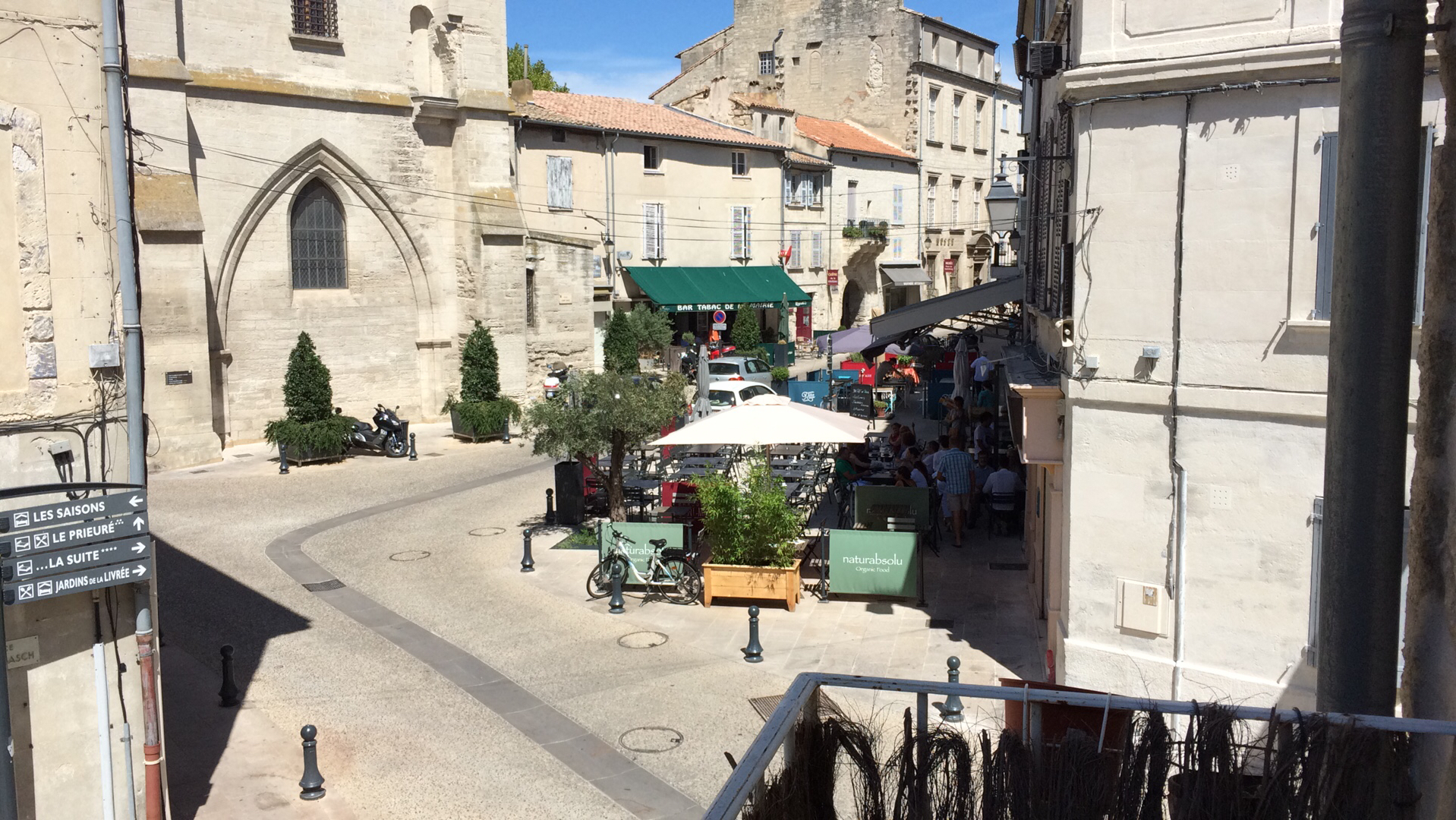
2015-07-25 11.56.54
The View from our AirBnB Apartment in Villeneuve-les-Avignon.

And, this trip was not just about wine (!) it was also a time for Dorianne and I to write, to explore the history of the region and meet people, and to see if we might want to settle here someday soon. And, as it turned out, to see if I am going to extend my new wine tour business to this area.

I have already blogged about several of our experiences during our stay (best key word to search is Provence), and Tweeted just about every wine we had on my Twitter account – @JimLockardWine.

But, some additional tidbits.

We first encountered Lauren, proprietor of the marvelous Arts, Design, and Wine Shop in Villeneuve-les-Avignon on the day we arrived. The shop is on the town square and has a nice selection of local wines plus design items from wristwatches to sunglasses to home décor items and wine glasses – all very nice stuff, by the way. Lauren spent some time living in Los Angeles, so his English is excellent. We asked him about the local wines and he gave us a lot of information and sold us our first two bottles of local wine, a 2014 Château d’Estoublon le Rosè and a 2014 Château La Verrerie Blanc, a Provençal Rosè and a white from the nearby Luberon Valley. We were off an running.

It was Lauren who told us to serve the area wines, including most of the reds, chilled – Châteauneuf-du-Pape being an exception. And, after asking if we had appropriate glassware in our apartment, Lauren loaned us two sets of very nice wine glasses for our stay, which was six weeks. He also pointed us to MistralTour.fr (LINK) and the amazing Valentina Cavagna, who took on a memorable tour of Châteauneuf-du-Pape, Gigondas, and to Domaine de la Verrière in Crestet that I blogged about previously (LINK). So Lauren is the kind of key person that you want to look for on journeys such as this – the one who knows the local scene and, ideally, loves to talk about it.

2015-08-14 18.15.59

Dorianne and I had most of our meals in our two bedroom apartment [AirBnB.com listing(LINK)], so we bought wines, mostly rosès, from Lauren and other local shops until we began visiting the wineries. Local wines start at around 3€ and go up, the top end being under 30€, except in Châteauneuf-du-Pape and one or two other places. Wine here is a great value. We found a nice sweet spot for rosès at around 10€ per bottle.

If I take away two main revelations from this trip, it will be these:

  1. The rosès of Tavel, the only O.P. in France devoted exclusively to rosè wines. These wines were a revelation of complexity, some even being age worthy. Definitely a departure from the standard Provençal rosè, in the way that a great Napa Cabernet differs from an everyday supermarket Cabernet. The other rosès were fine to drink, but the Tavels raised the bar quite a bit. It’s the sort of thing that you don’t know you are missing until you have some.
2015-08-31 12.05.21
Age Worthy Tavel Rosè Wine.

2015-08-29 13.40.32


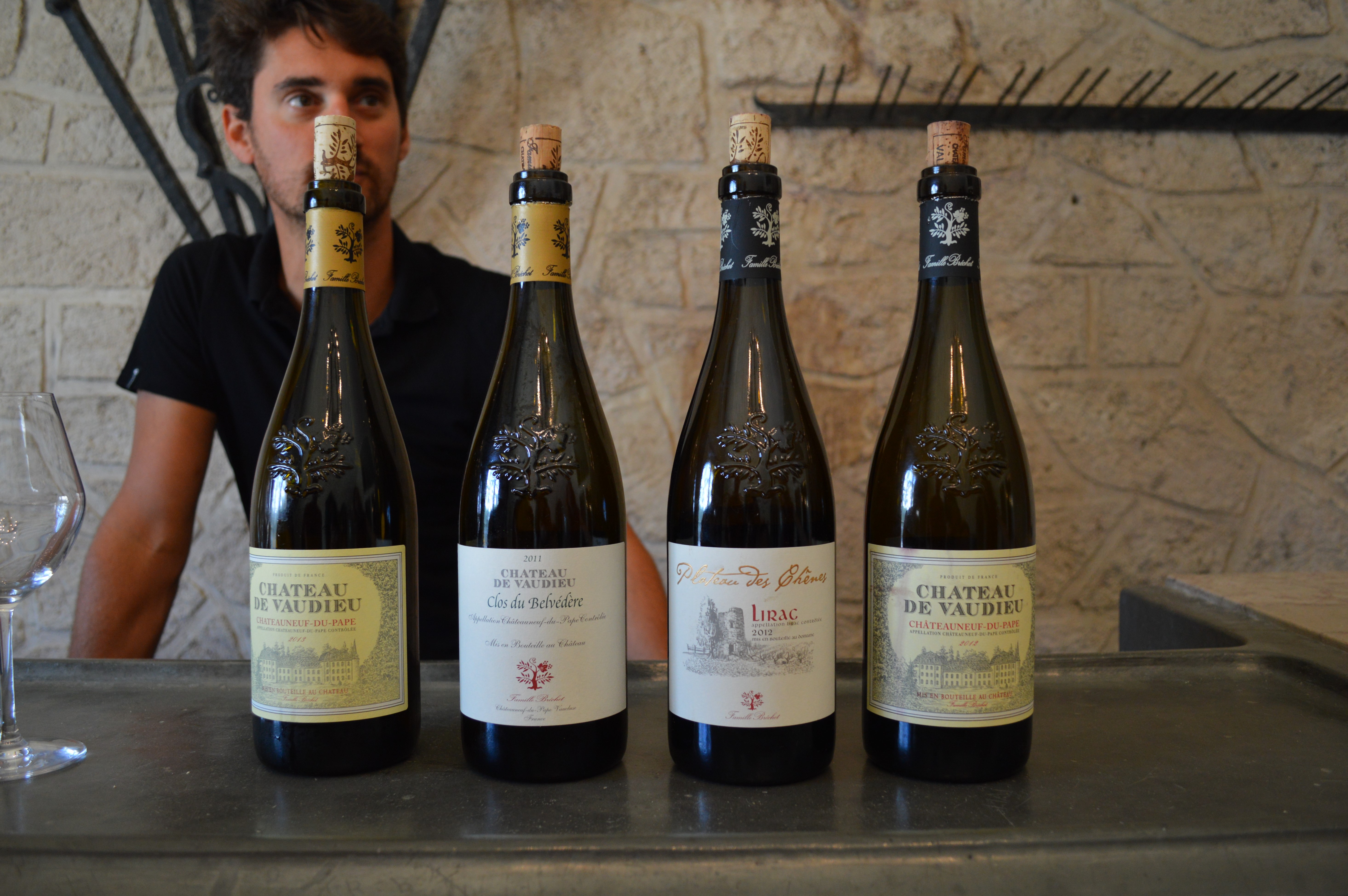
  1. The white wines of Châteauneuf-du-Pape, Lirac, and Gigondas were also a pleasant discovery. I did not know that whites were a factor, r even necessarily present, in these regions, and the complexity, beauty and approachability of these wines converted me instantly. If you can find white Châteauneufs in your area, try one. Cold, but not too cold – maybe out of the fridge for 15-20 minutes before serving. These blends of Grenache Blanc and Rousanne with small amounts of other varietals are among the best white wines I have ever tasted. Lirac in particular was a revelation – Châteauneuf – style wines, same varietals, different side of the river, at much lower price points, often made by the Châteauneuf wine makers themselves.
2015-08-14 10.00.08
Château Vieudieu in Châteauneuf-du-Pape.
DSC_0372
Château Vieudieu’s Châteauneuf-du-Pape Wines

 I know that there is much more to the Provençal wine scene – we did not get to the south on this trip, although we have been there before. I do think that the north, with it’s proximity to the Rhône River Valley is where the bulk of the better wines are cultivated and made.

As far as places to visit in northern Provence, I strongly recommend Avignon for the history and the food and wine in some of its better restaurants; the hill towns in the Ventoux and in the Luberon Valley, where good wine is cheap and the history and the landscape are so captivating; Nimes for really spectacular Roman ruins and a great old town center; and Gigondas for great wine and a very vertical hill town overlooking the Rhône River Valley. It gets pretty cold in the winter in the region as the Mistrals, the cold north winds, blow through the valleys, but spring, summer, and fall are all beautiful in Provence. But you probably already knew that.

We will be leading tours here beginning in the second half of 2016, so stay tuned.

2015-08-14 15.45.27 DSC_0469 2015-08-29 17.27.49 DSC_0369

Copyright 2015 by Jim Lockard

THOSE OVER-WRITTEN AND OVERWROUGHT TASTING NOTES!

A little break from the series on Noma. 

From The NEW YORKER MAGAZINE: an article questioning those lengthy and often indiscernible tasting notes from wine critics. While tasting notes are often helpful (I prefer to loom at them after tasting a wine to see if I agree or to identify a quality that I noticed but did not identify myself). So read the article and see what you think.

(LINK TO ARTICLE)

Quote: “Frustrated with the state of modern winespeak, some academics, sommeliers, and critics are attempting to rein in tasting notes and develop new idioms that convey quality more concretely. A group of researchers known as the American Association of Wine Economists has waged a nearly decade-long crusade against overwrought .and unreliable flavor descriptions. In 2007, the association’s Journal of Wine Economics ran an analysis of wine critiAcs which concluded that the industry was, in no uncertain terms, ‘intrinsically bullshit-prone.’ ‘We, the wine-drinking public, are happy to read their evaluations, because we are largely ignorant of the quality of wines,’ the study’s author, the Princeton economist Richard Quandt, wrote. (He and the president of the Wine Economists, Orley Ashenfelter, shun tasting notes in their own wine club.) Another contributor, Jordi Ballester, is a researcher at the Center for Taste and Feeding Behavior, in Dijon, France, who’s spent his career weeding out wine bullshit—or what he more politely terms ‘fuzzy concepts.'”
“THE BEST RESTAURANT IN THE WORLD:” COPENHAGEN’S NOMA – PART 1

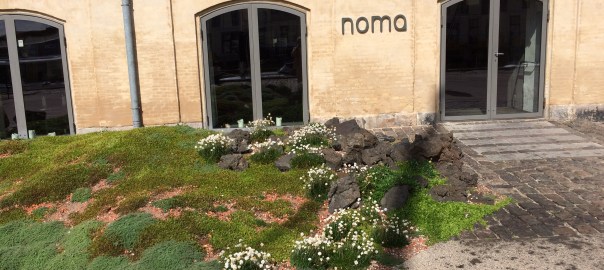
How does one blog about a visit to Copenhagen’s Noma, the “best restaurant in the world”? Do you focus on the food, the changing menu of everyday and very unusual ingredients put together in ways that, well, us regular people never would think to do? Do you focus on the wine, paired with the many courses from some of the most obscure and unusual wineries in Europe (only European wines!). Do you focus on the culture of Noma, which can be observed from the friendly greeting from EVERYONE as you enter, through the service of the exceptional and long meal, and via the tour of the premises that is offered after you finish eating? Do you focus on the price – not crazy expensive these days, but an investment nonetheless?

I will attempt to do a bit of everything in this series of four posts, for my visit to Noma with Dorianne and two friends was, if nothing else, an event. It was more than the food, more than the wine, more than the service, more than the culture, more than the location. It was more in just about every sense of the word. It is over 24 hours after we left and I am still not feeling normal, physically, mentally or emotionally. How does a visit to a restaurant do that to someone?

We began to plan our visit to Noma over six months ago. Imagine a 45 seat restaurant with a staff of 45 or more! With a food lab on the premises! That serves 18 or so courses of totally creative dishes! Much of which is foraged! With wine! We decided to go, but getting there was not without its complications and moments of fear.

I researched several websites that were about Noma or about visits to Noma (LINK) (LINK) (LINK). I looked at Noma’s unassuming website (LINK) to find out how to get reservations. They put a month’s worth up at a time, about 3 months in advance. Since we wanted to come in July around the date of our tenth wedding anniversary, I discovered that we needed to be online on April 6th at 10:00 am Copenhagen time.

We were in Spain at the time. I got online a bit late, about 10:10 am, and was informed that I was number 2499 and that there were 2278 people ahead of me waiting to be served. My waiting time would be about 90 minutes. I did not do the math of about 2 seatings a say of 45 people for 31 days, as some of those ahead of me would not be getting the dates they wanted, etc.

About 70 minutes later, I was in. We had booked an apartment in Copenhagen for July 21-24, so I requested a table for four (another couple was going to join us on the trip) on the 23rd through the website (all automated). The response was that I was booked for lunch. Great! That was comparatively easy.
A few days later as expected, I got an email from Noma requesting a credit card number (they have a policy that charges you if you change your reservation), and saying that they were looking forward to seeing us on APRIL 23RD!!!

NO!

I called Noma to try to get this changed and eventually connected with the reservations director. She told me that I made the reservation for April 23rd via the website. I told her that I thought that only July reservations were available on that day. She told me that there were also cancellations available via the website (you heard that here first!). I told her that we would not be in Copenhagen until July, so was there a way to change the reservation?

She checked and said that July 23rd was fully booked. I asked about July 22nd. She said that there was a spot for lunch for four. I said we would take it. Then I hung up and had a glass of wine.

Then, in May, the couple who was going to go to Copenhagen and to Noma with us, cancelled. This put us in the position of either changing our reservation and paying the fine(!!) or finding someone else to go with us. We were in Barcelona when we go the news. What to do?

The next evening in Barcelona, where we were attending and presenting at the Spirituality and Creativity in Management Congress 2015, at the Esade Graduate School, we went to dinner with some of the other attendees and presenters. There we met Ginger Grant, who just happened to be teaching at a graduate program in Copenhagen in July. Match made in heaven! Ginger agreed to come and bring someone to make a party of four.

The Big Day came. We arrived in Copenhagen in the evening on July 21st, had a quiet dinner on the Nyhavn canal, and turned in at our 5th floor walk-up AirBnB.

2015-07-22 20.37.46
Nyhavn Canal area in Copenhagen.

At the appointed hour on July 22nd, we walked the kilometer or so to Noma, met our dining companions outside. A Noma staff member came out and invited us to come in. About 25 staff were gathered inside the front entrance to greet us. It was as international a group as you can imagine, mostly young. We were shown to a table in the rustic, rough-hewn dining room. And the show began.

2015-07-22 16.22.41

The meal and (very unusual) wine pairings will be described in the next two posts, followed by the tour of the restaurant, kitchen, the lab, and the staff room in the final installment over the next few days.