Tag Archives: Winery

IN CATALONIA – A WINE REGION FULL OF LIFE

Dorianne and I are in Sitges, Spain this week, which is a beach town south of Barcelona. Just east and slightly inland from Barcelona is the Penedès DO Wine Region, home to a variety of wines, including Cavas, the sparkling wines of Spain. More about cavas in later posts. This concerns our visit to Bodegas Torres (LINK), in Villafranca del Penedès, one of the largest wine makers in Spain.

penedes map catala
The Penedès DO Wine Region

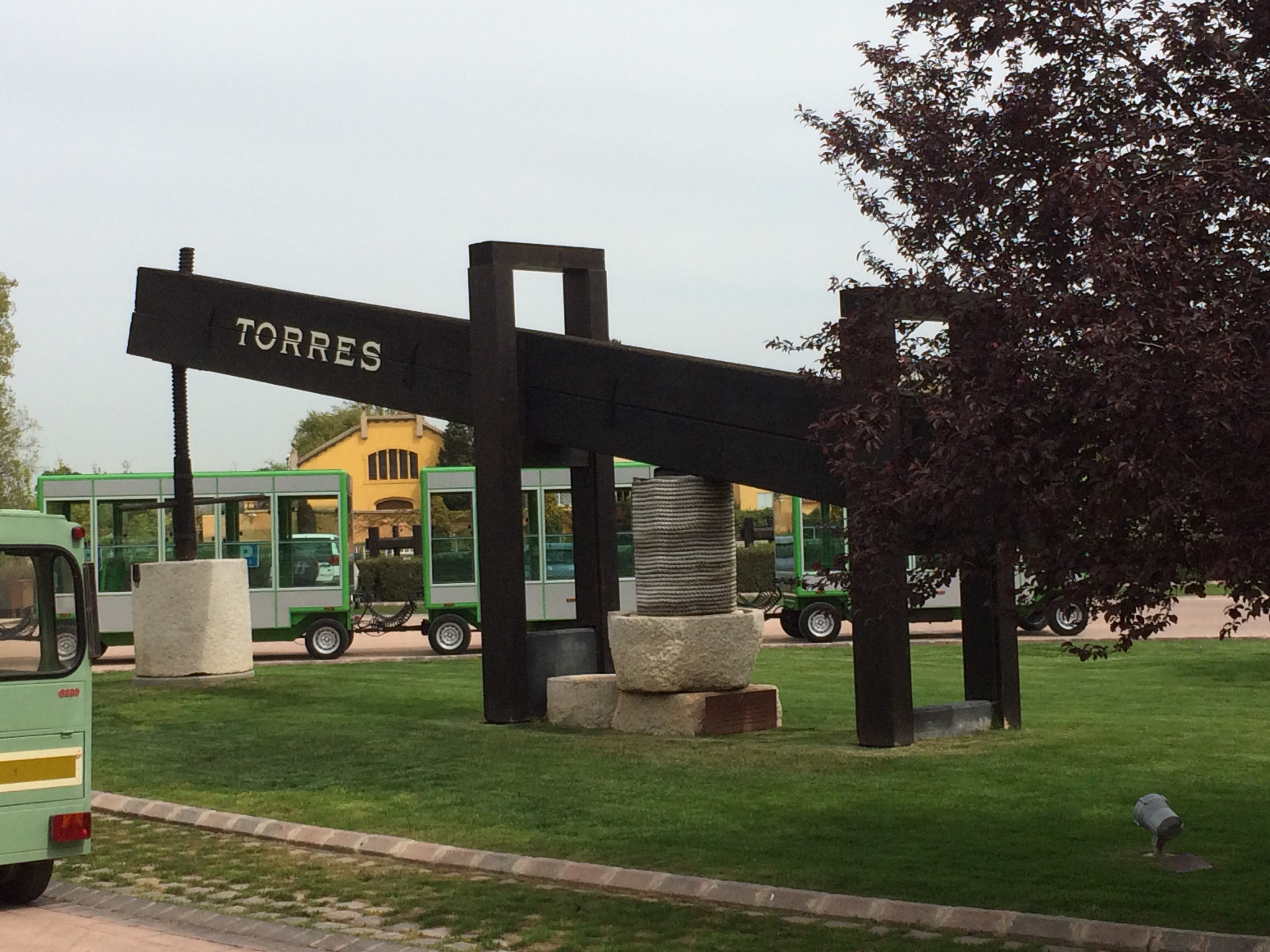
Bodegas Torres is truly a huge operation with a storied history and wine production all over the world (LINK). The Penedès Winery is a state of the art facility producing wine and brandy and is located next to the family home. It is roughly on the level of a Mondavi or a Gallo-sized operation, to give you an idea. The wine tour (which we were given alone with a guide, Archie, a young man from England) includes a tram and Universal Theme Park-like effects, which were inspired, we learned, by a family visit to Universal Studios in Los Angeles. So this is not your boutique winery.

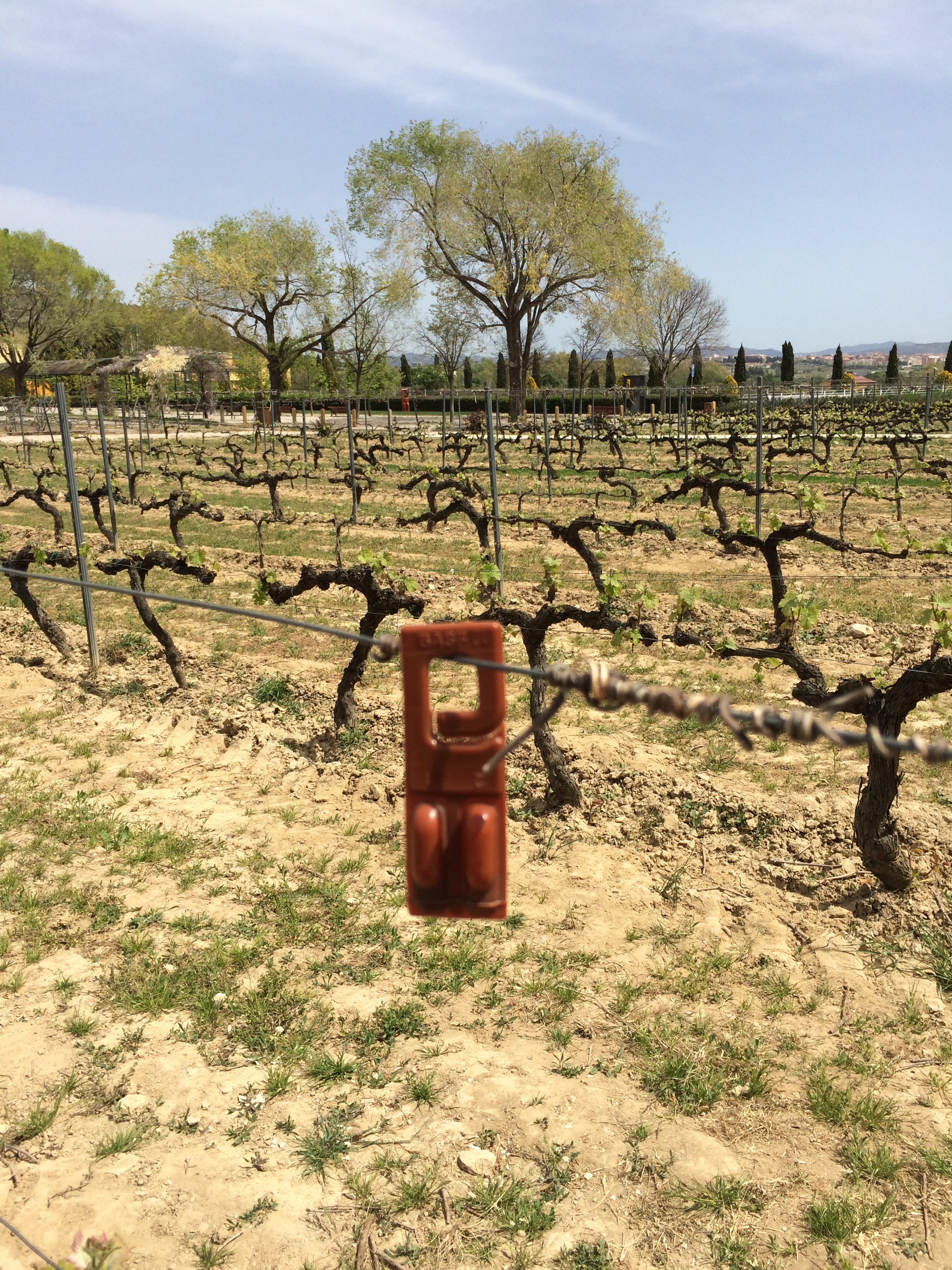
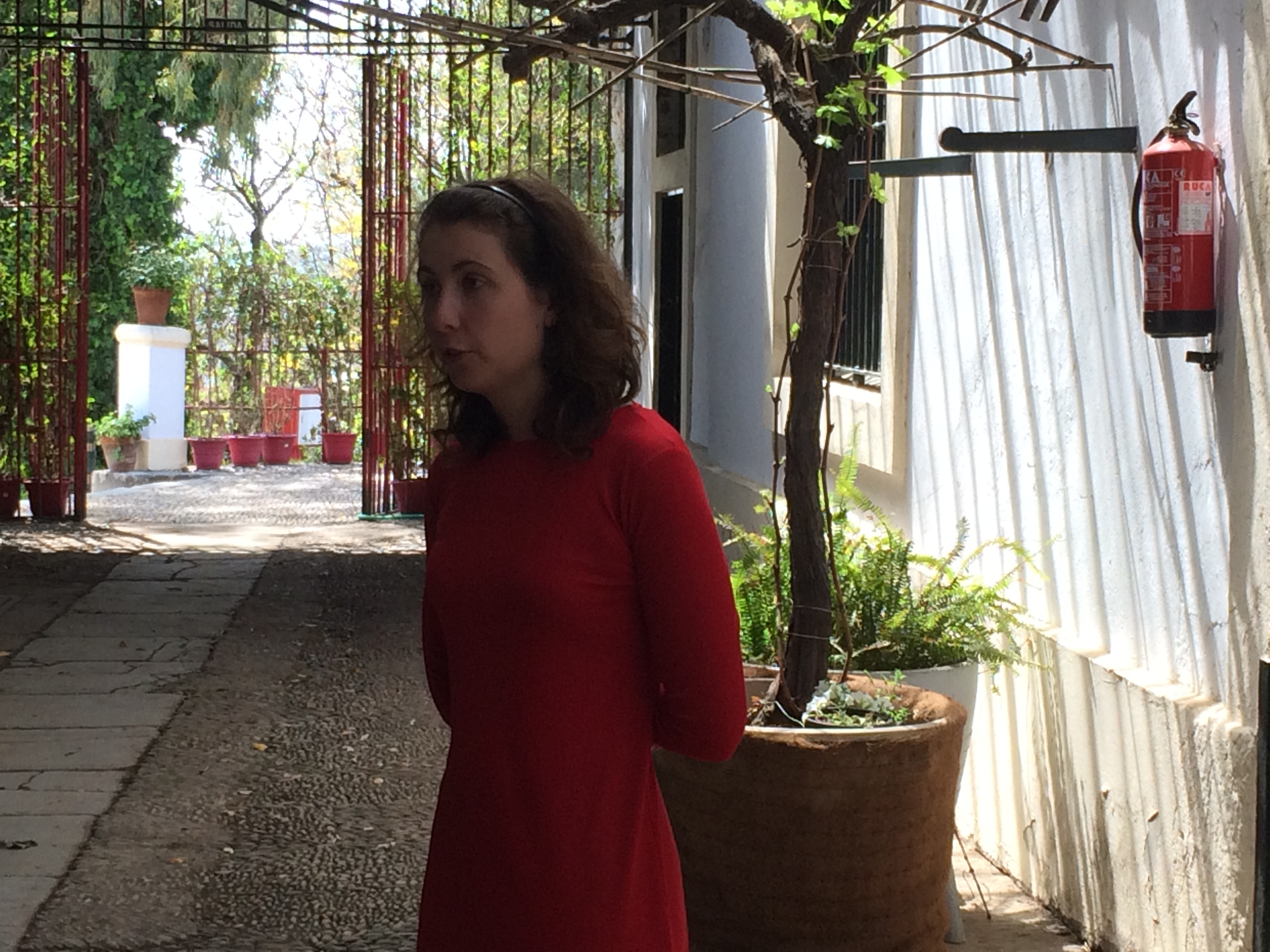
2015-04-15 12.34.47 2015-04-15 12.34.58 2015-04-15 12.35.47 2015-04-15 12.36.32

That being said, the company is taking strong steps at environmental sustainability (LINK), including recycling, energy and land conservation, increased organic and biodynamic farming practices, and the like. The tour highlights many of these practices, which the company obviously sees as a good way to market their wines. I agree with them.

2015-04-15 12.36.06
Reservoir used to clean equipment – water is recycled through the artificial wetlands.
2015-04-15 13.38.42
Sand dome over a reserve cellar to provide insulation
2015-04-15 13.55.57
Pheremone capsule to keep flies from laying eggs in the grapes

2015-04-15 13.40.17

The winery facility in Penedès processes millions of bottles of wine annually. It has the look and feel of a place that has the resources to create whatever the owners want – the buildings are nicely appointed, the vineyards well tended, the equipment is in excellent condition, plus there are very nice touches for the customer at every turn. There are about a dozen wines and several brandies produced here. Our tasting after the tour was limited to five wines from three regions in Spain. Archie our guide, has been with the company for about a year and is working toward wine certifications in England. His plan is to work in the wine industry. He showed a great deal of knowledge about the entire process, and he was able to answer most of our questions. The tour would be an excellent introduction for someone new to wine production, and we learned a thing or two as well.

2015-04-15 13.43.33
Barrel Storage Cellar
2015-04-15 13.51.32
Bottle Aging Facility
2015-04-15 13.54.35
Our guide, Archie, describing pruning techniques.

2015-04-15 13.54.18

As to the tasting – the wines we tried – two whites (blancos) and four reds (tintos), were all well-crafted and balanced wines. We tasted across several of the labels of the winery – (there are dozens). The blancos, were a 2013 Jean Leon Chardonnay from Penedès DO, and a 2013 Torres Fransola Sauvignon Blanc. The Chardonnay was 50% oak barrel aged and 50% stainless steel. It was similar to the increasingly popular style of Chardonnay from California, which is less buttery and powerful. The wine was refined and nice on the nose and in the mouth. Very good. The Sauvignon Blanc was more in the French style – smooth and elegant. The wine did not jump out at you with citrus or grassy notes like New Zealand Sauvignon Blancs; rather it seduced you a bit – this wine would be amazing with shellfish, we both agreed.

The four tintos were also all well-structured and balanced wines. They included a 2012 Torres Altos Ibericos Crianza Rioja, a Tempranillo with good character. Moderate tanins and acid make this wine good for drinking alone or with food, such as barbecue or some wonderful Iberico Jamon. The second tinto, a 2012 Torres Celeste Crianza from  Ribera del Duero DO, a Tinto Fino (the name for Tempranillo in that region). This wine was more fruity and had lower tanin – but was clearly well-crafted. Very nice. Next, we moved on to the two higher-end wines in the tasting. A 2012 Torres Salmos a blend of Cariñena (60%) Garnacha Tinta (20%) and Syrah (20%) grapes from the Priorat DO. I have really enjoyed just about every Priorat wine that I have tasted, and this one was no different. A very dark, rich color, fruity and spicy on the nose, and bold fruit-forward in the mouth, very thick (but not unpleasantly so) mouthfeel and a long, silky finish. I really love this wine. Finally, we go to the 2010 Mas la Plana Cabernet Sauvignon from the Penedès DO. This wine brings a greater complexity with some mushroom on the nose and hints of minerality just behind the fruit. Good tanins and acidity balance on the tongue and the finish is smooth and elegant. I liked this just a tiny bit less than the Salmos. The latter two wines should age beautifully. You can research more details at the Torres links above. This may not be the winery visit and tour for everyone – it is a very large facility and run like one. But it does give good insights into the Spanish Wine Industry. There are a number of smaller wineries in the region as well.

2015-04-15 13.59.44
The Tasting Room at Torres
2015-04-15 14.01.31
The Blancos (whites)
2015-04-15 14.17.16
The Tintos (reds)
2015-04-15 14.46.03
Dorianne, Jim and Archie after the tasting.

GONZALEZ-BYASS IS THE LARGEST SHERRY MAKER IN THE WORLD

Dorianne and I spent Easter weekend in Jerez, Spain, both to take a break from the hectic Santa-Semana schedule in Seville, and to explore a bit of Sherry country. Andalusia, the southwestern region of Spain is known for its production of Sherry Wines.

2015-04-03 13.49.46
Lobby and Waiting Room for the Tours.

2015-04-03 13.46.29

2015-04-03 13.49.06

There are a number of bodegas or Sherry houses in Jerez. The only one open on Good Friday afternoon was Gonzalez-Byass (LINK), makers of the best-selling Tio Pepe and a number of other Sherries and brandies. Gonzalez-Byass is the largest Sherry producer and also has wineries in every major Spanish Wine Region – they are sort of the Mondavi of Spain. The bodega is located adjacent to the Cathedral of Jerez and The Alcazar – prime real estate to be sure.

The tour cost 16 euros, including a tasting of two wines and a plate of tapas. Gonzalez-Byass is a big operation, and the tour was extensive. There were groups taken out in Spanish, English and German while we were there. You also take a tram for part of the tour. It is very touristy, but I was impressed at the amount of information provided by our guide, Rachel and the expanse of the bodega. The tour is not an intimate experience, but it is a great introduction to Sherry wine production.

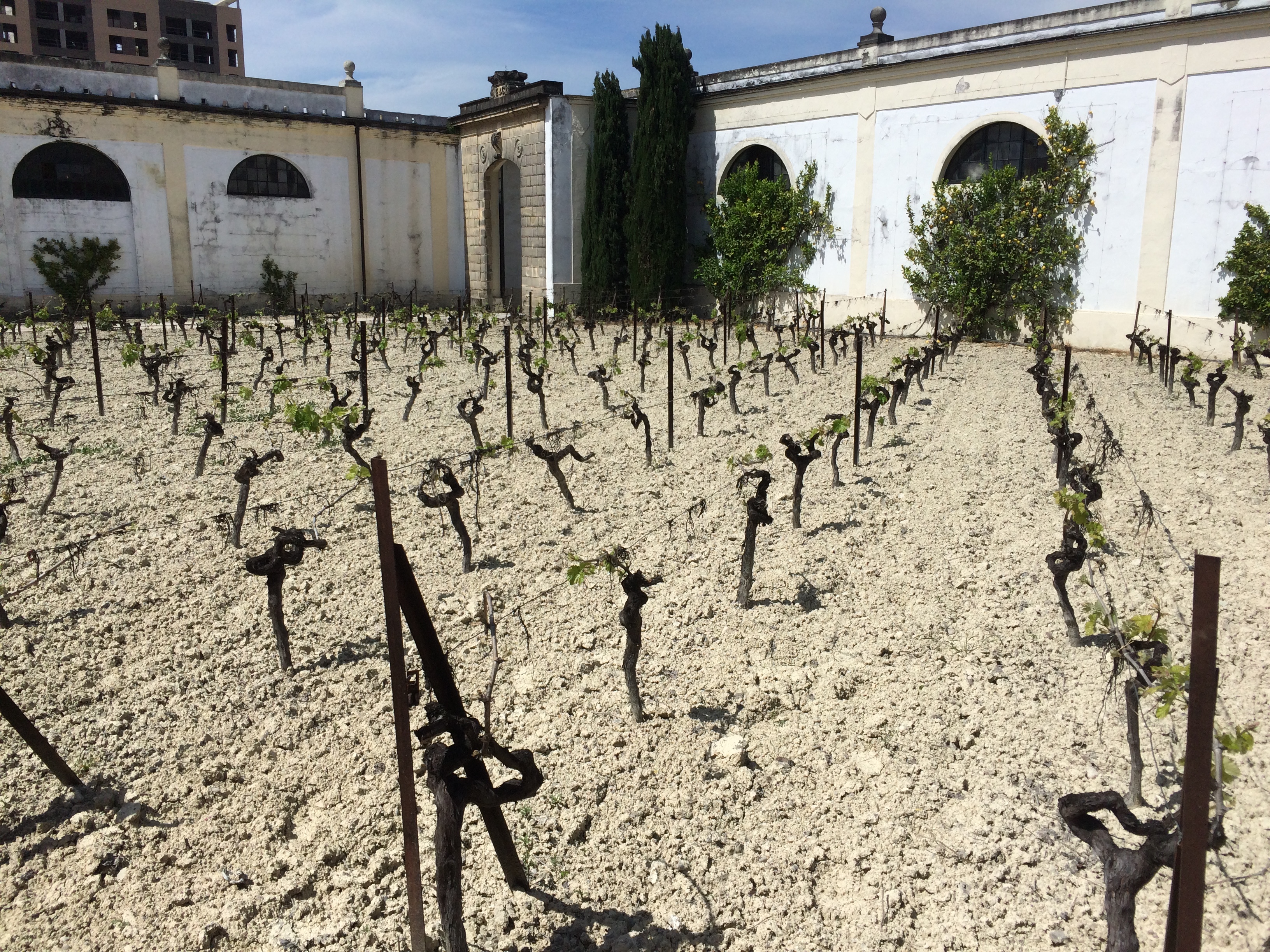
Sherry is made with only white grapes, primarily palomino, which grows well in the gray soil of the region. Dry Sherry or Fino is made from earlier harvests, sweet sherry or Cream or Dulces is made by adding late harvest grapes to the blend, in some cases, raisins.

2015-04-03 14.09.20 2015-04-03 14.34.23 2015-04-03 14.37.53 2015-04-03 14.38.28

Almost all Sherry is blended – a process where there is a stack of barrels four high. The bottom barrel contains up to 60 vintages, the second barrel is newer, the top barrel the current vintage. The winemaker takes 1/3 of the bottom barrel and then replaces that 1/3 with wine from the second barrel, and so on. Some from each of the upper barrels is added to the current wine being made. This, according to Gonzalez-Byass, results in a uniform product over time. There are some vintage Sherries, which are not made using this process.

2015-04-03 14.56.48
The grey soil of Andalusia.
2015-04-03 14.59.37
Samples of Brandies.
2015-04-03 14.59.53
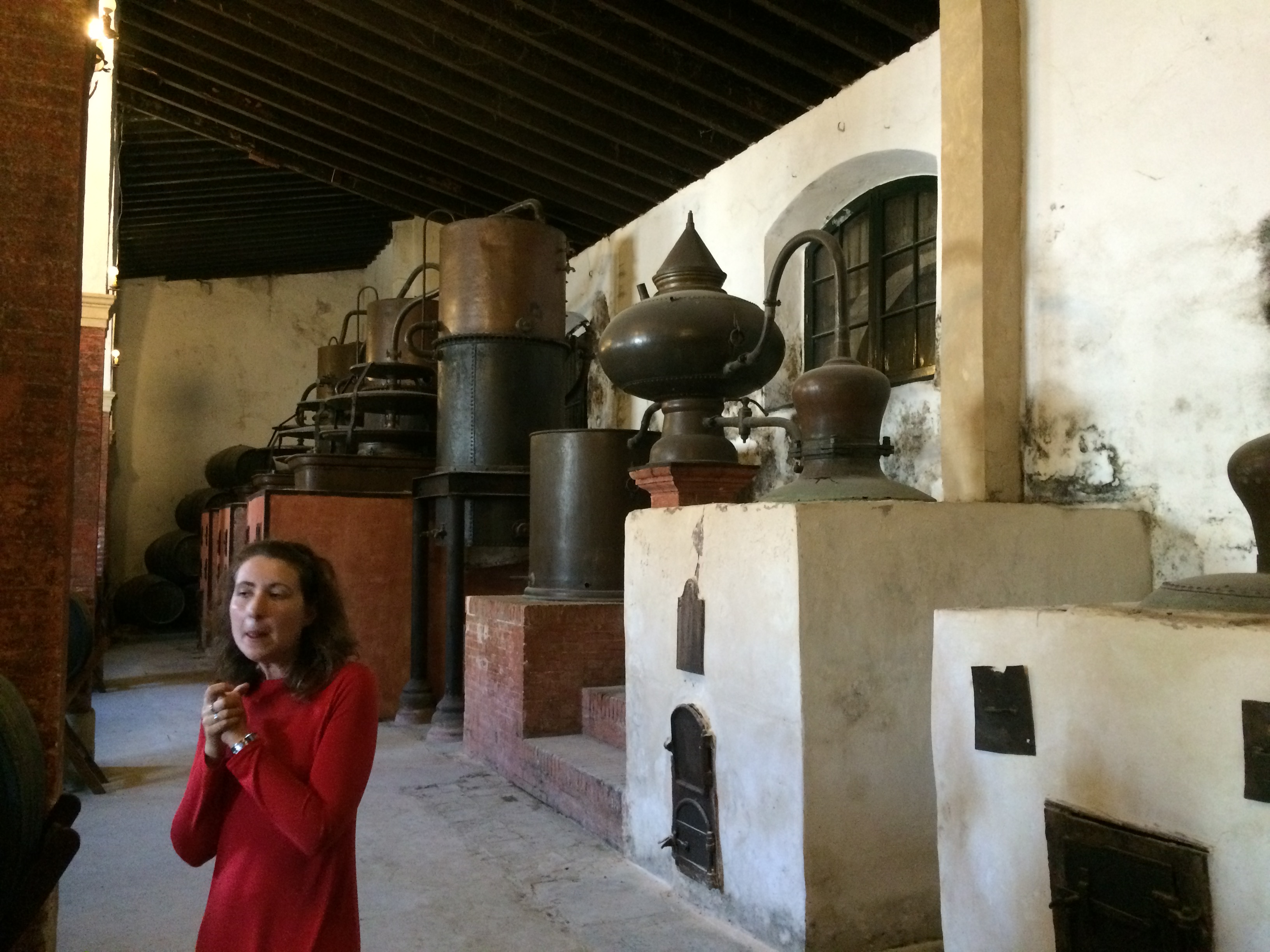
Rachel shows us the Old Brandy Stills.
2015-04-03 15.20.27
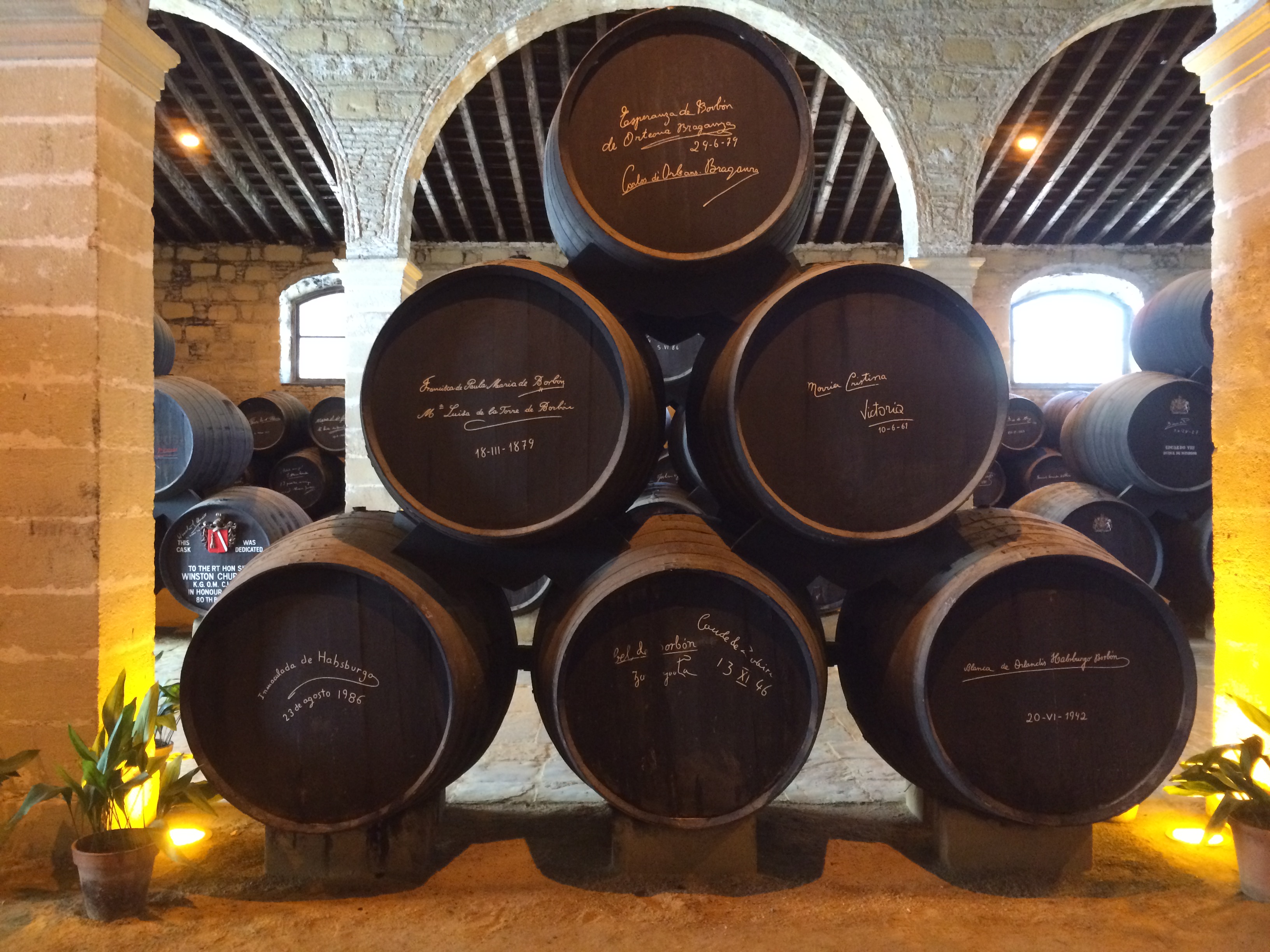
Signed barrels at Gonzalez-Byass.

Here is a good PDF showing the process of making Sherry wines (LINK).

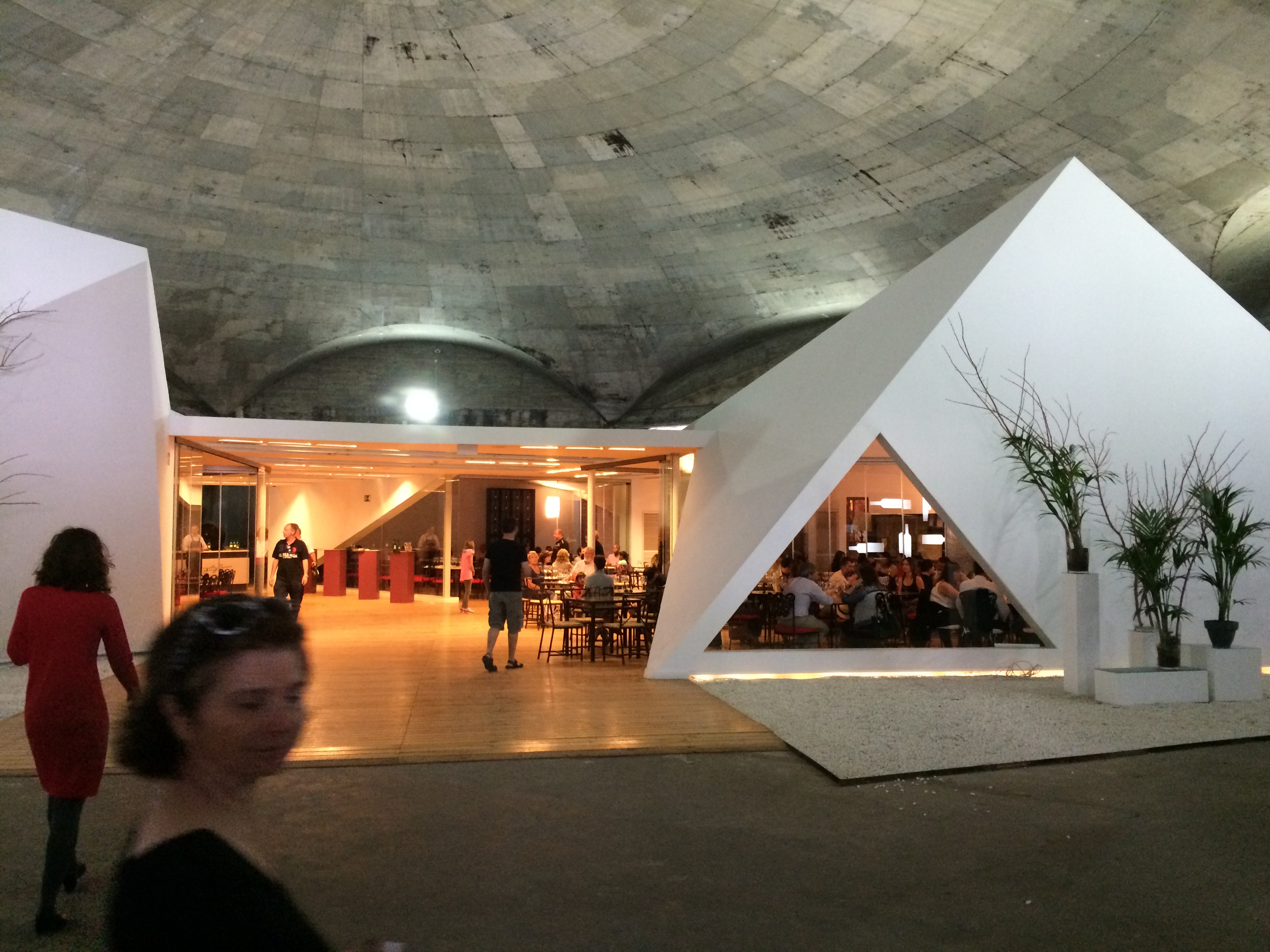
The tour concluded in a very modernistic tasting area built inside the storage building for Tio Pepe wines. We tasted three wines – a Fino, a Cream, and a Blend, and had tapas at a table shared with a mother and daughter from Moscow who had taken the English language tour. They told us about Russian wines, which I would love to try sometime.

2015-04-03 15.31.38
World’s Largest Weather Vane.
2015-04-03 15.33.25
Tasting Area inside Tio Pepe Storage Building.

I recommend Gonzalez-Byass for those who want to learn about Sherry production and enjoy the big touristy experience. They do it well. There are lots of opportunities to experience other bodegas in Jerez – just don’t go in Easter weekend!

nf

LIFE’S TOO SHORT TO DRINK CHEAP WINE – LAWSUIT OVER ARSENIC IN WINE

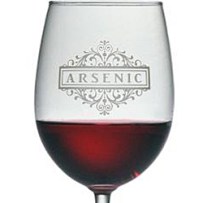
A lawsuit has been filed in California over illegal levels of arsenic found in inexpensive wines sold there. Here is a (Link to the list of wines) Here is a (Link to a news story) The lack of labeliWine - Arsenicng regarding wine additives is coming to a head in California, which is where you would expect it to happen in the U.S. The use of many additives has been addressed on this blog before via two well-researched articles from Joey Casco at TheWineStalker.net(Link to that post). The pressure to take bulk fruit and make it uniform in the wine making process for these inexpensive wines leads many of them to use additives that rang from undesirable to unsafe. Perhaps this lawsuit, brought by four individuals, may lead the way to more open reporting of what is going into wine.

UPDATE: This article (LINK) from Vinography is worth reading – giving another perspective on the matter. I still say, there are many reasons not to drink cheap wine. The arsenic thing may not even be the most compelling.

CASA BARRANCA WINE PAIRING DINNER IN OXNARD

On Friday, eleven of us made the short trek from the Conejo and Simi Valleys to the Oxnard/Port Hueneme area for a wine pairing dinner at the Waterside Restaurant (LINK), featuring Casa Barranca Wines (LINK). The dinner was set up in the back of the restaurant and included a table for 12 or so in a back room and a table for 16 in the front room.

I will speak to the food, the wine, and the execution of the concept. I want to begin by giving kudos to the owners of the Waterside Restaurant, who have created a very nice wine bar on a scenic marina in Oxnard. We had lunch there a while back and everything was good – the food, the wine, and the service. They hold a number of events during the week, and are working hard to bring a good wine experience to an area that has been generally lacking in good cuisine and good wine venues.

2015-02-27 18.47.49

As you can see, the menu was both ambitious and inventive. I should also note that some of the dishes were prepared differently for a member of our party who had allergies.The service was efficient and friendly.

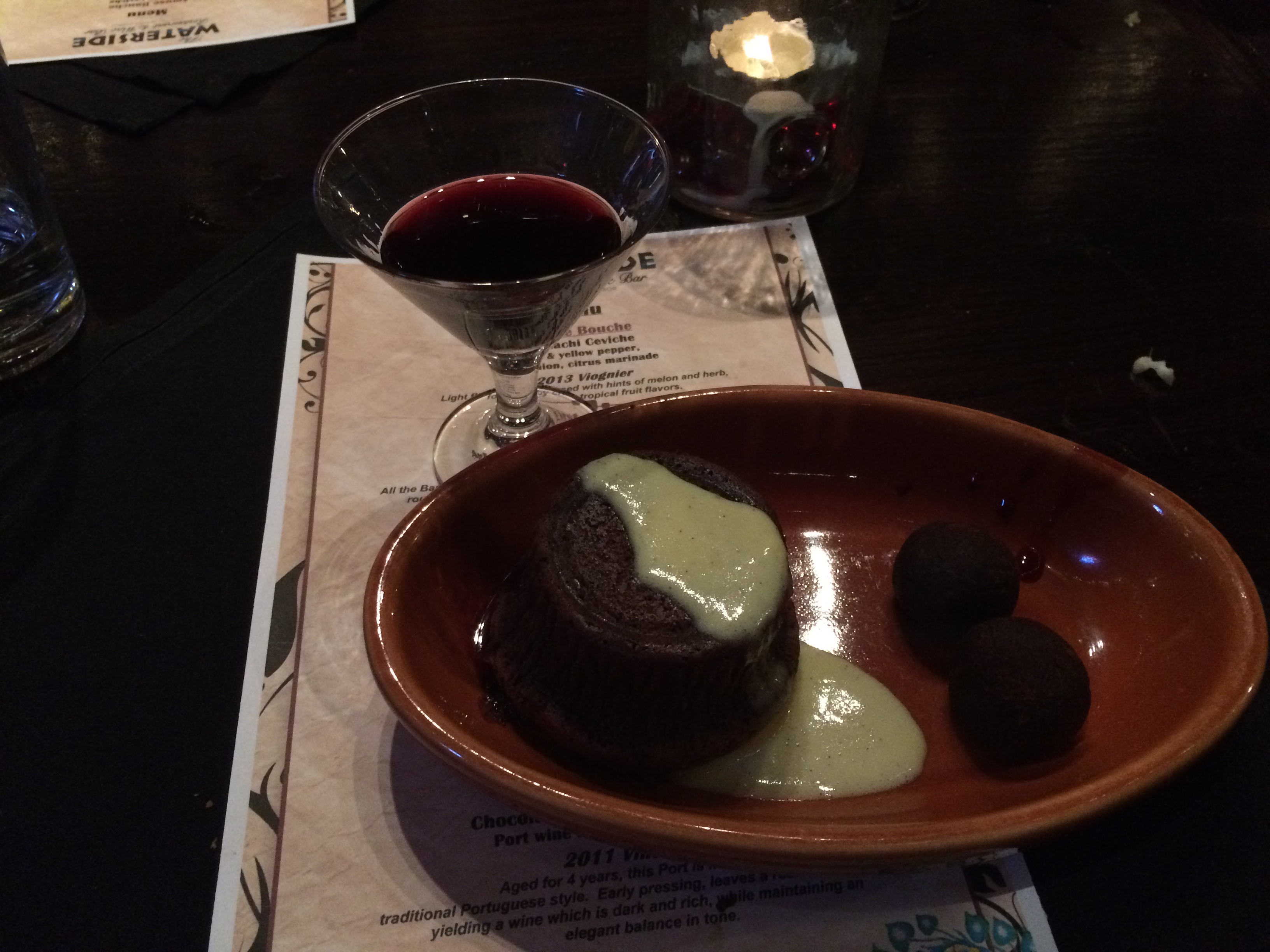
2015-02-27 20.08.21 2015-02-27 20.44.51

That said, there were some problems with the wine pairing event. The food was both inventive and beautifully presented, the chef used the paired wines in most of the courses. However, almost everything was served at a luke warm temperature at best. Part of this was due to the desire to have the chef explain each course after it was served AND having the winemaker describe the wine each time.This had to be done twice, as they could not be heard at both tables. They did finally alternate, with each speaking to a table then switching. I did taste a couple of courses as soon as they hit the table, and they were not hot. Something to think about for future events.

The Casa Barranca Wines are organically grown at a historic winery in Ojai, CA. The winery shares space with a spa retreat facility. Grapes are sources from Santa Ynez for the most part. Winemaker Samuel Tulberg, represented the winery at the dinner. He was very knowledgeable about the wines and their process, as you would expect.

The wines served were their 2013 Viognier, 2013 Sauvignon Blanc, 2010 Pinot Noir, 2013 Craftsman Red, and a 2011 Vino Noche Port. The Sauvignon Blanc and the Craftsman Red (56% Cabernet Sauvignon, 22% Cabernet Franc, 22% Merlot – and just 12.5% alcohol) were quite good. The Pinot Noir was very average, and the Viognier and the Vino Noche were just not very good. The wines that I liked (and this was the general consensus at the table) were complex and somewhat elegant, with nice hints of fruit and terroir in there. The Viognier was anything but elegant, had a chemical nose, and simply was not a pleasing wine to drink. The Vino Noche Port was very harsh on the palate and hot with alcohol. It was better with the dessert – chocolate lava cake, but still . . .

I am sure that a visit to the Casa Barranca Winery is a fun outing, but I would not be going for the wines. Perhaps, over time, the wine making process will mature and even out.

As for the Waterside Restaurant, I encourage them to keep on trying and working on their presentation timing for food at events such as this.

TWO EXCELLENT BLOGS ON WINE “FORMULAS” AND ADDITIVES

The Wine Stalker (LINK) is a wine blog by Joey Casco, CSW, who writes some interesting and knowledgeable stuff. He recently did two posts on “Wine Formulas” – how wineries get their wines to present the way they want them to. The techniques range from blending different varietals in larger quantities than you might think, to adding a variety of additives to the wine during the wine making process, to using procedures to add oxygen or color.

The posts are very fair and objective – giving wine lovers access to information that is otherwise hard to come by, given the lack of wine labeling regulations.

I found it very interesting to see how some of my favorite wines are manipulated to get to that certain place where the scores, and therefore the sales, will peak.

Here are the links to parts one and two of this series.

The Magic Potions & Formulas of Wine – Part 1: Mass Appeal & Cover-ups (LINK)

The Magic Potions & Formulas of Wine – Part 2: Mega Purple and Enologix (LINK)

Cauldron

BACK TO SUNLAND WINES TASTING ROOM

On Saturday, Dorianne had a late-morning appointment with her allergist, and it just happened to be in the same shopping center where the Sunland Vintage Winery Tasting Room (Link) is located in Thousand Oaks, CA. The proprietors, Michael and Debby Giovinazzo, were in when I peeked in the door at 11:00 am (the sign said they open at 1:00 pm). I asked if they were open and was invited in.

2015-02-14 12.57.28
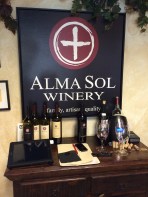
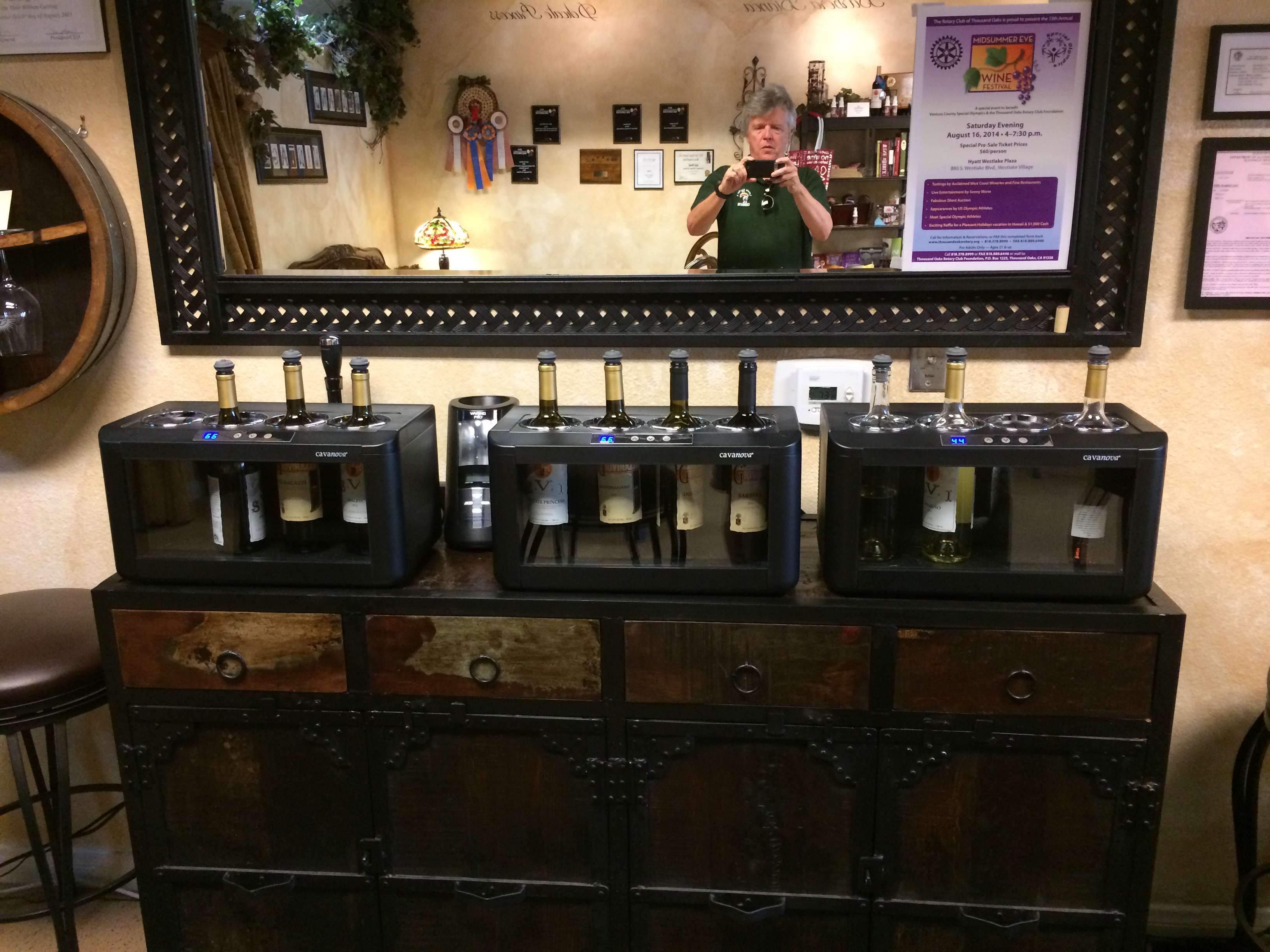
The Tasting Room at Sunland Vintage Wines – shared with Alma Sol Wines.

I blogged about their Tantalizing Thursday Events (LINK), where they combine $5 per glass wine with a food truck in the parking lot two weeks ago. That event was so crowded, that I was unable to have a conversation with Mike or Debby, so I returned to do just that.

Mike and Debby have been in the wine business for five years. Their wines are produced in Lodi, CA, and sourced from all over the state. His goal, he said, was to bring Italian Varietals to Southern California, which his Giovinazzo Wines label does, and does very well. There is also a newer label, SVI Wines with more traditional varietals – Cabernet Sauvignon, Syrah, Malbec, and Albarino. 

2015-02-05 18.51.36

Total production this year is 1350 cases, making Sunland Vintage Winery a small producer, but one with great variety. Mike told me that he just contracted for some Dolcetto fruit from Northern California growers that he is excited about. Mike and Debby clearly love being in and talking about, the wine business, and it looks like they have carved out a nice niche for themselves with their Italian Varietals and blends.

If you are in the area, check them out.

SOME AMAZING PINOT NOIRS

On Saturday, I joined a group for a wine tour of four wineries in the Santa Rita Hills Appellation (LINK), near Santa Ynez, California. The four were: Tyler, LaFondMargerum, and Ken Brown. I will blog about each separately, beginning with Ken Brown Wines (LINK). The Santa Rita Hills are located about 30 miles north of Santa Barbara. A unique geological area, they are on a circular land mass that separated from the North American tectonic plate about 12 million years ago. Since then, that circle of land has been turning about 1/4 inch per year, so that now, the mountain ranges and valleys run east to west instead of north to south. This provides a “chute” for cool breezes and moisture from the Pacific Ocean to come farther inland and created one of the perfect places on earth to grow Pinot Noir. The film “Sideways” (LINK) was filmed here (before the appellation was established), and the rest is, well, a rich history.

2015-02-07 16.13.20

Ken Brown is a legendary winemaker in the Santa Rita Hills area. He began at Zaca Mesa Wines. His first name is actually Byron, and after Zaca Mesa, he started Byron Winery in 1985, selling it to the Mondavi Family in 1990. He said that both of those wineries got to the level of 80 to 90,000 cases in annual production, and by that point, actually before that, it was no longer fun for him. The current annual production at Ken Brown Wines is just about 3,000 cases in total.

Along the way, Ken Brown has trained a number of winemakers in the area, including Jim Clendenen of Au Bon Climat and Bob Lindquist of Qupé Winery. His tasting room is in Buellton, CA, just off the 101 Freeway. It is very nicely appointed, with a corkwood floor that got a lot of attention from some of the women on the tour.

Ken Brown Holding forth about his Wines.

Ken was very expansive in describing his process of winemaking and each of his wines. We tasted one Chardonnay, five Pinot Noirs and one Syrah. My general comment is that his wines are amazingly well-crafted in a Burgundian style, not big fruit bombs like many California wines. In fact, some in our tour group thought his wines were not big enough.

I found them to be nuanced, balanced, and each had different characteristics. I just about fell in love.

The Chardonnay was beautifully made, and very oaky – not to my taste, but you could readily smell, taste, and see the quality of the wine. Several bottles of this were purchased by tour members.2015-02-07 15.43.28 2015-02-07 16.11.47

Each of the five Pinots, one a blend of two Santa Barbara appellations, the rest from Santa Rita Hills, two blends of vineyards and two single-vineyard wines, had a strong sense of place and a very nice blend of fruit, mineral, and spice.

I won’t go into all of the individual wines in detail – mainly because it is unlikely you will be able to get any! All are small production, and available only through the winery (LINK to wine shop site).

I purchased the 2012 Zotovich Vineyard Pinot Noir (LINK), a very complex Pinot; the 2012 Santa Barbara County Pinot Noir (LINK), his most approachable Pinot – fruity and very refreshing; and the 2012 Watch Hill Syrah (LINK), a rich fruit-forward Syrah with great complexity. If we were not moving soon, I would have bought more.

2015-02-07 15.11.06 2015-02-07 15.11.10

If you are in the Santa Rita Hills area any time soon, put Ken Brown Wines on you list of places to visit, You will not be disappointed (unless you only like the big, big wines. Then you better stick to Paso Robles).

MY FAVORITE WINERIES AND VINEYARDS – Clos Pepe Estate

Clos Pepe, owned by Steven and Kathy Pepe (the Spanish pronunciation, not the French), is a unique winery and vineyard for several reasons. Their wines, primarily Chardonnay and Pinot Noir grown and crafted in the Burgundian tradition, are one. The miniature heritage sheep who keep the undergrowth beneath the vines trimmed and the dogs that herd them are another. Their secondary labels, Axis Mundi, featuring wines crafted from fruit from other Central Coast vineyards are another.

But the main reason that Clos Pepe Estate is such a unique operation is the winemaker, Wes Hagen. Wes is unique among winemakers in a variety of ways – one of which being that he is as much, or more, of a philosopher than anything else. Oh, he crafts amazing wines – some of my absolute favorites – but it is the depth of knowledge about all things wine and wine-related (plus a lot of other stuff) that make being around him so entertaining and enriching.

2014-03-15 17.28.40 HDR
Jim Lockard and Wes Hagan at a recent charity tasting of Clos Pepe and Axis Mundi wines.

Visitors to the Estate (by appointment only) are greeted in the vineyard by Wes. Everyone gathers around a vine and he begins his very thorough presentation that includes the geological history of the Santa Rita Hills (a part of California that is separated from the North American tectonic plate and has been rotating at about ¼ inch a year for the past 12 million or so years, so that the valleys here run east and west rather than north and south. This makes for excellent conditions for cool-weather loving grapes like Pinot Noir and Chardonnay); the 6500 year history of wine and viniculture that began with a single vine in Kazakhstan – the ancestor of every wine grape vine on the planet today; the history and philosophy of Clos Pepe in growing their fruit and making their wine; a bit about the sheep and the dogs; Q&A time; THEN up to the owner’s home to taste (and purchase) some wine.

As the videos on the Clos Pepe website show, Wes can tell a story, explain a concept, delve into science, and bring up Joseph Campbell without skipping a beat. He truly loves his work, and he continually studies in a variety of areas to keep his incredible mind occupied and productive.

Clos Pepe wines are beautifully crafted from vines on the 28 acre estate. A number of top California wineries also source fruit from Clos Pepe vineyards. Wes, ever the experimenter, yet aware of tradition, crafts Pinot Noirs in both the lighter, more elegant French tradition, as well as the bigger, bolder California style. They emerge beautifully and age very well.

Wine - Clos Pepe label

The Chardonnays are also crafted in the French style primarily, with a nod to what California consumers are looking for as well. Wes is given to grand descriptions of his wines (that prove to be very accurate). Here, is a description of the Chardonnays from the website:

The Chardonnays are naturally lean, mineral-laden and racy, but with more winemaking influence can exhibit richness and roundness: new oak, malolactic treatment, extended barrel aging. When young, the wines have austere structure and bright apple fruit with hints of tropical fruit and peach. Clos Pepe Chardonnay is crafted for both early enjoyment as well as cellaring for a decade or more. As the wines age they gain a hazelnut and mineral complexity, quite similar to Premier Cru Chablis and White Burgundy from great vintages. Try young Clos Pepe Chardonnays with oysters, fried chicken or barbecue. Older vintages can be enjoyed with sand dabs in a lemon cream sauce, firm cheeses, cream-based soups, or any kind of delicate seafood preparation. Clos Pepe Chardonnay seems to like 3-5 years from vintage date to fully integrate, and can last up to 10-12 years for those that appreciate full maturity and a bit of oxidative aromas and flavor.

Dorianne and I have Pinot Noirs from Clos Pepe in our cellar going back to 2007, and Chardonnays from 2010 on (hard to keep the Chardonnays on the shelf). We pull them out mostly for special dinners or to share with good friends. With every bottle, I think of Wes Hagen, the depth of knowledge that he carries into his winemaking, and those sheep. Beautiful wines and beautiful memories.

MY FAVORITE WINERIES & VINEYARDS: Broc Cellars Winery

Chris Brockway’s Broc Cellars Winery is an unusual entry into the California wine scene. Housed in a small, old warehouse in a derelict (but recovering) section of Berkeley just off the 580 Freeway, it reeks of outsider and startup, which it is.

As it says on the winery website:

We are a ‘low wattage’ winery in the sense that we have very little modern equipment. Grapes are pitchforked whole-cluster into the fermenters, fermentation is allowed to happen spontaneously, all wines are basket pressed, with little/no sulphur used in our wines until bottling. True asphalt winemaking, in an urban winery.

And from Eric Asimov in the NYTimes:

Mr. Brockway casts a wide net to find grapes, often from odd little patches of unexpected varieties. He gets grenache, grenache blanc and cabernet franc from Santa Barbara County, and picpoul, a Mediterranean white grape, from Paso Robles. He finds zinfandel from Sonoma, carignan from the Alexander Valley and nero d’Avola and counoise, one of the 13 grapes permitted in Châteauneuf, from Mendocino. He buys valdigué, a grape once confused with gamay in California, from two sites in Solano County, and genuine gamay from the Umpqua Valley in Oregon.

At harvest, grapes are picked in the cool of night, and then he drives them back to Berkeley in his flatbed truck. “I’m on the road so much, sometimes I feel more like a truck driver than a winemaker,” he said.

Oh, and they have been written about at least three times in the New York Times, including a feature column by Eric Asimov in March 2014. This in addition to lots of local and regional coverage drew me to stop at the tasting room during a recent visit to the Bay Area. I was joined by a friend who was also in the area for a visit.

The tasting room is part of a larger room that houses barrels, tanks and other equipment. There are other sections of the building and an outdoor area that included a few concrete wine tanks. The tasting room itself is nicely furnished and well laid out. The staff member there, Craig Willimas (Chris Brockway was not there that day), was very knowledgeable about wine and about the Broc products. He was also a raconteur, regaling us with stories about his life as a private chef and journeys to New Orleans that involved costumes from the San Francisco Opera Company.

Broc Winery - Carol Carnes
Carol Carnes at Broc Cellars Winery Tasting Room
Jim at Broc Winery
Jim Lockard at Broc Cellars Winery in Berkeley.

We tasted six wines that day. Broc sources fruit from the Central Valley of California up to the Willamette Valley in Oregon. They tend to produce uncommon varietals, with the exception of their flagship 2009 Philary Syrah, their most expensive wine at $75.

Our tasting included

  • the 2013 Vine Starr White, a 100% Grenache Blanc ($30)
  • the 2013 Cassia Grenache(s) – ($27), a rosé blend of Grenache Gris and Grenache Noir from Mendocino County CA
  • the 2013 Valdiguié Green Valley Solano County ($24) – Valdiguie is a French varietal also known in California as Napa Gamay or Gamay 15
  • the 2013 Umpqua Valley Gamay Noir ($24) from Oregon grapes
  • the 2013 Nero d’Avola Mendocino County ($30)
  • and the 2009 Philary Syrah ($75), which is not normally part of the tasting, but there was a bottle open, so . . .

I enjoyed all of the wines with the exception of a Mouvedre that was not on the tasting list. The Philary Syrah was rich and big, but I didn’t think it was in the $75 class. I purchased three bottles: the Valdiguié, the Gamay Noir, and the Nero D’Avola.

Today, Dorianne, a friend and I tasted the 2013 Cassia Grenache(s) rosé. After drinking a lot of rosé this summer, this wine is the best. Beautiful fruit on the nose, perfect blend of fruit and minerality on the tongue, with a smooth aftertaste. And only 12.5% alcohol. This may be the perfect summer wine. The conversation drifted to splitting a case.

Wine - Broc - Grenaches Rose
2013 Cassia Grenache(s) Rosé

If you are in the Bay Area, Broc Cellars Winery is worth a visit. If not, order some of their wines from their website.

TASTING ROOM(s) IN THOUSAND OAKS – ALMA SOL

Last night we were scheduled to meet friends for a tasting at a new tasting room in Thousand Oaks, CA, the next town over from us. They said meet at Alma Sol, but I made it Aldabella – another brand new tasting room just opened in the area. Thus began the comedy of errors.

Dorianne was judging cakes and a life cooking contest at the Ventura County Fair and was going to be a bit late getting home to make our 5:00 pm appointment. I texted our friends and let them know. They texted back that the wife in that couple was stuck in traffic and would be a bit late, too.

2014-08-09 17.15.20
Altabella Winery Tasting Room

Dorianne arrived and we shifted cars and headed for Altabella, located on Via Colinos opposite the Four Seasons Hotel in Westlake Village. Altabella Winery Tasting Room has a beautiful tasting room adjacent to a medium-sized warehouse winery. We settled in on a plush sofa and waited for our friends. We received a text that our friends’ GPS was acting up and they would be a bit later. So we sat. One of the owners noticed that we were just sitting their and ordered us glasses of their Syrah. The wine was nicely-crafted, acidic, and smoky. I liked it more than Dorianne did.

Then, a phone call. “Hi, we are here, where are you?” the voice at the other end of the phone asked. “We are right here – Altabella Wine Tasting Room.” “No, came the response, Alma Sol.” So, we said our goodbyes and headed over to Alma Sol Winery Tasting Room, arriving about ten minutes later. There are two winery-operated tasting rooms in the area and we each went to a different one. End of comedy of errors.

2014-08-09 18.15.29
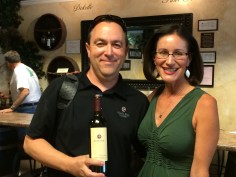
John and Lisa Shaw – Alma Sol

We were greeted at Alma Sol by our friends, of course, and by John and Lisa Shaw, the owner-operators of Alma Sol. And then it all came back.

We had met John and Lisa at the 2013 Garagiste Festival in Paso Robles, a gathering of small producers. We recalled speaking to them, enjoying their wines, and, yes, hearing that they were going to open a tasting room in Thousand Oaks. Our friends used to work with John and Lisa at Sage Publications. So, old home week.

John was heading out to pour at a charity event, so he poured our first glass, a 2013 Sauvignon Blanc, chatted for a bit, and headed out. Lisa stayed with us beyond their scheduled closing time of 6:00 pm, and poured and poured and poured.

Alma Sol is 2014-08-09 18.44.38their operation from top to bottom. Their Cabernet Sauvignon grapes are sourced at Lisa’s family vineyard in Paso Robles and their other varietals from a number of nearby vineyards. All of their wines are very well-crafted – you can tell the winemaker’s touch, but the essence of the fruit and the terroir are present. They are a small production winery – almost everything is well under 100 cases of production – but produce a good variety of wines within that structure.
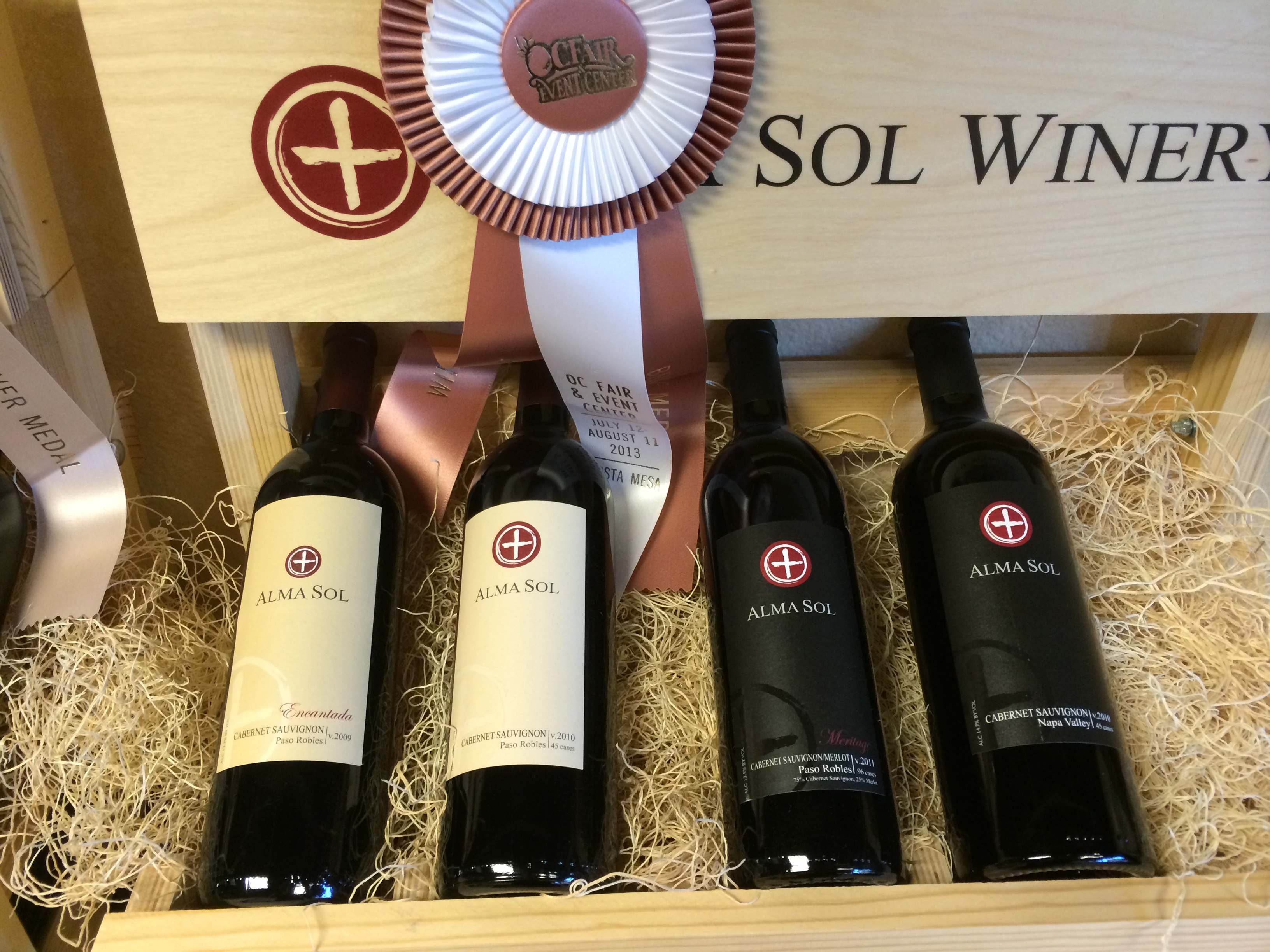
Their 2011 Cuevas Vineyard Cabernet Sauvignon (Curevas is Lisa’s family name) received 92 points from Wine Enthusiast and won Gold in the 2014 San Francisco Chronicle Wine Competition. It was our favorite – very smooth with berry fruit on the nose and subtle lavender and leather notes as well. The wine has a nice mouth-feel and spicy after n
otes. It retails for $32 – a bargain.

We will be visiting their tasting room, which they share with another small producer, Sunland Wines, whose wines we will taste in a future visit. They are located at 1321 E. Thousand Oaks Blvd, Suite A-108, Thousand Oaks, CA 91362.

2014-08-09 18.44.47
Alma Sol Wines ready to pour

2014-08-09 18.56.42