A very informative short video on the chemistry of wine from The Washington Post via TheVineyard.com.
Take a look:

A very informative short video on the chemistry of wine from The Washington Post via TheVineyard.com.
Take a look:

Since we are staying very near Avignon in southeastern France, an article on the nearby Châteauneuf-du-Pape Region, where we will be visiting soon, caught my eye. It’s about a UFO scare in France in the 1950’s that led to some very unusual legislation being passed in Châteauneuf-du-Pape. There is also a link to one of my favorite California wines – Bonny Doon Cellar’s Le Cigare Volant (LINK), which derives its name from that legislation.
The article is from the site FWx and originally appeared on Vinepair.com
A quote from the article: “Châteauneuf-du-Pape, located in the Provence-Alpes-Côte d’Azur region in southeast France, is one of the most celebrated wine producing villages in all of France. It also has one of the wackiest wine laws in the world, one borne out of 1950s UFO hysteria.”

Noma, the Copenhagen restaurant that has been voted “The Best Restaurant in the World” (LINK) over and over, was the site of a recent visit by Dorianne, two friends, and me recently. Here are the links to the first three installments of the series: (LINK TO PART 1) (LINK TO PART 2) (LINK TO PART 3).
This post, the final installment in the series, covers the post-meal tour of the facilities at Noma (LINK) and contains some commentary.
After our meal (see parts 2 & 3 of this series), it was good to stand up. We had been sitting for about two and one-half hours in a very intensive activity – eating new things, drinking new wines, talking about the meal and doing our own internal processing without stopping. When I stood up, I realized two things – I had been sitting quite a while and I had a lot to drink. Wine with 20 courses . . . you do the math.
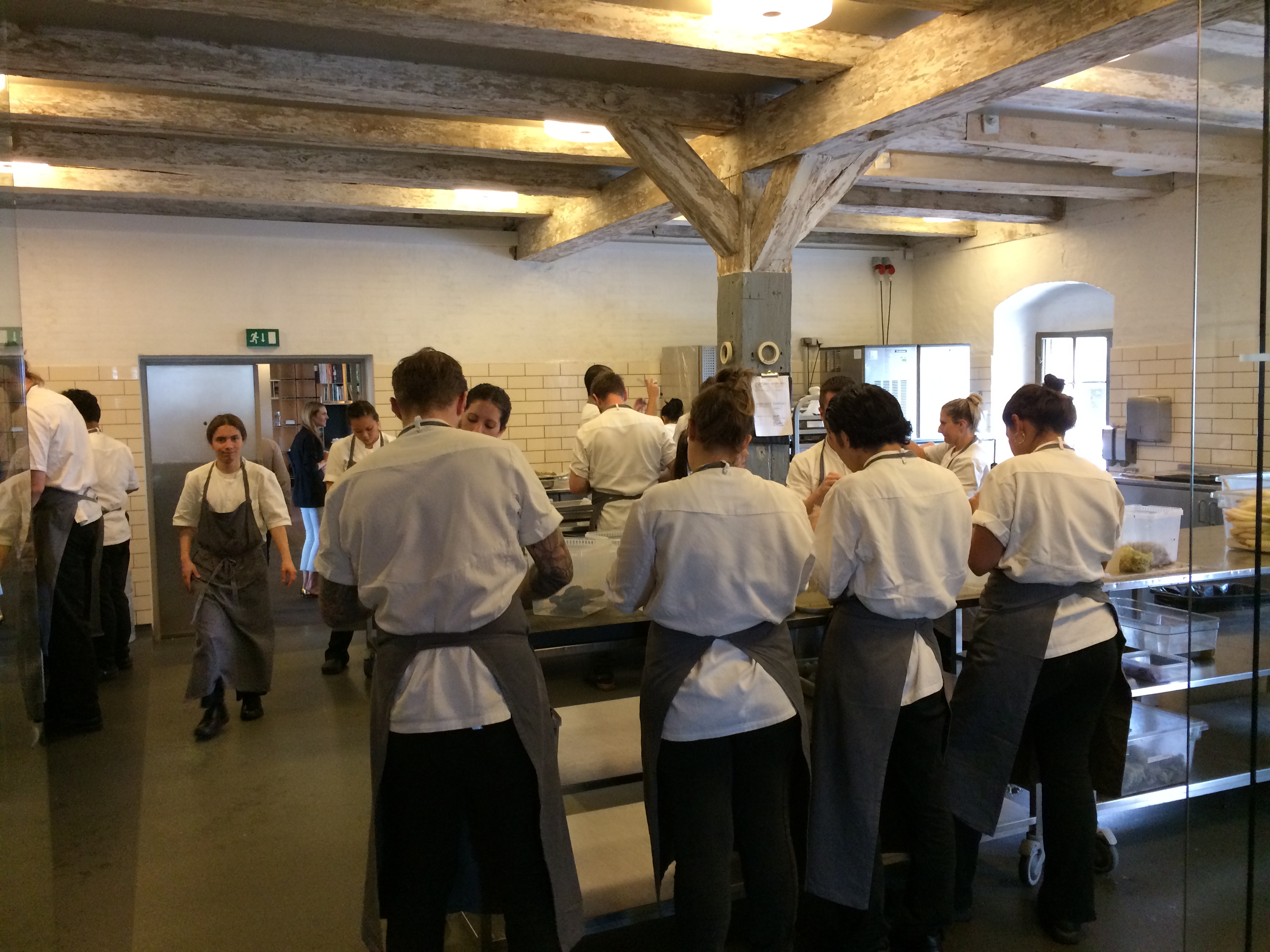
So I went to the restroom and then joined our party in the preparation kitchen, which is adjacent to and visible from the dining room. The tour, being guided by a young woman who is a chef at Noma (she said that she started as an intern a few years back. She is in her early 20’s, and YES, she knows – or says she knows – what an advantage that is for her). I did not get this young woman’s name, but I am sure that I will be seeing her face in a future foodie magazine as a star chef someplace.

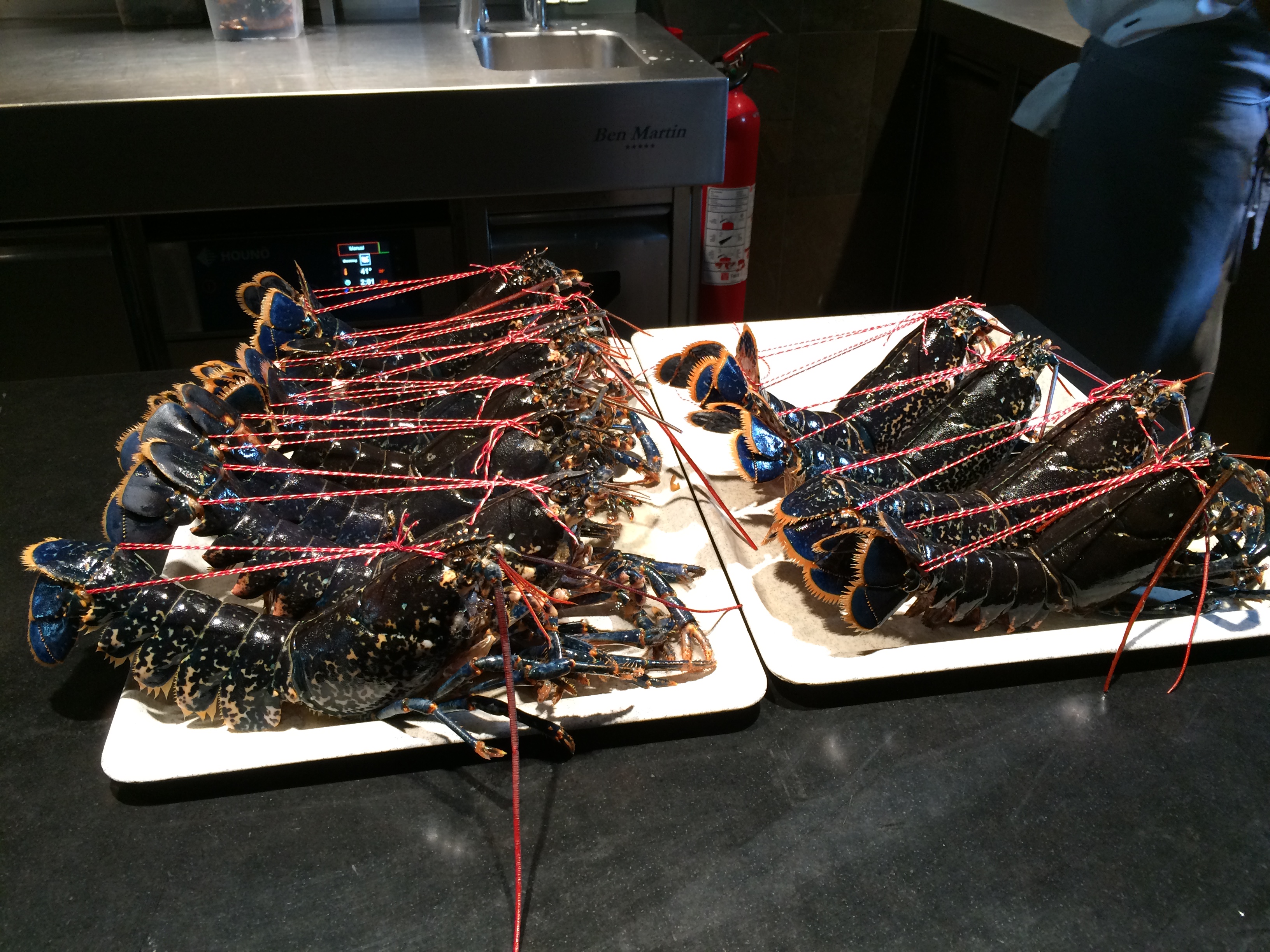
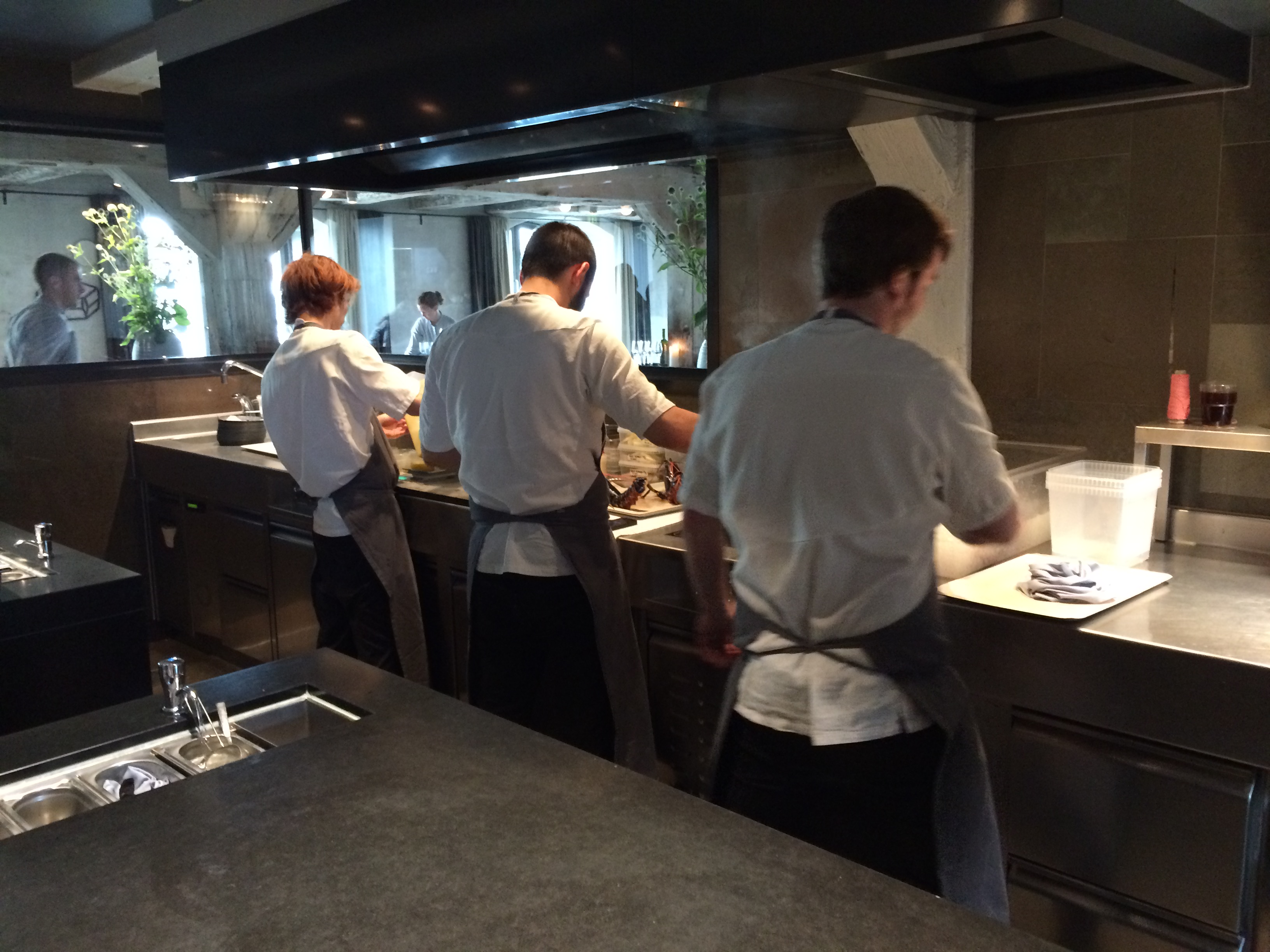

This first kitchen is where things are prepared to be served at the table and where some of the cooking is done.

Then we went out back of the restaurant to the Laboratory.
That’s right. The LABORATORY.
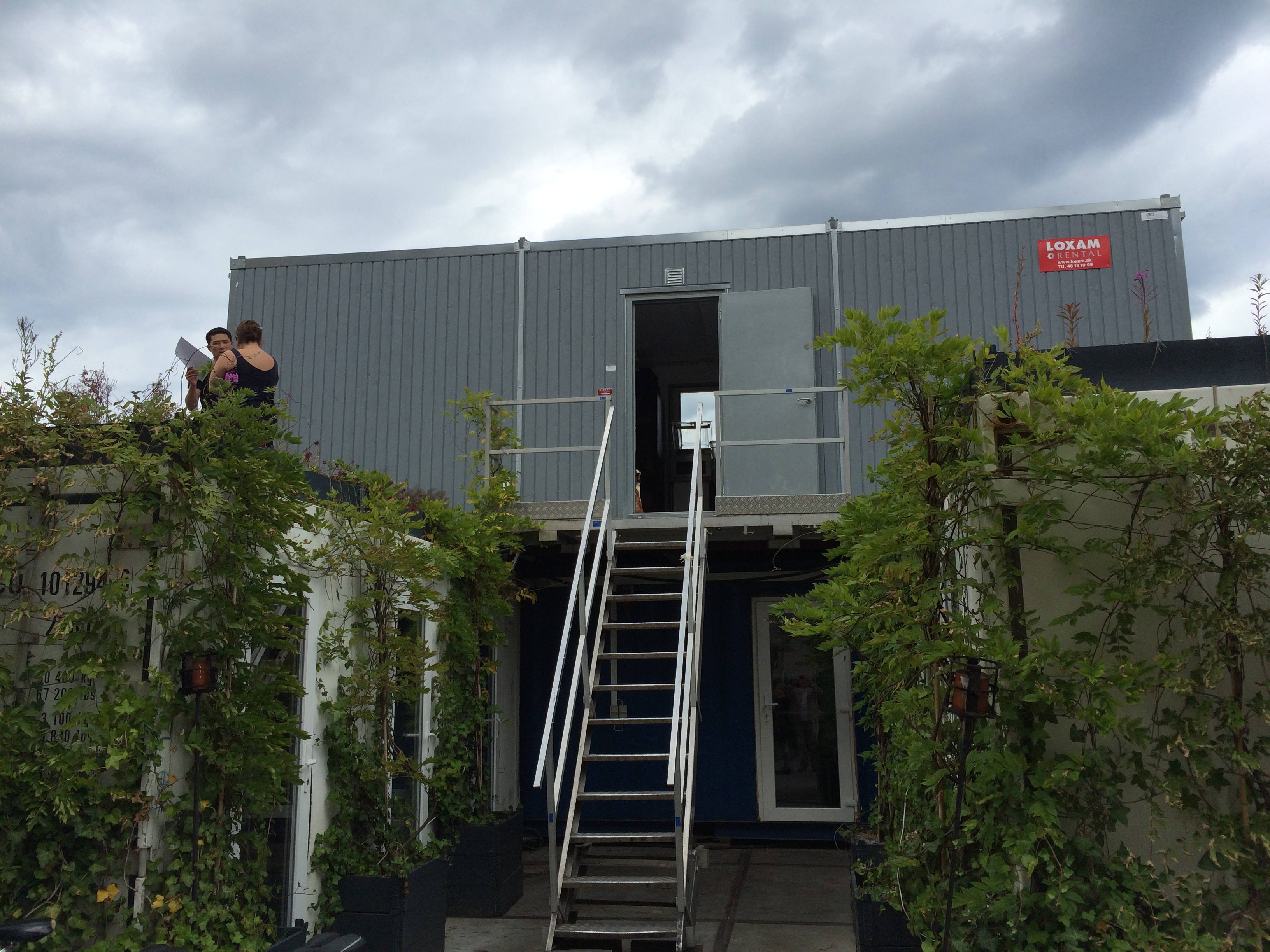


Here they try things out – there are all kinds of experiments going on to test various ingredients and what happens to them over time in various marinades, and under various conditions, etc. A very interesting part of the operation.
Upstairs, a private dining room that seats up to twenty. You can rent the room for a lot of money (like thousands of Euros) and then PAY FULL PRICE for your Noma meal!

The Book Shelves of Noma.


Action in the hallway: Ironing uniforms.
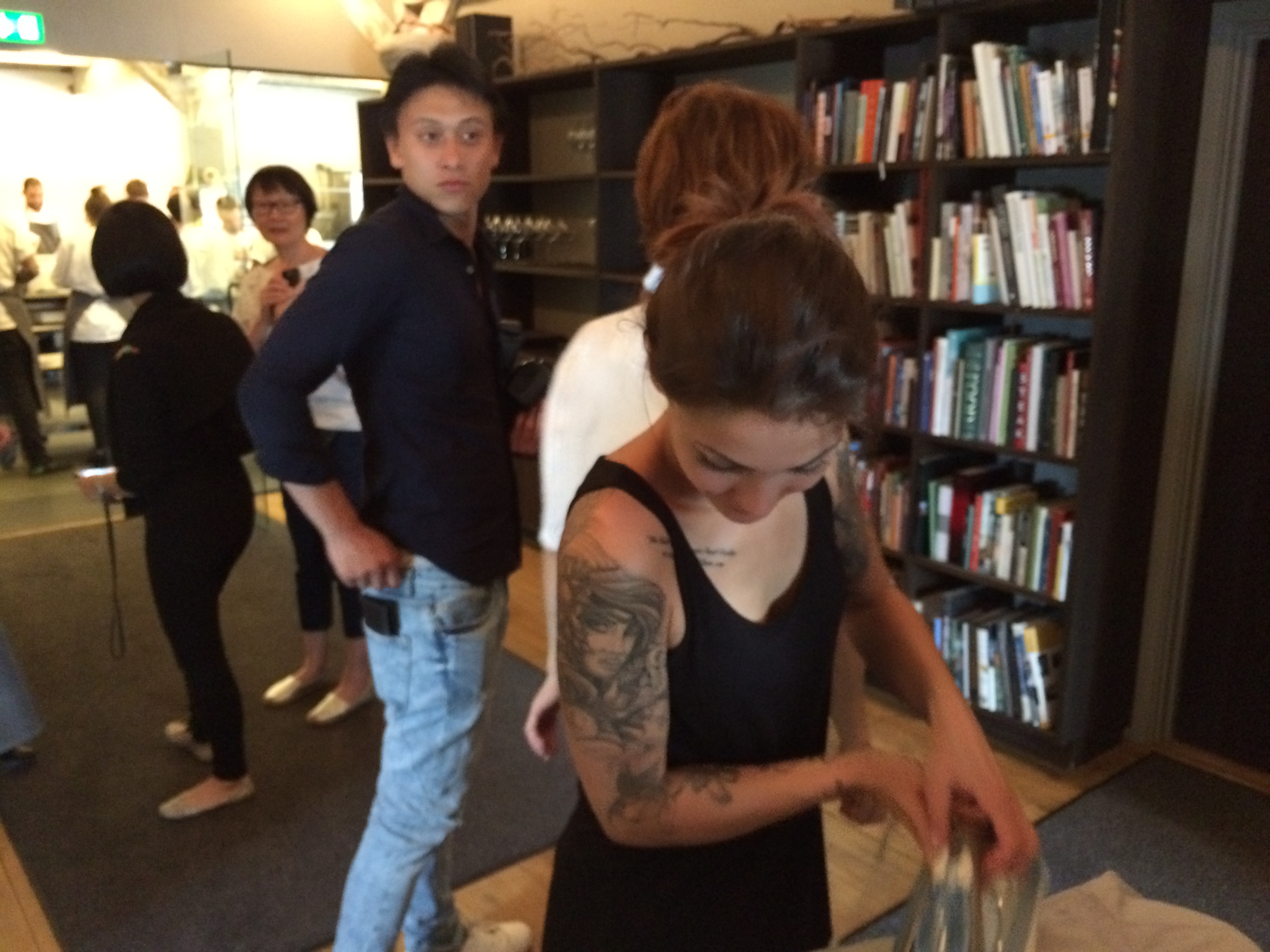
The Prep Kitchen – where the action is.


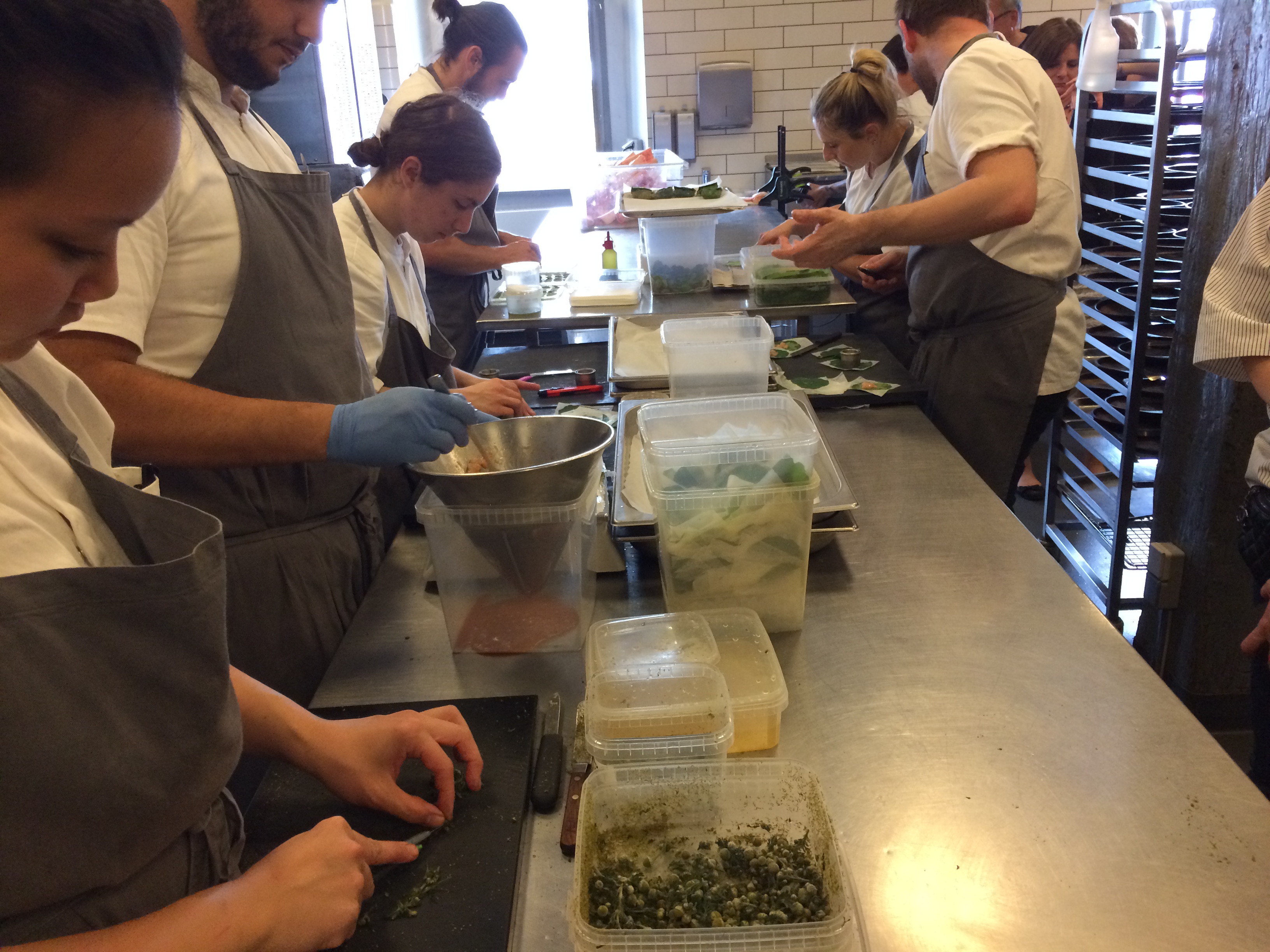
The Staff Room – where cooking, exploring recipe ideas, relaxing, changing clothes, etc. happens. There is a smaller kitchen, an herb garden, and lots of things stored – mushrooms, etc. Here you really get a sense of the Noma Culture, which is think is the glue that makes Noma what it is – one of the best restaurants in the world. You can see that the people who work here have accepted an ethos that they have had a hand in co-creating. René Redzepi, Owner and Founder and Chef de Cuisine is Daniel Giusti were not on the premises that day. They have brought a powerful culture of creativity, innovation, sustainability and success that seems to permeate the staff in a very good way. To work at Noma is to believe in this ethos, even if your intention is to get some experience and move on. While you are there, you are a true believer. Here is a link a partial list of Noma Alumni (LINK).
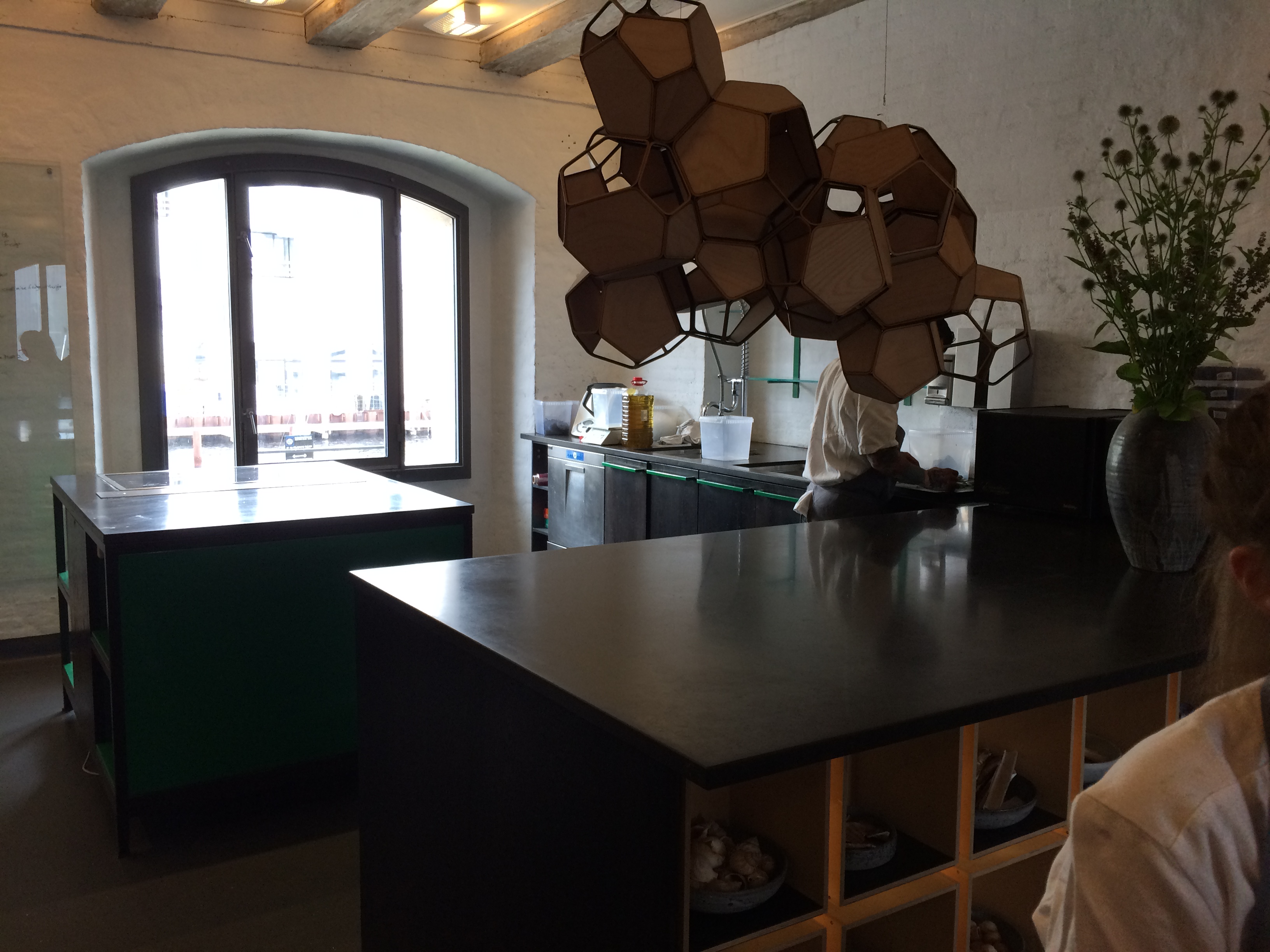

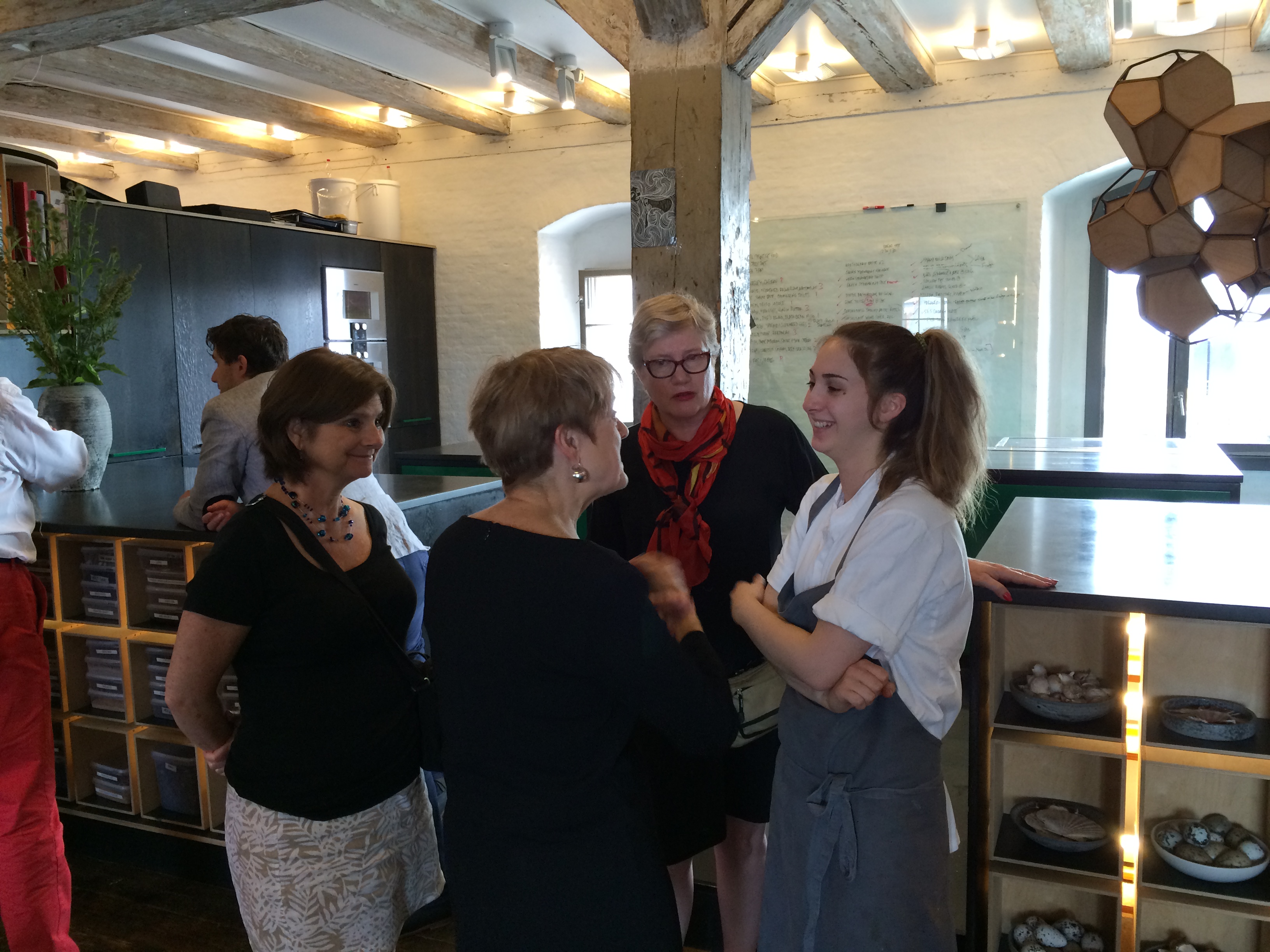


The lounge – near the entry, where you can have a drink before or after, or, I imagine, in lieu of, dinner.

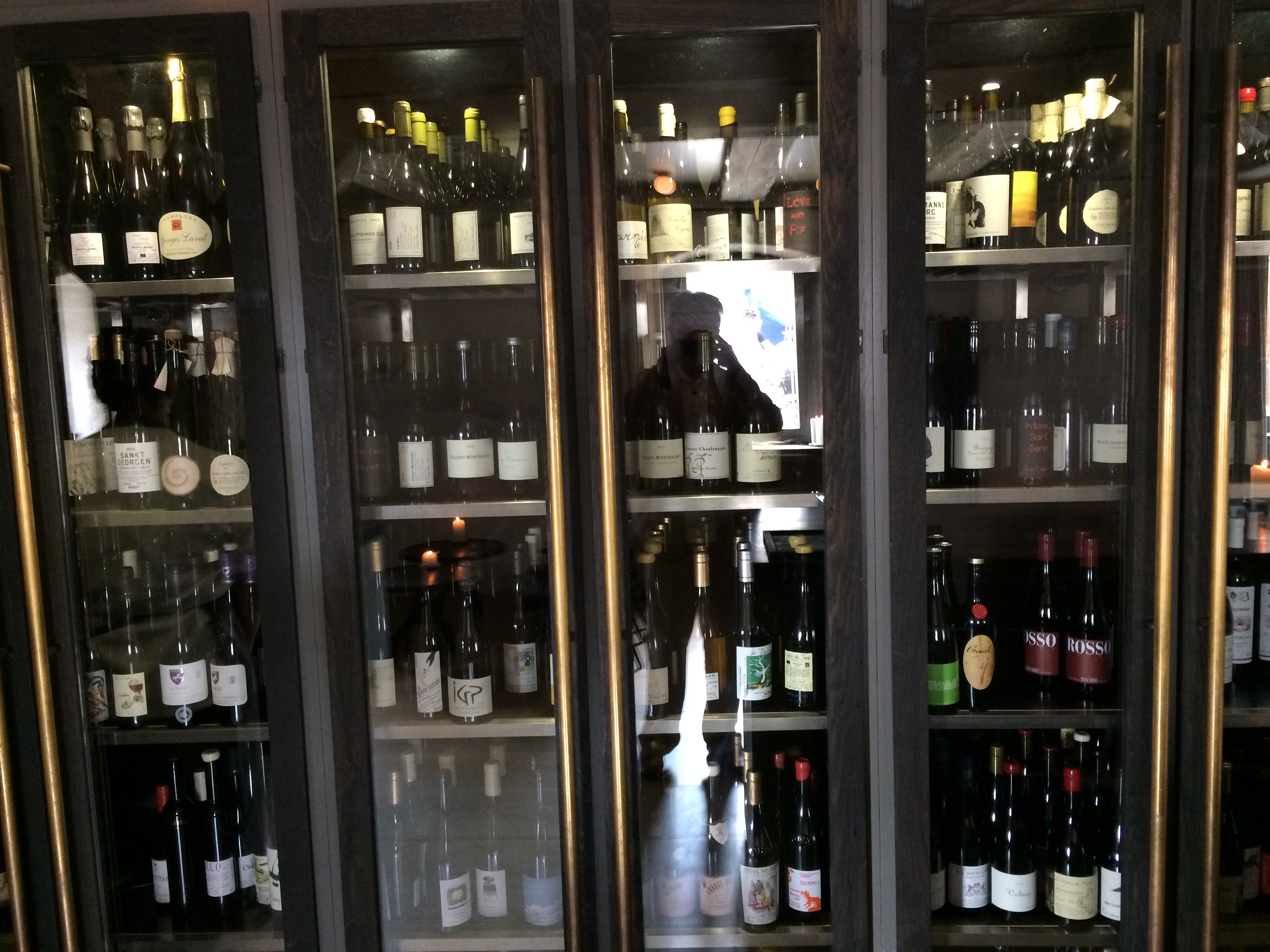
So ends our tour of Noma. On to some commentary.
Overall, this wonderful experience. While I did not like everything that I was served (probably not possible), I will say that the experience of the food was overall very enjoyable, both in tasting the dishes and in experiencing the creativity.
We were served 20 courses. My main negative about Noma is that the courses came out too quickly.
We had 20 in that time and it was too much too quickly. This is food that you want to savor – to talk about the amazing combinations of ingredients with your table mates, to take some photos (but of course!), and to taste the wine served and to experience the pairing of food and wine; then to reflect privately for a moment or two and then to share with your fellow diners your impressions and experience.
This takes time. But the next course is here!
I don’t think that this is a minor quibble. I like to savor. I don’t like to feel like they need to move me out to get the next seating in (which was not the case, as the next seating was for dinner). So please, Noma, a bit more time. I am not in a hurry when I am spending this kind of money for this kind of experience. I am sure that all of this has been figured out over time, but for me, it was not optimal in regard to truly enjoying the meal at leisure.
I read the other day of a restaurant opening in Barcelona that will serve 50 courses in two and one-half hours. I doubt I’ll be going there.
The wines at Noma were, let me say, unique (LINK TO LIST AS PDF). I have written about each and posted photos of the labels, but you probably won’t be able to find most of them – maybe one or two. I spoke with Sommelier Yukiyasu Kaneko about his choices. He said that he preferred to use only European wines, and that included a wine from Georgia in the former Soviet Union. He also clearly has a preference for young wines to accompany the fauna heavy Noma menu. All of the wines were whites. I found that the pairings worked well with one or two exceptions, and in those cases the wines were either sour or so very young as to have only rough edges, which I guess was intentional, but I did not agree with those choices.
Note that there is a lounge at Noma, where you can come for a drink or some wine before or after dinner, although you get quite a bit of wine with the paring meals – I recommend a taxi or a designated driver. We walked, and got a bit lost on the way back to our apartment.
How much did it cost? The wine pairing meal was 3100 DKK or about $450 per person. the juice pairing was 2500 DKK or about $367. Expensive, I know. It was Dorianne and my 10th Wedding Anniversary gift to one another, so a very special occasion.
Will I go again? Not sure that I need to, but if the opportunity presents itself – I will strongly consider it. I’d like to see what they do next. Have you been to Noma? Your comments are appreciated.
Photos and text, Copyright 2015 by Jim Lockard

Since I’m in Berkeley for a couple of weeks, it makes sense to visit some nearby wine meccas – Sonoma tomorrow, Napa Valley next week. Today, it was San Francisco’s Ferry Building (LINK), an admittedly touristy, but very good for foodies edifice at the foot of Market Street. For east coasters, think Faneuil Hall in Boston, South Street Station in New York, or Harborplace in Baltimore – but with much, much better food.
My go-to lunch spot here is always the Hogs Island Oyster Company (LINK) on the water side of the complex. The space has been expanded a bit since my last visit, and now features three bar areas and some indoor and outdoor tables. Oysters are the featured item, but the menu has much more from the sea. Today, I had steamed clams in melange of Mexican Chorizo, greens, hominy and jalapeno butter. I started with Boquerones, sardines with piquillo aioli, chopped egg, green herb sauce on a sliced ACME Bread Co. baguette. Delicious and beautiful.
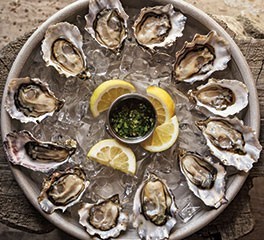


To wash this delicious feast down I opted for the house white wine, Hog Island Oyster Wine, a very interesting blend of 55% Gruner Veltliner and 45% Albarino from the California Central Coast’s Edna Valley. This unusual blend went perfectly with the seafood, existing somewhere between a Chardonnay and a Sauvignon Blanc in consistency. Fruity, but with a hint of flinty minerality, and a very different blend than you might get from the European versions of these varietals. I have had some Edna Valley Gruner Veltliner and Albarino, and this is an inspired blending of these grapes.

Afterwards, I wandered the halls of The Ferry Building, picking up some bread and chocolate to take home, and getting a Blue Bottle Coffee to sit outside by the water to enjoy with my new friend.


From The Wine Wanker – the advantages of 1/2 (350ml) bottles of wine. I agree, they can be great to have on hand, and for some people, the 1/2 bottle is the go-to size for everyday drinking. Read the excellent article below.
LINK: Does size really matter? Half size can be better (do we have your attention?).
Here is a good basic guide to Spain’s wine regions and wines by Stacey Gibson. I will be using during my time here through late April.

The NYTimes has an interesting article on the conflict arising in France and other countries regarding the move to organic and biodynamic practices in those countries. It is an interesting read for those who enjoy French Wines. The chart, from VinePair.com shows French Regions and the related varietals.

Last night, another dinner with Mary Stec and Richard Clark. Mary made 40 Clove Chicken – AMAZING. Now all that garlic needs a big red wine, in my opinion, to make it work. It was also Dorianne‘s Birthday! So there was a rich, chocolate dessert. Quite a culinary evening.

The wines were, first, a 2009 Ampelos Pinot Noir Rho (LINK to the 2010). Ampelos uses Greek letters for each of their wines. The Rho is a fairly big Pinot Noir by Santa Rita Hills AVA standards, inky color, spicy with a nice sense of terroir both on the nose and in the mouth. Hints of pepper and dark fruit bring a fullness to the flavor of this wine. It is a wine that holds up to red meat well, and the 40 clove chicken was a good pairing.

Next, we opened a 2003 O’Shaughnessy Howell Mountain Cabernet Sauvignon (LINK) that had been in the cellar for a while. Here is what Robert Parker had to say about it: “The 2003 Cabernet Sauvignon Howell Mountain has a big, sweet nose of chocolate, blueberry, black raspberry, and currants with some crushed rock and a hint of toasty oak. The wine is long, rich, pure, and impressively endowed, but strikingly elegant and complex. It is already drinking well and should age nicely for 10-15 or more years. The final blend on this was 83% Cabernet Sauvignon, 13% Merlot, and the rest Petit Verdot and Malbec. (2006)” I agree with the master in this case, and would add that the wine has aged well.

The O’Shaughnessy was a good match for both the chicken laced with garlic, and the rich chocolate confection that followed. A very happy evening.
This article (LINK) from WineFolly.com, has some very good information about decanting and serving wines. Decanting, and how long to decant, is often a mystery, and this article gives some good guidelines. There is very little about wine that is exact, so I recommend that you see these as guidelines, then explore and make changes as your experience dictates.
Last night, we spent some time and had dinner with Brad Kieffer and Karen Oxrider, our good friends and wine buddies.
Initially, Karen came over to our house where she and Dorianne did some work for a non-profit they are involved with. During this time, we opened a bottle of 2007 Au Bon Climat Hildegard White Table Wine, the wine, from the stable of the great Jim Clendenen, is an amazingly well-crafted white wine; made from 55% Pinot Beurot (Pinot Gris), 40% Pinot Blanc and 5% Aligote inspired by the composition of the Corton Charlemagne vineyard in Burgundy as it was believed to have been planted during Charlemagne’s reign as Emperor of the Holy Roman Empire (Parker). I have blogged about this wine before (Link).

It made the non-profit work go very smoothly!
Unfortunately, it was our last bottle of this great wine.
After the work was done, it was time to meet Brad for dinner. We chose Galetto’s Grill in Westlake Village, one of my favorites – a mixture of Brazilian and Italian cuisine with an excellent wine list.
But tonight, we would be bringing a couple of bottles.
Brad and Karen had a bottle of Hungarian wine that they brought back from a trip to Europe a few years ago. The wine, a 2002 Sandor Pince Egri Pinot Noir, was an unknown quantity. Would it still be good in 2015? Was it a good wine to begin with? An internet search revealed next to nothing about this particular wine.
A bottle of 2010 Clos Pepe Estate Pinot Noir would serve as a back-up.
Our conversation ranged from travel, past trips and future plans, to wine to food, to our impending move away from California and our extended stay in Europe. It was an evening of good company, good food, and good and interesting wine.
 The waiter opened the bottle of Sàndor Pince and poured a taste for Brad. He sniffed and swirled and very slowly tasted. After a pause, he said, “Interesting.”
The wine was very earthy – mineral on the nose, terroir (dirt) with a hint of rust was evident in the wine – not in an unpleasant way, but there was a nearly total absence of fruit on the nose and in the mouth. I liked the wine more than the others, but I agreed that we should see what it would be like in a few minutes. So we ordered.
I ordered a Brazilian style rib eye stake that would come with black beans and rice, pico de gayo, and other spices. Dorianne had a fish dish, Karen had salmon, Brad a skirt steak prepared much like my rib eye.
I will say that the Hungarian Pinot Noir was a good compliment to my steak with the dry Brazilian spices. The mineral nature of the wine was a good pairing. It’s relatively high acid and medium tannins went well with the dish. The others were ready to turn to the Clos Pepe, however.
 As always, the Clos Pepe Pinot Noir did not disappoint. Smooth, with a wonderful balance of mineral and fruit on the nose and the pallet, with a hint of pepper and spice. It was a nice finish to the evening after the harsher Hungarian Pinot Noir.
In fact, that wine was book-ended by two splendid wines from the California Central Coast. Our experiment with the rare (for us) Hungarian Wine from the “Valley of the Beautiful Women,” was really not all that dangerous, as we were definitely working with a net, as it were.
So it was the best of both worlds – a chance to try something new and also to enjoy two well known wines that never disappoint.
 Jim Lockard On Wine