Yesterday, Dorianne and I stopped into Taberna del Volapié (LINK) for lunch (around 3pm). We had a very nice meal of tapas and wine. The waiter told us that there was a free Flamenco (LINK) show that evening at 9pm. We decided to go later on.
We arrived at the Taberna at about 8:15 pm and noticed that all of the tables were either filled with customers or had “reserved” cards on them. Our waiter from lunch came up to us and we said that we had come for the show, but we did not know that we had to reserve a table. After some very rapid Spanish conversation with someone behind the bar, we were escorted to a table right up front, the reserved card was removed, and we were all set!
We ordered a bottle of 2013 Protos Roble, from Ribera del Duero (LINK), a wine that we have had before on our trip (in fact, I had two glasses with lunch). At 14€ (about $15) a bottle, it is quite a bargain.
2013 Portos Robles Tinto
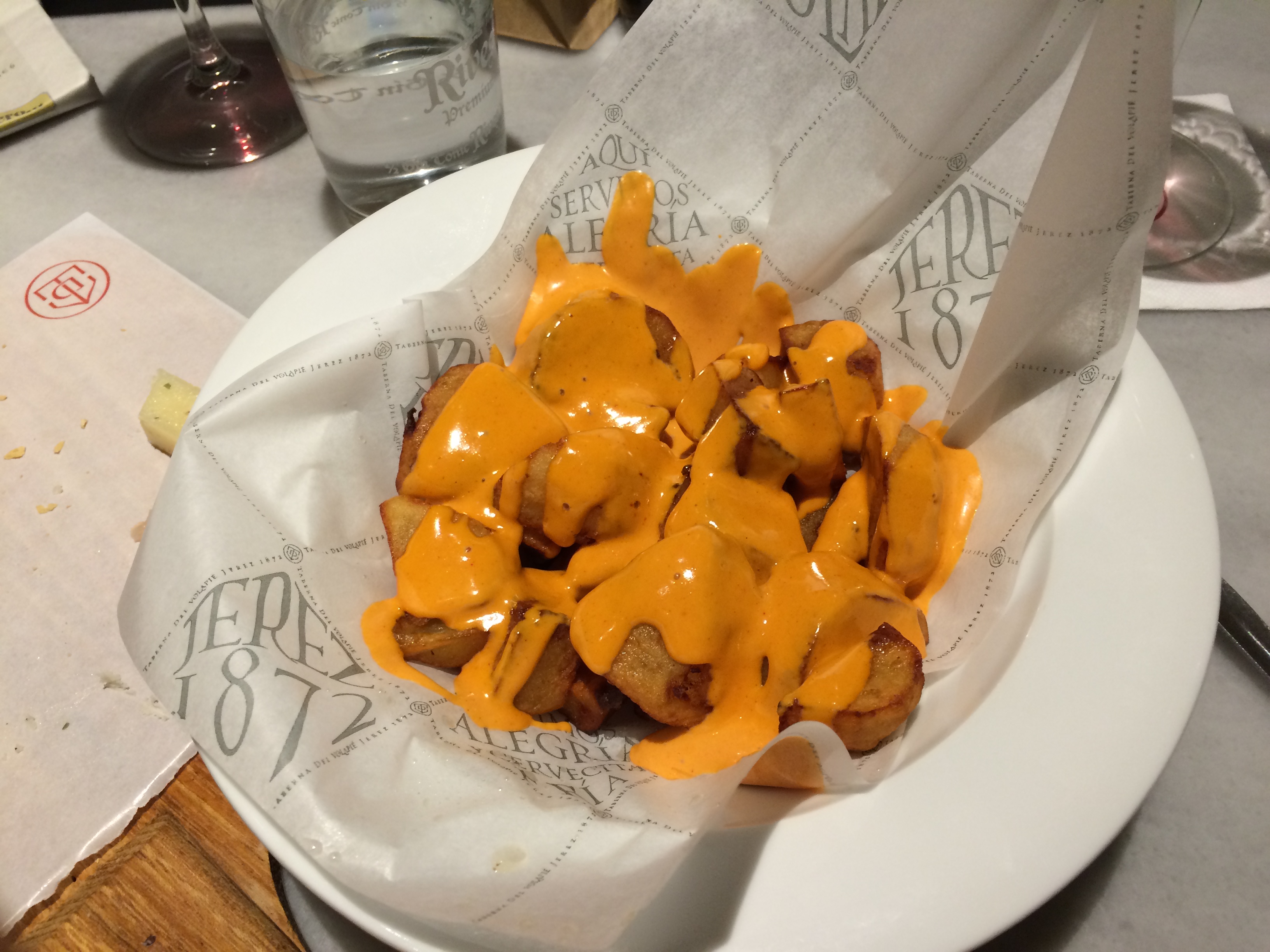
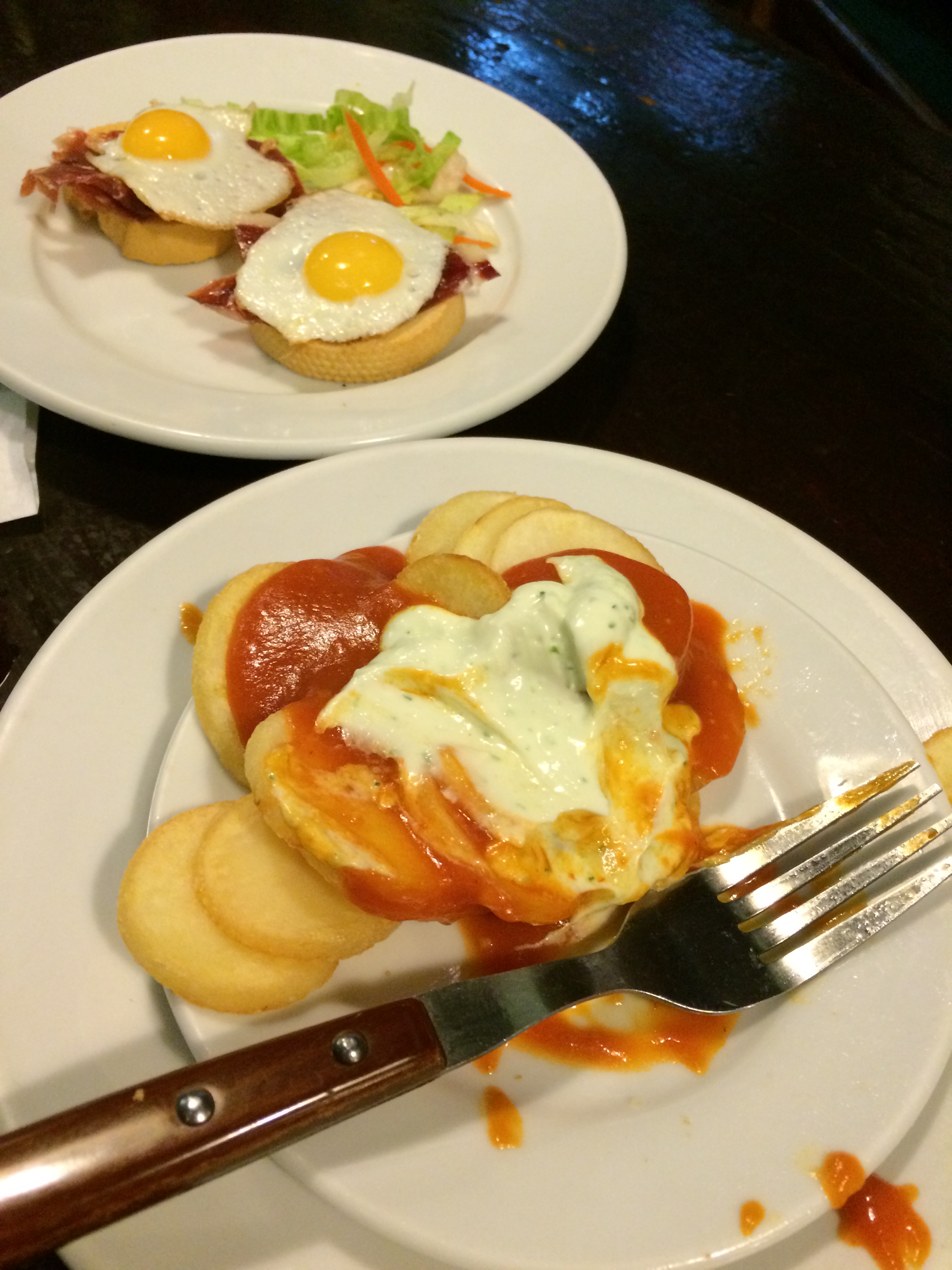
We had several tapas dishes – see the photos – and the show began.
Iberico Jamon (ham)Patatas Bravas – fried potatoes with spiced sauce – each place makes this in a slightly different way.Tuna loin with tomatoes.
We each had a glass of Solera 1847 Cream Sherry to close out the evening – a sweet wine, it is reminiscent of a late harvest or a tawny port wine.
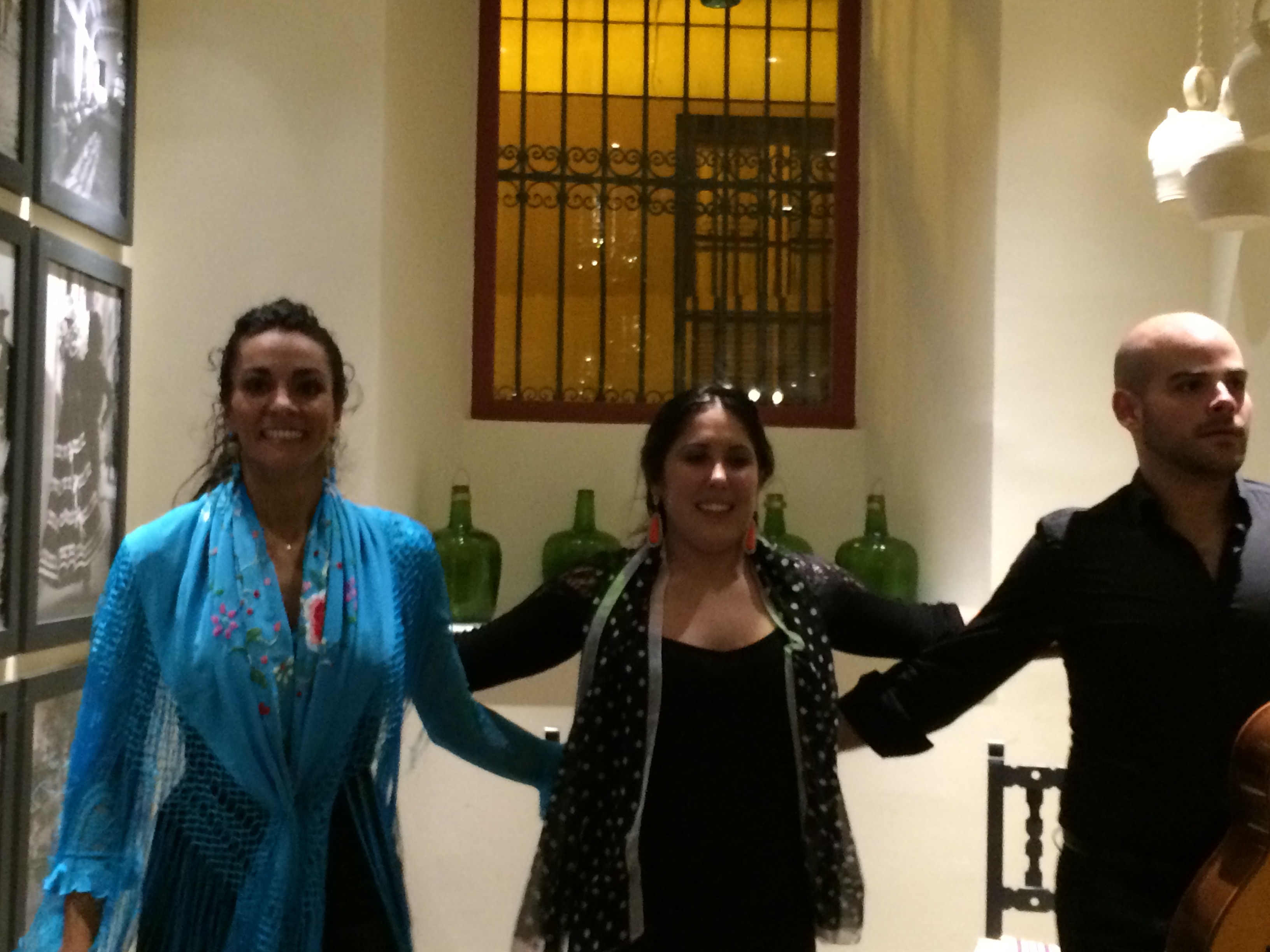
And then, FLAMENCO!
This group of three – guitarist, vocalist and percussionist (via clapping) and dancer – were the most accomplished team we have seen yet in Spain. Here are some photos and a video.
Dorianne and I spent Easter weekend in Jerez, Spain, both to take a break from the hectic Santa-Semana schedule in Seville, and to explore a bit of Sherry country.Andalusia, the southwestern region of Spain is known for its production of Sherry Wines.
Lobby and Waiting Room for the Tours.
There are a number of bodegas or Sherry houses in Jerez. The only one open on Good Friday afternoon was Gonzalez-Byass (LINK), makers of the best-selling Tio Pepe and a number of other Sherries and brandies.Gonzalez-Byass is the largest Sherry producer and also has wineries in every major Spanish Wine Region – they are sort of the Mondavi of Spain. The bodega is located adjacent to the Cathedral of Jerez and The Alcazar – prime real estate to be sure.
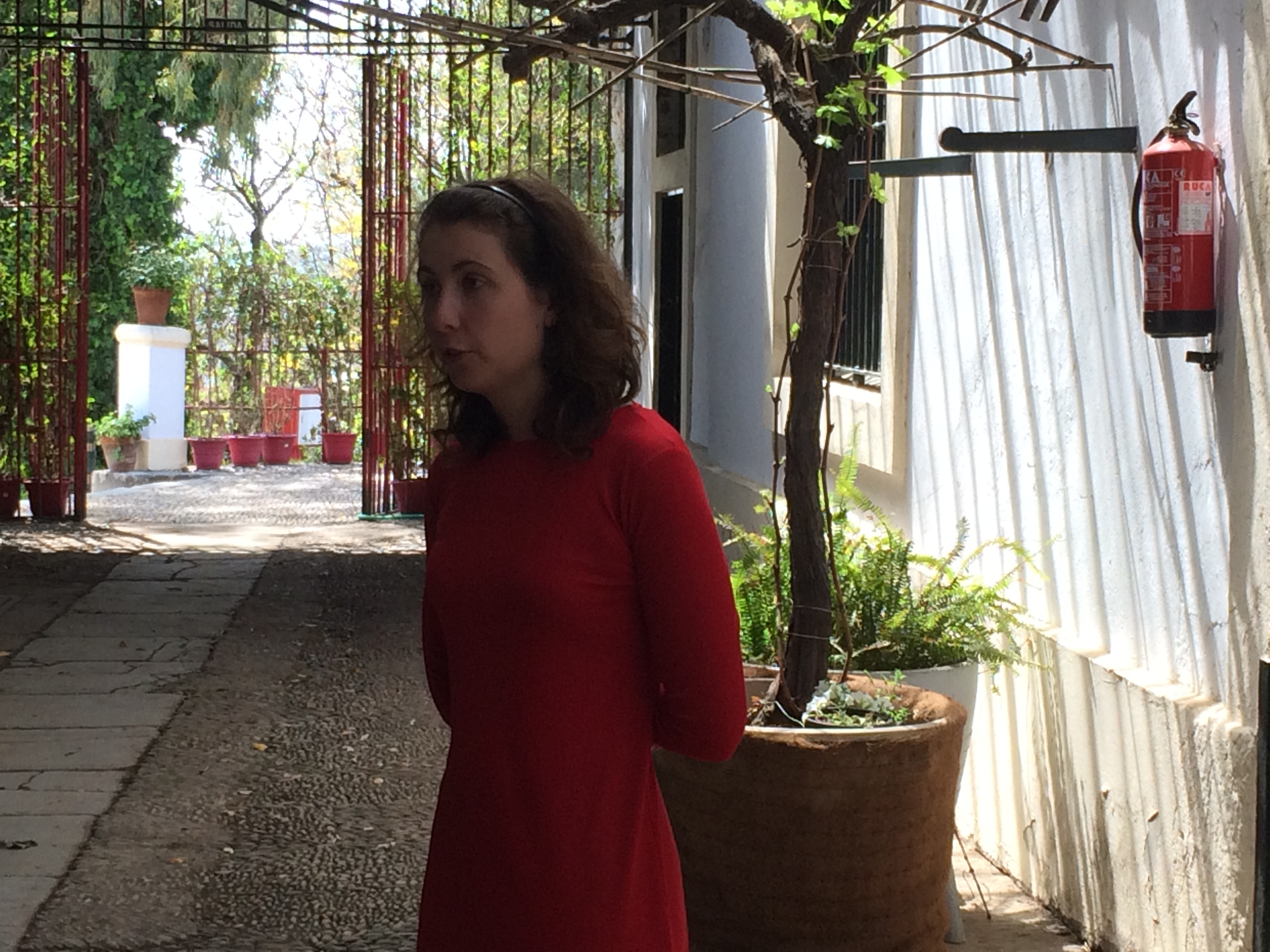
The tour cost 16 euros, including a tasting of two wines and a plate of tapas. Gonzalez-Byassis a big operation, and the tour was extensive. There were groups taken out in Spanish, English and German while we were there. You also take a tram for part of the tour. It is very touristy, but I was impressed at the amount of information provided by our guide, Rachel and the expanse of the bodega. The tour is not an intimate experience, but it is a great introduction to Sherry wine production.
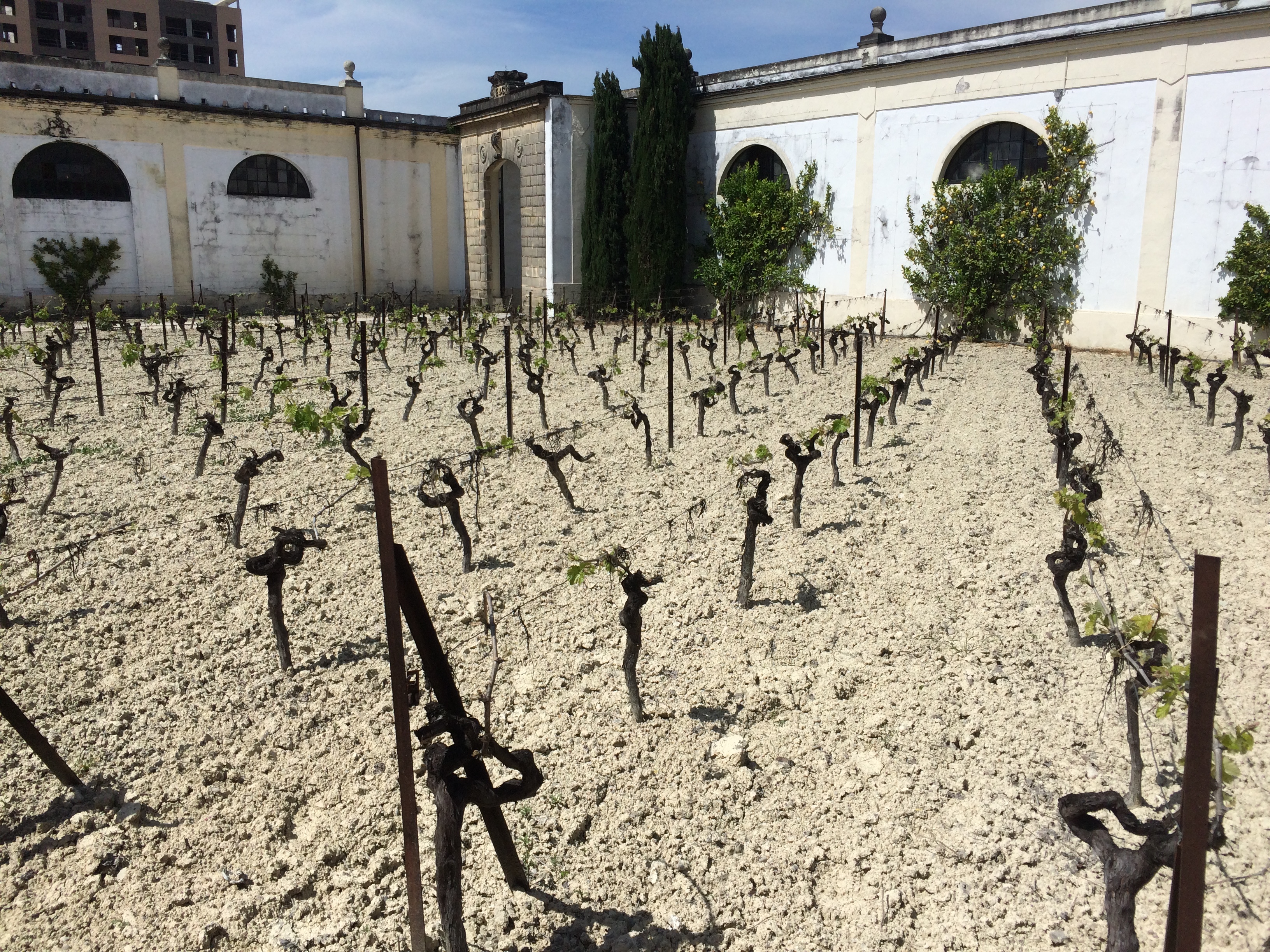
Sherry is made with only white grapes, primarily palomino, which grows well in the gray soil of the region. Dry Sherry or Fino is made from earlier harvests, sweet sherry or Cream or Dulces is made by adding late harvest grapes to the blend, in some cases, raisins.
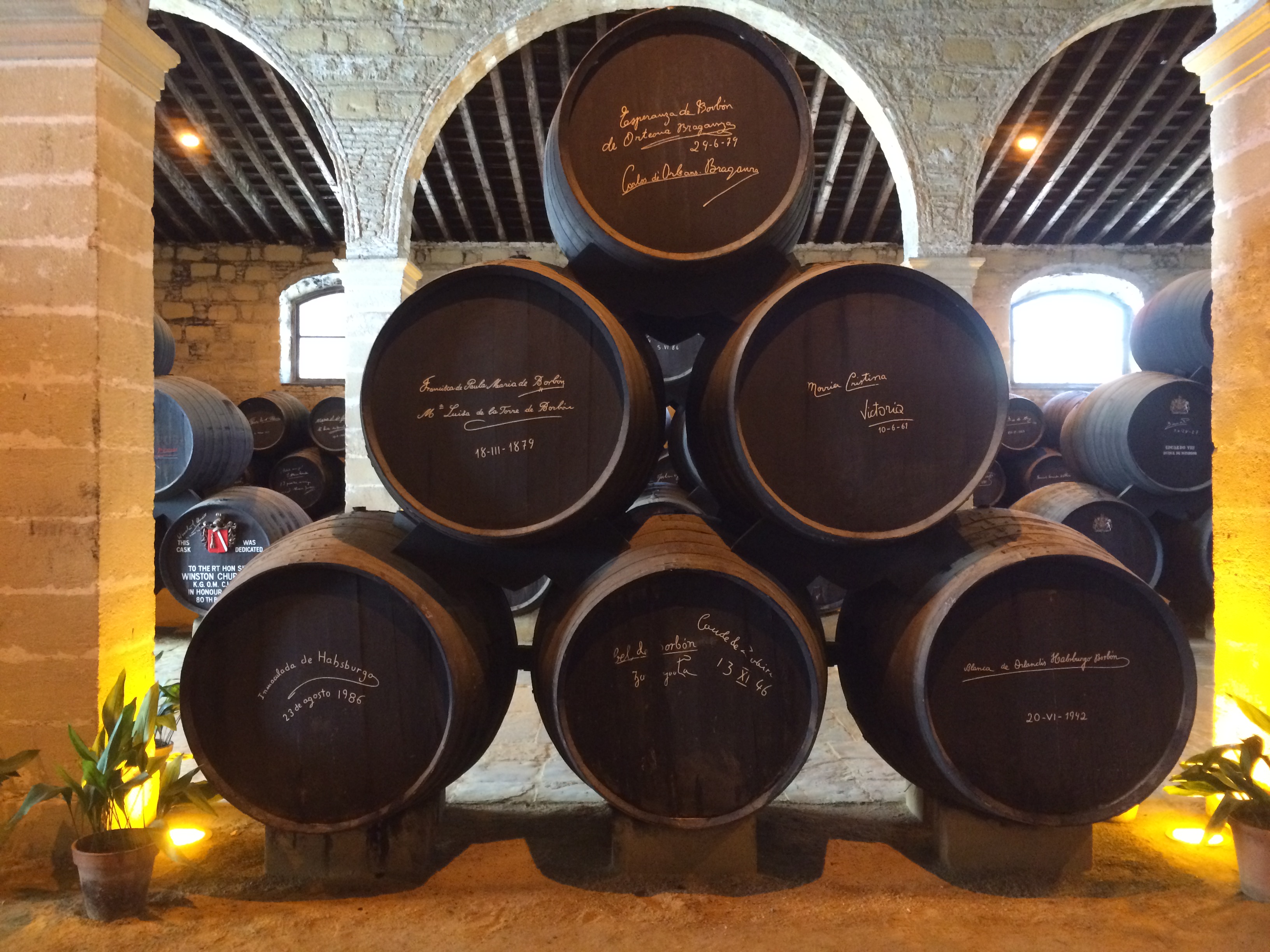
Almost all Sherry is blended – a process where there is a stack of barrels four high. The bottom barrel contains up to 60 vintages, the second barrel is newer, the top barrel the current vintage. The winemaker takes 1/3 of the bottom barrel and then replaces that 1/3 with wine from the second barrel, and so on. Some from each of the upper barrels is added to the current wine being made. This, according to Gonzalez-Byass, results in a uniform product over time. There are some vintage Sherries, which are not made using this process.
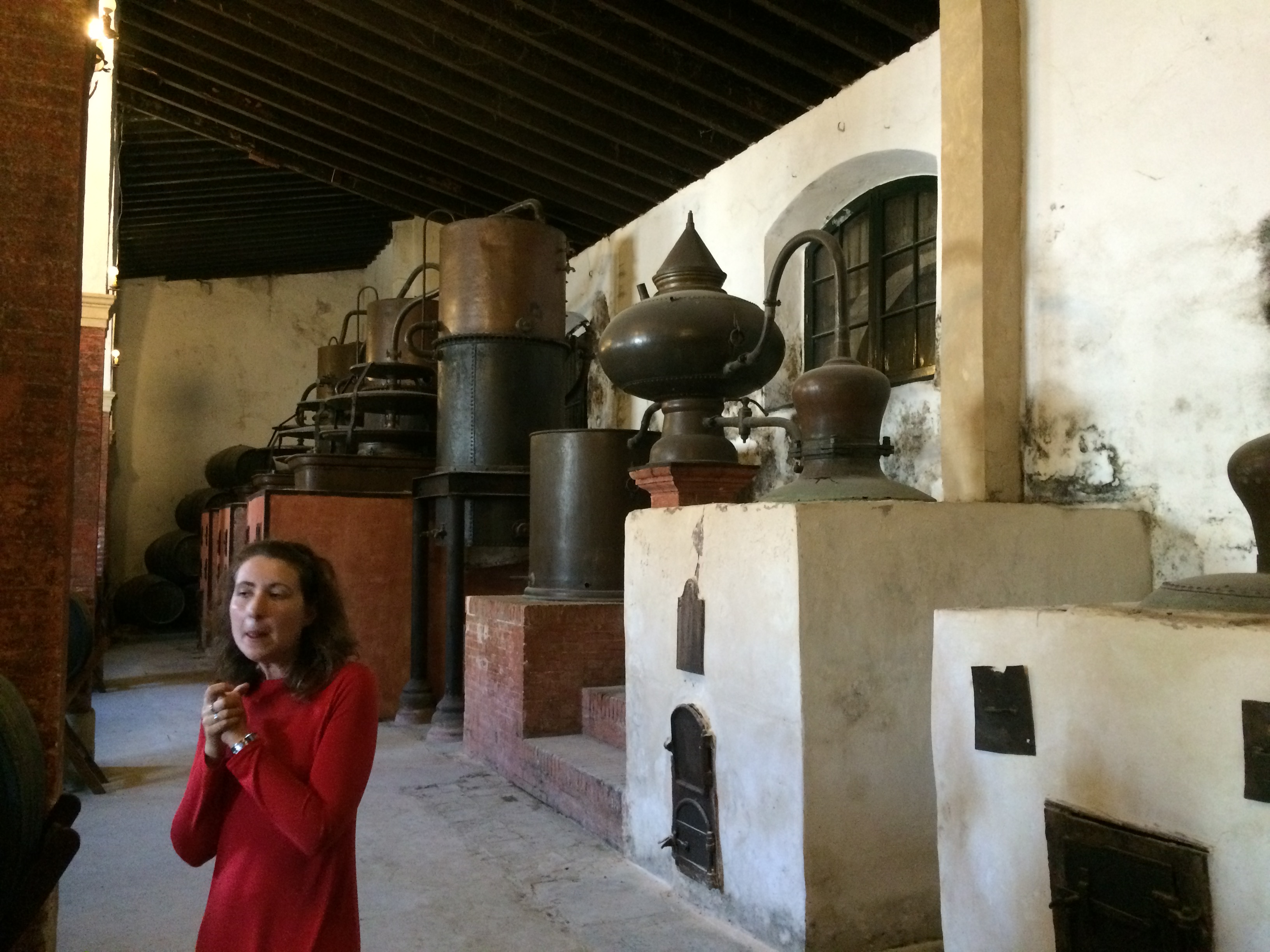
The grey soil of Andalusia.Samples of Brandies.Rachel shows us the Old Brandy Stills.Signed barrels at Gonzalez-Byass.
Here is a good PDF showing the process of making Sherry wines (LINK).
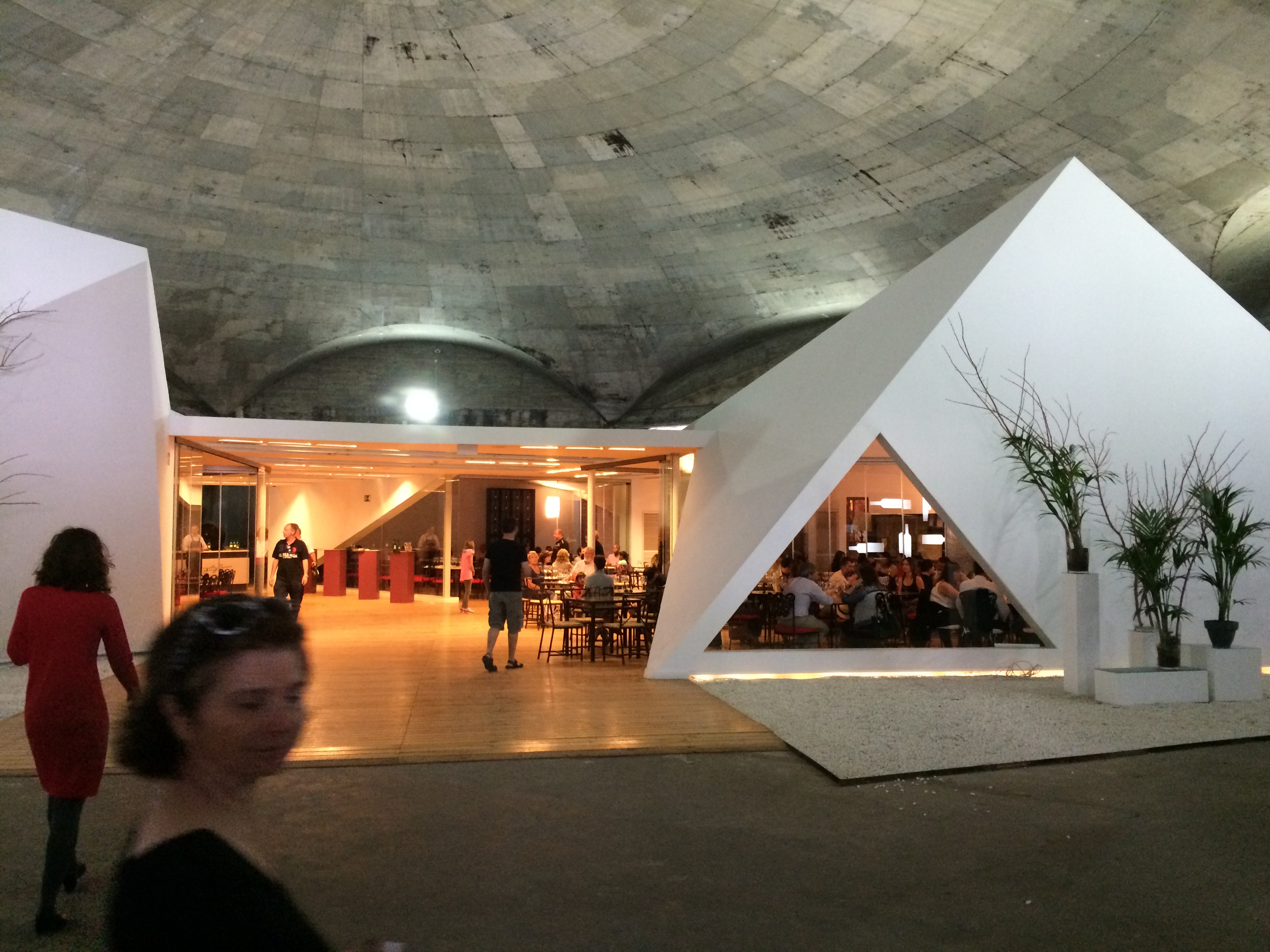
The tour concluded in a very modernistic tasting area built inside the storage building for Tio Pepe wines. We tasted three wines – a Fino, a Cream, and a Blend, and had tapas at a table shared with a mother and daughter from Moscow who had taken the English language tour. They told us about Russian wines, which I would love to try sometime.
World’s Largest Weather Vane.Tasting Area inside Tio Pepe Storage Building.
I recommend Gonzalez-Byass for those who want to learn about Sherry production and enjoy the big touristy experience. They do it well. There are lots of opportunities to experience other bodegas in Jerez – just don’t go in Easter weekend!
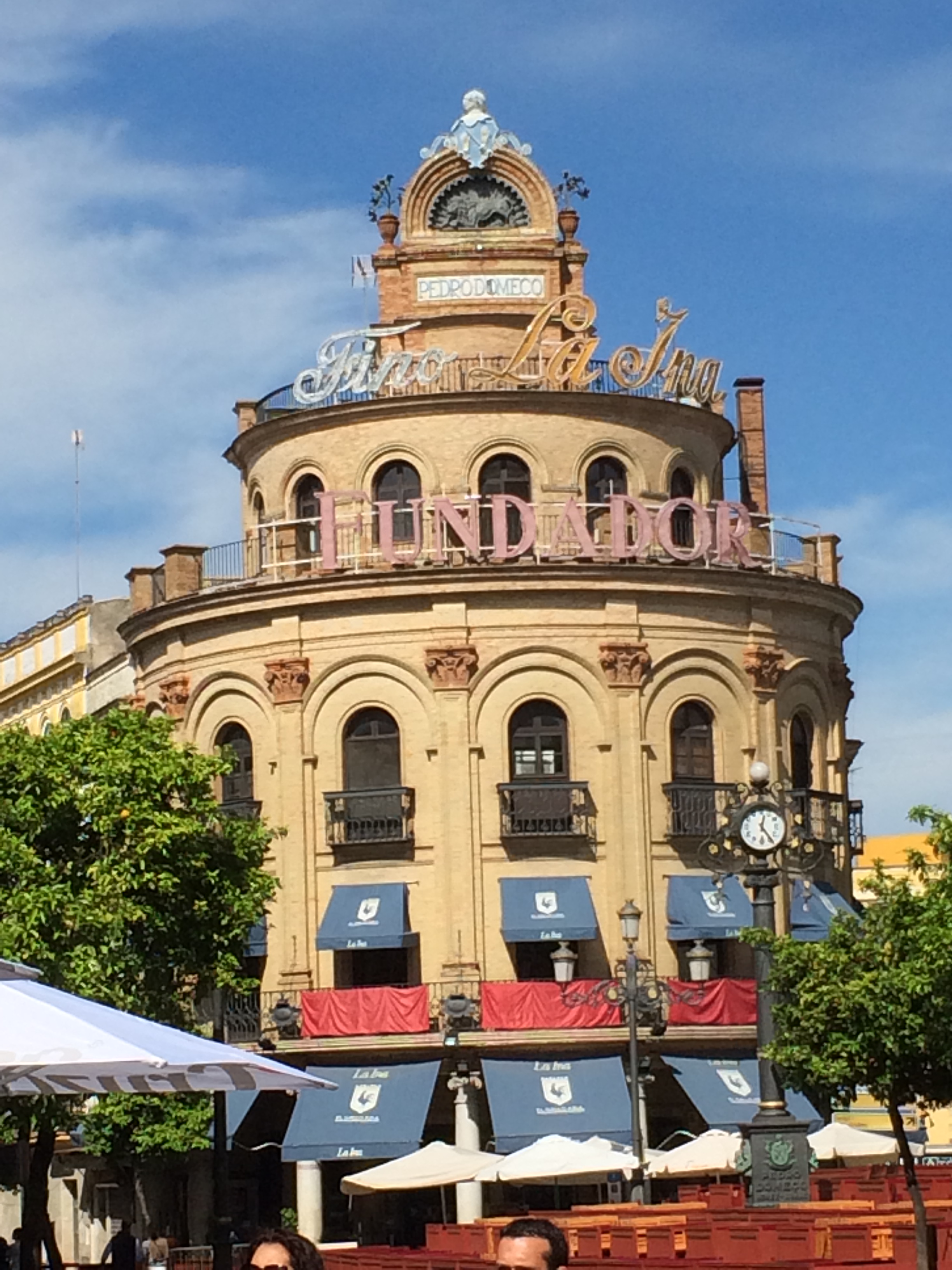
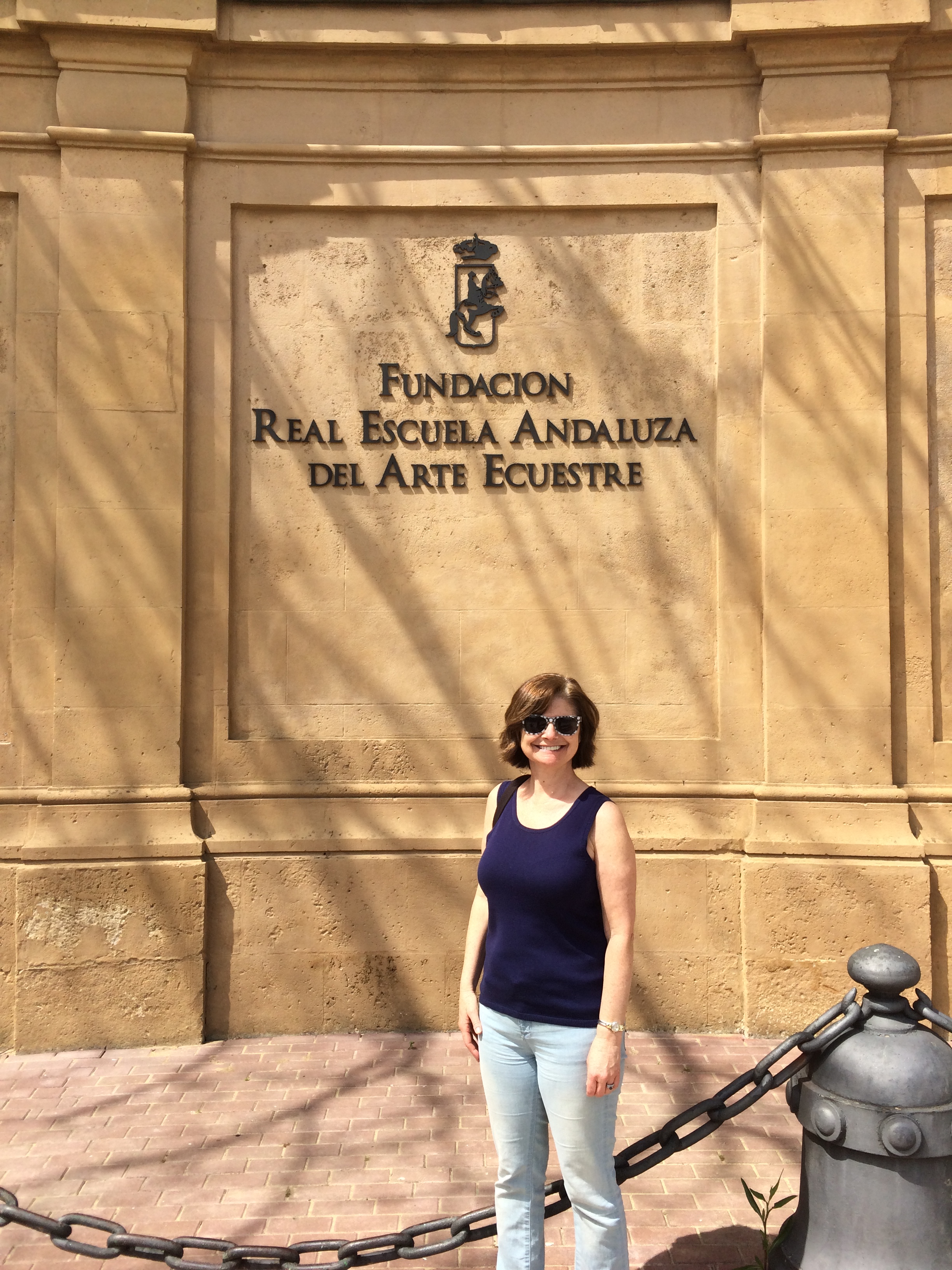
Dorianne and I took the train from Seville to Jerez on Good Friday and returned on Easter Sunday. During our short visit, we managed to do quite a bit – toured the largest Sherry Bodega – Gonzales-Bypass (LINK), makers of Tio Pepe and other sherries and brandies; had wonderful food and wine at several tapas bars; saw a Flamenco music show at a tabanco – a place where they serve Sherry from casks; visited a performance of the Andalusian Horses at the Foundation Real Escuela Andaluza del Arte Equestre (LINK); stayed in a very nice 4-star hotel, and strolled around town a bit.
I will be blogging about some of the specifics over the next couple of days, but for now, here are some representative photos of our side-trip.
Exploring Sevilla (Seville) is an experience of one discovery after another. This is our first trip here, and we are in a rented apartment near the center of town for 3 1/2 weeks. Preparations are underway for Holy Week (LINK), which is a huge deal here, with between 1 and 2 million people coming to the city for over 50 processions and other festivities. It is the biggest week of the Sevilla calendar.
Sevilla is also the home of tapas, the concept of a variety of dishes served on small plates. Tapas used to be either a snack between lunch (served here between 1pm and 4pm and dinner (served between 9pm and 11:30pm), or to accompany a larger meal. Today, especially after the economic recession here, tapas have become lunch through dinner for most people. Plates of tapas, usually one or two pieces of something, a plate of olives or a salad, cost between 1.5 and 3.5 euros. Larger servings, media or plata cost more (think bread plate/salad plate/dinner plate).
Marinated Pulpo (octopus) with Onions and PeppersSerrano Ham on Toast with Quail EggsPatatas Fritas (fried potatoes) with a spicy Catsup and Garlic Mayo
There are hundreds of tapas places in Sevilla. We happen to be staying within a block of a very good one, and we have been there twice so far.
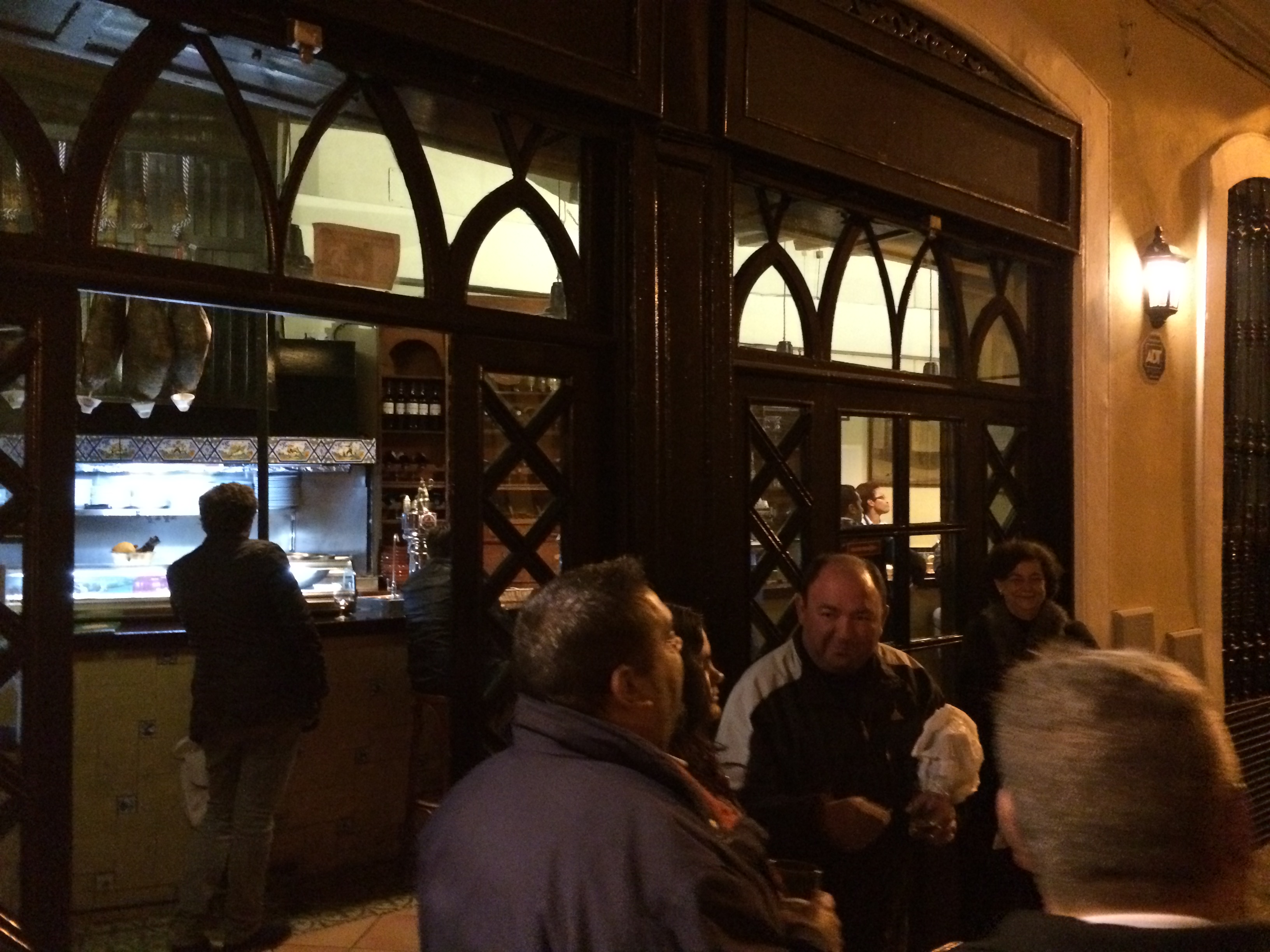
The place is Taverna Coloniales (LINK)at the Plaza del Christo de Burgos. Here, on a corner, dozens of people gather from afternoon through late at night to sample an amazing array of tapa, wine, and beer. Dorianne and I have found that three or four tapas plates are sufficient for a meal. Add two or three glasses of wine each, and our bill comes to about 18 euros, or $20. It is cheaper than eating in our apartment.
The Taberna is staffed by six people, four at the bar, one in the back room where there are about 6 tables, and one out front where the sidewalk cafe can seat around 30. The place is often packed, but the staff is excellent at knowing who needs what and when they need it, and they remember what you ordered when it comes time to pay. They remind me of the countless counter people who work in places in Manhattan, giving excellent service to large numbers of people. Part of what we in the US would call a “chain,” there are several establishments owned by the same people in the area.
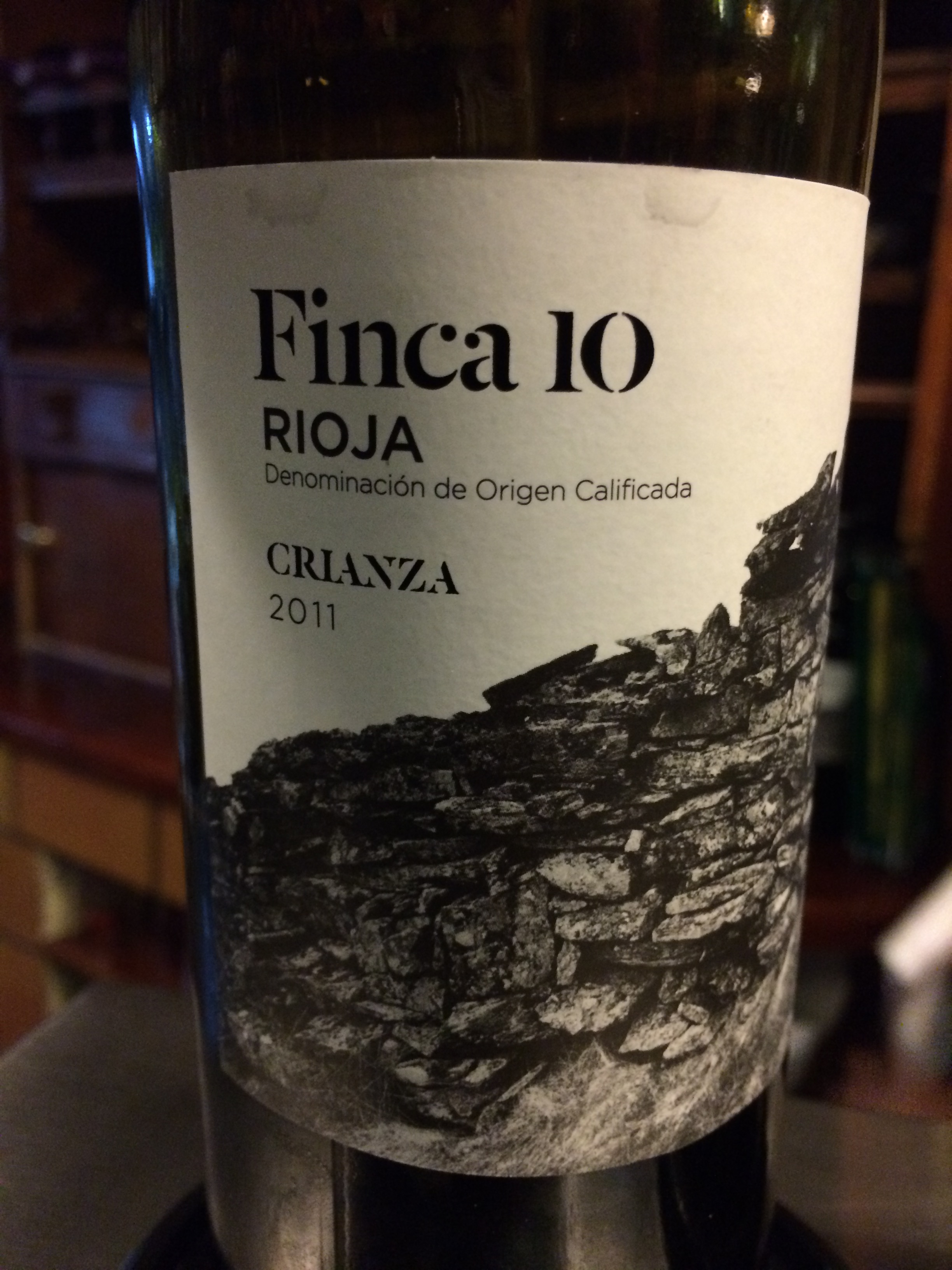
Last night, we had the tapa pictured above with a Tinto (red) wine from Rioja a 2011 Finca 10 Crianza (LINK – translation needed). The wine is, of course, Tempranillo. The term Crianza means that the wine has been aged for a shorter time (24 months with 6 months in barrel) than a Reserva (36 months with 12 months in barrel) or a Gran Reserva (60 months with 18 months in barrel). The wine was fruity, with a pleasant nose and a hint of minerality on the tongue; a bit bitter, with medium tannins and acidity. At under 2 euros a glass, it was hard to complain, so we did not.
After our meal, I ordered a glass of Sherry, a Canasta Cream Sherry (LINK) from Jerez (LINK), the premier Sherry region about an hour south of Sevilla. Also under 2 euros a glass, this wine reminds me of a California Port – rich and smooth with a very nice finish. That’s me above, with the glass of Sherry.
Spain is a very interesting country when it comes to wine. While wine is literally just about everywhere, there does not appear to be the kind of wine culture that you see in the United States, especially in California. I mean a culture where you strive to be aware of as much information about wine, wine regions, wine makers, and the various aspects of the wines that you drink, or aspire to drink, as possible.
Here, from what I have seen, people just drink the wine. You see very few expensive wines in stores and restaurants – about 65 euros is the max that I have seen, and that price point only one time – and there is little, if any, discussion about this wine versus that wine, or this region versus that.
It is both refreshing and disconcerting. When I tell people in tapas bars that I want to learn about Spanish wines, I usually get a response like, “Do you line blanco or tinto?” That is, red or white. That’s about it.
Everywhere you go, you see people, young and old, drinking wine – very cheaply compared to prices in the US. For 3 or 4 euros, you can get both a glass of wine and a plate of tapas in most places. Today, at a very nice tapas place, Dorianne and I had three large plates of tapas and two glasses of vino blanco for 18 euros.
That being said, I know that there is both a rich tradition of fine winemaking here and a culture that appreciates the results of good winemaking. I look forward to further explorations during the next month plus of our visit.
Next week, we will begin to tour some of the Sherry wine country of Andalusia, the southwest portion of Spain.
As I have noted before, Dorianne and I will soon be leaving for an extended period in Europe – mostly Spain and France, with some side trips to Portugal and/or Morocco on this leg, then back to the US for a bit to see our daughter graduate from Boston University, then back over to Switzerland, France, Germany, the Netherlands, Belgium (maybe) and Denmark. Here is a link to a NYTimes.com article about a couple who have retired and are using Airbnb.com – which we will be doing for most of our stays. Our trip will be more focused on wine, of course!
I love to travel. Since I was a child, I have always gotten excited about traveling – to the next town or across and ocean.
Dorianne shares this passion and we also are passionate about wine, so we combine the two passions wherever possible. This will begin a series of blogs on wine related travel, leading up to our departure in late February for a few months in Spain, Portugal, and France. I will, of course, blog from the places we visit about the locales, the people, and yes, the wines.
Wine Travel is Fun and Rewarding – Here we are at Foxen near Santa Ynez, CA.
“We are torn between nostalgia for the familiar and an urge for the foreign and strange. As often as not, we are homesick most for the places we have never known.” ~ Carson McCullers
A couple of years ago I took a short sabbatical, six weeks, and Dorianne and I went to France. We spent 3 1/2 weeks in an apartment in Paris, then went to Lourdes in the Pyrenees for a conference, the spend about six nights in Bordeaux and six more in the Loire Valley. The year before that, we took our daughters to Paris, Burgundy, and Provence for three weeks. In each of these amazing places, we sampled the local and regional wines and, where possible, visited the vineyards and chateaus where wine was grown and made, and made friends in cafes and tasting rooms with others who love wine.
A Great Wine Shop in St. Emilion.The Good Stuff.
“If I were really really ridiculously wealthy, I wouldn’t buy a mansion, just tiny apartments in every city I love.” ~ Mara Wilson
Combining wine enjoyment and education with travel is something that may not be for everyone, but for some, it is the essence of a quality experience. Those of us who spend time with people who create and sell wines know that they tend to be very interesting people, indeed. People like Wes Hagen of Clos Pepe Estate in the Santa Rita Hills of California’s Central Coast region and Giancarlo at Le Wine Bar in Bordeaux, are just two examples of friendly, knowledgeable, and approachable people who happen to be in the wine business. There are countless others as well. Wine travel lets you meet these people and have the experience of connecting at a much deeper level with the wine itself.
Wine travel can be a day trip, for those fortunate enough to live near wine-producing regions. I will be taking such a trip in a week, to the Santa Ynez, Santa Rita Hills appellations in Santa Barbara County. This will be a group tour, with many people who I know – four wineries and a picnic lunch. A very nice way to spend a day.
One of the things we will be doing on our upcoming European journey is setting up future small group wine tours in France. Working with travel professional Steve Hooks, we will be creating a series of tours that will include time in wine country – initially Bordeaux then Burgundy – followed by some time in the city – either Paris or Lyon. The tours will be geared toward those who are already familiar with fine wines and in separate groups, those who want to learn about fine wines. The focus of the former will be discovery and enjoyment and the focus of the latter will be education and enjoyment.
“We travel, some of us forever, to seek other states, other lives, other souls.” ~ Anaïs Nin
I really believe that good wine is best enjoyed with others. Our tours will emphasize that point, while offering some really unique opportunities to access some amazing places, enjoy great food paired with fine wines, and exploring the people and places of some of the world’s great wine regions.
We are not certain that there is a viable market for tours of this level. There are not many truly high-end wine tours being offered to North American customers. Some of the major tour companies and some of the cruise lines have tours featuring wine, but they are rather pedestrian, have larger groups, and mix the novice and the expert, which does not often go well in my experience.
One of the Buildings at Chateau Smith-Haute- Lafitte in the Bordeaux region.In the Tasting Room at Smith-Haute-Lafitte
Our question is – is there a market for a week-long small group experience with four nights in a premier wine region (Bordeaux, Burgundy) followed by three in a major city (Paris, Lyon), staying in top hotels, with tastings of top wines, dinners in chateaus, connections with locals in the wine trade, special tours of museums (like a private evening tour of the Musee du Louvre), wine pairing experiences, wine seminars and more?
As the year unfolds, we will be finding out. Share your thoughts in the comment section or email me at DrJim-Lockard@ATT.net
As a new year begins, I have been browsing Twitter and some wine blogs and seeing, for the most part, the results of New Years Eve celebrations – pictures of very nice labels, people having fun, even features about opulent wine cellars. Wine is definitely a catalyst for good time and a good lifestyle, isn’t it?
That being said, I have to admit that I am somewhat put off by the displays of opulence. I guess I fall somewhere between those drinking old Chateau Margeaux and those drinking Yellow Tail. (Full disclosure – I stayed in and did not imbibe last night – a case of food poisoning.) I disparage neither end of the spectrum, for they represent parts of a very wide spectrum of wine enjoyment. Now, I have had both Chateau Margeaux and Yellow Tail, and I hope to have the former again; and I am pretty sure that I will have the latter again. This is more about what wine enjoyment can be and how it is often portrayed in the wine media.
The emphasis of much of the wine media, including the Twitterverse, is that true wine enjoyment only happens at the high end – by those with better palates, more money, and greater access than most of us will ever enjoy. I know that this is true of many aspects of life – cars, houses, etc. – but with wine, it is, I think, a bit more universal. This deprives many of the true enjoyment that a more modest degree of the three items mentioned above – quality of palate, financial assets, and access to great wines and the places where they are made and consumed – can bring.
I do not wish to disparage the high end of the wine world, but I do want to celebrate the other aspects more than we do. I want to let people, especially young people new to wine, know that a visit to the tasting rooms of Paso Robles or Santa Ynez can be as much or more fun than a visit to the Chateaus of Bordeaux. For one example, you will likely taste wines that are ready to drink in Paso or Santa Ynez, whereas the Bordeauxs that you will taste in Chateaus will mostly be years away from their peak. Also, the people pouring your wines in Paso will be much more accessible and patient with the newcomer than most of the equivalent people in Bordeaux, or in many of the other “premium” places.
I want people new to wine to know that there are many, many AMAZING wines that cost less than $25, and that most of the wines that cost under $50 are really good. That there is a significant drop off in quality to value ratios when you get above $50 per bottle. I want them to know that pairing a wine with a pizza can bring as much pleasure as pairing one with caviar; that screw caps are a better sealing device than corks for wines not meant to age for a long time (and even that is debatable).
Personally, I want everyone who is interested in wine to enjoy their interest without feeling that they are “missing something” due to some lack of knowledge or money or access. I realize that this is probably an impossible desire, but that doesn’t mean that I won’t pursue it. I want this blog and my wine-related activities to speak to people who love wines in all kinds of ways.
During 2015, I will be traveling to Europe and to South America and will blog about wine experiences at all levels. I will be starting to offer wine travel experiences, first in France – Bordeaux and Paris – in two formats – for those who know wine well and for those who want to learn about wine. Later, tours to Burgundy and Lyon and possibly to other world locations will be initiated. The idea is to enjoy travel and to experience the joy of a wine related lifestyle at whatever level works for you.
Wine is for anyone who wants to enjoy it and we need to keep a broad perspective for the industry, and it’s customers, to thrive. I look forward to exploring more of the world of wine and to sharing it with as many people as want to partake of its many great experiences.
Dorianne and I went to a tapas dinner prepared lovingly by our friend Mary Stec. Attendance was based on bids at a charity auction and there were four couples plus our daughter, Grace, who is home from Boston University for the holidays.
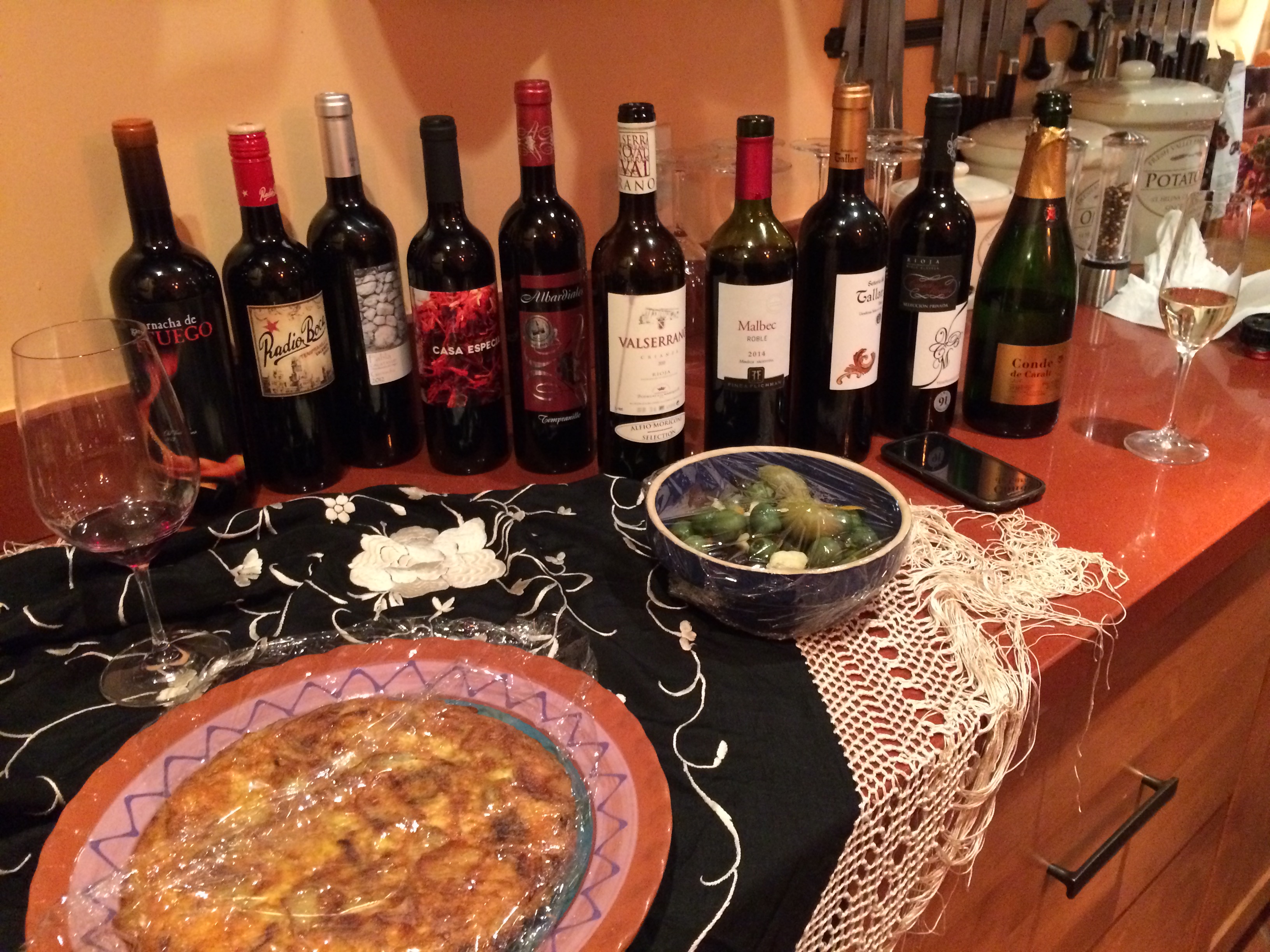
Mary being Mary, there were a true plethora of dishes – about a dozen or so, from charcuterie featuring Iberico Jamon and goat and sheep cheeses, to marinated octopus, to, well, it goes on and on. The wines were varied – here is a photo of some of them:
The line up of Spanish Reds and one Argentinian Malbec. Whites included Albarino and the sparking Cava at the right side of this line.
Here is the charcuterie plate:
Oh, and some bread. And mussels and chicken and sausage and . . .
The wines ranged from very good to not so good. Spanish wines tend to be priced low compared to other European wines, but there is not a widespread familiarity and knowledge with most of them. In our sampling (I did not get the list, sorry!), the two best wines retailed in the low $20 range. Those at $10 or less were all disappointing to one degree or another. We did not open the Malbec.





















 Jim Lockard On Wine