This blog has been pretty quiet since returning from Oregon last week. But that is about to change – next week will see several posts including our full product line tasting of Chile’s Los Vascos wines, the recounting of a tasting of Paso Robles’ LXV wines and a new boutique local wine tour business serving California’s Central Coast AVAs, and Dorianne and I will be heading up to Santa Ynez and Santa Rita Hills AVAs this coming week for a bit of a tour.
In the meantime, The Wine Stalker (LINK) has included us in a really great article about wine bloggers who live a distance from wine regions.
The Rest Of Us: Wine Blogging Outside Of Wine Country ~ The Wine Stalker – A blog for WINE GEEKS & WINE LOVERS (LINK):
“How is your travel availability to actually go to wine regions or blogger conferences?
Again, my wife and I travel nearly full time, 1/2 in the US and 1/2 in Europe. I lead wine tours in France (http://deluxewinetours.com/), so I get to meet a lot of French winemakers. We also spend a lot of time in Spain. This year we will also travel in the Ukraine and Poland, so I am looking forward to seeing what’s happening there.”
So thanks to The Wine Stalker for including us in the blog.
And, since you are here already, time is running out to register for our amazing October 2016 Tour of northern Provence and the southern Côtes du Rhône where we will enjoy some of the finest wines in France.
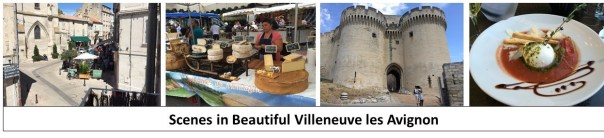
We will spend seven nights in France, based in Villeneuve-les-Avignon on the banks of the Rhône River in a 5 star hotel, exploring the hidden secrets of several wine regions that meet here – The Côtes du Rhône, Languedoc-Roussillon, and the Luberon.
Hôtel Le Prieuré
This intimate, small group tour (only eight spots available) features lodging in fine hotels, meals in chateaus, visits to the legendary vineyards, and tastings of some of the great wines of France. All the while, you will learn more about wine in the vineyard and at the chateau.
I was in Berkeley, CA for a week on business and I did a bit of exploration of the wine scene here. This is not my first time here, and I have blogged about Berkeley before (LINK).
The big news here is the possible scandal associated with the Premier Cru Wine Store bankruptcy (LINK). You can read about that if you wish. Of course, the great Kermit Lynch is here with his legendary wine shop(LINK) – I visited there in May. There are a lot of very good restaurants here with wine lists of varying length, breath an depth.
The wine highlight of this trip was two visits to Vintage Berkeley (LINK) a wine shop on College Avenue in the Elmwood neighborhood (I was staying nearby). The owners of Vintage Berkeley also own Solano Cellars Wines.
The shop on College Avenue has a focus on wines of the world priced under $30. There is a “back room” with more pricey bottles. I saw a lot of wine labels that were new to me, and a few that I recognized. Most of the latter were in the back room.
There is usually a wine tasting going on, and on my first visit, the proprietors were offering a couple of French wines from the Rhône Valley. There were about eight customers tasting and shopping. I had a good conversation with several of the customers and the staff. I was told that there would be a winemaker tasting of Clos Saron wines on Saturday.
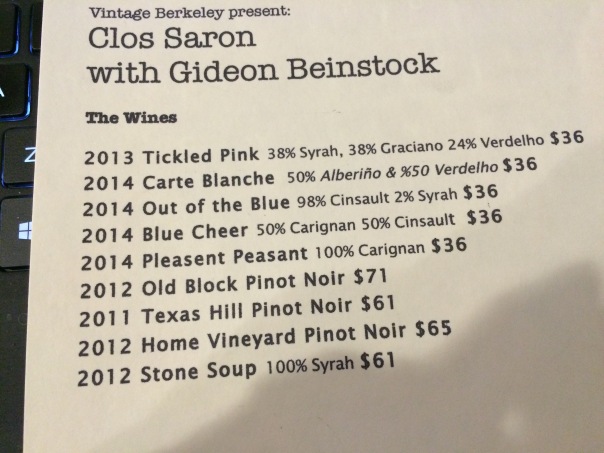
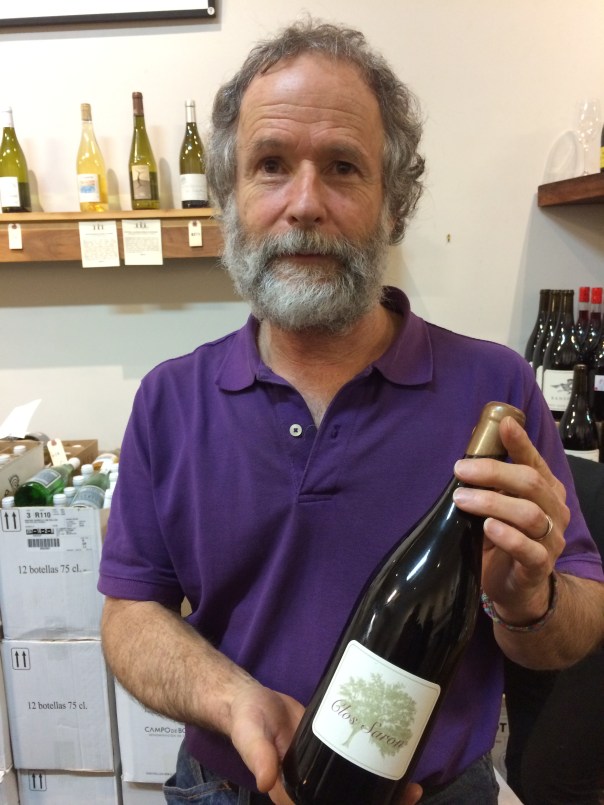
On Saturday evening, I returned and met Gideon Beinstock, the winemaker for Clos Saron, which is located in Yuba County, California, in the northern section of the Sierra Foothills AVA. The total production of Clos Saron is 800 cases, so don’t be looking for these at your local supermarket. They are currently re-planting some of their vines, so they are only bottling estate Pinot Noirs, three of them. The rest of their wines are sourced elsewhere. Here is the list from the tasting, which is most of the wines that they produce:
I found the Cinsaults and the Carignans to be very interesting wines. The Cinsault vines were planted in 1885 and the Carignan vines in 1900. The blends that featured these wines were well-structured with relatively high acid and moderate tanins. They should age well and are interesting on a number of levels.
I was not a big fan of any of the Pinots, but to be fair, they are all young. Perhaps with a few years in the bottle, they will soften a bit. There was too much acidity for my taste, although each did have a distinctive nose and flavor range.
Gideon Bienstock
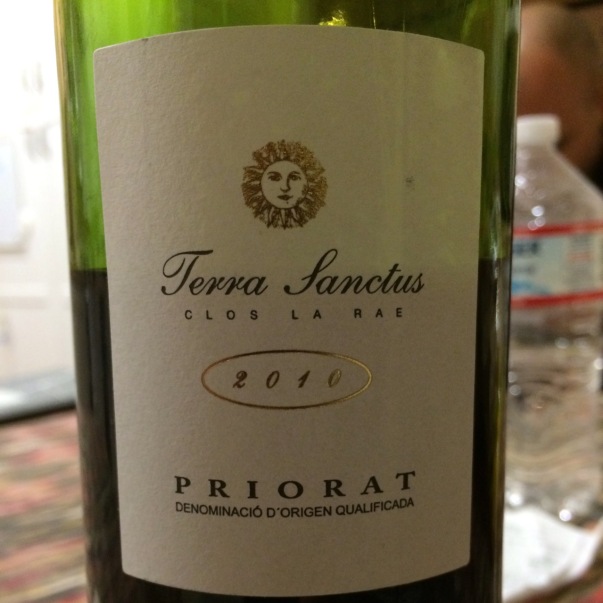
I bought a nice bottle of Terra Sanctus Priorat Blend from Catalunya and went home. The wine was excellent – well balanced, just short of chewy, with a nice viscosity and dark fruit and notes of minerality. I know I only scratched the surface of the Berkeley wine scene on this trip – but I will return!
We went up to Pismo Beach to join two other wine-loving couples for a couple of nights R&R on January 1st (I know, we just got back from Paso Robles on the 30th, but NYE was stressful). We stayed at the Kon Tiki Inn in Pismo (LINK), one of the better kept secrets in the area – no online registrations, you have to call!!!
We had some great meals – dinners at Avila Gardens Restaurant (LINK) and Guiseppe’s Cusina Italiana (LINK); and great lunches at the Los Olivos Cafe (LINK) on the way up; at Novo (LINK) in San Luis Obispo; and one at the Spyglass Inn in Shell Beach (LINK). All worth a visit.
But this is about the wine. And we did visit three, and only three wine tasting rooms on the trip. And the other couples brought some exceptional wines that we shared and took to dinner (a strategy: take your own bottle, but order a restaurant bottle first. It is likely that your bottle will then be served with no corkage fee – we did not aim for this, but that is what happened.).
Wine We Took to Avila Beach Inn
Wine We took to Guiseppe’s
The wineries, in order:
Baileyana/Zocker/Tangent/True Myth/Cadre(LINK): A tasting room outside of San Luis Obispo in the Edna Valley. All of the labels represented are made by a single producer and one winemaker. I am a fan of the Zocker label wines (and bought some) – a Grüner Veltliner, a Reisling, and a Late Harvest Grüner Veltliner.All are very true to the Austrian origins of these varietals. Light, crisp and refreshing – actually, great summer wines. The remainder of the 15 or so wines poured here are good, but not great. The tasting room and environs is very inviting, with boccie ball courts, picnic tables, etc., and there is a nice selection of wine-related gifts inside.
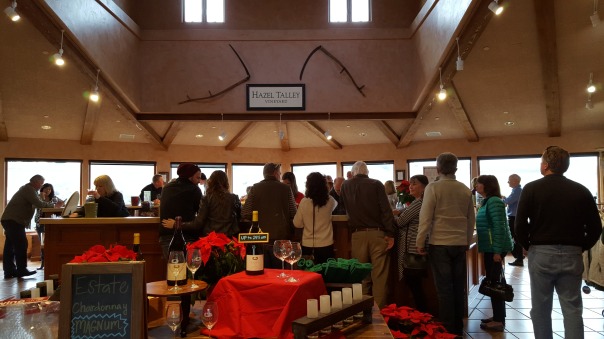
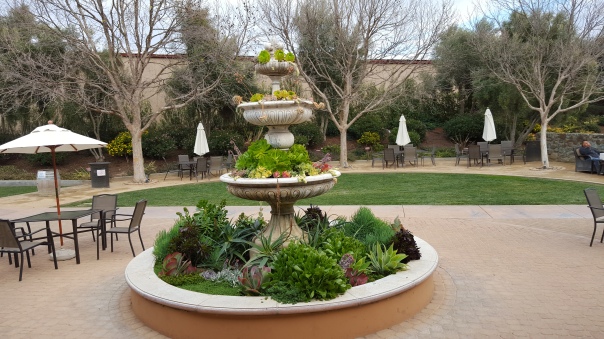
Talley Vineyards: An Edna Valley legend, Talley produces very good to excellent Burgundian-style wines. Their Pinot Noirs and Chardonnays, especially the single vineyard productions, are wonderful. And their prices have hardly risen over the past decade. There is also a second label, Bishop’s Peak, with some nice red wines. The tasting room is beautifully appointed and overlooks some of the vineyards to the west. Out front, a beautiful courtyard has tables and chairs around a lovely fountain that has been converted to a succulent garden due to California’s drought.
Mike, our tasting room host, has been there a long time. He was curiously unwilling or unable to answer some basic questions about the winery, such as was there a map of the vineyards, etc. It was busy, so I will give him the benefit of the doubt. We left with some single vineyard Chardonnay and Pinot Noir.
Talley Tasting RoomTalley VineyardsThe Converted Fountain at Talley Vineyards
Ken Brown Wines (LINK): Dorianne and I stopped at Ken Brown Wines in Buellton on the way back down to Agoura Hills. Ken is one of the founders of the Santa Rita Hills AVA, and is responsible for the Zaca Mesa and Byron labels there. He decided to step back from large production and specialize in managing a few vineyards and producing some very fine wines in limited production. He produces six single vineyard Pinot Noirs, four Pinot blends from various vineyards, a fantastic single vineyard Chardonnay, a single vineyard Syrah, and several other wines, all in very small quantities – nothing over 240 cases per year.
I blogged about a visit here last year (LINK), but Dorianne wasn’t with me, hence the stop on this visit. Well, we might have stopped even if she had been along on the earlier visit.
We had another very enjoyable trip through parts of California’s Central Coast with friends, great wines, wonderful food, and all of the natural beauty that goes with this special part of the world.
As I noted in my last post (LINK), Dorianne and I went to Paso Robles along California’s Central Coast region for three nights and two days of wine tasting with her sister and brother-in-law, Debby and Mike. Our daughter, Grace, joined us on the first day of wine tasting, but the four of us were on our own as we set out on Tuesday morning. We decided to keep it to two wineries to allow time for a nature walk later in the day.
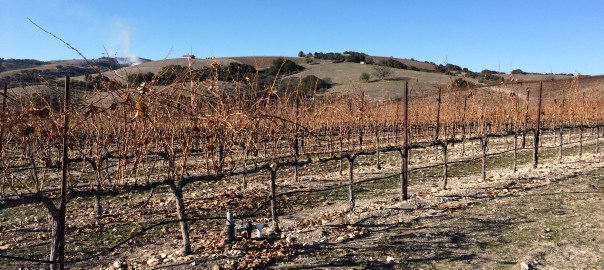
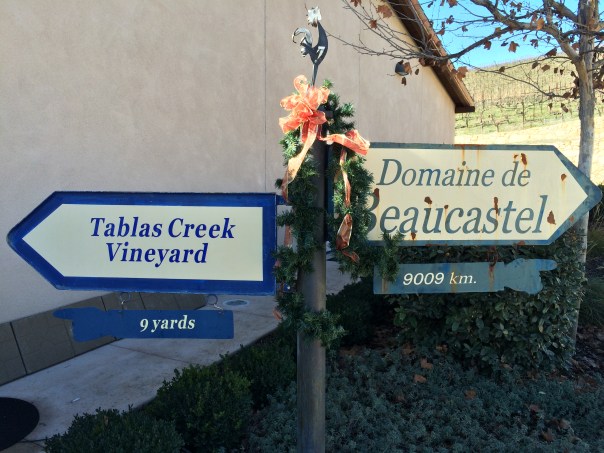
Our first stop on the west side was Tablas Creek Vineyards (LINK) in the Adelaida AVA of west Paso Robles. Long known for their expertise in Rhône varietals, Tablas Creekhas a Rhône River partner, Chateau Beaucastel (LINK) in France. You could spend months studying the Tablas Creek history, viticulture, wine making techniques, and tasting their wines (maybe a lifetime on that), but we only had a couple of hours.
Tablas Creek Vineyard is the result of a decades-long friendship between the Perrin family of Château de Beaucastel and Robert Haas, longtime importer and founder of Vineyard Brands. The families created a partnership in 1985 and in 1989 purchased a 120-acre property in the hilly Las Tablas district of west Paso Robles for its similarities to Châteauneuf du Pape: limestone soils, a favorable climate, and rugged terrain.
The partners imported the traditional varietals grown on the Perrins’ celebrated estate, including Mourvèdre, Grenache Noir, Syrah, and Counoise for reds, and Roussanne, Viognier, Marsanne, and Grenache Blanc for whites. These imported vines passed a rigorous 3-year USDA testing program, were propagated and grafted in our on-site nursery, and used to plant our organic estate vineyard.
Dorianne and I were members of the Tablas Creek wine club for a couple of years before we moved from Southern California. Their wines are beautifully crafted and many of their varietals are unique on the Central Coast, or even in all of California. They produce a few dozen wines, only three of which, called their core blends, are distributed widely. Here is the link to their wines page (LINK) for a more thorough description of each one.
Tablas Creek Vineyards and Tasting Room is located at the far west end of the Paso Robles area, which means that they are closer to the Pacific Ocean and its cooling influence. The tasting room is modern and state-of-the-art, with views into the winery. Several tasting stations surround a central core with displays of wines and other things for sale. As you approach the entryway, a display of grape vines for sale and a tub of stainless steel water bottles for guests to use during their visit.
The tasting room was crowded when we arrived. We found some space at a station being staffed by Suphada Rom, a very knowledgeable and well-traveled young woman from Vermont. Like many of the winery and tasting room workers in California, she arrived after some experience in Old World wine regions and developed a love for wine. Suphada writes a wine blog(LINK).
Suphada Rom
Tablas Creek Wines
The tasting experience at Tablas Creek involves the core blends and one or two varietals. To keep it short, I will just say that the core blends are always of a very high caliber. What I seek out at Tablas Creek are the single varietals. Our tasting included the 2013 Viognier and the 2013 Cabernet Sauvignon. Both were very good – the Cabernet being smoother and lighter, more elegant than the typical Paso Robles-style Cabernet, which are big powerful wines.
Before departing Tablas Creek, we purchased a four-pack of varietals that included the 2013 Cabernet, 2012 Tannat, 2012 Picpoul Blanc (a varietal we enjoyed in France), and the 2013 Vermentino – a set that should provide many pleasures in the coming months.
Our next stop was farther east, up on a very high hill closer to Paso Robles on the border between the Adelaida and Willow Creek AVAs. Calcereous (pronounced with two hard “C’s”) is another wonderful Paso Robles wine experience. The name comes from the limestone soils of the area.
From their website (LINK): “Father and daughter Lloyd Messer and Dana Brown realized their dream of finding a place to express their passion for wine in 2000, when they established Calcareous Vineyards on one of the highest limestone plateaus on Paso Robles’ westside. Both Lloyd and Dana, experienced wine distributors in their native Iowa, recognized the westside of Paso Robles had potential to produce world class wines. Their acquisition of 342 acres atop solid calcareous rock reaching 1,800 feet above sea level confirmed their dedication to producing the highest quality, terroir driven wines possible. It is a labor of love to cultivate fruit on this challenging land, but the reward is immediately apparent when tasting the wines.”
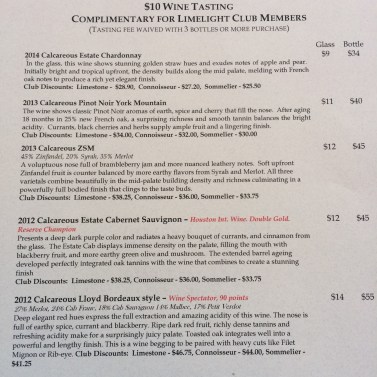
Everything about Calcereous is beautiful – the wines, the land, the tasting room, and the experience. Our tasting room host, Karl Jepsen, is from Denmark. He gave an animated and informative “wine seminar” as we tasted six wines (five from the list and one additional).
Karl led us through the tasting, going over the provenance of each wine and adding some additional bits of information, such as how to determine which aspects of the bouquet of the wine come from the fruit and which come from the barrel.
Calcereous wines are premium wines – every wine we tasted was in the 90’s in my own mental ratings chart. We were given an impromptu tour of the vineyard & winery as well. I think we spent nearly 3 hours there. Wine highlights were the 2014 Estate Chardonnay, the 2013 ZSM (a fantastic blend of Zinfandel, Syrah & Merlot), and the 2012 Lloyd Bordeaux-style Blend, a truly exceptional wine Our 1/2 case purchase contained all three of those.
Karl Jepsen
Calcereous Vineyard
A note about the restaurant where we ate lunch after these great winery experiences – Fish Gaucho (LINK) in downtown Paso Robles did not disappoint. Very good Mexican dishes, large portions, and a nice atmosphere with good service. It’s worth a look when you are in Paso Robles.
There are over 200 wineries in Paso Robles, California. We visited just five of the more established producers on this short trip. I look forward to returning soon and exploring some of the smaller and newer producers.
As always, your comments are welcome.
And it was chilly – here are Dorianne and Debby clearing the ice from the car in the morning.
Dorianne and I did a post-Christmas trip to Paso Robles this week. We were accompanied by her sister Debby and Debby’s husband, Mike, who live in Oklahoma, but love wine very much. The trip was really a good experience, so I will cover it in two posts.
Paso Robles has become the premier region of California’s Central Coast, which is saying something, as there are a lot of great wines coming from Santa Barbara, San Luis Obispo and Monterey Counties. With over 200 producers, Paso Robles is the largest region (it includes 11 AVA’s), but it is also the place where the most experimentation and innovation is happening, which is by design. The focus is mainly on Cabernet Sauvignon and Zinfandel, but there are dozens of varietals being grown and the Rhône-style wines produced there are world-class.
I have written before of our trips there to attend the Garagiste Festivals (LINKS). This time, we selected just a few wineries to visit, three on the east side and two on the west side; HWY 101 is the divider. This post will speak to the east side and Part 2 the west side.
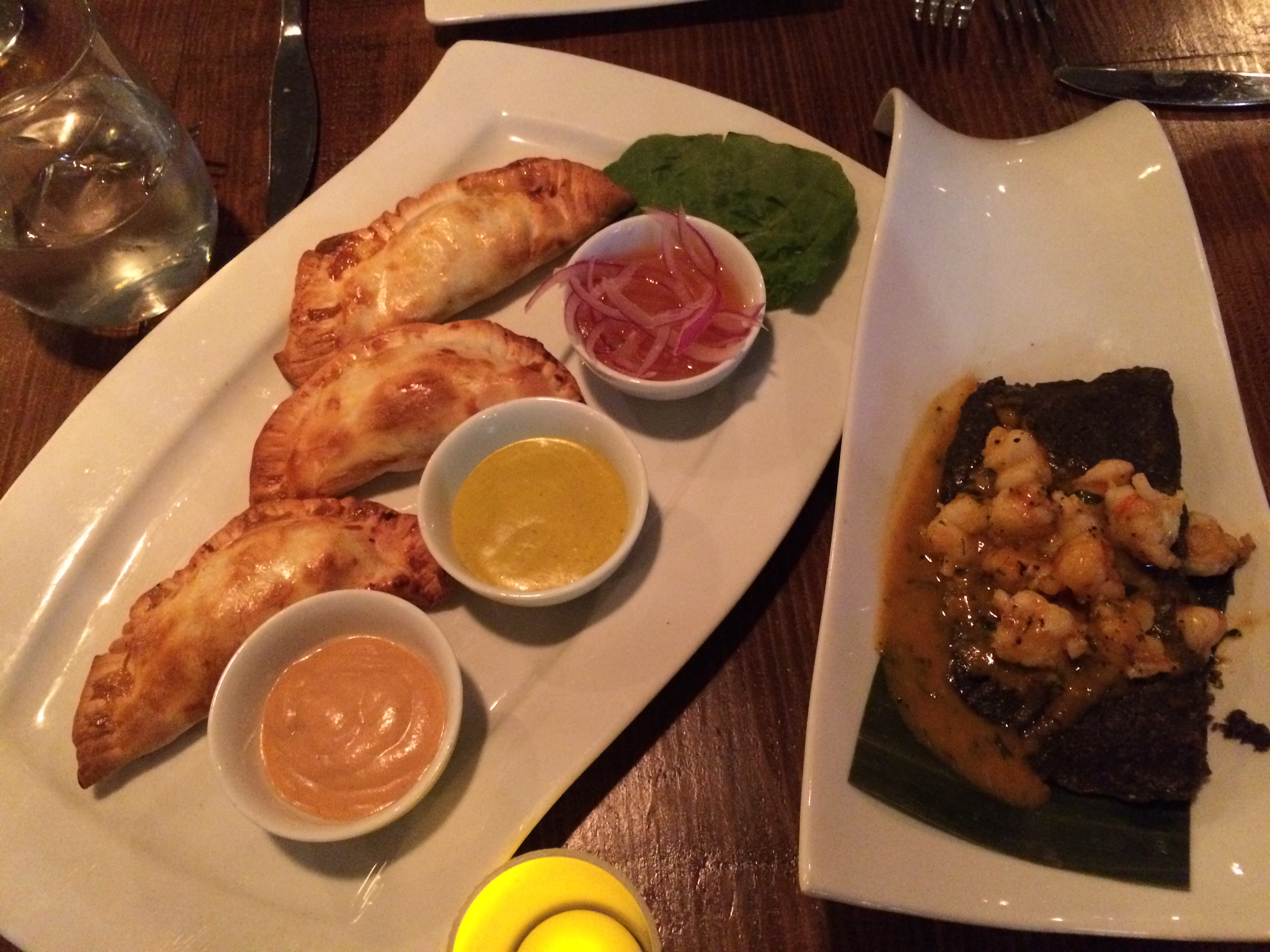
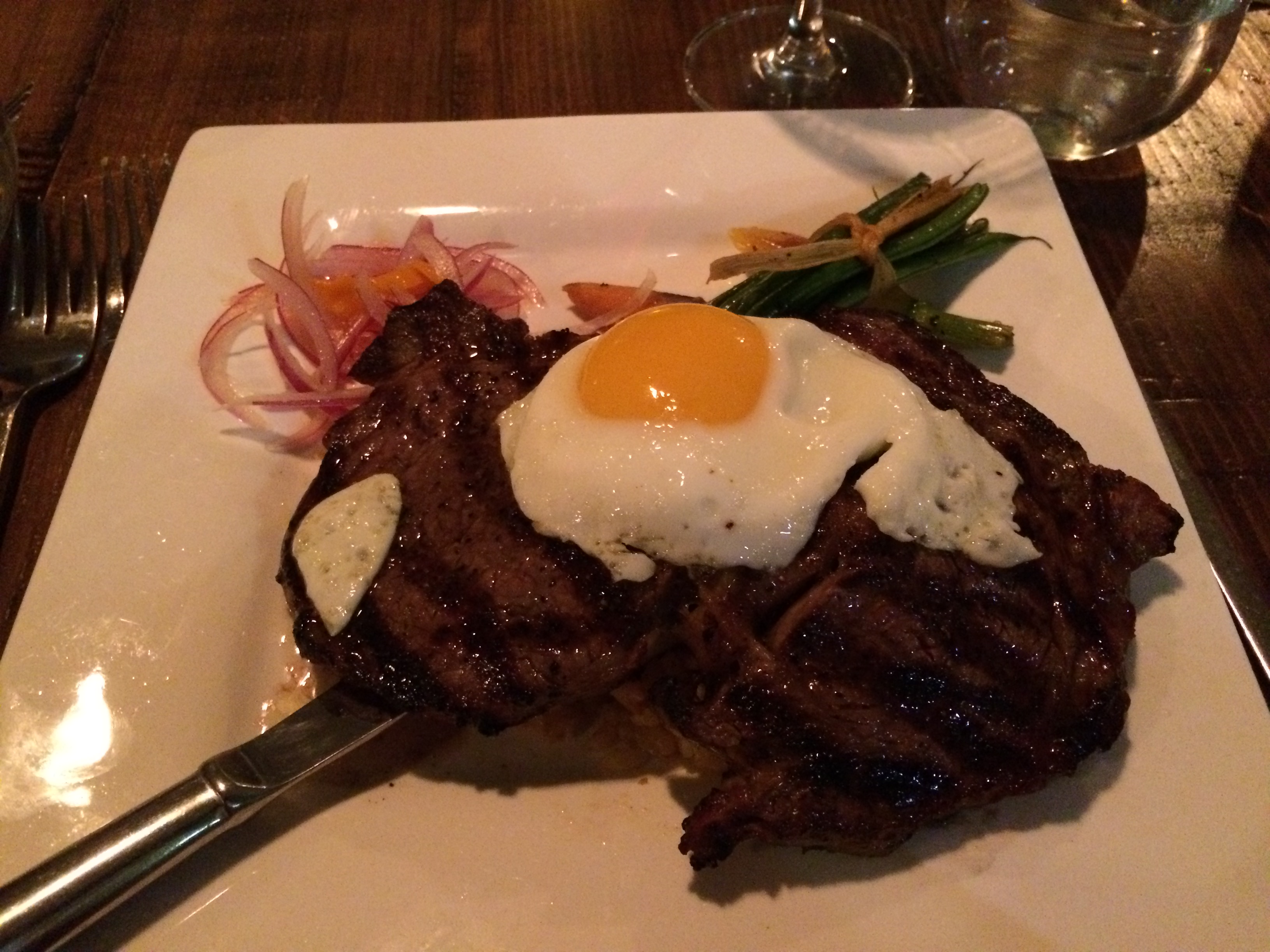
Our arrival on Sunday night began with dinner at Mistura (LINK), a Peruvian themed restaurant located at a golf course on the east side of town. This highly rated restaurant was an excellent choice for food and beverage, but our timing was off. The Sunday after Christmas is a very unpredictable night, and they were a bit over-crowded. We did not get seated for our 7:00 pm reservation until about 7:45 pm and our dinner did not arrive until almost 8:30 pm. That said, the staff was very gracious and helpful the wine list is very good, and the venue is very nice. Avoid the holidays and you should have a great experience.
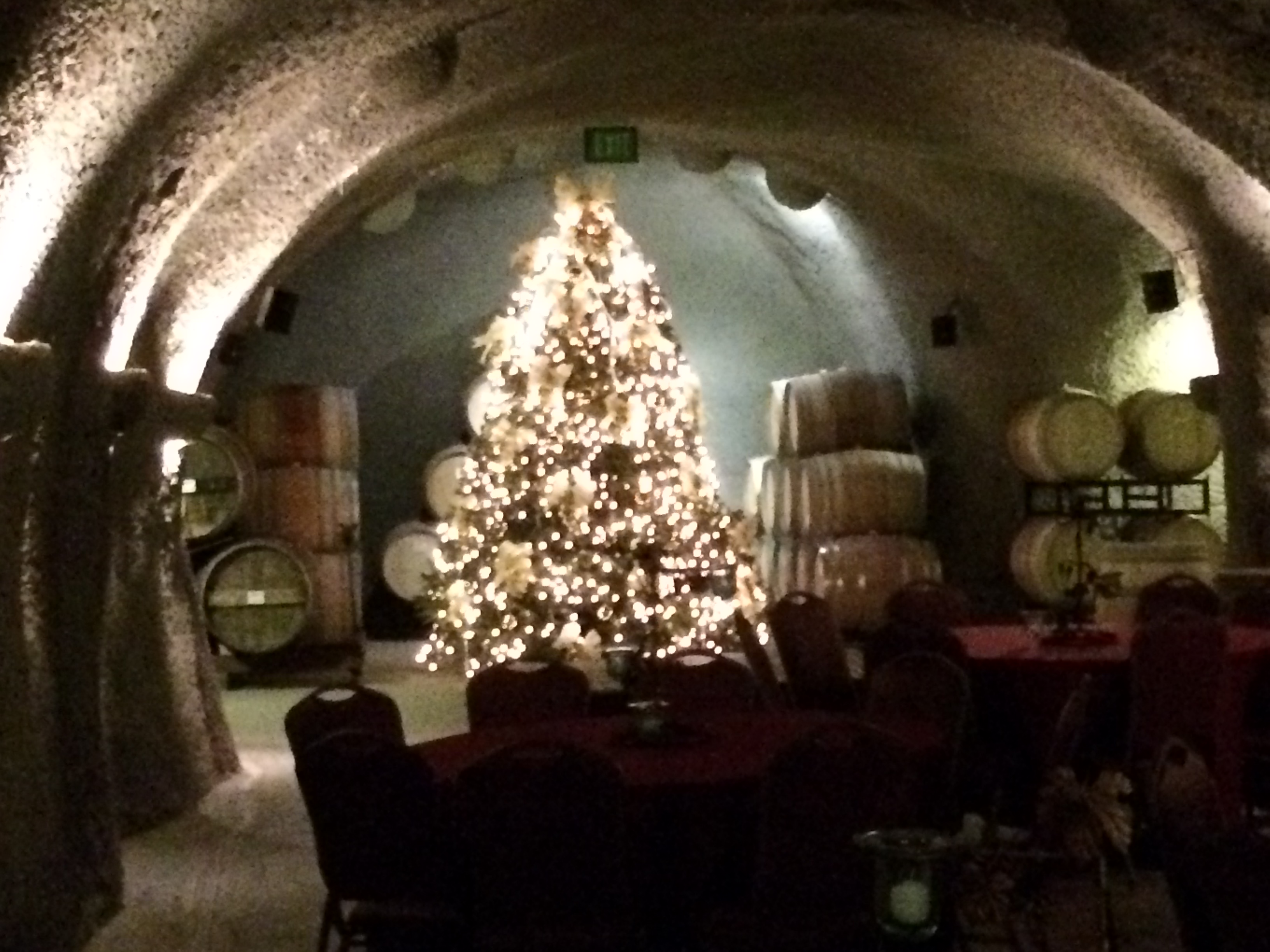
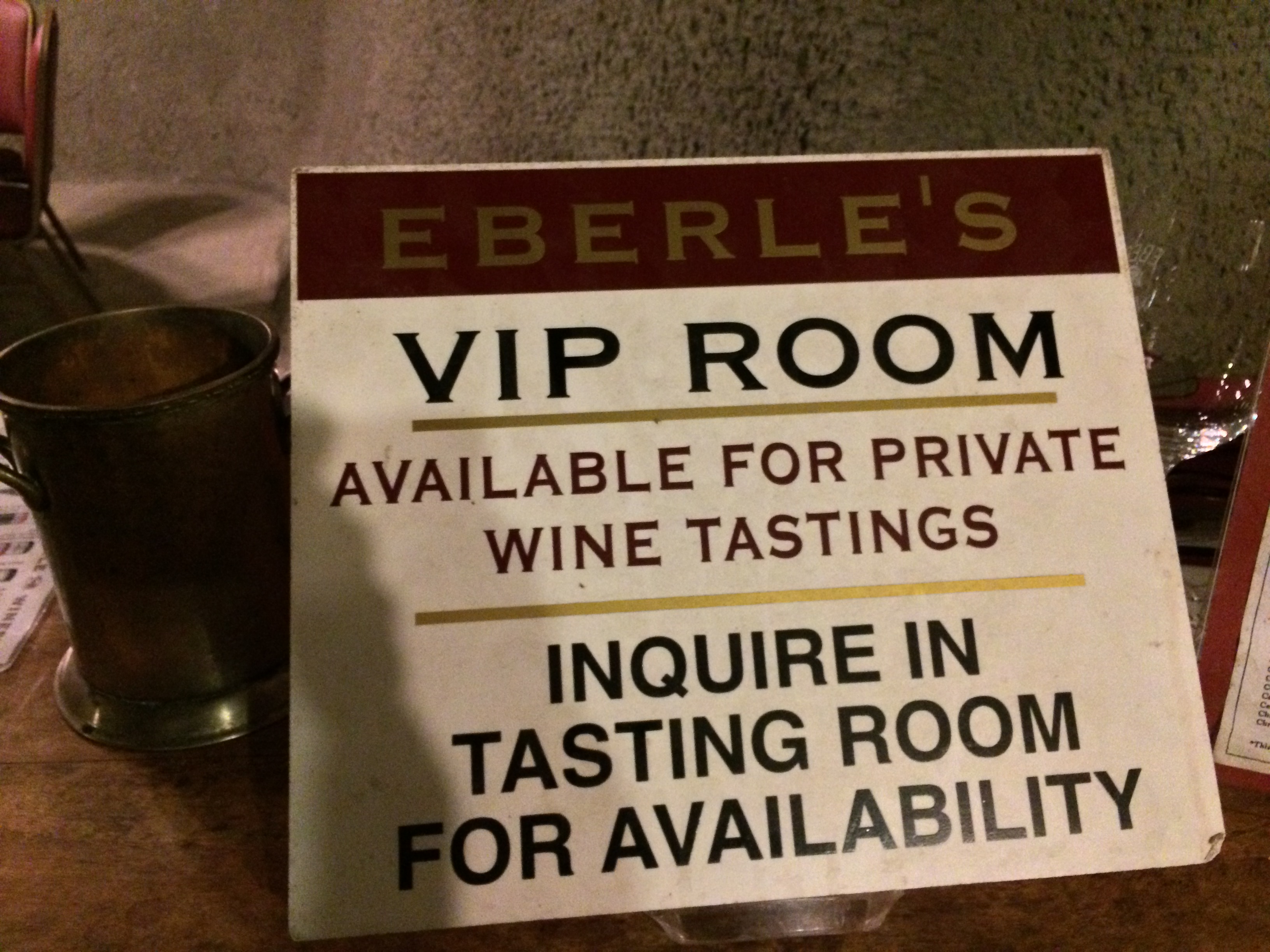
On Monday, joined by our daughter, Grace, who was in the area with her father for the holidays, we began our tours at Eberle Winery (LINK)on Route 46. A relatively large producer for Paso Robles, Eberle provides a very good customer experience when you visit: complimentary tastings and winery tours (Dave Olcott and his team do a very professional job), a nicely appointed main tasting room, and knowledgeable staff. We felt well cared for and enjoyed our tour and experience very much. The venue is also available for special occasions and there is a VIP Tasting experience in the Wine Caves offered for a fee that looked very nice. Some photos from Eberle.
The wines at Eberle range from whites like Chardonnay, Viognier, and a Côtes-du-Rhône Blanc blend; a Syrah Rosé; and reds that include Barbera, Syrah, Zinfandel, Cabernet Sauvignon, and a red blend. Most of the wines on their website are available for tasting. You get to choose up to five wines to taste. Overall, I would rate Eberle as a very competent wine producer and many of their wines are good values. We particularly enjoyed (and purchased) the 2014 Viognier, Mill Road Vineyard, the 2013 Zinfandel, and the 2013 Barbera.
The next stop was Tobin James Cellars (LINK), farther east just off of Route 46 East. Tobin James has a unique branding look and their tasting room facility is set like a saloon in the wild west. Very campy. The place was packed when we arrived (about noon on a Monday), with three large bars pouring complimentary tastings. One thing that appeals to me – they have Tommy Bahama brand (LINK)shirts with their logo and name on them. Probably 2/3 of my wardrobe is Tommy B.
Bethany
Tobin James takes a little getting used to for the serious wine drinker – getting past the colorful hype if you will. In the tasting room, you have your choice of a variety of wines on the tasting menu, but only one Zinfandel. Since I know Tobin James as a producer of high-quality Zinfandels, I asked Bethany, our very personable and competent tasting room staff person, if there was another menu. She smiled and produced a second menu with 6 Zinfandels, a Primitivo, and seven other Reserve wines. Also complimentary for tasting. Now we were getting somewhere.
Dorianne and I did side-by-side tastings of the 6 Zins, which were all excellent. We purchased three after getting Grace to expand her pallet a bit. When you get to the higher-end wines, Tobin James excels. Their other wines are good for everyday use as well.
The Gang at Tobin James
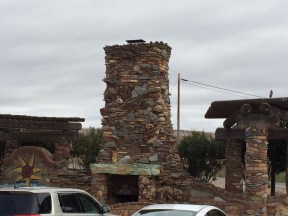
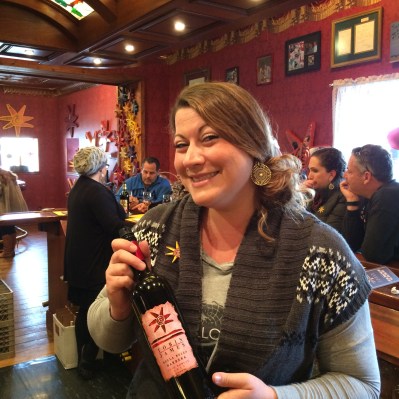
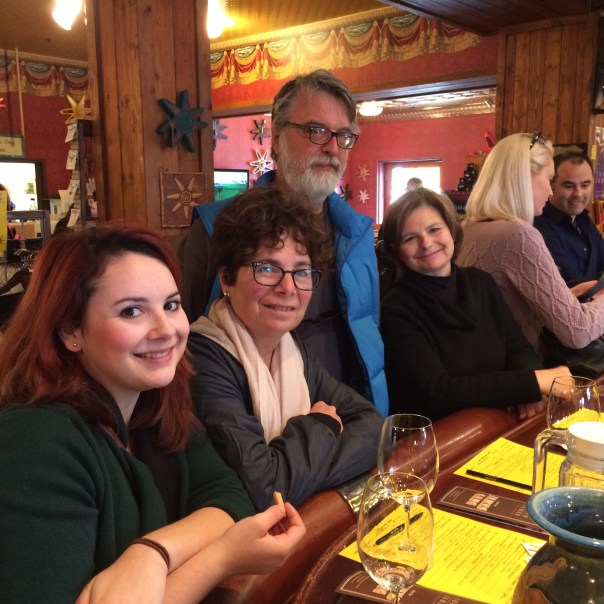
Our final stop of the day was a Cass Winery (LINK) in Creston, just southeast of Paso Robles. We know Cass Winery as a primary source of fruit for our Agoura Hills-based wine cooperative that I have posted about in the past (LINK). Cass, run by Steve Cass, is very well-known as both a reliable and innovative producer of a number of varietals. With 17 wines featured on their website, they are also very versatile. I am a big fan of Cass’s Rhône-style whites, particularly the Rousanne and Marsanne varietals.
Since our tasting included lunch in the winery cafe, it was an opportunity to experience their wines with some food. I opted for their award-winning burger, which was not the best choice for the whites, but . . . I was hungry.
Suffice to say that the Rousanne and Marsanne that we tasted were excellent – rich and fruity with a nice sense of minerality. The reds, a Syrah and a Cabernet Sauvignon, were also very nice.
The Burger at Cass Winery
So our first day of tasting came to a close at about 2:30 pm. Then we said farewell to Grace and headed for the market to get chicken and some other provisions for dinner at our AirBnB house that evening. The Eberle Viognier and Zinfandel purchased that morning would prove up to the task of the appetizer and main courses.
Wine travelis indeed rewarding, the wines, the places, and the people.
Next post – Paso Robles’ west side, featuring Tablas Creek and Calcareous Wineries, and a great Mexican restaurant.
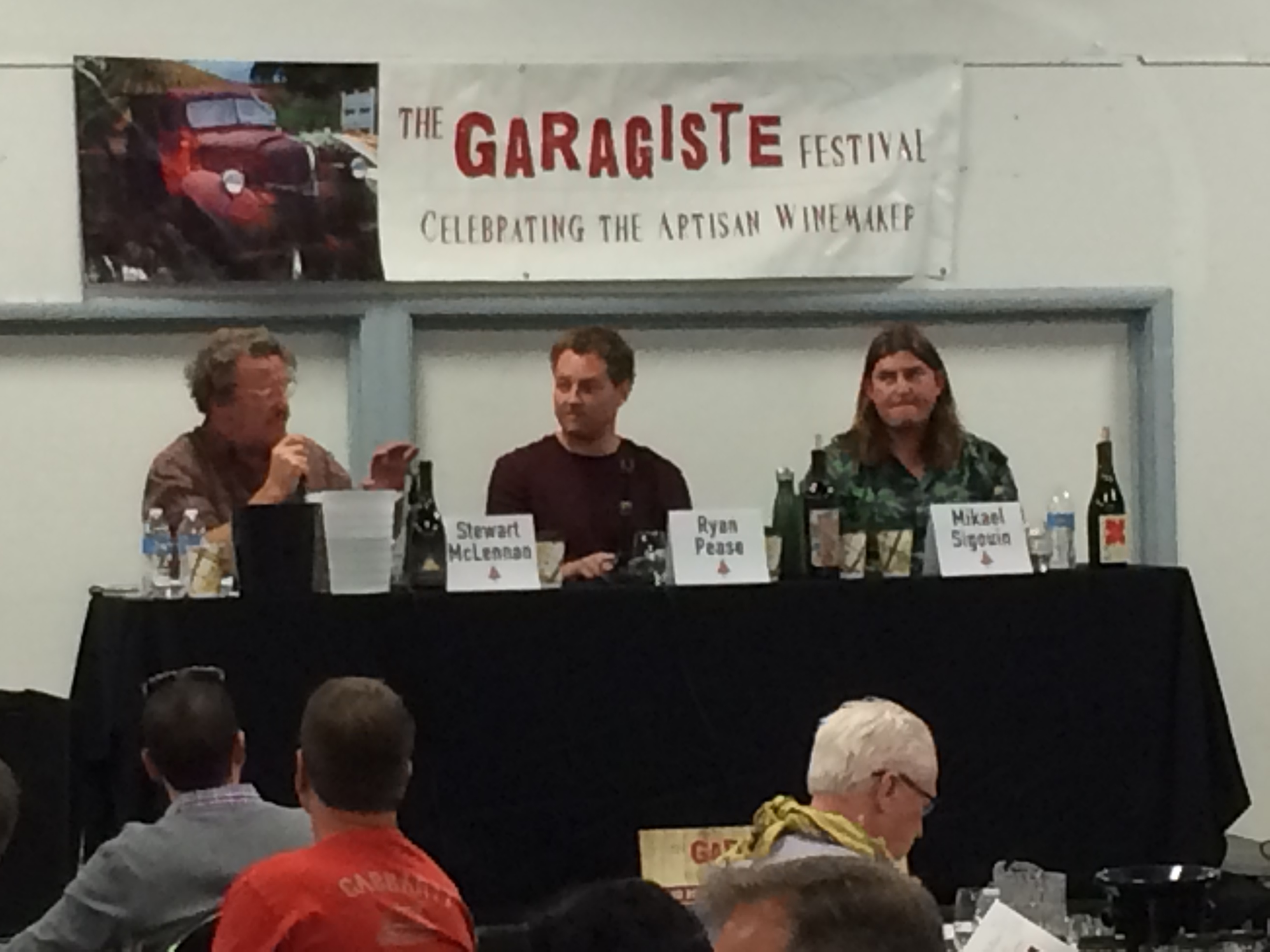
Each year at the Garagistè Festival, there are two seminars held as part of the VIP package for the Saturday events. This year’s seminars were “Exploring the Aroma Wheel” with Madeline Puckette of WineFolly.com (LINK) and “Techniques of the Garagistè: The Secret of Stems,” with Mikael Sigouin, Ryan Pease, and Stewart McLennan.
“Exploring the Aroma Wheel” Seminar.
“Exploring the Aroma Wheel” explored how to discover the various aromas of wine and how to go a bit deeper than the normal surface sniff of the glass. Madeline Puckette is a very good presenter and the seminar was interactive. Each table had 8 covered and numbered coffee cups, each containing a different scent. We were to begin by sniffing each cup and noting what we thought the aroma was. Then, we were provided two glasses, one with Pinot Noir, the other Cabernet Sauvignon. We were asked to sniff the glasses (some instructions were given) and to list three fruit aromas and three non-fruit aromas that we noted in each.
Madeline Puckette of WineFolly.com
Then, we were asked to sniff one or two of the cups again, and then sniff the wines. The experience of most people was that the aroma of the wine changed after sniffing one or two of the cups (the cups had odors like chocolate, mint, vanilla, smoke, etc.). Ms. Puckette noted that sniffing the aroma in the cup tended to eliminate that odor from the wine for the person sniffing; that changed the aromatic experience of the wine. The workshop was a good experience, and yes, we did get to drink the wine.
Mikael Sigouin of Kaena Wine Co., Ryan Pease of Paix sur Terre, and Stewart McLennan of Golden Triangle on the panel.
“Techniques of the Garagistè: The Secret of Stems” featured three Paso Robles winemakers: Mikael Sigouin of Kaena Wine Company (LINK), Ryan Pease of Paix Sur Terre (LINK), and Stewart McLennan of Golden Triangle (LINK). Each of these winemakers uses stems and whole clusters in making some or all of their wines. The idea is to bring more of the sense of the terroir to the wines and to broaden the flavor profile beyond the fruit itself.
The wines were:
Kaena: 2013 Grenache – Terra Alta Vineyard
Paix Dur Terre: 2013 “The Other One,” 100% Mourvedre
Golden Triangle: 2013 50% Cabernet Sauvignon 50% Syrah
Each was very different in character, although all were the result of whole cluster fermentation. It was very interesting to hear what each winemaker seeks to get from the process and how this process is impractical for large-scale producers.
After the seminars, a lunch was served and then the VIP ticket holders had first shot at the Grand Tasting, with over 70 Garagistè winemakers, producers making under 1500 total cases each year.
We will explore the Grand Tasting in the next post.
The Garagistè Festival(LINK), for the uninitiated, is a gathering that promotes and celebrates small production winemakers from Paso Robles and elsewhere in California. These are folks who produce under 1500 cases per year. Some are new and plan to grow into the future Mondavis or Kendall-Jacksons of the world; others are doing it as a labor of love and have no plans to expand; still others are winemakers for larger concerns and this is their hobby-like “side venture.” There are also now Garagistè Festivals in Solvang and in Los Angeles each year.
This is the fifth annual Paso Robles event, and I have attended all of them. Dorianne and I drove up from LA County where we are staying with friends for last night’s Winemakers’ Mixer and today’s workshops and Grand Tasting (which I will blog about later).
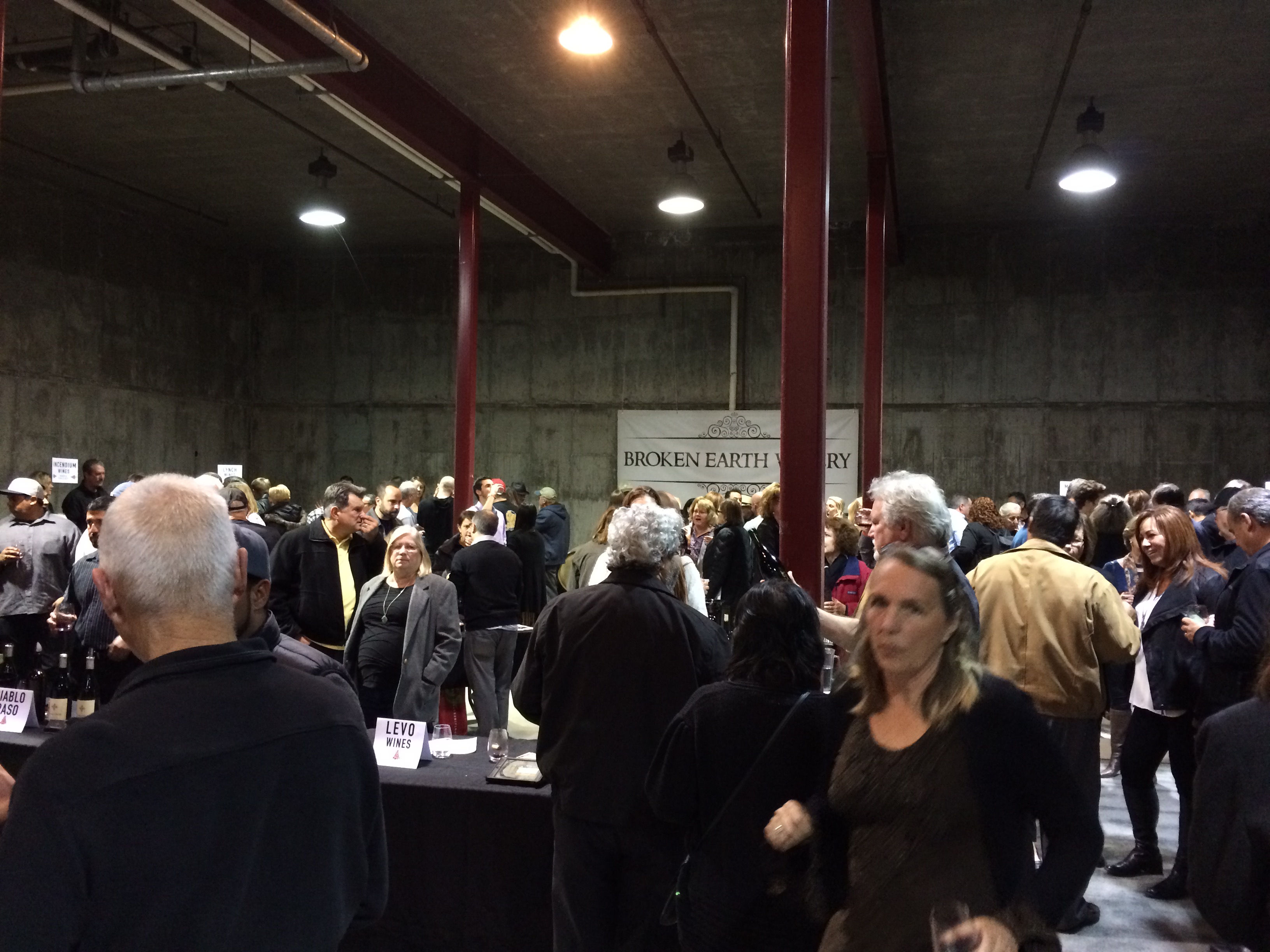
The mixer was added a few years ago, and has been held in different places. This year, it was in the barrel room at Broken Earth Winery (LINK). There were about 35 wineries represented (and one local hard cider maker), including about 1/2 dozen who had been at all five festivals. There were some snacks provided and the Pairing Knife Food Truck(LINK) was also on hand with some great food.
The focus of the evening was new releases and tastings of wines that had not yet been released. You might say that this concept is loosely observed. There were some new releases, and some yet-to-be-released wines (one, just pressed and served from a 5 gallon plastic container), but there were also some 2007 Cabernets and other regular production wines, but really, who cares?
The fun of this evening was meeting young (and not-so-young) winemakers who are following their dream and doing what they love. They are eager to talk about their wines and really enjoy it when someone with some knowledge shows up. There were over 70 wines to taste, so spitting was in order. The general quality of the wines at the Garagistè Festival has improved significantly over the past five years. But, there is still a pretty wide range of quality, which is also part of the fun.
Here are a few highlights from the evening for us – we did not taste every single wine (you can get wines from most of these small producers via their website):
Ascension Cellars (LINK), Paso Robles. Currently produces 8 wines in the Rhône style. We tasted their GSM called Trinity and a Syrah – both were very well-crafted and balanced.
Deno Wines (LINK), Templeton, CA. The last wine we tasted before departing, the wine was a pre-release of the blend of 50% Zinfandel and a 50% GSM blend. This surprising combination produced a very spicy and well-balanced wine. Dennis Sharpe will have some other GSM’s out today for the Grand Tasting.
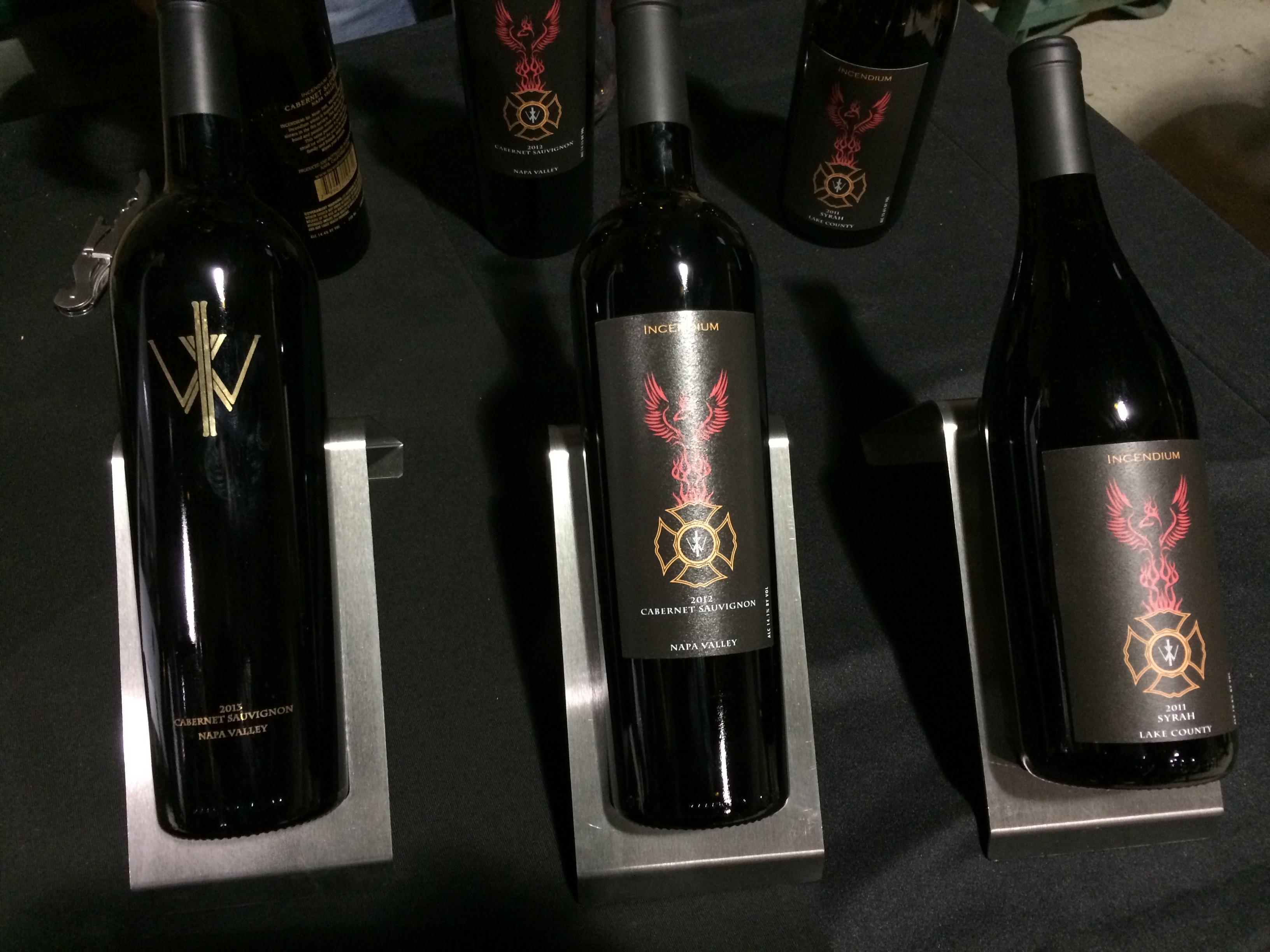
Incendium Wines (LINK), Napa Valley, CA. Winemaker Vince Kalny is a firefighter for Cal Fire. His wines reflect his primary calling, with beautifully designed labels. A portion of the proceeds from sales go to The National Fallen Fire Fighters Foundation. That said, his wines are very well made. There were 3 Chardonnays, 2 Cabernet Sauvignons and a Syrah to taste. The Cabs (2012 & 2013 – pre-release) stood out as very well-crafted and were smooth and ready to drink.
Incendium Wines – The RedsVince Kalny – Firefighter and Winemaker.
Stanger Vineyards (LINK), Paso Robles, CA. Last year, when we entered the mixer, the first person we saw was J.P. French holding a 5 gallon plastic water jug that was filled with Malbec that had just been pressed. He sloshed some of the juice into our glasses and moved on. Later, we returned to his table and discovered some amazing wines. J.P. was back this year, with the 2015 Cabernet Sauvignon in the plastic jug – again, just pressed. He also had a 2007 Cabernet Sauvignon that was spicy, earthy, but with nice red fruit on the nose and palate. If you are into wine, Stanger Vineyards is a good bet.
Theopolis Vineyards (LINK), Anderson Valley, CA. Theopolis, run by Theodora Lee, a Texan and an attorney by trade, had 7 or 8 wines (we were well into the tasting) on display. Theopolis has a focus on Petite Syrah on the red side, and the Symphony Grape – a California crossing of Muscat of Alexandria and Grenache Gris developed in 1948 (but not commercially released until 1982) by the late Harold Olmo, professor of viticulture at the University of California, Davis. As its pedigree suggests, it is a seductively aromatic wine with delightfully captivating aromas that are markedly floral with slightly spicy flavors (from their website). She also produces a very seductive Petite Syrah Rosè. The wines were among the best of the evening and I look forward to visiting her again today at the Grand Tasting.
Theodora Lee of Theopolis Vineyards
Turiya Wines (LINK), Lompoc, CA. Turiya means “pure consciousness” in Sanskrit. Winemaker Angela Soleno brings a consciousness to winemaking that produces some exceptional wines. We tasted a Sangiovese and a Bordeaux Blends, and both were excellent. A one-woman operation, Angela produces about 200 cases annually, all reds, featuring a number of varietals – Red Blends, Cabernet Sauvignon, Syrah, Malbec, Merlot, Petit Verdot, Cabernet Franc and Sangiovese. Wine prices begin at about $100/bottle and you have to be on the allocation list to receive wine. Visit the website for more information.
Angela Soleno of Turiya Wines.
Vinemark Cellars (LINK), Paso Robles, CA. Mark Wasserman, who runs Vinemark with his wife, Julie, was present with two wines, a 2013 Reserve Pinto Noir and a 2012 Mezzanote, a blend of 75% Primitivo and 25% Petite Syrah. Mark is the classic Garagistè, in it for the love of winemaking. He loves to talk about his wines, and they are wonderful.
Mark Wasserman of Vinemark Cellars.
So that is a taste of the tasting mixer. There were a number of other quality wines present and, again, try as we might, Dorianne and I did not get to taste everything. Today – the Classic Tasting with about 70 producers and a couple of hundred wines. We will do our best.
Our friends at Lazenne.com (LINK), makers of wine luggage and wine travel accessories, have posted an excellent article giving five reasons to purchase wine at the winery. Here is a quote from the article by Chrissie McClatchie for Lazenne:
“In France alone there are over 300 AOC’s (Appellation d’Origine Contrôlée, or Controlled Designation of Origin), some counting just one or two producers (Palette in Provence) to hundreds (the simple Bordeaux AOC). Considering the scope, it’s easy to imagine how many of these wines don’t leave their region of origin. I lead wine tours through the Bellet AOC in the hills of Nice, one of France’s oldest and smallest appellations, boasting only eleven vineyards. With such a small production, the wineries can little keep up with the local demand, let alone consider opening up export markets. For most people, therefore, purchasing direct is the only access they have to wines which are simply not available in their home country.” – (LINK TO FULL ARTICLE)
Tasting Room at Chateau Manissy in Tavel, France
I would add that many of the same reasons hold true when you are visiting domestic wineries – good values, wines that are not otherwise available due to limited production, and knowing the provenance are also reasons to buy at the winery in California, New York, or Virginia.
Tasting at LaFond Winery in the Santa Rita Hills of California.
Dorianne and I will be visiting California’s Central Coast twice in the next two months, and Napa-Sonoma-Mendocino areas early in the new year. We are looking forward to tasting and buying some amazing wines.
Me Tasting at Broc Winery in Berkeley, California.
Dorianne and I have been on the road since March, in Europe and the U.S., and I have been blogging along the way. I thought it might be helpful to do a post about Wine Tips for Travelers.
And, of course, if you love wine travel – join me for our Tour of Bordeaux, Paris, and Champagne in March (LINK).
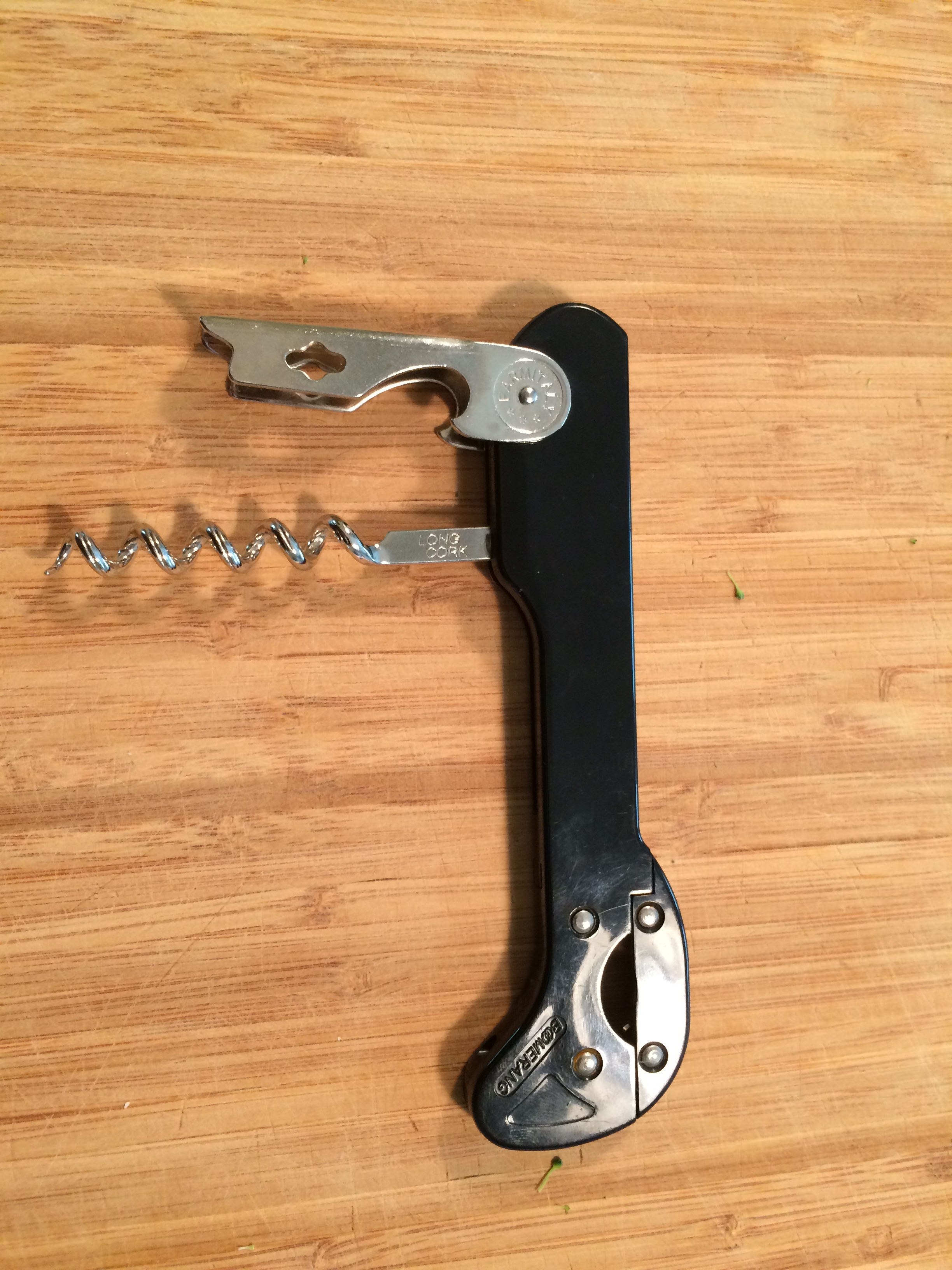
BEST TRAVEL CORKSCREW
The best travel corkscrew that I have found is this little gem, The Boomerang, I purchased for $6.99. After having a number of corkscrews confiscated by TSA agents at U.S. airports, I began to look for one that did not have a knife blade as a foil cutter. This one has four discs that cut very evenly around the top of the foil. The corkscrew itself seems a bit fragile, but I have opened over 100 bottles with it with no sign of it slowing down. I do, however, carry a backup.
The history since 9-11 is that all corkscrews were originally banned from carry-on luggage because of the knife blade as a foil cutter AND the corkscrew itself. This was relaxed a few years ago, but the ban on the knife blade has continued.
Since I always take a corkscrew with me and I fly dozens of times a year, I needed to find one that I could take in my carry-on luggage, because, well, you never know. A case in point – I was flying across country, and a friend happened to be one of the
flight attendants. My wife and I were in coach. The flight attendant brought us a package wrapped in plastic bags and said, “Mr. Lockard, you left this in the front of the plane.” Opening it, I found a bottle of very nice Chardonnay and two glasses from the first class cabin. My corkscrew was in the pocket of my backpack under the seat in front of me!
I have also blogged about the Best Corkscrew (LINK), the Cork Pops Legacy Wine Opener, but that model, being powered by gas capsules, is not suitable for travel. If you can only afford one of these, get the traveler – it’s much cheaper, and you can use it at home or on the road.
TRAVELING WITH WINE
There are a couple of things that you might want to know about taking wine with you on airlines and cruise ships. First, is how to pack the wine so that it is safe and does not spill onto the contents of your suitcase.
Many times, I have traveled with wine bottles in my checked luggage. What I usually do, if it is just a bottle or two, is either use a special wine bottle protector, or, absent that, wrap the wine in some clothing like a sweatshirt or a bathrobe (what, you don’t travel with a bathrobe?). It is best, of course, to have the protector.
If you are flying with more wine, like a case or so, it is best to get wine luggage and check it through. There are a number of products on the market. I like Lazenne (LINK), a light but stable product that works great for most uses. They also make wine bottle protectors.
Lazenne Wine Case SuitcaseWine Bottle Protector
I did a blog post on bringing wine into the U.S. and customs duties, etc. Here is the (LINK TO THAT POST). Actually, duties on wine are lower than you might expect, and paying the extra airline fee, if there is one, to ship a case of wine is a relative bargain.
Cruise ships can be another story. Oceangoing cruise lines often have a policy restricting bringing alcohol on board. If you make purchases on shore excursions, the booze is often taken upon re-boarding and held until you disembark. You can usually get away with having some wine in your luggage initially, but that will, of course, be somewhat limited. If you are concerned about this, check with the cruise line to see what their policy is.
River cruises are often different. We recently went on a Viking Cruise Lines (LINK) ship on the Rhine River. We were encouraged to bring wine purchases aboard to have with dinner – no corkage fees. The reason for this is that this cruise offers complimentary wine with meals, so any wine that you bring on board saves them money. I still liked the policy, and we did bring some wine on board to consume.
WINE APPS FOR TRAVEL
I am not a big fan of any of the wine apps I have used so far. I guess the best is Delectable (LINK), which lets you scan the label and view a bit of info and any other reviews that happen to have been posted. It also lets you review the wine. The problem is that, while it recognizes most wines that you find only in Europe, there is a paucity of information and very few, if any reviews on them.
For locating wine venues, from wine bars to châteaus to good wine restaurants, I use TripAdvisor.com and occasionally, Yelp.com and Google.com/maps. These work as well in Europe as in the U.S., meaning that they are okay, not really great. Better to find a local wine bar or wine shop, make friends with the bartender or proprietor and ask questions about the local wine scene. If you know of something better, please leave a comment to this post.
SOME PLACES JUST AREN’T GREAT FOR WINE
While wine has become more and more prevalent in many parts of the world, there are some places where wine either isn’t available, isn’t good when it is available, or is so pricey that there are better options.
We were in Iceland(LINK TO THAT POST)in May for a few days. There is wine there, but it is extremely expensive due to shipping costs and UK duties on New World Wines. As my post at the time indicates, we found some great local beers and did just fine.
Prague is near some decent wine regions, particularly in Hungary, but I found that my lack of knowledge of the local wines was a problem. So we went with the huge array of excellent beers there as well.
Next month, we head to Oaxaca, Mexico for a month of Spanish Immersion Classes and the amazing cuisine of that region (think chocolate, mole sauces, and coffee). Not a wine region in sight, and if there is wine, it will be served at room temperature – about 80 degrees Fahrenheit. No, we will stick with beer and the fantastic Mescals of the area.
FINAL TIPS
So my tips include:
Take a good travel corkscrew and a backup.
Select one or two good options for carrying wine with you.
Learn your online and local wine resources.
Remember – when there isn’t wine, there is always something else.
So never let your travels be dictated by your own failure to prepare. Sampling the local wines when you travel is a great experience (even if the wines aren’t always so good), and the people in the wine industry, from the vineyards to the retail shops, have been great people wherever we have traveled.
We aren’t done. After Cleveland, we head to Southern California, then Mexico, then Hawaii, then Southern and Northern California through January – then, who knows? But you can be sure that I will be blogging all the way.
Since we are staying very near Avignon in southeastern France, an article on the nearby Châteauneuf-du-Pape Region, where we will be visiting soon, caught my eye. It’s about a UFO scare in France in the 1950’s that led to some very unusual legislation being passed in Châteauneuf-du-Pape. There is also a link to one of my favorite California wines – Bonny Doon Cellar’s LeCigare Volant(LINK), which derives its name from that legislation.
The article is from the site FWx and originally appeared on Vinepair.com
A quote from the article: “Châteauneuf-du-Pape, located in the Provence-Alpes-Côte d’Azur region in southeast France, is one of the most celebrated wine producing villages in all of France. It also has one of the wackiest wine laws in the world, one borne out of 1950s UFO hysteria.”

















 ur final stop of the day was a Cass Winery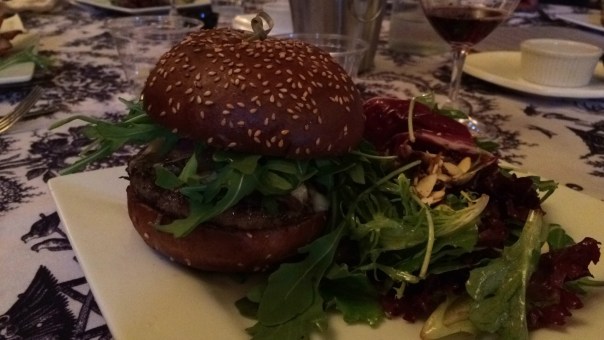









 Jim Lockard On Wine