Category Archives: Wine Travel

FREIXENET CAVA (Sparkling Wine) – THE GOOD STUFF

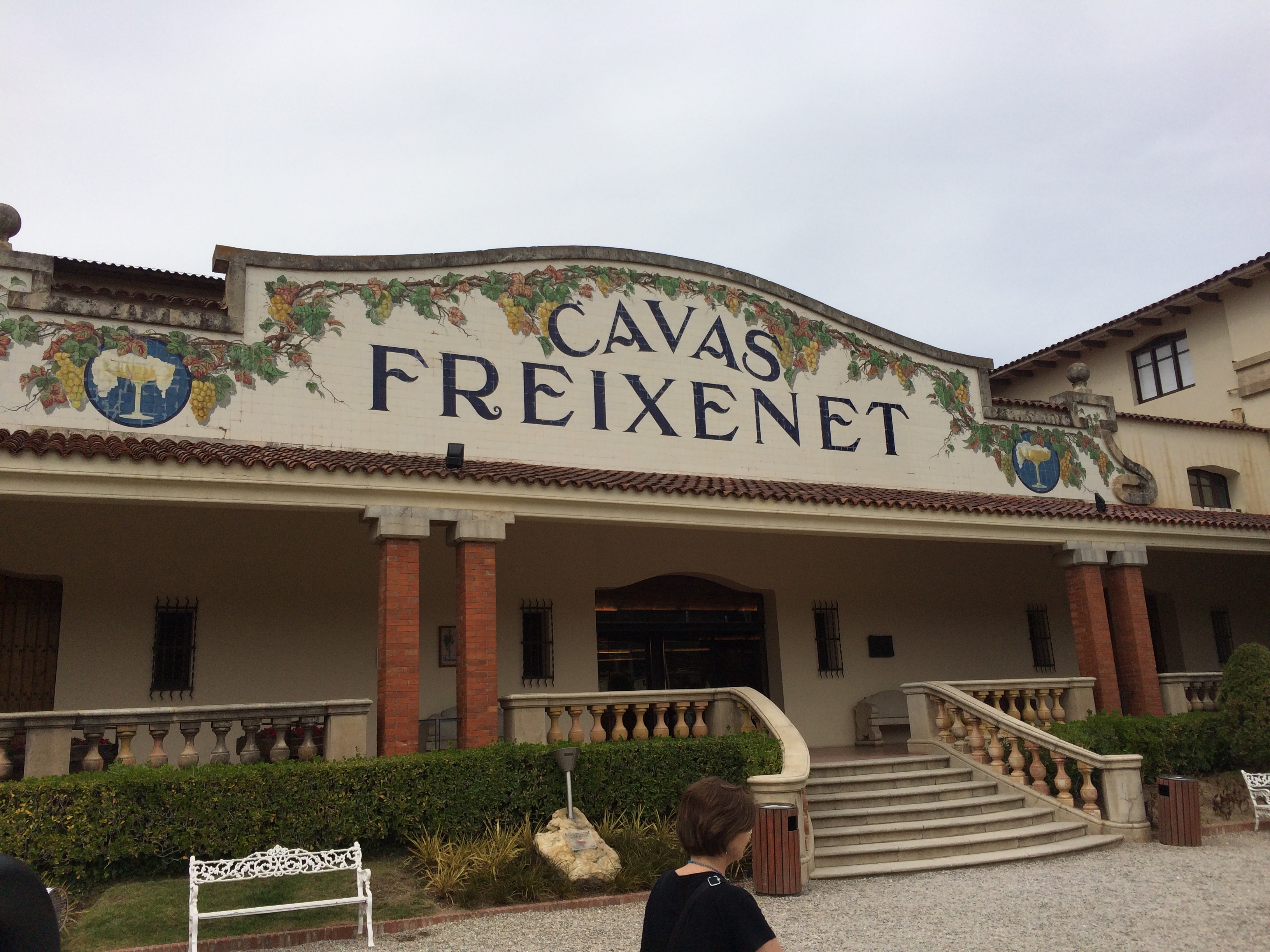
During our recent visit to the Penedès DO near Barcelona, we also visited the legendary Cava producer, Freixenet (LINK). Known in America mostly as a producer of very cheap sparkling wine suitable for college parties and sports celebrations (where most of the wine is shot out of the bottle), it is often hard for U.S. consumers to imagine high-end Freixenet Cavas. But that is what we had during our visit to the winery.
2015-04-15 16.18.12 2015-04-15 16.19.40

Cava (LINK) is the Spanish sparkling wine, similar in processing to French Champagne, but using different grapes and the name “Cava” is not limited to a specific geographic region or appellation. The primary grapes used in Cava are:

  • Macabeu (white)
  • Parellada (white)
  • Xarel·lo (white)

Other grapes:

  • Chardonnay (white)
  • Pinot Noir (red)
  • Garnacha (red)
  • Monastrell (red)

Freixenet uses the first three almost exclusively.

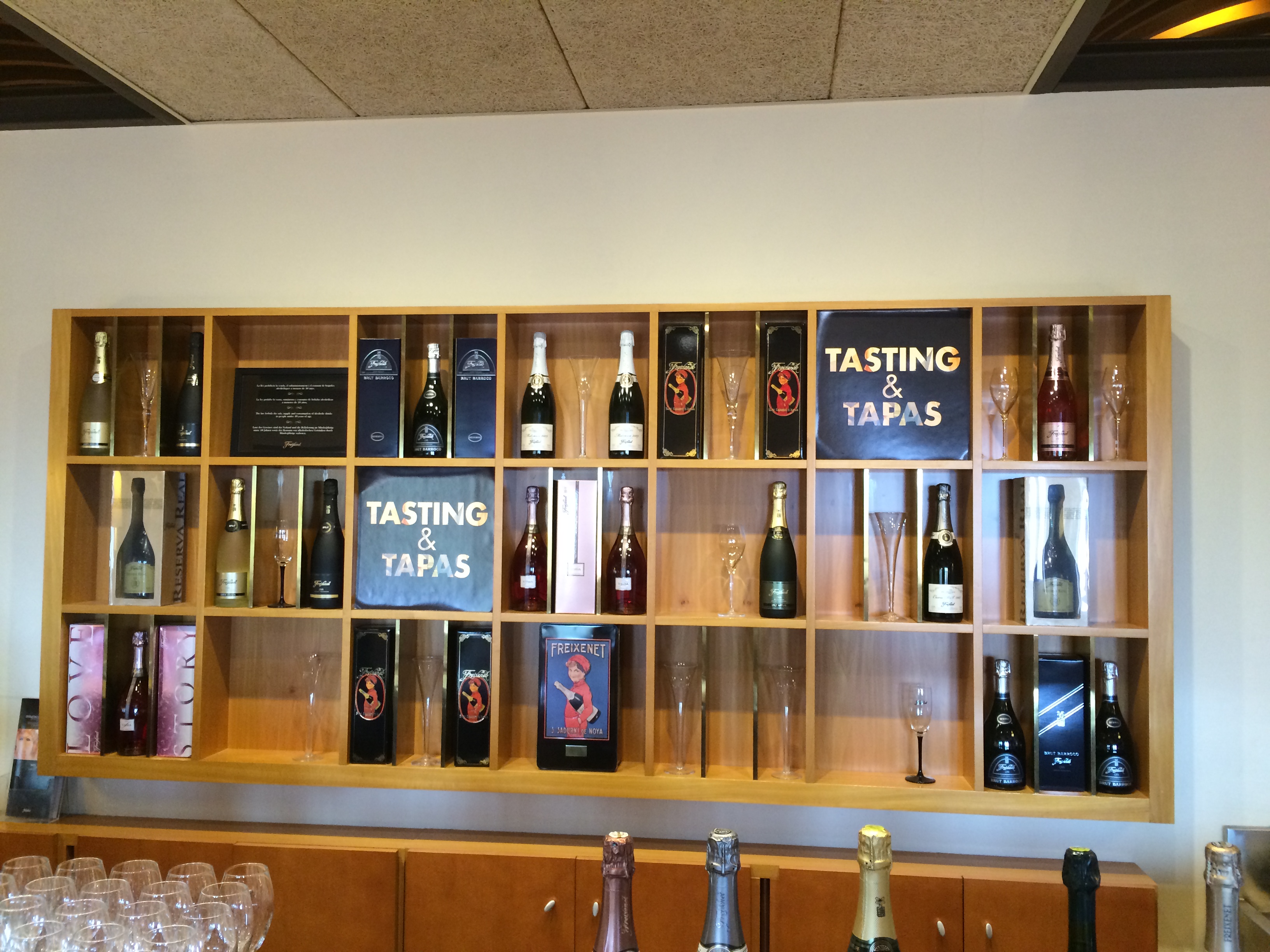
We did not do a tour of the extensive facility (90 million bottles per year) in Sant Sadurní d’Anoia. We went right to the tasting room, after wandering around a bit and seeing some of the marketing vehicles the winery has used over the years and some of the “art” on display in the main building.

2015-04-15 16.17.50 2015-04-15 16.18.08 2015-04-15 16.18.16

The tasting room is in the 3rd floor of a large production building that has a large gift shop on the first floor where you can get your “inexpensive” black bottle of Freixenet  that you remember from your formative years, along with lots of other things. The tasting room is large and well appointed – and handled a tour group of about 50 young people easily while we were there.

2015-04-15 16.37.25 2015-04-15 16.37.28

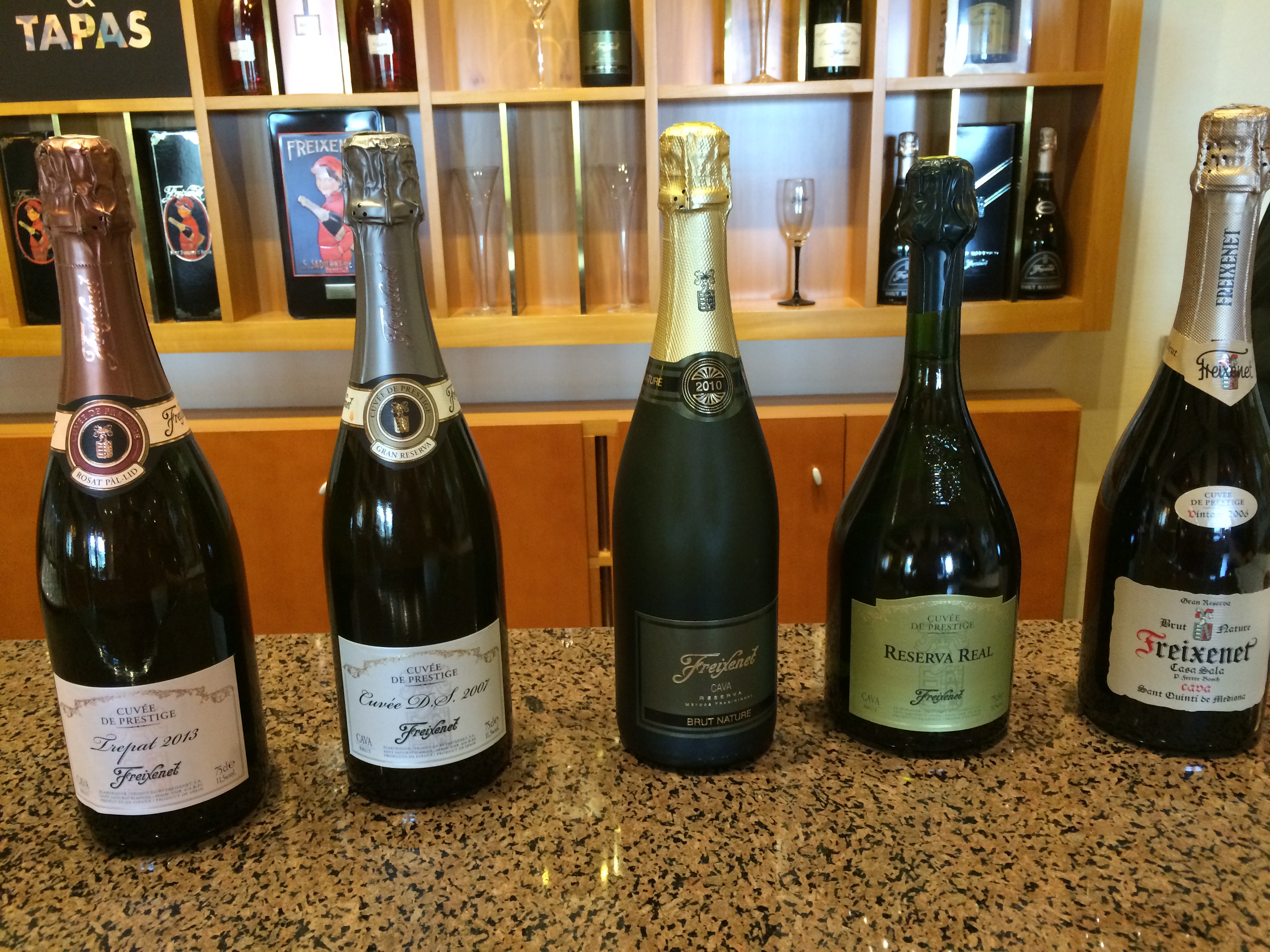
We opted to taste four wines from the Cuevèe Prestige Collection, their higher end cavas, and one, the Brut Nature Reserva 2009, that is the favorite of the locals in Spain. Now, Dorianne is more of a sparkling wine fan than I am, and she was the driving force behind our visit – having many fond, if foggy, memories of evenings where that black bottle played a role. But I was game, so we tasted.
2015-04-15 16.39.14 2015-04-15 16.48.47

We began with the Trepat 2013, a Blanc de noirs” style cava, that is a single vineyard wine – rare in this business. The wine was sharp, tart, and had a very strong degree of carbonation. This would be a great wine with a ripe cheese.

Next, we tasted the Cuvèe DS 2007 Gran Reserva, using Macabeo, Xarel•lo and Parellada grapes. It is only produced when the harvest is very good. This wine was more balanced than the Trepat and had a nice sense of fruit and not too much sugar. 

Then, the Brut Nature Reserva 2009, the cava that sells the best in Spain (according to the tasting room staff). The wine is only produced in certain years. It is a smooth and well-crafted cava that would accompany a meal of fish or chicken, or, well, just about anything.

Next, the Riserva Real, a non-vintage cava, made in the Champagne style, meaning a blend of vintages. This cava, like some of the others, is aged in chestnut barrels. This wine was very nicely crafted, with a hint of minerality on the nose and a very smooth mouthfeel. Fruit and spice. A really nice sparkling wine.

Finally, the CASA SALA Brut Nature, Gran Reserva 2005, the highest priced wine we tasted. This wine was similar to the Riserva Real, but not quite as well balanced. The wine is  produced at the original properly of the family (The Casa Sala’s) via manual harvest, pressed in a wine press from the Champagne region that is more than 150 years old, fermentation with native yeast, and wine decanting and maintenance by gravity, without using pumps. This brut nature has no dosage and is reminiscent of the traditional cavas of 50 years ago. Two traditional grape varieties are used for the blend, Xarel•lo and Parellada, and their percentages in the cuvée change from year to year. 

If you come to the Barcelona region, a visit to the Pendedès DO is worth your while. I would say that the better cavas of Spain can take a seat beside most French Champagnes, and, like most Spanish wines, they are a great value.

IN CATALONIA – A WINE REGION FULL OF LIFE

Dorianne and I are in Sitges, Spain this week, which is a beach town south of Barcelona. Just east and slightly inland from Barcelona is the Penedès DO Wine Region, home to a variety of wines, including Cavas, the sparkling wines of Spain. More about cavas in later posts. This concerns our visit to Bodegas Torres (LINK), in Villafranca del Penedès, one of the largest wine makers in Spain.

penedes map catala
The Penedès DO Wine Region

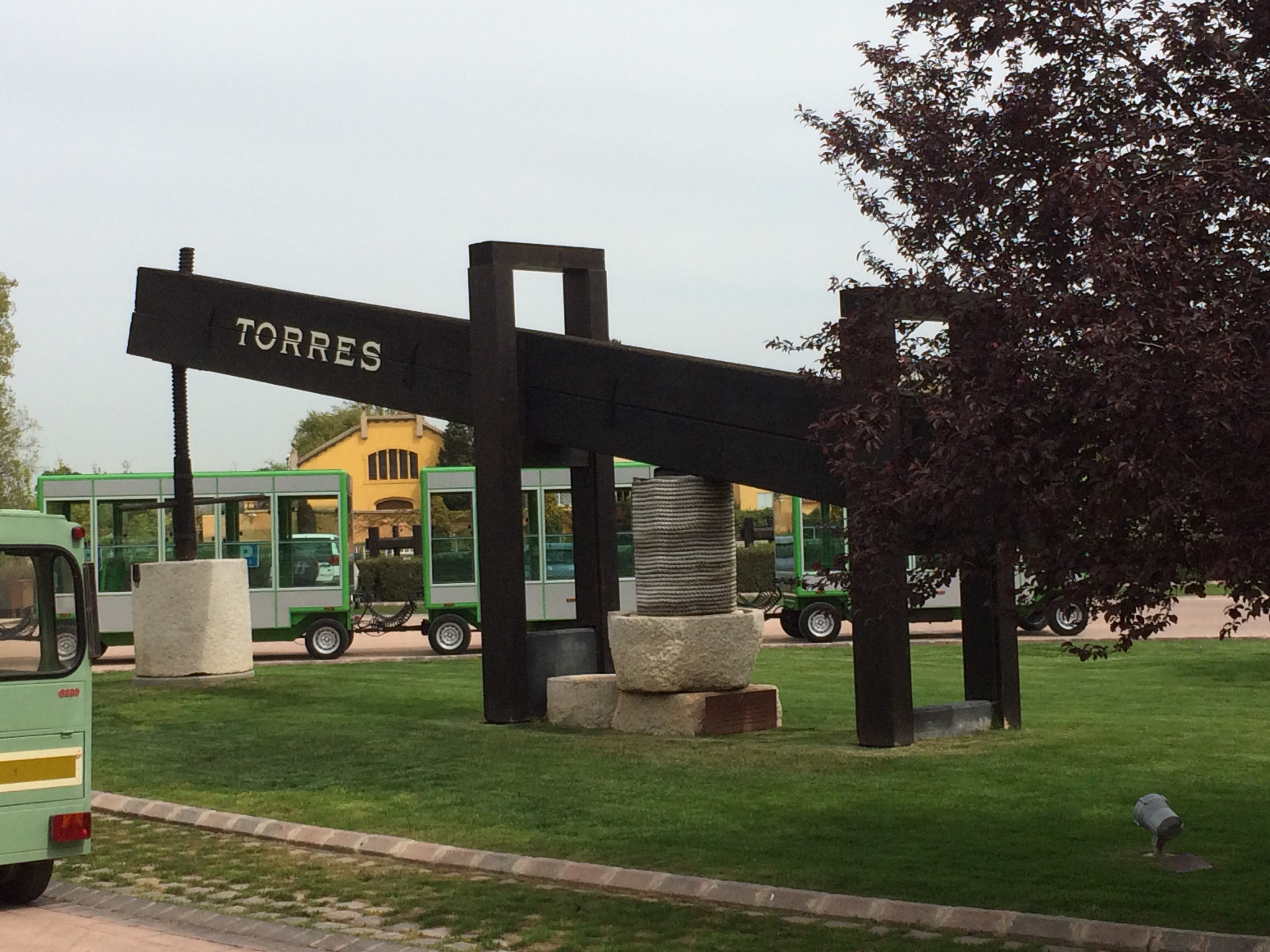
Bodegas Torres is truly a huge operation with a storied history and wine production all over the world (LINK). The Penedès Winery is a state of the art facility producing wine and brandy and is located next to the family home. It is roughly on the level of a Mondavi or a Gallo-sized operation, to give you an idea. The wine tour (which we were given alone with a guide, Archie, a young man from England) includes a tram and Universal Theme Park-like effects, which were inspired, we learned, by a family visit to Universal Studios in Los Angeles. So this is not your boutique winery.

2015-04-15 12.34.47 2015-04-15 12.34.58 2015-04-15 12.35.47 2015-04-15 12.36.32

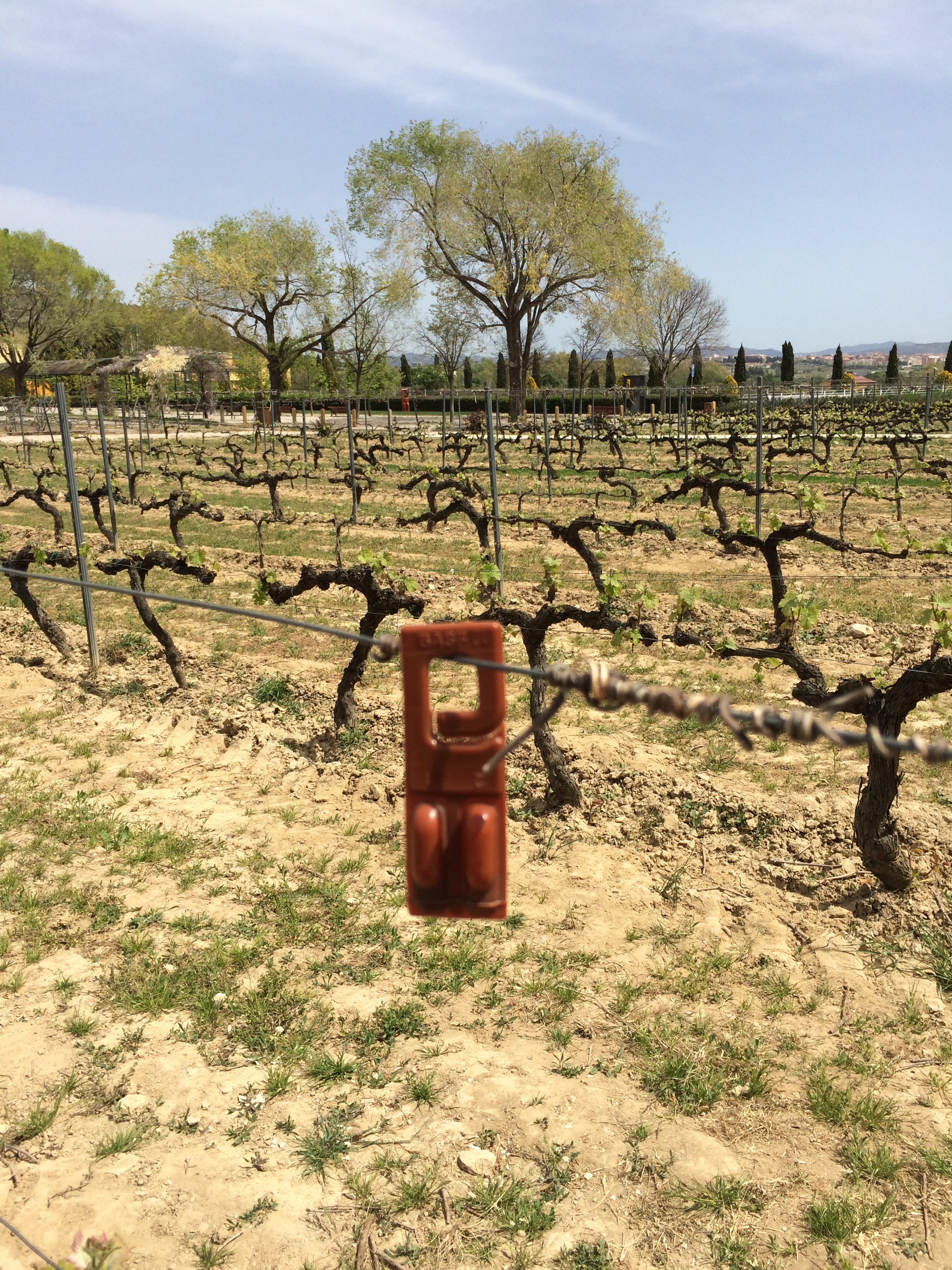
That being said, the company is taking strong steps at environmental sustainability (LINK), including recycling, energy and land conservation, increased organic and biodynamic farming practices, and the like. The tour highlights many of these practices, which the company obviously sees as a good way to market their wines. I agree with them.

2015-04-15 12.36.06
Reservoir used to clean equipment – water is recycled through the artificial wetlands.
2015-04-15 13.38.42
Sand dome over a reserve cellar to provide insulation
2015-04-15 13.55.57
Pheremone capsule to keep flies from laying eggs in the grapes

2015-04-15 13.40.17

The winery facility in Penedès processes millions of bottles of wine annually. It has the look and feel of a place that has the resources to create whatever the owners want – the buildings are nicely appointed, the vineyards well tended, the equipment is in excellent condition, plus there are very nice touches for the customer at every turn. There are about a dozen wines and several brandies produced here. Our tasting after the tour was limited to five wines from three regions in Spain. Archie our guide, has been with the company for about a year and is working toward wine certifications in England. His plan is to work in the wine industry. He showed a great deal of knowledge about the entire process, and he was able to answer most of our questions. The tour would be an excellent introduction for someone new to wine production, and we learned a thing or two as well.

2015-04-15 13.43.33
Barrel Storage Cellar
2015-04-15 13.51.32
Bottle Aging Facility
2015-04-15 13.54.35
Our guide, Archie, describing pruning techniques.

2015-04-15 13.54.18

As to the tasting – the wines we tried – two whites (blancos) and four reds (tintos), were all well-crafted and balanced wines. We tasted across several of the labels of the winery – (there are dozens). The blancos, were a 2013 Jean Leon Chardonnay from Penedès DO, and a 2013 Torres Fransola Sauvignon Blanc. The Chardonnay was 50% oak barrel aged and 50% stainless steel. It was similar to the increasingly popular style of Chardonnay from California, which is less buttery and powerful. The wine was refined and nice on the nose and in the mouth. Very good. The Sauvignon Blanc was more in the French style – smooth and elegant. The wine did not jump out at you with citrus or grassy notes like New Zealand Sauvignon Blancs; rather it seduced you a bit – this wine would be amazing with shellfish, we both agreed.

The four tintos were also all well-structured and balanced wines. They included a 2012 Torres Altos Ibericos Crianza Rioja, a Tempranillo with good character. Moderate tanins and acid make this wine good for drinking alone or with food, such as barbecue or some wonderful Iberico Jamon. The second tinto, a 2012 Torres Celeste Crianza from  Ribera del Duero DO, a Tinto Fino (the name for Tempranillo in that region). This wine was more fruity and had lower tanin – but was clearly well-crafted. Very nice. Next, we moved on to the two higher-end wines in the tasting. A 2012 Torres Salmos a blend of Cariñena (60%) Garnacha Tinta (20%) and Syrah (20%) grapes from the Priorat DO. I have really enjoyed just about every Priorat wine that I have tasted, and this one was no different. A very dark, rich color, fruity and spicy on the nose, and bold fruit-forward in the mouth, very thick (but not unpleasantly so) mouthfeel and a long, silky finish. I really love this wine. Finally, we go to the 2010 Mas la Plana Cabernet Sauvignon from the Penedès DO. This wine brings a greater complexity with some mushroom on the nose and hints of minerality just behind the fruit. Good tanins and acidity balance on the tongue and the finish is smooth and elegant. I liked this just a tiny bit less than the Salmos. The latter two wines should age beautifully. You can research more details at the Torres links above. This may not be the winery visit and tour for everyone – it is a very large facility and run like one. But it does give good insights into the Spanish Wine Industry. There are a number of smaller wineries in the region as well.

2015-04-15 13.59.44
The Tasting Room at Torres
2015-04-15 14.01.31
The Blancos (whites)
2015-04-15 14.17.16
The Tintos (reds)
2015-04-15 14.46.03
Dorianne, Jim and Archie after the tasting.

GONZALEZ-BYASS IS THE LARGEST SHERRY MAKER IN THE WORLD

Dorianne and I spent Easter weekend in Jerez, Spain, both to take a break from the hectic Santa-Semana schedule in Seville, and to explore a bit of Sherry country. Andalusia, the southwestern region of Spain is known for its production of Sherry Wines.

2015-04-03 13.49.46
Lobby and Waiting Room for the Tours.

2015-04-03 13.46.29

2015-04-03 13.49.06

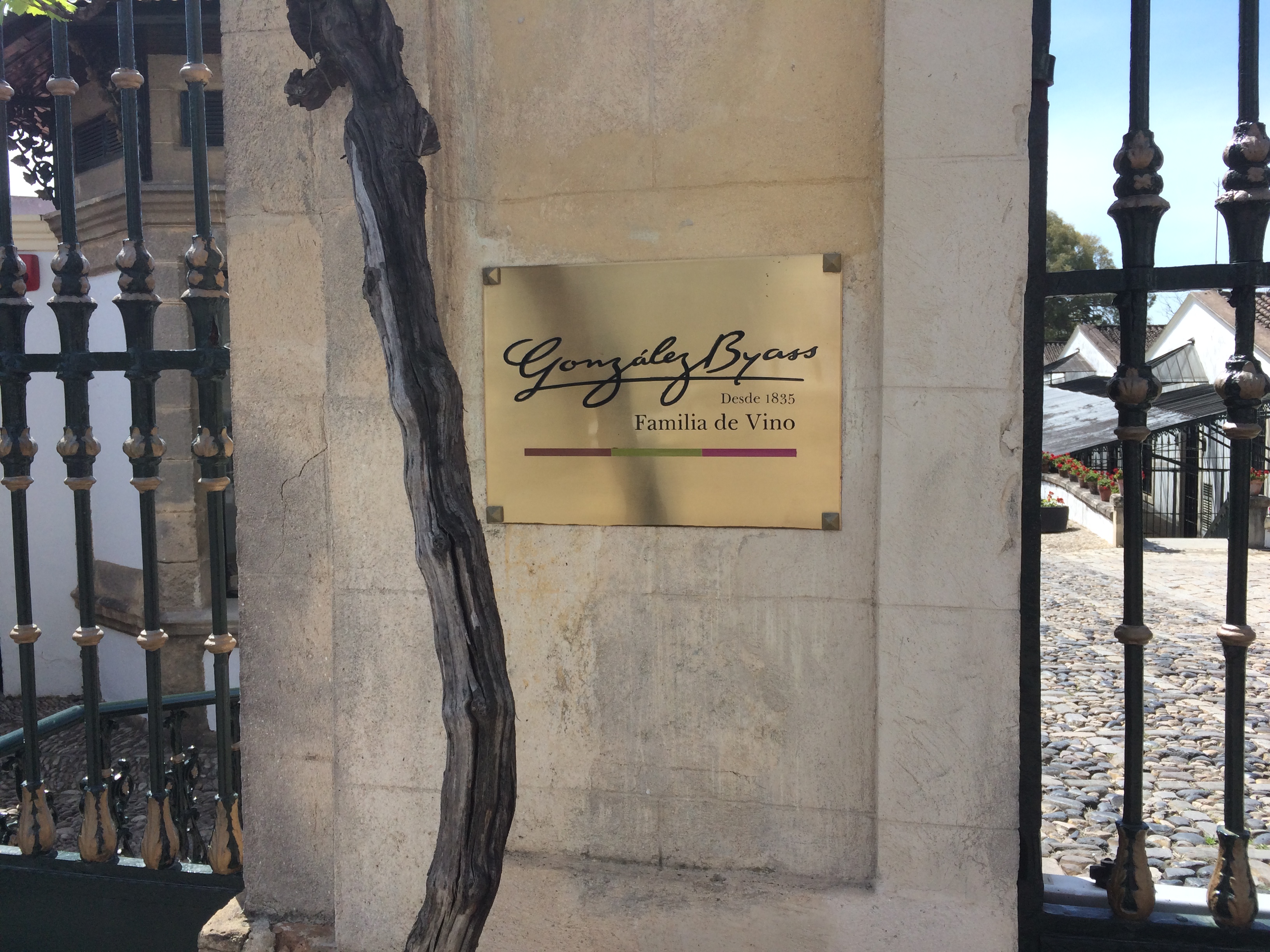
There are a number of bodegas or Sherry houses in Jerez. The only one open on Good Friday afternoon was Gonzalez-Byass (LINK), makers of the best-selling Tio Pepe and a number of other Sherries and brandies. Gonzalez-Byass is the largest Sherry producer and also has wineries in every major Spanish Wine Region – they are sort of the Mondavi of Spain. The bodega is located adjacent to the Cathedral of Jerez and The Alcazar – prime real estate to be sure.

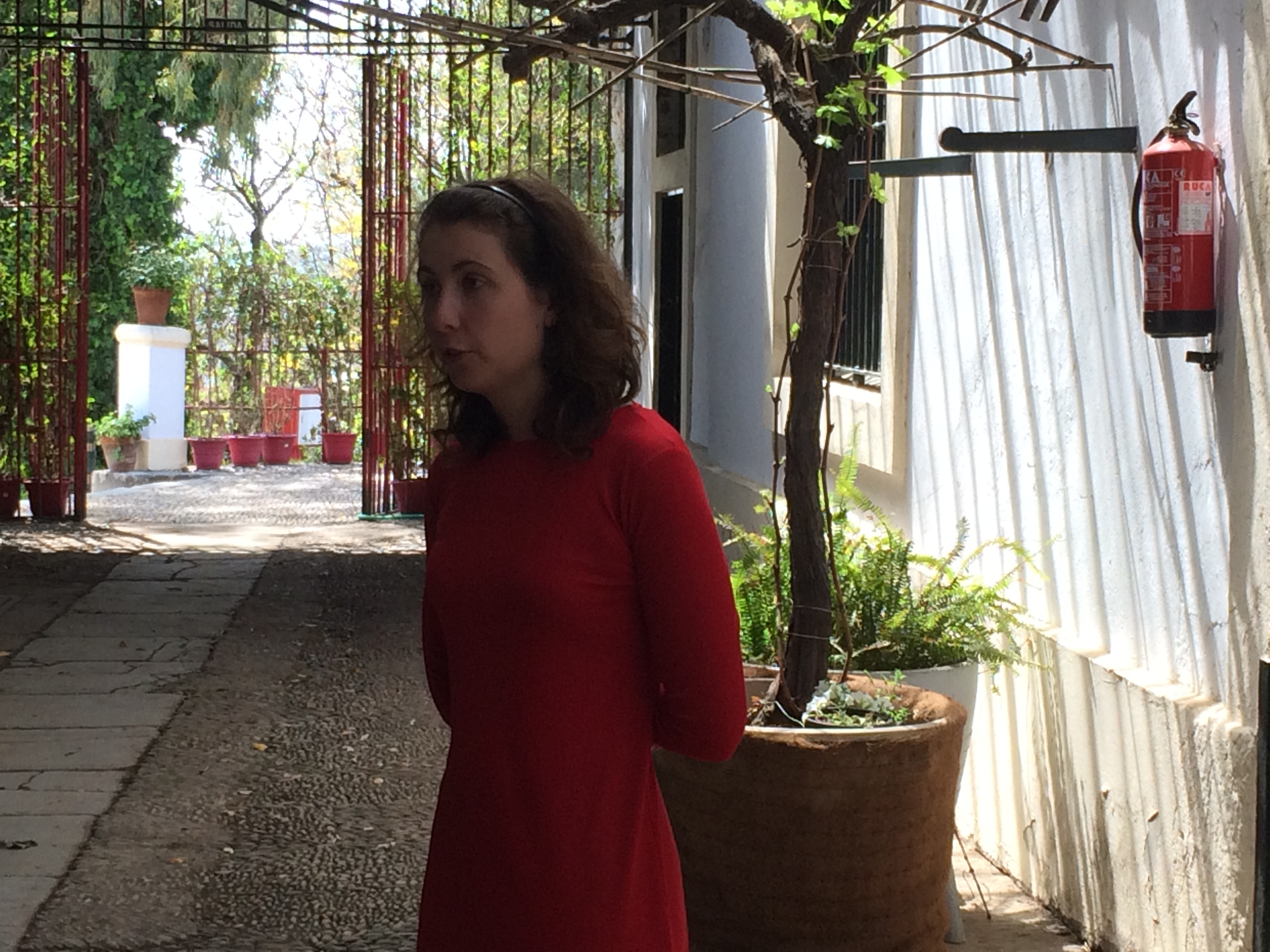
The tour cost 16 euros, including a tasting of two wines and a plate of tapas. Gonzalez-Byass is a big operation, and the tour was extensive. There were groups taken out in Spanish, English and German while we were there. You also take a tram for part of the tour. It is very touristy, but I was impressed at the amount of information provided by our guide, Rachel and the expanse of the bodega. The tour is not an intimate experience, but it is a great introduction to Sherry wine production.

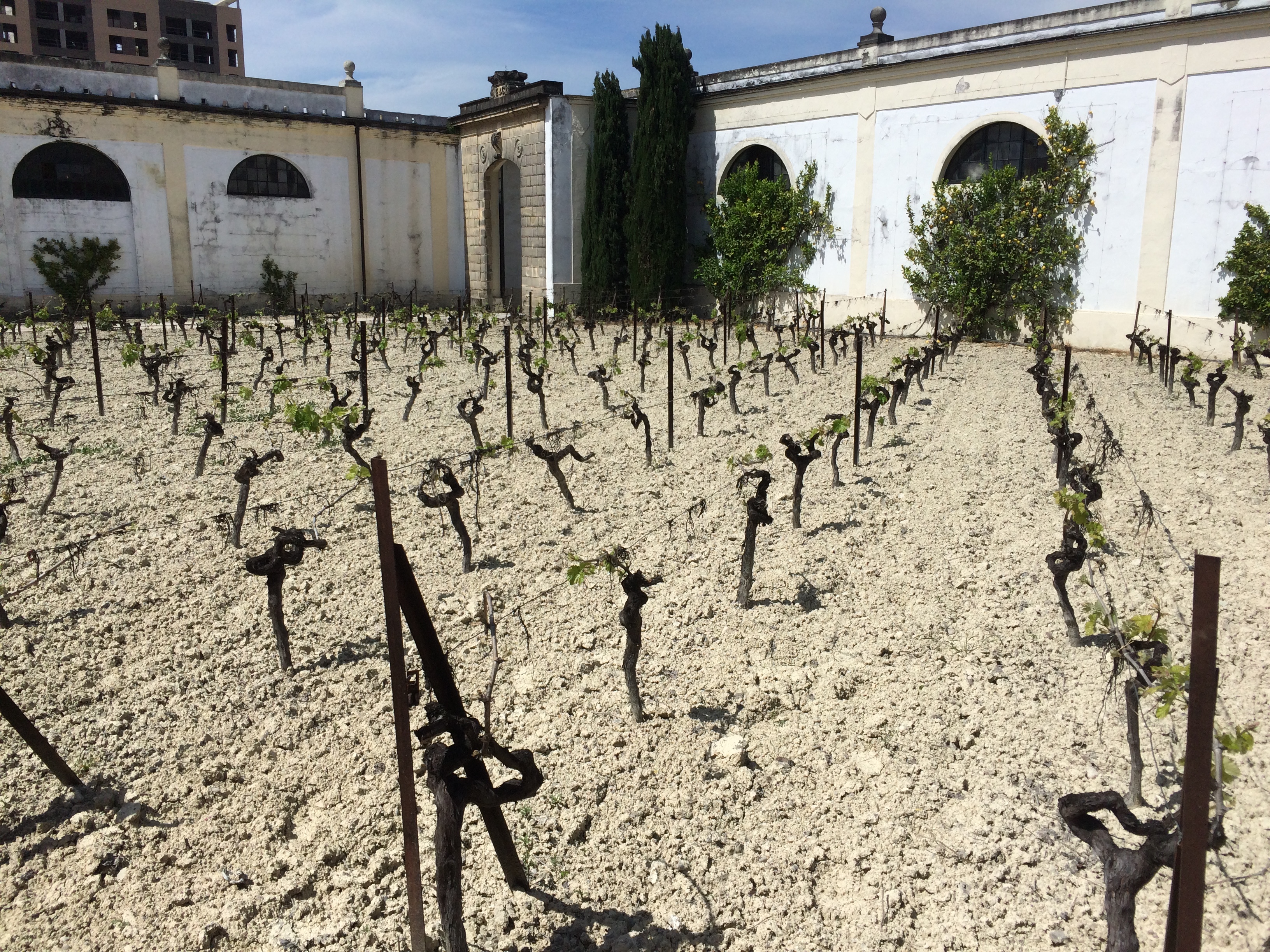
Sherry is made with only white grapes, primarily palomino, which grows well in the gray soil of the region. Dry Sherry or Fino is made from earlier harvests, sweet sherry or Cream or Dulces is made by adding late harvest grapes to the blend, in some cases, raisins.

2015-04-03 14.09.20 2015-04-03 14.34.23 2015-04-03 14.37.53 2015-04-03 14.38.28

Almost all Sherry is blended – a process where there is a stack of barrels four high. The bottom barrel contains up to 60 vintages, the second barrel is newer, the top barrel the current vintage. The winemaker takes 1/3 of the bottom barrel and then replaces that 1/3 with wine from the second barrel, and so on. Some from each of the upper barrels is added to the current wine being made. This, according to Gonzalez-Byass, results in a uniform product over time. There are some vintage Sherries, which are not made using this process.

2015-04-03 14.56.48
The grey soil of Andalusia.
2015-04-03 14.59.37
Samples of Brandies.
2015-04-03 14.59.53
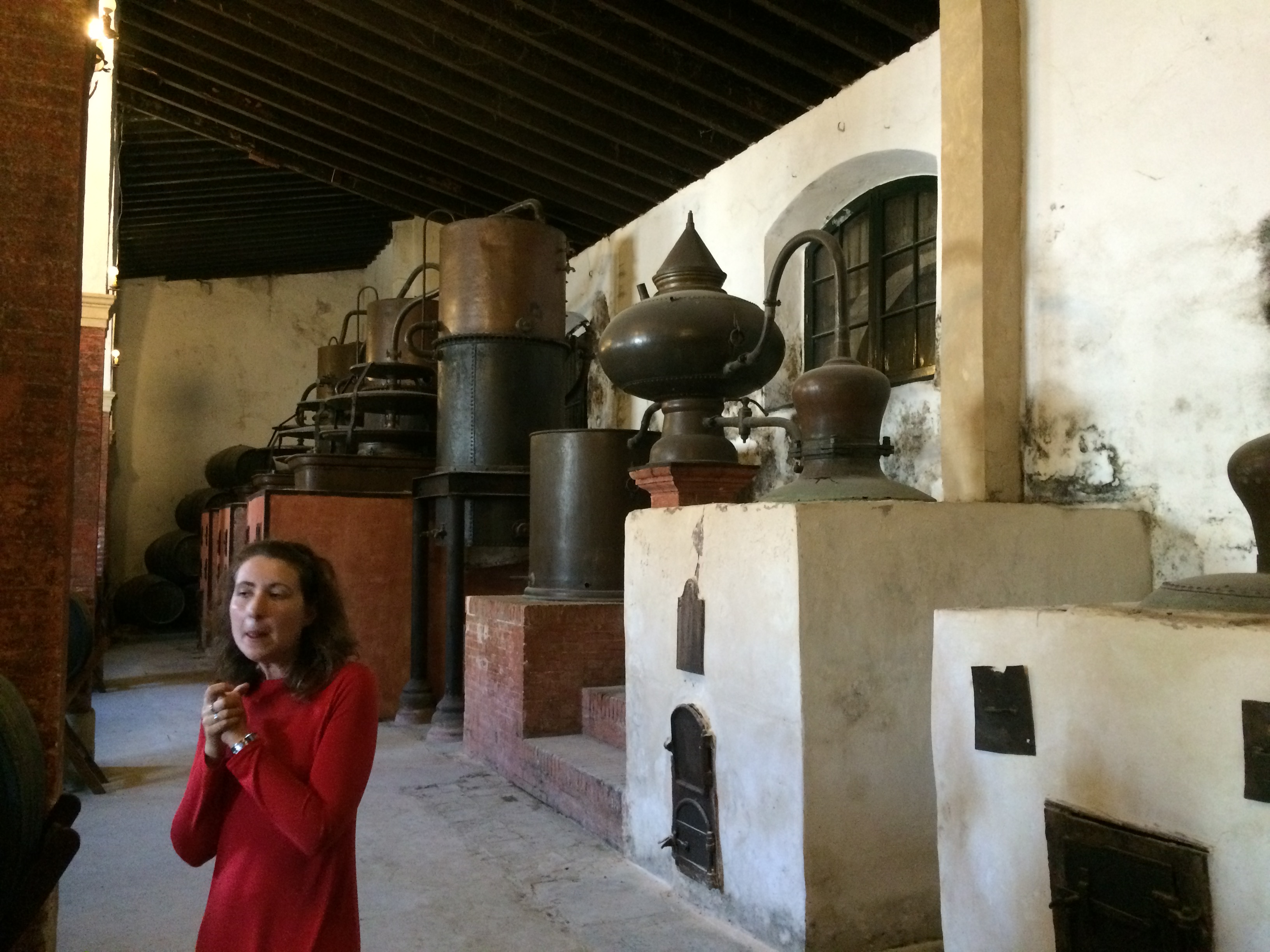
Rachel shows us the Old Brandy Stills.
2015-04-03 15.20.27
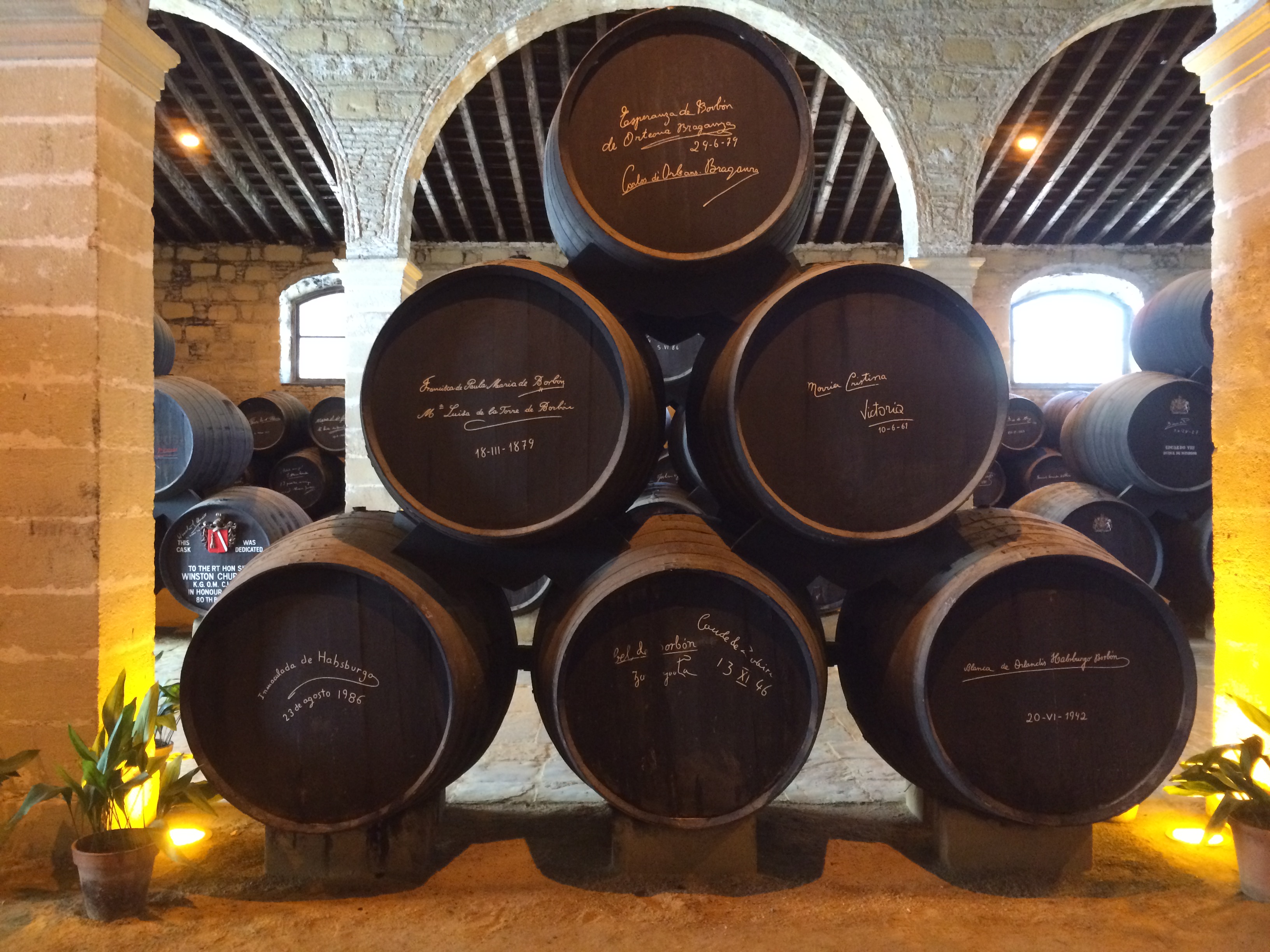
Signed barrels at Gonzalez-Byass.

Here is a good PDF showing the process of making Sherry wines (LINK).

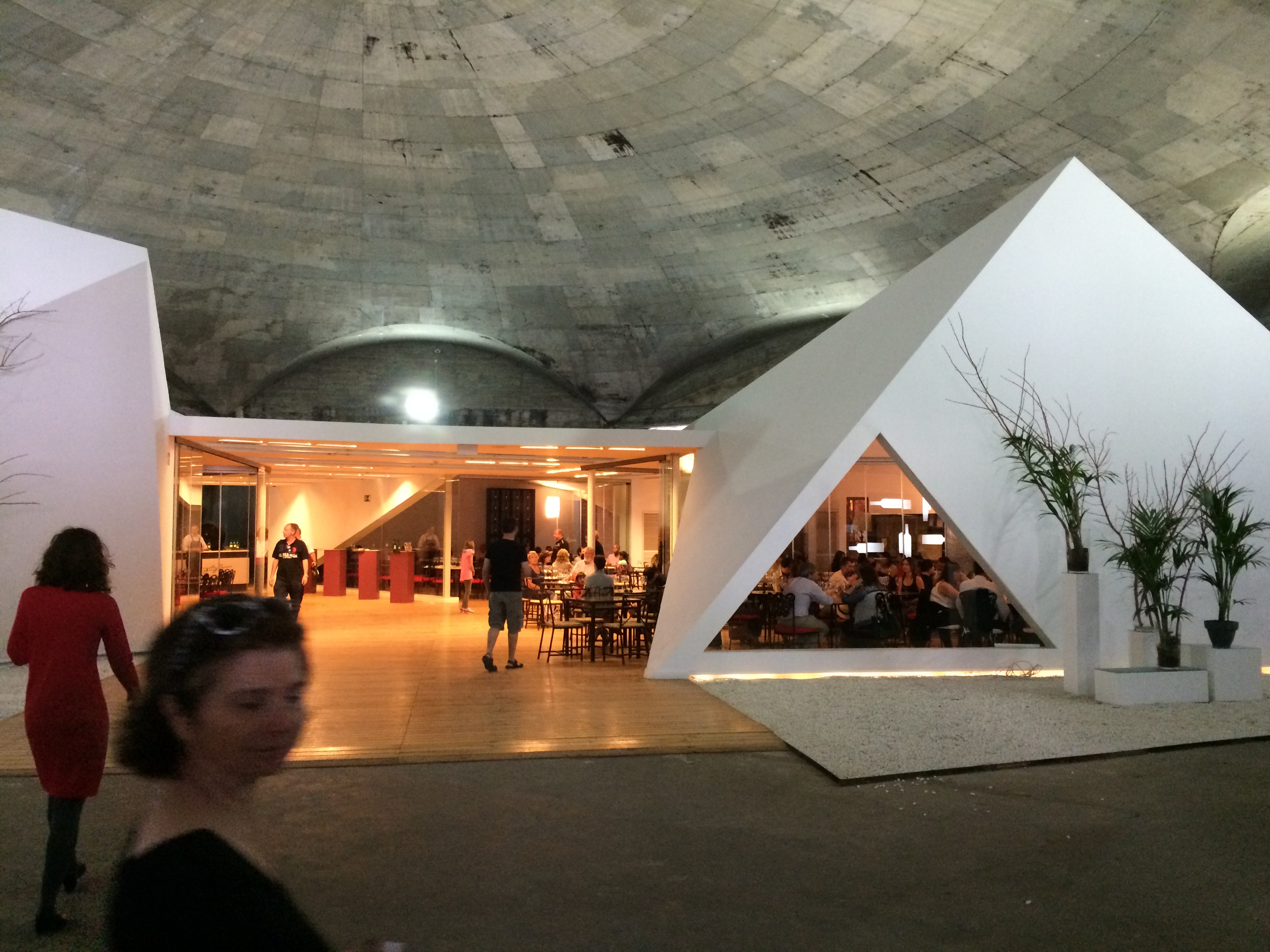
The tour concluded in a very modernistic tasting area built inside the storage building for Tio Pepe wines. We tasted three wines – a Fino, a Cream, and a Blend, and had tapas at a table shared with a mother and daughter from Moscow who had taken the English language tour. They told us about Russian wines, which I would love to try sometime.

2015-04-03 15.31.38
World’s Largest Weather Vane.
2015-04-03 15.33.25
Tasting Area inside Tio Pepe Storage Building.

I recommend Gonzalez-Byass for those who want to learn about Sherry production and enjoy the big touristy experience. They do it well. There are lots of opportunities to experience other bodegas in Jerez – just don’t go in Easter weekend!

nf

SHERRY IN JEREZ, SPAIN

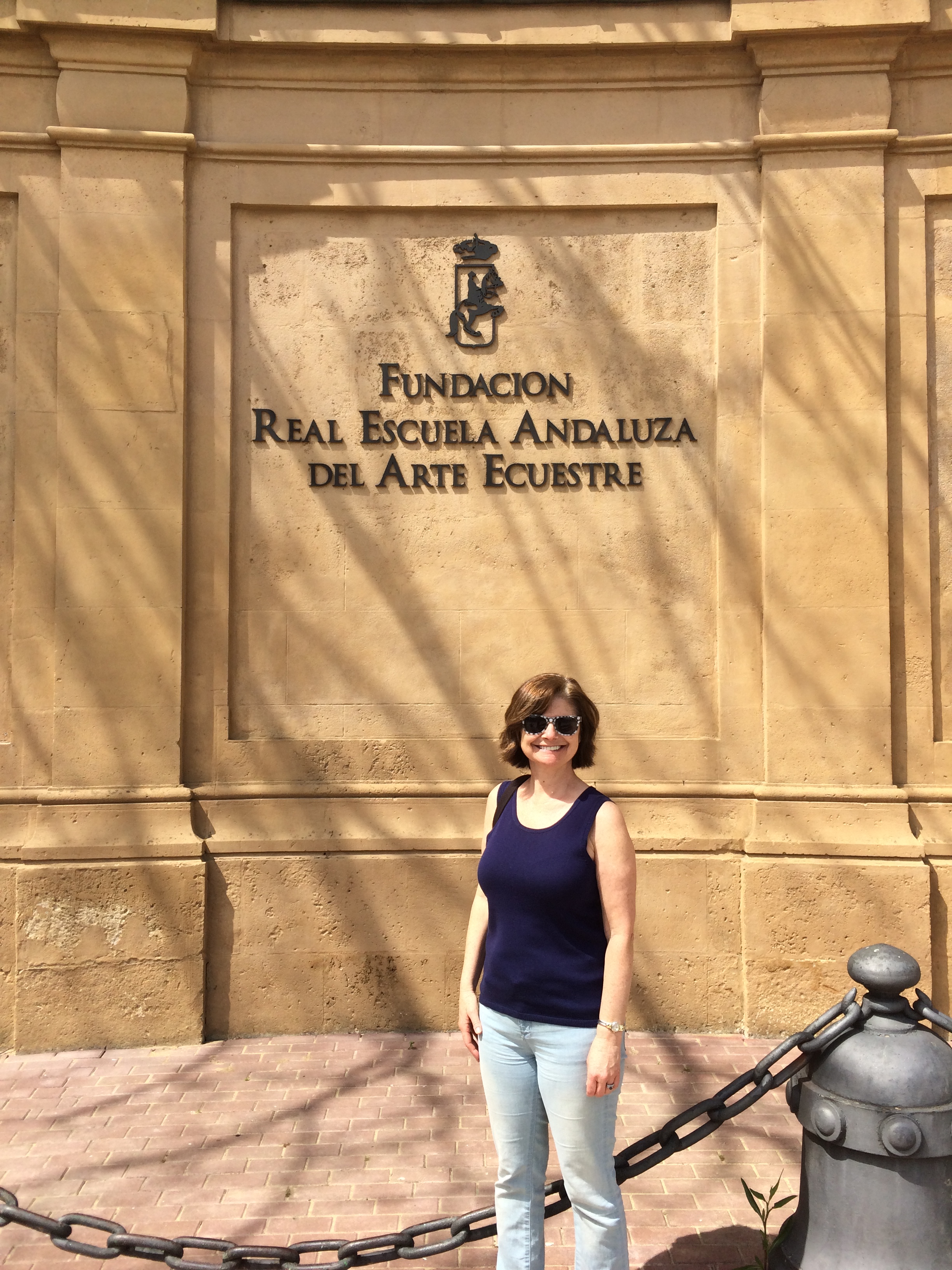
Dorianne and I took the train from Seville to Jerez on Good Friday and returned on Easter Sunday. During our short visit, we managed to do quite a bit – toured the largest Sherry Bodega – Gonzales-Bypass (LINK), makers of Tio Pepe and other sherries and brandies; had wonderful food and wine at several tapas bars; saw a Flamenco music show at a tabanco – a place where they serve Sherry from casks; visited a performance of the Andalusian Horses at the Foundation Real Escuela Andaluza del Arte Equestre (LINK); stayed in a very nice 4-star hotel, and strolled around town a bit.

I will be blogging about some of the specifics over the next couple of days, but for now, here are some representative photos of our side-trip.

2015-04-03 13.40.38 2015-04-03 13.46.29 2015-04-03 14.59.37 2015-04-03 15.05.03 2015-04-03 16.39.03 2015-04-04 13.47.45 2015-04-04 14.02.56 2015-04-04 14.14.48 2015-04-04 19.26.25

AN EVENING OF TAPAS AND WINE IN SEVILLA

Exploring Sevilla (Seville) is an experience of one discovery after another. This is our first trip here, and we are in a rented apartment near the center of town for 3 1/2 weeks. Preparations are underway for Holy Week (LINK), which is a huge deal here, with between 1 and 2 million people coming to the city for over 50 processions and other festivities. It is the biggest week of the Sevilla calendar.

Sevilla is also the home of tapas, the concept of a variety of dishes served on small plates. Tapas used to be either a snack between lunch (served here between 1pm and 4pm and dinner (served between 9pm and 11:30pm), or to accompany a larger meal. Today, especially after the economic recession here, tapas have become lunch through dinner for most people. Plates of tapas, usually one or two pieces of something, a plate of olives or a salad, cost between 1.5 and 3.5 euros. Larger servings, media or plata cost more (think bread plate/salad plate/dinner plate).

2015-03-22 20.39.36
Marinated Pulpo (octopus) with Onions and Peppers
2015-03-22 20.59.12
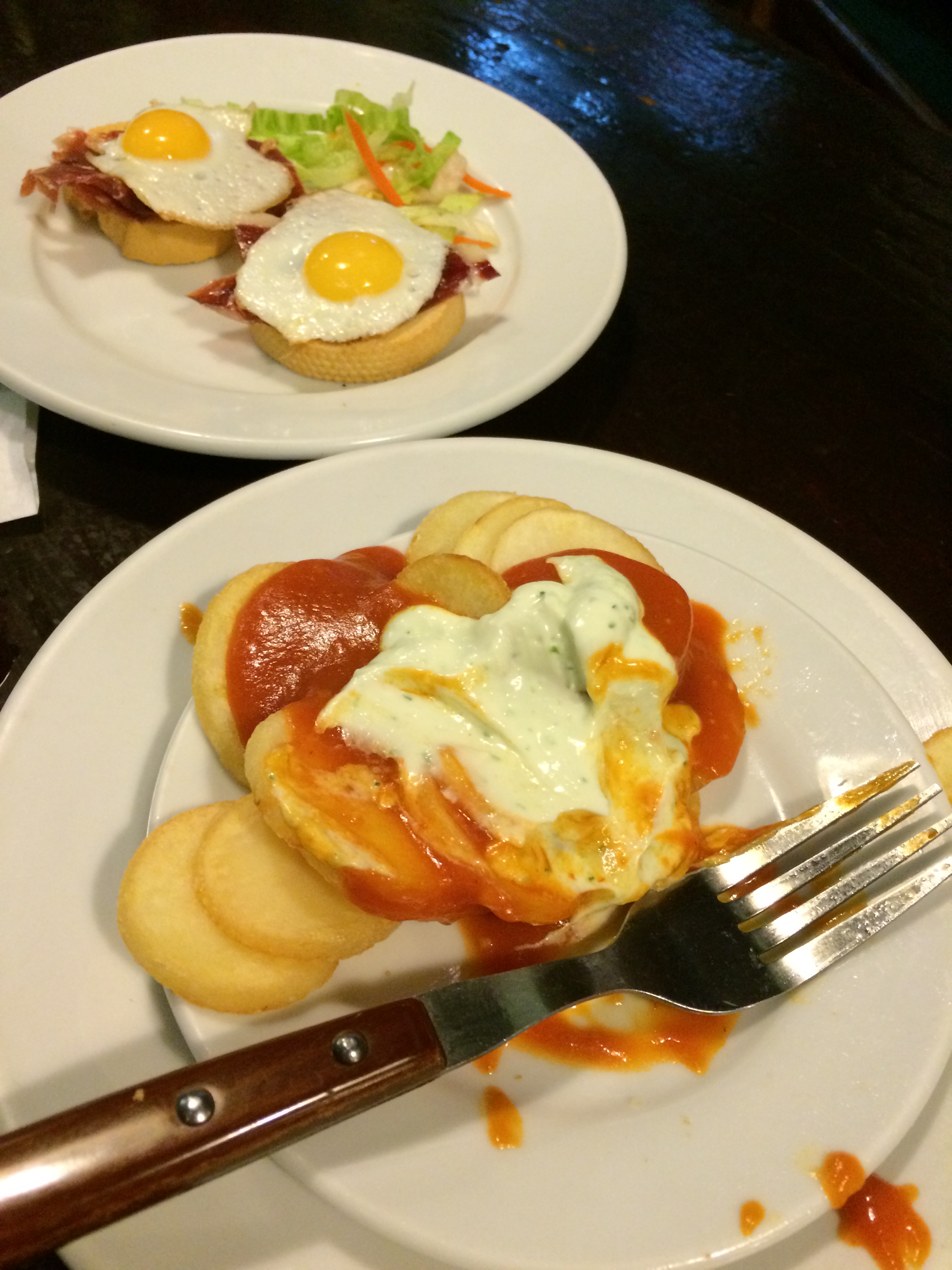
Serrano Ham on Toast with Quail Eggs
2015-03-22 20.59.17
Patatas Fritas (fried potatoes) with a spicy Catsup and Garlic Mayo

There are hundreds of tapas places in Sevilla. We happen to be staying within a block of a very good one, and we have been there twice so far.

2015-03-22 21.15.02

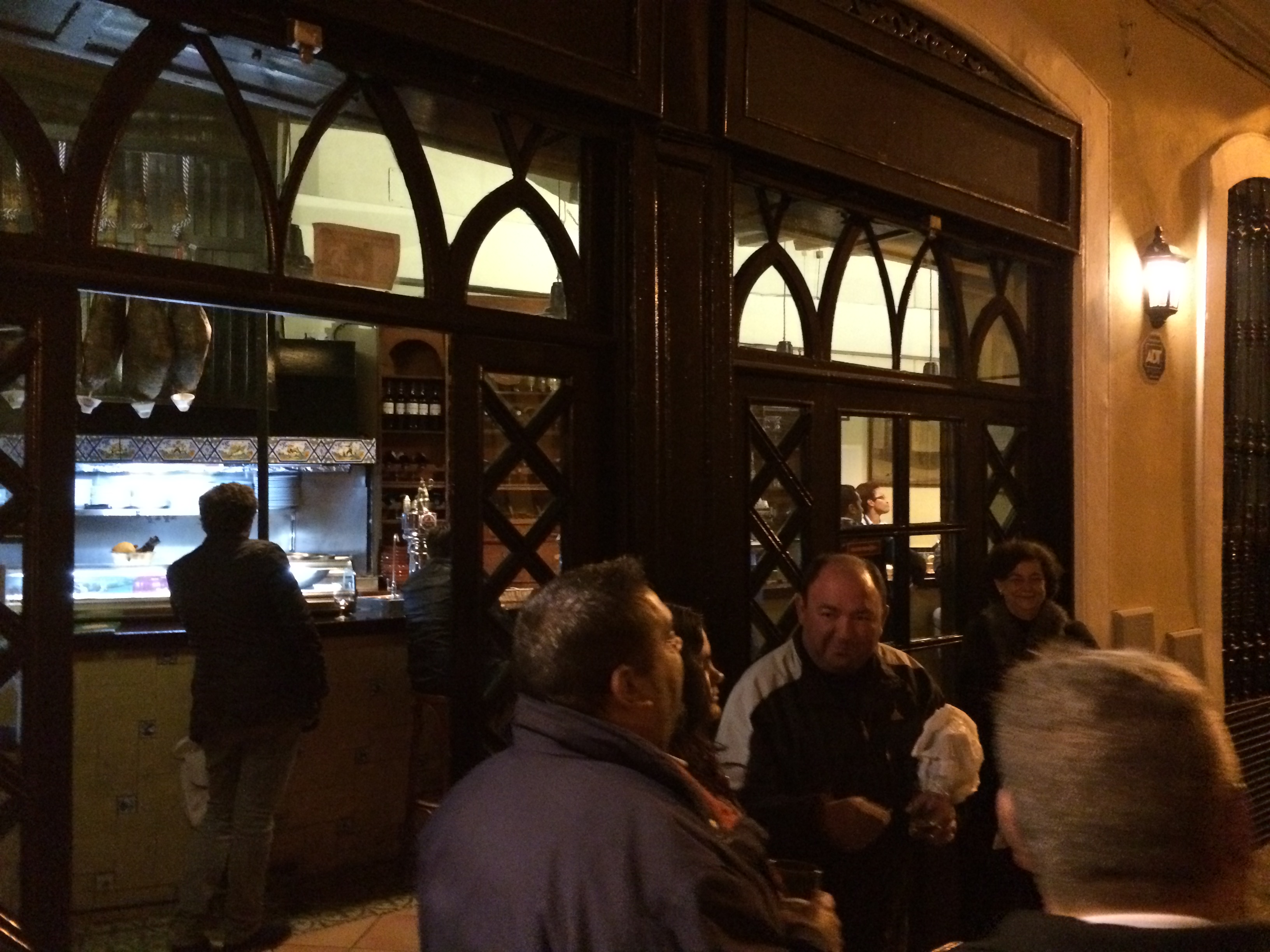
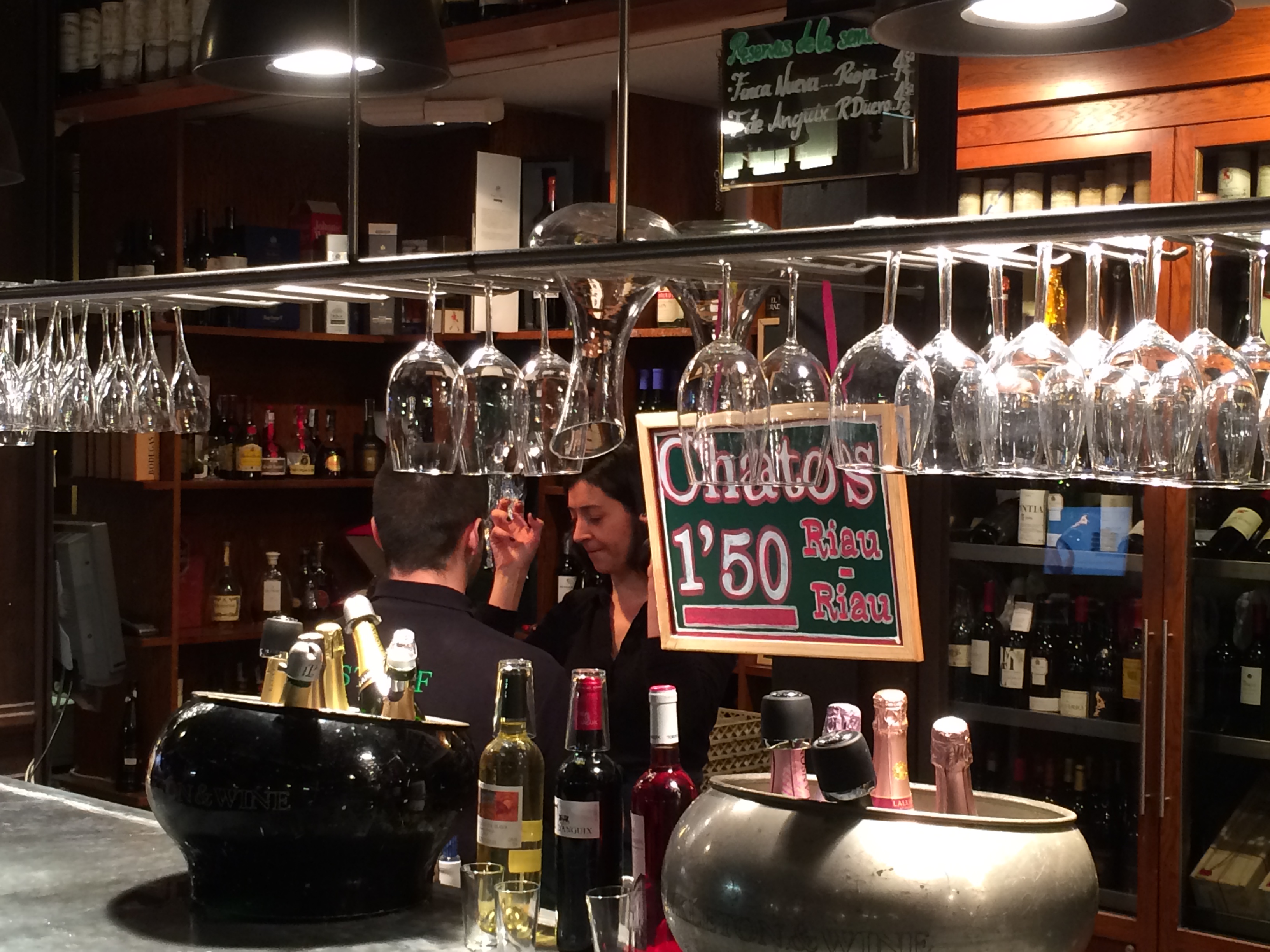
The place is Taverna Coloniales (LINK) at the Plaza del Christo de Burgos. Here, on a corner, dozens of people gather from afternoon through late at night to sample an amazing array of tapa, wine, and beer. Dorianne and I have found that three or four tapas plates are sufficient for a meal. Add two or three glasses of wine each, and our bill comes to about 18 euros, or $20. It is cheaper than eating in our apartment.

The Taberna is staffed by six people, four at the bar, one in the back room where there are about 6 tables, and one out front where the sidewalk cafe can seat around 30. The place is often packed, but the staff is excellent at knowing who needs what and when they need it, and they remember what you ordered when it comes time to pay. They remind me of the countless counter people who work in places in Manhattan, giving excellent service to large numbers of people. Part of what we in the US would call a “chain,” there are several establishments owned by the same people in the area.

2015-03-22 20.49.05 2015-03-22 21.09.13

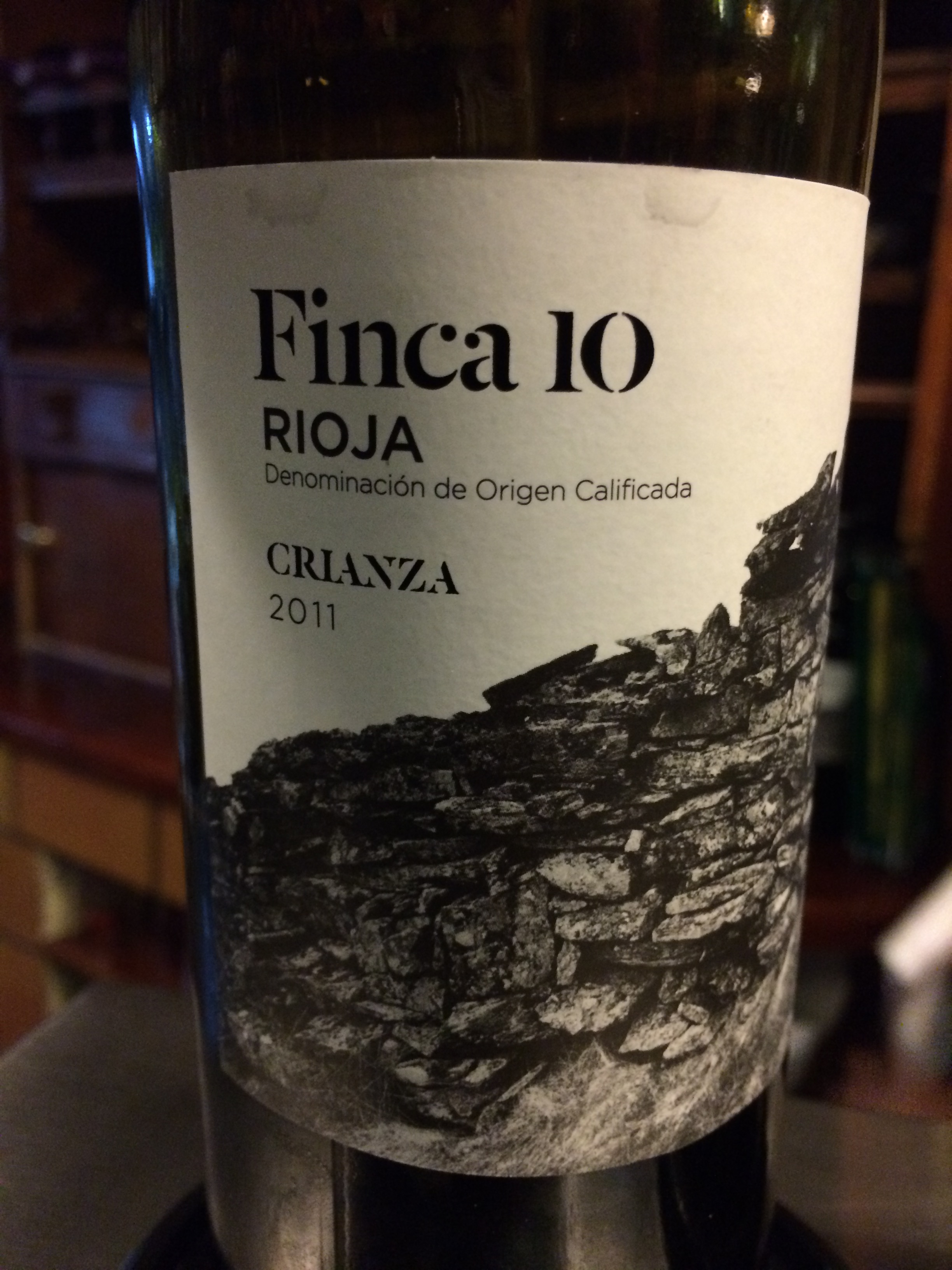
Last night, we had the tapa pictured above with a Tinto (red) wine from Rioja a 2011 Finca 10 Crianza (LINK – translation needed). The wine is, of course, Tempranillo. The term Crianza means that the wine has been aged for a shorter time (24 months with 6 months in barrel) than a Reserva (36 months with 12 months in barrel) or a Gran Reserva (60 months with 18 months in barrel). The wine was fruity, with a pleasant nose and a hint of minerality on the tongue; a bit bitter, with medium tannins and acidity. At under 2 euros a glass, it was hard to complain, so we did not.

Wine - Sherry - canasta-botella

After our meal, I ordered a glass of Sherry, a Canasta Cream Sherry (LINK) from Jerez (LINK), the premier Sherry region about an hour south of Sevilla. Also under 2 euros a glass, this wine reminds me of a California Port – rich and smooth with a very nice finish. That’s me above, with the glass of Sherry.

Here are some other photos of Taberna Coloniales:

2015-03-22 20.39.07 2015-03-22 20.39.14 2015-03-22 20.41.27 2015-03-22 20.41.31 2015-03-22 21.07.11 2015-03-22 21.14.51 2015-03-22 21.15.10

AMAZING RESTAURANT & WINE IN MADRID

Dorianne and I arrived in Madrid on Friday the 13th. We are staying near the Palacio Real and the Cathedral, adjacent to the old city. So far, we have explored a few Tapas places, including the wonderful Mercado de San Miguel (LINK) which is a moving conveyor of wine-drinking, tapas-eating revelers from vendor to vendor devouring a variety of tapas and wines or beers. The two photos below are of the Mercado.

2015-03-13 19.57.22 2015-03-13 19.58.47

Last night (Saturday) we visited TripAdvisor.com to see what was the highest rated restaurant near us. We were pointed to La Mi Venta (LINK), a nondescript little place near the Palacio. It was rated #32 out of over 7,000 Madrid restaurants.

Here is my TripAdvisor.com review: Thank you TripAdvisor.com! While in Madrid, we looked for the highest rated restaurant near our hotel – and found this gem just a few blocks away.
La Mi Venta is very unassuming from the outside – it looks like a thousand other touristy street cafes in this area near the Palacio Real (LINK). But inside is another matter. The ground floor is a very nondescript tapas bar – but downstairs are two very intimate and lovely dining rooms. David, who presides over this area like a king, is assisted by a young man who’s name we did not get, but the two compliment each other beautifully.
After being served a delicious bread and an amazing olive oil for dipping, we opted for tapas – two of the combination plates that evening. The menu includes a number of Tapas selections, plus other small plates, salads, and larger meals at the back.
Our first Tapas Platter was a combination of Iberico Jamon (LINK) (reputed to be the best in Madrid – and I have no argument there), and other charcuterie with Manchengo cheese.
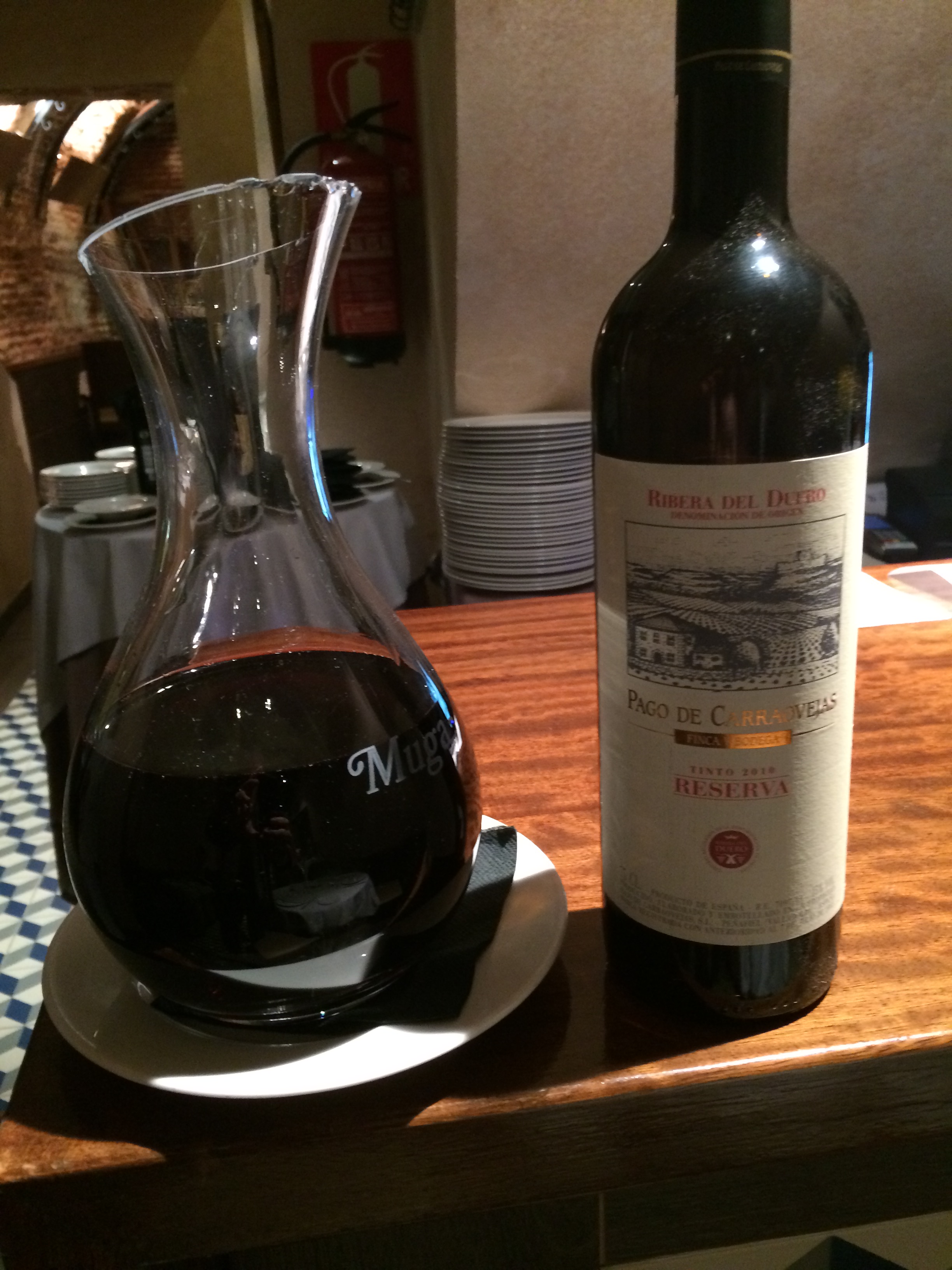
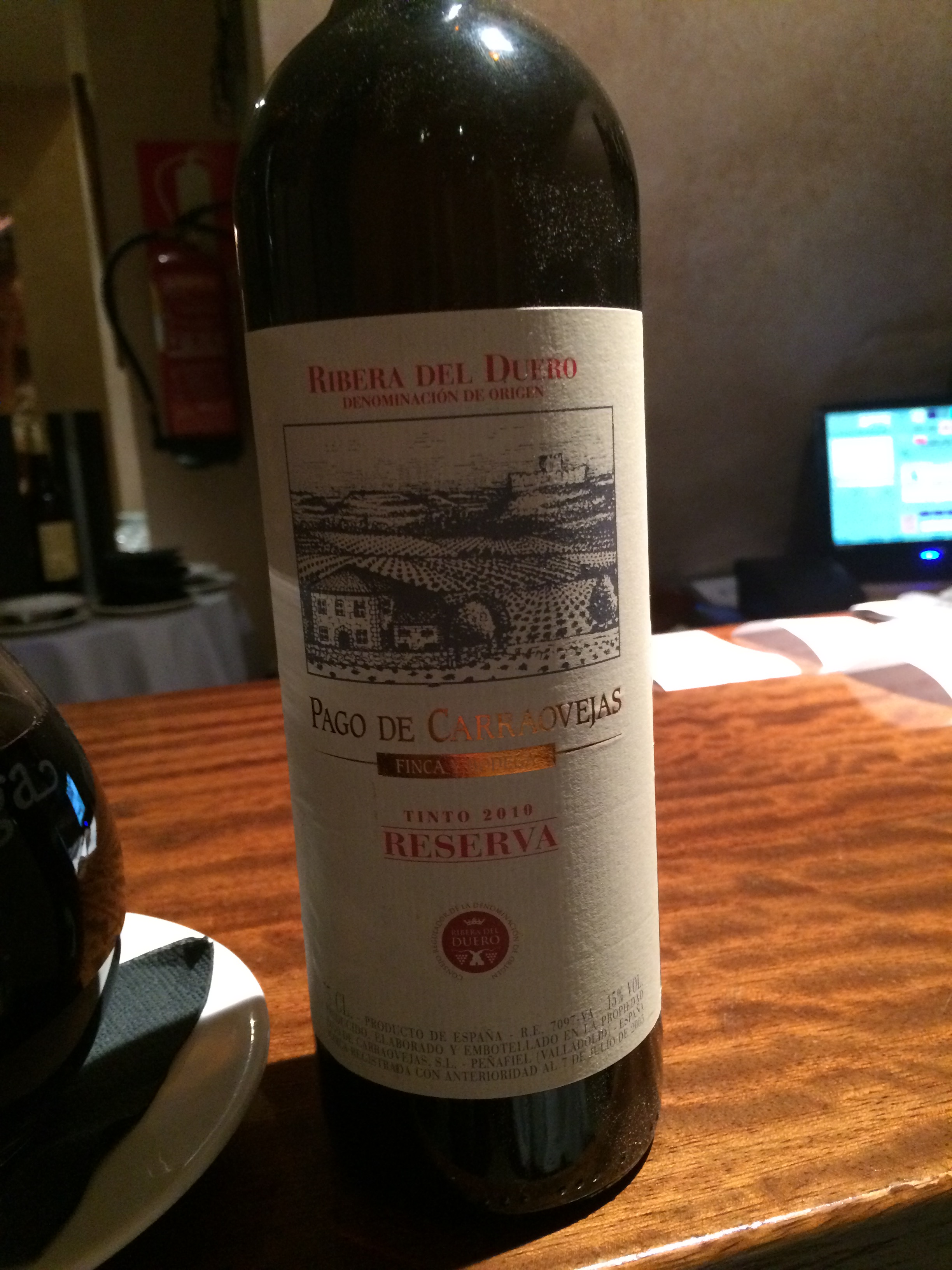
At David’s recommendation, we ordered a bottle of 2010 Pago de Carraovejas Riserva Tinto (LINK). A blend of 97% Temperanillo, 2% Cabernet Sauvignon, and 1% Merlot – a truly superlative wine (Parker – 94 Points) for only 44 Euros (I saw the same bottle in a retail store the next day for 41 Euros). The wine was a perfect accompaniment to the Tapas.
For our second platter, we chose a seafood base – Pike, tuna, foie gras, and Pork back with fried potatoes and mild chilies. All amazing. The Spanish foie gras (which won the French competition last year) is very light and delicious and the geese are not force-fed to produce this amazing product.
We had digestives at the end of the meal, a version of limoncello and a chocolate cream liquor with wonderful confections.
The entire bill with tax was 84 Euros.
This restaurant is a don’t miss if you are visiting Madrid.

2015-03-14 20.55.01 2015-03-14 21.28.12

This will serve as our introduction to fine Spanish Wine. The wine had a very appealing nose of dark fruit with a hint of savory minerality. David decanted the wine for about 20 minutes before serving. He noted that it is one of the hottest wines in Spain currently. The 2010 Pago de Carraovejas Riserva Tinto drank much like a California Cabernet – big and bold at 15% alcohol, a trait of many Ribera Wines.

2015-03-14 20.43.23 2015-03-14 20.43.28

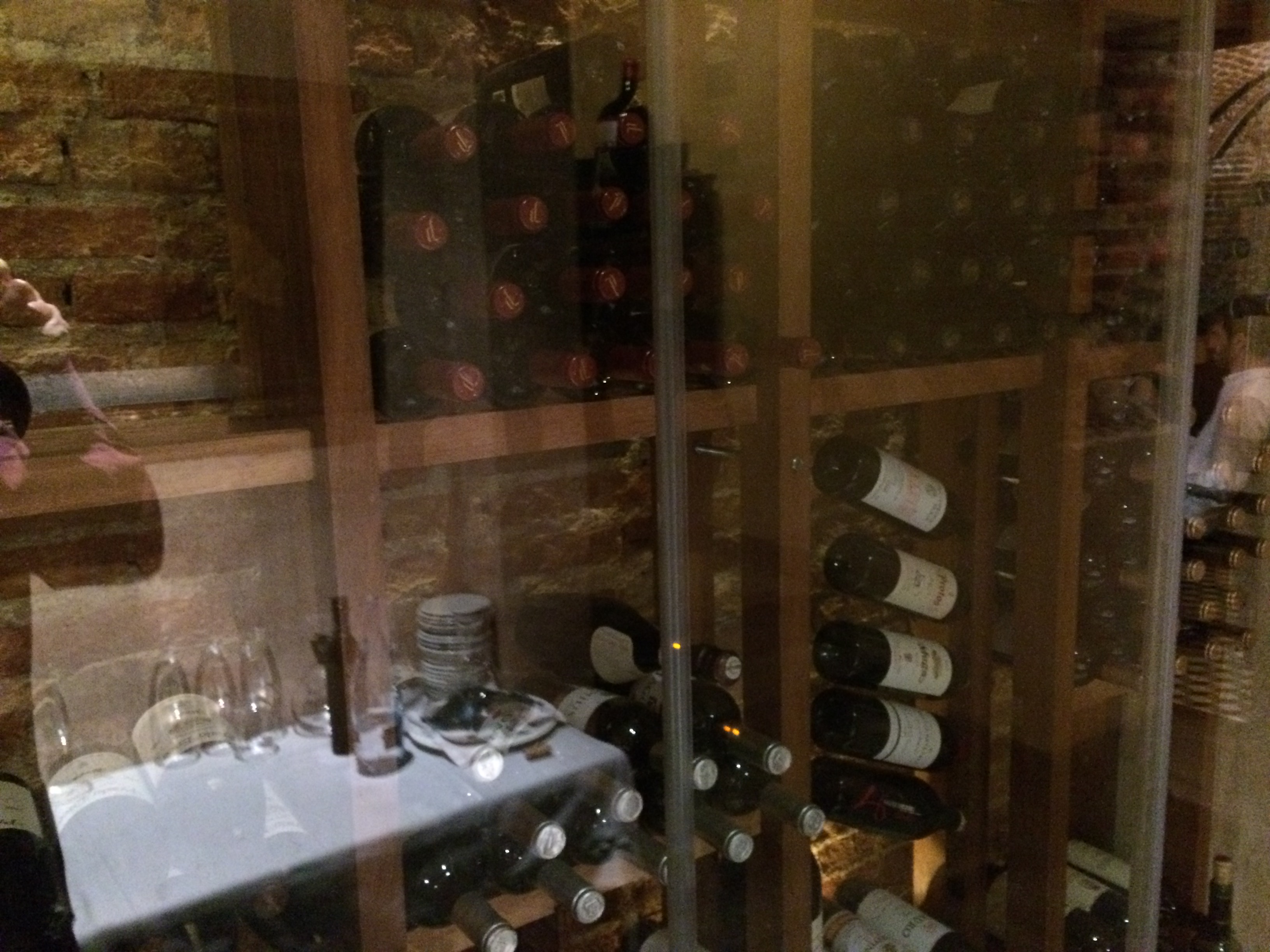
For a Digestive, we were served two liquors made on the premises, a Limoncello-like liquor and a Chocolate Cream Liquor, topping off a grand meal. Then, a quick tour of the wine cabinet with David.

2015-03-14 22.02.48 2015-03-14 22.25.39 2015-03-14 22.25.48

HEADING FOR EUROPE SOON

As I have noted before, Dorianne and I will soon be leaving for an extended period in Europe – mostly Spain and France, with some side trips to Portugal and/or Morocco on this leg, then back to the US for a bit to see our daughter graduate from Boston University, then back over to Switzerland, France, Germany, the Netherlands, Belgium (maybe) and Denmark. Here is a link to a NYTimes.com article about a couple who have retired and are using Airbnb.com – which we will be doing for most of our stays. Our trip will be more focused on wine, of course!

NYTimes Article  2013-05-21 11.49.03

WINE TRAVEL – WHERE TO GO, WHAT TO DRINK?

I love to travel. Since I was a child, I have always gotten excited about traveling – to the next town or across and ocean.

Dorianne shares this passion and we also are passionate about wine, so we combine the two passions wherever possible. This will begin a series of blogs on wine related travel, leading up to our departure in late February for a few months in Spain, Portugal, and France. I will, of course, blog from the places we visit about the locales, the people, and yes, the wines.

IMG_1850

Wine Travel is Fun and Rewarding – Here we are at Foxen near Santa Ynez, CA.

“We are torn between nostalgia for the familiar and an urge for the foreign and strange. As often as not, we are homesick most for the places we have never known.” ~ Carson McCullers 

A couple of years ago I took a short sabbatical, six weeks, and Dorianne and I went to France. We spent 3 1/2 weeks in an apartment in Paris, then went to Lourdes in the Pyrenees for a conference, the spend about six nights in Bordeaux and six more in the Loire Valley. The year before that, we took our daughters to Paris, Burgundy, and Provence for three weeks. In each of these amazing places, we sampled the local and regional wines and, where possible, visited the vineyards and chateaus where wine was grown and made, and made friends in cafes and tasting rooms with others who love wine.

2013-05-21 12.46.33
A Great Wine Shop in St. Emilion.
2013-05-21 11.49.03
The Good Stuff.


“If I were really really ridiculously wealthy, I wouldn’t buy a mansion, just tiny apartments in every city I love.” ~ Mara Wilson 

Combining wine enjoyment and education with travel is something that may not be for everyone, but for some, it is the essence of a quality experience. Those of us who spend time with people who create and sell wines know that they tend to be very interesting people, indeed. People like Wes Hagen of Clos Pepe Estate in the Santa Rita Hills of California’s Central Coast region and Giancarlo at Le Wine Bar in Bordeaux, are just two examples of friendly, knowledgeable, and approachable people who happen to be in the wine business. There are countless others as well. Wine travel lets you meet these people and have the experience of connecting at a much deeper level with the wine itself.

Wine travel can be a day trip, for those fortunate enough to live near wine-producing regions. I will be taking such a trip in a week, to the Santa Ynez, Santa Rita Hills appellations in Santa Barbara County. This will be a group tour, with many people who I know – four wineries and a picnic lunch. A very nice way to spend a day.

One of the things we will be doing on our upcoming European journey is setting up future small group wine tours in France. Working with travel professional Steve Hooks, we will be creating a series of tours that will include time in wine country – initially Bordeaux then Burgundy – followed by some time in the city – either Paris or Lyon. The tours will be geared toward those who are already familiar with fine wines and in separate groups, those who want to learn about fine wines. The focus of the former will be discovery and enjoyment and the focus of the latter will be education and enjoyment.

“We travel, some of us forever, to seek other states, other lives, other souls.” ~ Anaïs Nin 

I really believe that good wine is best enjoyed with others. Our tours will emphasize that point, while offering some really unique opportunities to access some amazing places, enjoy great food paired with fine wines, and exploring the people and places of some of the world’s great wine regions.

We are not certain that there is a viable market for tours of this level. There are not many truly high-end wine tours being offered to North American customers. Some of the major tour companies and some of the cruise lines have tours featuring wine, but they are rather pedestrian, have larger groups, and mix the novice and the expert, which does not often go well in my experience.

2013-05-21 16.32.06
One of the Buildings at Chateau Smith-Haute- Lafitte in the Bordeaux region.
2013-05-21 16.45.49
In the Tasting Room at Smith-Haute-Lafitte


Our question is – is there a market for a week-long small group experience with four nights in a premier wine region (Bordeaux, Burgundy) followed by three in a major city (Paris, Lyon), staying in top hotels, with tastings of top wines, dinners in chateaus, connections with locals in the wine trade, special tours of museums (like a private evening tour of  the Musee du Louvre), wine pairing experiences, wine seminars and more?

As the year unfolds, we will be finding out. Share your thoughts in the comment section or email me at DrJim-Lockard@ATT.net