A very informative look at how the three-tier system affects your wine prices and why from Wine Folly – Link below the image. Link to Wine Folly.
Category Archives: Wine Education
INTO THE WINE CO-OP VAULT
On Wednesday afternoon, out of the blue, I get a call inviting Dorianne and I over to our Conejo Valley Wine Co-op wine maker’s home to taste a variety of wines made for the co-op from 1994 to 1998. The wines had been stored in a member’s cellar and he was no longer going to drink wine, so he was giving them to the current and former wine makers.
We arrived about 90 minutes later to find 28 wines lined up on a counter in Richard and Mary’s kitchen, with a few more bottles in the refrigerator. The wines, now 16 to 20 years old, were a mystery. Most had not been opened for over a decade.

So, we rolled up our sleeves and got to work.
Present were Richard Clark our current wine maker, his wife, Mary Stec; Dennis Weiher, the winemaker for the first 20+ years of the co-op’s existence; and John Trickett, an early member of the co-op who had helped make most of these wines. John is also the owner of the wines in question.
The wines ranged from Cabernet Sauvignon to Merlot to Zinfandel to Cab Franc to Petite Syrah to Freisa to Grignolino to Chardonnay to Semillon, to Riesling (in sweet and dry versions). There was even two kinds of Meade – regular honey Meade and a clover Meade.
Glasses at the ready, water, a bit of cheese and some crackers, dump and spit buckets, and we began.
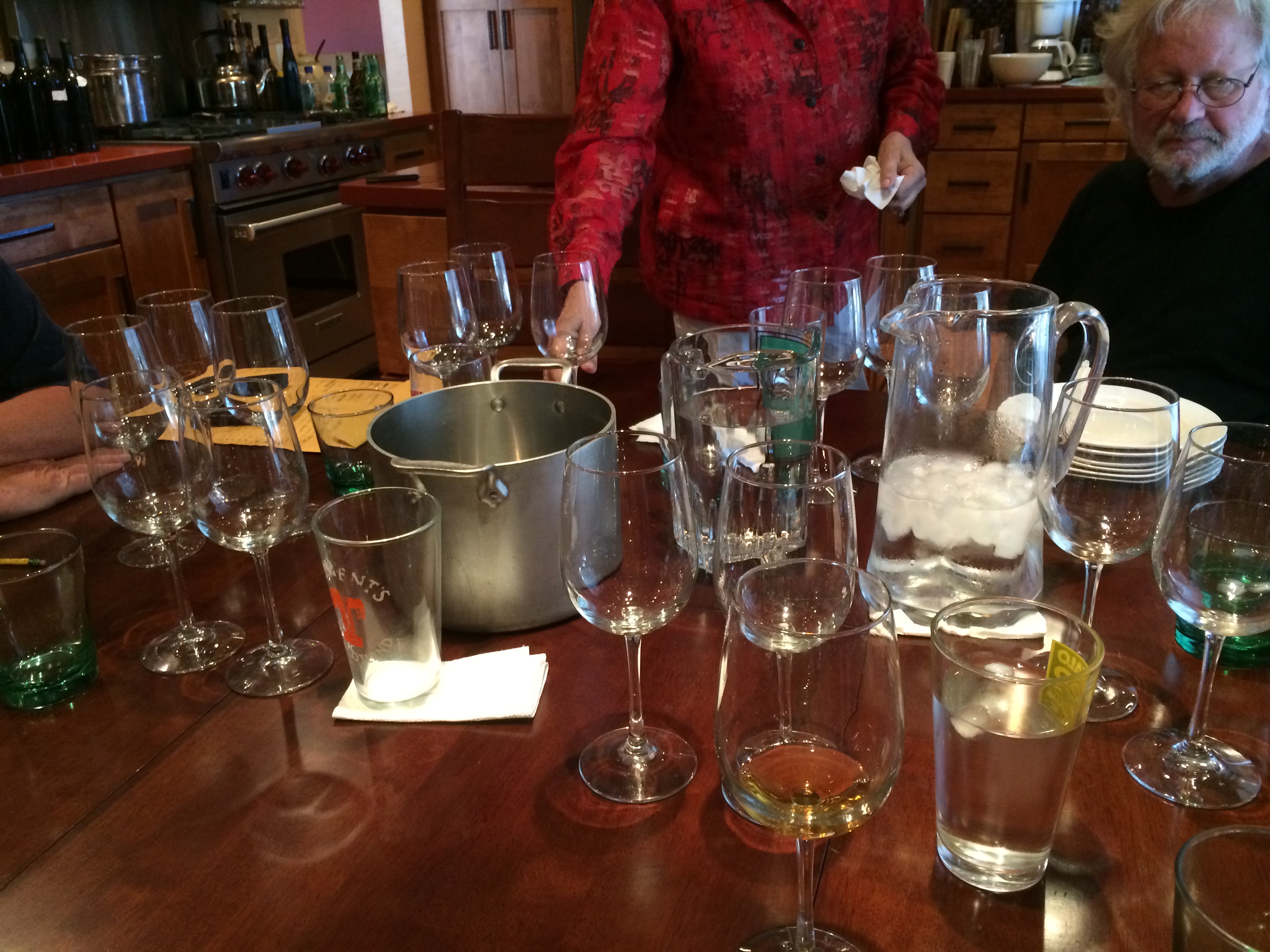

We worked our way through, varietal by varietal, with relevant blends in between. The co-op wines are made Garagiste style, meaning in this case in a suburban driveway/garage. Fruit was sourced mostly in the Santa Ynez – Paso Robles – Los Alamos areas by Dennis and John. They were essentially experimenting with various wine making techniques in fermentation and storage. Because of this and for myriad other reasons, we did not know how much, if any, of this wine would still be good.
The first pass through, we came up with a few winners – three whites of five, a Chardonnay, a Semillon, and the sweet Riesling had held up very well – good color, nice nose, and drinkable to very drinkable. All but the merest trace of fruit was gone in most of these wines, but they had aged well.
The reds were literally all over the place. Three were nice right out of the bottle – especially a Cabernet Franc that would rate in the high 80’s to low 90’s; a Cabernet Sauvignon from 1997 was a winner, and a Merlot from 1998.. Seven wines were set aside to open up, and the other 16 reds were undrinkable.

Then dinner – Mary had “whipped up” pasta pomodoro and a big bowl of clams, mussels and crabs in a light tomato sauce, and some cole slaw. The Cab Franc disappeared during the dinner.
We moved to the dessert wine and Meades after dinner. Mary brought out some homemade coconut sorbet to help us along. The sweet Riesling was simply amazing – as good a dessert wine as I have had. It was balanced beautifully, with a very nice nose, viscous mouth feel and a very pleasant aftertaste; the bad news – only two other bottles left. The honey Meade, too, was beautiful – viscous, sweet, but not too sweet, and a very nice aftertaste. The clover Meade was poured over the sorbet and tasted from the glass – it was elegant – sweet and savory with a very nice mouth feel. Excellent.
This was a rare opportunity to explore and to realize that amateur winemaking can, indeed, produce nice, drinkable wines that will age. The co-op wines have improved over the years, as the winemakers have learned more about their craft. I can’t wait to taste the 2014’s in about 20 years.
WHAT IS A WINE CO-OP?
Dorianne and I have been members of the Conejo Valley Wine Co-op for four years. The co-op itself is nearly 30 years old. Like other co-ops of its kind, it is an amateur wine making operation where the wine is made for the personal consumption of the members.
Co-ops can be of any size. Ours is 20 shares – two for the winemaker, and the other 18 are in full and half-share members. There is an annual assessment per share to cover the expenses (grapes, bottles, corks, electricity and water, equipment, etc.) and a capitalization fee upon joining. The wine is divided by the number of shares after bottling. Some co-ops process their own grapes; some use a “custom crush” site – basically a winery that is open to processing grapes from small-batch customers.
In our co-op each shareholder provides some labor, mostly at harvest and bottling times. Harvest is usually in September and October and involves getting the grapes, transferring them to the fermentation bins, and cleaning up afterward. Then, after fermentation, we press the grapes using a bladder press and put the red wines into oak barrels and the white wine into stainless steel, and clean up afterward. Our co-op normally does three or four reds each year and one white. We generally purchase 1100 pounds of each varietal grape; the white wine is usually purchased as juice because of the difficulty of transporting white grapes in a warm climate.
![image[1]](https://jimlockardonwine.com/wp-content/uploads/2014/08/image1.jpeg)
![image[1]](https://jimlockardonwine.com/wp-content/uploads/2014/08/image11.jpeg)
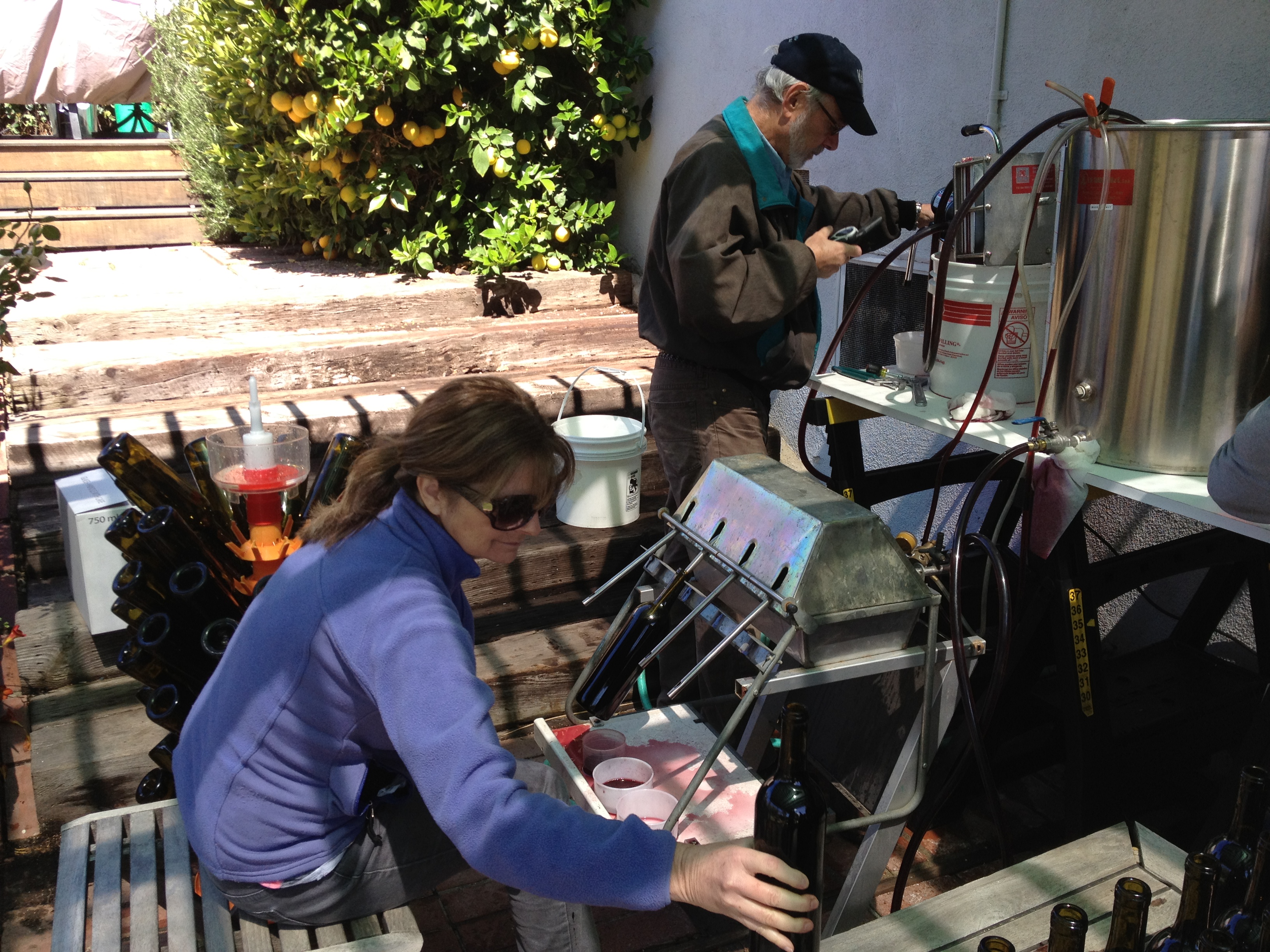
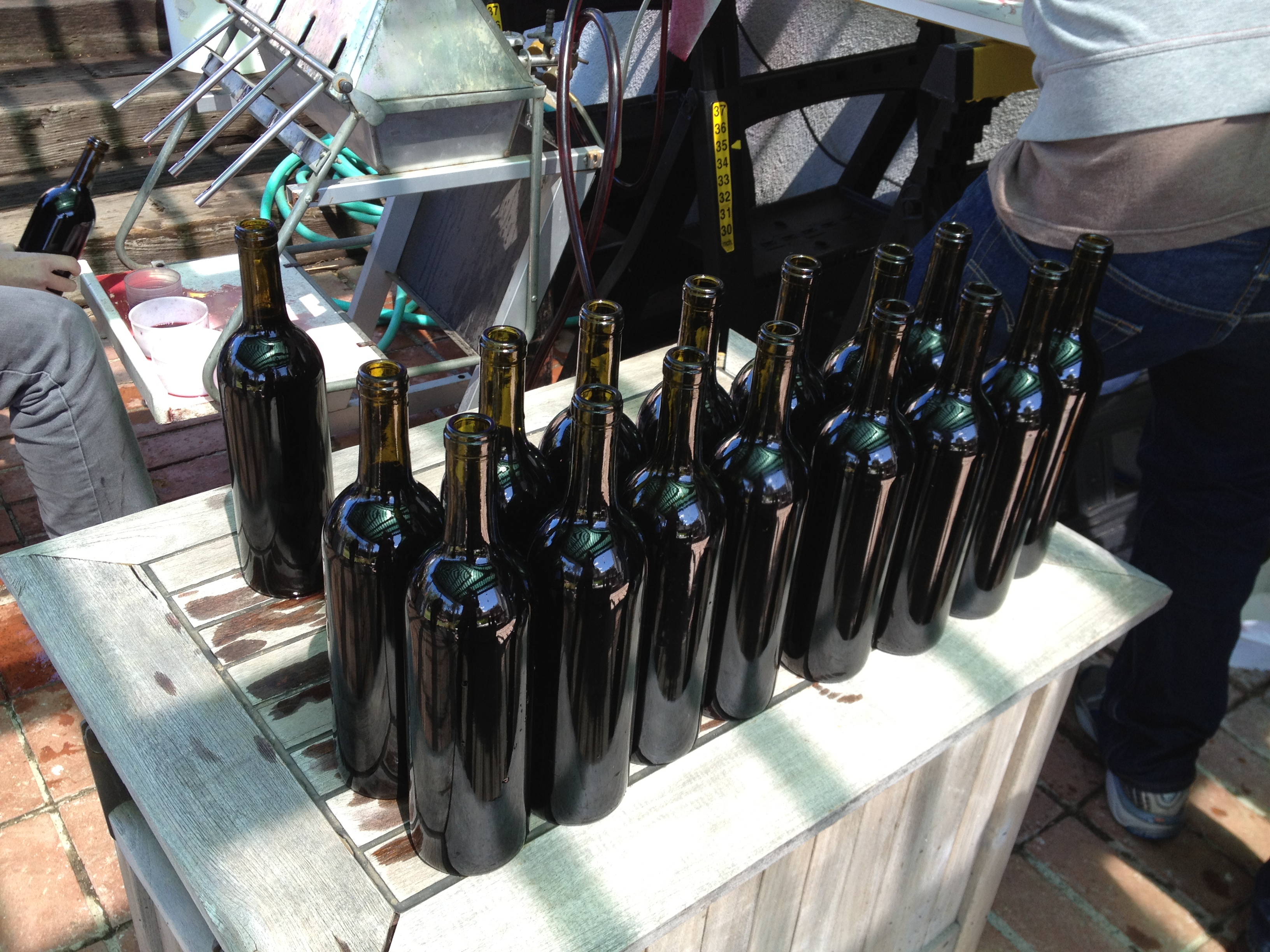
At the annual business meeting in February or March, we meet and blind taste the wines to be bottled that year. Each shareholder gives each wine a rating of 0 to 10. The highest rated varietals will normally be bottled at 100%, or used to blend in small amounts with a lesser-rated wine. We usually end up with two pure varietals and two or three red blends each year.

Also at the annual meeting, we decide on what varietals to purchase the following season. Since we are close to the Malibu and Central Coast AOC’s, we usually get wines from producers there. Lately, we have been getting almost all of our grapes from the Paso Robles area. For 2015, we bottled Cabernet Sauvignon (2013), Merlot (2013) and a Zinfandel/Merlot 80/20 blend (2013); and a white – Viognier (2014).
Next year’s bottling will feature a Pinot Noir (2013) that wasn’t ready this year, and Rhone varietals Syrah (2014), Granache (2014), Mouvedre (2014) and Malbec (2014). The white is expected to be Rousanne (2015). Each year, the varietals are different and the blends are different.
We are true Garagistes, in that our operation is in a garage. Our winemaker, Richard Clark, converted half of his two-car garage into a cool room where the wine is stored for aging. Tubes connect the wine room to the front driveway for pumping wine into the barrels and tanks and to the rear deck area for pumping the wine out for bottling.

What are the benefits of being in a co-op? Well, to name a few, there is cheap wine that ranges from drinkable to very good for yourself and to give away (each shareholder makes their own labels – ours is Domaine Dorianne), learning about winemaking by participating, chances to help with other tasks like racking, barrel tastings any time you want (need winemaker’s ok), social connection, and something to talk about at parties. We have found that it has greatly added to our wine knowledge and enjoyment. And, by the way, if you are local to our area, our co-op has a few shares available!
ORDERING WINE IN RESTAURANTS
Many newer wine drinkers are very hesitant to order wines in a restaurant. They may find the prices too high or the notion of ordering from an “expert” waiter, wine steward or sommelier too intimidating.
A few tips can help to alleviate most, if not all, of these concerns.
First, let’s look at mark-ups. The traditional mark-up in a restaurant is 250% of retail, or two-and-a-half times the regular cost of a bottle. This goes to cover a variety of things, personnel, storage and inventory, and general overhead, AND it adds quite a bit to the profit margin of the restaurant. I have found that this standard is more and more rare these days, and I have seen markups of less than 50% of retail in some restaurants.
Of course, you have to have an idea of the retail value of a wine to know what the markup is – and there are smartphone apps for those who want to be able to look up this information at the table. But beyond markup is the real essence of what you want – what kind of wine is on the list? You will want look over the wine list and get a sense of what they specialize in (Italian wines? California Central Coast?) and get a feel for the overall pricing. Then, decide your budget and see if there are appealing wines in your range.
In a restaurant, I usually stay in the $45 to $60 range, often relying on the waiter or sommelier if I am not aware of many of the selections. You can find very good wines at the lower price-points in restaurants, because the wines are selected for quality and to go with their menu; they don’t want you to have a disappointing experience. Feel free to give the staff your preferred price point when asking for their advice – and remember it is just advice; you can order whatever you like.
Even on a recent trip to Burgundy in a restaurant with an award-winning wine list, when I told the sommelier that I wanted something in the 40 euro range – something local and distinctive – he instantly produced a bottle of Pinot Noir that was simply wonderful.
Another option is to buy by the glass – although if you are having more than 3 or 4 glasses in your party, you are probably spending more than a bottle would cost. Of course, this is only of concern when price is a significant concern and would not apply if different members of your party are having different wines.
Dorianne and I will often have a discussion about what wine or wines to get. She steers away from red meat and I steer toward it, so she is often having a white and I am having a red – so we go by the glass or half bottle if that is an option. We have also been known to agree on a single menu item to share a bottle of the same wine together.
Yet another option is to bring your own bottle and pay corkage. A corkage fee is established by the restaurant and covers the cost of providing wine glasses, opening your bottle, and serving the wine. It will usually include an ice bucket for white or rosé wines. Corkage varies by the restaurant, but usually is higher in more expensive places, as you might imagine. About $15 is normal for each bottle.
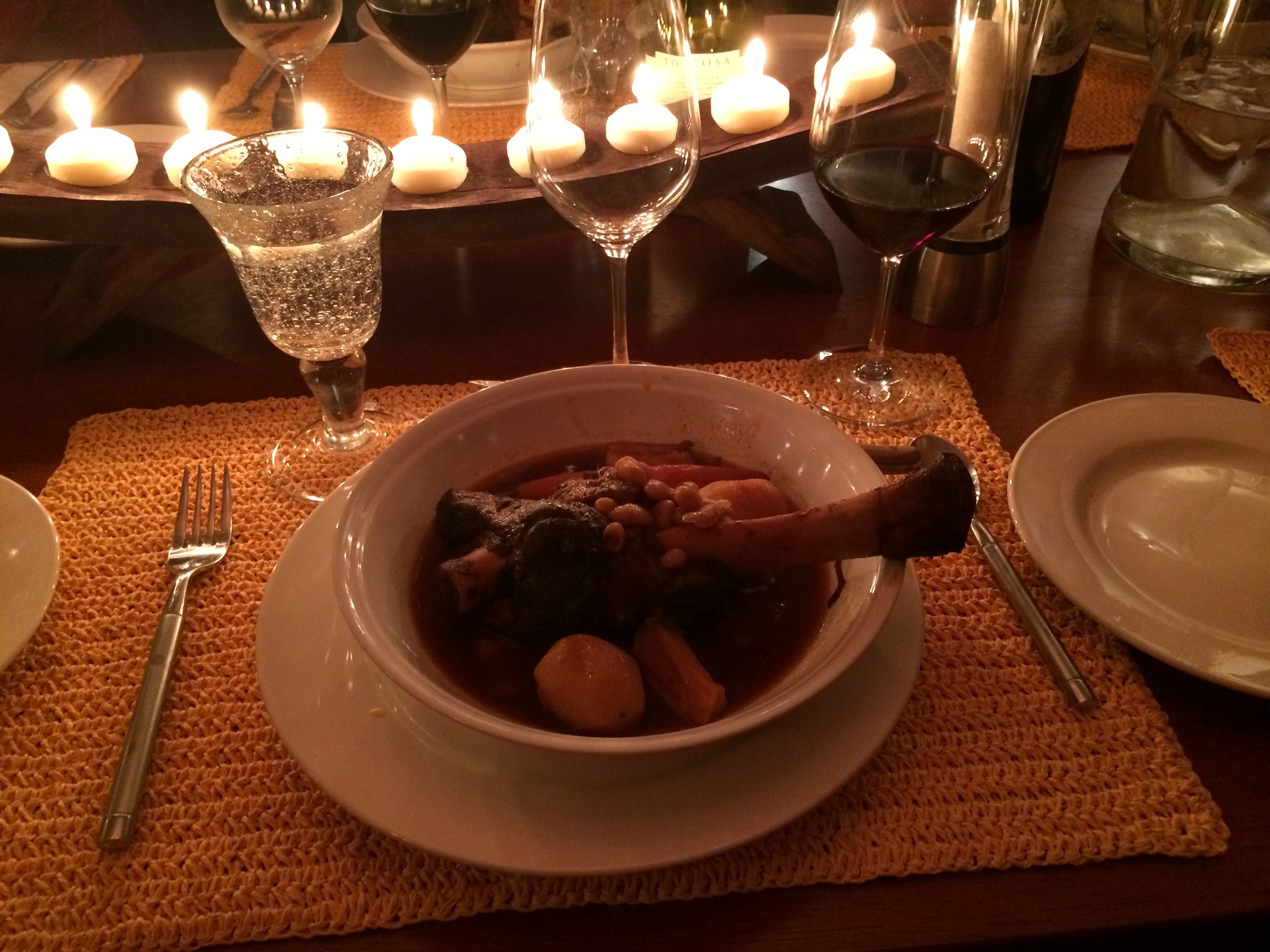
So, bottom line – there is no need to fear asking for help from the staff, be that the waiter or a wine steward. While in rare cases, they might be trying to move certain bottles, normally, you will get a good recommendation. If you are a regular, you will likely get some special treatment, perhaps a bottle not on the list or something that the staff is particularly enjoying at the moment. So have fun and enjoy wine with your restaurant meal!
HOW TO BUY GOOD WINE OR HOW TO BUY WINE GOOD
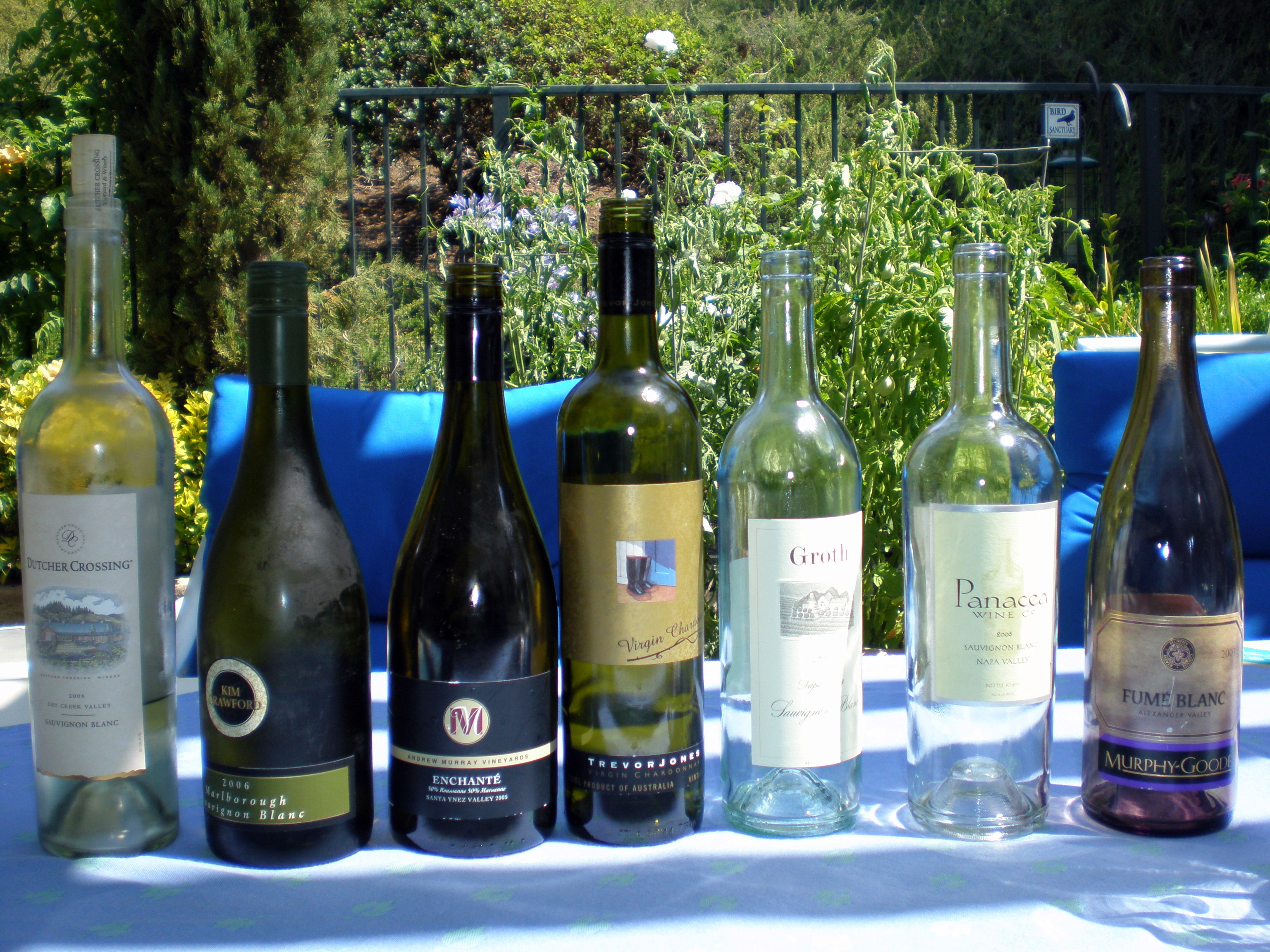
For those relatively new to wine enjoyment, you are likely to be confronted with the issue of how to reliably find good wines – that is, wines that you like. Is it a matter of price? Is it about where the wine is from, or the varietal?
I drink wine nearly every day. I drink mostly at home, but have a glass or a bottle in a restaurant one or two times per week. I enjoy wine, but I want to get a good value almost all of the time; the possible exception being a very special occasion, when I may splurge on a more expensive bottle. I don’t want the desire for a good value to keep me from getting wines that I like either, so I try to find a balance.
I like many kinds of wines, and drink reds, whites, rosés, as well as ports and dessert wines (although the last two much less often). I like to pair wines with food, but am not overly strict about it. I pay attention to the heaviness or lightness of the wine – say an Oregon Pinot Noir (light) versus a Paso Robles Cabernet Sauvignon (heavier). I would likely have the Pinot with salmon or a lighter chicken dish and the Cab with a steak or pork loin.
So the main wine factors are heaviness and lightness, spiciness or minerality vs. fruit-forward, acidity, and temperature (chilled vs. room temperature). Other factors are season and temperature (colder = heavier and unchilled; warmer = lighter and chilled). These are not hard and fast rules – I have Cabernet Sauvignon in the summer and Sauvignon Blanc in the winter (I live in Southern California, so winter is a relative term for me).
I prefer wines with some unique or distinctive qualities, even at lower price points. This means, that I tend to stay away from cheap, mass-produced wines. These wines are almost always made to be drinkable to a wide variety of people, so they are usually fruity, bland, and forgettable.
Another factor is price. Think everyday wines vs. that special night wines vs. really special occasion wines.
If you averaged out the cost per bottle of the wines I drink in the average week, it would probably land somewhere between $13 and $15. My go-to summer white this year is Portes de Bordeaux, a $6 French white from Trader Joe’s (which they will not likely have again next year). Our favorite rosé is by Chateau Nages, a Provençal wine that sells for $9.99 at Total Wines and Spirits (see earlier posts on Go-To Whites and Rosés for Summer. These and similar wines make up at least two thirds of our consumption. The other third is a mixture of more special wines, a Sancerre for $25 or a California Syrah for $28 that we have purchased either during our travels, at a winery, at local wine shops, or on-line. We purchased a case of Bordeaux wines on a trip last year and some of those are ready to drink, so we have had a couple bottles from that case (which would skew our average price up quite a bit).
To buy good wine (defined as wine that you like) on a budget, you have to know what you like. After that, it is a matter of learning what wines fit into that category. Ask the people who work at a local wine shop or two what wines are similar to what you like. For example, if you like Malbec, you will probably like Barbara; if you like Chenin Blanc, you will probably like Pinot Gris. Get six or eight bottles of wines that are similar and try them out. Then re-purchase the ones you really enjoy.
When you find those everyday wines that you really like, consider stocking up – get a case or two. If you are interested in aging wine or buying as an investment, you have a different set of standards. I will write about those in a future post.
GO-TO ROSÉS FOR SUMMER
During the past decade, rosé wines have gone from the very low end of the wine spectrum to a place much closer to, if not the top, then the upper-middle. This is, in part, due to the overall improvement in everything in wine from viniculture to winemaking skills and techniques across the industry. As a result of these developments, almost all wines, especially mid-range and lower end wines, have improved.
But rosé has gotten even better, because some great winemakers have begun to produce rosés, especially in California and Oregon. Provence, the recognized king of rosé regions, has also upped their game. The result is a much higher quality set of options for summer wine drinking – or any time that you would like to enjoy a nice, light, crisp and, increasingly, complex wine.
As noted in the earlier post on Go-To White Wines for Summer, Dorianne and I tend to reverse our normal ration of 75% reds to 25% whites and rosés in the summertime. We drink fewer reds and those tend to be lighter reds (we may even serve them chilled a bit).
So our Go-To rosés for Summer – the value wines that we go back to again and again – are
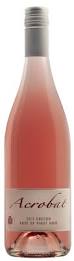
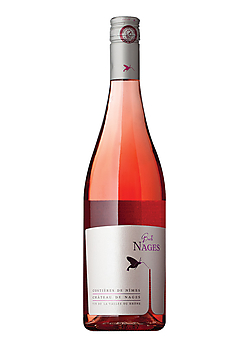
Chateau de Nages Buti Nages Nimes Rosé (2012) purchased from Total Wine and Spirits ($9.99) and King Estate Acrobat Rosé (2013) purchased from World Market ($11.99).
Both of these wines are crisp and dry, fruit-forward wines. The Chateau de Nages is from the Rhone Valley and is 60/40 Grenache/Syrah aged in oak barrels. The Acrobat is a Pinot Noir and is aged in stainless steel.
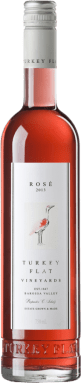
A little higher up the price spectrum is a wine that I have had several times over the past decade, but is not available every year, at least not where I have looked. The wine is Turkey Flat Rosé from the Barossa Valley in Australia. The grape is Shiraz and the wine is always dry and crisp with some minerality enhancement to the fruit that one expects from a rosé.
As always, I recommend that you explore around your local wine shops and other retailers and see what rosés they are stocking. Have a conversation with the folks in the shop to see what they recommend based on what you like. I have found some interesting wines this year, including a Cabernet Sauvignon rosé from South Africa. There are also some very well-crafted California rosés this year – but at higher price points than the French rosés, including Provence, Bordeaux, and the Rhone and Loire Valleys.
WINE SPECTATOR QUIZ – SUMMER WINES
A great way to learn about wine is via the Wine Spectator quizzes. You can access them by Liking Wine Spectator on Facebook, or by going to this link Wine Spectator Quiz. This quiz is on summer wines. There is a new quiz every week.

GO-TO WHITES FOR SUMMER
In the summer, my tastes move into the realm of rosés and whites, probably reversing the normal 75% red to 25% white ration of the rest of the year. Summers mean more lighter foods served cold, more seafood and salads and fresh vegetables from the garden.
Today, my go-to whites for this summer are featured. We’ll look at rosés in another post Thee wines seem to change each year, a factor of things like availability, special bargains that arise, and my own shifting tastes. A few years ago, Dorianne and I were visiting Laetitia Winery north of Santa Maria and discovered that they were selling their very nice Sauvignon Blanc for $60 a case. That became our go-to wine for the rest of that summer!
This summer, there are two, and they are both from France. The first is Les Portes de Bordeaux Sauvignon Blanc (2012) from Trader Joe’s. It sells for $6.99 and is a very nicely-crafted single varietal from Bordeaux. We tried a bottle in early June and have been buying it ever since. It is simply a very nice every day white wine.
The sec ond is Louis Latour Chardonnay Grand Ardèche (2012). It sells for $10.99 and is available in lots of places. For an every-day wine, it is very well-balanced and pairs well with a variety of dishes. Dorianne made an Italian sweet onion soup last night, and the Latour was a perfect match.
We have also had a couple of nice bottles of Sancerre Blanc from DOMAINE HIPPOLYTE REVERDY, a Kermit Lynch Wines pick. I purchased this at Total Wine and Spirits for $23.00 and have returned to buy more. It is a very nice, well-crafted special occasion wine. We were motivated to try it as we are following the New York Times Wine School each month with friends, and Sancerre was the wine last month.
In finding your own go-to whites, I suggest that you spend some time exploring and keep your eye out for bargains. Remember, you expect a $50 bottle of wine to be good – when you find a bottle around $10 that you enjoy – that is a find!
Let me know your favorite summer whites in the comments.
 Jim Lockard On Wine