“A few feet away sat their 13 accomplices, a diverse group that included an aging thug with a long rap sheet; two small-town elementary-school teachers; a local bar owner; three Bordeaux négociants; the owner of that catering supply company from Biarritz; and a political science professor from an elite Paris university. Their link? Rey said the men shared a “fascination with the luxury of the world of wine, a world that was out of their reach.”
The spree began on June 10, 2013, when Gautrau and Allard broke into Château d’Yquem and stole 384 half-bottles of d’Yquem 2010 worth more than $110,000. It remains a mystery why a 27-year-old with no knowledge of wine knew enough to specifically take d’Yquem 2010. Prosecutors believe he had received an order. Phone records reveal that he received a phone call from Biarritz the night before.”
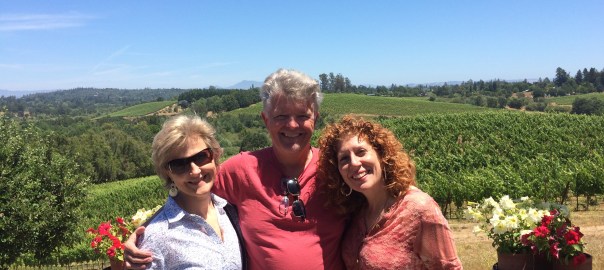
The other day, I was joined by Sonic Nourishment (LINK) musicians Erika Luckett and Lisa Ferraro for a day in western Sonoma for some wine tastings and lunch. It was a perfect day weatherwise, and we began with a drive out to Iron Horse Vineyards (LINK)near Sebastopol.
Known for their sparkling and white wines, Iron Horse consists of just over 100 acres of vineyards. We opted for two tastings, with Lisa getting the sparkling wines and me getting the white wines (Erika was our designated driver). The sparklers were all well-crafted (with the exception of one that turned out to be a bad bottle – when we pointed it out to the tasting room personnel, another one was opened, which was fine). I am not a huge sparkling wine fan, but I do appreciate the bubbly from time to time, and these were all very drinkable to me. Lisa said that she was overall less impressed than on a prior visit to Iron Horse.
The whites, all Chardonnays, were equally well-crafted, especially the 2012 Rued Clone Chardonnaywhich was especially well-crafted with a nose of white fruit – pears and apples – with a hint of caramel. Very nice. We did not taste any of their Pinot Noirs, saving our strength for the long day ahead.
One note – the tasting notes pages at Iron Horse said nothing about the wines, only naming some suggested food pairings. Since there was no food available, I did not find this very helpful. On the other hand, the tasting room staff was very helpful and paid attention to everyone.
Next, we headed into Healdsburg (LINK) for lunch and to hit a couple of tasting rooms there.
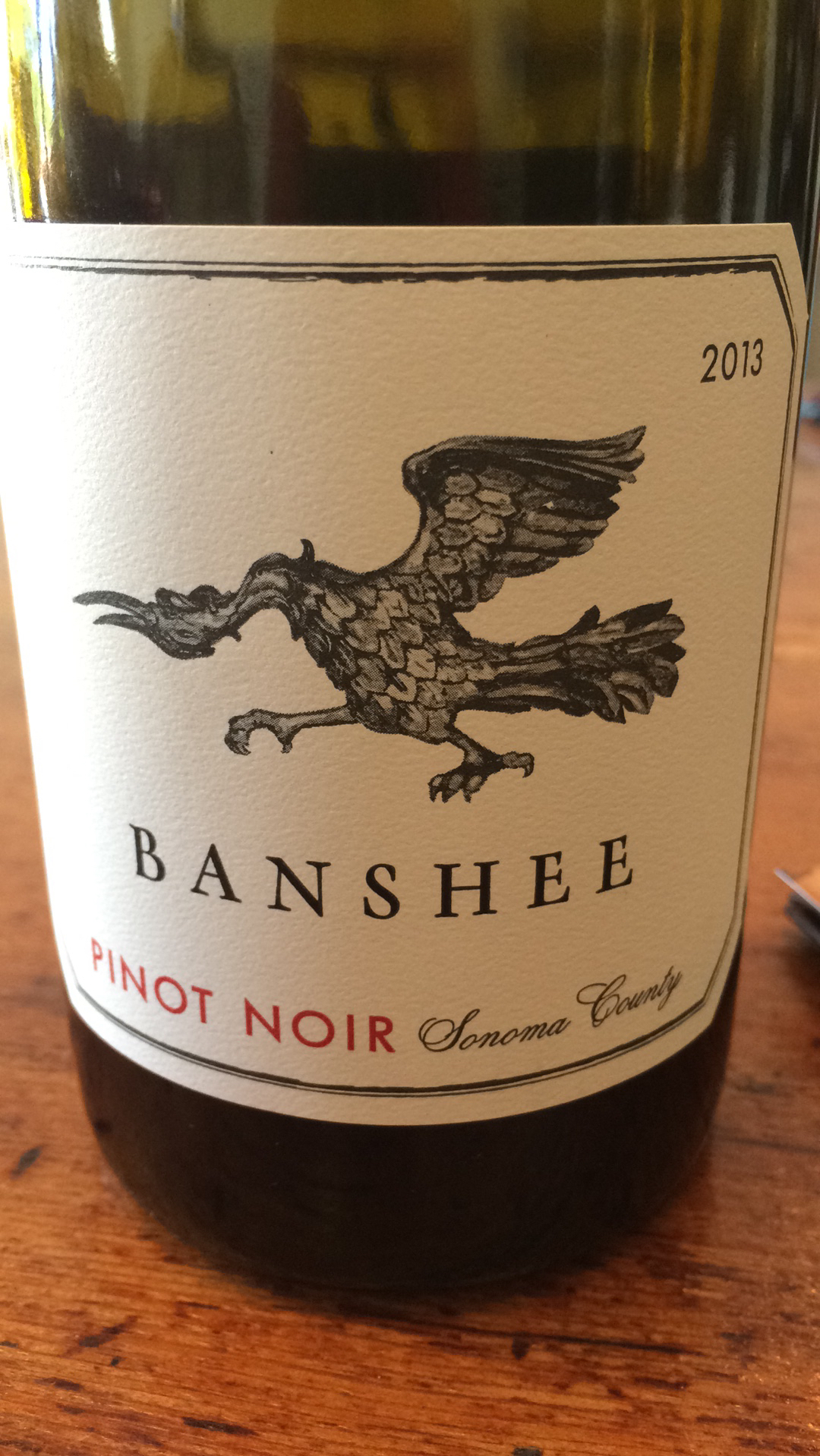
After a healthy lunch at the Oakville Grocery, we headed over to Banshee Wines(LINK), for some Chardonnay, Sauvignon Blanc,Pinot Noir, a Cabernet and a red blend. Banshee sources fruit from a number of Sonoma coastal and inland vineyards. They produce wines that are more Californian than Burgundian in style, which is not surprising. Lisa and I each did their basic tasting (there is also a reserve tasting), of three Chardonnays and two Pinot Noirs. They were all well-crafted and very good (think somewhere between oaky and stainless steel for the Chardonnays; the reds were very nice with one exception – The 2013 Mordecai Red Blend, made up of 9 varietals, had such an off-putting nose (think swampy) that neither Lisa nor I could get to the tasting. We asked the tasting room staff if this was a bad bottle, and were told that it was fine. We dumped that one.
Otherwise, the Banshee Wines that we tasted were enjoyable. Like many smaller producers in the area, their price points are a bit high for the average buyer – but if you like the wines, you will buy them.
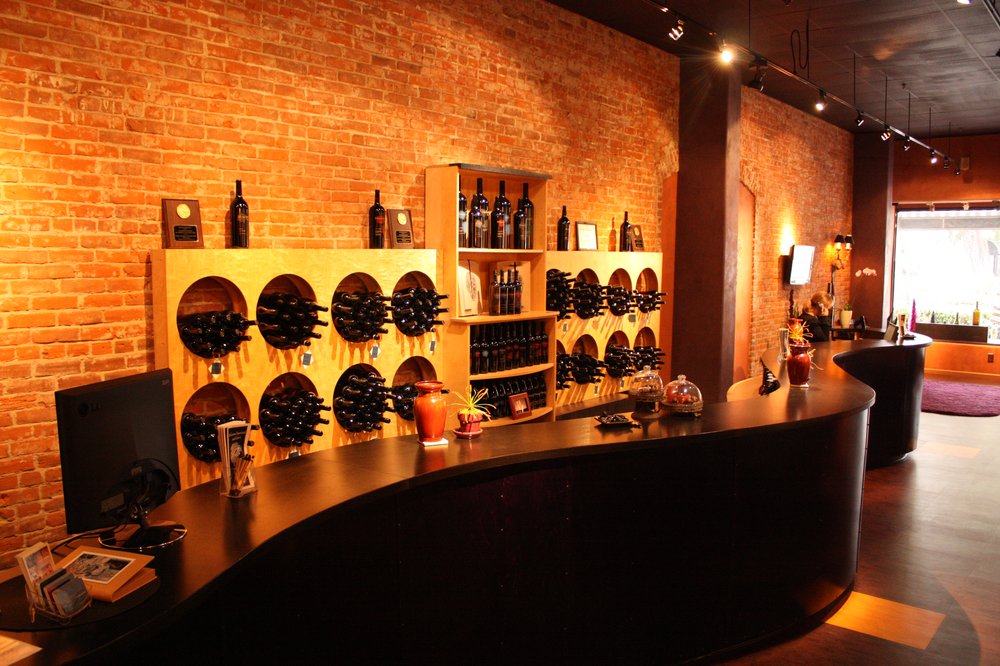
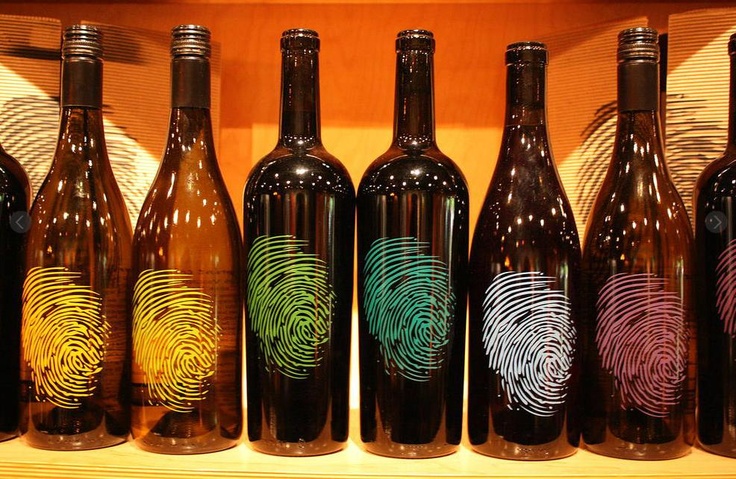
Our final stop of the day (we needed to beat the traffic back to the East Bay), was Thumbprint Cellars (LINK), whose tasting room is just off the square in Healdsburg. I had some of their wines a couple of years back, when they were regularly featured on the Wines Till Sold Out (www.WTSO.com) site, and liked them very much. When I mentioned that to the tasting room staff, I was told that those were special blends made just for WTSO at the time.
We started with their 2013 Arousal white blend of Sauvignon Blanc and Viognier, a floral nose, very rich mouth feel, and smooth finish on this one. We also tasted the 2011 Climax red blend, a mix of 44% Syrah, 26% Merlot,
20% Zinfandel, 7% Cabernet Franc, 3% Viogner. This one is very smooth and complex (as you might imagine), but well-balanced. Very nice. I brought a bottle of this one home; so did Lisa. The 2011 Sonoma County Cabernet Sauvignon was everything you would want in a Sonoma Cab – rich, spicy, bold, and lots of dark fruit, but with an elegance that is so often missing in “big” wines.
Thumbprint Cellars Tasting Room
So that was our day in Western Sonoma. Like all such tasting outings, we had a great time and missed a lot of wineries. But that gives us something to go back for.
Since I’m in Berkeley for a couple of weeks, it makes sense to visit some nearby wine meccas – Sonoma tomorrow, Napa Valley next week. Today, it was San Francisco’s Ferry Building (LINK), an admittedly touristy, but very good for foodies edifice at the foot of Market Street. For east coasters, think Faneuil Hall in Boston, South Street Station in New York, or Harborplace in Baltimore – but with much, much better food.
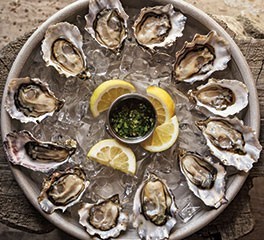
My go-to lunch spot here is always the Hogs Island Oyster Company (LINK) on the water side of the complex. The space has been expanded a bit since my last visit, and now features three bar areas and some indoor and outdoor tables. Oysters are the featured item, but the menu has much more from the sea. Today, I had steamed clams in melange of Mexican Chorizo, greens, hominy and jalapeno butter. I started with Boquerones, sardines with piquillo aioli, chopped egg, green herb sauce on a sliced ACME Bread Co. baguette. Delicious and beautiful.
Boquerones – $7.00Steamers with Pasta $17.
To wash this delicious feast down I opted for the house white wine, Hog Island Oyster Wine, a very interesting blend of 55% Gruner Veltliner and 45% Albarino from the California Central Coast’s Edna Valley. This unusual blend went perfectly with the seafood, existing somewhere between a Chardonnay and a Sauvignon Blanc in consistency. Fruity, but with a hint of flinty minerality, and a very different blend than you might get from the European versions of these varietals. I have had some Edna ValleyGruner Veltliner and Albarino, and this is an inspired blending of these grapes.
Afterwards, I wandered the halls of The Ferry Building, picking up some bread and chocolate to take home, and getting a Blue Bottle Coffee to sit outside by the water to enjoy with my new friend.
One of my favorite wineries in California is Artiste in Los Olivos on the Central Coast. Bion Rice the master blender (all Artiste wines are blends) of Artiste and winemaker and manager of Sunstone Wines, puts wax seals on all Artiste bottles. A number of wineries do this, mostly for aesthetic purposes. The wax seal can also serve to prove the the wine has not been tampered with.
Some Artiste Wines
So how best to open a bottle with a wax seal? Many wine openers will not work with these seals because the wax gives the top too large a circumference for them to fit over the bottle top. So electric openers are out, as are some others.
Many try to chip the wax off of the bottle with a sharp knife, the tip of their corkscrew or the little knife used to remove foil coverings from the bottle. These can work, but can lead to injury, to pieces of wax flying around the room, and to an unsatisfactory result.
The best way to open these bottles is with a Waiter’s Friend or a winged corkscrew. Simply put the corkscrew through the middle of the wax top and into the cork. When it is properly seated, remove the cork as you normally would. The wax will come with it. Then, enjoy your wine!
Opening Wax Top Bottle with Waiter’s Friend Opener.
The folks at Lazenne, who make and sell wine travel products, posted this helpful article on what you can and cannot do in terms of transporting wine and spirits internationally. A good article to bookmark for future use. And you can check out their products from the article page.
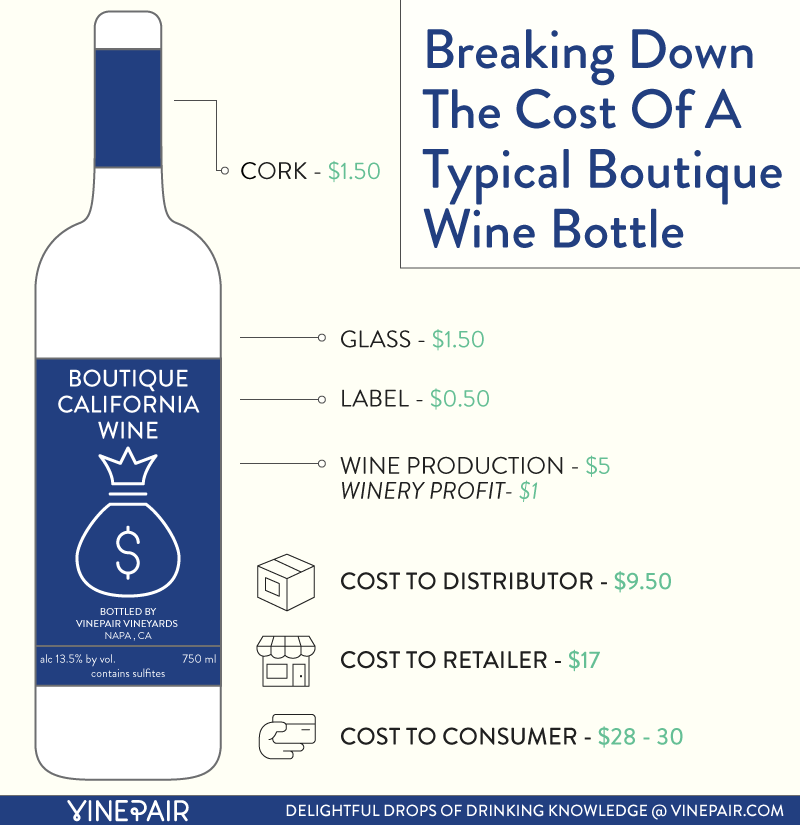
VinePair.com has posted another informative article with an excellent infographic on the cost of a bottle of wine. Here is the infographic & below are some of my comments and a link to the article.:
And here is a (LINK TO ARTICLE). The article goes into greater depth about each step in the process of getting wine to you via retailers.
I find it very interesting that getting the wine to the consumer is by far the largest portion of the cost of wine. If you added in buying this wine at a restaurant, the cost to the consumer zooms to about $60 or more, as the “retail” portion would go up since restaurants typically mark up wines to twice the retail cost or more.
This also makes it more satisfying to buy wines at the winery, so that the winery makes the additional money. It is also why wine club prices are discounted, since the distributor is not in that equation.
It’s good to know where your money goes, so that you can make wise choices. There really aren’t any surprises here, except perhaps how little the wine maker gets from each bottle produced – but isn’t that the way that the economics of farming works?
This infographic from Wine Enthusiast is a good guide to Organic and Biodynamic wine making. For those interested in supporting Green efforts to minimize or eliminate the use of chemicals and other environmental hazards, this is for you.
The best guidelines for storing wine are really rather simple. Avoid light, heat, and vibration. Here is a link to a post by Ted Loos in Travel and Leisure’s Online Blog that speaks to these issues very simply. (LINK TO POST)
My own experience has been that wine is not that sensitive – most wine anyway. I do store fine wines that I intend to keep for some time in a wine refrigerator. Everyday wines, I store in a closet on a wine rack, and some wines on a rack in the dining room. At least I did that when I had a house. Now that we are traveling more or less full-time, so all of the wine that we did not consume before leaving California is in a wine storage facility.
Obviously, wine storage is an area of practice that is relative to how long you keep the wine that you purchase or make. It is best to have the kind of storage that is the most conducive to allowing the wine to mature properly. If, however, like so many people today, you consume wine very soon after purchase, storage is less of a concern. In either case, the article cited above will be helpful.
@EricAsimov on Twitter tipped me off about this article (LINK) by Sarah Miller on the Kitchenette Blog about the VOX video (see below) that has been circulating on the internet recently. The video says that Expensive Wine is for Suckers and features a tasting panel by a few folks at VOX of three Cabernet Sauvignons from different price points. They all liked the cheap one, ergo, expensive wines are for suckers.
Sarah Miller’s hilarious blog post in response (CAUTION: ADULT LANGUAGE!!!) takes VOX and the host of others who blithely support their findings to task in a very significant and entertaining way. It’s a long read, but, IMHO, worth it. First, here is the video:
And here is my take.
I agree with MIller in the basic premise of her post – that there is no definitive line that says what wine is good and what wine is bad; that less expensive wines from large producers tend to be altered with additives to create something other than what the and grapes and terroir might have created on their own; and that the way we appreciate wine changes with greater knowledge and experience.
Since wine enjoyment is so subjective, each individual will find that his or her experience differs from others’, including many or all of the “experts” in the wine media. This is not unusual, as pointed out in the article – the masses often desire the simplest types of foods, drinks, music and movies. Thus the more expensive wines, those that represent higher quality fruit and true wine making craftsmanship, will tend to be appreciated by smaller numbers of people – more complexity = fewer adherents.
Here is a quote from the article: “Back to the whole cheap wine versus expensive wine thing. Cheap wine is awful. It used to taste like vinegar, and now, more often than not, it tastes like pancake syrup. It is made quickly and with little care. The grapes in it are often too ripe or not ripe enough. Good wine tastes like violets and flowers and fruit and spices and being blown away by it is an experience you are not required to have—but you should believe that it exists, because it does. Yes, of course, there are good wine values and bad ones. There is no one in the wine industry with a brain who thinks that every single bottle of $40 wine is universally better than every single bottle of $18 wine, or that every single person will like a $40 bottle better than a $8 one. As Schneider (a sommelier quoted in the article) pointed out, we aren’t robots.”
The philosopher Ken Wilber writes about the concept of span versus depth: the greater the span of something, the less depth and vice versa. A fast food restaurant will sell many more meals in a day than a fine dining restaurant; an action film with lots of explosions and little if any plot will out draw a character-driven film based on fine literature. Why should wine appreciation be any different?
If you like cheap wine, drink cheap wine. If you like expensive wine, drink that. But I suggest that you not let price, or ratings points, or labels, or other external factors be anything more than suggestions for you. If you are new to wine, find out what you like and drink that. Perhaps you will want to explore other types of wine over time; perhaps you will want to learn more about wines and wine making and that will influence what you drink.
My only caution, as I have stated in other posts, is to watch those really cheap wines produced in large quantities, as they are, more often than not, made with a lot of additives that you do not know about and that may not be good for you. The amount and type of additives tends to change and lessen as the price point of wines goes up, but not in an absolutely predictable fashion. Someday, stricter labeling requirements(LINK TO A GOOD ARTICLE) may help with this issue, but for now, you are pretty much on your own.
One again, VinePair.com delivers a great article on wine education that I am re-posting here. The words here, chewy, hot, jammy and others add to your vocabulary when describing wines. A good and entertaining read.






 Jim Lockard On Wine