Continuing our series on the wineries I visited on a group wine tour in the Santa Rita Hills Appellation on Saturday, we will take a look at Margerum Wine Company (LINK). Our group tasted at the winery near Buellton, but the regular tasting rooms (LINK) are in Santa Barbara. Assistant Winemaker Sam Smith conducted our tasting on Saturday.
Sam Smith describes Margerum Wines.
Margerum produces a number of wines from a variety of vineyards (LINK) in Santa Barbara County. They produce small quantities of each wine, seeking to maximize the quality. Their stable of wines runs from Sauvignon Blanc (including a rare late harvest dessert version), to Pinot Gris and a Grenache Rosé on the white side, with Syrah, Pinot Noir,Grenache, and Rhone and Chateauneuf-du-Pape style blends under a couple of labels. You can read about each of the wines at the link above. I really enjoyed the 2013 LATE HARVEST SAUVIGNON BLANC, a very light and smooth dessert wine that has a light mouthfeel and not too much sweetness.
I found the wines we tasted to be well-crafted with a tendency toward lightness and elegance, even a sense of understatement, which is consistent with the style that many winemakers adopt in this region. As noted in earlier posts, if you want the big fruit-bomb reds, you need to head north a bit to Paso Robles, where that style is more prevalent.
The owners of Margerum Wine Company are also involved in the Wine Cask Restaurant (LINK) in Santa Barbara. The restaurant has an excellent reputation, and, I am pretty sure, you can get some Margerum Wines on the premises.
Later, more posts on the other two wineries we visited, LaFond and Tyler, each very interesting in its own right.
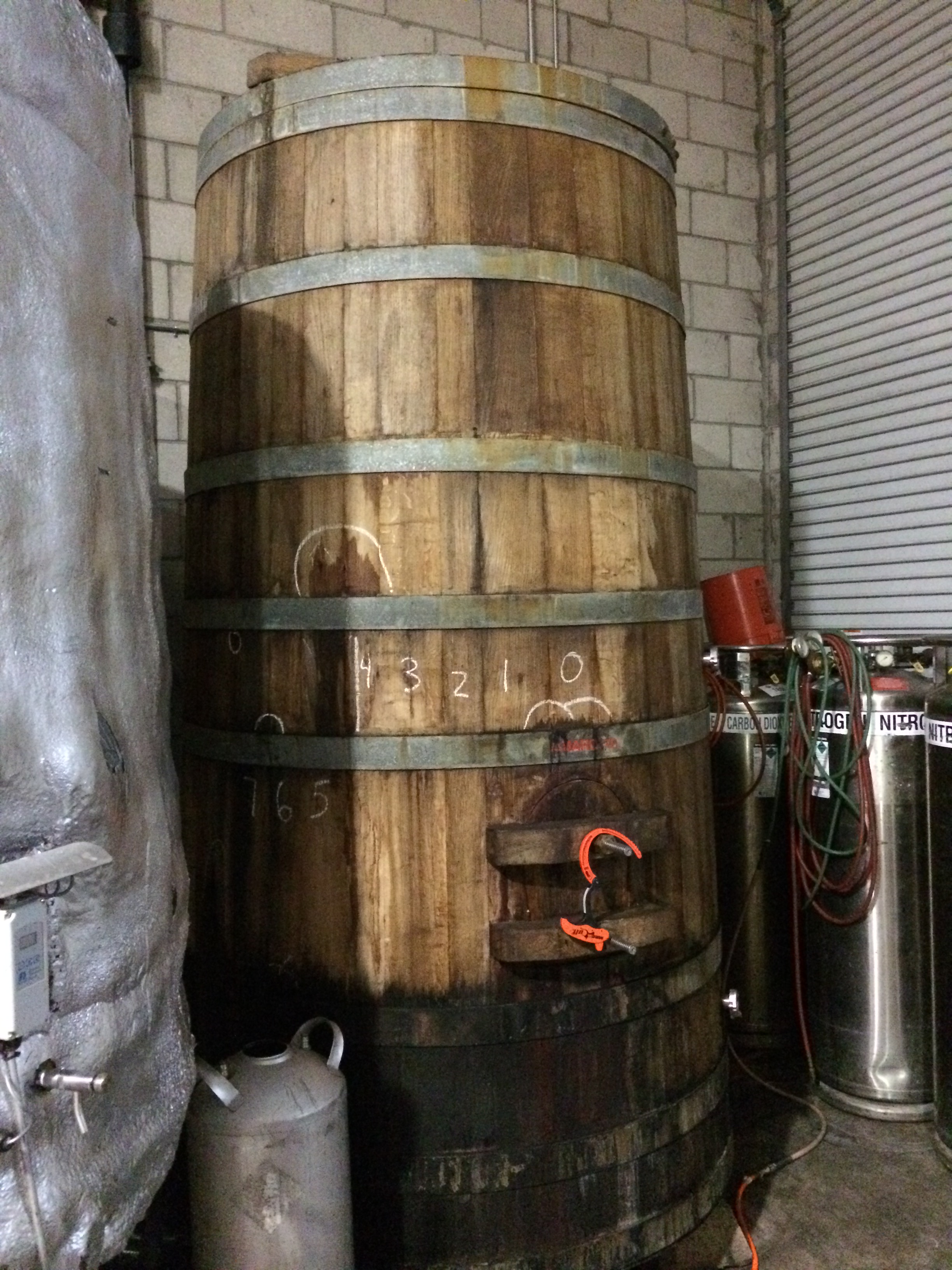
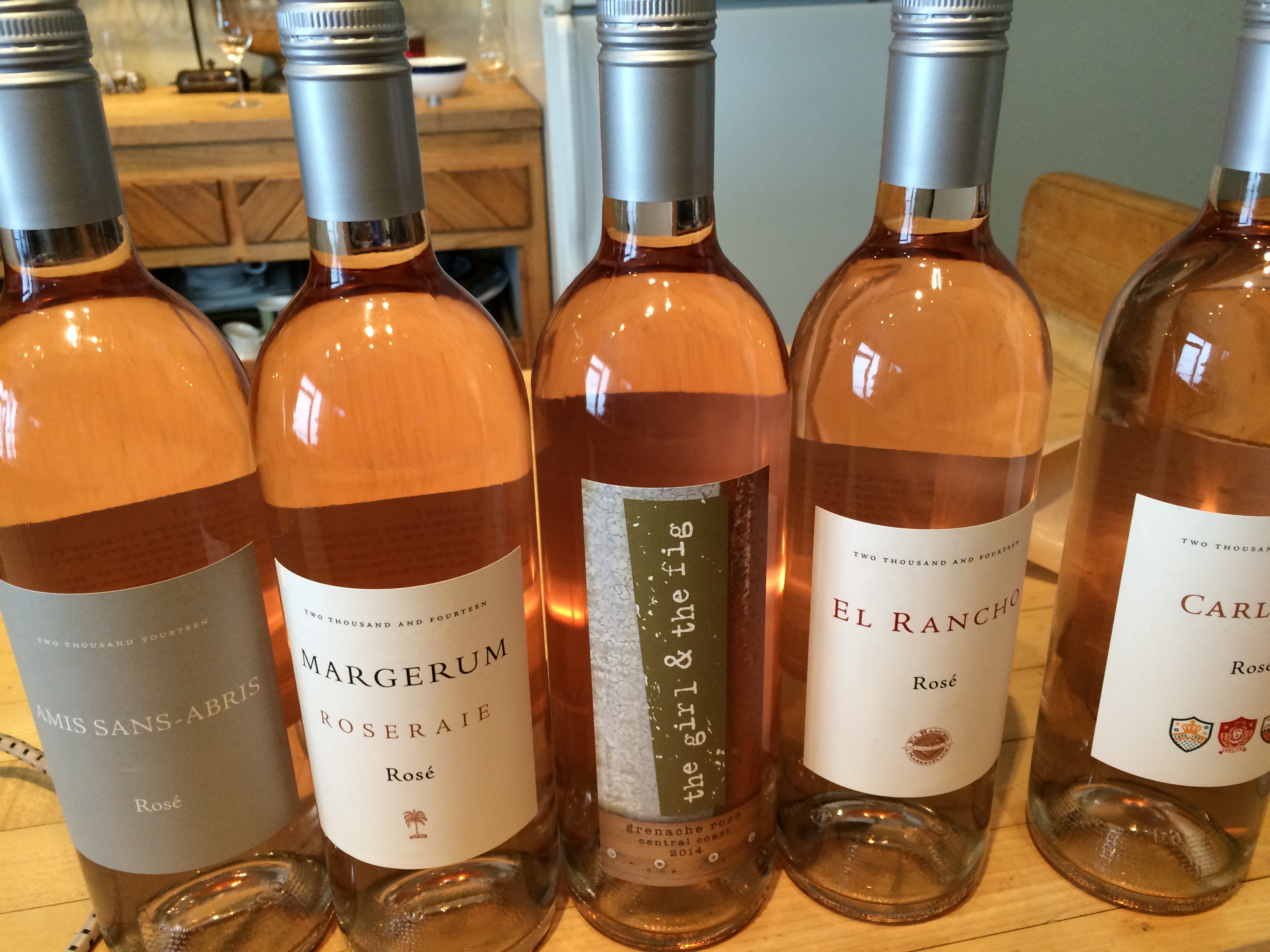
Stainless Steel Barrels at Mergerum.A Line Up of Rosés.
On Saturday, I joined a group for a wine tour of four wineries in the Santa Rita Hills Appellation (LINK), near Santa Ynez, California. The four were: Tyler, LaFond, Margerum, and Ken Brown. I will blog about each separately, beginning with Ken Brown Wines (LINK). The Santa Rita Hills are located about 30 miles north of Santa Barbara. A unique geological area, they are on a circular land mass that separated from the North American tectonic plate about 12 million years ago. Since then, that circle of land has been turning about 1/4 inch per year, so that now, the mountain ranges and valleys run east to west instead of north to south. This provides a “chute” for cool breezes and moisture from the Pacific Ocean to come farther inland and created one of the perfect places on earth to grow Pinot Noir. The film “Sideways” (LINK) was filmed here (before the appellation was established), and the rest is, well, a rich history.
Ken Brown is a legendary winemaker in the Santa Rita Hills area. He began at Zaca Mesa Wines. His first name is actually Byron, and after Zaca Mesa, he started Byron Winery in 1985, selling it to the Mondavi Family in 1990. He said that both of those wineries got to the level of 80 to 90,000 cases in annual production, and by that point, actually before that, it was no longer fun for him. The current annual production at Ken Brown Wines is just about 3,000 cases in total.
Along the way, Ken Brown has trained a number of winemakers in the area, including Jim Clendenen of Au Bon Climat and Bob Lindquist of Qupé Winery. His tasting room is in Buellton, CA, just off the 101 Freeway. It is very nicely appointed, with a corkwood floor that got a lot of attention from some of the women on the tour.
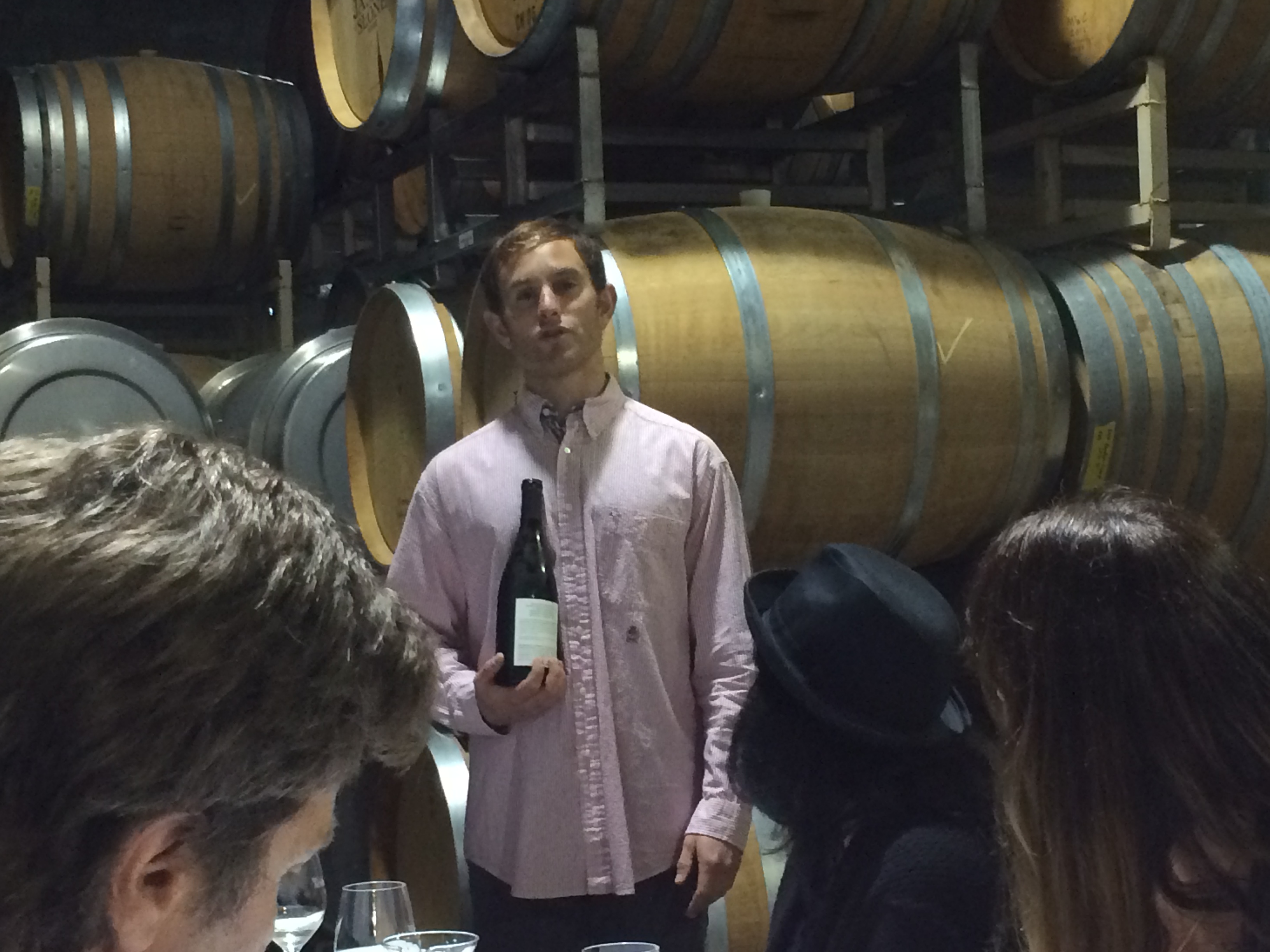
Ken Brown Holding forth about his Wines.
Ken was very expansive in describing his process of winemaking and each of his wines. We tasted one Chardonnay, five Pinot Noirs and one Syrah. My general comment is that his wines are amazingly well-crafted in a Burgundian style, not big fruit bombs like many California wines. In fact, some in our tour group thought his wines were not big enough.
I found them to be nuanced, balanced, and each had different characteristics. I just about fell in love.
The Chardonnay was beautifully made, and very oaky – not to my taste, but you could readily smell, taste, and see the quality of the wine. Several bottles of this were purchased by tour members.
Each of the five Pinots, one a blend of two Santa Barbara appellations, the rest from Santa Rita Hills, two blends of vineyards and two single-vineyard wines, had a strong sense of place and a very nice blend of fruit, mineral, and spice.
I won’t go into all of the individual wines in detail – mainly because it is unlikely you will be able to get any! All are small production, and available only through the winery (LINK to wine shop site).
I purchased the 2012 Zotovich Vineyard Pinot Noir (LINK), a very complex Pinot; the 2012 Santa Barbara County Pinot Noir (LINK), his most approachable Pinot – fruity and very refreshing; and the 2012 Watch Hill Syrah (LINK), a rich fruit-forward Syrah with great complexity. If we were not moving soon, I would have bought more.
If you are in the Santa Rita Hills area any time soon, put Ken Brown Wines on you list of places to visit, You will not be disappointed (unless you only like the big, big wines. Then you better stick to Paso Robles).
As noted in my Philosophy of Wine entry, I drink wine almost every day with dinner. Dorianne and I drink 3 or 4 reds to every white or rosé, except in summer, when that ratio tends to be reversed.
I put reds into three basic categories – everyday, special dinner, and very special occasion. Everyday wines would run about $20 and under, special dinner from $20 to $50, and very special occasion from $50 and up. A bottle with a great story or one that is hard to obtain may put it up a category or two even though the price point is lower.
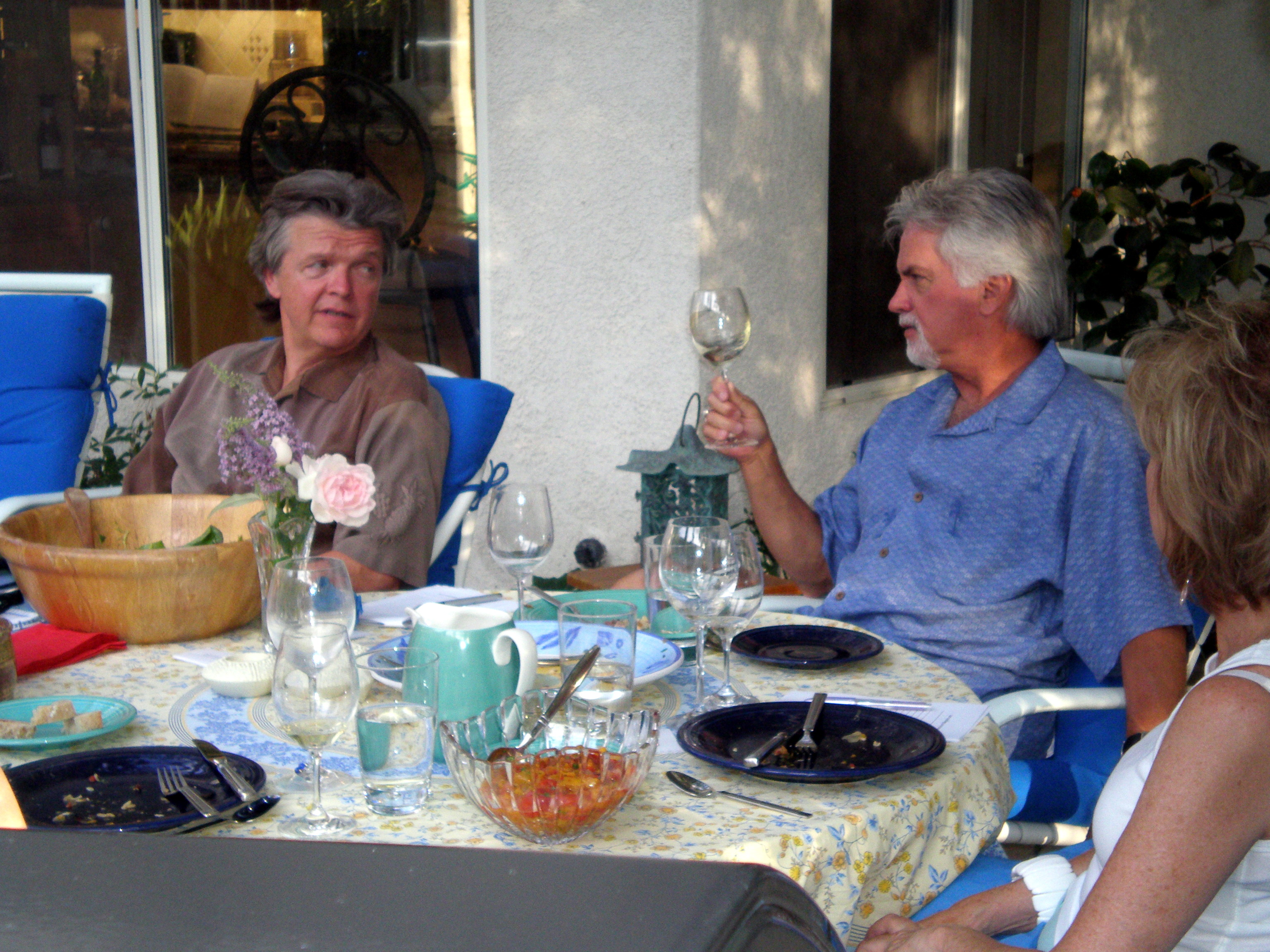
Sharing some Wine with Friends.
Everyday wines are the mainstay of our consumption. These are generally wines that we buy from local retailers or online at sites like WTSO.com. Occasionally, they come from a winery. We also have our wine co-op wines that fall into the everyday category. We get about 8 cases from our co-op share each year, 6 of red and 2 of white. I will not include the co-op wines in these reviews, because you cannot obtain them. We had a 2010 Petit Syrah/Cabernet Sauvignon on Monday night from the co-op.
So how do you choose your favorite everyday wines? I would begin with trial and error then move out from there based on a certain level of awareness that develops as to what to look for – certain varietals, wine makers, and price points. The trial and error comes first – you sample some wines. This can happen by purchasing at a retailer, or you can be a bit more creative.
When you are invited to a party, if they have lower priced wines, try some. See if you find any that you like and note the brand and varietal. In a restaurant, especially some chain restaurants, they will have inexpensive wines (at a markup no doubt) that you can try. Many wines under $15 is that they will stay very constant from year to year, so you are less likely to be surprised by a new vintage.
I like a variety of wines, so when I look for everyday wines, I am looking at a broad spectrum of wines, both domestic and international. You may be a Merlot or a Cabernet Sauvignon drinker, which narrows the field quite a bit. I like some variety and some signs of craftsmanship, even in my everyday wines. If you look around, you can find wines under $15, and definitely under $20 that have this quality. Here, you will find some variation from vintage to vintage, but that adds to the variety!
So let me start with two red wines that have, for me, been very reliable over time. They are under $15, both are imported, and each has a bit more to offer than the standard-brand or bulk wine product. The vintage will be whatever is currently available – it is unlikely that wine merchants are holding these for aging.
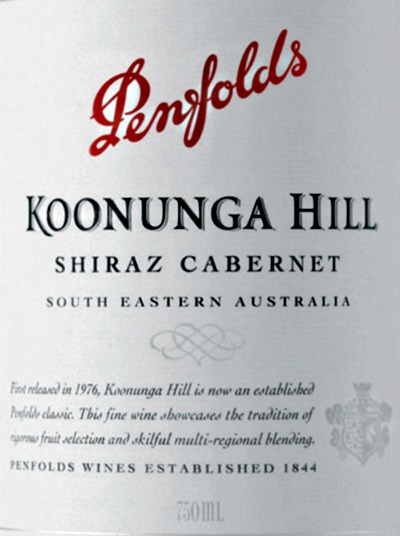
A Good One from Australia.
Penfolds Koonunga Hill Shiraz/Cabernet: I began drinking this wine in 2003. Penfolds is the flagship wine brand of Australia, makers of the legendary Penfolds Grange (which is near the very top of my bucket list) Shiraz wine. The Koonunga Hill label is second from the bottom in the Penfolds hierarchy – above the very pedestrian Rawson’s Retreat label. I have tried the Koonunga Hill Shiraz and the Cabernet as separate varietals, and find that the blending of these two grapes creates the most satisfying experience. The 2011 vintage is the most likely on to be on your retailer’s shelf. It is a 62% Shiraz 38% Cabernet blend (this will vary from year to year) and is 13.5% alcohol, which I prefer to the heavier levels of alcohol in may California everyday wines, which are usually just hot and not very well balanced. The Koonunga Hill Shiraz Cabernet is great with red meat and will hold up to BBQ sauces and spiced foods as well. The wine will age for 8 to 10 years, but this wine is not made to age, so drink it right from the shelf.
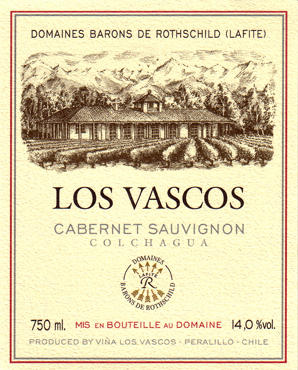
From Chateau LaFite Rothschild in Chile.
Los Vascos Cabernet Sauvignon: I came across Los Vascos when I was living in South Florida and it came with a great story. A friend was the supervising flight attendant on a private Boeing 727 belonging to the CEO of a South American subsidy of a large US corporation. The CEO was really into wine – he would send my friend on the plane to Paris to load on first growth Bordeaux’s and Burgundies – you get the idea. At the time, the Los Vascos (from Chile) was retailing for about $7. My friend gave her boss a glass on a flight and he really liked it (probably a good thing for her career). He then began to serve it on his plane to his high-roller friends and did not tell them what it was. Pretty much everyone took it for a premium wine.
So what is this wine? Well, it is a large production wine from the Chateau Lafite Rothchild vineyards in Chile. There are a couple of reserve versions of the wine that come in at higher prices – from about $20 up to $65. Today, the basic Los Vascos Cabernet retails for $14 but can usually be had for $10 to $12 or less from a variety of retailers. The website recommends decanting for about an hour before drinking this wine, although I have never done this. You will find notes of ripe fruit, good structure, and hints of a variety of mineral notes – which most of us experience differently. This is a great wine with roasted and grilled meats.
All three of these wines are what I like in an everyday wine. A few others that I imbibe fairly regularly are Bogle Old Vine Zinfandel ($9 to $12); Norton Reserve Malbec, Mendoza, Argentina ($14 to $20); Luigi Pira Dolcetto d’Alba, Piedmont, Italy ($12 to $18); plus many more. You have probably noted that most of the wines listed here are imported. For some reason, producers around the globe seem to be able to get well-crafted wines made and shipped to the US at everyday wine prices. It’s a paradox.
There are lots of decent wines in this price range – ask your wine retailer to guide you to those undiscovered gems in the shop – everyplace has some of these wines. As always, once you find what you like, begin to branch out and explore wines like those.
Last night we were scheduled to meet friends for a tasting at a new tasting room in Thousand Oaks, CA, the next town over from us. They said meet at Alma Sol, but I made it Aldabella – another brand new tasting room just opened in the area. Thus began the comedy of errors.
Dorianne was judging cakes and a life cooking contest at the Ventura County Fair and was going to be a bit late getting home to make our 5:00 pm appointment. I texted our friends and let them know. They texted back that the wife in that couple was stuck in traffic and would be a bit late, too.
Altabella Winery Tasting Room
Dorianne arrived and we shifted cars and headed for Altabella, located on Via Colinos opposite the Four Seasons Hotel in Westlake Village. Altabella Winery Tasting Room has a beautiful tasting room adjacent to a medium-sized warehouse winery. We settled in on a plush sofa and waited for our friends. We received a text that our friends’ GPS was acting up and they would be a bit later. So we sat. One of the owners noticed that we were just sitting their and ordered us glasses of their Syrah. The wine was nicely-crafted, acidic, and smoky. I liked it more than Dorianne did.
Then, a phone call. “Hi, we are here, where are you?” the voice at the other end of the phone asked. “We are right here – Altabella Wine Tasting Room.” “No, came the response, Alma Sol.” So, we said our goodbyes and headed over to Alma Sol Winery Tasting Room, arriving about ten minutes later. There are two winery-operated tasting rooms in the area and we each went to a different one. End of comedy of errors.
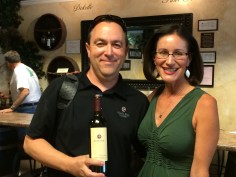
John and Lisa Shaw – Alma Sol
We were greeted at Alma Sol by our friends, of course, and by John and Lisa Shaw, the owner-operators of Alma Sol. And then it all came back.
We had met John and Lisa at the 2013 Garagiste Festival in Paso Robles, a gathering of small producers. We recalled speaking to them, enjoying their wines, and, yes, hearing that they were going to open a tasting room in Thousand Oaks. Our friends used to work with John and Lisa at Sage Publications. So, old home week.
John was heading out to pour at a charity event, so he poured our first glass, a 2013 Sauvignon Blanc, chatted for a bit, and headed out. Lisa stayed with us beyond their scheduled closing time of 6:00 pm, and poured and poured and poured.
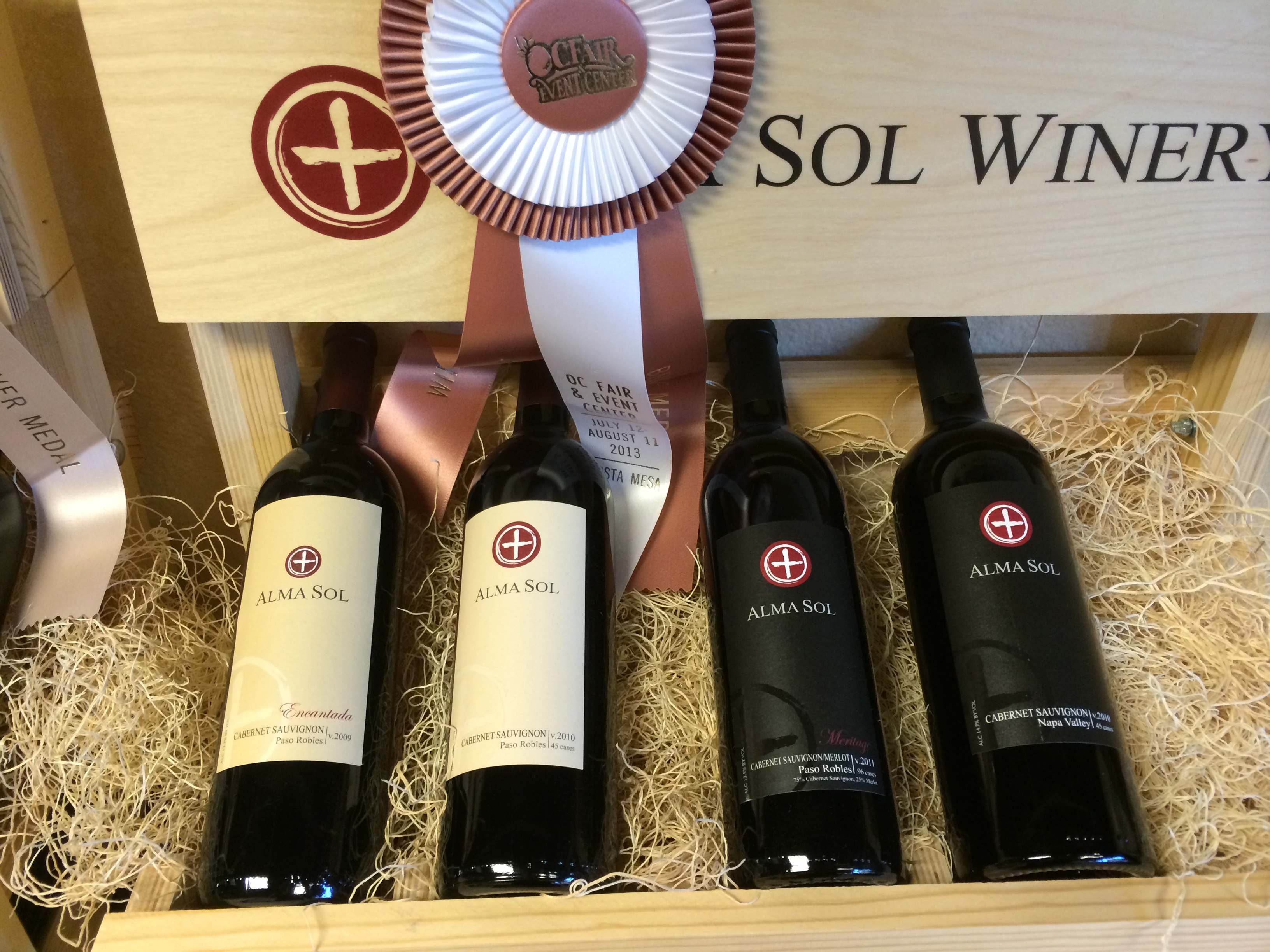
Alma Sol is their operation from top to bottom. Their Cabernet Sauvignon grapes are sourced at Lisa’s family vineyard in Paso Robles and their other varietals from a number of nearby vineyards. All of their wines are very well-crafted – you can tell the winemaker’s touch, but the essence of the fruit and the terroir are present. They are a small production winery – almost everything is well under 100 cases of production – but produce a good variety of wines within that structure.
Their 2011 Cuevas Vineyard Cabernet Sauvignon (Curevas is Lisa’s family name) received 92 points from Wine Enthusiast and won Gold in the 2014 San Francisco Chronicle Wine Competition. It was our favorite – very smooth with berry fruit on the nose and subtle lavender and leather notes as well. The wine has a nice mouth-feel and spicy after n
otes. It retails for $32 – a bargain.
We will be visiting their tasting room, which they share with another small producer, Sunland Wines, whose wines we will taste in a future visit. They are located at 1321 E. Thousand Oaks Blvd, Suite A-108, Thousand Oaks, CA 91362.





 their operation from top to bottom. Their Cabernet Sauvignon grapes are sourced at Lisa’s family vineyard in Paso Robles and their other varietals from a number of nearby vineyards. All of their wines are very well-crafted – you can tell the winemaker’s touch, but the essence of the fruit and the terroir are present. They are a small production winery – almost everything is well under 100 cases of production – but produce a good variety of wines within that structure.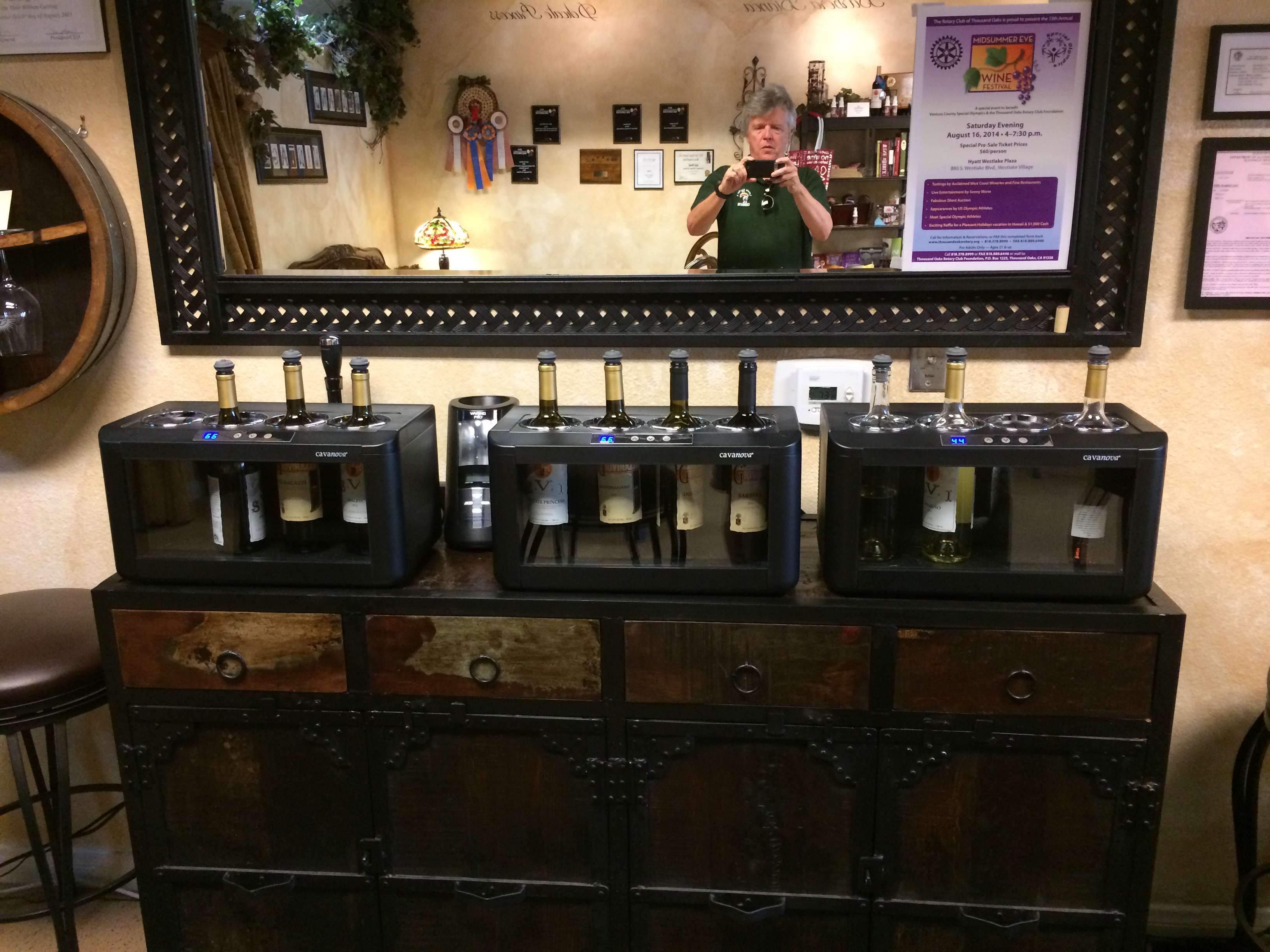
 Jim Lockard On Wine