Last night, another dinner with Mary Stec and Richard Clark. Mary made 40 Clove Chicken – AMAZING. Now all that garlic needs a big red wine, in my opinion, to make it work. It was also Dorianne‘s Birthday! So there was a rich, chocolate dessert. Quite a culinary evening.
Mary Stec’s Amazing 40 Clove Chicken in the Pot
The wines were, first, a 2009 Ampelos Pinot Noir Rho (LINK to the 2010). Ampelos uses Greek letters for each of their wines. The Rho is a fairly big Pinot Noir by Santa Rita Hills AVA standards, inky color, spicy with a nice sense of terroir both on the nose and in the mouth. Hints of pepper and dark fruit bring a fullness to the flavor of this wine. It is a wine that holds up to red meat well, and the 40 clove chicken was a good pairing.
A Really Wonderful Pinot Noir
Next, we opened a 2003 O’Shaughnessy Howell Mountain Cabernet Sauvignon (LINK) that had been in the cellar for a while. Here is what Robert Parker had to say about it: “The 2003 Cabernet Sauvignon Howell Mountain has a big, sweet nose of chocolate, blueberry, black raspberry, and currants with some crushed rock and a hint of toasty oak. The wine is long, rich, pure, and impressively endowed, but strikingly elegant and complex. It is already drinking well and should age nicely for 10-15 or more years. The final blend on this was 83% Cabernet Sauvignon, 13% Merlot, and the rest Petit Verdot and Malbec. (2006)” I agree with the master in this case, and would add that the wine has aged well.
A Big Bold Cabernet.
The O’Shaughnessy was a good match for both the chicken laced with garlic, and the rich chocolate confection that followed. A very happy evening.
Last night, Dorianne and I joined Richard Clark and Mary Stec at Niroj Restaurant in Agoura Hills, CA. Since it was the eve of the Lunar New Year, I figured (correctly) that it would not be a big night for Kurdish food. The restaurant was not crowded, and we had a leisurely and delicious meal and some good wine.
I brought a bottle of 2009 Dover Canyon Che Vito Da Cano, a 70% Sangiovese, 30% Syrah Blend. This wine is smooth, fruit forward without being out of balance, and had a very nice finish with a hint of spice aftertaste. Delicious. The wine doesn’t even appear on their website, so I guess there is no more of it to be had. Dover Canyon Winery is a great stop if you are in the Paso Robles area.
Luqman Barwari, the owner, oversees NirojCuisine with a loving hand. A former executive at Amgen, he began the restaurant a couple of years ago to follow his passion for the food of his home culture. Niroj is, I believe, the only Kurdish Restaurant in the southwestern U.S. The food is beautifully prepared – very much like the variety of Middle Eastern cuisine. We shared a cold Mezze Platter of appetizers with the made-on-the-premisis soft bread, then the four of us shared two entrees – a lamb shank and a shrimp tawe – all excellent.
Mary, Luqman, and Richard
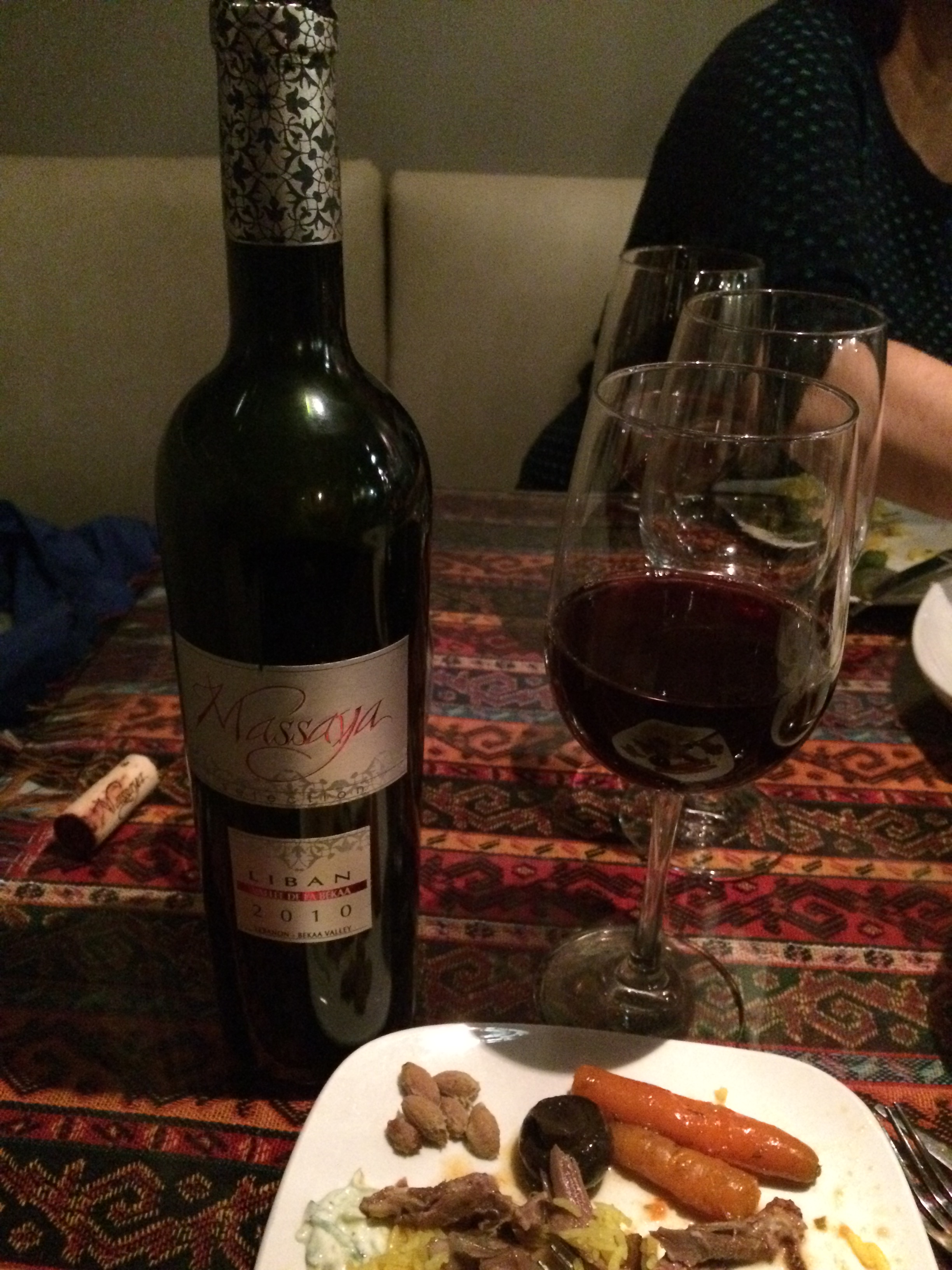
Then, for our second bottle, we ordered a Lebanese wine – a 2010 Massaya Silver Blend from the Bekaa Valley. This wine with its unusual blend of Southern French( 40% Cinsault, 30% Grenache, 15% Mourvedre) and Bordeaux (15% Cabernet Sauvignon) grapes benefits from the sunny climate of the Lebanon tempered by cool night-time temperatures as a result of the height of the vineyards. The wine was very smooth, with medium tannins and a nice blend of fruit and minerals on the palate.
Some house made Baklava ended the experience at Niroj Cuisine. I took a photo of the Lebanese and Turkish Wines on the menu.
On Saturday, Dorianne had a late-morning appointment with her allergist, and it just happened to be in the same shopping center where the Sunland Vintage Winery Tasting Room (Link) is located in Thousand Oaks, CA. The proprietors, Michael and Debby Giovinazzo, were in when I peeked in the door at 11:00 am (the sign said they open at 1:00 pm). I asked if they were open and was invited in.
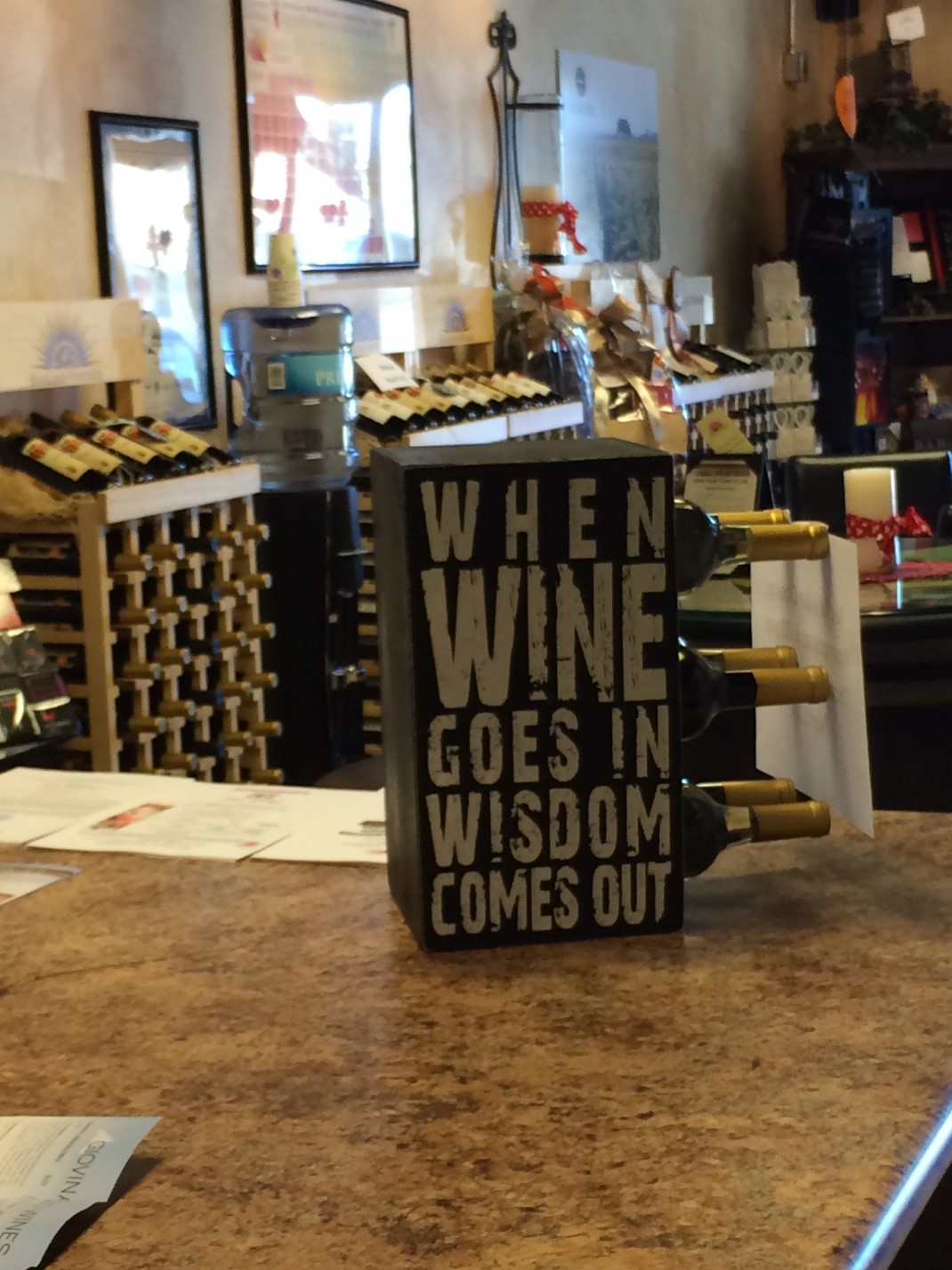
The Tasting Room at Sunland Vintage Wines – shared with Alma Sol Wines.
I blogged about their Tantalizing Thursday Events(LINK), where they combine $5 per glass wine with a food truck in the parking lot two weeks ago. That event was so crowded, that I was unable to have a conversation with Mike or Debby, so I returned to do just that.
Mike and Debby have been in the wine business for five years. Their wines are produced in Lodi, CA, and sourced from all over the state. His goal, he said, was to bring Italian Varietals to Southern California, which his Giovinazzo Wineslabel does, and does very well. There is also a newer label, SVI Wines with more traditional varietals – Cabernet Sauvignon, Syrah, Malbec, and Albarino.
Total production this year is 1350 cases, making Sunland Vintage Winery a small producer, but one with great variety. Mike told me that he just contracted for some Dolcetto fruit from Northern California growers that he is excited about. Mike and Debby clearly love being in and talking about, the wine business, and it looks like they have carved out a nice niche for themselves with their Italian Varietals and blends.
This article (LINK)from WineFolly.com, has some very good information about decanting and serving wines. Decanting, and how long to decant, is often a mystery, and this article gives some good guidelines. There is very little about wine that is exact, so I recommend that you see these as guidelines, then explore and make changes as your experience dictates.
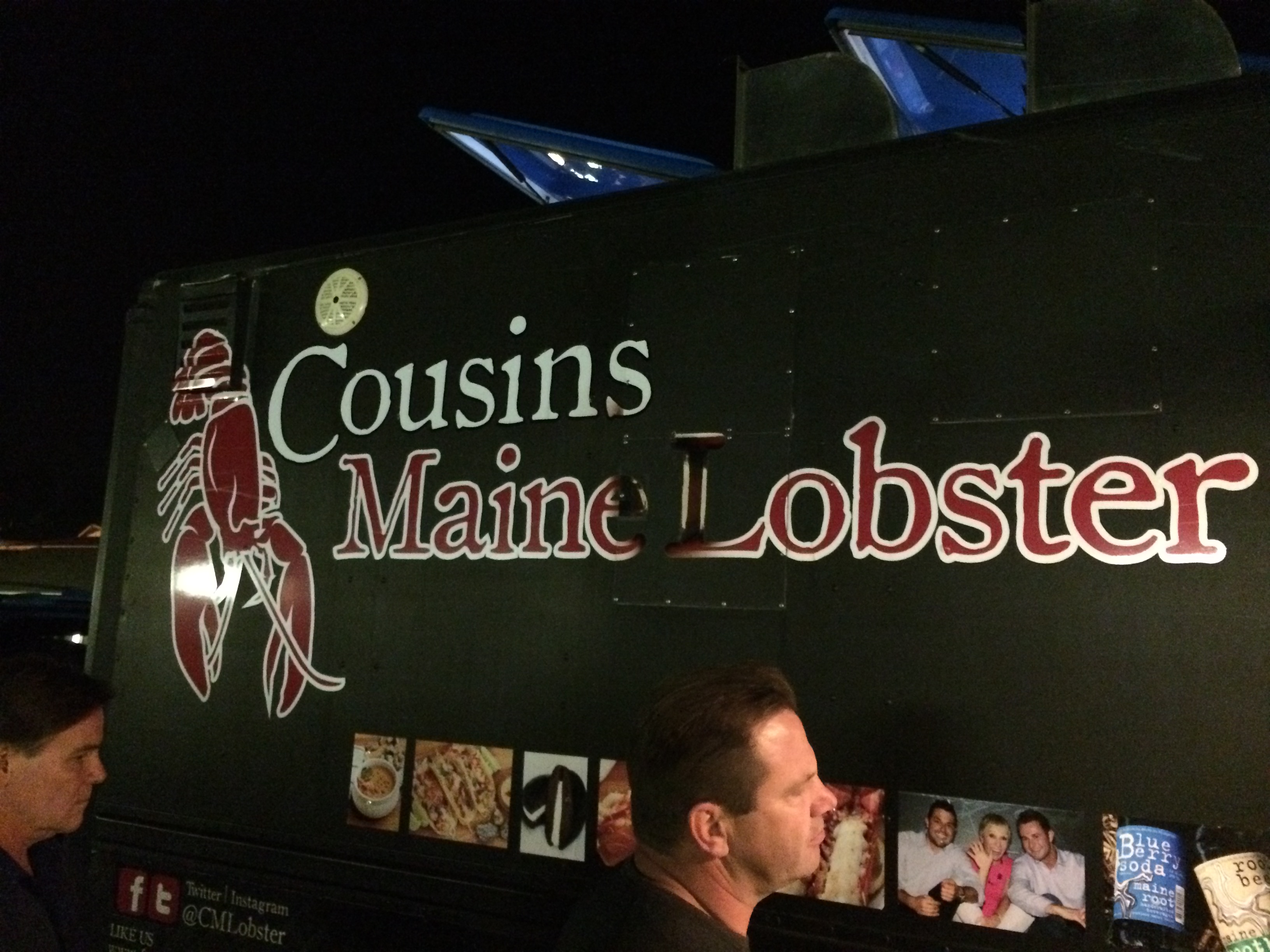
Here in the Thousand Oaks/Malibu, CA area, we are awash in wine – a good thing. There are over twenty wineries in the two Malibu AVA’s, and a lot of tasting rooms, wine bars, and wine-centric retailers in the Thousand Oaks/Westlake Village area. The competition is growing as the area is developing into a wine destination. Last night, a groups of us joined a large crowd at Sunland Vintage Winery Tasting Room (Link) in Thousand Oaks. The proprietors, Michael and Debby Giovinazzo, held court in a bustling tasting room, pouring $5 glasses of wine for their Thursday evening promotion Tantalizing Thursday, featuring different food trucks each week. Last night it was Cousin’s Maine Lobster Truck (Link), featuring lobster rolls, chowder, tacos and more.
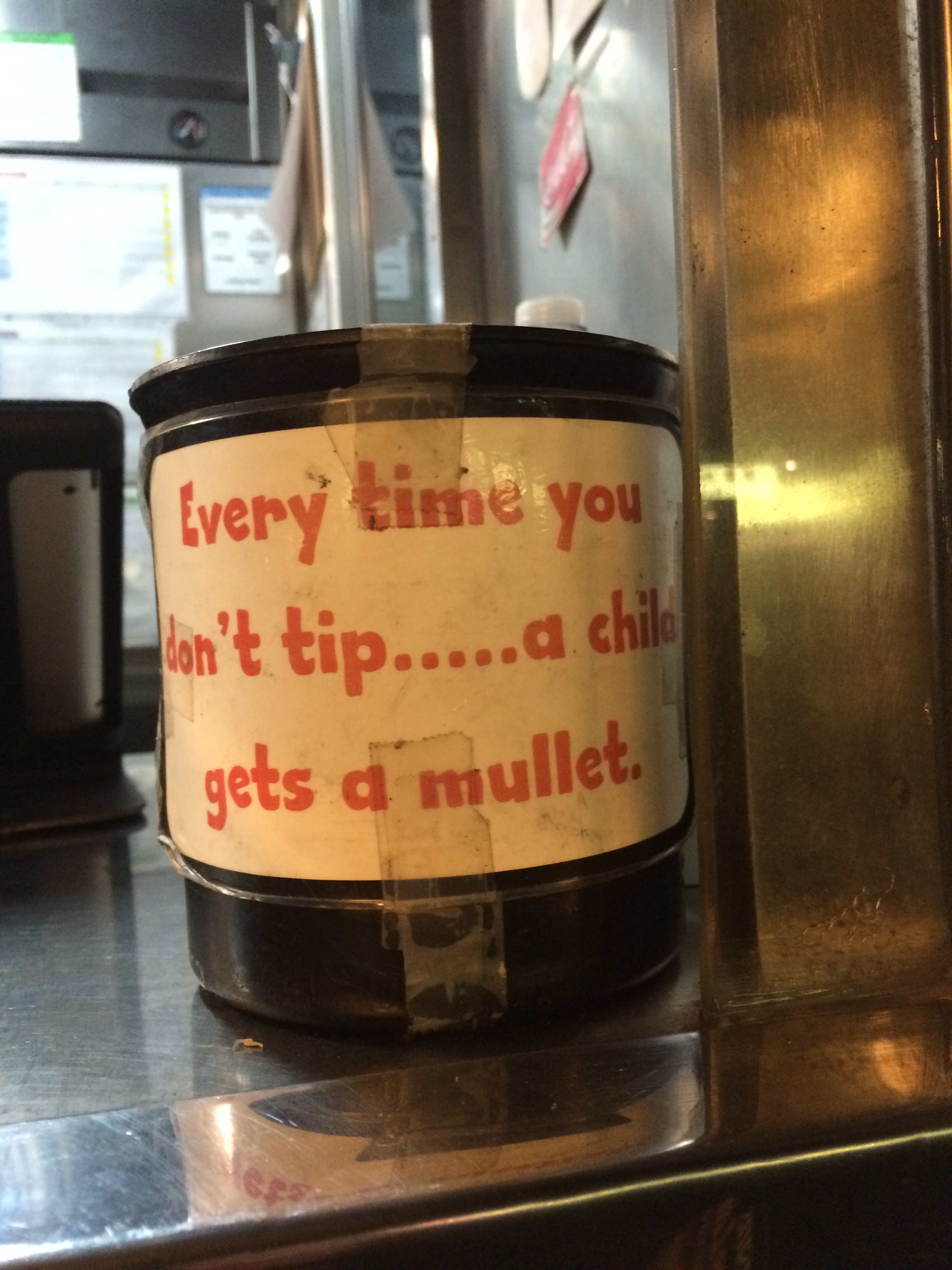
Tip Jar on the Lobster Truck
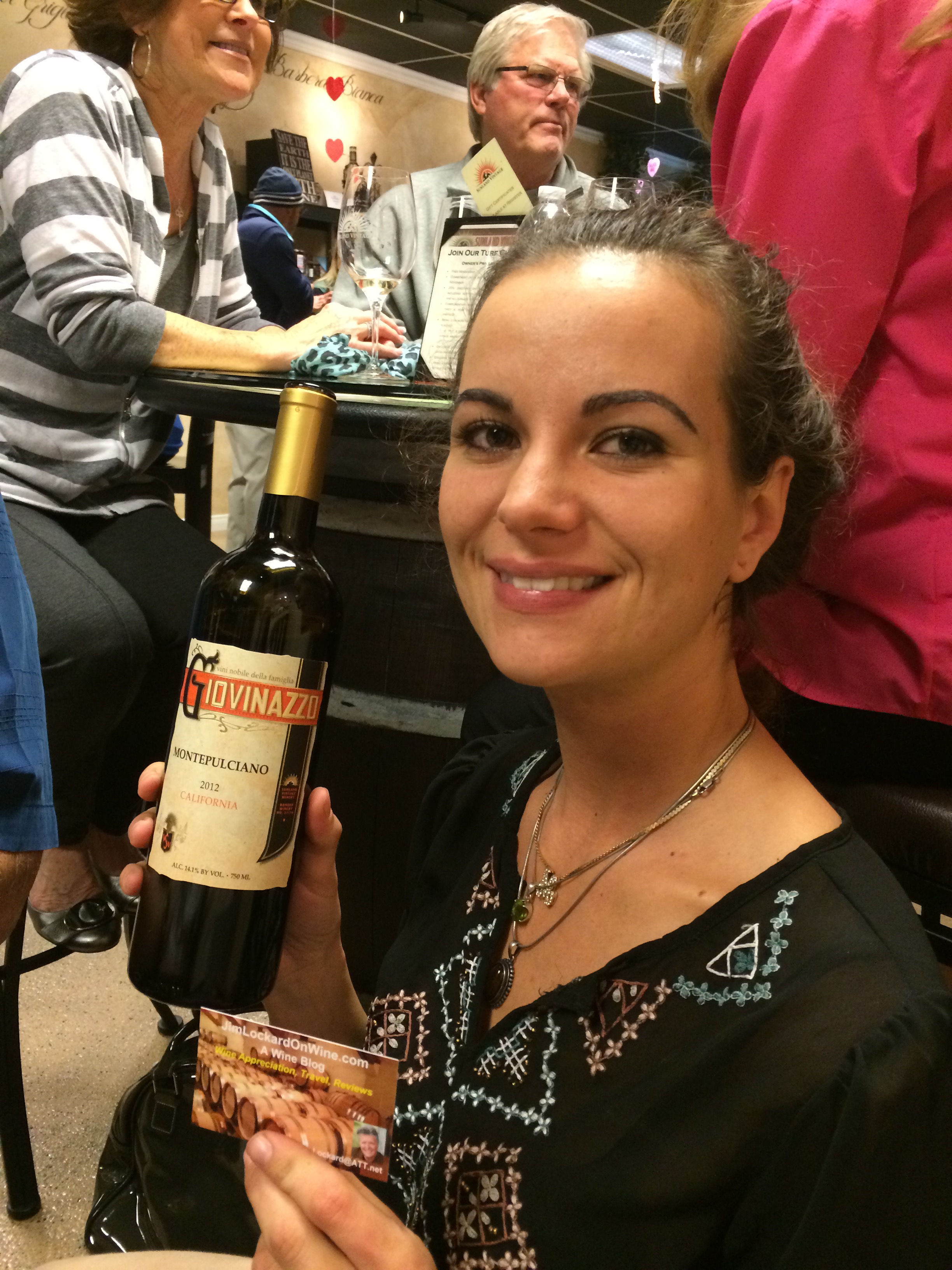
We settled in at a large table (nine of us), and ordered some wine from the server, Merissa. We started with the Albarino, a nicely crafted white that was perfect with lobster. The line for the Lobster Truck was long, but convivial. Then we headed into the land of the reds. Sunland has two labels, Giovinazzo Wines – Italian varietals like Nebbiolo, Dolcetto, Montepulciano, Sangiovese, Teroldego, and Barbera, and their SVI Brand – Premium Wines like Cabernet Sauvignon, Malbec, Zinfandel, the Albarino, and Bordeaux Blends. The wines are very well crafted. It is very unusual to have so many Italian varietals from a California winery, so you have to give Sunland credit for being ambitious. We did not taste all of the wines – the $5 per glass format of the evening precluded that, but we did have a sampling. On the Italian side, the Giovinazzo Wineslabel, we tasted the Dolcetto (harsh and very acidic, and I usually like Dolcettos); Montepulciano (very nice, smooth and balanced, best of the night); Malbec (also nicely balanced, but not very distinctive). From the SVI Wines label, we had the Albarino (very nice, smooth, fruity, grassy); Zinfandel (very sweet, big, ripe, almost a dessert wine); Cabernet Sauvignon (well-crafted, balanced, nice fruit/mineral balance). I plan to return to get some time to taste some of these wines again and to try some of the others. I also want to speak to Mike and Debby when it is less hectic. Sunland Winery is a great addition to the Thousand Oaks wine scene.
The For Sale sign is up in front of the house. Dozens of folks are streaming through our completely staged home – meaning that it looks pretty much like we don’t live here. Every morning, we hide all of the evidence of our occupancy and we depart whenever the realtor notifies us that a showing is happening. Fortunately, that has been happening very regularly of late.
We will be heading to Europe for a while, no fixed address, probably for most of 2015 and maybe beyond. I am looking forward to sampling more of the wines of Spain, France, Germany, and Austria (at a minimum), but what to do about our wines in our home cellar?
Now, when I say “cellar,” I should note that we live in a suburban tract house. No basement. Our “cellar” consists of a number of stashes around the house, where lighting is minimal and temperature is fairly steady. The really good stuff is in a wine refrigerator in the garage, but there are bottles on a rack in our utility closet, another rack in a hallway, another on the cabinet in our dining room (French only!), and more on a small rack built into our kitchen breakfast nook.
When the move was being planned, we had about 350 bottles in total. We rented a locker at CELLAR MASTERS in Newbury Park, CA, where we put a dozen cases right away and where the remainder will go when we leave.
The focus now is on drinking wines that will not age well, or that are at or near their peak now. We are also supplementing with some purchases of whites, which we do not tend to keep over time for the most part. Our wines are mostly from California, with the Central Coast and Napa and Sonoma well-represented; plus a couple of cases of French wines, and a few Australians and one or two from British Columbia’s Okanagan Region.
So, our case of ARTISTE wines, our CLENDENDEN FAMILY WINES and the AU BON CLIMAT are being consumed, as are our STOLPMAN and some CABERNETS. Our French wines, mostly Bordeaux, will age well, as will the Burgundies. We will keep some of the newer CLOS PEPE Pinots, which should last a few years, and we will have a lot of assorted CABERNETS and MERLOTS from California to keep.
I expect that we will be down to about 200 bottles when we depart sometime in mid to late February. At some point, we will likely have the wines shipped from the storage facility to wherever we land, or sell it off. It is both fun and a bit sad to be consuming some of the bottles that we obtained from the wineries or through friends. But, there are worse things that one has to do, right?
Dorianne and I returned to Alma Sol Winery’s tasting room the other night with three other couples. Alma Sol Winery (Link) is owned and operated by the husband and wife team of John Shaw and Lisa Cuevas Shaw.
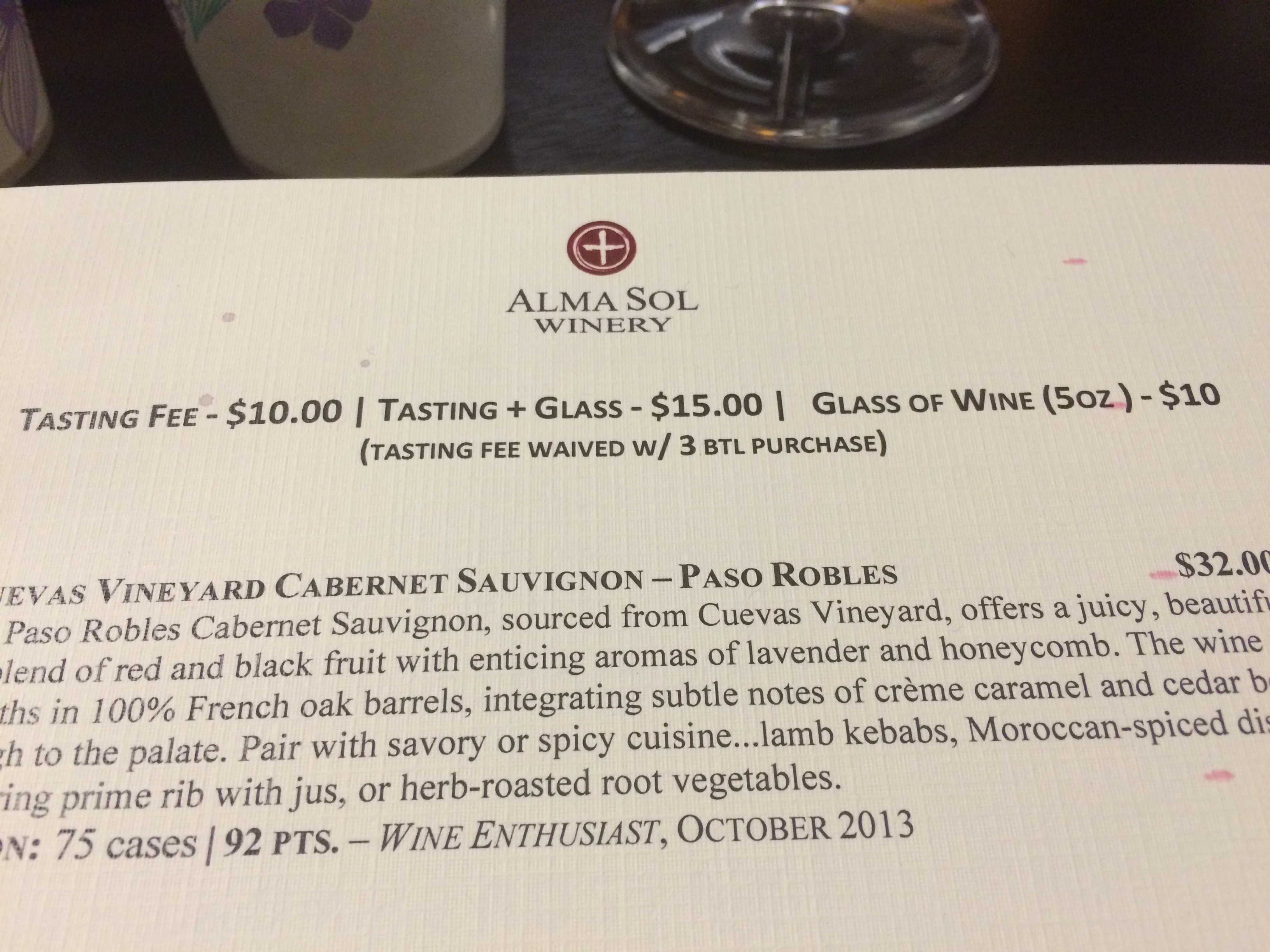
The heading of the tasting list at Alma Sol Tasting Room in Thousand Oak, CA
John Shaw, who serves as winemaker for the couple – really a two-person operation, from the vineyard to the tasting room – met us at the door. Lisa Cuevas Shaw was inside with a bottle of wine in her hand. We began the evening’s tasting, which John had selected from his list of Bordeaux-influenced wines.
“It’s a cool evening,” he said, “so it’s all reds and all full-bodied wines.”
The wines he poured were indeed, red and were generally fuller bodied wines as well. The exception was the first wine, a 2010 Cuevas Cabernet Sauvignon, which was very elegant and a fruit-forward wine. After that, the wines had more of a mineral presence and varied as to the fruit presence. I won’t go into detail, because these wines are produced in such small quantities that they are very unlikely to show up outside of the tasting room. You can obtain some of them at the website (link above).
We first met John and Lisa at the Paso Robles Garagiste Festival a couple of years ago. They told us that they would be opening a tasting room in Thousand Oaks – our neck of the woods – very soon. The location is shared with Sunland Vintage Winery (Link), whose mostly Italian varieties we plan to return to sample soon. Alma Sol, using mostly grapes from the Cuevas Vineyard in Paso Robles and other fruit sourced from Paso and as far north as Napa Valley. In fact, we tasted a blend of five Napa Bordeaux-style grapes in the tasting – it was made in a middle ground between the French and California styles – fruity and elegant, but higher in alcohol.
We finished the tasting with their dessert wine: 2012 Almazan Dessert Wine, Paso Robles ($34.00)
From their website: This Portuguese Port-style wine uses both Tempranillo and Touriga Nacional grapes from the east side of Paso Robles. The beautiful nose is made up of cherries and cranberries and follows through with a very fruit forward, elegant mouth feel. The finish is long with a touch of fortified wine that lightly warms your mouth. This wine pairs great with your favorite dessert, Dark chocolate raspberry truffles, or a cigar (if you like them, of course).
Production: 70 cases
We bought a bottle. Very nice!
It is really nice to see more tasting rooms open in the Thousand Oaks area. Alma Sol is a great addition to the local line up – I look forward to seeing how John and Lisa continue to develop as winemakers.
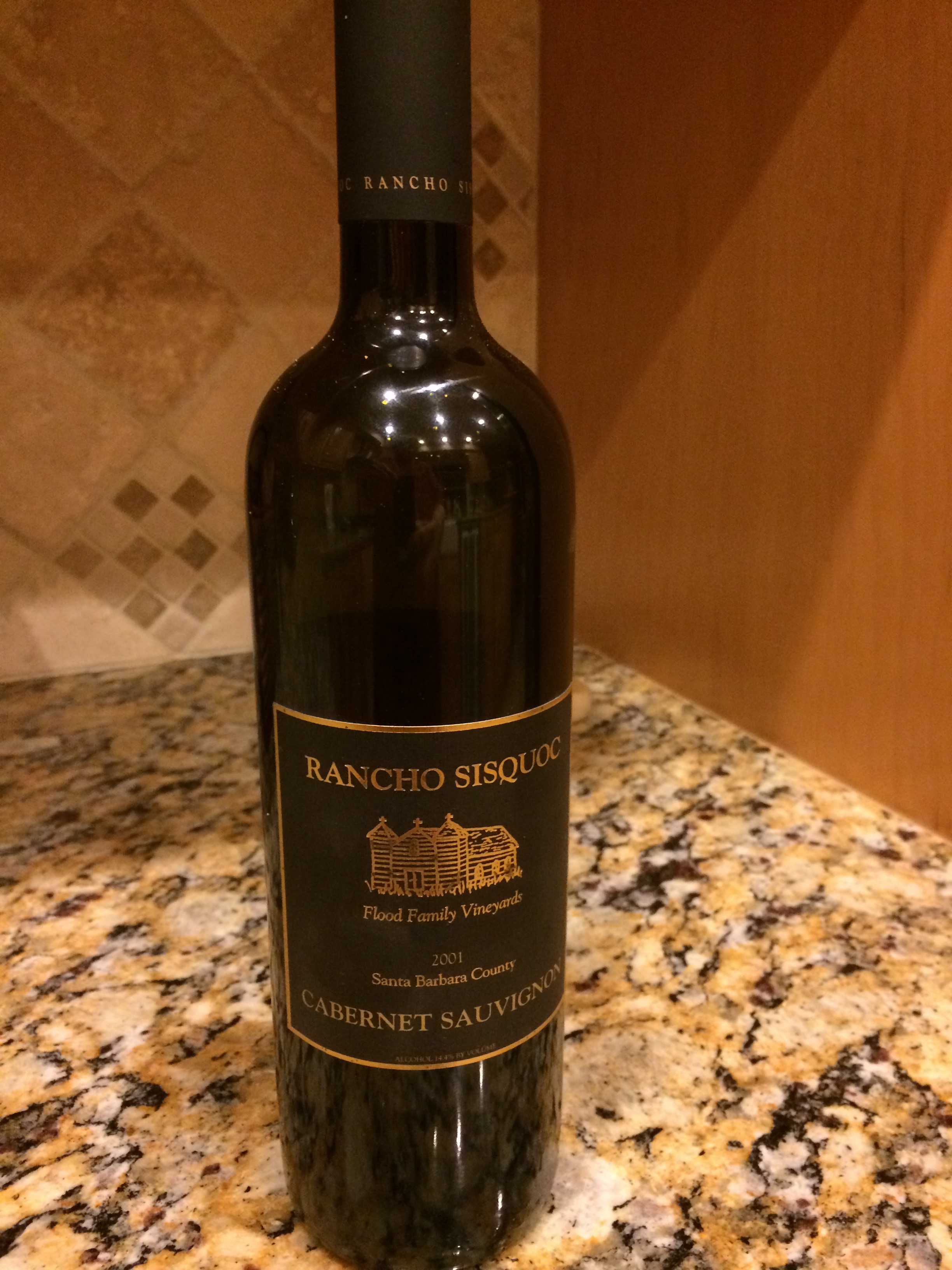
Dorianne and I opened a 2001 Rancho Sisquoc Cabernet Sauvignon(LINK)last night – a bottle that we got at the winery (LINK) in about 2006. The wine had been stored in our small wine refrigerator. We are thinning out our cellar in anticipation of moving (that will be covered in other posts) and having no fixed address for some time, so the Rancho Sisquoc was opened.
The first thing I noticed was that the cork was completely dried out – the extraction process took a while and a couple of implements, and most of the cork came out in tiny pieces. This, I thought, does not bode well. I had really made a mess on the counter top – most of the cork was dust. Finally, I got to the bottom of the cork, and those pieces fell into the wine (of course).
The first sniff of the bottle was promising, so I poured a bit through a screen in my Vinturi Wine Aerator (LINK), which caught most of the cork bits.
Well, the wine was wonderful – rich, dark purple in color, with nice fruit (dark cherry mostly) on the nose and palate, and just a touch of minerality and leather. The wine was well-balanced and drank beautifully. There was enough integrity to that devastated cork to keep things in good shape in the bottle, for which we are very grateful. We had the wine with a snack dinner of chevre, smoked salmon, prosciutto, and crackers. Life is good!
Last night, Dorianne and I had dinner at Mary Stec and Richard Clark’s (again). Mary was trying out a recipe for her upcoming Autumn in Tuscany cooking class (sold out), and was also preparing a coq au vin for the main course. Dorianne and I dug into the French area of our cellar and came out with a Burgundy and Bordeaux. Both wines were exceptional.
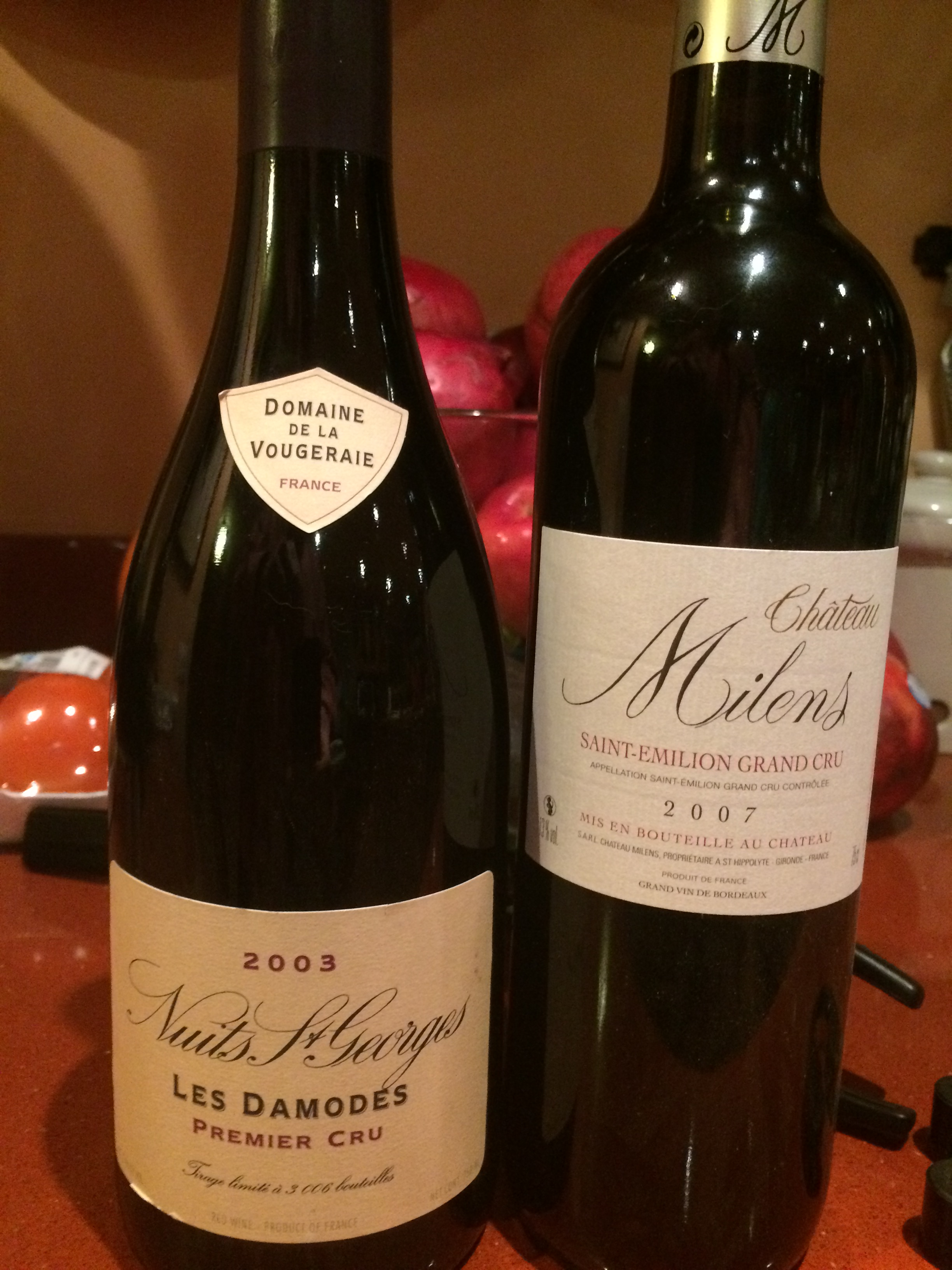
Two French Beauties
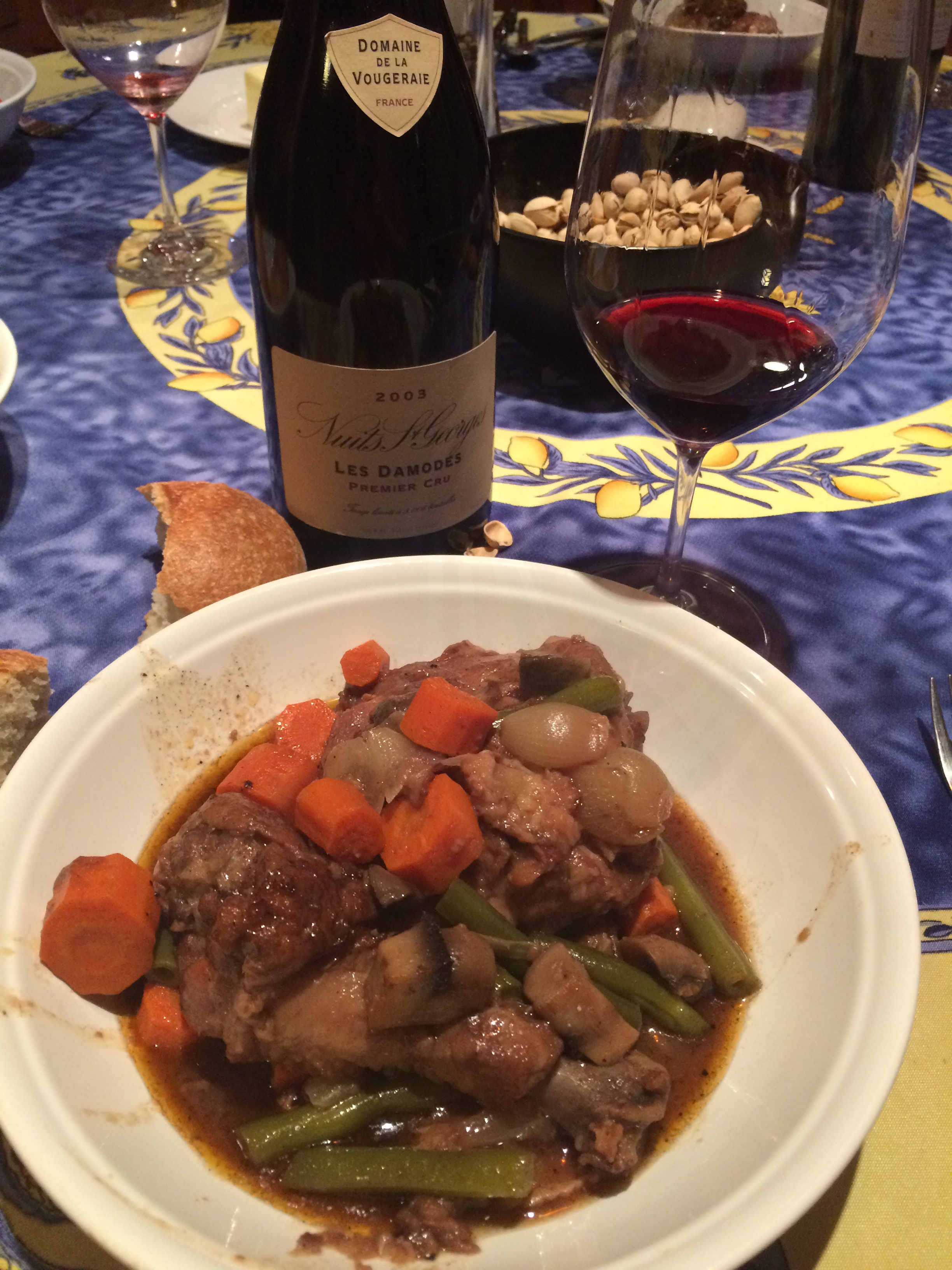
The appetizer was squash ravioli with balsamic and sage; Mary used won ton instead of pasta. It was a little sweeter than expected, but very good. We began with the Bordeaux, a 2007 Chateau Millens Saint-Emilion Grand Cruthat we purchased in Saint-Emilion in 2013. The wine shop where we purchased it, as part of a mixed case, purchases the entire production of this small producer (so you will not be able to find this amazing wine, except at that shop – sorry). The Bordeaux blend, Cabernet and Cabernet Franc, was very well structured, with a nice mix of cherry fruit and minerality on the nose, and hints of cherry, tobacco, and chocolate on the tongue. It finished very well. This wine was not a perfect match for the unexpectedly sweet appetizer, but it was a very good wine. We still have a couple of bottles left, and the wine could use some additional time to age. With the coq au vin, we poured the Burgundy, a 2003 Domaine de la Vougeraie, Nuits St. Georges Les Damodes Premier Cru Pinot Noir. This wine was a Christmas gift from Dorianne a few years ago. It was simply magnificent.
Coq au Vin by Mary Stec with the Domaine de al Vougeraie Burgundy.
The nose was very complex, with floral notes of lavender and rose predominating. The wine had a nicely structured mouth-feel, velvety smooth, a bit softer than the Bordeaux, as you might expect. The flavors were berries, floral notes, and just a hint of minerality. This wine also had a great finish – something that I usually do not notice. I was surprised to see that some of the online scores for this wine were only in the high 80’s. I would score it higher. These were special wines pulled out for a special dinner, and not every day wines. That being said, they both delivered a superior experience that you would not find in an everyday wine. For more info on my philosophy of wine, go to the ABOUT section.
As noted in my Philosophy of Wine entry, I drink wine almost every day with dinner. Dorianne and I drink 3 or 4 reds to every white or rosé, except in summer, when that ratio tends to be reversed.
I put reds into three basic categories – everyday, special dinner, and very special occasion. Everyday wines would run about $20 and under, special dinner from $20 to $50, and very special occasion from $50 and up. A bottle with a great story or one that is hard to obtain may put it up a category or two even though the price point is lower.
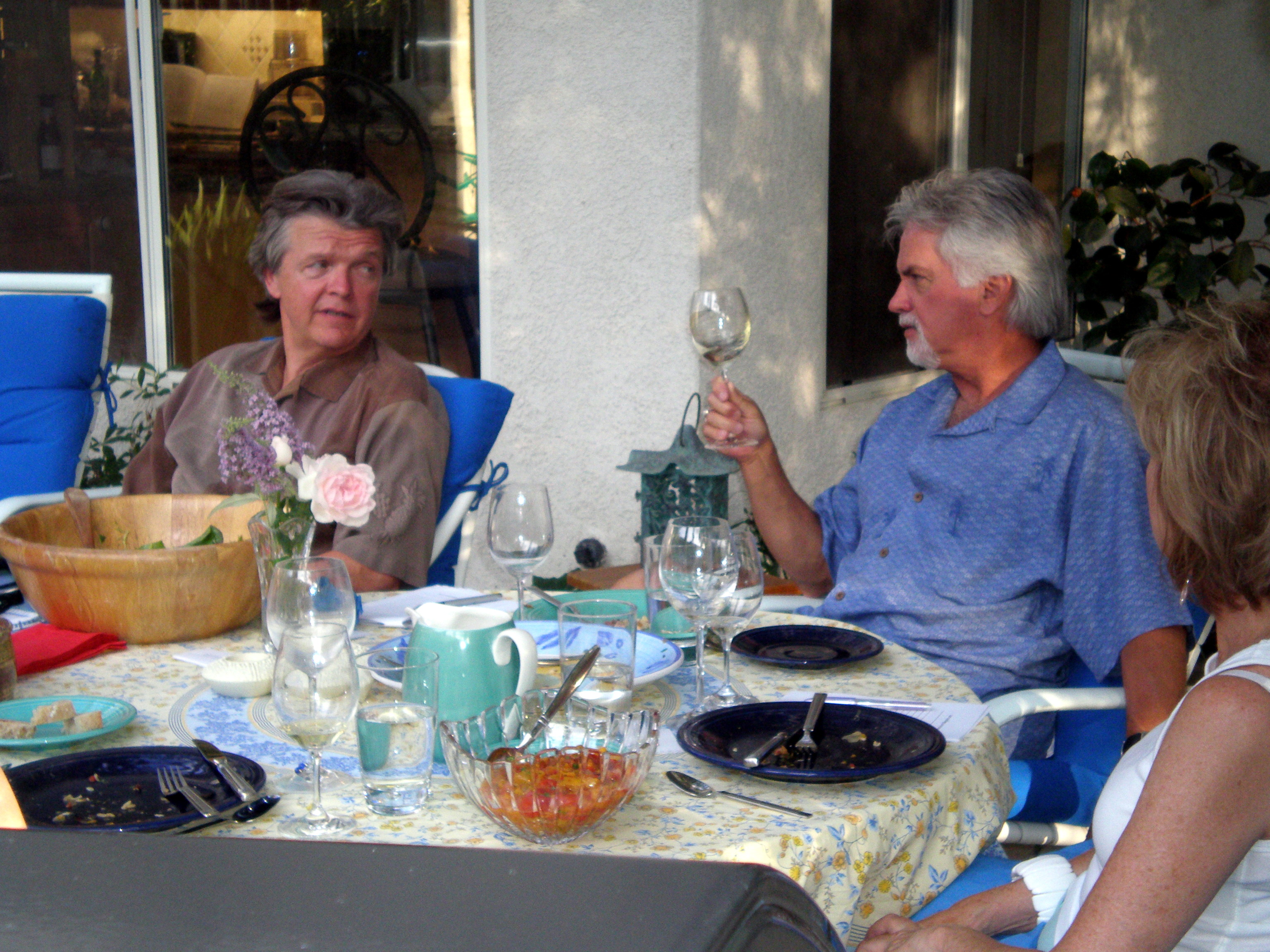
Sharing some Wine with Friends.
Everyday wines are the mainstay of our consumption. These are generally wines that we buy from local retailers or online at sites like WTSO.com. Occasionally, they come from a winery. We also have our wine co-op wines that fall into the everyday category. We get about 8 cases from our co-op share each year, 6 of red and 2 of white. I will not include the co-op wines in these reviews, because you cannot obtain them. We had a 2010 Petit Syrah/Cabernet Sauvignon on Monday night from the co-op.
So how do you choose your favorite everyday wines? I would begin with trial and error then move out from there based on a certain level of awareness that develops as to what to look for – certain varietals, wine makers, and price points. The trial and error comes first – you sample some wines. This can happen by purchasing at a retailer, or you can be a bit more creative.
When you are invited to a party, if they have lower priced wines, try some. See if you find any that you like and note the brand and varietal. In a restaurant, especially some chain restaurants, they will have inexpensive wines (at a markup no doubt) that you can try. Many wines under $15 is that they will stay very constant from year to year, so you are less likely to be surprised by a new vintage.
I like a variety of wines, so when I look for everyday wines, I am looking at a broad spectrum of wines, both domestic and international. You may be a Merlot or a Cabernet Sauvignon drinker, which narrows the field quite a bit. I like some variety and some signs of craftsmanship, even in my everyday wines. If you look around, you can find wines under $15, and definitely under $20 that have this quality. Here, you will find some variation from vintage to vintage, but that adds to the variety!
So let me start with two red wines that have, for me, been very reliable over time. They are under $15, both are imported, and each has a bit more to offer than the standard-brand or bulk wine product. The vintage will be whatever is currently available – it is unlikely that wine merchants are holding these for aging.
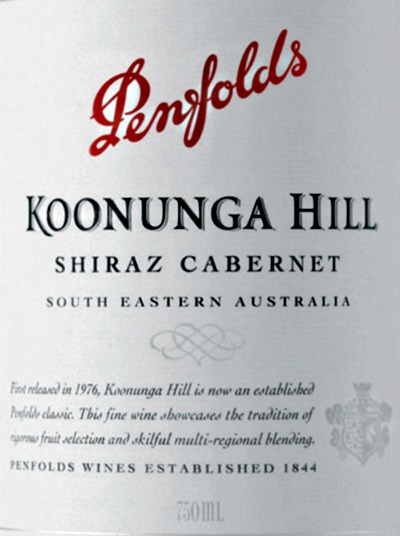
A Good One from Australia.
Penfolds Koonunga Hill Shiraz/Cabernet: I began drinking this wine in 2003. Penfolds is the flagship wine brand of Australia, makers of the legendary Penfolds Grange (which is near the very top of my bucket list) Shiraz wine. The Koonunga Hill label is second from the bottom in the Penfolds hierarchy – above the very pedestrian Rawson’s Retreat label. I have tried the Koonunga Hill Shiraz and the Cabernet as separate varietals, and find that the blending of these two grapes creates the most satisfying experience. The 2011 vintage is the most likely on to be on your retailer’s shelf. It is a 62% Shiraz 38% Cabernet blend (this will vary from year to year) and is 13.5% alcohol, which I prefer to the heavier levels of alcohol in may California everyday wines, which are usually just hot and not very well balanced. The Koonunga Hill Shiraz Cabernet is great with red meat and will hold up to BBQ sauces and spiced foods as well. The wine will age for 8 to 10 years, but this wine is not made to age, so drink it right from the shelf.
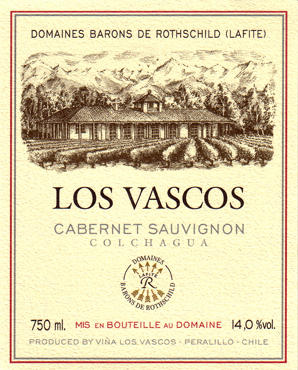
From Chateau LaFite Rothschild in Chile.
Los Vascos Cabernet Sauvignon: I came across Los Vascos when I was living in South Florida and it came with a great story. A friend was the supervising flight attendant on a private Boeing 727 belonging to the CEO of a South American subsidy of a large US corporation. The CEO was really into wine – he would send my friend on the plane to Paris to load on first growth Bordeaux’s and Burgundies – you get the idea. At the time, the Los Vascos (from Chile) was retailing for about $7. My friend gave her boss a glass on a flight and he really liked it (probably a good thing for her career). He then began to serve it on his plane to his high-roller friends and did not tell them what it was. Pretty much everyone took it for a premium wine.
So what is this wine? Well, it is a large production wine from the Chateau Lafite Rothchild vineyards in Chile. There are a couple of reserve versions of the wine that come in at higher prices – from about $20 up to $65. Today, the basic Los Vascos Cabernet retails for $14 but can usually be had for $10 to $12 or less from a variety of retailers. The website recommends decanting for about an hour before drinking this wine, although I have never done this. You will find notes of ripe fruit, good structure, and hints of a variety of mineral notes – which most of us experience differently. This is a great wine with roasted and grilled meats.
All three of these wines are what I like in an everyday wine. A few others that I imbibe fairly regularly are Bogle Old Vine Zinfandel ($9 to $12); Norton Reserve Malbec, Mendoza, Argentina ($14 to $20); Luigi Pira Dolcetto d’Alba, Piedmont, Italy ($12 to $18); plus many more. You have probably noted that most of the wines listed here are imported. For some reason, producers around the globe seem to be able to get well-crafted wines made and shipped to the US at everyday wine prices. It’s a paradox.
There are lots of decent wines in this price range – ask your wine retailer to guide you to those undiscovered gems in the shop – everyplace has some of these wines. As always, once you find what you like, begin to branch out and explore wines like those.






 Jim Lockard On Wine