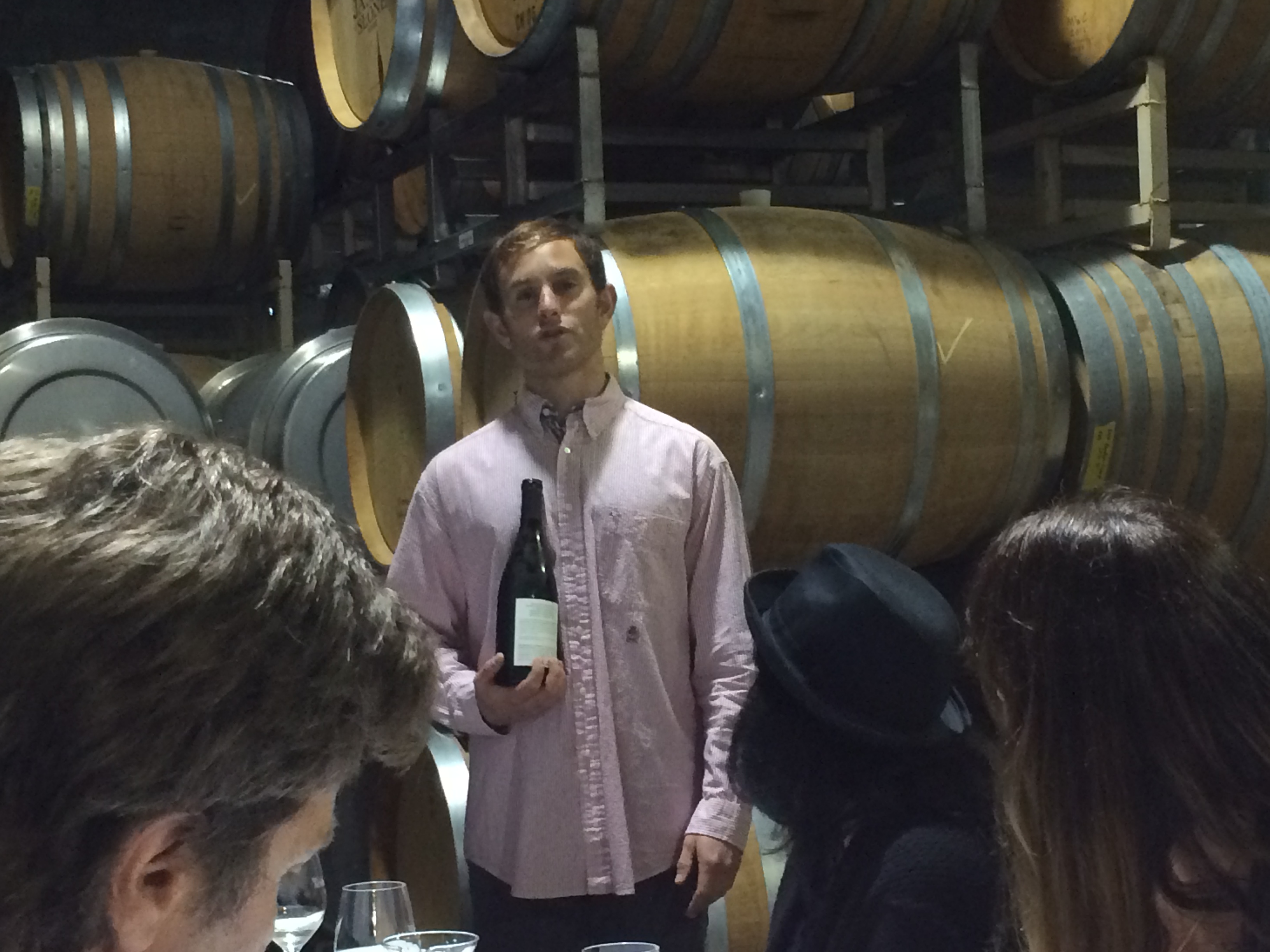
Continuing our series on the wineries I visited on a group wine tour in the Santa Rita Hills Appellation on Saturday, we will take a look at Margerum Wine Company (LINK). Our group tasted at the winery near Buellton, but the regular tasting rooms (LINK) are in Santa Barbara. Assistant Winemaker Sam Smith conducted our tasting on Saturday.
Sam Smith describes Margerum Wines.
Margerum produces a number of wines from a variety of vineyards (LINK) in Santa Barbara County. They produce small quantities of each wine, seeking to maximize the quality. Their stable of wines runs from Sauvignon Blanc (including a rare late harvest dessert version), to Pinot Gris and a Grenache Rosé on the white side, with Syrah, Pinot Noir,Grenache, and Rhone and Chateauneuf-du-Pape style blends under a couple of labels. You can read about each of the wines at the link above. I really enjoyed the 2013 LATE HARVEST SAUVIGNON BLANC, a very light and smooth dessert wine that has a light mouthfeel and not too much sweetness.
I found the wines we tasted to be well-crafted with a tendency toward lightness and elegance, even a sense of understatement, which is consistent with the style that many winemakers adopt in this region. As noted in earlier posts, if you want the big fruit-bomb reds, you need to head north a bit to Paso Robles, where that style is more prevalent.
The owners of Margerum Wine Company are also involved in the Wine Cask Restaurant (LINK) in Santa Barbara. The restaurant has an excellent reputation, and, I am pretty sure, you can get some Margerum Wines on the premises.
Later, more posts on the other two wineries we visited, LaFond and Tyler, each very interesting in its own right.
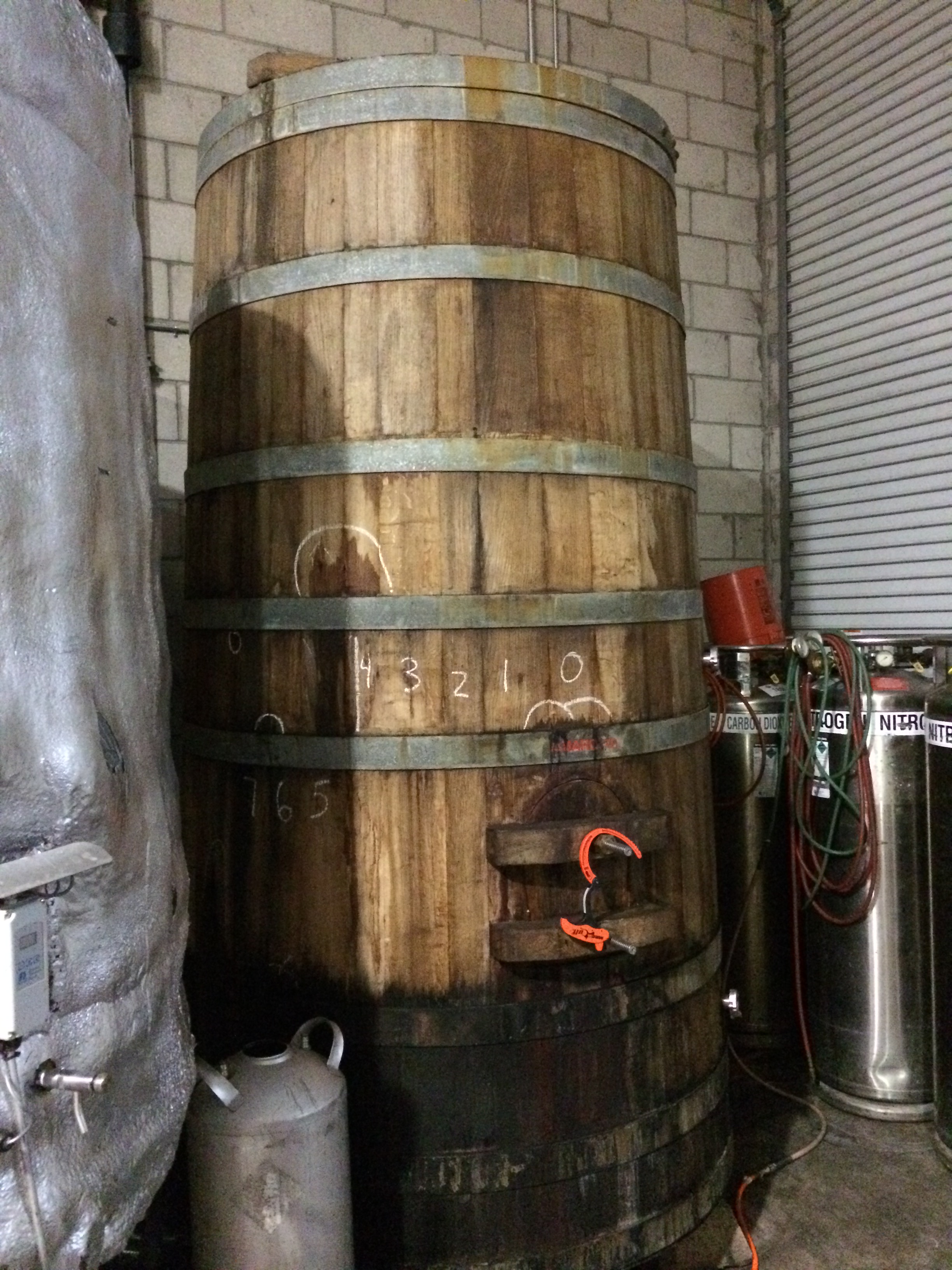
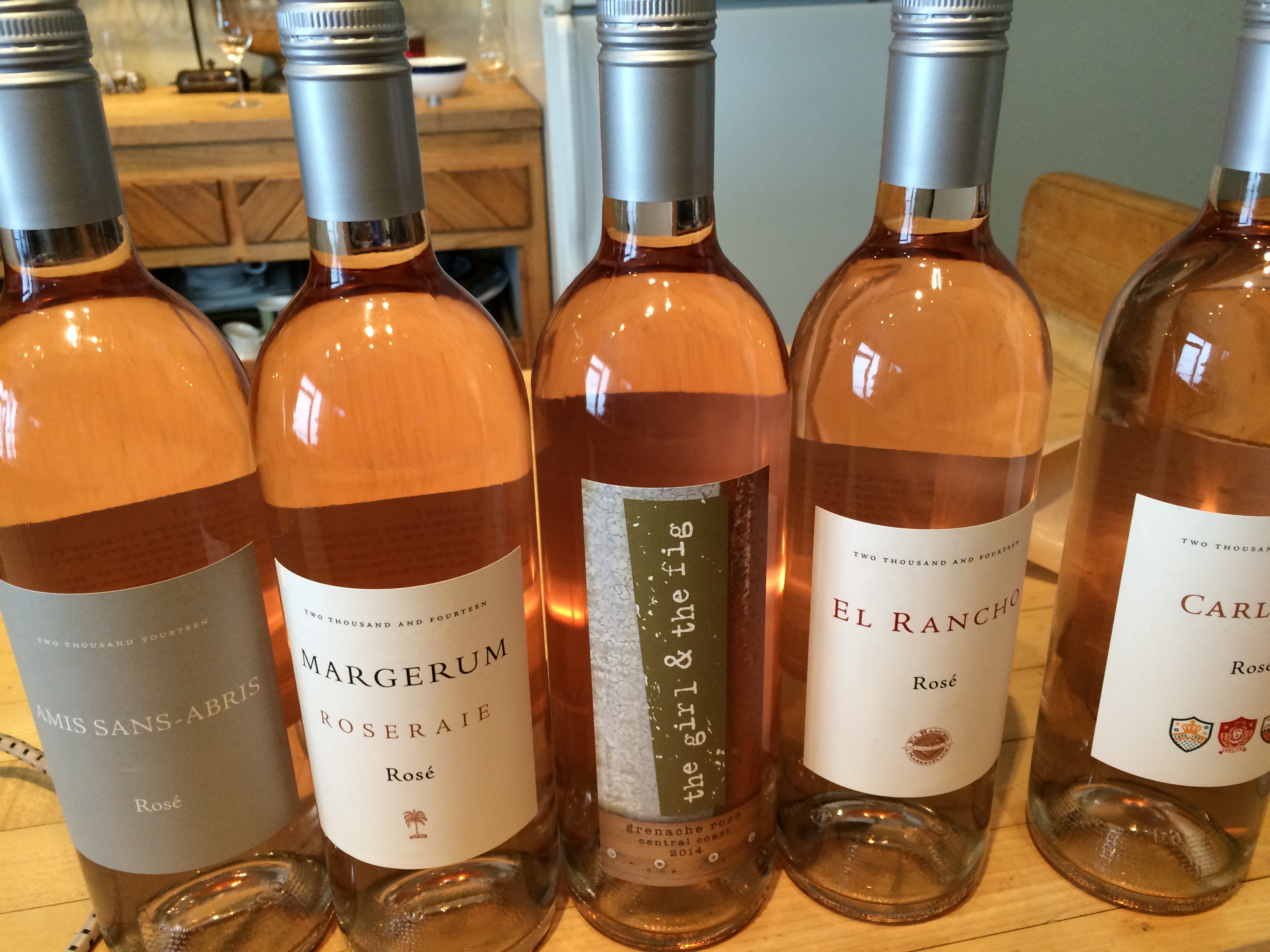
Stainless Steel Barrels at Mergerum.A Line Up of Rosés.
On Saturday, I joined a group for a wine tour of four wineries in the Santa Rita Hills Appellation (LINK), near Santa Ynez, California. The four were: Tyler, LaFond, Margerum, and Ken Brown. I will blog about each separately, beginning with Ken Brown Wines (LINK). The Santa Rita Hills are located about 30 miles north of Santa Barbara. A unique geological area, they are on a circular land mass that separated from the North American tectonic plate about 12 million years ago. Since then, that circle of land has been turning about 1/4 inch per year, so that now, the mountain ranges and valleys run east to west instead of north to south. This provides a “chute” for cool breezes and moisture from the Pacific Ocean to come farther inland and created one of the perfect places on earth to grow Pinot Noir. The film “Sideways” (LINK) was filmed here (before the appellation was established), and the rest is, well, a rich history.
Ken Brown is a legendary winemaker in the Santa Rita Hills area. He began at Zaca Mesa Wines. His first name is actually Byron, and after Zaca Mesa, he started Byron Winery in 1985, selling it to the Mondavi Family in 1990. He said that both of those wineries got to the level of 80 to 90,000 cases in annual production, and by that point, actually before that, it was no longer fun for him. The current annual production at Ken Brown Wines is just about 3,000 cases in total.
Along the way, Ken Brown has trained a number of winemakers in the area, including Jim Clendenen of Au Bon Climat and Bob Lindquist of Qupé Winery. His tasting room is in Buellton, CA, just off the 101 Freeway. It is very nicely appointed, with a corkwood floor that got a lot of attention from some of the women on the tour.
Ken Brown Holding forth about his Wines.
Ken was very expansive in describing his process of winemaking and each of his wines. We tasted one Chardonnay, five Pinot Noirs and one Syrah. My general comment is that his wines are amazingly well-crafted in a Burgundian style, not big fruit bombs like many California wines. In fact, some in our tour group thought his wines were not big enough.
I found them to be nuanced, balanced, and each had different characteristics. I just about fell in love.
The Chardonnay was beautifully made, and very oaky – not to my taste, but you could readily smell, taste, and see the quality of the wine. Several bottles of this were purchased by tour members.
Each of the five Pinots, one a blend of two Santa Barbara appellations, the rest from Santa Rita Hills, two blends of vineyards and two single-vineyard wines, had a strong sense of place and a very nice blend of fruit, mineral, and spice.
I won’t go into all of the individual wines in detail – mainly because it is unlikely you will be able to get any! All are small production, and available only through the winery (LINK to wine shop site).
I purchased the 2012 Zotovich Vineyard Pinot Noir (LINK), a very complex Pinot; the 2012 Santa Barbara County Pinot Noir (LINK), his most approachable Pinot – fruity and very refreshing; and the 2012 Watch Hill Syrah (LINK), a rich fruit-forward Syrah with great complexity. If we were not moving soon, I would have bought more.
If you are in the Santa Rita Hills area any time soon, put Ken Brown Wines on you list of places to visit, You will not be disappointed (unless you only like the big, big wines. Then you better stick to Paso Robles).
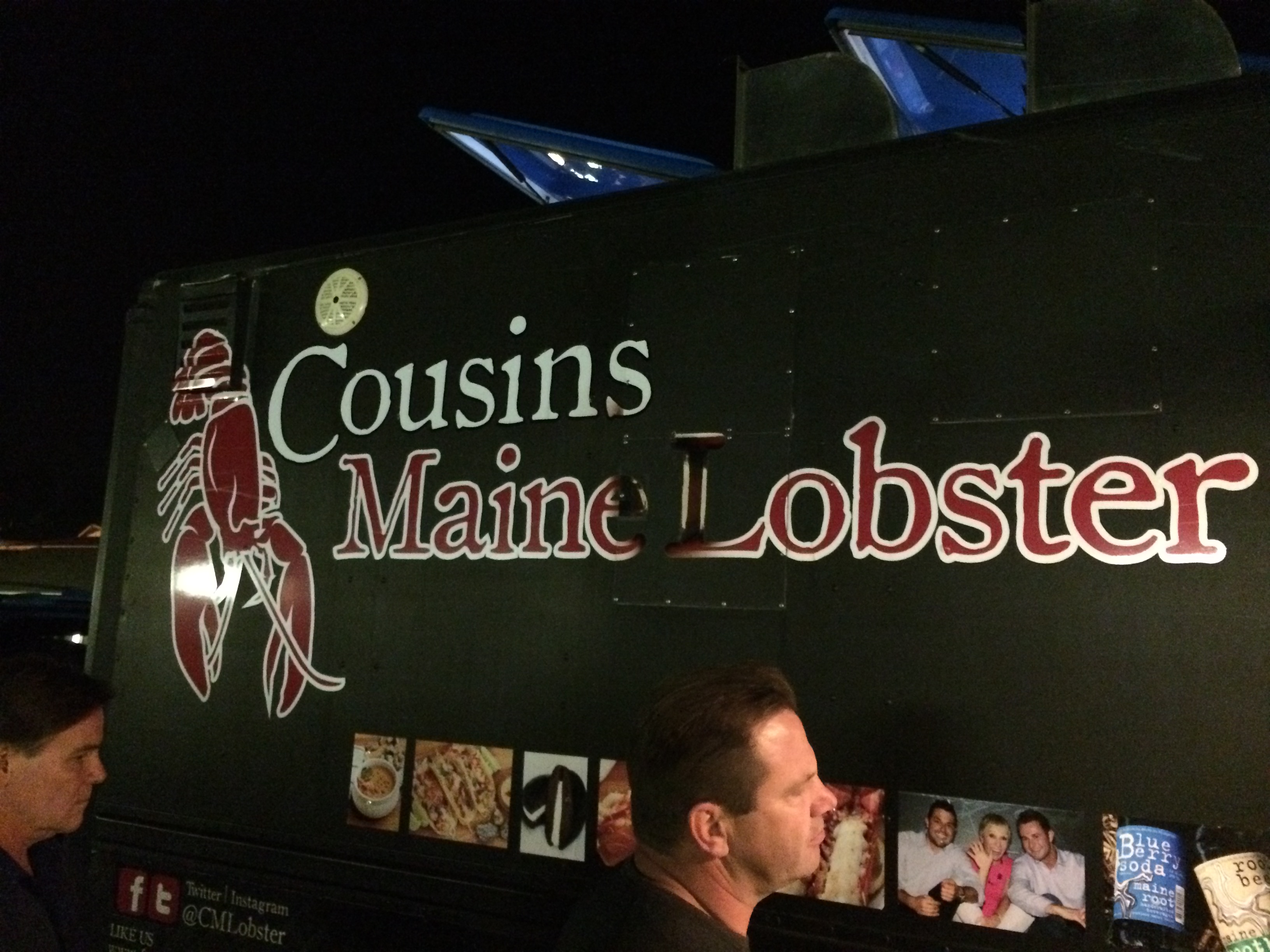
Here in the Thousand Oaks/Malibu, CA area, we are awash in wine – a good thing. There are over twenty wineries in the two Malibu AVA’s, and a lot of tasting rooms, wine bars, and wine-centric retailers in the Thousand Oaks/Westlake Village area. The competition is growing as the area is developing into a wine destination. Last night, a groups of us joined a large crowd at Sunland Vintage Winery Tasting Room (Link) in Thousand Oaks. The proprietors, Michael and Debby Giovinazzo, held court in a bustling tasting room, pouring $5 glasses of wine for their Thursday evening promotion Tantalizing Thursday, featuring different food trucks each week. Last night it was Cousin’s Maine Lobster Truck (Link), featuring lobster rolls, chowder, tacos and more.
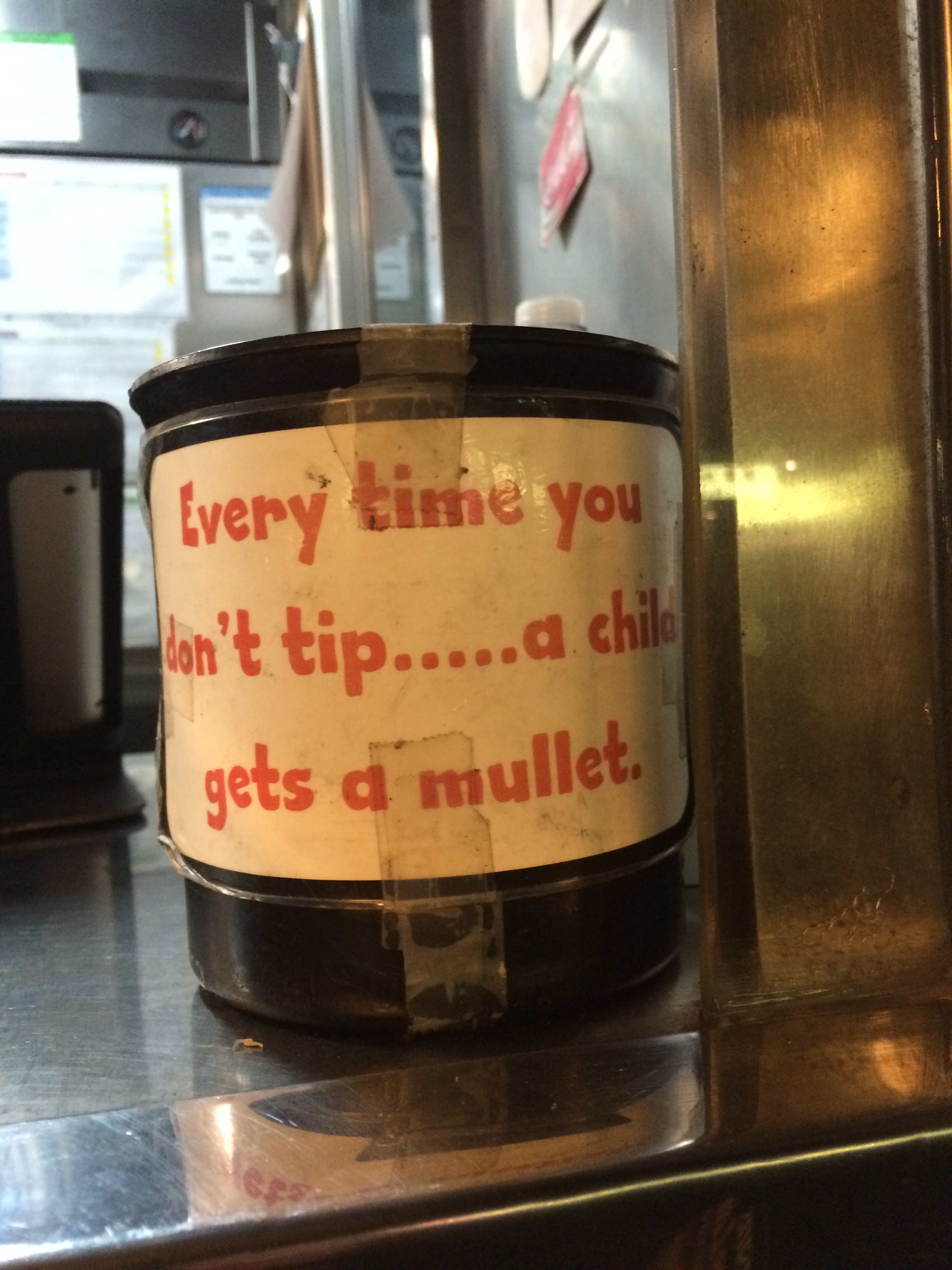
Tip Jar on the Lobster Truck
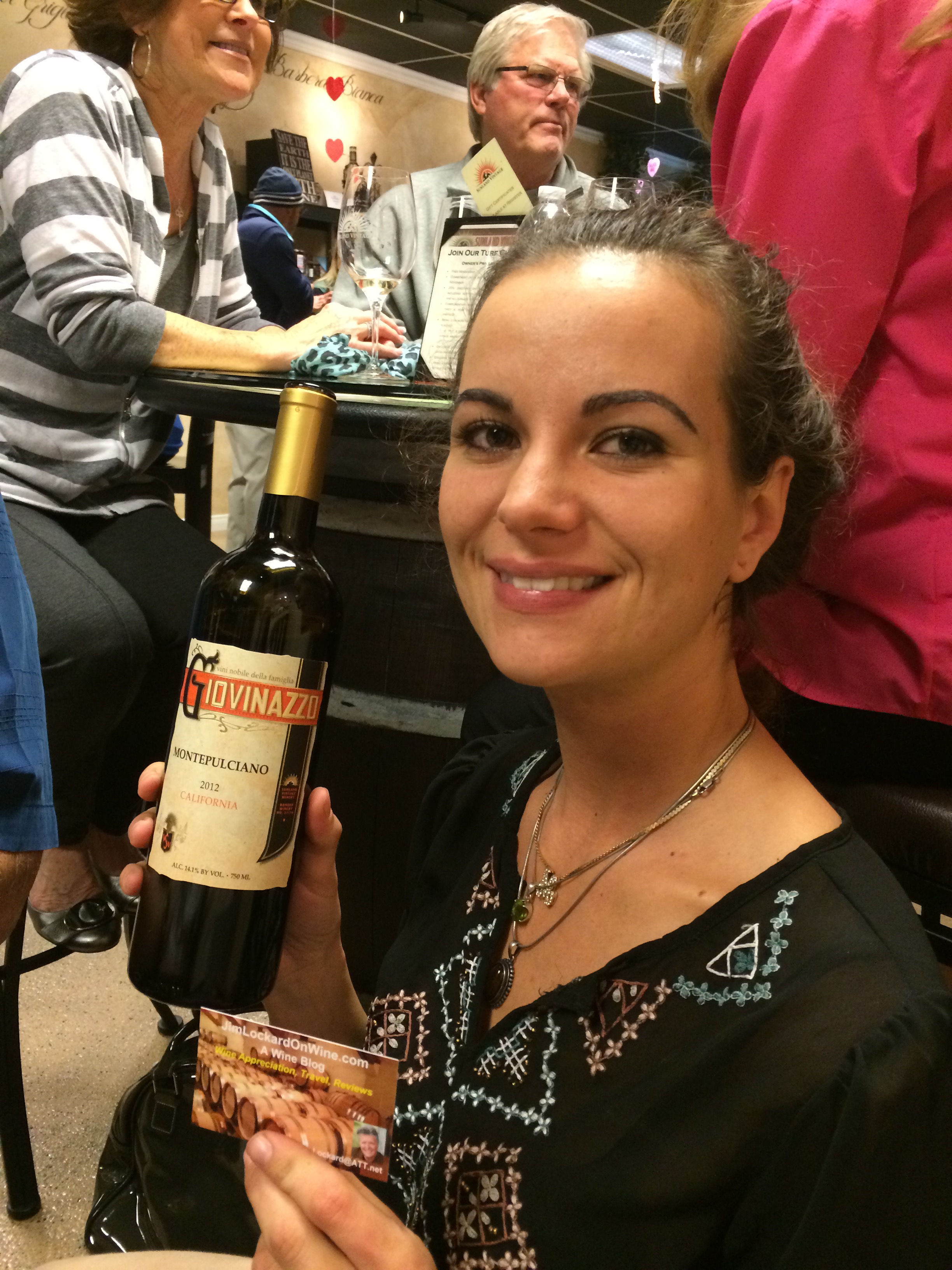
We settled in at a large table (nine of us), and ordered some wine from the server, Merissa. We started with the Albarino, a nicely crafted white that was perfect with lobster. The line for the Lobster Truck was long, but convivial. Then we headed into the land of the reds. Sunland has two labels, Giovinazzo Wines – Italian varietals like Nebbiolo, Dolcetto, Montepulciano, Sangiovese, Teroldego, and Barbera, and their SVI Brand – Premium Wines like Cabernet Sauvignon, Malbec, Zinfandel, the Albarino, and Bordeaux Blends. The wines are very well crafted. It is very unusual to have so many Italian varietals from a California winery, so you have to give Sunland credit for being ambitious. We did not taste all of the wines – the $5 per glass format of the evening precluded that, but we did have a sampling. On the Italian side, the Giovinazzo Wineslabel, we tasted the Dolcetto (harsh and very acidic, and I usually like Dolcettos); Montepulciano (very nice, smooth and balanced, best of the night); Malbec (also nicely balanced, but not very distinctive). From the SVI Wines label, we had the Albarino (very nice, smooth, fruity, grassy); Zinfandel (very sweet, big, ripe, almost a dessert wine); Cabernet Sauvignon (well-crafted, balanced, nice fruit/mineral balance). I plan to return to get some time to taste some of these wines again and to try some of the others. I also want to speak to Mike and Debby when it is less hectic. Sunland Winery is a great addition to the Thousand Oaks wine scene.
Last night, we spent some time and had dinner with Brad Kieffer and Karen Oxrider, our good friends and wine buddies.
Initially, Karen came over to our house where she and Dorianne did some work for a non-profit they are involved with. During this time, we opened a bottle of 2007 Au Bon Climat Hildegard White Table Wine, the wine, from the stable of the great Jim Clendenen, is an amazingly well-crafted white wine; made from 55% Pinot Beurot (Pinot Gris), 40% Pinot Blanc and 5% Aligote inspired by the composition of the Corton Charlemagne vineyard in Burgundy as it was believed to have been planted during Charlemagne’s reign as Emperor of the Holy Roman Empire (Parker). I have blogged about this wine before (Link).
It made the non-profit work go very smoothly!
Unfortunately, it was our last bottle of this great wine.
After the work was done, it was time to meet Brad for dinner. We chose Galetto’s Grill in Westlake Village, one of my favorites – a mixture of Brazilian and Italian cuisine with an excellent wine list.
But tonight, we would be bringing a couple of bottles.
Brad and Karen had a bottle of Hungarian wine that they brought back from a trip to Europe a few years ago. The wine, a 2002 Sandor Pince Egri Pinot Noir, was an unknown quantity. Would it still be good in 2015? Was it a good wine to begin with? An internet search revealed next to nothing about this particular wine.
Our conversation ranged from travel, past trips and future plans, to wine to food, to our impending move away from California and our extended stay in Europe. It was an evening of good company, good food, and good and interesting wine.
The waiter opened the bottle of Sàndor Pince and poured a taste for Brad. He sniffed and swirled and very slowly tasted. After a pause, he said, “Interesting.”
The wine was very earthy – mineral on the nose, terroir (dirt) with a hint of rust was evident in the wine – not in an unpleasant way, but there was a nearly total absence of fruit on the nose and in the mouth. I liked the wine more than the others, but I agreed that we should see what it would be like in a few minutes. So we ordered.
I ordered a Brazilian style rib eye stake that would come with black beans and rice, pico de gayo, and other spices. Dorianne had a fish dish, Karen had salmon, Brad a skirt steak prepared much like my rib eye.
I will say that the Hungarian Pinot Noir was a good compliment to my steak with the dry Brazilian spices. The mineral nature of the wine was a good pairing. It’s relatively high acid and medium tannins went well with the dish. The others were ready to turn to the Clos Pepe, however.
As always, the Clos Pepe Pinot Noir did not disappoint. Smooth, with a wonderful balance of mineral and fruit on the nose and the pallet, with a hint of pepper and spice. It was a nice finish to the evening after the harsher Hungarian Pinot Noir.
In fact, that wine was book-ended by two splendid wines from the California Central Coast. Our experiment with the rare (for us) Hungarian Wine from the “Valley of the Beautiful Women,” was really not all that dangerous, as we were definitely working with a net, as it were.
So it was the best of both worlds – a chance to try something new and also to enjoy two well known wines that never disappoint.
Which Wine Opener to buy is always a big issue. Like most wine lovers, I have quite a few, not counting the half dozen or so now in the possession of the TSA.
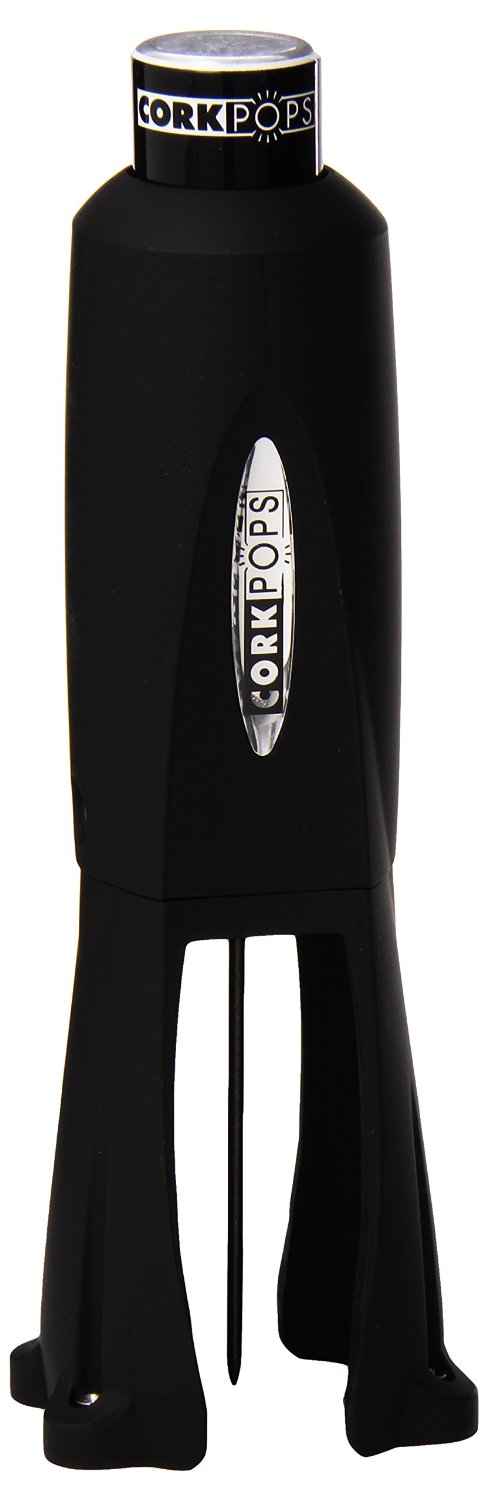
A while back, I was given the Cork Pops Legacy Wine Opener, a gas-operated little gem that includes a foil cutter in its excellent design. Priced around $25 to $30, this gadget makes opening wine a joy, even with tricky corks. This isn’t a corkscrew, as it has no screw – just a straight hollow needle that pierces the cork and puts gas between the cork and the wine to force the cork easily out of the bottle neck.
The Cork Pops Legacy Wine Opener
It works like this. You can use the foil cutter (four sharp disks on the bottom of the legs) to remove the foil cap, then push the needle through the center of the cork. Once the device is fully seated on the bottle, you simply press the top with your thumb. This activates the gas canister and pushes gas into the bottle, easily removing most corks. The taste and aroma of the wine are unaffected. To remove the cork, you twist the opener where the legs join the body, and the cork slides back down the needle.
This has become my go-to wine opener at home, and I have given several as gifts.
Now, let’s look at some drawbacks.
1. This device does not travel well. It comes in a clear plastic case, so taking it to a friend’s home or on a picnic will work. But you can’t take the opener with gas on an airplane, so you will still need a good travel opener if you are flying.
2. The Legacy does not work on large format bottles or with very long corks where the needle cannot get all the way through (a very small percentage of corks, fortunately). Nor will with work with bottles that have a wax cap over the cork – you might bend the needle trying to push it through the wax, and the wax makes the bottle neck too wide to fit the device over it.
3. Some have reported problems using it with plastic corks, although I have never had a problem with this.
4. You have to develop a bit of a “touch” with this opener. Too much force on the top of the canister (which is the “button” you push) and too much gas goes into the bottle causing the cork to fly out of the bottle often followed by some wine. It may take a bottle or two to practice with – start with the “value” wines.
Beyond that, I have nothing but good things to say about this wine opener. If you have any experiences with this one or with an opener that you like better, please comment.
I love to travel. Since I was a child, I have always gotten excited about traveling – to the next town or across and ocean.
Dorianne shares this passion and we also are passionate about wine, so we combine the two passions wherever possible. This will begin a series of blogs on wine related travel, leading up to our departure in late February for a few months in Spain, Portugal, and France. I will, of course, blog from the places we visit about the locales, the people, and yes, the wines.
Wine Travel is Fun and Rewarding – Here we are at Foxen near Santa Ynez, CA.
“We are torn between nostalgia for the familiar and an urge for the foreign and strange. As often as not, we are homesick most for the places we have never known.” ~ Carson McCullers
A couple of years ago I took a short sabbatical, six weeks, and Dorianne and I went to France. We spent 3 1/2 weeks in an apartment in Paris, then went to Lourdes in the Pyrenees for a conference, the spend about six nights in Bordeaux and six more in the Loire Valley. The year before that, we took our daughters to Paris, Burgundy, and Provence for three weeks. In each of these amazing places, we sampled the local and regional wines and, where possible, visited the vineyards and chateaus where wine was grown and made, and made friends in cafes and tasting rooms with others who love wine.
A Great Wine Shop in St. Emilion.The Good Stuff.
“If I were really really ridiculously wealthy, I wouldn’t buy a mansion, just tiny apartments in every city I love.” ~ Mara Wilson
Combining wine enjoyment and education with travel is something that may not be for everyone, but for some, it is the essence of a quality experience. Those of us who spend time with people who create and sell wines know that they tend to be very interesting people, indeed. People like Wes Hagen of Clos Pepe Estate in the Santa Rita Hills of California’s Central Coast region and Giancarlo at Le Wine Bar in Bordeaux, are just two examples of friendly, knowledgeable, and approachable people who happen to be in the wine business. There are countless others as well. Wine travel lets you meet these people and have the experience of connecting at a much deeper level with the wine itself.
Wine travel can be a day trip, for those fortunate enough to live near wine-producing regions. I will be taking such a trip in a week, to the Santa Ynez, Santa Rita Hills appellations in Santa Barbara County. This will be a group tour, with many people who I know – four wineries and a picnic lunch. A very nice way to spend a day.
One of the things we will be doing on our upcoming European journey is setting up future small group wine tours in France. Working with travel professional Steve Hooks, we will be creating a series of tours that will include time in wine country – initially Bordeaux then Burgundy – followed by some time in the city – either Paris or Lyon. The tours will be geared toward those who are already familiar with fine wines and in separate groups, those who want to learn about fine wines. The focus of the former will be discovery and enjoyment and the focus of the latter will be education and enjoyment.
“We travel, some of us forever, to seek other states, other lives, other souls.” ~ Anaïs Nin
I really believe that good wine is best enjoyed with others. Our tours will emphasize that point, while offering some really unique opportunities to access some amazing places, enjoy great food paired with fine wines, and exploring the people and places of some of the world’s great wine regions.
We are not certain that there is a viable market for tours of this level. There are not many truly high-end wine tours being offered to North American customers. Some of the major tour companies and some of the cruise lines have tours featuring wine, but they are rather pedestrian, have larger groups, and mix the novice and the expert, which does not often go well in my experience.
One of the Buildings at Chateau Smith-Haute- Lafitte in the Bordeaux region.In the Tasting Room at Smith-Haute-Lafitte
Our question is – is there a market for a week-long small group experience with four nights in a premier wine region (Bordeaux, Burgundy) followed by three in a major city (Paris, Lyon), staying in top hotels, with tastings of top wines, dinners in chateaus, connections with locals in the wine trade, special tours of museums (like a private evening tour of the Musee du Louvre), wine pairing experiences, wine seminars and more?
As the year unfolds, we will be finding out. Share your thoughts in the comment section or email me at DrJim-Lockard@ATT.net
Dorianne and I took a bottle of 2004 Shaffer Napa Valley Merlot (Link) to have with the meal.
The wine had a very refined nose – dark fruit and a touch of minerality. The flavor was well-crafted and smooth, with cherry, tobacco, and some earthiness on the edges. A very nice wine. This wine retails in the $50 range, so you would expect it to be good – it does not disappoint and I think that it can still age for a few more years and hold up.
Before dinner, with some chevre and hummus, we had a 2009 Clos Pepe Chardonnay – Barrel Fermented (Link). Richard Clark and I had gotten a couple of half bottles on a trip to the Clos Pepe Estate a couple of years ago. The four of us shared the half bottle of this amazing wine – very, very nice, but it’s all gone!
But back to the Shafer Merlot. The wine paired very well with the roasted pork, it had enough structure and tannin to hold up to the dish. I noted some heat, and guessed accurately that it had 14.9% alcohol – which is getting fairly normal for California Merlots. Here is the link to Shafer Wines – (Link).
The For Sale sign is up in front of the house. Dozens of folks are streaming through our completely staged home – meaning that it looks pretty much like we don’t live here. Every morning, we hide all of the evidence of our occupancy and we depart whenever the realtor notifies us that a showing is happening. Fortunately, that has been happening very regularly of late.
We will be heading to Europe for a while, no fixed address, probably for most of 2015 and maybe beyond. I am looking forward to sampling more of the wines of Spain, France, Germany, and Austria (at a minimum), but what to do about our wines in our home cellar?
Now, when I say “cellar,” I should note that we live in a suburban tract house. No basement. Our “cellar” consists of a number of stashes around the house, where lighting is minimal and temperature is fairly steady. The really good stuff is in a wine refrigerator in the garage, but there are bottles on a rack in our utility closet, another rack in a hallway, another on the cabinet in our dining room (French only!), and more on a small rack built into our kitchen breakfast nook.
When the move was being planned, we had about 350 bottles in total. We rented a locker at CELLAR MASTERS in Newbury Park, CA, where we put a dozen cases right away and where the remainder will go when we leave.
The focus now is on drinking wines that will not age well, or that are at or near their peak now. We are also supplementing with some purchases of whites, which we do not tend to keep over time for the most part. Our wines are mostly from California, with the Central Coast and Napa and Sonoma well-represented; plus a couple of cases of French wines, and a few Australians and one or two from British Columbia’s Okanagan Region.
So, our case of ARTISTE wines, our CLENDENDEN FAMILY WINES and the AU BON CLIMAT are being consumed, as are our STOLPMAN and some CABERNETS. Our French wines, mostly Bordeaux, will age well, as will the Burgundies. We will keep some of the newer CLOS PEPE Pinots, which should last a few years, and we will have a lot of assorted CABERNETS and MERLOTS from California to keep.
I expect that we will be down to about 200 bottles when we depart sometime in mid to late February. At some point, we will likely have the wines shipped from the storage facility to wherever we land, or sell it off. It is both fun and a bit sad to be consuming some of the bottles that we obtained from the wineries or through friends. But, there are worse things that one has to do, right?











 Jim Lockard On Wine